Three things govern photographs in Arizona and the first one catches nearly everybody out: there is no shade. The Sonoran Desert's two significant trees, palo verde and mesquite, carry leaves measured in millimetres on open filigree branch structures — drought adaptations that make them cast a fine hard moving dapple rather than cover. Stand a couple under one at midday and their faces are covered in small hard-edged patches, and at eighty degrees of sun elevation in unmodified desert air that is not recoverable in post. Every usable shade at a low-desert venue is built, carried, or the shadow of a wall.
That matters more here than the sun angle itself, because the second governing fact is the air: very low humidity and almost no particulate scattering mean the direct beam arrives essentially unmodified and shadows receive almost no atmospheric fill, so the gap between a lit surface and a shaded one runs roughly two stops wider than the same sun angle gives in a humid climate. A deep porch in Arizona produces a more extreme ratio than the identical porch in Florida.
And the same clarity gives a deep saturated blue sky, which means open shade is lit by a blue source and reads distinctly cool while direct sun reads warm — so an ungelled flash puts a yellow-green face into a frame that is warm above and cold below. Warm-gel everything; it is the single most reliable correction in the state.
The third fact is that the season runs backwards. Almost every other guide in this library treats summer as the working season and winter as the compromise. In the low desert it is the reverse and it is emphatic: November to April is mild, dry, calm and among the most pleasant climates in North America, with a December noon sun reaching only about thirty-four degrees — which means the sun never climbs high enough to flatten a face or erase a building's geometry, and the whole short day has directional light with no bad hour at all.
From May to September, Phoenix afternoons regularly exceed a hundred and ten degrees, which for a wedding party in formal clothing outdoors is a welfare question rather than a comfort one, and the honest advice is that a summer schedule belongs at the ends of the day with the middle indoors.
February to April is the best window in the state, because this desert flowers in spring rather than autumn — brittlebush yellow across the bajada from February, Mexican gold poppy and lupine in March in a year with adequate winter rain, ocotillo red on the tips of its whip-like stems, and palo verde in mass yellow bloom through April into May, which is the strongest colour the low country produces and which depends entirely on the previous winter's rainfall. Two further things are worth knowing.
The monsoon, from July into September, is the photographic compensation for the heat: clear mornings, towering convective cloud building over the ranges through the afternoon, thunderstorms late, and the best light of the year in the half hour after a cell passes. In Tucson about half the annual rain arrives in that window, which is enough to green the desert visibly for a few weeks in August — a completely different picture from the tan-and-blue one the state is known for.
It also brings the haboob, a wall of dust advancing across the valley ahead of a collapsing storm, sometimes thousands of feet high, which is among the most dramatic subjects in these guides, entirely unplannable, and the clearest argument for a covered alternative that genuinely exists. And Arizona is not one state photographically but three. Prescott sits at five thousand four hundred feet in ponderosa and granite country with four real seasons, October leaf colour and genuine winter snow.
Tucson at twenty-four hundred feet looks up at the Santa Catalinas, a sky island that passes from saguaro desert to spruce-fir forest in twenty-seven miles and holds snow on its summits while the city is in shirtsleeves. Tucson also has the strictest outdoor lighting ordinance of any major American city — full shielding, lumen caps, restrictions on blue-rich light — which means the Milky Way is genuinely visible from a ranch outside town on most clear moonless nights.
Civil twilight across the state runs twenty-four to twenty-seven minutes, the shortest figures in this library, and in exceptionally clear air the fall from usable light to dark is abrupt rather than gradual. Three end-of-day frames fit into that if none of them is being decided at the time.
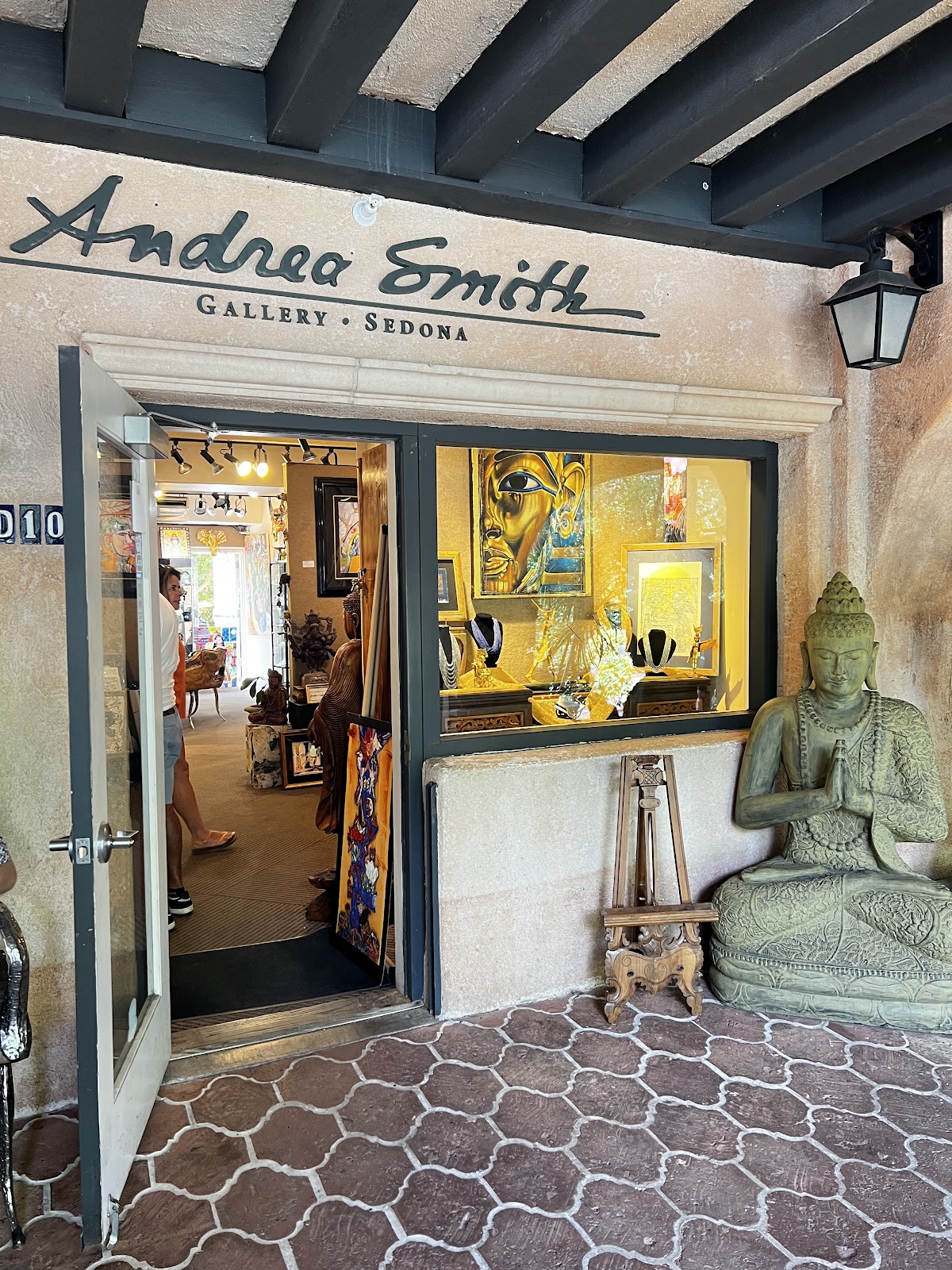
The Tlaquepaque Arts Village, Sedona: Field Notes on Courtyards
A courtyard village in Sedona — where enclosed outdoor space solves the problem the desert creates.
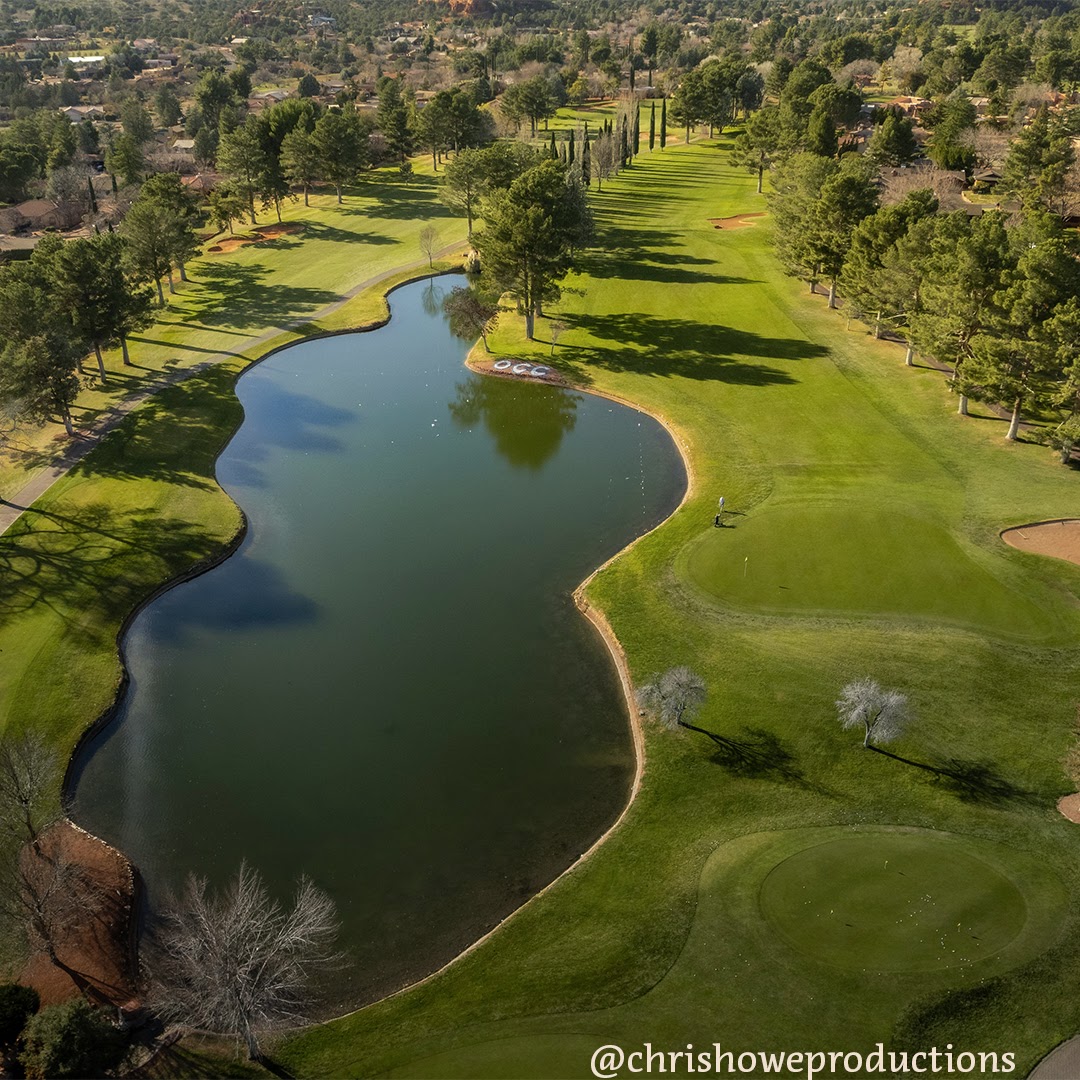
The Red Rock Country Club, Sedona: The Problem, and Four Ways Out
An open Sedona course under red rock — no shade, hard sun, and four ways to work with both.
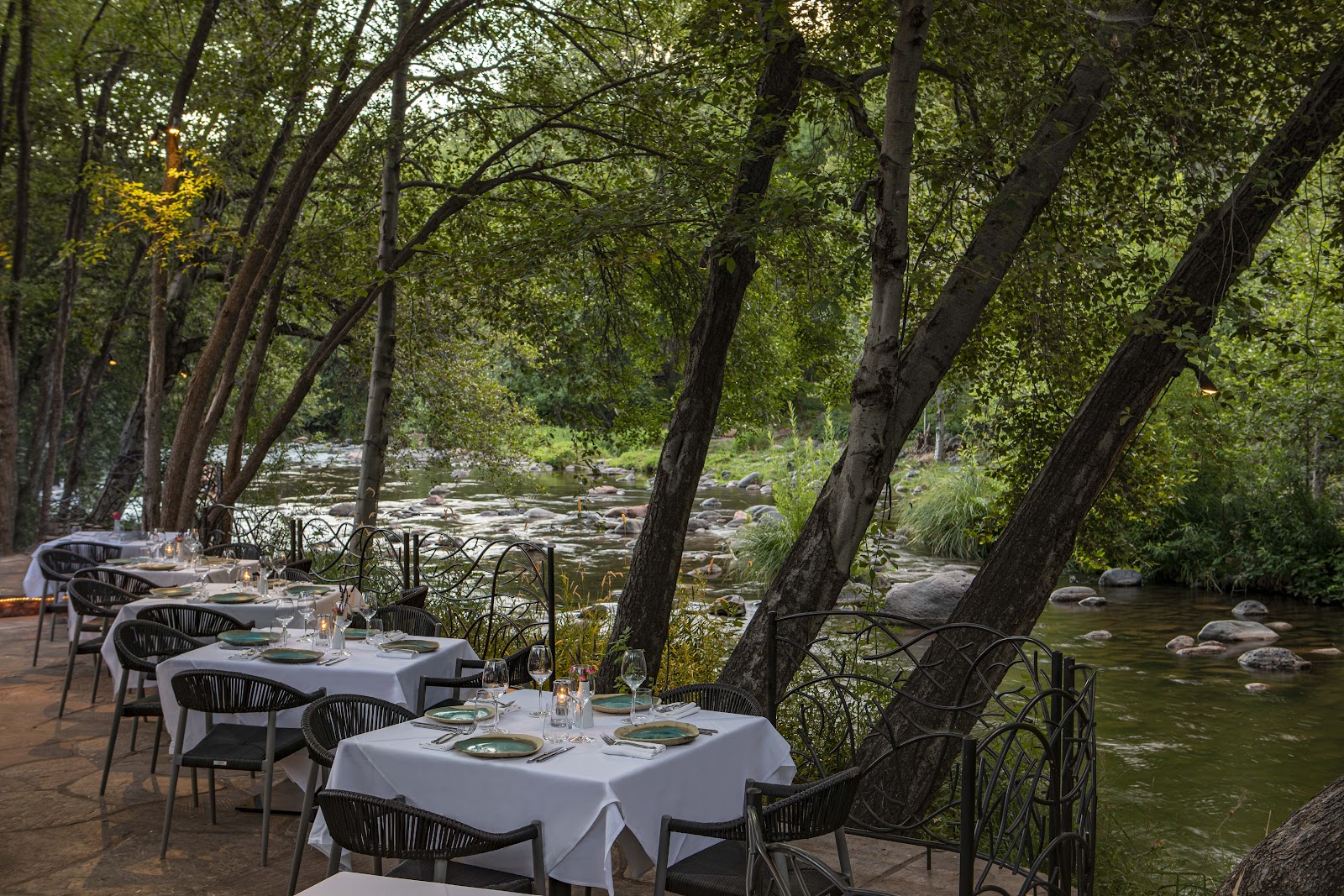
L’Auberge de Sedona: A Walk Through the Property
A creekside Sedona resort walked in the order a wedding day uses it — creek, cabins, terraces and rock.
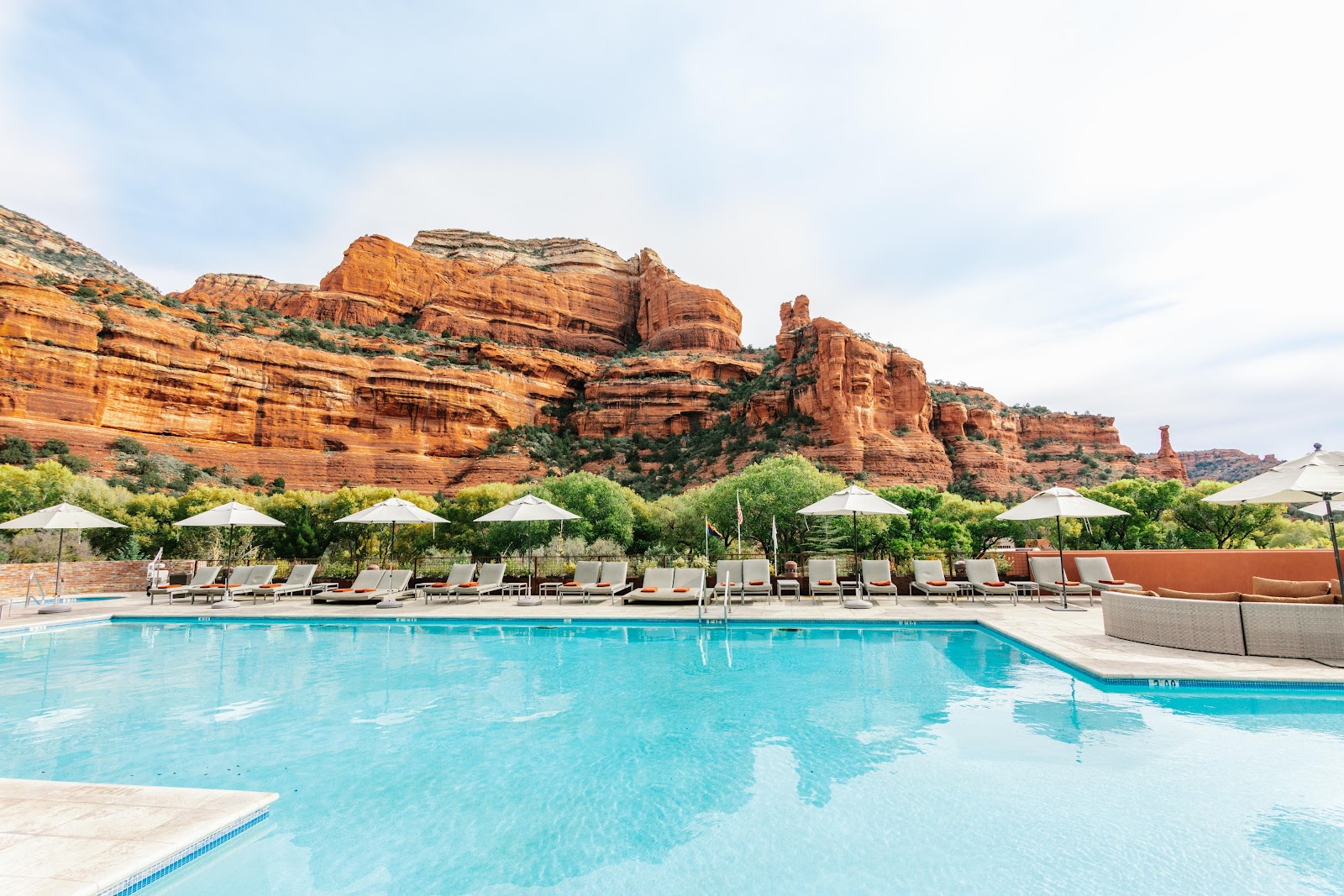
The Enchantment Resort, Sedona: The One Decision That Governs Everything
A Sedona resort inside a red rock canyon — where one question about when the walls are lit governs everything.
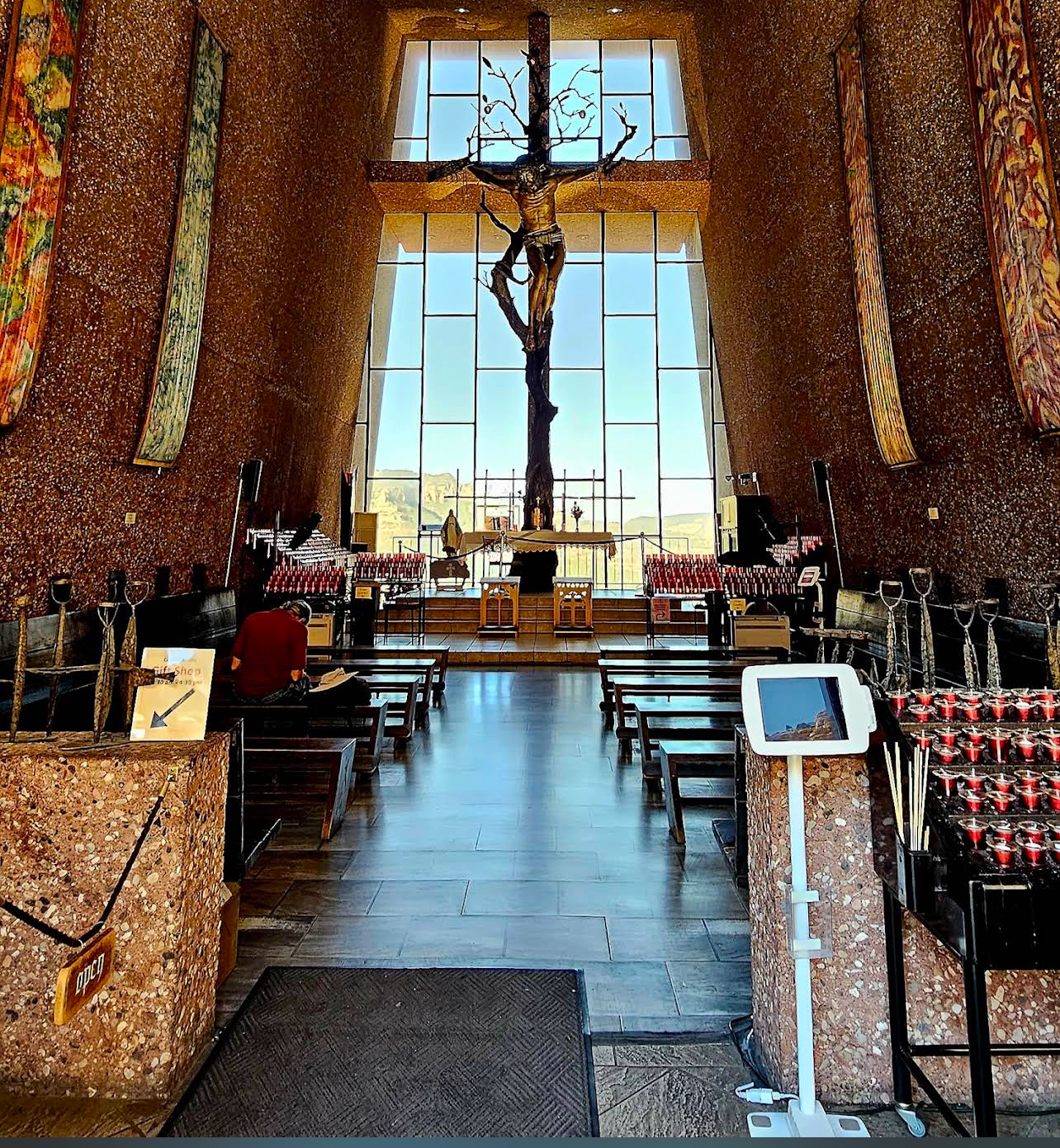
The Chapel of the Holy Cross, Sedona: One Frame, and How It Is Made
A chapel built into Sedona's red rock — and the one frame that the rock itself makes possible.
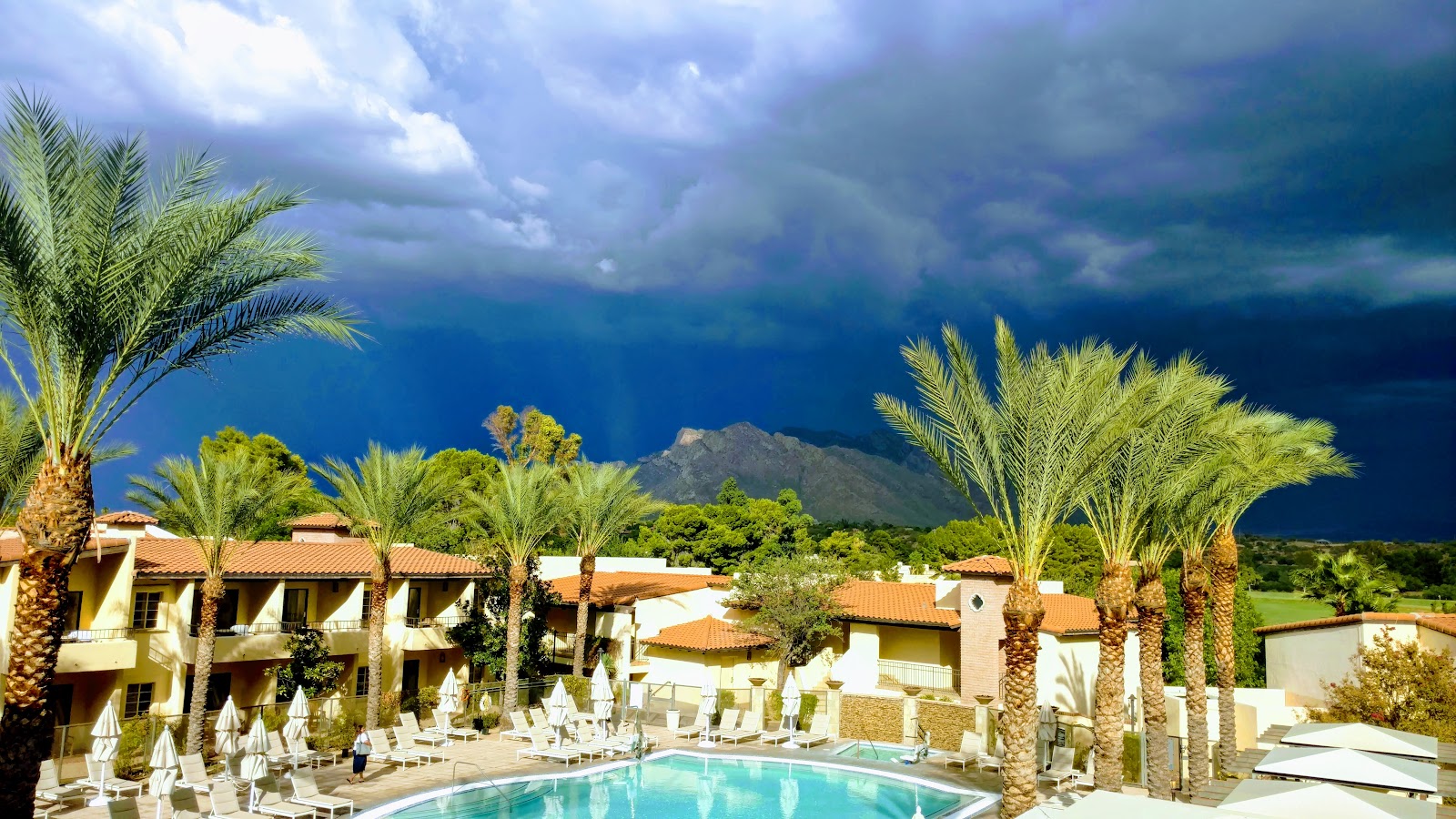
The Omni Tucson National Resort: The Problem, and Four Ways Out of It
A golf resort in the Sonoran Desert, where irrigated green meets tan desert and the two do not agree.
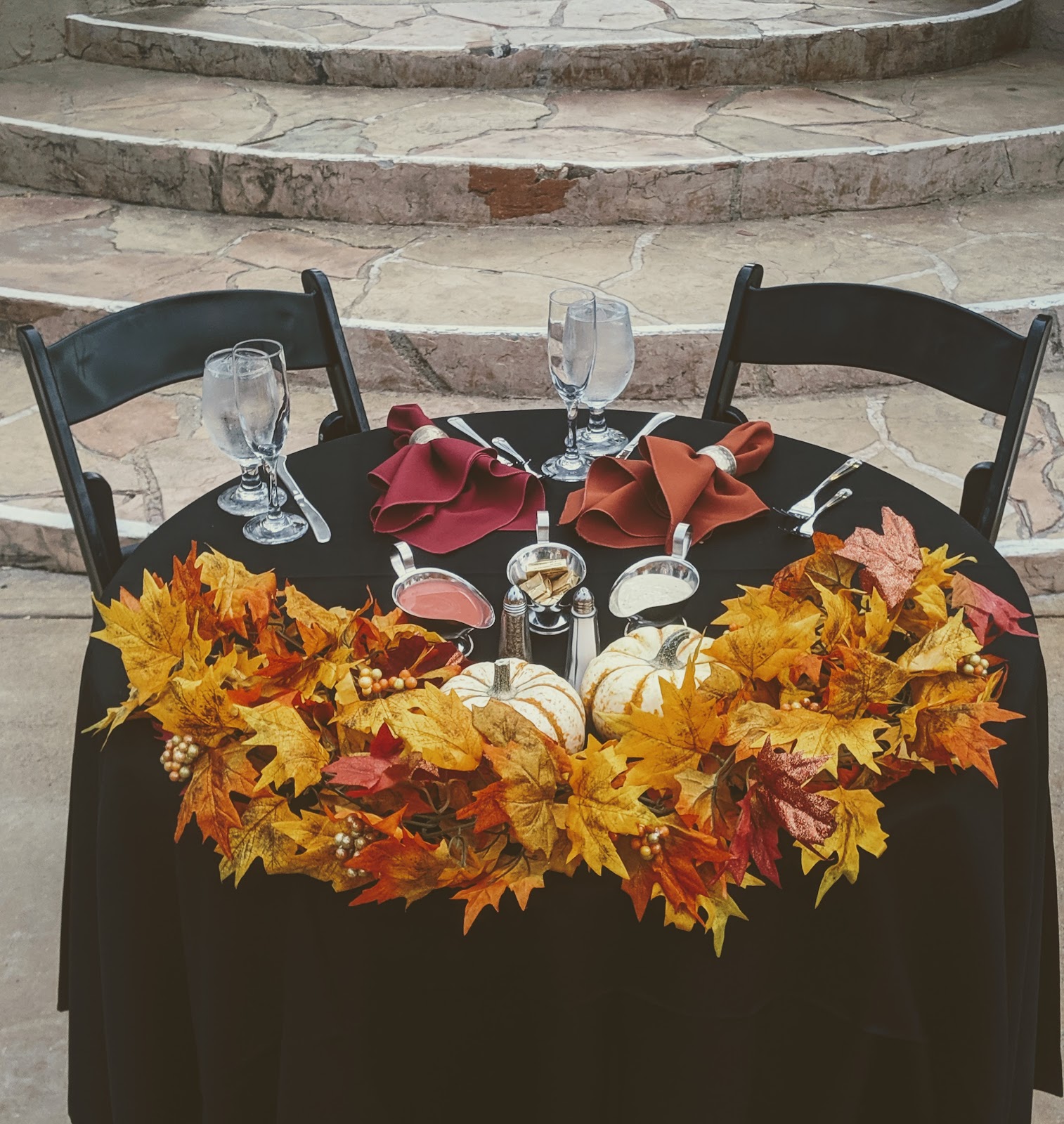
The Oasis at Wild Horse Ranch, Tucson: One Frame, and How It Is Made
A desert ranch west of Tucson — a city with the strictest lighting ordinance in America, and the night sky to show for it.
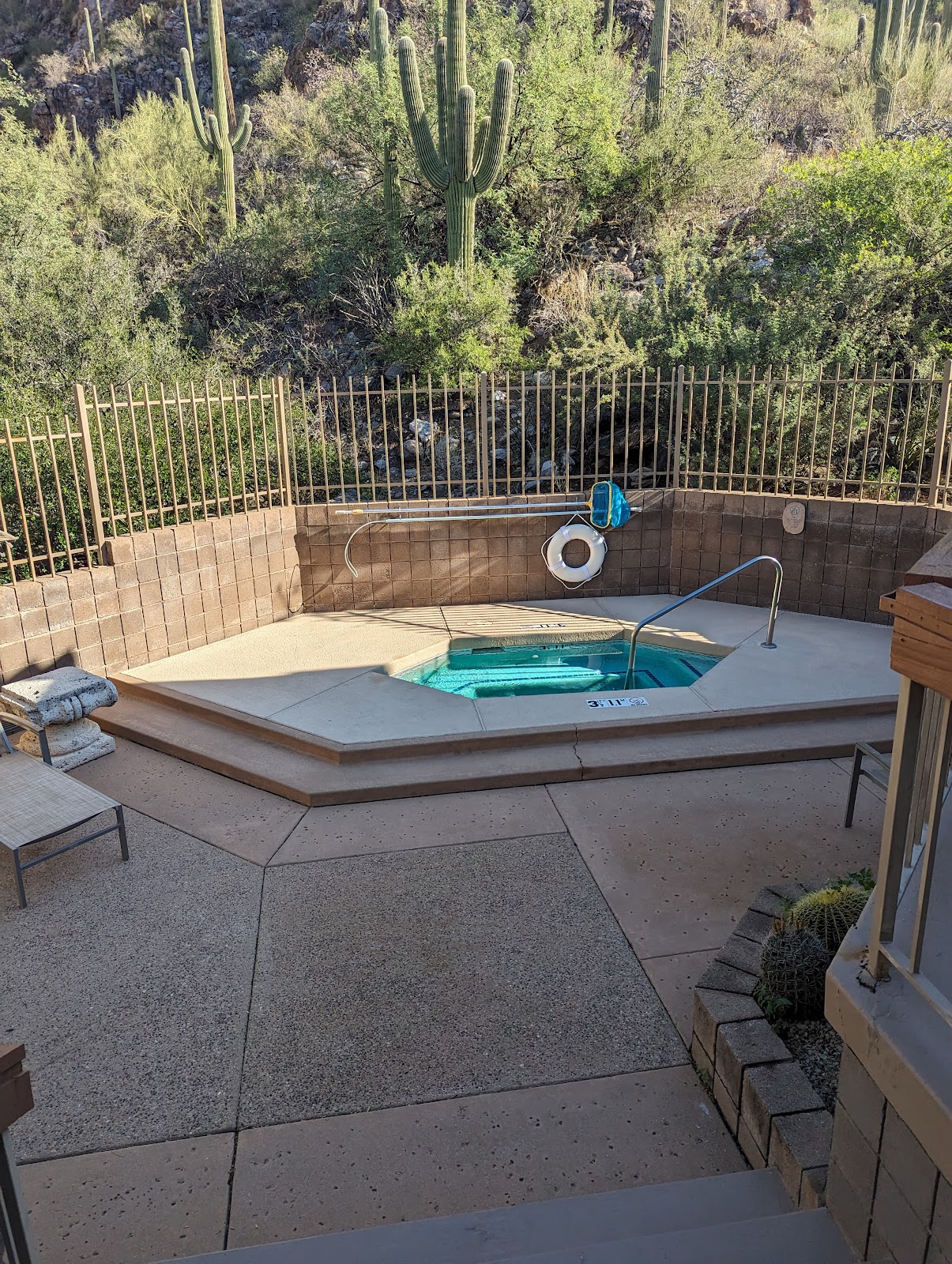
The Loews Ventana Canyon, Tucson: Field Notes
A resort at the mouth of a canyon in the Catalina foothills, where the terrain rewrites the schedule.
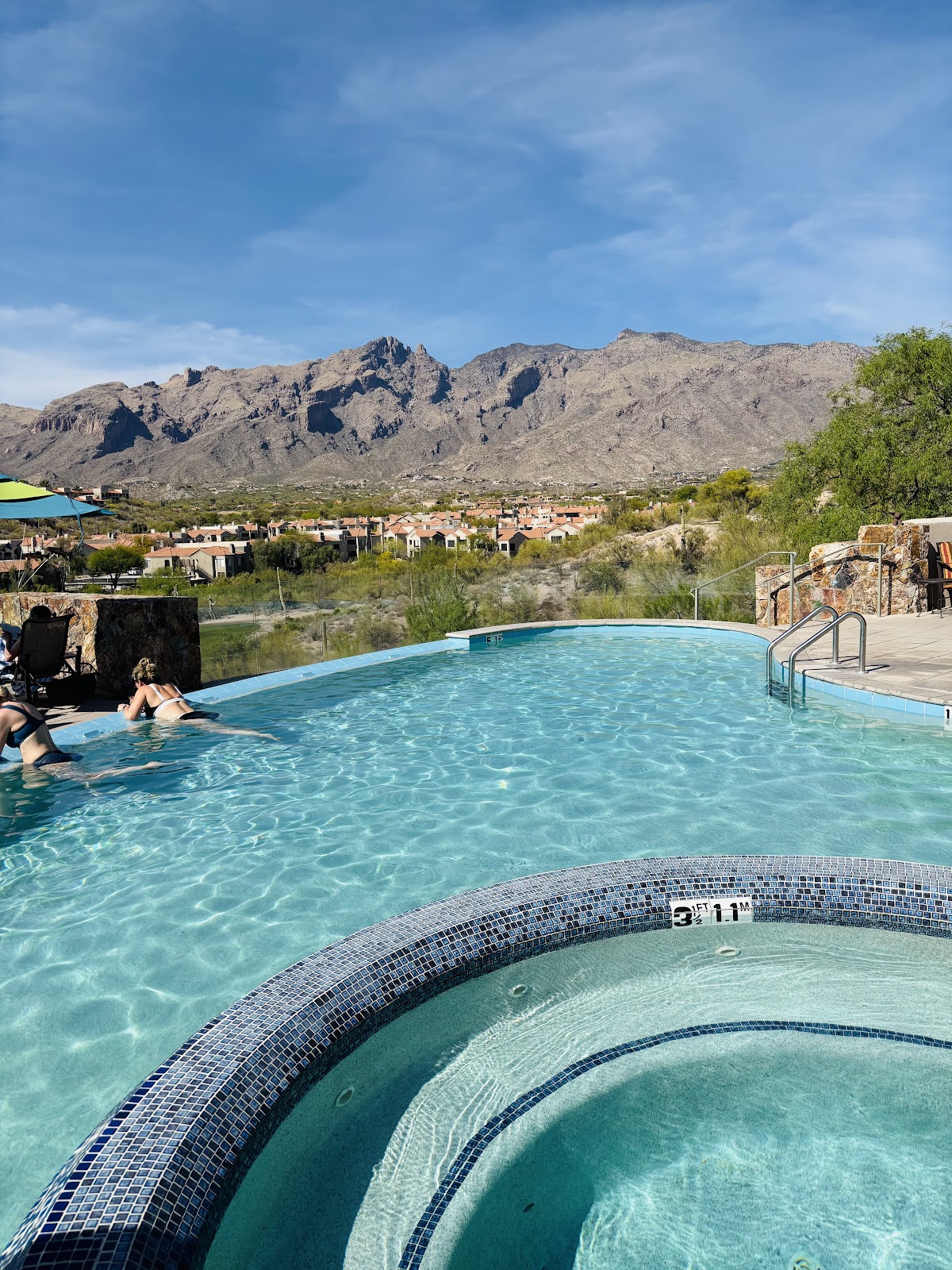
The Hacienda del Sol, Tucson: A Walk Through the Building
A Spanish Colonial Revival guest ranch in the Catalina foothills, built in adobe around courtyards.
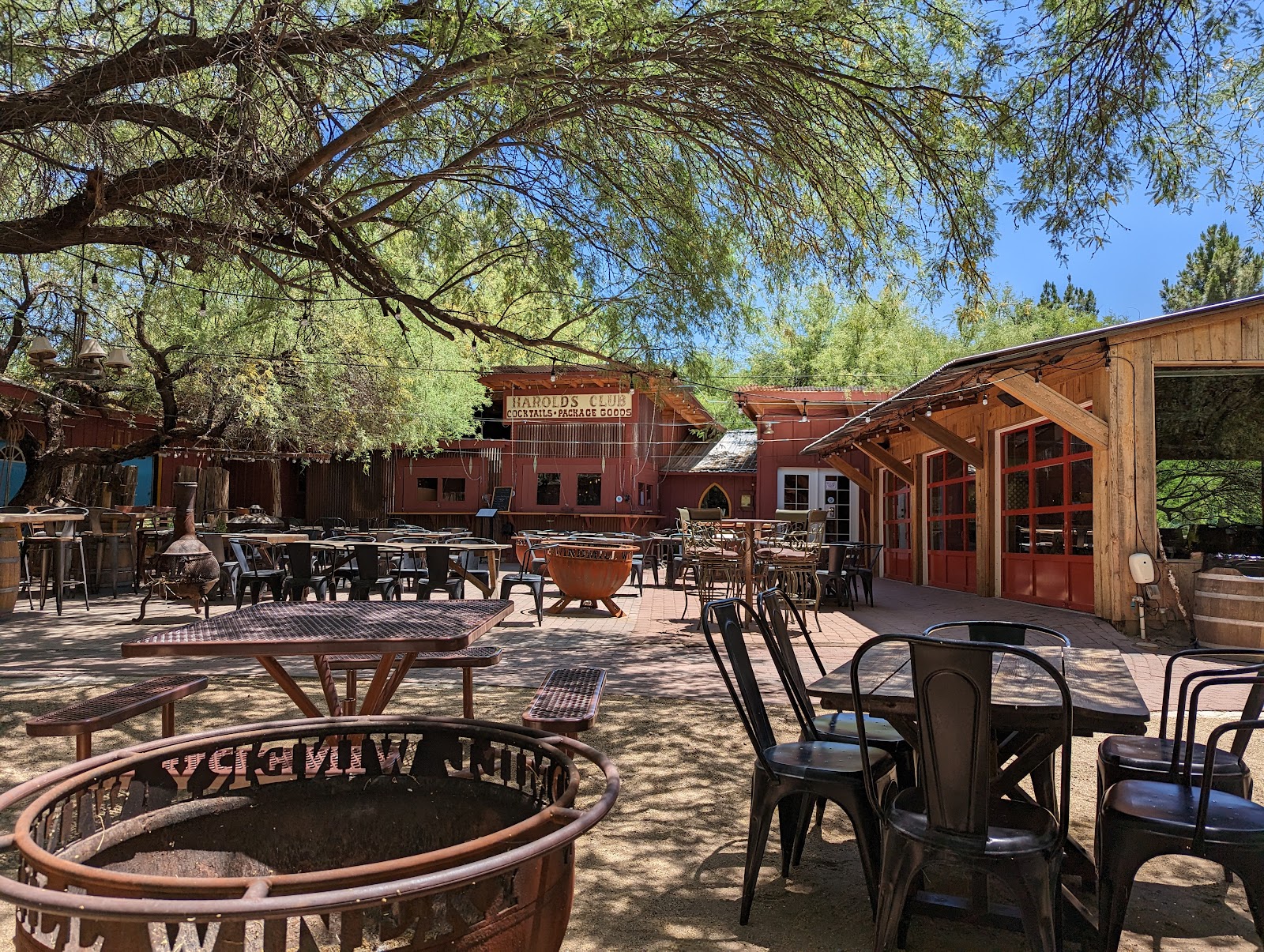
The Windmill Winery, Florence: A Walk Through the Site
A barn, a constructed lake and planted vines on the open desert floor — a site that imports everything it has.