 The Tlaquepaque Arts Village, Sedona: Field Notes on Courtyards
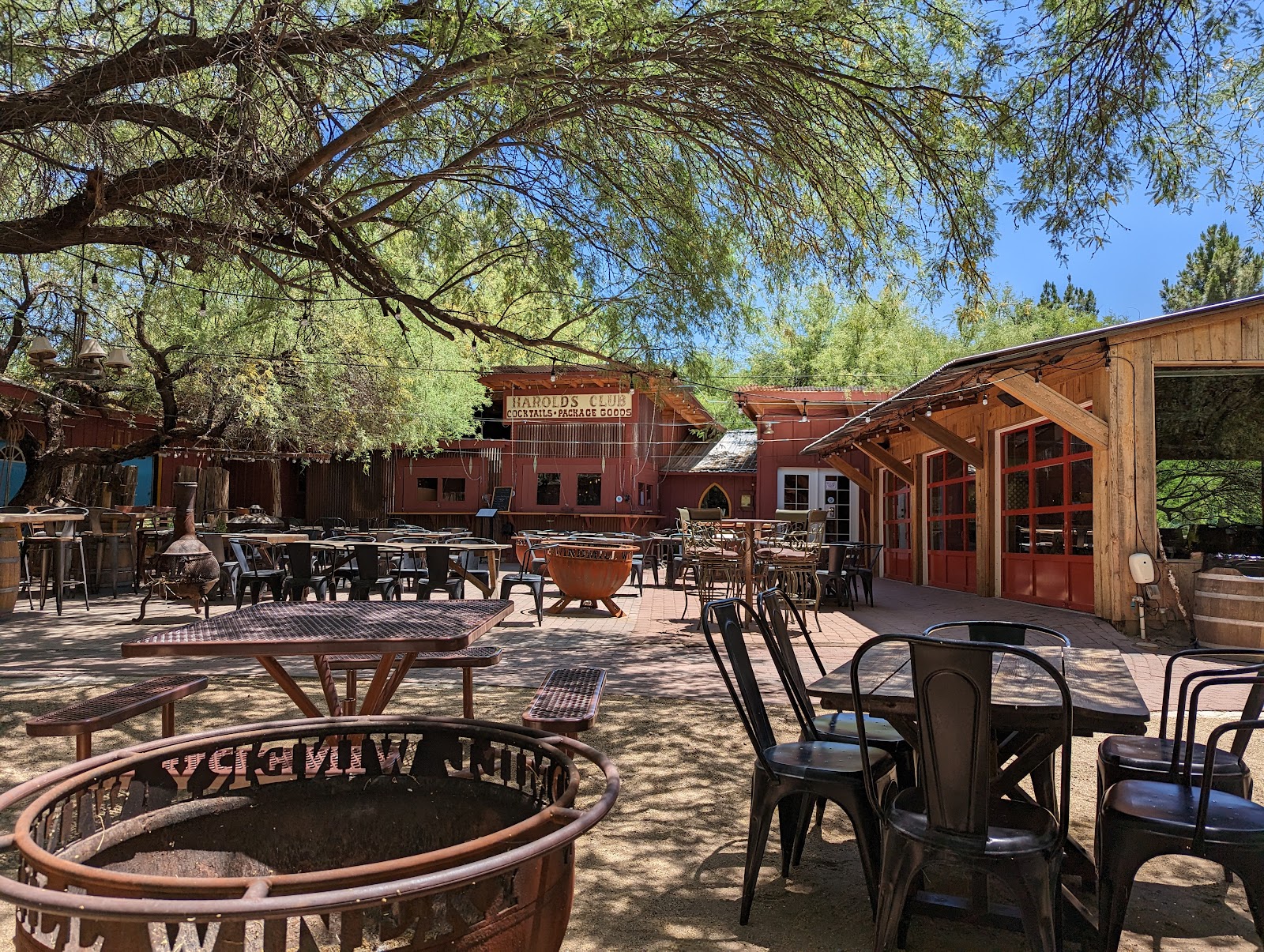
The Windmill Winery, Florence: A Walk Through the Site
A barn, a lake and vines, all imported into a desert.
This property is an argument with its own landscape, and that is the interesting thing about it.
A barn, a body of water and planted vines are three elements from a temperate agricultural tradition, and none of them occurs naturally on the Sonoran Desert floor. Each is here because someone put it here and keeps it here, and each behaves slightly differently for being out of place.
The barn is genuine shelter in a landscape that has almost none. The lake is a reflective surface in a place with no standing water. And the vines are a planted geometry in a landscape whose own vegetation is scattered and irregular.
For a photographer that combination is unusually useful, because it means the site supplies the three things the low desert otherwise withholds: cover, reflection and order. Everything else — the light, the sky, the horizon, the heat — is pure Sonoran.
Florence sits at about thirty-three degrees north at roughly fifteen hundred feet, south-east of Phoenix on open desert ground. The June noon sun reaches around eighty degrees, the December noon sun about thirty-four, days run from about ten hours fifteen to fourteen hours twenty, and civil twilight is roughly twenty-five minutes — short, and the fall-off in dry clear air is abrupt.
The desert light fact that governs everything here is the lack of scattering: low humidity and few particulates mean the beam arrives nearly unmodified and the shadows get almost no atmospheric fill, so the gap between lit and shaded surfaces is roughly two stops wider than a humid climate gives at the same sun angle.
What follows is a walk through the property in the order a wedding day uses it. We have not photographed here; which spaces are included, what the lake access is and the permitted hours are questions for the venue.
The Windmill Winery at a glance
| Where | A barn, a constructed lake and planted vines on the desert floor near Florence |
| What the site supplies | Cover, reflection and order — the three things the low desert withholds |
| What the desert supplies | The light, the sky, the horizon and the heat |
| The barn | The only real shelter, and a large soft source at its open end |
| Ask first | Included spaces, lake access, permitted hours |
Arriving, and the barn
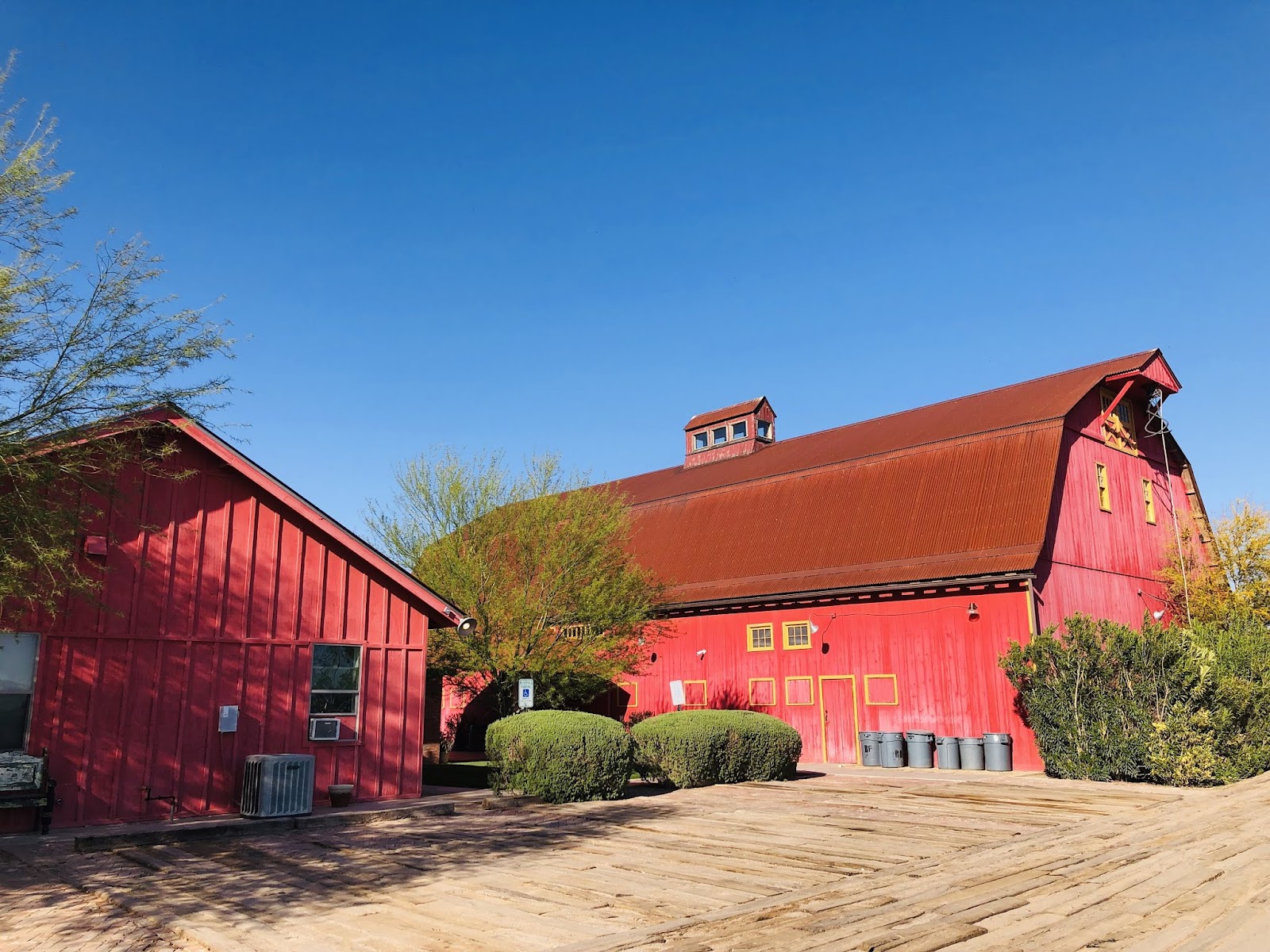
The approach is the first thing and it sets the terms. A property like this sits on flat open ground with a long horizon and distant ranges, which means it is visible from a long way out and the building reads as an object in a landscape rather than as a place you arrive inside.
That makes the establishing frame a wide one taken from distance, and it works best with the building small and low in the frame and the sky doing most of the work. On a clear day that means an even blue field, which is honest and dull; under monsoon cloud, or in the twenty minutes after sunset, it becomes the picture.
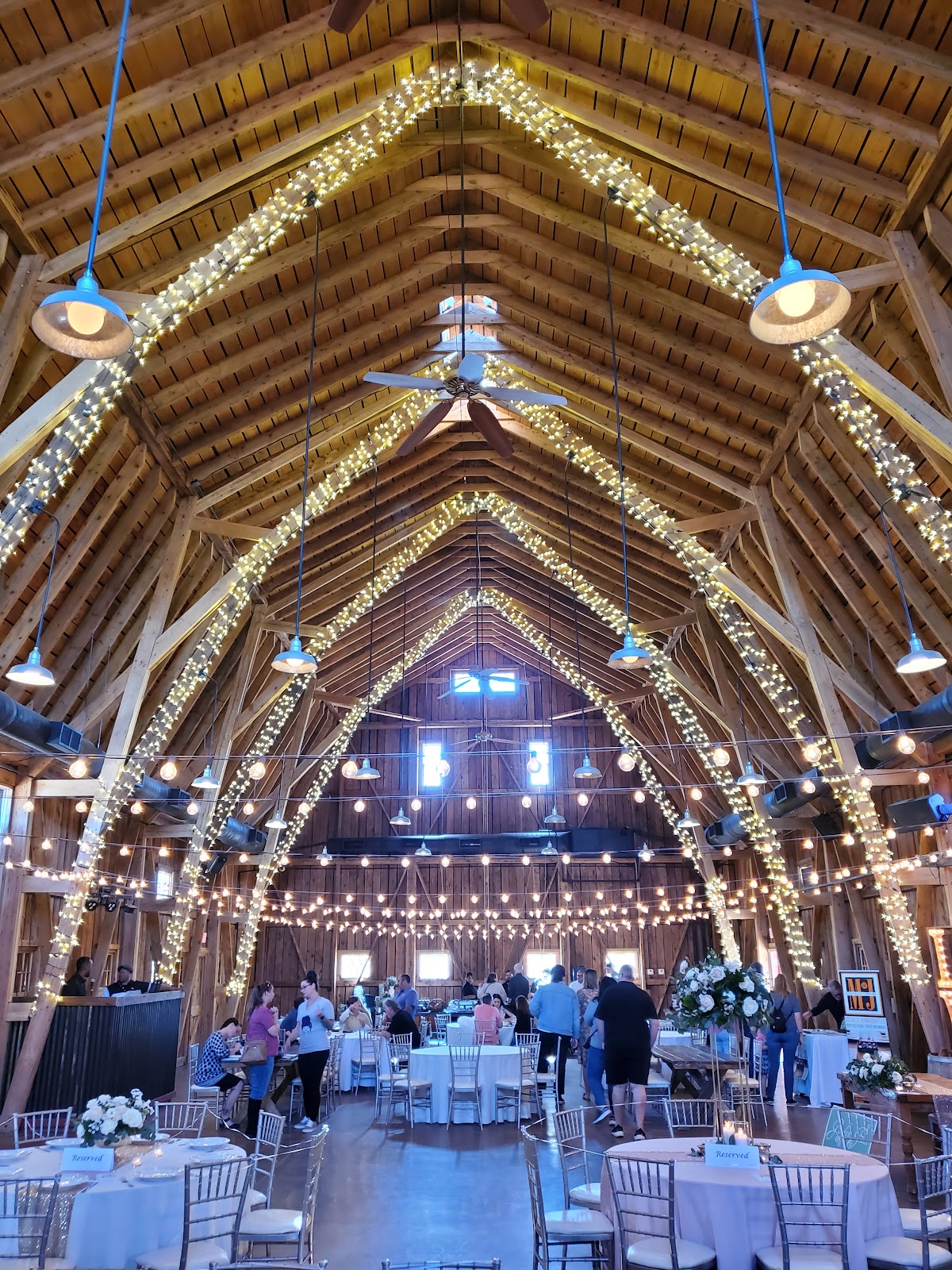
Inside the barn the light is the reason to be there. A large volume with an open end is optically a very big soft source with a hard mask: light enters from the open side, spreads across the floor and the near walls, bounces, and falls off quickly with depth.
In desert conditions that gradient is steeper than it would be elsewhere, because the exterior is so bright and the interior receives no other contribution. Three metres in from the opening is a good portrait ratio; eight metres in is dramatic; fifteen metres in the subject is in near darkness with a blazing rectangle behind them.
That last position is the barn’s best frame and it needs to be shot deliberately. Expose for the subject and the opening blows to white, which reads as a silhouette-in-reverse and is a legitimate strong picture. Or expose for the opening and the subject silhouettes, which against a bright desert exterior is very clean.
The doorway itself is the most reliable portrait position on any barn property, and this one has the desert’s particular version of it: the ground outside is pale and sunlit, which throws a substantial warm bounce back in under the subject’s chin. That fills from below, opens the eye sockets and makes an unassisted doorway portrait here better than the same position in a green landscape where the ground absorbs rather than reflects.
The structure overhead is the second resource. Timber trusses, purlins and a ridge give a barn its ceiling geometry, and a frame that includes them reads as architecture rather than as a shed. The technique is a wide lens from low, centred on the ridge, which renders the structure symmetrically and puts the subjects small beneath it.
Interior surfaces decide whether flash can be bounced. Pale walls and a light ceiling mean a single source aimed up fills the whole volume; dark timber means nothing comes back and the answer is directional sources with the space left dark. That is worth establishing on arrival rather than mid-reception.
And the barn is the heat refuge, which on this site is its most important practical function. From May to September a wedding party cannot be outdoors in the middle of the day in any comfortable sense, and a large shaded volume with air moving through it is what makes a summer date possible at all.
The lake, and the vines
Outside, the water is the element that most changes what the site can do.
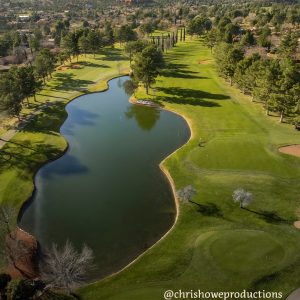
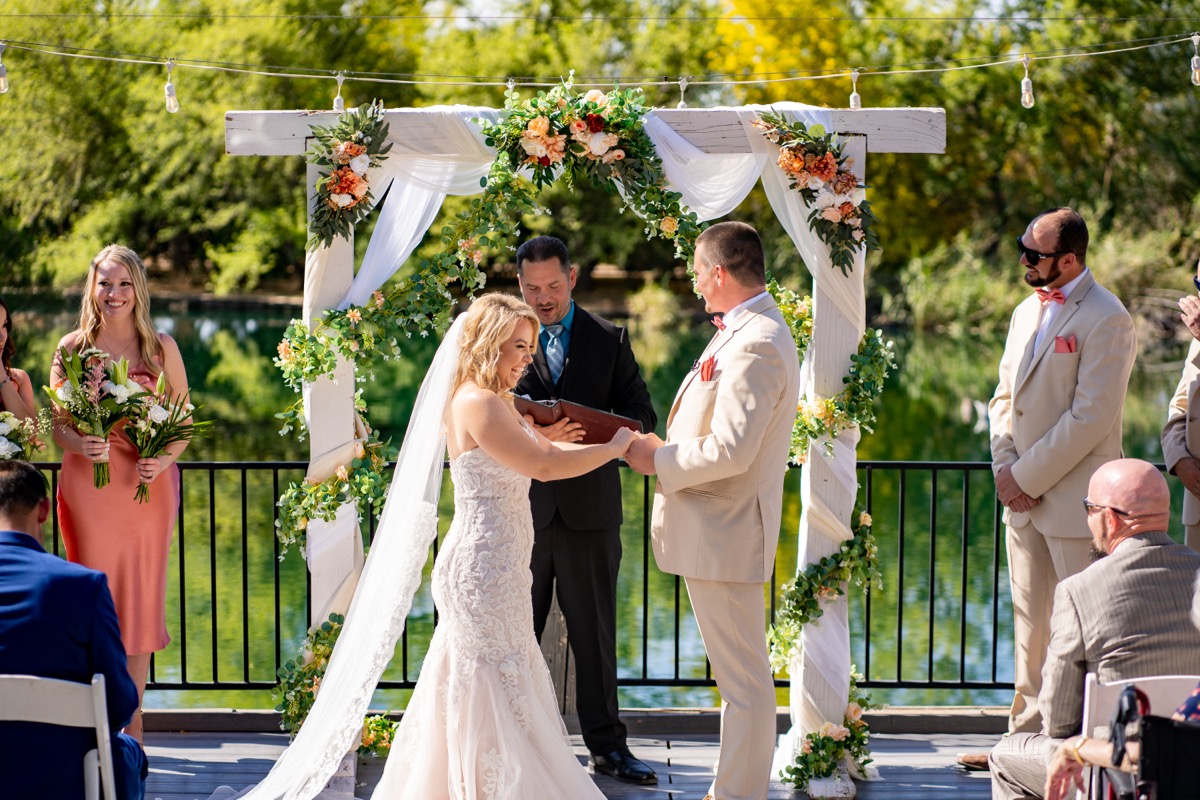
A constructed lake on the desert floor is a large flat reflector in a landscape that has none, and that has an immediate consequence for portraits: a subject standing at the water’s edge with the sun behind them gets a fill from below off the surface, which is a light the surrounding desert cannot provide.
It is a subtle fill rather than a strong one — water reflects only a few percent of incident light at high angles — but at low sun angles, when the light strikes the surface obliquely, the reflectivity rises sharply and the bounce becomes substantial. That means the water’s fill is strongest in exactly the last hour when the frames are best, which is a fortunate coincidence.
The reflection itself is the bigger prize. A still desert lake mirrors the sky, and a desert sky at dusk is more saturated than a humid one because the dry dust-carrying air scatters long wavelengths efficiently — so the water doubles the best thing the climate produces.
Whether it is still is a matter of the hour. Desert afternoons develop a thermal breeze as the ground heats, building toward evening, which breaks the surface into texture. Mornings are calm. So the mirror frames belong to the first hours and the textured, sparkling ones to the last — which is the reverse of the usual advice and follows directly from the desert’s own circulation.
Broken water is not a loss. A low sun on a rippled surface produces a path of bright specular highlights running from the sun toward the camera, and a subject silhouetted against that path is one of the strongest frames the site offers. It needs the camera low, almost at water level, to make the path long.
The edges need looking at. A constructed lake in a desert has engineered banks, a visible liner or rock edge in places, and a waterline that may be well below the top of the bank in the dry season. Shooting low and close keeps the engineering out of frame; shooting from distance includes it. Neither is wrong and one is usually better.
And the water attracts everything alive in the landscape, which is a genuine bonus. Herons, egrets, ducks and a great deal of birdlife concentrate at any permanent desert water, which means a frame with a bird lifting off behind a couple is a real possibility rather than a fantasy.
The vines are the third element and they supply order. Planted rows give a receding geometry that the desert’s own scattered vegetation never does, and the two useful frames are the same at any vineyard: down a row with a moderate telephoto, which compresses the rows into a corridor, and across the rows at an angle, which reads as rhythm.
The desert vineyard calendar is unusual and worth knowing. Vines here break bud in February, well ahead of any temperate region, because the mild winter accumulates growing degree days fast. Full canopy by May. Harvest in July or August rather than September. And the leaves never turn properly, because a desert autumn has neither the cold nights nor the shortening to produce colour.
So an October frame in this vineyard looks like an August one, and nothing in the planting will say autumn. That is worth managing as an expectation rather than discovering on the day.
- Fifteen metres into the barn with a blazing opening behind is the site’s best interior frame
- Pale sunlit desert ground bounces warm fill up into the doorway portrait
- Mirror reflections are a morning thing; the thermal breeze builds all afternoon
- Get the camera to water level to lengthen the specular path at low sun
- The vineyard has no autumn — harvest is July and the leaves never turn
The open ground, and the end of the day
Between the built and planted parts is the desert itself, and it is worth walking to rather than treating as the space between things.
The vegetation is the thing to understand. The Sonoran Desert has essentially no solid natural shade, because palo verde and mesquite — its two significant trees — carry millimetre-scale leaves on open branch structures. Under one at midday a face is covered in small hard patches, and at eighty degrees of sun elevation in unmodified air that is unrecoverable. This is not a tree you shelter under; it is a tree you photograph.
Palo verde photographs well for a specific reason: its bark is green, because it photosynthesises through trunk and branches as a drought adaptation. It reads as a green vertical rather than a brown one, unlike any tree elsewhere in these guides, and in April and May it flowers a mass of bright yellow across the whole crown.
The saguaro is the landscape’s signature and it is a compositional object rather than a plant — a columnar cactus several metres tall with an instantly recognisable silhouette and a narrow shadow. It is placed rather than included: behind a head it is a distraction, offset with space around it it is an anchor, and backlit against a clean sky at low sun it needs nothing else in the frame.
Cholla is the one to be careful with. Backlit at low sun a jumping cholla glows, because its dense spines catch and scatter light, and it is genuinely worth a frame. The spines are barbed and detach on contact, which makes it a real hazard to fabric and skin. Photograph it, do not pose beside it.
The horizon is the open ground’s real gift. On flat desert with distant ranges the camera has an uninterrupted view in every direction, which makes the frame with the subjects small and the sky enormous always available — and a moderate telephoto compressing a far range behind them is the version worth taking, because a wide lens reduces those mountains to a low ridge.
The end of the day is short and it is the reason to plan. Civil twilight here runs about twenty-five minutes, among the shortest in these guides, and in exceptionally clear air the fall from usable to unusable is abrupt rather than gradual.
Three setups fit into that if none is being decided at the time. So the discipline is to know the three — the water, the vine row and the open horizon — walk to the first before the light arrives, and move without discussion.
What follows is worth staying for. Ten or fifteen minutes after sunset a clear desert sky can be a saturated orange-to-violet gradient across the whole western half, mirrored in the lake if the breeze has dropped, with the barn lit and warm in the middle distance. That is the frame the site was built to produce.
And after that the dark is genuinely dark. The desert outside the metropolitan core has little light pollution, which puts stars in a thirty-second exposure and makes a lit barn under a visible Milky Way a real option for a tripod frame at the end of the night.
The season decides the comfort. November to April is the good half — mild, dry, calm, with a December noon sun at about thirty-four degrees that models all day and no bad hour. February to April adds the desert bloom: brittlebush yellow, Mexican gold poppy and lupine in a wet year, ocotillo red, and palo verde in mass yellow through April.
May to September is the constraint: afternoons above a hundred and ten degrees are a welfare matter for a party in formal clothes, and the barn becomes the middle of the day. The monsoon from July is the compensation — convective cloud over the mountains, storms late, washed air afterwards, and the unplannable haboob advancing across the flat horizon, which on this site’s long sightlines is as dramatic as anything in these guides.
More frames from The Windmill Winery
The Windmill Winery wedding photography: common questions
What does this site supply that the desert does not?
Cover, reflection and order — a barn, a lake and planted rows, none of which occurs naturally on the Sonoran Desert floor.
What is the barn's best frame?
Deep inside, fifteen metres from the opening, with the blazing exterior behind. Expose for the subject and let the opening blow, or expose for the opening and silhouette them.
When is the lake still?
Mornings. Desert afternoons develop a thermal breeze that builds toward evening and breaks the surface into texture — which makes its own frame, shot from water level.
Can we shelter under the desert trees?
No. Palo verde and mesquite have millimetre-scale leaves and open branching, so they cast a hard dapple rather than shade. They are subjects, not shelter.
Does the vineyard turn colour?
No. Harvest here is July or August and the leaves never turn, because a desert autumn lacks the cold nights that produce colour.
How much time is there at dusk?
About twenty-five minutes of civil twilight, with an abrupt fall-off in clear air. Know three frames in advance and walk to the first before the light arrives.
More Arizona venue guides
We are writing a photographer’s guide to every venue we would happily shoot in Arizona. Here are three more, plus the full index:
- The Chapel of the Holy Cross, Sedona: One Frame, and How It Is Made
- The Enchantment Resort, Sedona: The One Decision That Governs Everything
- L’Auberge de Sedona: A Walk Through the Property
Planning a wedding at The Windmill Winery?
A barn, a lake and vines, all argued into a desert. Tell us your date.