 The Tlaquepaque Arts Village, Sedona: Field Notes on Courtyards
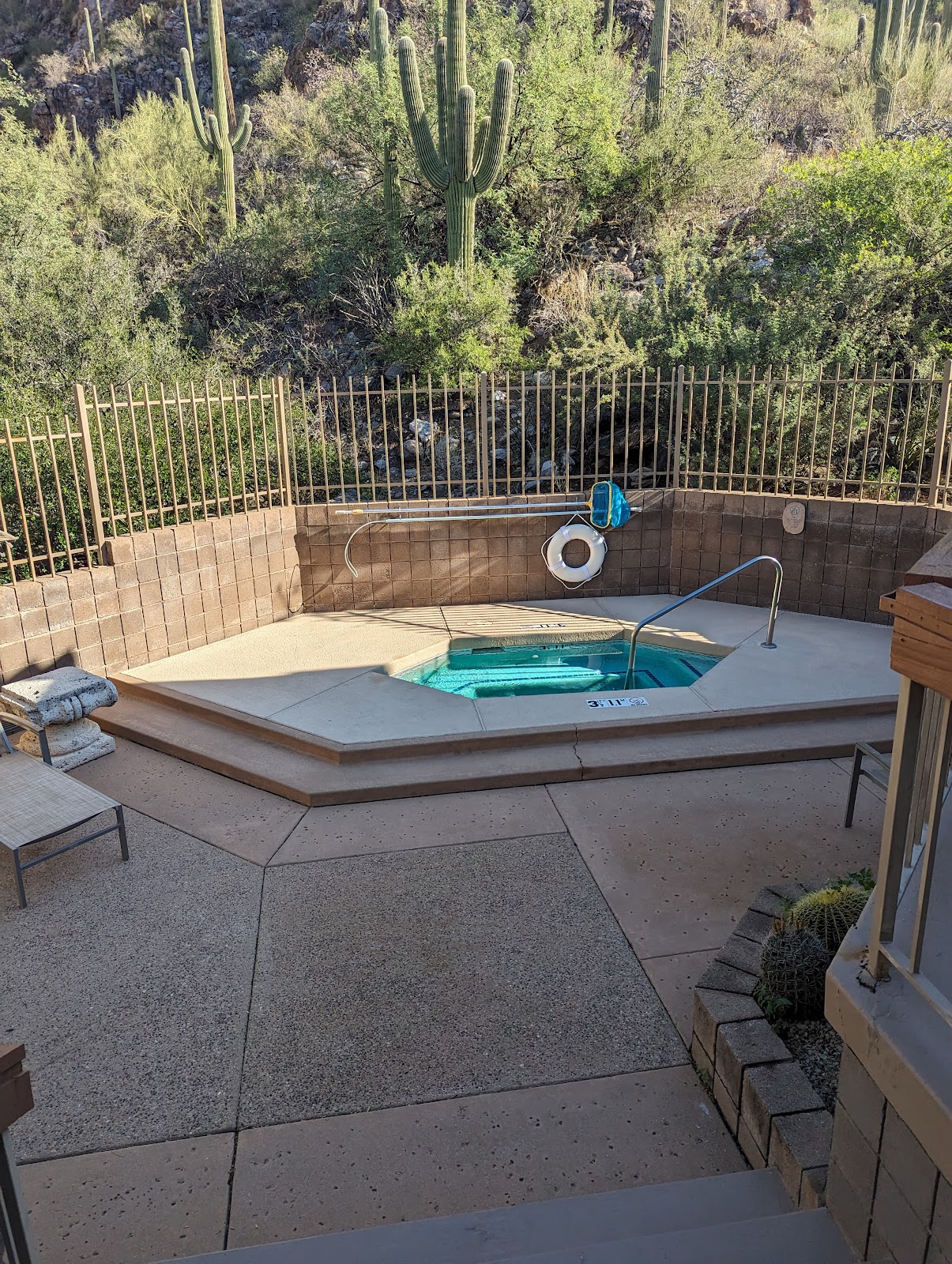
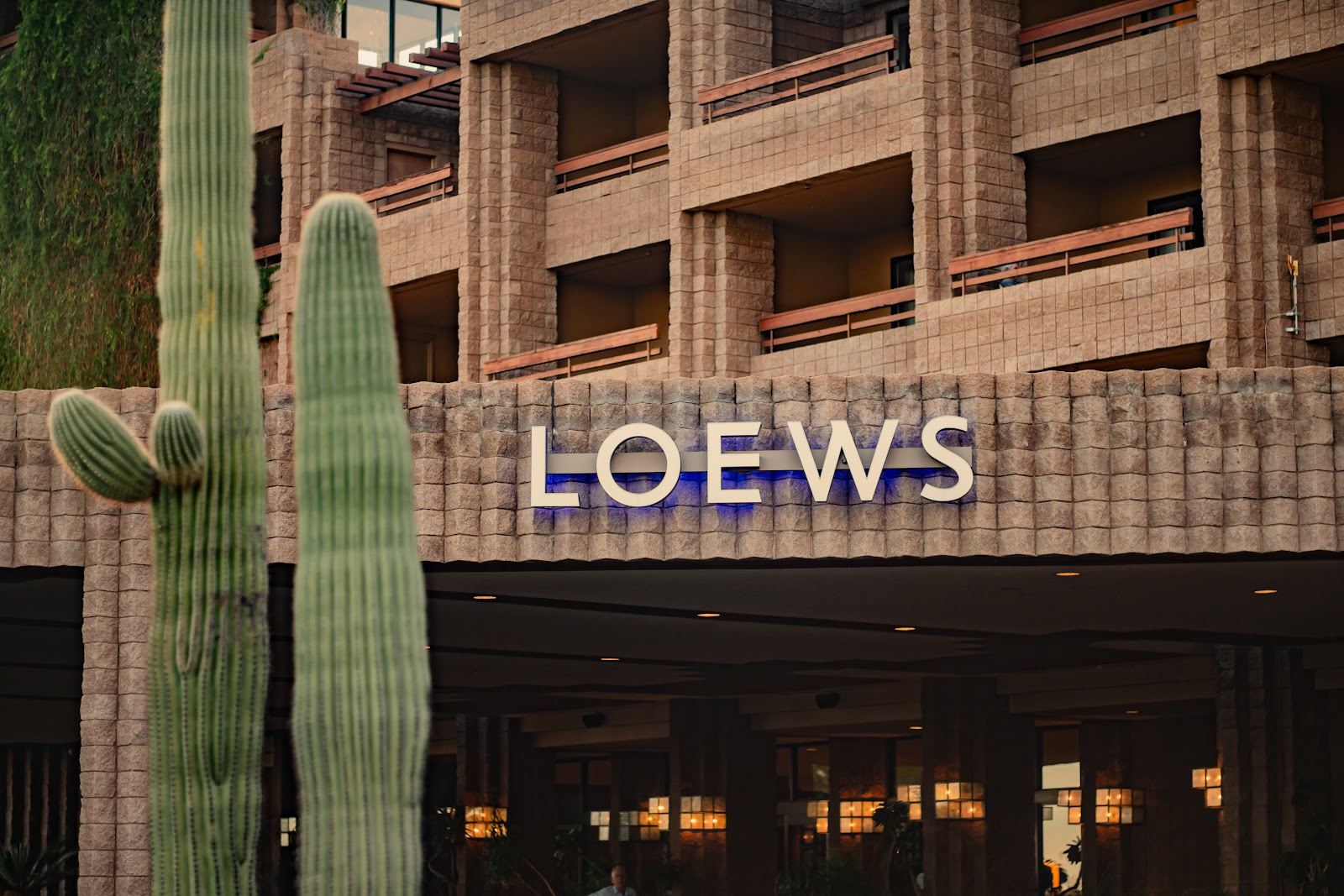
The Loews Ventana Canyon, Tucson: Field Notes
A canyon rewrites the day. Here is how, and what to do.
A resort at the mouth of a canyon is not a desert resort with a view. The canyon changes the physics of the site, and four of those changes matter enough to plan around.
The first is the light schedule. A canyon mouth has high ground on two or three sides, which means the sun arrives later and leaves earlier than an app predicts — and the app is predicting a flat horizon.
The second is the air. Canyons drain cold air downhill at night, which makes the canyon mouth measurably colder at dawn than the ground a mile away, and which produces morning mist in the right conditions where the open desert has none.
The third is the water. A canyon concentrates whatever rain falls on a large catchment into a narrow channel, which means a drainage that is dry sand for most of the year and a genuine running stream within minutes of a monsoon storm.
And the fourth is the vertical. Walls rising hundreds of feet immediately beside a property give a scale and a background nothing on flat ground can, and they set their own exposure problem when a lit wall and a shaded subject appear in the same frame.
Tucson sits at about thirty-two degrees north; the resort is in the Catalina foothills at roughly twenty-eight hundred feet, with the range rising to over nine thousand behind. The June noon sun reaches around eighty-one degrees, the December noon sun about thirty-five, and civil twilight is roughly twenty-four minutes — the shortest in these guides.
What follows is four problems and what solves each. We have not photographed a wedding here; which lawns and terraces are bookable, what canyon access exists and the permitted hours are questions for the resort.
The Loews Ventana Canyon at a glance
| Where | A resort at the mouth of a canyon in Tucson’s Catalina foothills |
| Problem one | Terrain shortens the day at both ends — the sun app is wrong here |
| Problem two | Cold air drains down the canyon overnight, producing mist and a cold dawn |
| Problem three | A dry wash becomes a running stream within minutes of a monsoon cell |
| Problem four | Lit walls above a shaded subject — a five-stop frame |
Problem one: the terrain clock
Every sunrise and sunset time published anywhere assumes a flat horizon, and at the mouth of a canyon that assumption is wrong by a substantial margin.
The mechanism is simple geometry. If the ground to the east rises at twenty degrees, the sun does not reach the site until it has climbed above twenty degrees — which at this latitude in winter is more than ninety minutes after the published sunrise. The same applies in reverse in the evening, with the western horizon.
The margin varies with the season because the sun rises and sets at different bearings through the year: further north in summer, further south in winter. So a canyon mouth that gets the last light until half an hour before published sunset in June may lose it an hour and a half before in December, simply because the sun is setting behind a different part of the ridge.
The only reliable answer is to observe it. Visit at the season and the hour, or ask the venue directly when the sun leaves a particular lawn in a particular month — resort staff know this precisely because it governs their own operations.
Failing that, the conservative assumption is to treat the golden hour as ending forty-five minutes earlier than the app says and to plan accordingly. Arriving at the last position and finding the light already gone is the characteristic failure at a terrain-bound venue, and it is entirely preventable.
There is a compensation and it is a good one. The high ground above the site stays lit after the site itself has gone into shade, which means there is a window — often twenty or thirty minutes — when the subject is in soft even shadow and the canyon walls behind them are in full warm sun.
That is the best frame the geography gives. The shaded foreground is easy to expose and flatters faces; the lit wall behind is warm, textured and dramatic; and the ratio between them is manageable with a single source on the subjects at about a stop over the ambient.
It also reverses on the other side of the day. In the morning the tops light first while the canyon floor is still dark, which gives the same frame with the light coming from the opposite bearing — and the morning version has the still, cold, sometimes misty air that the evening version does not.
Problems two and three: cold air and sudden water
Cold air drainage is the canyon’s second physical fact and it is one photographers rarely account for.
The mechanism is density. After sunset the ground radiates its heat to the sky, the air touching it cools, cool air is denser than warm, and in any terrain with a slope it flows downhill. A canyon is a channel for that flow, which means the canyon mouth collects cold air all night from a large area of high ground above it.
The result is a temperature inversion by dawn: the canyon floor is colder than the slopes above it, sometimes by ten or fifteen degrees. In the desert, where the daily swing is already twenty-five or thirty degrees, that makes a canyon-mouth dawn genuinely cold even in a mild season.
That is a practical matter for anyone outdoors early in formal clothing, and it is worth saying rather than discovering.
It is also a photographic gift, because cold air at the surface with moisture available produces mist — and after a monsoon rain, or in the days following any significant precipitation, a canyon mouth at dawn can have fog lying in the channel when the open desert a mile away has none.
Desert fog is rare and it is spectacular, precisely because it is so unexpected in a landscape defined by clarity. Saguaros emerging from mist, the canyon walls softened into receding planes, a low sun breaking through — that is a frame worth setting an alarm for, and it is most likely in the days after a wet spell in the cool season.
The wash is the third problem and it is a safety matter before it is a photographic one.
A desert canyon drains a large catchment into a narrow channel, and the ground in the catchment is hard, dry and largely unvegetated — which means it absorbs very little and sheds almost everything. A storm over the upper Catalinas puts water into the channel within minutes, and the flow can arrive at the canyon mouth while the sky overhead is still clear.
That is the flash flood mechanism and it is the reason every wash in Arizona carries a warning sign. For a wedding it means one rule: nobody stands in a wash during the monsoon season if there is any convective cloud over the mountains, regardless of what the weather looks like at the venue.
Outside that condition a wash is one of the best locations on any desert property. The bed is pale sand and cobble, which is a large natural reflector; the banks are lined with the only substantial trees in the desert, because they are the one place with reliable subsurface water; and the channel gives a clean receding line through an otherwise open landscape.
Those bank trees are worth knowing. Velvet mesquite grows far larger along a wash than it does on open ground, and desert willow — despite the name, a bignonia rather than a willow — flowers pink and trumpet-shaped through the warm months. Cottonwood and sycamore appear where water is closest to the surface, and both are genuinely large deciduous trees that turn yellow in November.
That last point is a real Sonoran surprise: a desert wash is the one place in the low country with autumn colour, because it is the one place broadleaf deciduous trees can live. A cottonwood in a wash in mid-November, gold against a tan canyon wall, is a frame that contradicts everything the region is supposed to be.
- Assume the golden hour ends forty-five minutes earlier than the app says
- Wait for the window where the subject is shaded and the walls behind are lit
- A canyon mouth at dawn is cold and, after rain, sometimes foggy
- No one stands in a wash with convective cloud over the mountains
- A wash is where the desert keeps its big trees — and its November gold
Problem four: vertical walls and a sky island
The fourth problem is exposure, and it comes from having several hundred feet of rock in the frame above a subject at ground level.
At most hours of the day a canyon wall is either fully lit or fully shaded while the floor is the opposite, which produces a frame with a four or five stop internal range. In Tucson’s dry air that range is at the upper end, because shadows receive almost no atmospheric fill.
There are three legitimate answers. Wait for the moment the ratio is manageable, which is the shaded-subject-lit-wall window described above. Add light to the subject to bring them within a stop and a half of the wall, which needs a real source rather than an on-camera flash at that distance. Or embrace the range and silhouette the subject against the lit wall, which is a strong graphic frame and works in a way a compromise exposure does not.
What does not work is metering an average. A frame with a blazing wall and a dark floor exposed at the midpoint gives a grey wall and a muddy subject, and neither recovers.
The rock itself rewards attention. The Catalinas are gneiss — a metamorphic rock with visible banding, pale grey to buff with darker bands — and the banding reads at a distance in clear air, which gives the walls texture rather than mass.
In low sun that texture is at its strongest, because the raking light picks out the relief along the bands. Midday flattens it entirely. So the wall, like everything else here, is an ends-of-the-day subject.
The range behind is the sky island and it deserves a frame of its own. The Santa Catalinas rise from about twenty-four hundred feet at the city to over nine thousand at the summit, and in that twenty-seven-mile climb the vegetation passes through saguaro desert, grassland, oak woodland, ponderosa pine and finally spruce and fir — a sequence equivalent to travelling from Mexico to Canada.
That means the background is banded rather than uniform: pale rock and cactus below, a visible treeline, dark conifer above. In winter the summits hold snow, which gives the extraordinary Tucson frame of a party in shirtsleeves with a white mountain behind them.
A moderate telephoto is needed to make any of it count. A wide lens renders nine thousand feet at its true angular size and it becomes a ridge; compression from distance restores the scale the eye perceives.
The seasons are the low desert’s, moderated by elevation. November to April is the good half — mild, dry, and with a December noon sun at about thirty-five degrees that models all day. February to April adds the bloom: brittlebush yellow, Mexican gold poppy, ocotillo red, palo verde in mass yellow through April, all depending on the previous winter’s rain.
Summer is severe and the monsoon is the compensation, and in Tucson it is more than a compensation. About half the city’s annual rainfall arrives between July and September, which is enough to green the desert visibly — grasses coming up between the cacti, creosote flushing, and the whole landscape shifting from tan to green for a few weeks in August.
A green Sonoran Desert under structured cloud, with a wet gneiss canyon wall behind it, is the least expected and possibly the best picture the site produces. It comes with storms that arrive fast, a wash that fills, and about twenty-four minutes of twilight at the end — which is the shortest figure in these guides and the reason the last frames are rehearsed rather than improvised.
More frames from The Loews Ventana Canyon
The Loews Ventana Canyon wedding photography: common questions
Why is the sun app wrong here?
It assumes a flat horizon. With high ground to the east and west, the sun arrives later and leaves earlier — often by more than an hour in winter.
What is the best frame the terrain gives?
The window after the site goes into shade but the canyon walls above are still lit: an easily-exposed shaded foreground against a warm dramatic wall.
Why is the canyon mouth cold at dawn?
Cold air drains downhill overnight and a canyon channels it, so the floor collects cold air from a large area above and can be ten or fifteen degrees colder than the slopes.
Is a wash safe to photograph in?
Outside the monsoon, yes, and it is one of the best locations on the property. During monsoon season, never with convective cloud over the mountains — flow arrives while the sky overhead is still clear.
Does the low desert have autumn colour?
Only in the washes. Cottonwood and sycamore live where water is near the surface, and they turn gold in November against tan canyon walls.
How do I expose a lit wall above a shaded subject?
Wait for the ratio, add a real light to the subject, or silhouette them deliberately. Metering an average gives a grey wall and a muddy face.
More Arizona venue guides
We are writing a photographer’s guide to every venue we would happily shoot in Arizona. Here are three more, plus the full index:
- The McCormick Ranch, Scottsdale: Field Notes
- The Oasis at Wild Horse Ranch, Tucson: One Frame, and How It Is Made
- The Omni Tucson National Resort: The Problem, and Four Ways Out of It
Planning a wedding at The Loews Ventana Canyon?
A canyon sets the clock. We will work to it. Tell us your date.