Two facts govern photography anywhere around Coeur d'Alene and both of them are about geometry rather than weather. The first is the ridge. Lake Coeur d'Alene sits in a trough that glaciers deepened, with forested hills dropping steeply to the water on most sides, and the consequence is that the sun goes behind a ridge well before it reaches the horizon. At lake level the effective sunset can be twenty to forty minutes earlier than the printed time, depending on which way a position faces and on the season — and that is invisible until it happens.
A photographer working from an almanac will find the good light gone while still walking to the position. Go and look at the western skyline from the exact spot you intend to use, judge the ridge height above the horizon, and bring the whole evening forward. A venue set above the water may hold the light a little longer than the shoreline does, which is one of the few situations where elevation buys you time, and it is worth establishing rather than assuming. The compensation is genuine and it is the best thing about an enclosed mountain lake.
Once the water is in shadow, the hills on the far side stay lit for a quarter of an hour, glowing warm above dark water — and if the surface is still, that lit hillside is doubled in it. A frame with a couple in cool shade, a gold slope behind them and the whole thing reflected is specific to this kind of landscape and it is worth positioning for deliberately rather than stumbling into. The second governing fact is the latitude. Coeur d'Alene sits at about forty-seven and three-quarter degrees north, the same as Seattle, which gives the largest seasonal swing outside the far north of this collection.
In late June sunset is after nine, there are roughly sixteen hours of daylight, the noon sun reaches about sixty-six degrees and civil twilight runs close to thirty-seven minutes — the longest dusk in this library, with a genuinely usable balance point of eighteen to twenty minutes, which is enough for two positions rather than one. In late December sunset is before four, there are around eight and a half hours of daylight, and the noon sun never rises above about nineteen degrees, which puts the balance point during cocktails and makes it a named item on a timeline or a missed opportunity.
That midsummer noon figure of sixty-six degrees is also worth noting: it is a full seventeen degrees lower than the Gulf South equivalent, so midday here still has some direction in it and open shade functions properly. The constraint outdoors in summer is shade rather than sun angle, because the conifers here give very little of it.
The lake behaves in two distinct ways and the difference is the clock rather than luck. Because it is enclosed by hills rather than open to a prevailing wind, mornings are frequently and genuinely calm — and a calm enclosed lake mirrors, giving forested slopes doubled and symmetrical about the waterline. That is the best photograph available anywhere on this water and it is a morning phenomenon: by the afternoon a valley breeze will usually have set in and the surface broken up, at which point reflections become shimmering columns rather than mirrors.
Both are good and they are different pictures, but the mirror is the rarer one, so take it when you see it rather than saving it for later. Get the camera low for either: from standing height the water is a band across the bottom of a frame, and from near its own level the reflection occupies half the picture. The lake is large, deep and cold, and it is clear but not exceptionally so — nobody should be promised the visibility a very deep alpine lake offers.
What it gives is scale, a dark blue-green that holds up in a frame, and surroundings that rise steeply enough to make every wide composition layered rather than flat. One tree sets the year here and it is worth planning a date around. North Idaho's forests are western white pine, ponderosa, Douglas fir — and western larch, which is a deciduous conifer. It turns brilliant gold in the second half of October and then drops its needles, so the hillsides change colour in autumn in a way conifer forests generally do not: bands and patches of gold through dark evergreen, on steep slopes above blue water, for about a fortnight.
It is one of the most distinctive seasonal effects in this entire collection and almost nobody plans for it. The rest of the year the conifers are useful differently: tall, straight, widely spaced, with reddish plated bark on the pines, which makes them excellent verticals — a run of straight trunks behind a subject at a moderate focal length is a strong graphic background, and plated bark takes raking light beautifully — and poor shade, because the crowns are high and narrow.
Away from the lake, the ground north of town is the Rathdrum Prairie, a flat plain of glacial outwash laid down by catastrophic floods at the end of the last ice age, now farmland. That produces an entirely different setting a few kilometres from the water: an enormous sky, a level horizon, open fields and forested mountains on the skyline. On flat ground with a low foreground the frame is two-thirds sky whether you like it or not, so compose for it — horizon low, and shoot when the sky has something in it, because a flat blue sky over flat fields is the one condition that gives nothing.
Farmland also changes completely through the season, and a grain field at full height in late July, backlit by a low sun, turns into a glowing screen because the heads are translucent. That is worth asking any rural venue about, because nobody thinks to and the answer changes the exterior photographs more than anything about the building. With a level horizon and no relief, any camera tilt is immediately obvious: use a level outdoors here, not only indoors.
The climate is Inland Northwest — drier than the coast, wetter than Spokane, with warm dry summers, cool nights and substantial winter snow at a lake sitting a little above six hundred metres. July and August are the reliable season: warm dry days, calm mornings, dependable sun, and the busiest weeks in a town whose economy is summer tourism. Two late-summer hazards need contingencies rather than alarm.
Afternoon thunderstorms build over the mountains through July and August, localised and quick but carrying genuine lightning risk on exposed ground, on open farmland, on a floating boardwalk or at a waterline — a safety matter rather than an inconvenience, so know where everyone goes and how long it takes to get there. And wildfire smoke has become a serious recurring feature of August and September across the Inland Northwest: smoke from fires in Idaho, eastern Washington, Montana and British Columbia can fill this valley for days, turning the light orange, flattening all contrast and producing air quality that makes an outdoor event genuinely inadvisable.
It cannot be forecast far ahead, so a late-summer plan here needs an air-quality contingency as well as a weather one — and at a venue chosen for its long view, the specific cost of smoke is the view itself. Mid to late October is the best-looking window of the year, for the larch, with clear air, thin crowds, calm cold mornings and sunset around six putting the balance point at a civil hour; the risk is an early storm or early snow.
Late May into June is the other good window, with the grounds filling, long evenings and still cold mornings on the water — though spring comes late here, so early May may be earlier than a couple expects. Winter is a real winter: substantial snow, temperatures well below freezing, and a lake that ices at its margins without usually freezing over. That produces superb material — snow on dark conifer above blue-black water is maximum tonal separation, and a lit timber interior against snow and early darkness is exactly what these buildings are for — and it makes any outdoor session a brief planned proposition rather than an hour.
Two winter cautions, both logistical: rural and lakeside roads in snow are a genuine travel problem for guests and suppliers rather than a photographic one, and a January date deserves a contingency that assumes some people cannot drive. And valley inversions can put grey fog or low cloud over the lake and the prairie for days while the ridges above sit in clear sun — which from a venue set above the water is a gift rather than a problem, because you are looking down onto a fog layer with lit hilltops beyond it.
Work with it rather than waiting for the sun to come down to you, because it will not. The compensation in any season is the half hour after a storm clears: washed air so the far shore and the mountains resolve, wet timber and wet stone several tones darker and far more saturated than dry, the wind usually dropping so the lake flattens, and a low sun coming under a broken ceiling onto a lit hillside. If a cell goes through at six, wait rather than pack.
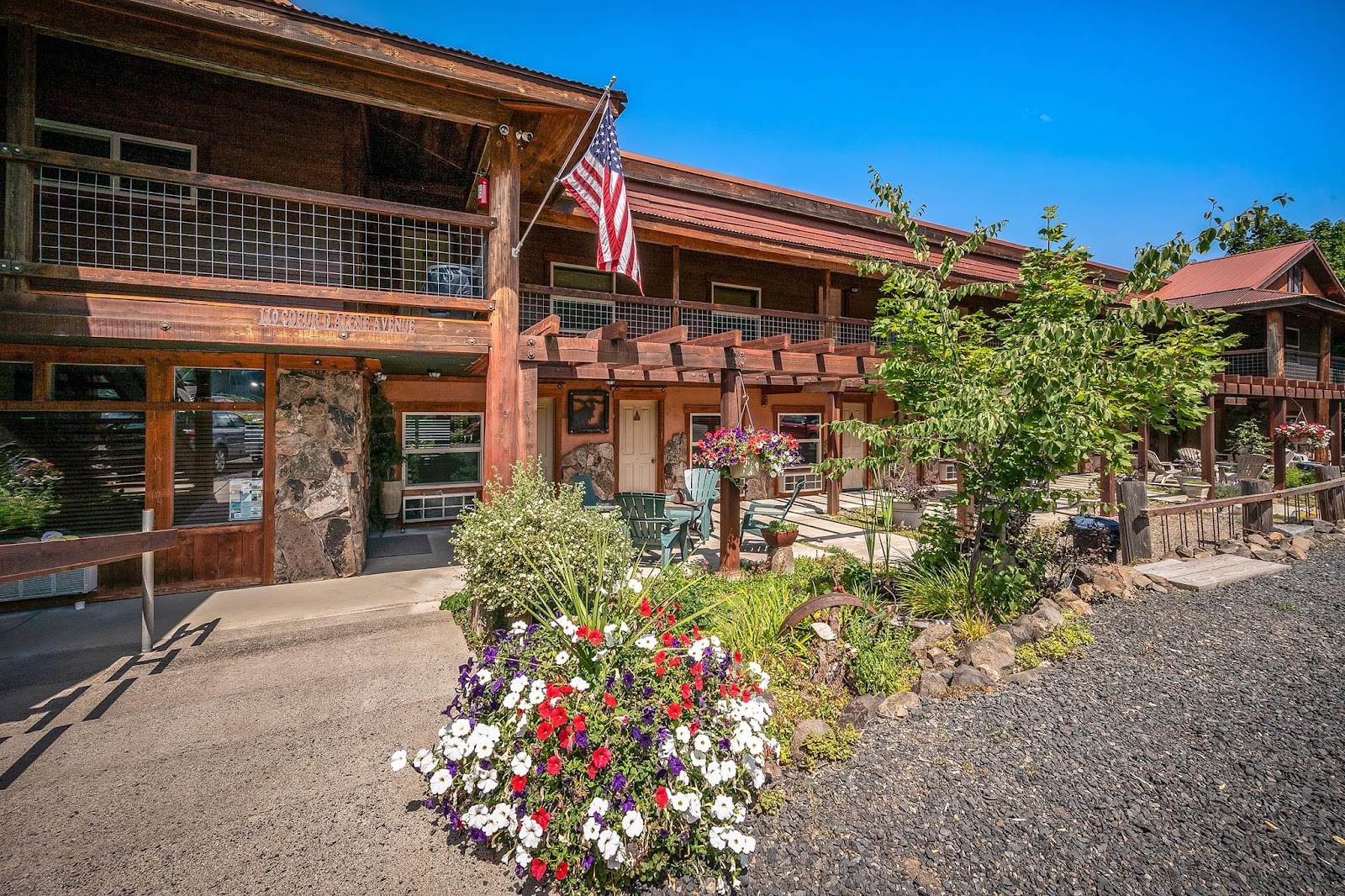
The Lakeview Lodge, Coeur d’Alene: Suits and Does Not Suit
A timber lodge above the lake — warm, enclosed and dark, which is exactly what some couples want and not others.
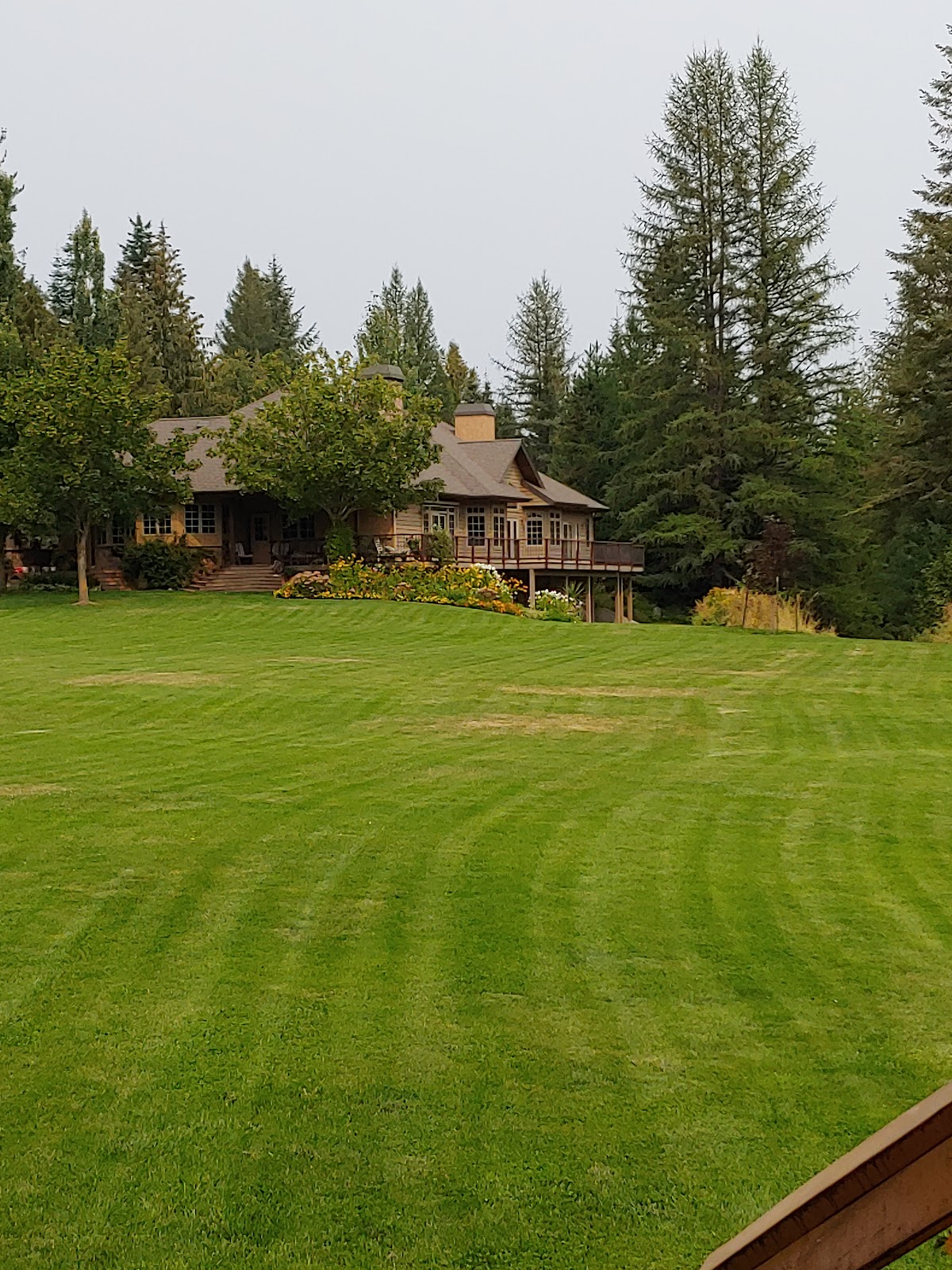
The Barn at Stillwater, Coeur d’Alene: The Problem, and Four Ways Out of It
A barn on flat glacial farmland with mountains on the horizon — dark timber inside, enormous sky outside.
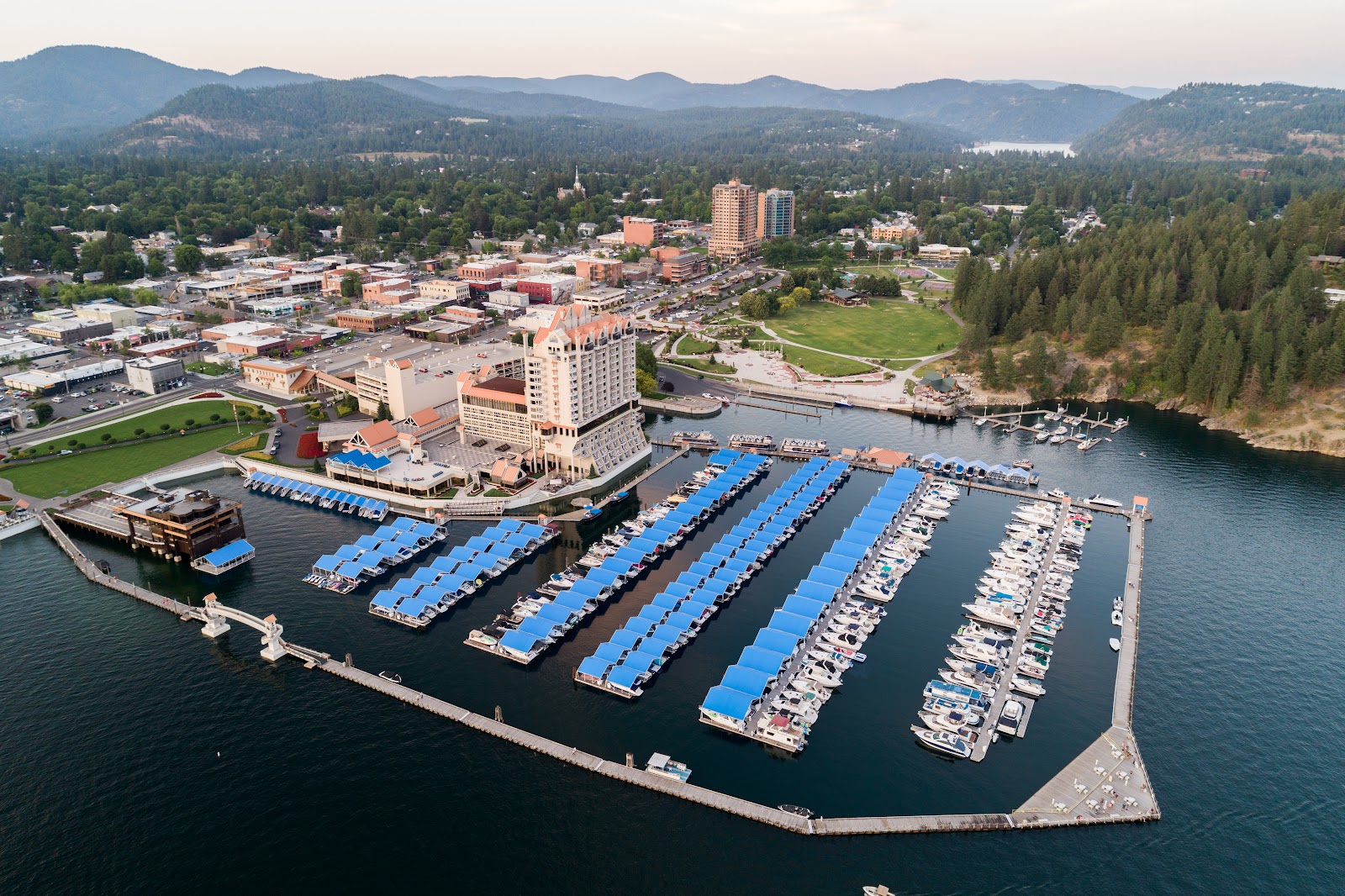
The Coeur d’Alene Resort, Coeur d’Alene: A Walk Through the Building
A lakeside resort with a floating boardwalk that takes you out into the middle of the water.