Seattle's reputation is wrong in a specific and useful way, and correcting it changes how a photographer plans. The city does not get an extraordinary amount of rain by volume — its annual total is lower than Atlanta's or New York's. What it gets is an extraordinary number of days with cloud on them: something in the region of two hundred and twenty-five a year with substantial cover, and around a hundred and fifty with measurable precipitation, most of which is light drizzle over long periods rather than heavy rain over short ones. So the dominant condition here is not rain.
It is a high, even, continuous overcast, and for a photographer that is a softbox the size of the sky. Shadows are soft to non-existent, faces are evenly lit at any hour, there is no bad time of day, and skin tones need almost no work. It is, frankly, the most forgiving portrait light in this library, and photographers who arrive hoping for sun and treat the grey as a failure produce worse work than ones who plan for it. What it costs is contrast and sky.
A flat white overcast contributes nothing to a wide frame and through a window it is simply a bright blank rectangle, so the instruction is to exclude it: shoot down the steep streets rather than up, fill the frame with architecture or planting, put the horizon high, and let colour and texture carry the picture instead of tone. A frame composed for an interesting sky on an overcast Seattle day will always disappoint; a frame composed for saturated green and wet stone will not. Wet is the other thing to use rather than wait out.
Drizzle saturates brick, stone, steel, paving and foliage, and wet materials are more saturated and more three-dimensional than dry ones, with reflections in wet paving giving a free second image. A Seattle street in light rain photographs better than the same street dry. Carry a cloth for the front element and work. There is one compounding technical note for the modern hotels here: an overcast sky is already a cool source, and contemporary glazing is coated to reject heat, which shifts transmitted daylight cooler and often slightly green. Those effects stack, so interiors photographed on window light in this city read noticeably bluer than the eye remembers.
Warm the whole block consistently rather than frame by frame, and set a white balance for the position you are shooting from, because a subject at the glass and one five metres back are lit by measurably different colour.
The second governing fact is the latitude, which at about forty-seven and a half degrees north is the highest of any city in this collection and produces the largest seasonal swing in it. In late June the sun sets after nine, there are roughly sixteen hours of daylight, the noon sun reaches about sixty-six degrees, and civil twilight runs close to thirty-seven minutes — the longest dusk anywhere in this library, giving a genuinely luxurious balance-point window of perhaps eighteen to twenty usable minutes rather than the ten a Gulf South venue allows.
That is long enough for two or three positions rather than one, and it should be spent rather than saved. In late December the sun is gone by half past four, there are about eight and a half hours of daylight, and the noon sun never rises above roughly nineteen degrees. Those are two different venues, and a schedule that works in July is wrong in January by four and a half hours; in winter the balance point falls before half past five, during cocktails rather than after dinner, which has to be a named item on the timeline or it will pass while the room is being seated.
That midsummer noon figure of sixty-six degrees deserves attention, because it is a full seventeen degrees lower than the Gulf South equivalent: the summer midday sun here still has direction in it, so it models a face rather than flattening it, open shade works, and a portrait outdoors at one in the afternoon is a reasonable proposition. Midday is not the write-off it is further south.
There is one high-latitude effect that catches photographers out, and it is worth checking for every date: the sun's setting azimuth swings enormously here, from well north of west in midsummer to well south of west in midwinter — something like seventy degrees of movement. Which facade gets the last light therefore changes by season by a wide margin, and a west-facing position scouted in July can be in shade on a January date. The city's geography helps the exteriors more than a downtown block usually does, and the reason is glacial.
These hills are the leftovers of an ice lobe that pushed down this trough and withdrew, with the street grid laid across them without much concession, so the blocks running inland from the water climb hard. That gradient is a compositional tool: a subject standing uphill of the camera separates from their background by geometry alone, with no depth of field required, and a subject downhill has the street stacking up behind them. Neither is available in a flat city.
The same steepness turns the west-running streets into sightlines to Elliott Bay, so a frame with open water in it is a short walk from most downtown venues without any roof access — worth finding two of on a scout, because they are the genuine wind-and-weather fallback. The waterfront below is a working one, with piers, ferries and container traffic, which is honest and photogenic in a way a landscaped promenade is not; a ferry crossing behind a subject at dusk is a strong and very specific frame, and they run often enough to plan on rather than hope for.
Beyond the water the Olympic Mountains stand as a long serrated ridge, which makes a west-facing sunset here a complete composition — water, then silhouette, then sky — rather than the wall of buildings most city venues offer. Two honest cautions about the views.
On most evenings between October and May there is no visible sunset at all: the sun goes behind a uniform grey ceiling and the light simply fades, so the default evening frame should be the city after dark — warm lit windows against a grey-blue sky, wet streets holding reflections, the bay gone to pewter — with the mountain silhouette as the bonus rather than the plan. And Mount Rainier, which is a different mountain from the Olympic ridge, stands some ninety kilometres to the south-east and is visible only when the air is clear, perhaps a third of days and mostly in summer.
Never promise a couple a frame with Rainier in it; if it appears, shoot it immediately, because it will go. Season by season: July and August are the dry season, which visitors find surprising — reliably sunny, warm rather than hot, with clear air and the year's longest twilight. They are the most dependable outdoor conditions here, which is why the wedding season is compressed into a narrow window and why those dates book first.
Two cautions about late summer: since the late twenty-tens, August and September have brought wildfire smoke from Cascade and British Columbia fires with some regularity, giving an orange low-contrast light that some people love and air quality that can make an outdoor event genuinely inadvisable, so a late-August outdoor plan needs an air-quality contingency as well as a rain one.
October through May is the soft season and it is better than its reputation, for a regional reason: this is evergreen country, with Douglas fir, western red cedar and western hemlock holding dark green mass through the winter and moss on trunks, walls and roofs at its most vivid in the wet months, so a February frame here carries more colour than a February frame almost anywhere else in this collection. Cherry blossom arrives in late March and rhododendron, the state flower, from April into June.
Winter's real constraint is darkness rather than cold — it is mild here and rarely freezes hard — which puts the usable outdoor window on a December day between about nine and half past three. A winter wedding in Seattle is an interiors wedding with one short outdoor window, and the honest plan is to use that window deliberately rather than discovering at four that it has gone.
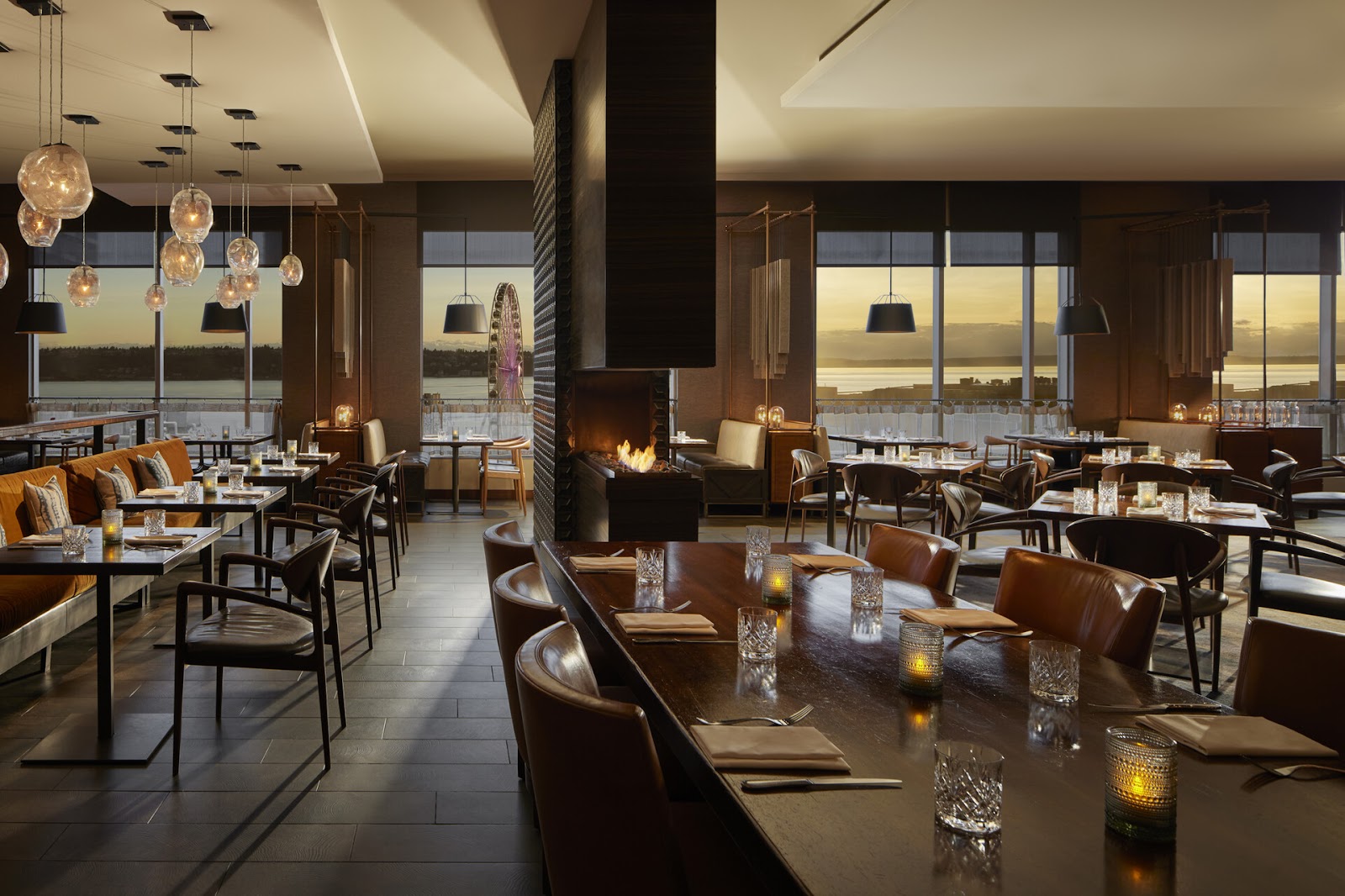
The Four Seasons Seattle, Seattle: Suits and Does Not Suit
A modern hotel above the waterfront near Pike Place — which suits some couples exactly and others not at all.
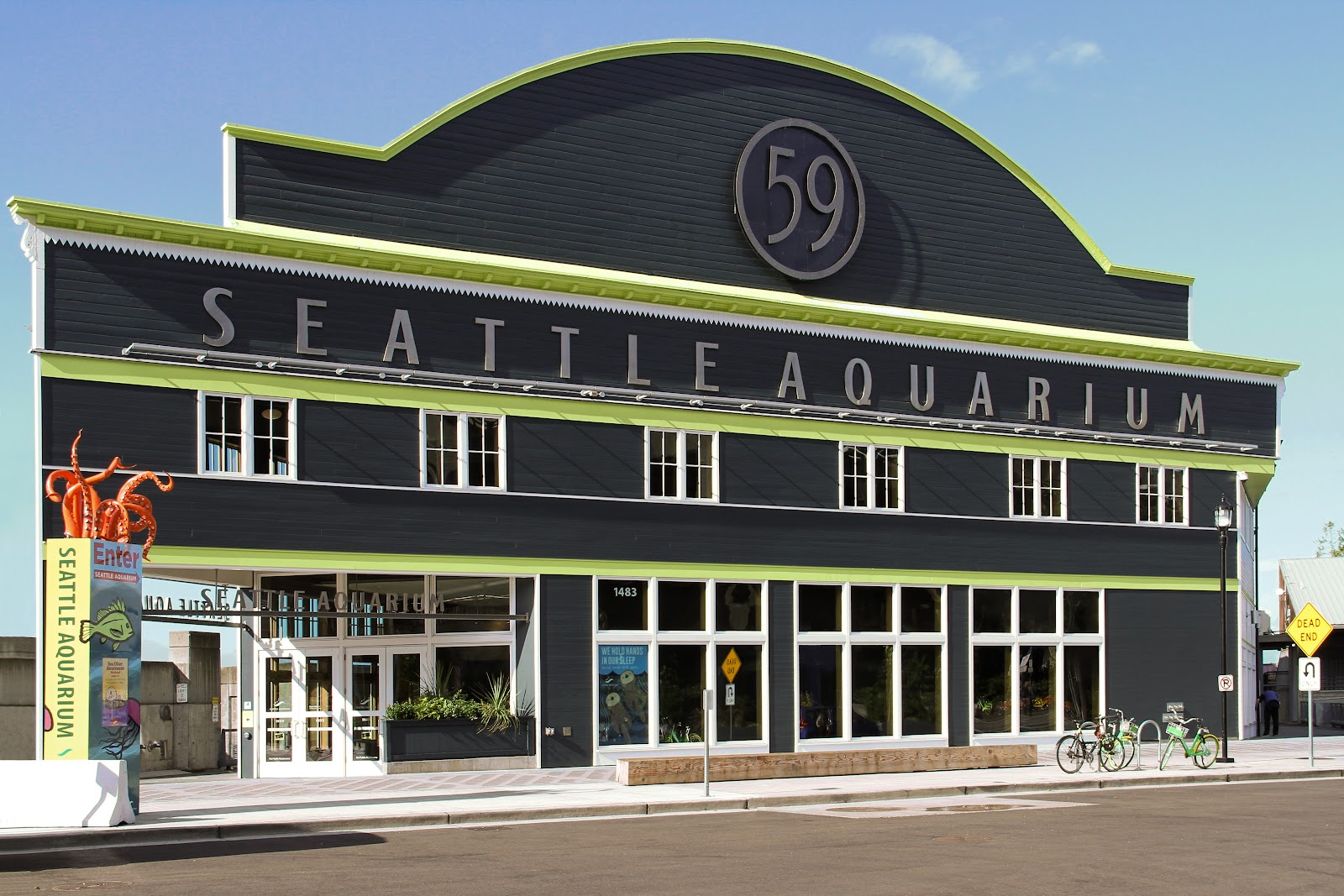
The Seattle Aquarium, Seattle: The One Decision That Governs Everything
An aquarium on a pier over Elliott Bay, with an unobstructed western horizon a few steps outside the door.
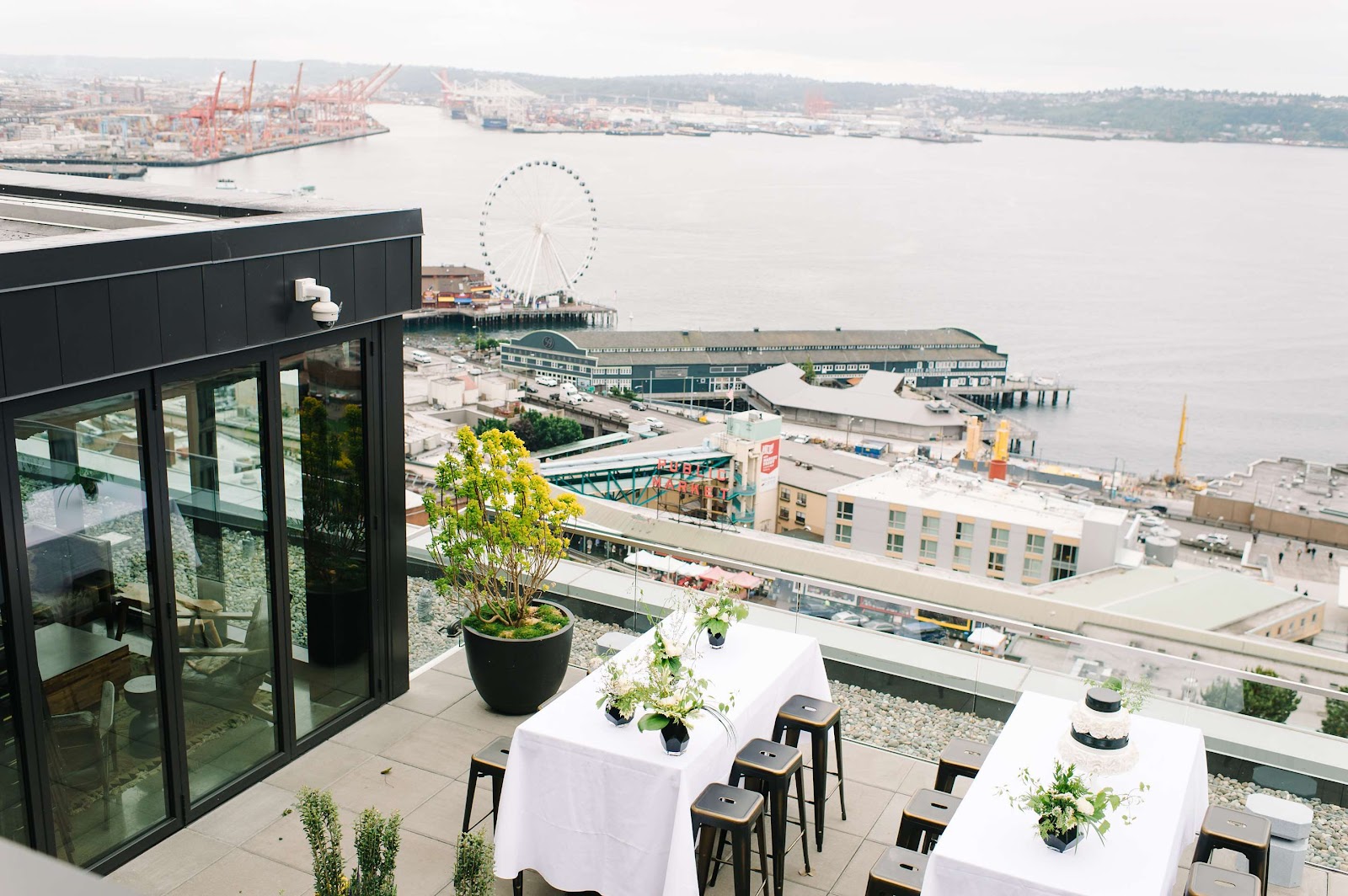
The Thompson Seattle, Seattle: The Light Through the Day
A glass hotel above the Seattle waterfront — where the dominant light is a softbox the size of the sky.
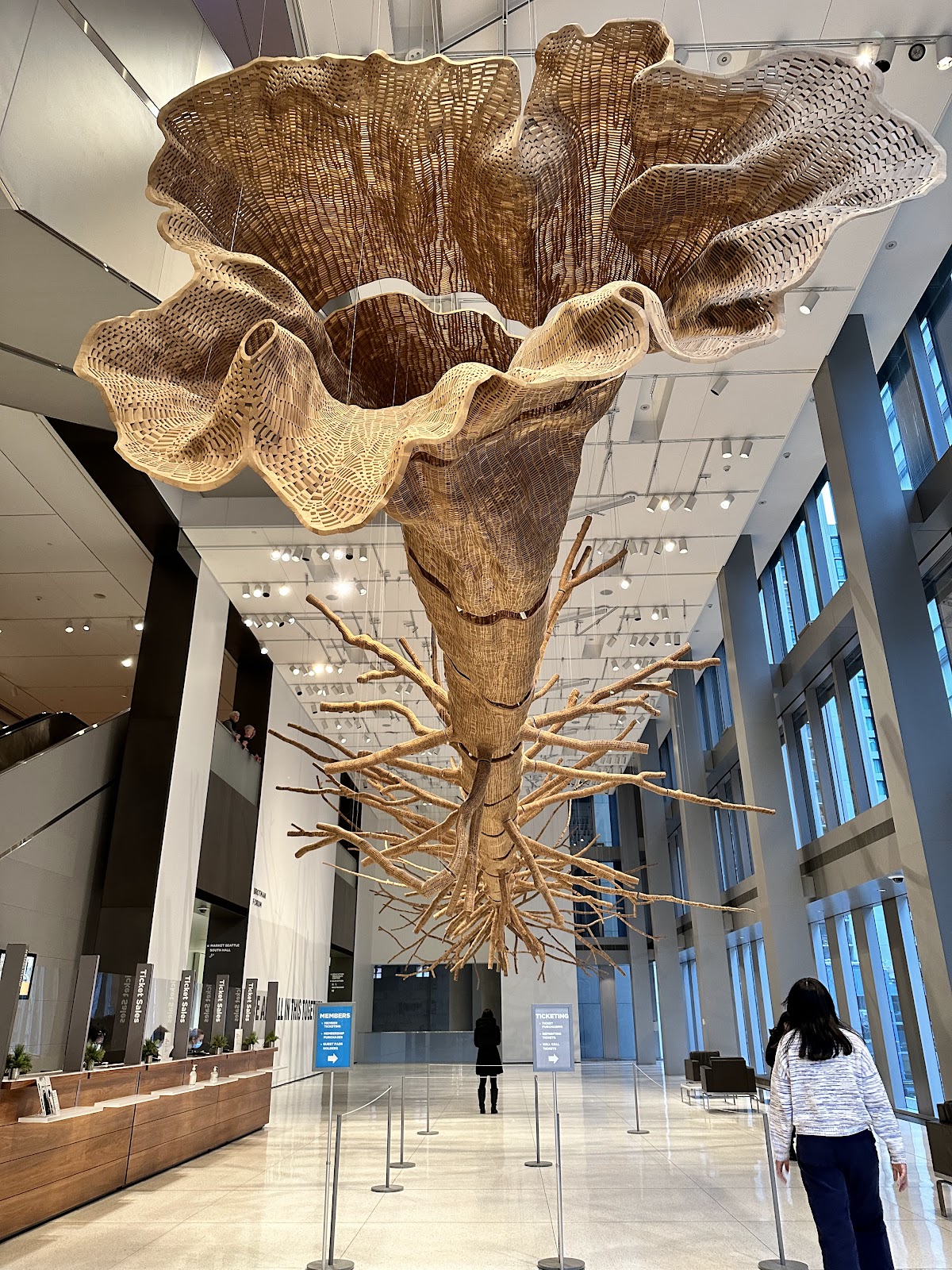
The Seattle Art Museum, Seattle: A Walk Through the Building
A downtown museum on one of Seattle's steep streets, with a forty-eight-foot black figure hammering outside the door.