 The Four Seasons Seattle, Seattle: Suits and Does Not Suit
The Seattle Art Museum, Seattle: A Walk Through the Building
Street, sculpture, lobby, stair, galleries — and ask about each one first.
This building is best described by walking it, because it rises through a steep downtown block and each level has a different rule about what you may do there.
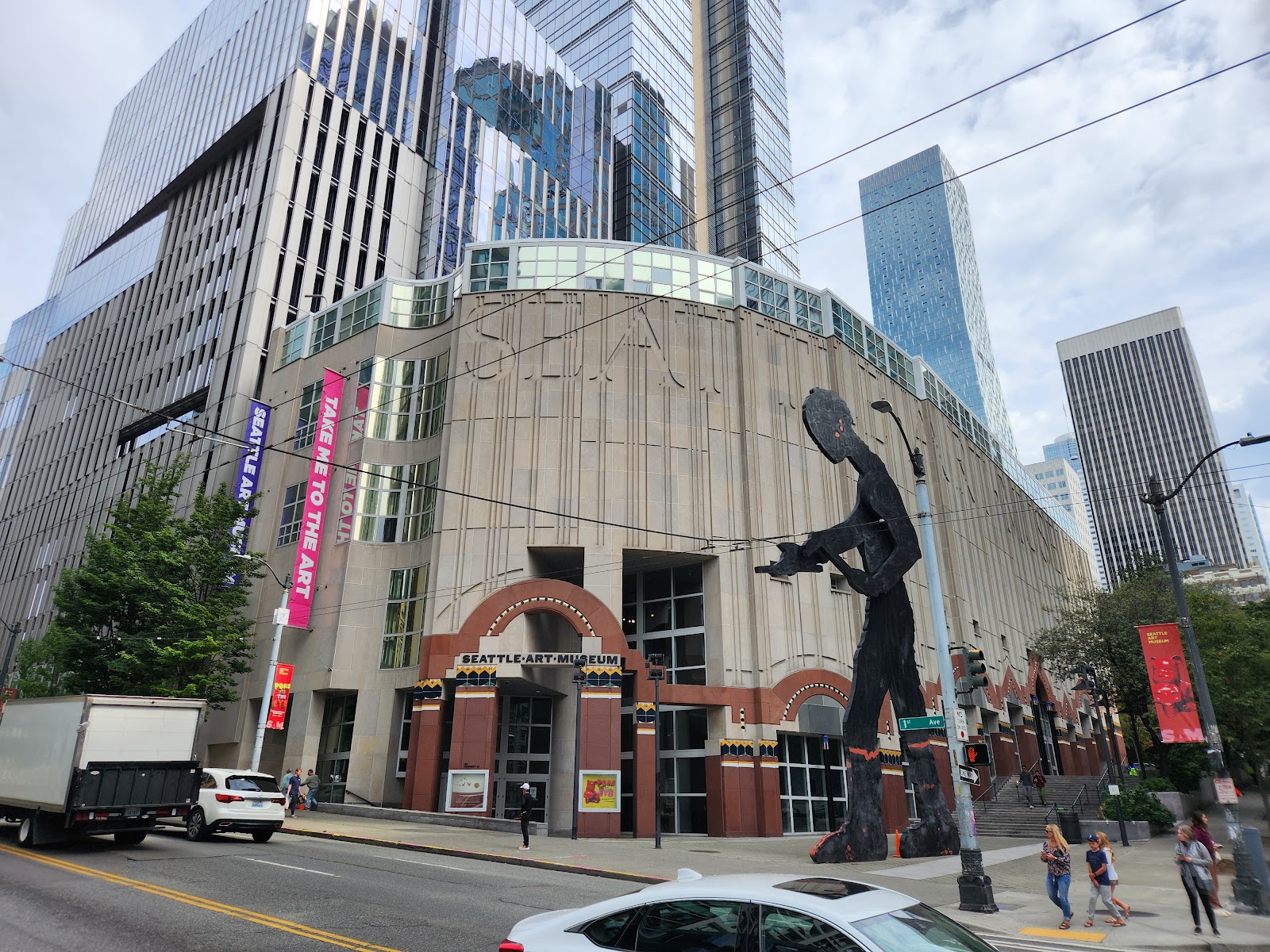
The Seattle Art Museum occupies a downtown site near the corner of First and University, in a nineteen-nineties building with a two-thousands expansion attached, and it has one of the most recognisable objects in the city standing on the pavement outside: a black steel figure some forty-eight feet tall with a hammering arm that moves. It is the museum’s front door and its landmark at once.
Before the walk, the question that determines everything. At any art museum, what a wedding may do and where is governed by conservation and by loan agreements rather than by the events team’s goodwill, and the answers are firmer than at a hotel.
Gallery lighting is set by conservation limits. Works on paper are typically held around fifty lux and oil paintings around two hundred, and those figures are not adjustable for an event — they exist because light damages pigment cumulatively and irreversibly. Fifty lux is very dark indeed: it is roughly the level of a dim corridor, and it is several stops below what a camera wants.
Flash near artwork is normally prohibited outright, for the same reason. So is a tripod in most galleries, because of the risk to objects and to other visitors. And individual works on loan may not be photographable at all, under terms the museum has agreed with a lender and cannot waive.
None of that is negotiable and none of it is unreasonable. What it means is that a museum wedding is photographed in the circulation spaces, the lobby, the stair, the event rooms and outside — and that the galleries, if they feature at all, feature on the museum’s terms.
Ask for those terms in writing, room by room, before the timeline exists. The answers will shape the day more than the weather will.
With that established, the walk goes: the street and the sculpture, the lobby and the stair, the event spaces, and then the waterfront — because this museum also runs an outdoor sculpture park down the hill, and whether that is available is worth asking about separately.
One general note first. Seattle sits at about forty-seven and a half degrees north, which is the highest latitude of any city in this library, and that produces the longest twilight here and the largest seasonal swing. In midsummer the sun sets after nine and civil twilight runs close to thirty-seven minutes; in December the sun is gone by half past four and the noon sun never rises above about nineteen degrees. Those are two entirely different venues and the last section deals with both.
The Seattle Art Museum at a glance
| Where | A downtown Seattle museum near First and University, on a steep block |
| Ask first | Gallery access, flash and tripod rules, and which works may be photographed |
| The constraint | Conservation lighting of roughly fifty to two hundred lux; no flash near art |
| The walk | Street and sculpture, lobby, grand stair, event rooms, then the waterfront |
| The latitude | Forty-seven and a half north: a thirty-seven minute midsummer dusk |
The street, the sculpture and the lobby
Start outside, and start with the gradient, because downtown Seattle’s streets are steep in a way that is a genuine compositional asset.
The hills here are glacial — ridges and mounds of material left by an ice lobe that pushed down this trough and then withdrew — and the street grid was laid across them without much concession, so blocks running east from the waterfront climb hard. A subject standing uphill of the camera is separated from their background by geometry alone, with no depth of field required. A subject downhill sits against a background of street rising behind them, which stacks rather than recedes. Neither is available in a flat city and both are worth walking a block to find.
The steepness also means that from partway up a block you are looking over the rooftops of the block below, which at the western end of downtown means a view down to the water. That is a frame worth locating on a scout.
Then the sculpture, which is the museum’s calling card and needs a decision made about it.
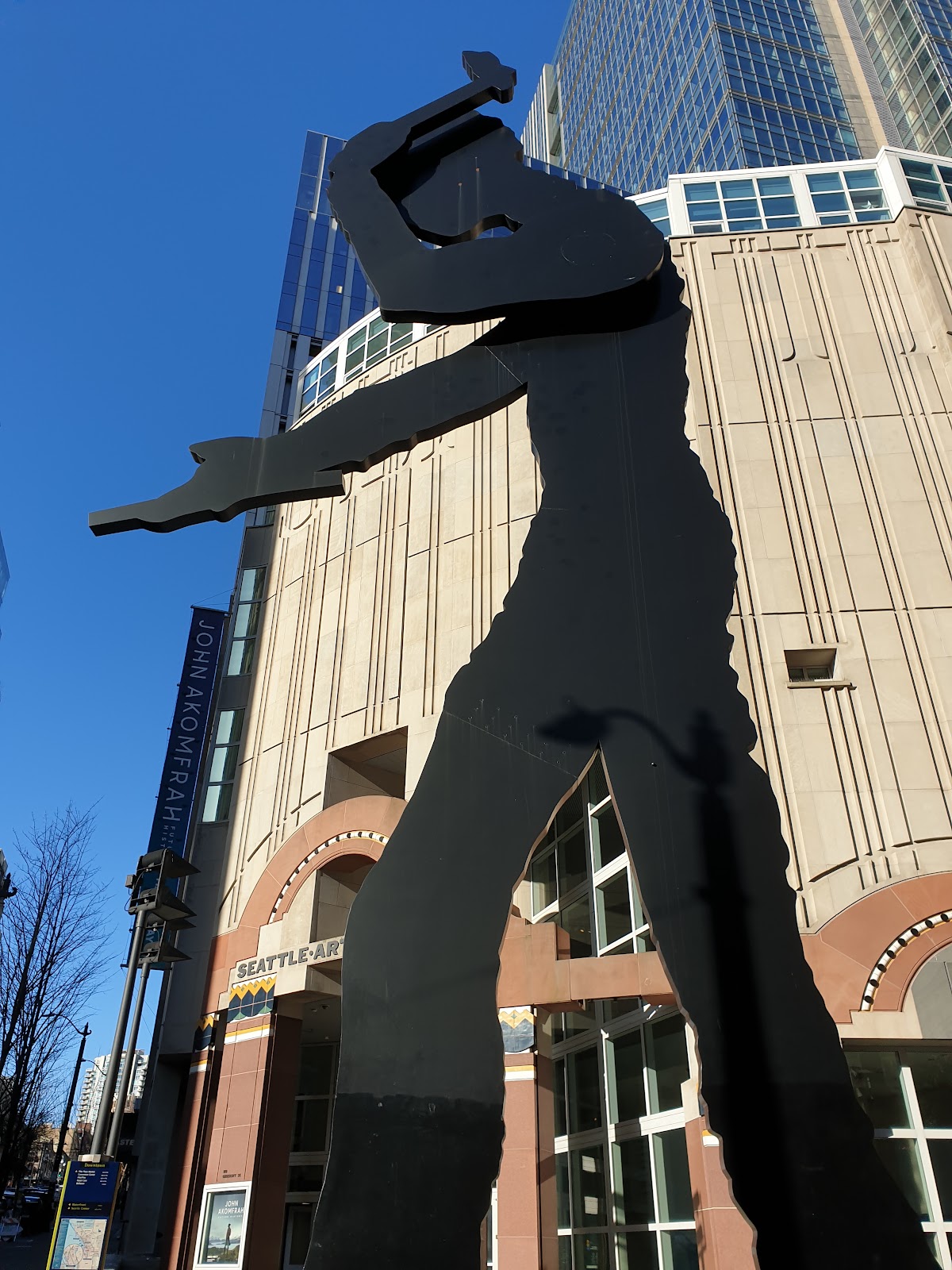
A forty-eight-foot black steel figure is a photographic condition rather than an object. Black steel reflects very little, so it gives nothing back to a subject standing beside it and reads as a silhouette shape rather than as a surface in most light. That is a gift if you use it as shape and a problem if you expect it to be a background.
So use the outline. Get low, put sky behind the figure, and let it read as a graphic black form with two small people at its base. The scale is the subject — the point of the photograph is that the thing is enormous — and a tight frame of a couple next to a black leg communicates none of that. Stand back and go wide.
The arm moves, slowly and on a schedule, which means the silhouette is not the same from minute to minute. Watch it for a cycle and choose the position of the arm you want rather than taking whatever is there. That is thirty seconds of patience for a better frame.
In bright sun the figure against a pale sky is a heavy contrast problem: meter for the sky, let the steel go to true black, and the frame is clean. Meter for the steel and the sky is gone. There is no version where both are correct, so choose. On an overcast day — which in Seattle is most days between October and May — the problem disappears, because the sky is a large even source and the black form sits against it cleanly. Overcast is the better condition for this frame, not the worse one.
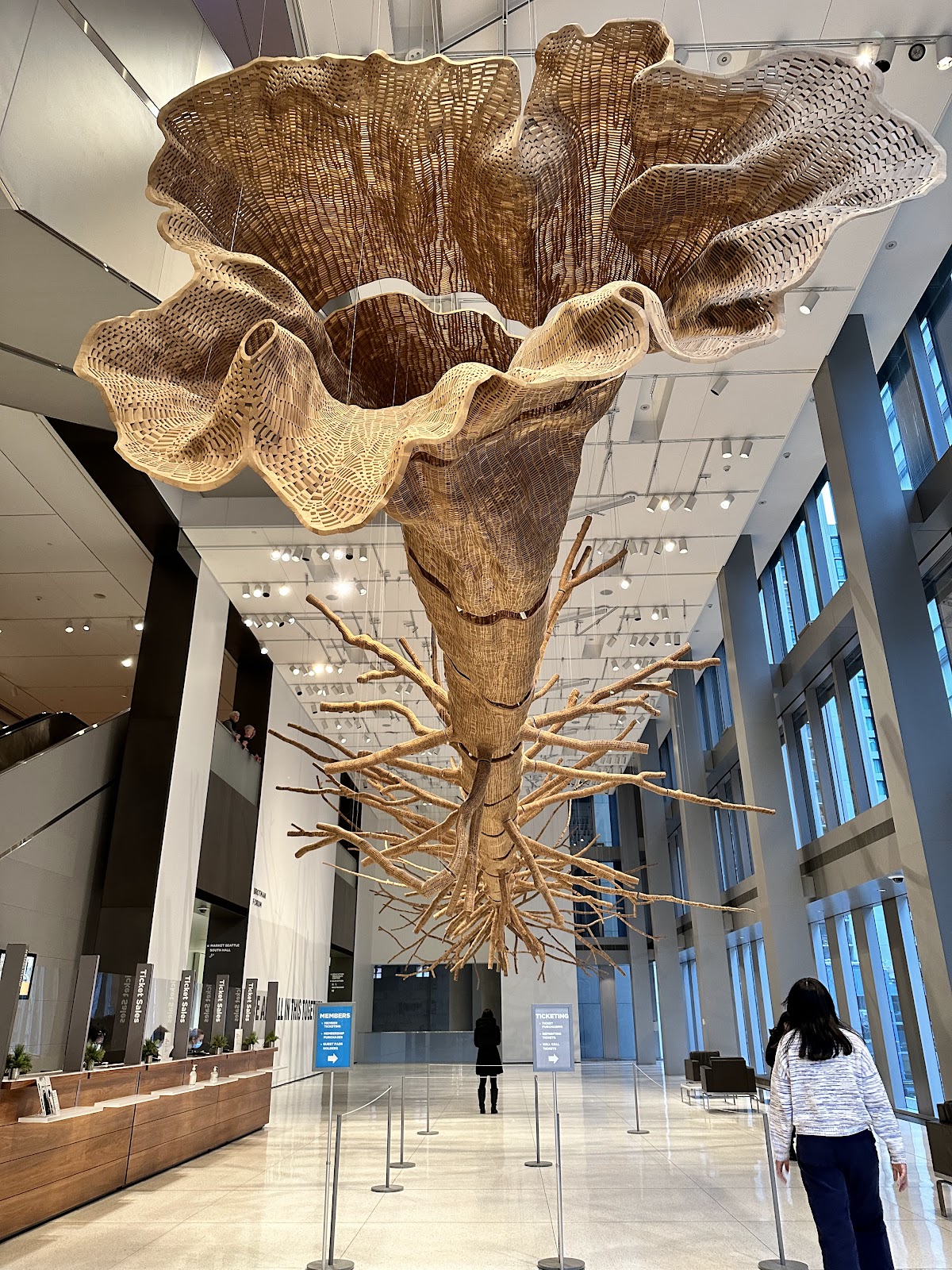
Inside, the lobby is the first interior and in a museum of this kind it is usually the most generous space: tall, hard-surfaced, with daylight from the street frontage and a controlled artificial scheme above.
Two things to establish about it. Whether daylight reaches it and from which direction, because a glazed frontage gives you a genuine window light for portraits in the middle of the day. And what the ceiling is, because a pale high ceiling takes a bounced light beautifully and a dark or heavily serviced one does not.
Hard surfaces are the lobby’s character and they cut two ways. Stone and terrazzo bounce efficiently, which helps, and they are also acoustically live and visually busy with reflections and highlights. Work with the reflections rather than against them: a polished floor under a lit subject produces a second dimmer image below them, and that doubles a frame for free.
The grand staircase is the strongest architectural frame in a building of this type and it should be used in the first twenty minutes of the day while everyone is still tidy. A stair gives you a height difference, a diagonal, a leading line, a reason for someone to be looking somewhere other than at the lens, and a place to arrange a group at multiple levels without a riser. Photograph it from the bottom looking up for drama and from the top looking down for pattern, and do both, because they are completely different pictures.
The galleries, the event rooms and the park
The galleries need their own set of expectations, and the numbers in the lede are the reason.
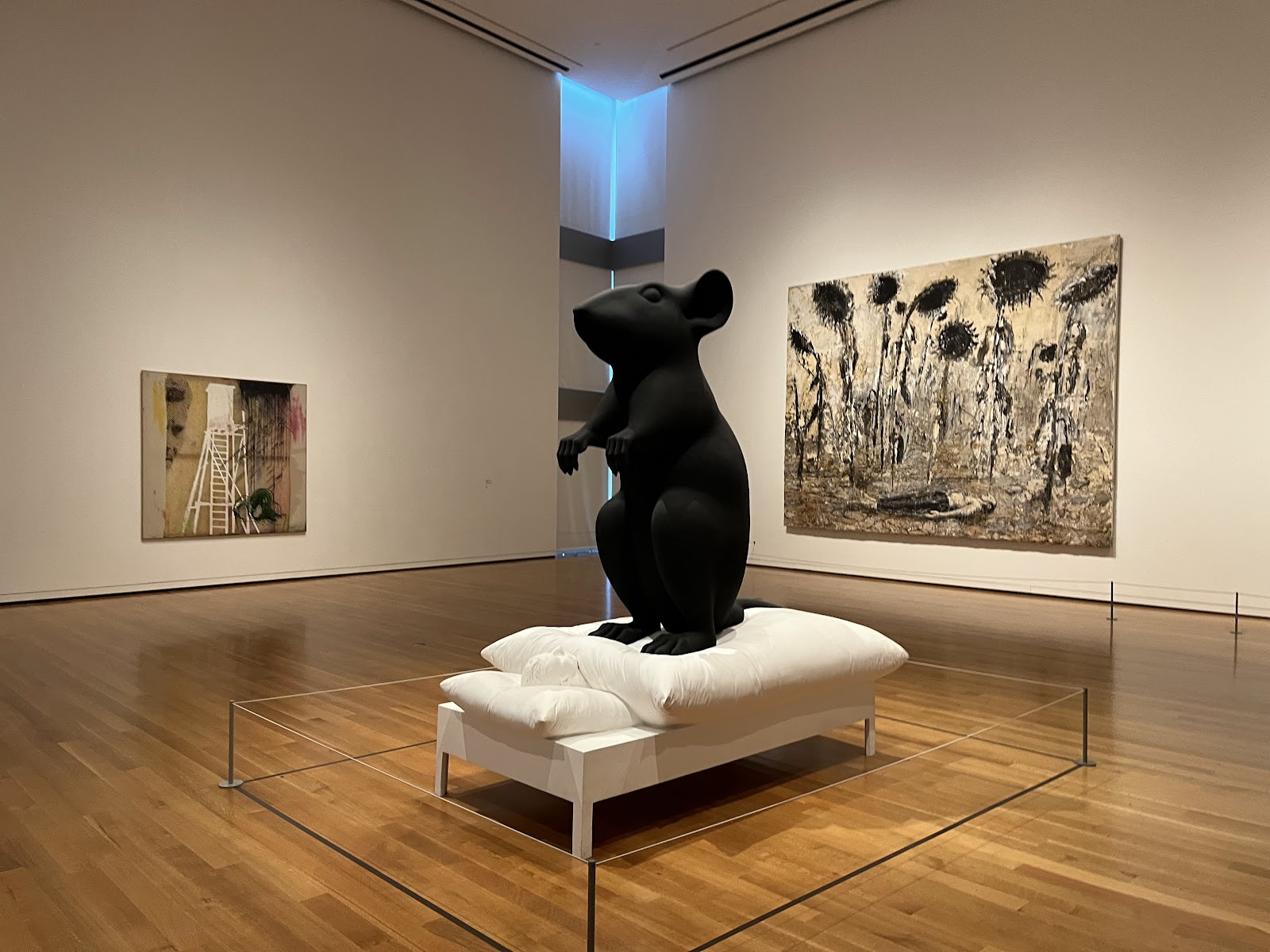
At fifty to two hundred lux, a gallery is genuinely dark by photographic standards — you will be working wide open at a sensitivity you would not choose, hand-held, without a tripod, and without flash. That is not a reason to avoid the galleries; it is a reason to plan for them specifically.
The practical kit is a fast normal or short telephoto — something at f/1.4 or f/1.8 — and the willingness to accept noise. A slightly noisy frame that exists beats a clean frame that does not. Modern sensors handle this far better than the received wisdom suggests, and a gallery at f/1.4 is entirely workable.
Shoot for the light that is there. Museum lighting is directional by design — objects are lit and surroundings are not — which means there are small pools of usable light in a dark room, and a subject placed at the edge of one is directionally lit with a black background behind them. That is a good portrait condition and it is free. Look for where the light already falls rather than trying to raise the whole room.
Colour is the other gallery issue. Museum lighting is generally high quality and consistent within a room, but it varies between rooms — a gallery lit for paintings and one lit for textiles may be a full correction step apart. Set a white balance per room and do not carry one value through a floor.
And respect the constraint on individual works. If a piece is on loan and cannot appear in a photograph, that is a legal obligation the museum has taken on, and a frame that breaches it is a problem for them rather than a coup for you. Ask for the list, and if there is no list, ask whether there are restricted rooms.
Event spaces in a museum are usually purpose-built and conventional: rectangular, flexible, with a dimmable scheme and often no exterior glazing at all. That last point is the one to check, because a windowless function room and a room with daylight are two completely different photographic days and the difference should be known in February rather than discovered on the morning.
If the room is windowless, plan the whole block: two lights bounced into opposite corners for ambient — assuming a pale ceiling — one directional source for the key, and a single white balance for the sequence. It takes ten minutes to set up when the plan exists beforehand and half an hour when it does not.
Then the waterfront, which is the part most people do not realise is connected. This museum also operates an outdoor sculpture park down the hill on the shoreline, with large works set in open landscaping above the water. Whether that is available for a wedding, and under what terms, is a separate conversation from the main building, and it is worth having, because the park solves everything the galleries cannot.
It is outdoors, it faces west over the water, it has large sculptural objects that read as architecture, and it has an open western horizon — which at this longitude and with the Olympic Mountains beyond means an unobstructed sunset over water with a mountain silhouette behind it. That is the single best frame available to this venue and it is not in the building.
Two cautions if it is available. It is a public park, so expect other people, and the shoreline is exposed, so wind there is materially stronger than in the streets above — a veil on that lawn in a fifteen-knot westerly is a two-person job. And the walk down is steep and the walk back up is steeper; budget twenty-five minutes round trip for a party of a dozen, and check whether a vehicle is an option.
If it is not available, the fallback is the street-end views down to the water from the downtown blocks, which are genuinely good and cost nothing but a short walk.
Whichever you use, protect the last half hour. At this latitude the end of the day is long and generous in summer and very early in winter, and both need to be on the schedule as a named item.
Seattle, the overcast, and the year
Seattle’s reputation is wrong in a specific and useful way, and correcting it changes how a photographer plans.
The city does not get an extraordinary amount of rain by volume — its annual total is lower than Atlanta’s or New York’s. What it gets is an extraordinary number of days with cloud on them: something in the region of two hundred and twenty-five days a year with substantial cloud cover, and around a hundred and fifty with measurable precipitation, most of which is light drizzle over long periods rather than heavy rain over short ones.
So the dominant condition here is not rain. It is a high, even, continuous overcast, and for a photographer that is a softbox the size of the sky. Shadows are soft to non-existent, faces are evenly lit at any hour, there is no bad time of day, and skin tone is easy. It is, frankly, the most forgiving portrait light in this library.
What it costs is contrast and sky. A flat white overcast contributes nothing to a wide frame, so exclude it: shoot down the steep streets rather than up, fill the frame with architecture or planting, put the horizon high, and let colour and texture carry the picture instead of tone. A frame composed for an interesting sky on an overcast Seattle day will always disappoint; a frame composed for saturated green and wet stone will not.
Wet is the other thing to use. Drizzle saturates every surface — brick, stone, steel, foliage, paving — and wet materials are more saturated and more three-dimensional than dry ones. A Seattle street in light rain photographs better than the same street dry, and reflections in wet paving give a free second image. Carry a cloth for the front element and work.
The latitude is the other half of the story and it produces the largest seasonal swing in this library. At forty-seven and a half degrees north, the midsummer sun sets after nine, the noon sun reaches about sixty-six degrees, and civil twilight runs close to thirty-seven minutes — which is the longest dusk anywhere in this collection and gives a genuinely luxurious balance-point window of perhaps eighteen or twenty minutes rather than the ten you get in the Gulf South.
In December the sun is gone by about half past four, the noon sun never exceeds roughly nineteen degrees, and there are only about eight and a half hours of daylight. A nineteen-degree sun rakes everything all day, which is beautiful light, but there is not much of it and it is usually behind cloud.
There is one consequence of the high latitude that catches photographers out and it is worth knowing: the sun’s setting azimuth swings enormously through the year here. In midsummer it sets well to the north of west; in midwinter well to the south of west. That means which facade gets the last light changes by season, by a wide margin, and a position that worked beautifully in July will be in shade in January. Check it for the actual date rather than trusting a summer scout.
July and August are the dry season, which surprises visitors. They are reliably sunny, warm without being hot, and the light is clear — genuinely the most dependable outdoor conditions of the year, and the reason the city’s wedding season is compressed into a narrow window. If a couple wants sun, this is when it is.
Two honest cautions about late summer. Since the late twenty-tens, August and September have brought wildfire smoke from fires in the Cascades and British Columbia with some regularity. Smoke produces an orange low-contrast light that some people love and it also produces genuinely poor air quality that makes an outdoor event inadvisable. It cannot be forecast far out, and a late-August outdoor plan should have an indoor alternative for air quality as well as for rain.
And the mountain. Mount Rainier stands some ninety kilometres to the south-east and is visible from the city only when the air is clear — perhaps a third of days, concentrated in summer. Locals say the mountain is out when it is. Never promise a couple a frame with Rainier in it. If it appears, take it immediately, because it will go.
October through May is the soft season and it is better than its reputation. Even light all day, deep saturated green — this is evergreen country, with Douglas fir, western red cedar and western hemlock keeping dark mass through winter, and moss on trunks, walls and roofs that is at its most vivid in the wet months. A February frame here has more colour in it than a February frame almost anywhere else in this library. Cherry blossom comes in late March and rhododendron, the state flower, from April into June.
The practical instruction for the whole year: plan the interiors properly because you will need them, treat the overcast as a light rather than a problem, exclude the white sky, and put the balance-point window on the timeline — long in July, and before the reception has started in December.
More frames from The Seattle Art Museum
The Seattle Art Museum wedding photography: common questions
What should we ask the museum before booking?
Gallery access and on what terms; the flash and tripod rules room by room; whether any works are restricted from photography under loan agreements; which event room you have and whether it has exterior glazing; and whether the outdoor sculpture park down the hill is available, which is usually a separate conversation. Those answers shape the day more than the weather does, and they are firmer than a hotel’s because they are governed by conservation and by contracts rather than by goodwill.
Why are the galleries so dark?
Conservation. Works on paper are typically held around fifty lux and oil paintings around two hundred, because light damages pigment cumulatively and irreversibly, and those levels are not adjustable for an event. Fifty lux is roughly a dim corridor — several stops below what a camera wants. Plan for a fast normal or short telephoto at f/1.4 and accept some noise; a slightly noisy frame that exists beats a clean one that does not.
Is there any good light in a gallery?
Yes, and it is free. Museum lighting is directional by design — objects are lit and their surroundings are not — so a dark room contains small pools of usable light, and a subject placed at the edge of one is directionally lit with a black background behind them. Look for where the light already falls rather than trying to raise the whole room. Set a white balance per room, because a gallery lit for paintings and one lit for textiles can be a full correction step apart.
How should the sculpture outside be photographed?
As a shape, not a surface. Black steel reflects almost nothing, so it reads as a silhouette and gives nothing back to anyone standing beside it. Get low, put sky behind it, and let it be a graphic black form with two small people at the base — the scale is the subject, so stand back and go wide. Its arm moves on a slow cycle, so watch it and choose the position you want. Overcast is the better condition for this frame, because a bright sky behind black steel is an unresolvable contrast problem.
Is Seattle weather a problem for a wedding?
Less than its reputation suggests, and differently. The annual rainfall total is lower than Atlanta’s — what Seattle has is many cloudy days with light drizzle, which for a photographer is a softbox the size of the sky: soft shadows, even light at any hour, easy skin tones, and the most forgiving portrait light in this library. What it costs is sky, so exclude it — shoot down the steep streets, fill the frame, put the horizon high, and let saturated green and wet stone carry the picture. Wet surfaces photograph better than dry ones.
When is the best time of year?
July and August are the dry season and they surprise people: reliably sunny, warm rather than hot, with clear air and a midsummer twilight close to thirty-seven minutes — the longest dusk in this collection. Two cautions: since the late twenty-tens, late August and September have brought wildfire smoke with some regularity, which means an air-quality contingency as well as a rain one. And never promise a frame with Mount Rainier in it; it is ninety kilometres off and visible perhaps a third of days. If it appears, shoot it immediately.
More Seattle, WA venue guides
We are writing a photographer’s guide to every venue we would happily shoot in Seattle, WA. Here are three more, plus the full index:
- The Thompson Seattle, Seattle: The Light Through the Day
- The Four Seasons Seattle, Seattle: Suits and Does Not Suit
- The Seattle Aquarium, Seattle: The One Decision That Governs Everything
Planning a wedding at The Seattle Art Museum?
Ask about the galleries first, then walk it upward. Tell us your date.