 The Seattle Aquarium, Seattle: The One Decision That Governs Everything
The Four Seasons Seattle, Seattle: Suits and Does Not Suit
Everything here is modern, west-facing and controlled. That is the whole argument.
This venue divides couples cleanly, and the division is not about money. It is about whether they want a room with a view or a room with a history.
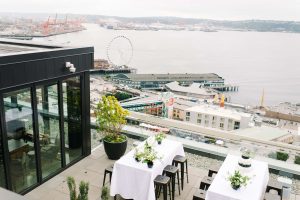
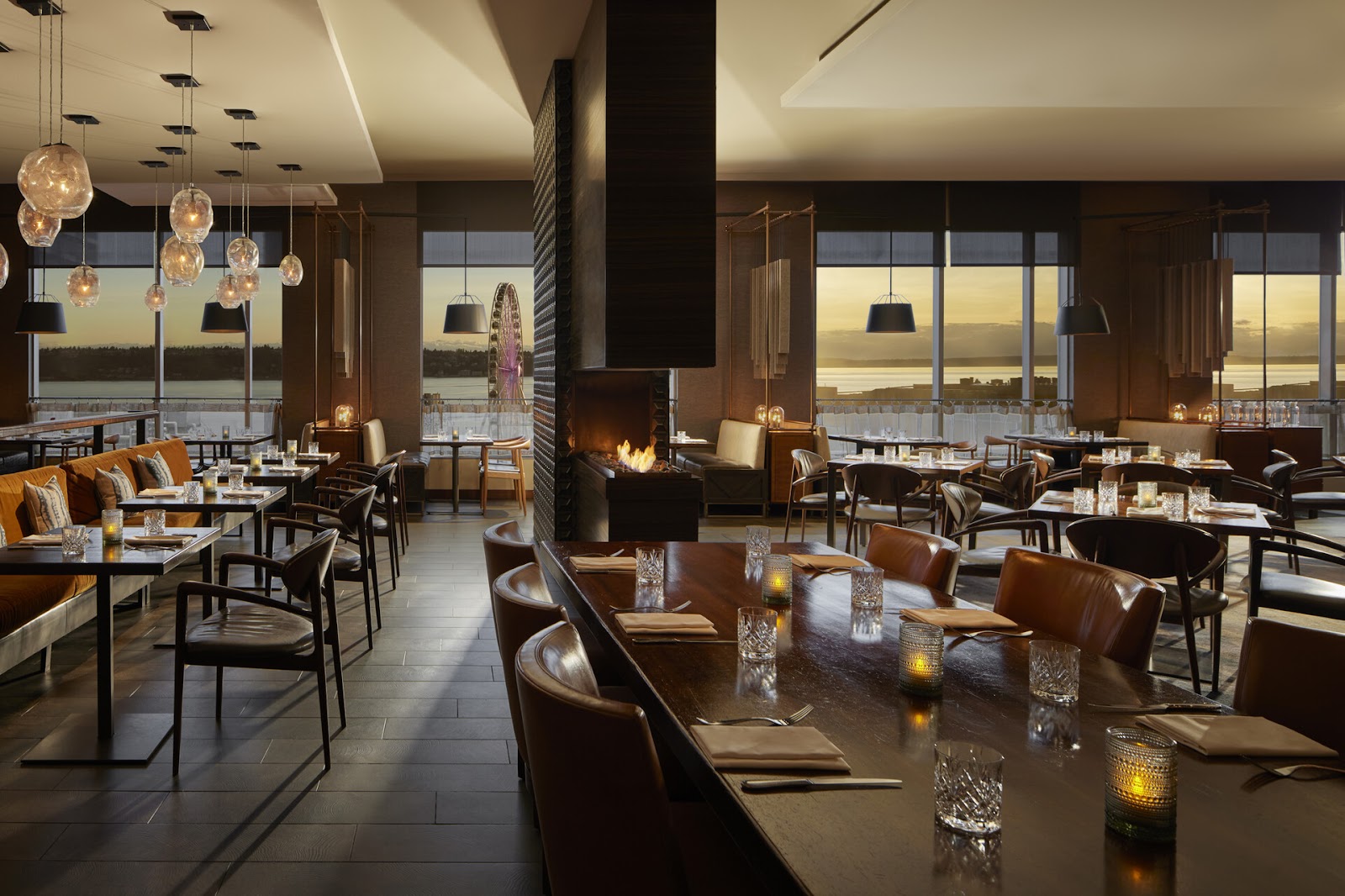
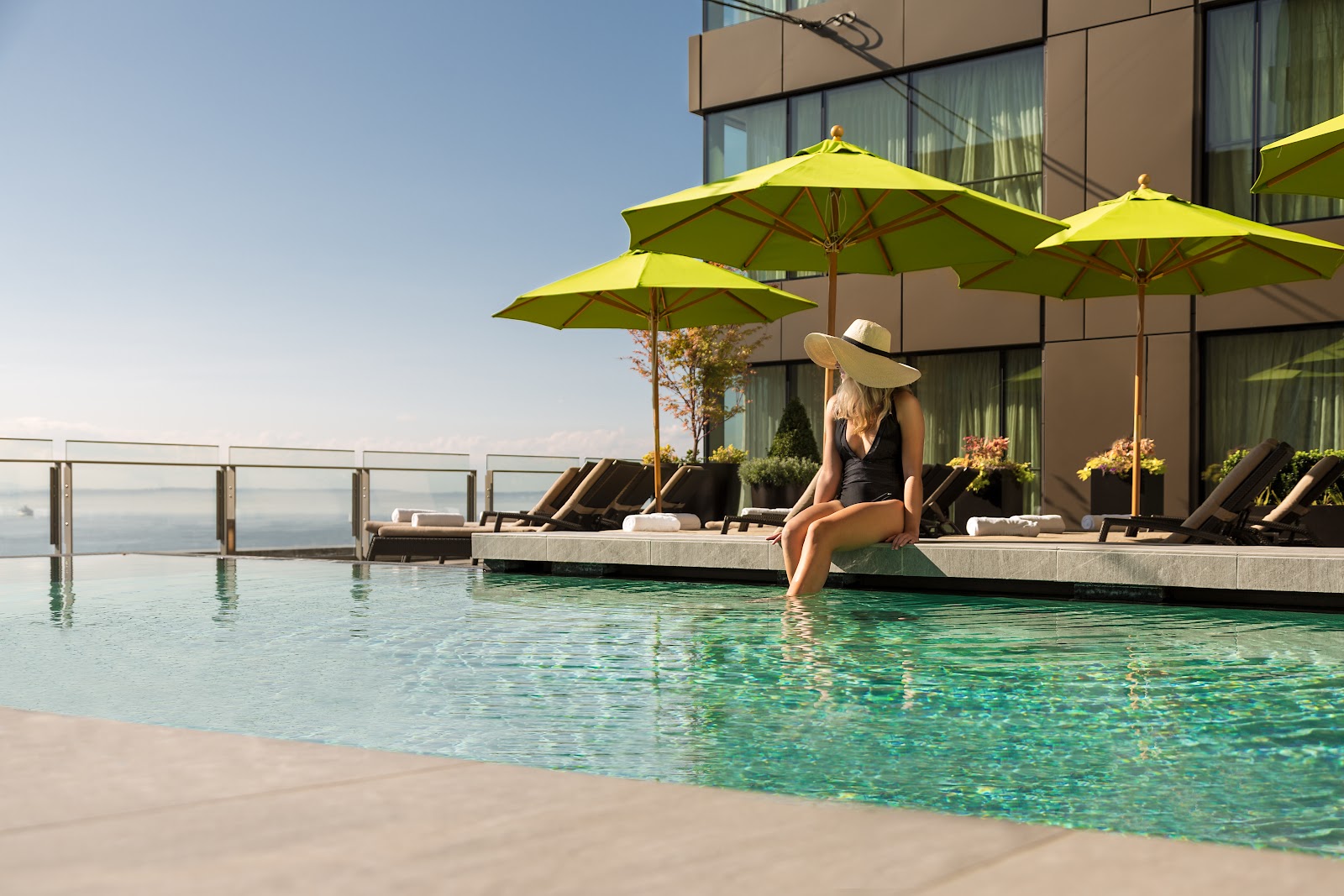
The Four Seasons Seattle sits at the western edge of downtown above the central waterfront, a short walk from the Pike Place market, and it is modern throughout — floor-to-ceiling glazing, pale stone, clean lines, no period detail anywhere in it. What it has instead of architecture is orientation: it looks west over Elliott Bay, and beyond the water the Olympic Mountains stand as a long serrated ridge.
For a photographer that produces a venue with a very specific profile. The light is excellent and entirely dependent on the weather and the aspect rather than on the hour. The interiors are controllable and forgiving and contribute nothing in themselves. And the view is the building’s whole photographic argument.
Two facts about Seattle underpin everything below and they are worth stating before the list.
The dominant light here is a high marine overcast. The city gets something like two hundred and twenty-five cloudy days a year and around a hundred and fifty with measurable precipitation, mostly light drizzle over long periods — its annual rainfall total is actually lower than Atlanta’s. What that means through a glass wall is a softbox the size of the sky: soft shadows, even light at any hour, no bad time of day, and skin tones that need almost no work. It is the most forgiving portrait light in this library.
And the latitude, at about forty-seven and a half degrees north, produces the largest seasonal swing in this collection. Late June: sunset after nine, sixteen hours of daylight, and civil twilight close to thirty-seven minutes — the longest dusk anywhere here. Late December: sun gone by half past four, eight and a half hours of daylight, and a noon sun that never exceeds about nineteen degrees.
So the same venue is two different products depending on the month, and a couple choosing a January date needs to understand that before the timeline rather than after.
What follows is what it suits, what it does not, and then the practical business of the light and the year.
The Four Seasons Seattle at a glance
| Where | A modern hotel above the Seattle waterfront near Pike Place |
| Suits | View-led weddings, winter dates, controlled interiors, pale palettes |
| Does not suit | Anyone wanting period architecture, patina, or a garden |
| The light | A marine overcast through floor-to-ceiling glass — soft and forgiving |
| Ask first | Which way your rooms face, and whether any outdoor space exists |
What it suits
It suits a couple whose priority is the view, and here that is a stronger asset than at most hotels making the same claim.
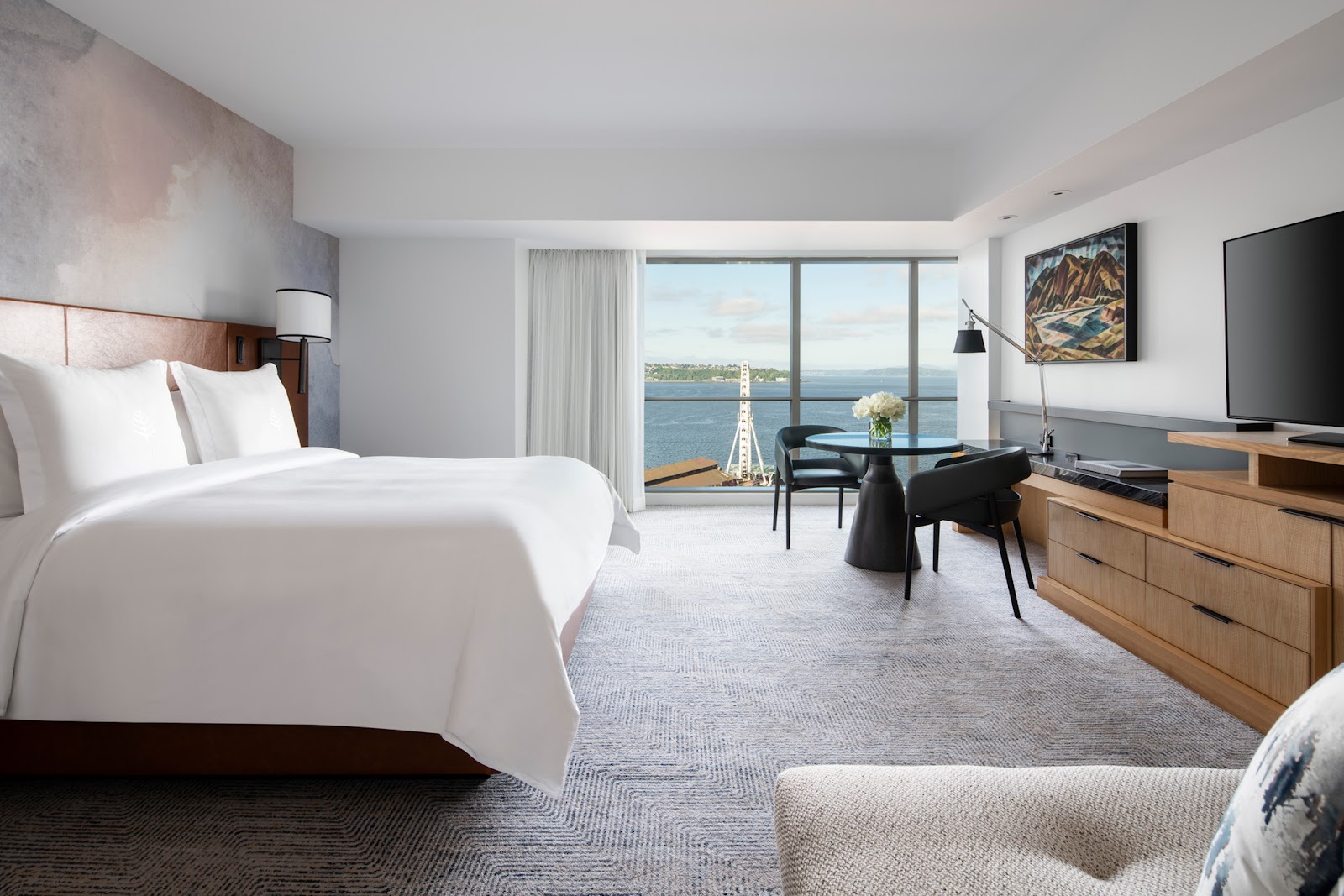
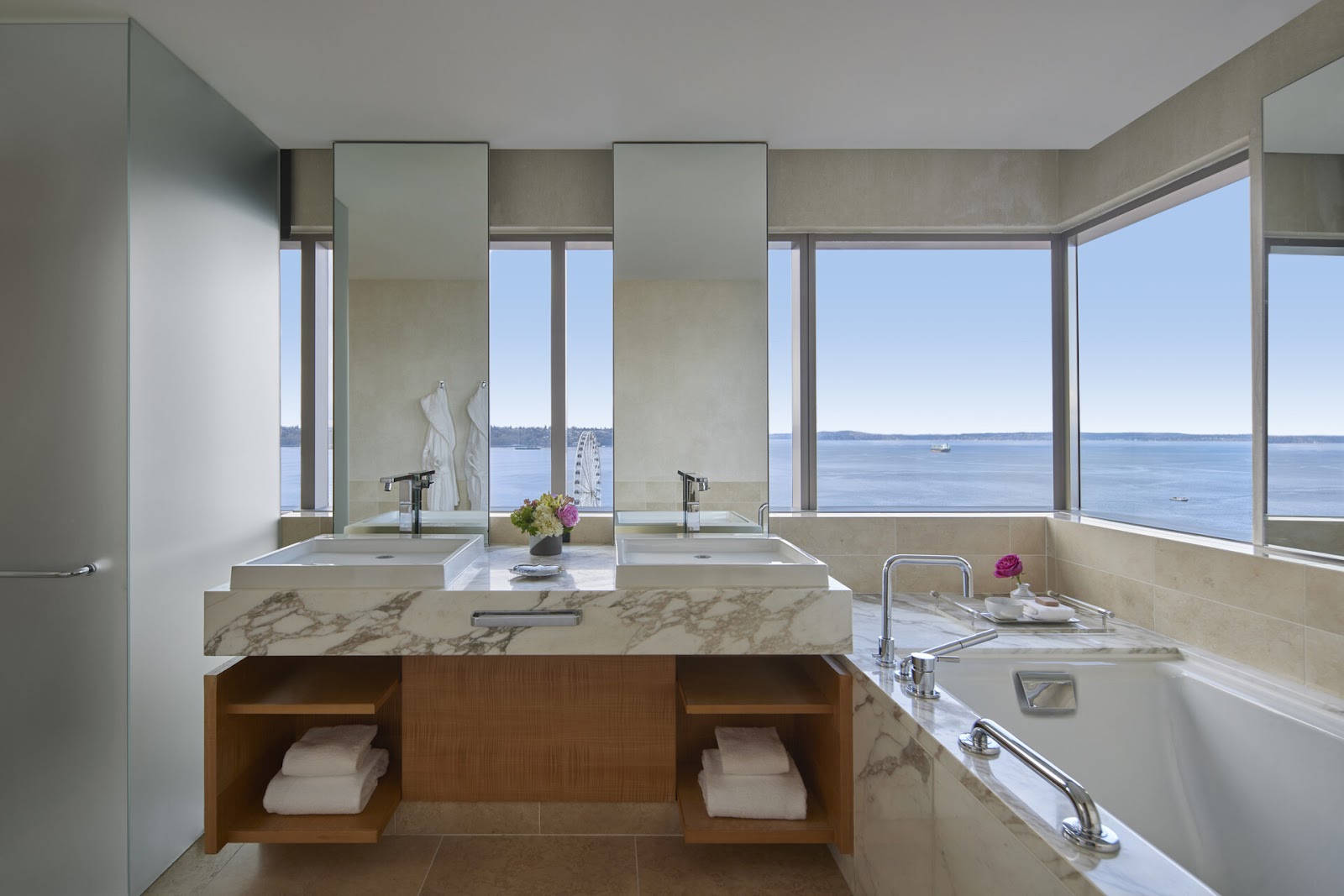
West over open salt water at a mountain range, with nothing in the near field to interrupt it, is a complete composition: water, then a hard silhouette, then sky. Most city hotels offer a skyline, which is a wall of buildings; this offers a horizon, which is a different and rarer thing. If a couple has chosen this hotel because of what is out of the window, they have chosen well and the photographs will reflect it.
It suits a winter date better than almost any venue in this library, and that is worth saying loudly because it runs against the grain. Seattle’s winter is mild rather than cold, rarely freezing hard, and a wedding whose good material is all indoors and through glass does not care that there are only eight and a half hours of daylight. Add a nineteen-degree noon sun that rakes everything from eleven to three on a clear day, and a city that looks its best wet and lit, and a December wedding here is a genuinely good proposition rather than a compromise. It will also be considerably cheaper and easier to book than August.
It suits a pale palette. Modern stone and glass interiors in ivory and grey are the natural home of a low-saturation aesthetic, and a couple whose references are all soft neutrals will find the building agrees with them in every frame rather than fighting them. That sounds minor and it is not — at a maximalist venue the same couple spends the day working around the room.
It suits natural-light photography without qualification. A glass wall under an overcast is the single most reliable portrait source there is, available from breakfast to sunset, in February as in July, without a light stand or a decision. A photographer who works that way will get a full set here with almost no equipment.
It suits a wedding that wants to use the city on foot. The waterfront is immediately below and the market is a short walk, which means genuine exteriors — working piers, ferries, steep street-ends looking down to the water, market ironwork and produce colour — are reachable in ten minutes rather than by vehicle. That is unusual and it is worth a great deal, because the frames it produces are unmistakably of this city.
It suits a large guest count. A modern hotel of this class has purpose-built function rooms with proper ceiling heights, level floors, dimmable lighting and service access, which means a hundred and eighty people is a routine number rather than a problem. That is the opposite of the historic properties elsewhere in this library, where the interiors are the constraint.
It suits a photographer who likes to light, because the surfaces are cooperative. Pale walls and ceilings at normal heights make bounce extremely efficient — two lights into opposite corners will lift a whole reception room by a stop and a half invisibly — which is a real advantage over a hotel with dark panelling.
And it suits a couple who value the day running smoothly over the day being unusual. A modern hotel of this class is operationally excellent: the schedule holds, the rooms are ready, the service is timed, and nothing goes wrong that has not been planned for. That is worth naming as a virtue, because it is the actual reason many people choose this kind of venue and photographers rarely mention it.
One specific practical advantage. Because the good interior light is a property of the aspect rather than the hour, preparation coverage can be scheduled whenever suits the couple rather than whenever suits the sun. Ask which way the suites face and the morning plans itself.
What it does not suit
It does not suit a couple who want architecture. There is no period detail here, no patina, no material with age in it, and no room that is interesting in itself. Every surface is new. If the moodboard is full of plasterwork, panelling, stone stairs and old windows, this is the wrong building and no technique produces age that is not there. Say so at the enquiry stage and it becomes a choice rather than a disappointment.
It does not suit a garden wedding, or in practice any outdoor ceremony. Establish precisely what outdoor space exists and what it is like, because at a downtown hotel on a waterfront edge the answer is usually a terrace rather than grounds, and a terrace above open water in this city is exposed to a marine westerly that is a regular condition rather than an occasional one. A veil in that is unmanageable and a lightstand is a hazard.
It does not suit anyone relying on the mountains. The Olympic ridge is visible far more often than Mount Rainier — which stands ninety kilometres to the south-east and appears perhaps a third of days — but it still disappears entirely in low cloud, and low cloud is the default here for two thirds of the year. On an overcast evening the view is water and sky with no ridge in it, which is simpler and still works, but nobody should be promised the mountains. Sell the water, not the summits.
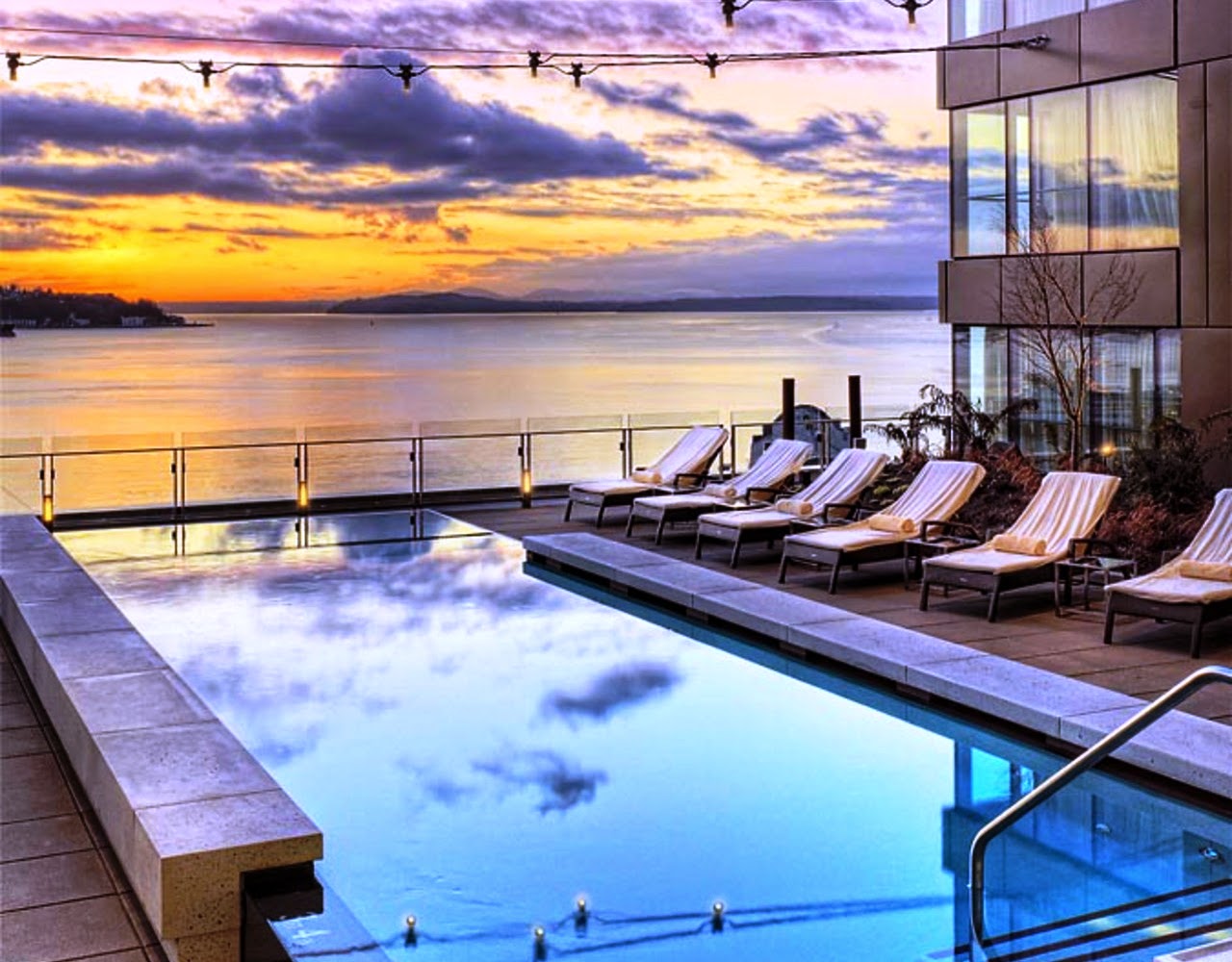
It does not suit a sunset-dependent plan without a fallback. On most evenings between October and May there is no visible sunset at all: the sun goes behind a uniform grey ceiling and the light simply fades. The frame to have instead is the city after dark — warm lit windows against a grey-blue sky, wet streets holding reflections, the bay gone to pewter — and that has to be the default plan rather than the consolation. A photographer who has only planned for the mountain silhouette will be caught out four evenings in five.
It does not suit a couple who want their photographs to look like nobody else’s. A modern glass hotel produces a clean, consistent, well-lit set that shares a visual language with every other modern glass hotel. The view differentiates it; the rooms do not. If distinctiveness matters more than polish, a historic property or an industrial one will serve better.
It does not suit a very low budget, which barely needs saying, and it does not suit a plan that assumes the rooftop or terrace is included. Outdoor and amenity spaces at hotels of this class are often shared with guests, and what a wedding actually gets should be in writing before the deposit.
It does not suit a summer date if the couple dislikes competition. July and August are genuinely the dry season here — reliably sunny, warm rather than hot, clear air, and the longest twilight in this collection — which means those dates are the most contested in the city and book earliest. A couple deciding in March for the following August is probably too late.
And one honest caution about late summer specifically. Since the late twenty-tens, August and September have brought wildfire smoke from Cascade and British Columbia fires with some regularity. Smoke gives an orange low-contrast light that flatters some sets and it also gives genuinely poor air quality that makes any outdoor element inadvisable. It cannot be forecast far out, so a late-August plan needs an air-quality contingency as well as a rain one. In a venue that is largely interior, that is a mild problem — which is, in fairness, another argument for this kind of building.
The honest summary: if the priority is a horizon, a smooth day, a pale palette and light that works in any month, this venue is an excellent and under-appreciated choice, particularly in winter. If the priority is character, patina or a garden, it will be a polite disappointment from the engagement to the album.
The light, the city on foot, and the year
The working method here is short, because the building does most of it.
Put the subject side-on to the glass at a metre and a half and photograph them. Under an overcast that is a large soft wrapping source with no shadow to fill and no beam to manage, and it is the same at ten in the morning as at three in the afternoon. On the rarer clear morning, an east-facing room takes a hard low beam that lays a sharp rectangle across the floor four or five stops above everything else — close the sheers for working light and save the beam for one deliberate frame.
Two corrections to apply consistently. The light is cool, because an overcast sky is a cool source and because modern glazing is coated to reject heat, which shifts transmitted daylight cooler and often slightly green. Those compound, so interiors here photograph noticeably bluer than the eye remembers; warm the whole block rather than each frame. And on a high floor there is much less ground bounce than at street level, so eye sockets and the underside of the jaw go darker than the brightness suggests. A white card at waist height fixes it.
Set a white balance for the position you are shooting from, because a subject at the glass and one five metres back are lit by measurably different colour.
Reflections are the constant. A glass wall with a bright exterior and a dimmer interior reflects the room back at you, so a wide frame including the window carries a ghost of the furniture, the stands and possibly you. Move off the glass axis, get close to the pane, or compose the reflection deliberately. A polariser helps less than photographers hope, because you are nearly perpendicular to the surface.
Then the city on foot, which is the part of this venue most photographers underuse.
Downtown Seattle climbs steeply away from the water — the hills are glacial, left by an ice lobe that pushed down this trough and withdrew, with the street grid laid across them without much concession. That gradient is a compositional tool: a subject uphill of the camera separates from the background by geometry alone, and a subject downhill has the street stacking up behind them. Neither is available in a flat city.
The same steepness makes the west-running streets into sightlines to the bay. From partway up a block you look over the rooftops below to open water, which puts a frame with the bay in it a short walk from the door and no roof access required. Find two of those on a scout; they are the wind and weather fallback and they are good enough to be a first choice.
The waterfront below is a working one — piers, ferries, cranes, moored vessels — which is honest and photogenic in a way a landscaped promenade is not. A ferry crossing behind a subject at dusk is a strong and very specific frame, and the ferries run often enough to plan on rather than hope for.
And wet is the material to use rather than avoid. Drizzle saturates brick, stone, steel, paving and foliage, and wet surfaces are more saturated and more three-dimensional than dry ones, with reflections giving a free second image. A Seattle street in light rain photographs better than the same street dry. Carry a cloth and work.
The year, briefly, since most of it has been covered. July and August are the dry, sunny, contested season with the longest twilight. October through May is the soft season, better than its reputation: even light all day, no bad hour, and — because this is evergreen country, with Douglas fir, western red cedar and western hemlock holding dark green mass through the winter, and moss on trunks, walls and roofs at its most vivid in the wet months — a February frame here has more colour in it than a February frame almost anywhere else in this library.
Cherry blossom arrives in late March and rhododendron, the state flower, from April into June, so the spring shoulder gains real colour on top of the soft light.
Winter’s constraint is darkness rather than cold. Eight and a half hours of daylight, mostly overcast, puts the usable outdoor window on a December day between about nine and half past three, and the balance point before half past five — which means it falls during cocktails rather than after dinner. Put those twenty minutes on the timeline as a named item or they will pass while the room is being seated.
In midsummer the same window arrives after nine and runs for eighteen to twenty genuinely usable minutes, which is nearly double what a Gulf South venue gives you and enough for two or three positions rather than one. That generosity is the best thing about photographing this far north and it should be spent rather than saved.
One closing note. Ask which way your rooms face. In a building where the windows are the light and the view is the argument, aspect is the single most consequential fact about the booking, and it is a question the hotel can answer in a sentence.
More frames from The Four Seasons Seattle
The Four Seasons Seattle wedding photography: common questions
Who is this venue right for?
Couples whose priority is the view — west over open salt water at a mountain ridge, which is a horizon rather than the wall of buildings most city hotels offer — and couples who value the day running smoothly. It also suits pale palettes, large guest counts, natural-light photography, and, unusually, winter dates: the good material is all indoors and through glass, so eight and a half hours of daylight does not matter much, and December is far easier to book than August.
Who should look elsewhere?
Anyone who wants architecture. There is no period detail, no patina and no room that is interesting in itself — every surface is new, and no technique produces age that is not there. Also anyone wanting a garden or an outdoor ceremony: what exists is likely a terrace, and a terrace above open water here is exposed to a marine westerly that is a regular condition rather than an occasional one.
Can we count on the mountain views?
Sell the water, not the summits. The Olympic ridge to the west appears far more often than Mount Rainier — which is ninety kilometres to the south-east and visible perhaps a third of days — but it still disappears entirely in low cloud, and low cloud is the default for two thirds of the year. On an overcast evening the view is water and sky with no ridge, which is simpler and still works. Nobody should be promised the mountains.
What happens on an overcast day?
The interiors get better, not worse. A high even overcast through a glass wall is a softbox the size of the sky: soft shadows, even light at any hour, no bad time of day, and easy skin tones — the most forgiving portrait light in this library. What you lose is the sunset, because on most evenings from October to May the sun simply fades behind a grey ceiling. The frame to plan for instead is the city after dark: lit windows against a grey-blue sky, wet streets holding reflections, the bay gone to pewter.
Why do the interior photographs look cool?
Two effects compound. An overcast sky is a cool source, and modern high-performance glazing is coated to reject heat, which shifts transmitted daylight cooler and often slightly green. So rooms lit through glass on a grey day photograph noticeably bluer than the eye remembers. Warm the whole block consistently rather than frame by frame, and set a white balance for the position you are shooting from, since a subject at the glass and one five metres back are lit differently.
What is the one question to ask the hotel?
Which way your rooms face. In a building where the windows are the light and the view is the whole argument, aspect is the most consequential fact about the booking — a west-facing room is soft and even all morning and strongly directional late, and an east-facing room is the reverse. It is a question they can answer in a sentence, and it determines the shape of the entire day.
More Seattle, WA venue guides
We are writing a photographer’s guide to every venue we would happily shoot in Seattle, WA. Here are three more, plus the full index:
- The Seattle Aquarium, Seattle: The One Decision That Governs Everything
- The Seattle Art Museum, Seattle: A Walk Through the Building
- The Thompson Seattle, Seattle: The Light Through the Day
Planning a wedding at The Four Seasons Seattle?
A horizon, a smooth day and light in any month. Tell us your date.