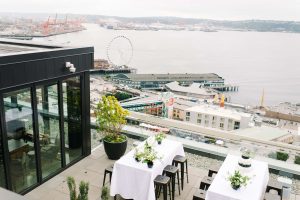
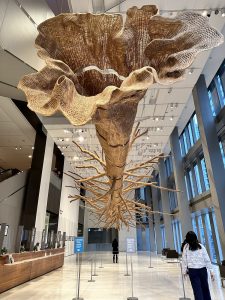
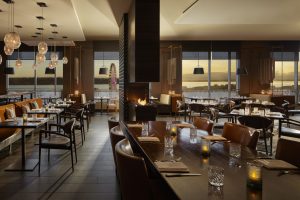
 The Four Seasons Seattle, Seattle: Suits and Does Not Suit
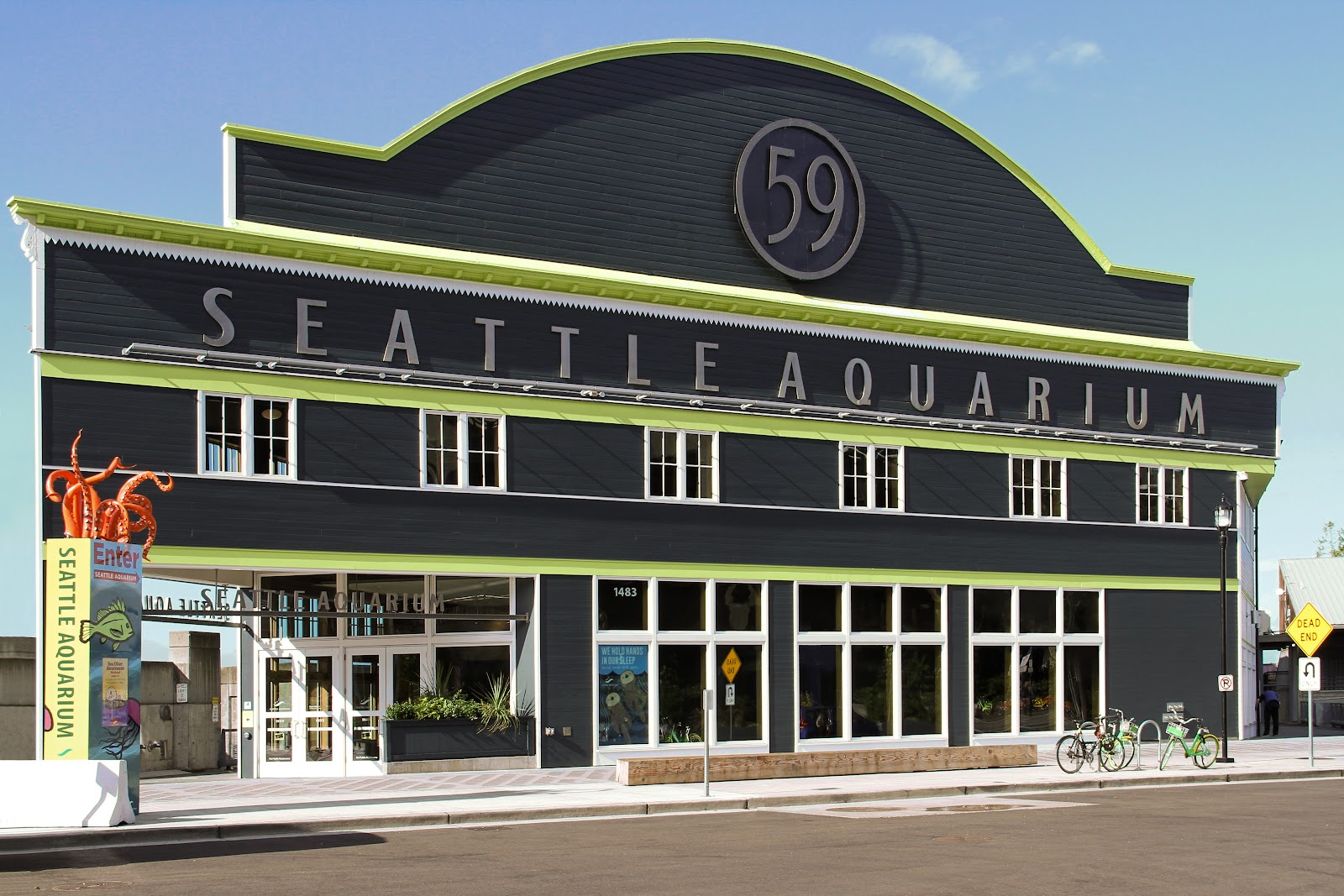
The Seattle Aquarium, Seattle: The One Decision That Governs Everything
Inside is a dark blue room. Outside is the best sunset in the city.
One decision governs a wedding day here, and it is not about equipment or timing in the usual sense. It is about which of two completely different venues you are using at the end of the day.
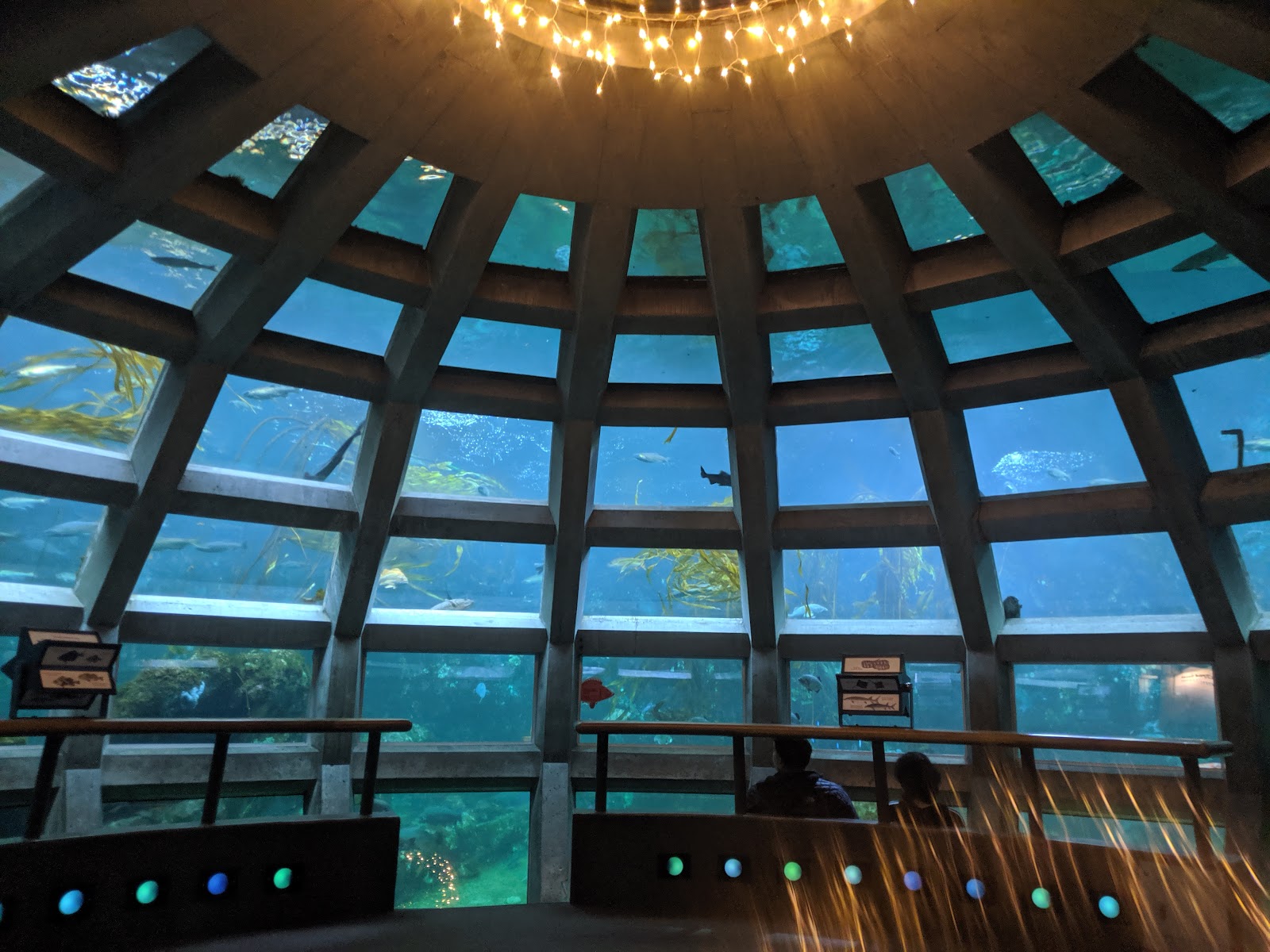
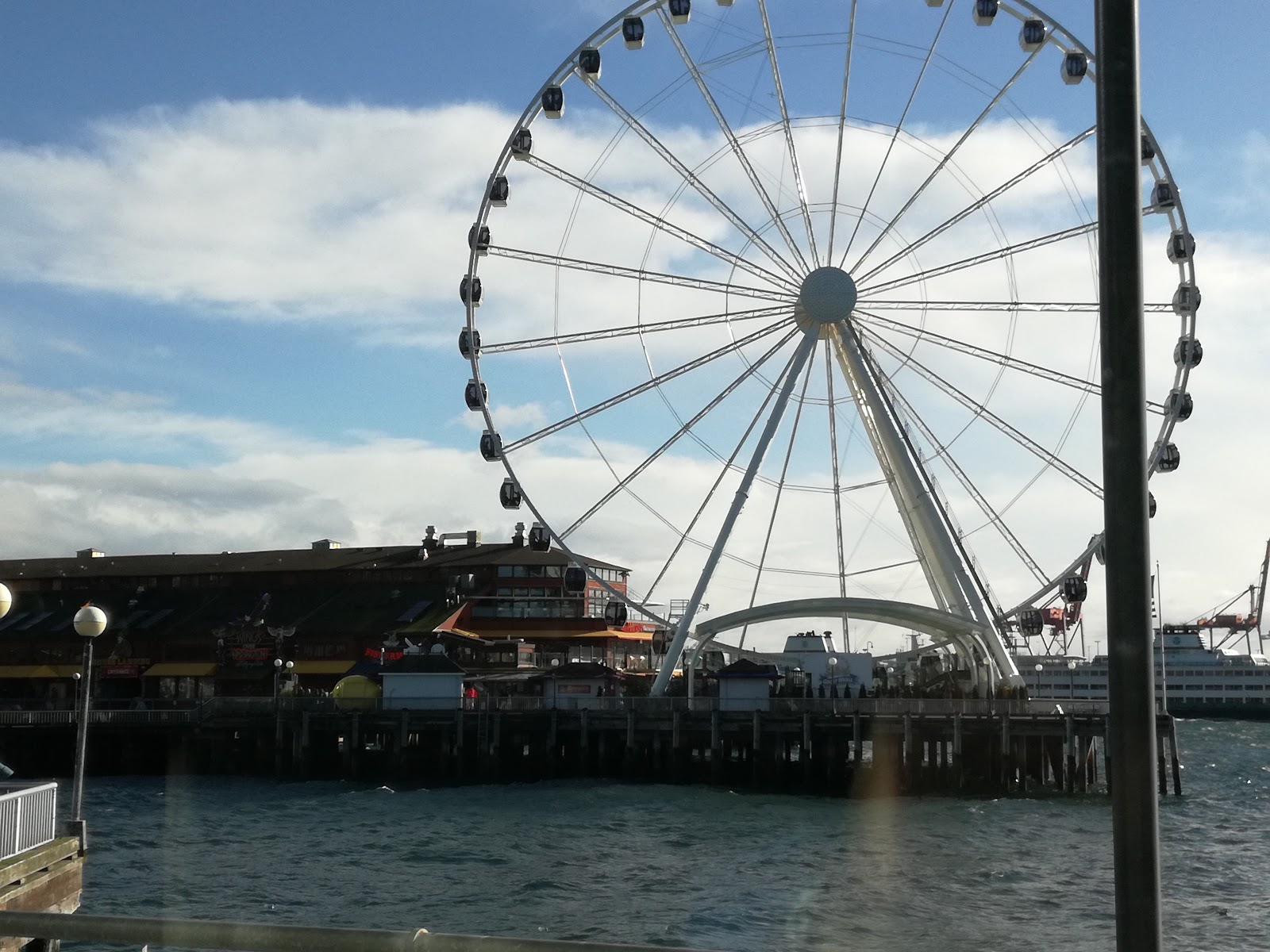
The Seattle Aquarium occupies a pier on the central waterfront, built out over Elliott Bay. Inside is an aquarium: dark, cool, lit almost entirely by illuminated tanks. Outside, a few steps from the door, is an unobstructed western horizon over open salt water with the Olympic Mountains standing on the far side of it.
Those are photographically opposite, and the one thing they compete for is the only twenty minutes in the day when either is at its best.
Take the outside first, because it is the stronger asset and most people underuse it. A pier on the western edge of a city, facing across open water at a mountain range, is a genuinely complete sunset composition: water, then a long serrated silhouette, then sky, with nothing in the near field to interrupt it. Very few venues in this library have that, and none of them has it four steps from the reception.
The water is open and moving, so it scatters rather than mirrors — a soft luminous sheen rather than a reflection, holding visibly brighter than the land for a long while after the sun has gone. The mountains flatten to a hard silhouette early, which gives the frame a clean lower edge.
And the latitude here is the most generous in this collection. At about forty-seven and a half degrees north, civil twilight runs close to thirty-seven minutes in midsummer, of which the usable balance point — where the sky and the city lights are within a stop of each other — lasts perhaps eighteen to twenty minutes. That is nearly double what a Gulf South venue gives you, and it is long enough for two or three positions rather than one.
Now the inside, which is a much more limited environment than couples expect and worth being honest about early.
Water absorbs light unevenly and it absorbs red first, so within a few metres of depth the red end of the spectrum is largely gone — which is why the sea looks blue, and why tank light is strongly weighted to blue and green with almost no red in it. At a cold-water Pacific aquarium that is more pronounced than at a tropical one, because the exhibits are darker and greener to begin with.
A face lit by that light has no red falling on it. Skin without red in it reads as ill, and white balance cannot recover it, because the wavelengths are not there to amplify — pushing the slider warm just adds noise to a channel with no signal. So tank light is background light, always, and never key light.
Which means: inside, every frame with a person in it requires light that you bring, and the tanks are a luminous coloured backdrop rather than an illumination source. That is entirely workable and it produces good photographs. It is simply not a place you can shoot on available light.
So the decision. If the couple’s priority is the water and the mountains, the schedule points outward and the twenty minutes belong to the pier. If it is the aquarium itself, the twenty minutes are irrelevant and the interior can be shot at any hour. Trying to have both inside the same twenty minutes is what produces neither.
What follows is each of those, then what the rest of the site gives you, then the year.
The Seattle Aquarium at a glance
| Where | An aquarium on a pier over Elliott Bay, central Seattle waterfront |
| The decision | Whether the balance-point window belongs to the pier or the interior |
| Outside | Open water, an Olympic silhouette, and an eighteen to twenty minute dusk |
| Inside | Tank light has no red in it — background only, never key |
| Ask first | Flash policy by room, after-hours availability, and pier access |
Why the decision governs, and what each side gives
Take the pier side properly, because the frame there is worth planning the whole evening around.
Find the position on a scout in daylight. What you want is an outlook where the western horizon is clean along its whole width — no piling, no moored vessel, no crane in the outline — with the mountain ridge visible and enough foreground deck to stand people on. Mark it.
Then work out where the sun will actually set, because at this latitude that moves a very long way through the year. In late June the sun sets well to the north of west; in late December well to the south of west. That is a swing of something like seventy degrees of azimuth, which means the position that puts the sun over the mountains in July will put it behind a building in January. Check it for the real date rather than trusting a summer scout — this is the single most common planning error at a west-facing venue this far north.
Once positioned, the frame builds itself. Meter the sky, not the water. Put the couple on the deck with the ridge behind them, small rather than large, and light them with one small warmed source at low power — because at any exposure that holds the sky and the silhouette, ambient will not expose a face. Feather the light so there is no visible pool on the decking, which is the commonest tell.
Get low. A camera near deck level compresses the water’s ripples into a luminous path running the depth of the frame and puts the mountains above the waterline rather than beside it.
Then use the eighteen to twenty minutes as the luxury it is. Two positions on the pier and one back inside against a tank is genuinely achievable in that window if all three are decided in advance, which is not true at a southern venue where you get ten minutes. Decide, walk, shoot, move.
Two cautions about the pier. It is exposed, and a marine westerly here is a regular condition rather than an occasional one — strong enough to make a veil unmanageable and a lightstand a hazard. Sandbag everything and tell the couple in advance that on some evenings the veil will not come up. And it is a public waterfront, so unless the booking closes the area there will be other people, some of them also photographing the sunset.
Now the interior, and the practical shape of working in it.
The default frame inside is a subject properly lit by you, positioned so a tank glows out of focus behind them at a wide aperture. That frame does not require being in front of any particular exhibit, it is repeatable in a dozen places, and it is the strongest interior photograph an aquarium gives. Build the interior coverage from it.
Expose for the tank and add light to the subject, aiming to put them about half a stop under the tank rather than matching it. A face slightly darker than a luminous background reads as correct; a face brighter than it looks pasted on.
Keep your light off the axis of any acrylic panel. Reflections, not darkness, are the main technical problem in an aquarium: the panels are thick, sometimes curved, highly reflective, and they sit between you and everything interesting. A source at forty-five degrees or more to the glass, and placed low or high rather than level with the camera, sends its reflection away from you. Test with one frame before placing people.
You will be reflected too, and so will everyone behind you. Wear dark clothing for the whole day — it is worth doing as a matter of course at an aquarium — and check the frame edges for a pale shape that turns out to be a guest. Pressing the lens against the panel eliminates your own reflection entirely when the composition allows it.
Through curved acrylic, shoot near the centre of the curve rather than its edge, and keep the camera perpendicular to the surface. A curved panel is a lens: straight lines bow, objects near the edge stretch, and oblique angles through thick acrylic produce visible colour fringing that is genuine refraction rather than a lens fault and cannot be corrected out.
Two things to ask about in writing. The flash policy, room by room — assume no flash toward any tank, and assume the reason is the animals rather than the photographs, but the answer for a function room is a separate question. And whether an after-hours window is available, which at an aquarium is a real product and changes the venue completely: the public gone, the paths empty, nobody leaning on the panels you want to shoot through.
Do not promise a specific animal in a specific frame. Many species are inactive or out of view, exhibits close at different times, and no aquarium will hold a keeper schedule for a photograph. Say that in February rather than disappointing someone at nine in the evening.
What follows from it: the pier, the waterfront and the city above
Once the decision is made, the rest of the site sorts itself into three zones and each has one thing to offer.
The pier structure itself is the first and it is more useful than it looks. A working timber and concrete pier is a set of hard repeated verticals and horizontals over water, and repetition photographed along its length compresses into a rhythm. Underneath, where the light comes off the water and bounces up through the structure, is a genuinely unusual condition: uplight onto a face from below, rippling and moving, which is the one direction no building ever provides. If there is safe accessible deck at that level, it is worth the walk.
Wet decking is the material to use. This is a city where the dominant condition is a light drizzle, and wet timber and concrete are more saturated and more three-dimensional than dry ones, with reflections giving a free second image. A Seattle pier in light rain photographs better than the same pier dry. Carry a cloth for the front element and work rather than waiting.
The second zone is the working waterfront either side, which is honest and photogenic in a way a landscaped promenade is not: ferries, container cranes, moored vessels, the machinery of a port. A ferry crossing behind a subject at dusk is a strong and very specific frame, and the ferries run frequently enough to be planned on rather than hoped for.
That is worth saying to a couple who might otherwise think of the industrial surroundings as a problem. A photograph that includes the port is a photograph of Seattle; one composed to exclude it could be anywhere.
The third zone is the city above, and it is the fallback when wind or weather closes the pier. Downtown here climbs steeply away from the water — the hills are glacial, left by an ice lobe that pushed down this trough and withdrew, with the street grid laid across them without much concession — so the streets running inland rise hard.
That gradient is a compositional tool. A subject standing uphill of the camera separates from their background by geometry alone, with no depth of field needed. A subject downhill has the street stacking up behind them. And from partway up any west-running block you are looking back over rooftops to the water, which puts a sightline with the bay in it a short walk from the door without needing the pier at all.
Find two of those street-end positions on the scout. They are the genuine wet-weather and high-wind alternative, and they are good enough to be a first choice rather than a consolation.
One scheduling consequence of all this. Because the interior is entirely independent of the hour — a tank at eleven in the morning is identical to a tank at eleven at night — the correct plan is to do interior coverage whenever is convenient and protect the outdoor window absolutely. That is the opposite of a venue whose interiors depend on daylight, and it makes the timeline unusually easy to build once the decision at the top of this guide is made.
Two practical matters. The pier is a public and operational structure, so establish what area your booking actually covers and whether any part of the deck is off limits. And an aquarium is warm and damp by necessity while the waterfront outside is cool and often wet, so a camera moving between them will fog — coming in, in winter, within seconds. Let it equalise rather than wiping it, which takes several minutes, and plan the first interior frames accordingly.
Elliott Bay, and the year
Seattle’s reputation is wrong in a specific way, and correcting it is the most useful thing in this section.
The city’s annual rainfall total is lower than Atlanta’s. What it has is days: something like two hundred and twenty-five a year with substantial cloud and around a hundred and fifty with measurable precipitation, most of that light drizzle over long periods rather than heavy rain over short ones.
So the dominant condition from October through May is a high, even, continuous overcast, and for a photographer that is a softbox the size of the sky. Shadows are soft to non-existent, faces are evenly lit at any hour, there is no bad time of day and skin tones need almost no work. On the pier that means a portrait at eleven in the morning in February is as good as one at four, which widens the day enormously.
What the overcast costs is the sunset. On an overcast evening there is no visible sun, no mountain colour and no gradient, and the frame to make instead is the city: warm lit windows against a grey-blue sky, wet streets holding reflections, the water gone to pewter. That is a genuinely good photograph and it is the one available on most evenings of the year, which means it should be the default plan and the clear-sky version should be the bonus. A photographer who has only planned for the mountain silhouette will be caught out four evenings in five.
July and August are the dry season and they surprise visitors: reliably sunny, warm rather than hot, with clear air and the longest twilight in this collection. They are the most dependable outdoor conditions of the year, which is why the city’s wedding season is compressed into a narrow window and why those dates book first.
Two honest cautions about late summer. Since the late twenty-tens, August and September have brought wildfire smoke from Cascade and British Columbia fires with some regularity. Smoke produces an orange low-contrast light that some people love, and it also produces genuinely poor air quality that makes an outdoor event on an exposed pier inadvisable. It cannot be forecast far out, so a late-August outdoor plan needs an air-quality contingency as well as a rain one.
And Mount Rainier, which is a different mountain from the Olympic ridge to the west. Rainier stands some ninety kilometres to the south-east and is visible only when the air is clear — perhaps a third of days, concentrated in summer. Never promise a frame with Rainier in it. The Olympics to the west are nearer and visible far more often, but they too disappear in low cloud, which at this venue matters because they are half the composition. On a low-cloud evening the sunset frame is water and sky without a ridge, which is simpler and still works.
The latitude produces the largest seasonal swing in this collection and it has to be planned around rather than discovered. In late June the sun sets after nine, the noon sun reaches about sixty-six degrees, and there are roughly sixteen hours of daylight. In late December the sun is gone by half past four, the noon sun never exceeds about nineteen degrees, and there are about eight and a half hours. A schedule that works in July is wrong in January by four and a half hours.
That midsummer noon figure of sixty-six degrees is worth dwelling on, because it is a full seventeen degrees lower than the Gulf South equivalent. It means the summer midday sun here still has direction in it: it models a face rather than flattening it, open shade works, and a portrait on an open deck at one in the afternoon is a reasonable proposition. Midday is not the write-off it is further south.
The winter noon sun at nineteen degrees rakes everything all day, which on a clear December afternoon makes the entire period from eleven to three the best light of the year — low, warm, directional, across water. The catch is that most winter days are not clear and the levels are low.
October through May is the soft season and it is better than its reputation for one regional reason: this is evergreen country. Douglas fir, western red cedar and western hemlock keep dark green mass through the winter, and the moss on trunks, walls and roofs is at its most vivid in the wet months. A February frame here has more colour in it than a February frame almost anywhere else in this library.
Winter’s real constraint is darkness rather than cold — it is mild here and rarely freezes hard. Eight and a half hours of daylight, mostly overcast, means the usable outdoor window on a December day runs from about nine to half past three, and the balance point falls before half past five, during cocktails. A winter wedding here is an interiors wedding with one short outdoor window, and the honest plan is to use that window deliberately rather than discovering at four that it has gone.
Which brings it back to the one decision. Make it early, write the outdoor window on the timeline with a name against it, and this is one of the most rewarding evenings in the city to photograph.
More frames from The Seattle Aquarium
The Seattle Aquarium wedding photography: common questions
What is the one decision?
Whether the twenty minutes at dusk belong to the pier or the interior. Outside is an unobstructed western horizon over open water with the Olympic ridge behind it — a complete sunset composition four steps from the reception. Inside is a dark blue room that is identical at eleven in the morning and eleven at night. Because the interior is independent of the hour, the sensible answer is almost always to shoot inside whenever is convenient and protect the outdoor window absolutely.
Why can't we shoot on the tank light?
Because water absorbs red first, so within a few metres of depth the red end of the spectrum is largely gone — which is why the sea looks blue and why tank light is strongly blue and green. At a cold-water Pacific aquarium that is more pronounced than at a tropical one. Skin lit with no red falling on it reads as ill, and white balance cannot recover it because the wavelengths are not there to amplify. Tank light is background light, always. Every interior frame with a person in it needs light you bring.
What is the biggest technical problem inside?
Reflections rather than darkness. The acrylic panels are thick, sometimes curved and highly reflective, and they sit between you and everything interesting — so you, your lights and the visitors behind you all appear in frame. Keep your source at forty-five degrees or more to the glass and low or high rather than level with the camera, wear dark clothing for the whole day, and press the lens to the panel when the composition allows, which removes your own reflection completely.
Where will the sun actually set?
That depends heavily on the date, and it is the most common planning error at a west-facing venue this far north. At forty-seven and a half degrees the sun sets well north of west in late June and well south of west in late December — a swing of something like seventy degrees. A position that puts the sun over the mountains in July can put it behind a building in January. Check the azimuth for the real date rather than trusting a summer scout.
What if it is overcast — which it usually is?
Plan for it as the default rather than the fallback. On an overcast evening there is no sun, no mountain colour and no gradient, and the frame to make instead is the city: warm lit windows against a grey-blue sky, wet streets holding reflections, the water gone to pewter. That is available on most evenings of the year. Also note that wet decking and stone are more saturated and three-dimensional than dry, so light rain improves the exteriors rather than spoiling them.
When is the best time of year?
July and August — genuinely the dry season here, reliably sunny, warm rather than hot, with clear air and civil twilight close to thirty-seven minutes, the longest in this collection. Two cautions: late August and September now bring wildfire smoke with some regularity, which on an exposed pier is an air-quality question as well as an aesthetic one; and a December wedding is an interiors day with one outdoor window between about nine and half past three, with the balance point falling during cocktails.
More Seattle, WA venue guides
We are writing a photographer’s guide to every venue we would happily shoot in Seattle, WA. Here are three more, plus the full index:
- The Seattle Art Museum, Seattle: A Walk Through the Building
- The Thompson Seattle, Seattle: The Light Through the Day
- The Four Seasons Seattle, Seattle: Suits and Does Not Suit
Planning a wedding at The Seattle Aquarium?
One decision, made early, and the timeline writes itself. Tell us your date.