Providence is a small city with an unusually good set of photographic assets in it, and the useful thing about them is that they are within walking distance of each other. The venues in this collection are both grand early-twentieth-century interiors — a hotel of 1922 and a library of around 1900 — which means they share one governing condition: the light is brought rather than found. Marble lobbies are lit by fixtures, ballrooms by chandeliers that sit in the frame and are far brighter than anything they illuminate, and period reading rooms by whatever the institution has installed.
Windows exist and are useful, but there is no room in either building that can be photographed on available light at a sensible quality. Bring two lights and a plan. The surfaces divide the lighting approach and the division decides it room by room, so check every ceiling on arrival. Pale plaster and pale marble are efficient bounce surfaces: one light aimed at a wall or a high ceiling lifts a room by a stop and a half and leaves no evidence, which is the cleanest way to light a period interior.
Dark timber and heavily decorated ceilings are the opposite, absorbing almost everything sent at them and putting you on a modifier close to the subject instead. Warm whatever you bring in either case, because filament, table lamps and chandeliers are very warm and a neutral flash in that ambient reads cold and looks inserted. And do not average the colour: choose the dominant source, balance for it, gel your own light to match, and let the rest fall, because averaging is what makes grand interiors photograph grey and dead.
Polished floors are the other recurring fact — a lit subject standing on marble, terrazzo or parquet gets a second dimmer image beneath them for nothing, though only from a camera down at about a metre, and it also means every light you put up appears twice, so check the frame for reflections of your own stands.
Outside, four things are worth walking to and each is a different register. The state house stands on rising ground above the downtown carrying one of the largest self-supporting marble domes anywhere — a monumental classical building on open lawn, which makes it a scale frame: two small figures on grass with a white dome behind them, photographed dead on the centre line or firmly off axis and never two degrees off, in low raking light, because at noon it is a flat white plane. The river runs through the middle of the city with walkways, bridges and stone embankments, giving reflections, low camera positions and bridges as frames.
And the river carries something worth building a whole wedding around: on scheduled evenings a public art installation lights a long line of braziers in the middle of the water, so there are open fires burning on the river at dusk with the walkways full of people, warm light on stone embankments, and a foreground of practical flame that no other city offers. Check the schedule, because it runs on specific dates rather than every evening — and if a wedding date coincides, the dusk session belongs on the river and nowhere else.
Two technical notes for it: fire is very warm and very bright relative to a dusk sky, so expose for the flames and let the surroundings go or light the couple with a warmed source to match; and a long exposure turns individual flames into soft continuous glows while a short one freezes their shape, so decide rather than defaulting. Third, the colonial hill east of the river has an unusually intact street of eighteenth and early-nineteenth-century houses — painted clapboard and brick with fanlights and ironwork, on a slope — which is a completely different material world from a marble interior and a fifteen-minute walk.
The slope also gives gradient, which separates a subject from a background by geometry alone. Fourth, the downtown's own commercial architecture is from the same decades as the venues, in stone, brick and terracotta, so exterior frames within a block sit naturally beside the interior ones: look for a large flat field of stone at a long focal length, and a deep doorway that gives a band of open shade, the latter being the answer to the middle of a summer day. Providence sits at about forty-two degrees north in a humid continental climate with four distinct seasons.
Civil twilight runs roughly thirty-one minutes in midsummer with a usable balance point of thirteen to sixteen — among the longer dusks in this library, generous enough for two exterior positions if both are decided in advance. The midsummer noon sun reaches about seventy-two degrees, meaningfully lower than the South's, so midday outdoors still has direction in it and open shade functions properly; the midwinter noon sun sits near twenty-five degrees and rakes stone from late morning to mid-afternoon, which is the best exterior light of the year and lasts hours rather than minutes.
Late September into early November is the strongest window: the summer humidity drops out so stone reads crisply, temperatures suit walking in formal clothing, sunset lands around six so the balance point falls at a civil hour, and New England's colour peaks in the second half of October — street trees and the hill above the river rather than open country, but genuine and brief. May into June is the other good window, mild and lengthening, with sunset after eight by late June.
Summer is entirely workable with the middle of the day given to the interiors, which at these venues costs nothing at all because a marble lobby or a period reading room is identical at every hour. July dewpoints around seventy fill shadows by roughly two stops outdoors, at the cost of a pale washed sky and a lens that fogs coming out of an air-conditioned building — and in a building with collections the air conditioning will be firm, so that transition is recurring.
Thunderstorms pass quickly in the warm months and the half hour afterwards is the best exterior light of the year: washed air, wet stone several tones darker and far more saturated, reflections in the street and the river doubling everything, and a low sun under a broken ceiling into a street canyon. Winter is long and cold, with sunset before half past four in late December, snow in most years and temperatures well below freezing — which puts the balance point before five, during cocktails and therefore a named timeline item, and limits any outdoor session to minutes.
In exchange, winter is when grand interiors are at their strongest: their value is entirely independent of the season, chandeliers read at their best against early darkness, and a January date will be easier and cheaper to book than an October one. The hazard is the nor'easter, which brings wind and heavy wet snow to this coast and is a travel problem for guests and suppliers rather than a photographic one, so a winter date deserves a contingency that assumes some people cannot drive.
And one instruction applies at both venues in every month: photograph the rooms empty in the first twenty minutes you are on site, before the tables and chairs and flowers arrive. A domed hall, a ballroom or a Beaux-Arts reading room with nobody in it is one of the finest architectural subjects the city offers, and once it is dressed you will not see it again that day.
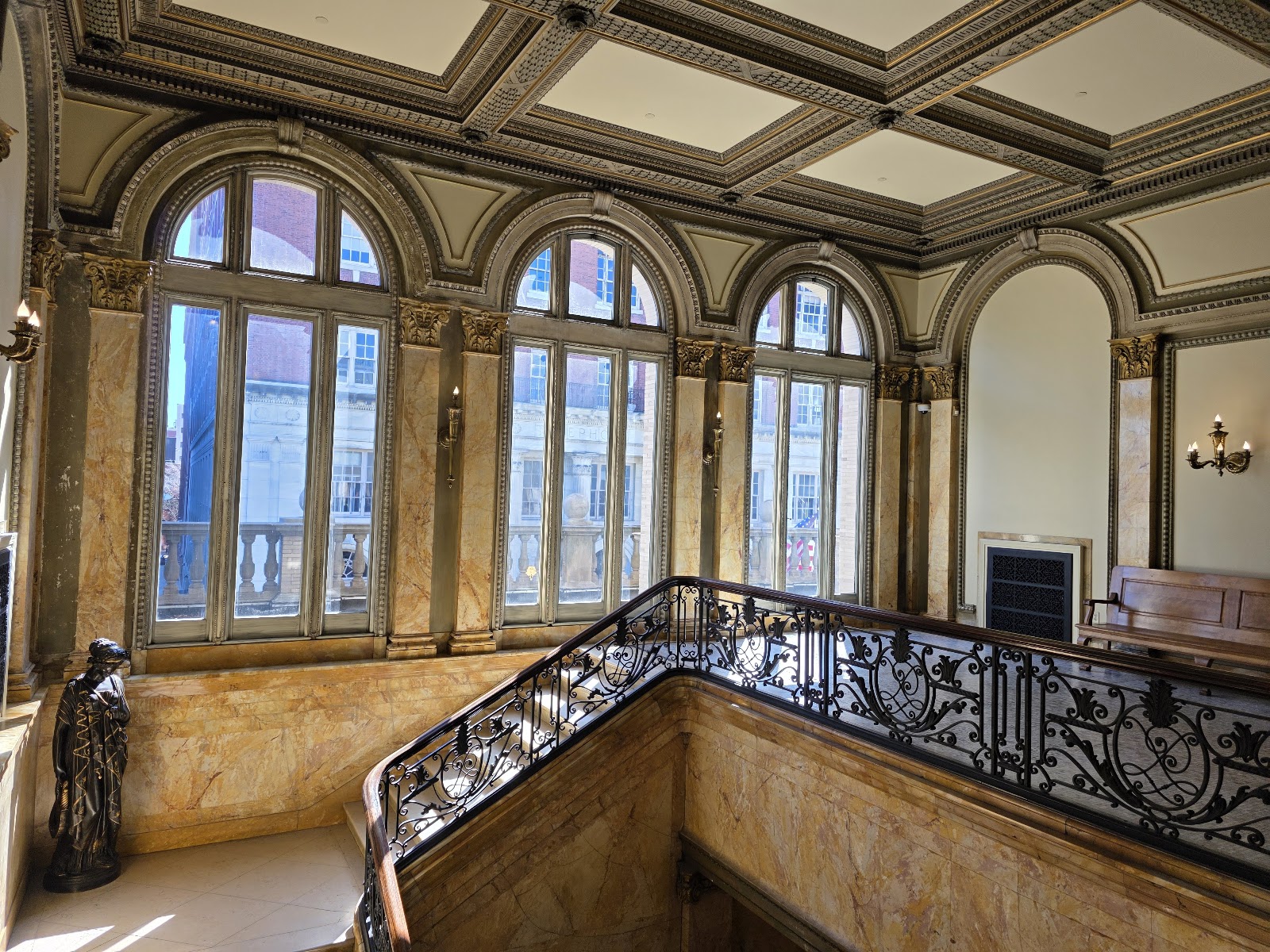
The Providence Public Library, Providence: The One Decision That Governs Everything
A 1900 Beaux-Arts library with a thoroughgoing modern renovation attached — two buildings, and a choice per frame.
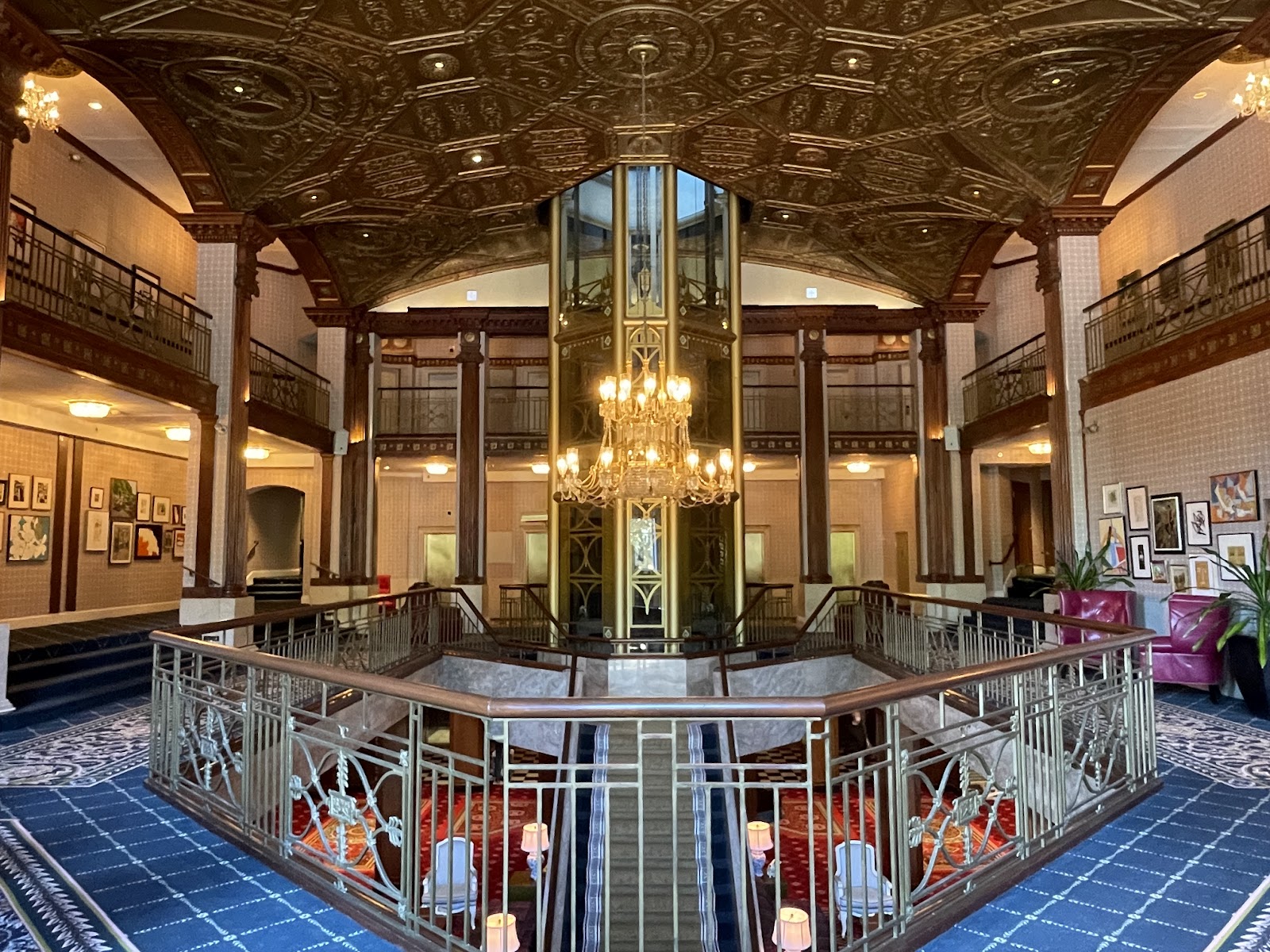
The Graduate Providence, Providence: The Venue’s Own Logic
A 1922 grand hotel with a marble lobby, a ballroom above it and a glass lift running up the outside.