Colorado Springs sits at about six thousand feet, and altitude is the first thing that governs every exposure here. Roughly twenty percent less atmosphere above the camera means roughly twenty percent less scattering, and that has four consequences. The direct beam is more intense, because less of it is absorbed or scattered away. The shadows receive almost no fill, because scattered light is what illuminates shadows and there is less of it — so the gap between a lit surface and a shaded one at six thousand feet is measurably wider than at sea level for the same sun angle.
That is the single most important practical fact in this city: contrast is higher than sea-level experience suggests, and a subject half in sun and half in shade is a five-stop problem rather than a three-stop one. Put people entirely in one or the other, and entirely in shade is almost always better for faces. The sky is a deeper blue, because reduced Rayleigh scattering lets the shorter wavelengths dominate more cleanly — which looks magnificent and creates a colour problem, since open shade is lit almost entirely by that sky and reads distinctly cool while sunlit rock and stucco read warm.
An ungelled flash in shade puts a slightly green face into a frame that is warm above and cold below, and warm-gelling every source by a quarter to a half is the single most reliable correction in Colorado. It should be the default rather than a remedy. And the air is exceptionally clear, which means distant subjects hold detail and contrast in a way they never do in humid country.
Two human consequences are worth mentioning because they change how a day runs rather than how it photographs: ultraviolet is about a quarter higher than at sea level, so a party outdoors for a long ceremony burns faster than the temperature warns them; and six thousand feet is enough to feel for anyone arriving from sea level, with shortness of breath, faster fatigue and a markedly lower alcohol tolerance. Pacing the formal photographs accordingly produces better expressions.
The second governing fact is Pikes Peak, and the key point is counterintuitive: it is a morning subject. The mountain lies west of the city at over fourteen thousand feet, some eight thousand above the plains, which means its eastern face — the side every Colorado Springs venue sees — is front-lit from sunrise until about midday and falls into its own shadow after. By evening it is a flat silhouette against a bright western sky. That reverses the usual mountain-venue logic, where the peak takes the last light, and it means the mountain portraits belong before the ceremony rather than after it.
The peak also wants a long lens: a dozen miles off it subtends only ten or twelve degrees, so a wide lens renders it as a low pale ridge while a telephoto brings it forward into the mass the eye perceives. Expose for the summit about two thirds of a stop below clipping, because a blown peak has no ridges or couloirs in it at all. Snow caps it from roughly October into June, so a white summit against a deep blue sky — the state's signature frame — is available for two-thirds of the year.
The mountains also shorten the day: a fourteen-thousand-foot range to the west blocks the sun well before a flat horizon would, so the golden hour ends earlier than any app predicts and it is worth asking a venue when the sun actually leaves the terrace you are using. The compensation is the lag, which is the region's most reliable good light — after the sun drops behind the range the high rock stays lit while the ground goes into shade, giving a subject in soft even shadow against a warm lit mountain at a ratio one modest source bridges. It happens every clear evening. Three closing notes.
The Garden of the Gods is the city's other landform and it is geologically specific: the Fountain Formation, red sandstone laid down some three hundred million years ago and then tilted nearly vertical when the Front Range rose — which gives a landscape of thin upright slabs rather than horizontal beds, and therefore strong verticals, which is unusual. Red sandstone washes toward orange-grey under a high sun and goes to a genuine deep brick red in low frontal light, so it is an evening subject.
Summer from July into August brings near-daily afternoon thunderstorms, and the Front Range is among the most hail-prone regions in North America with hail large enough to cause real damage — so a covered alternative must genuinely exist rather than be listed, and lightning above six thousand feet is a reason to be indoors immediately. The half hour after a cell passes is the best light of the year: washed air at its clearest, wet red rock deeply saturated, a low sun under a broken ceiling and often a rainbow over the plains.
And late September into early October is the best window — aspen turning gold in clonal blocks at altitude, since a grove is genetically one organism and turns all at once; Gambel oak going russet-bronze on the lower slopes; the clearest air of the year; the storm season over; and Pikes Peak taking its first snow. Civil twilight here runs only about twenty-seven minutes, shorter in practice because of the mountain, so the end of the day needs its two or three frames known in advance and walked to rather than discussed.
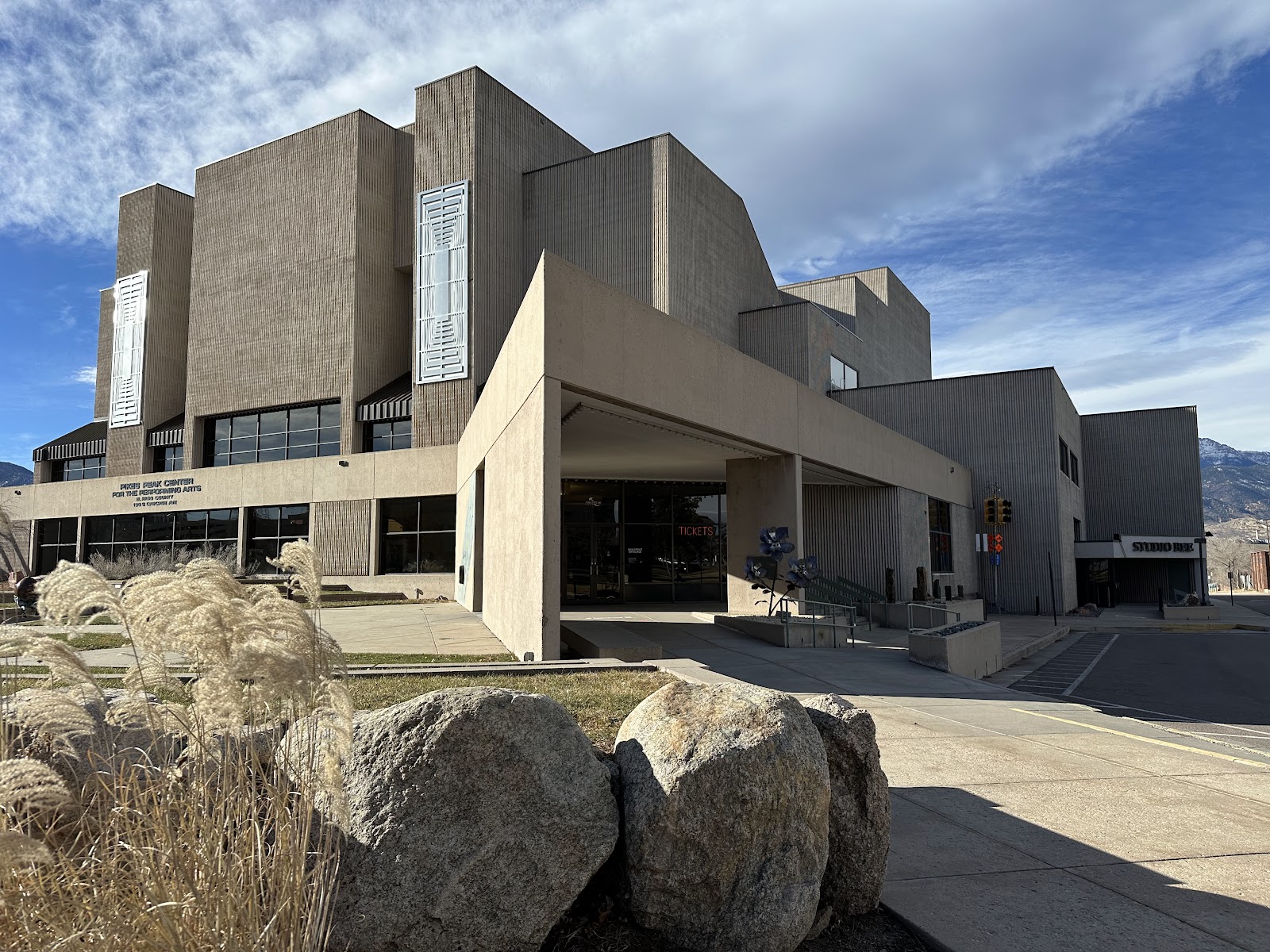
The Pikes Peak Center: The Problem, and Four Ways Out of It
A performing arts centre in downtown Colorado Springs — a building that excludes daylight on purpose.
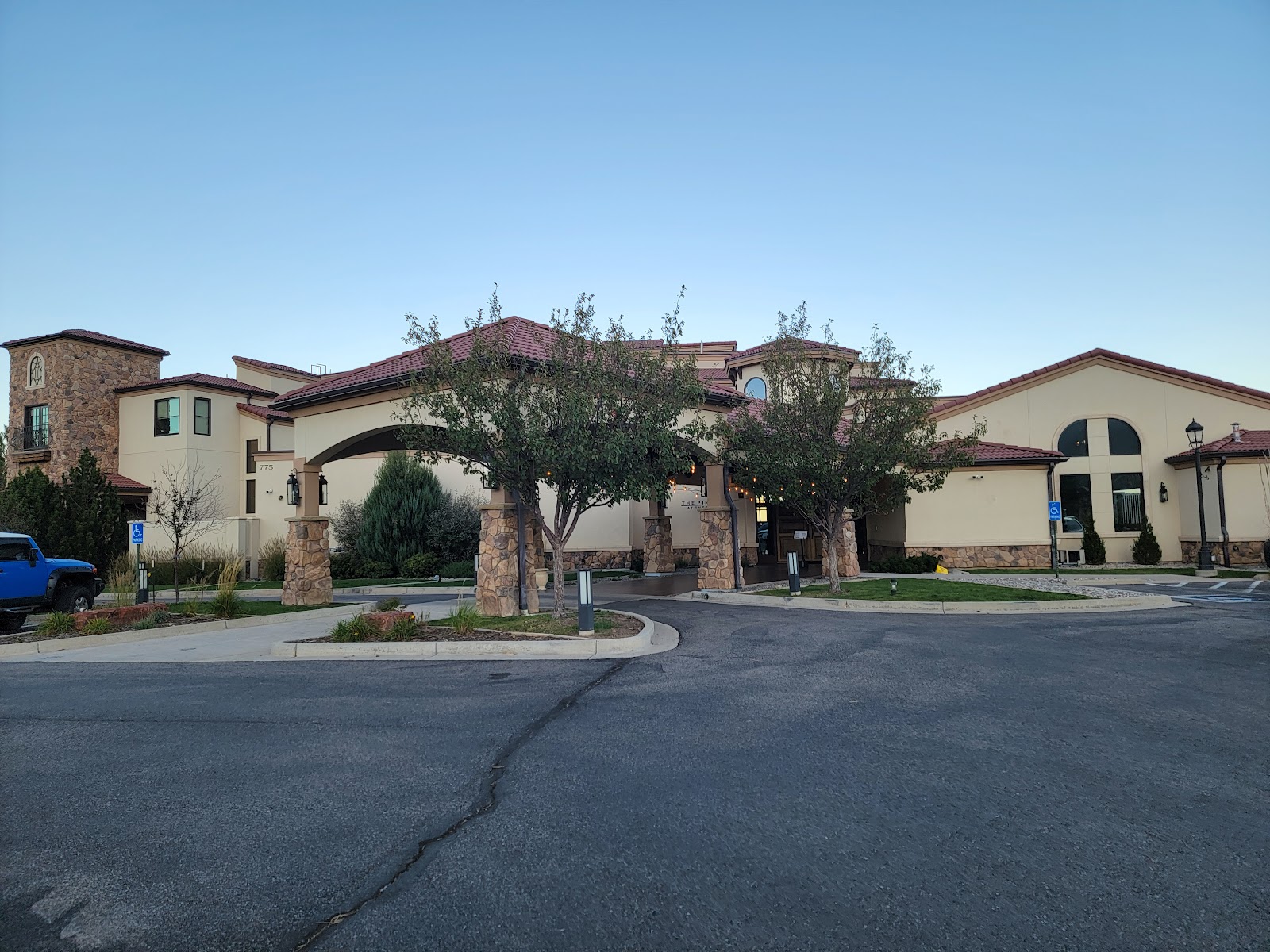
The Pinery at the Hill, Colorado Springs: One Frame, and How It Is Made
An event venue on a rise above Colorado Springs, with a fourteen-thousand-foot mountain filling the western view.
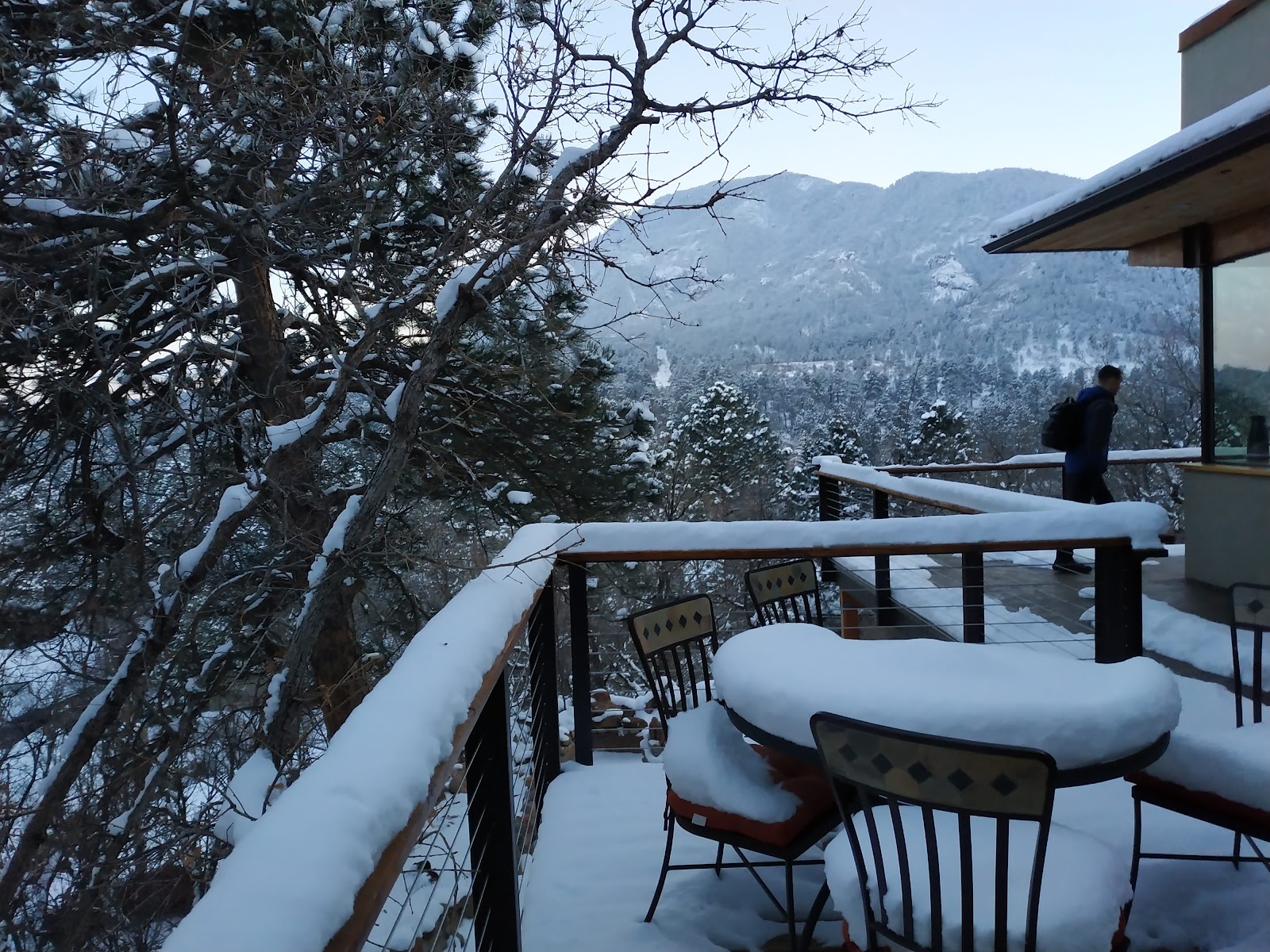
The Cheyenne Canon Inn: The Venue’s Own Logic
A 1920s house at the mouth of a canyon in Colorado Springs — a position that decides the light and the air.
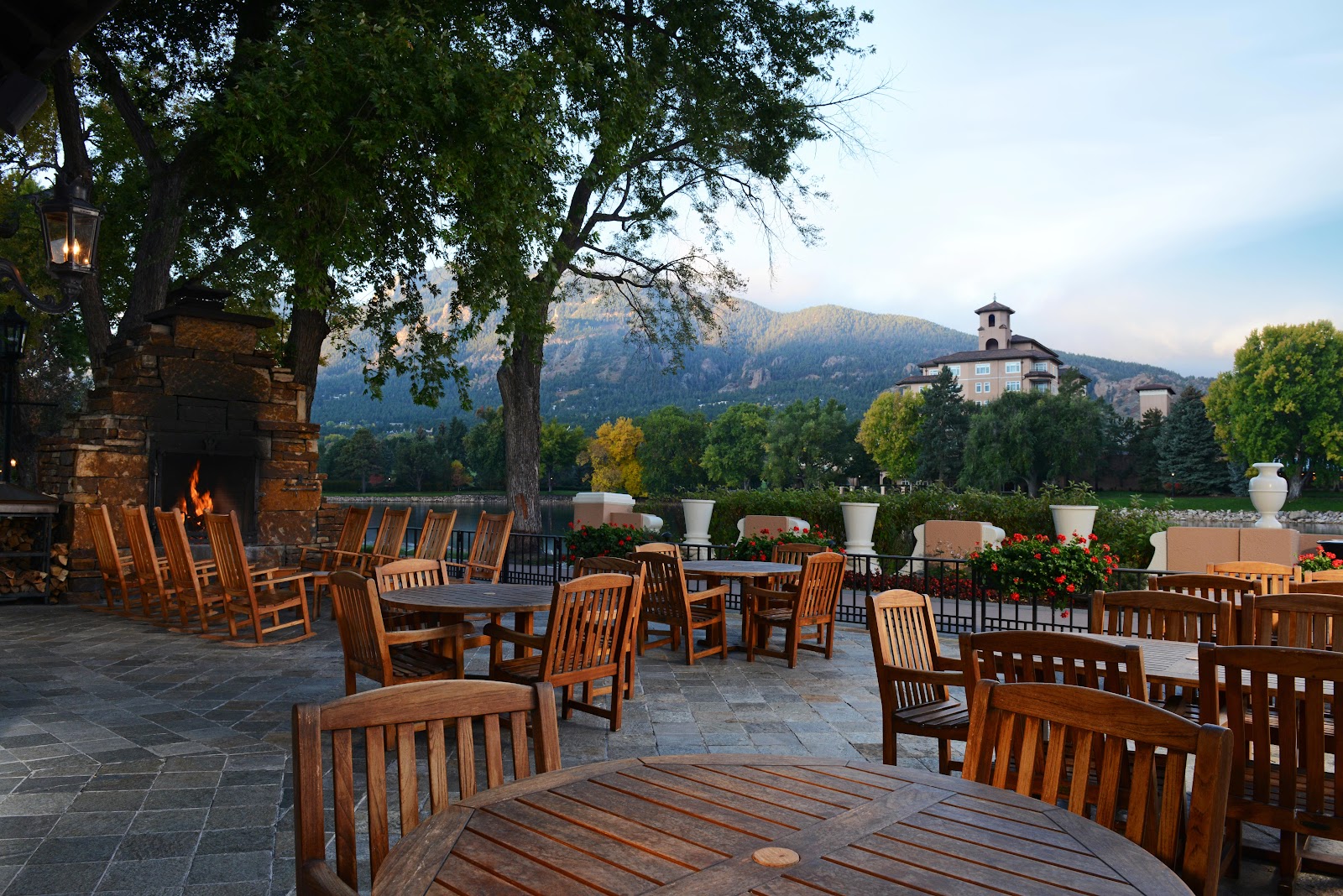
The Broadmoor: What It Suits, and What It Does Not
A 1918 grand resort at the foot of the Front Range — Mediterranean Revival at a scale that decides everything.
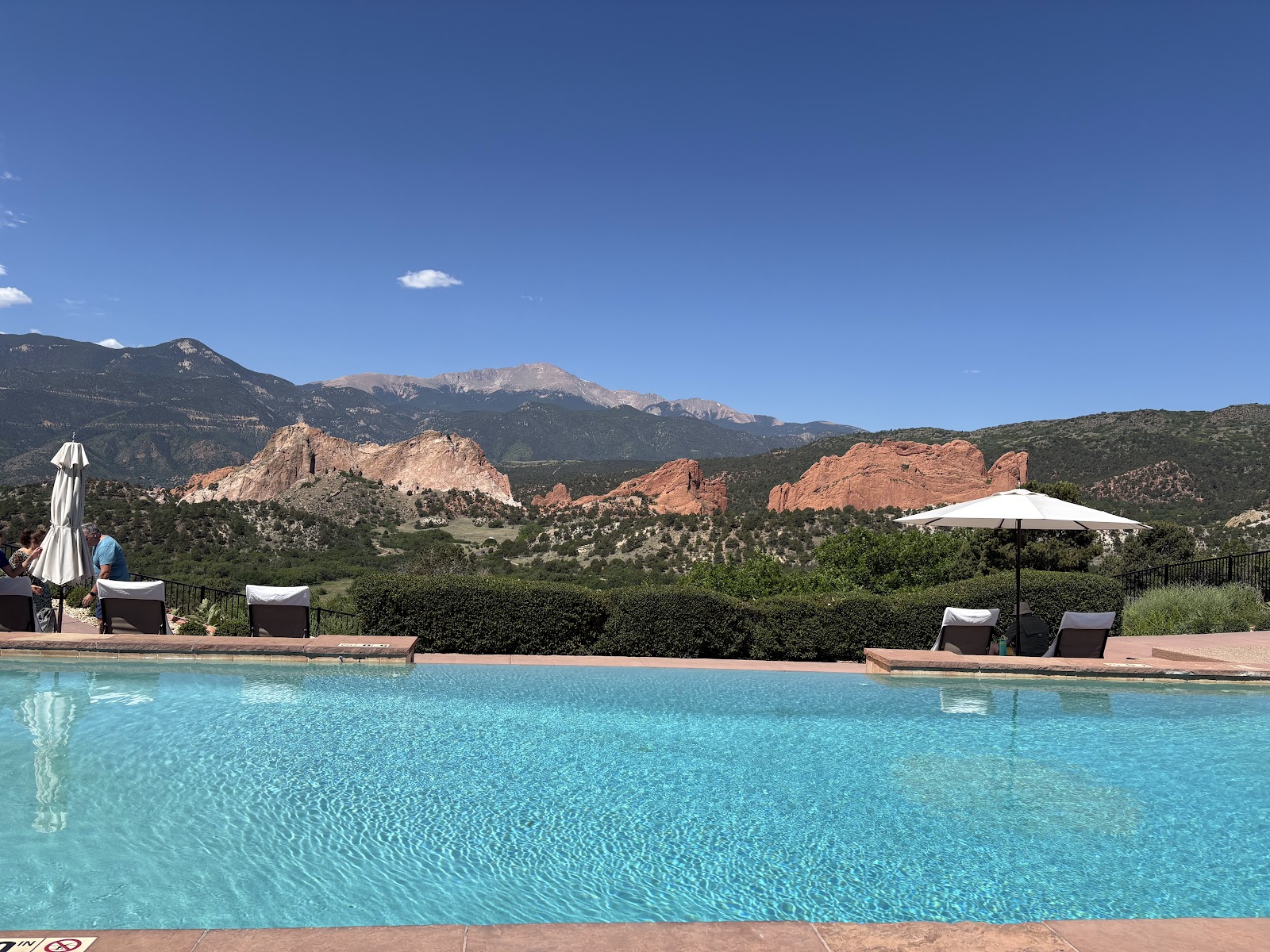
The Garden of the Gods Club: The One Decision That Governs Everything
A club beside the Garden of the Gods, with vertical red sandstone one way and a fourteen-thousand-foot peak the other.