 The Rio, Las Vegas: A Walk Through an Off-Strip Resort
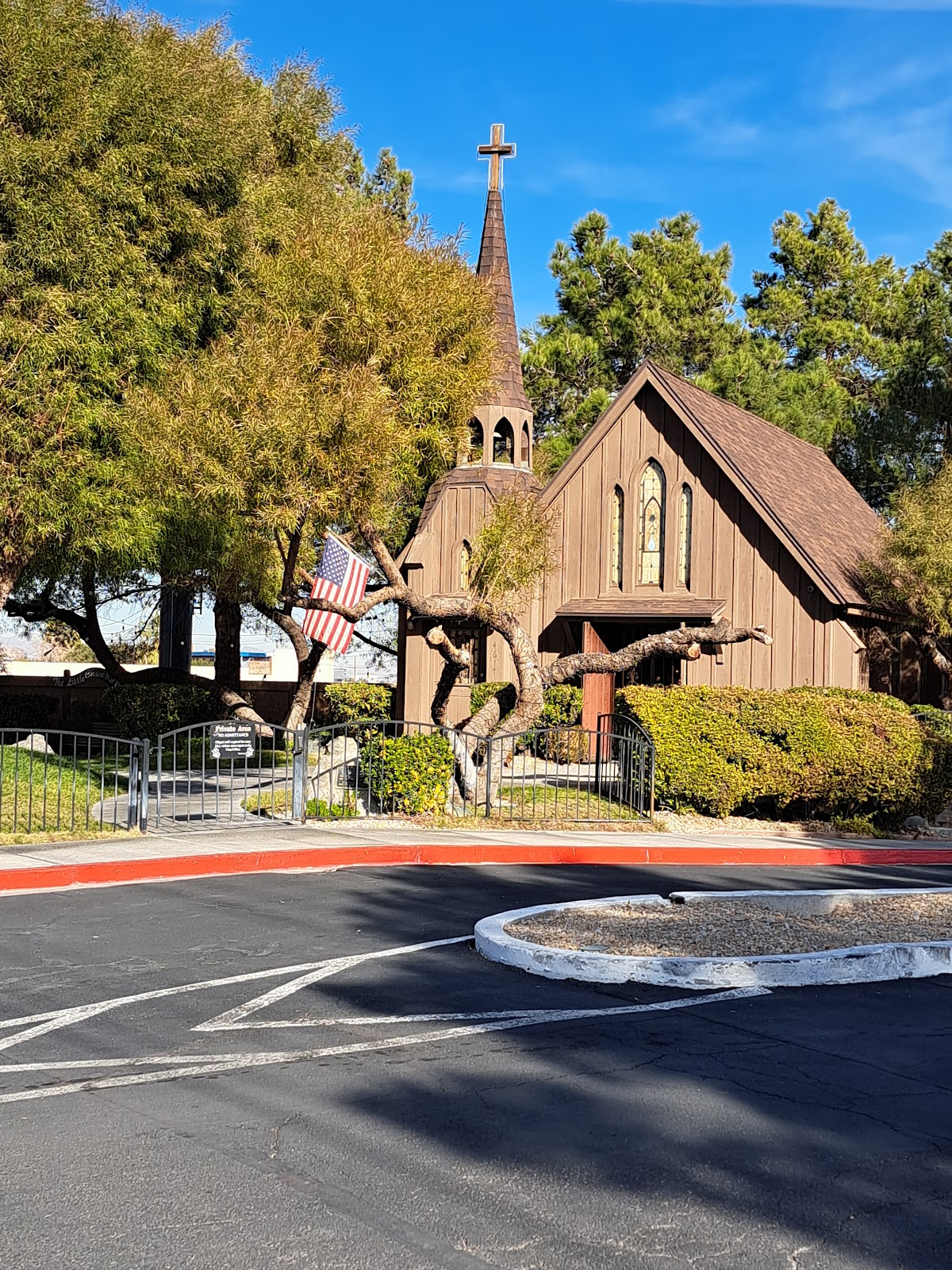
The Little Church of the West, Las Vegas: A Walk Through a Timber Chapel
Dark timber absorbs almost everything you give it. Planted ground outside gives most of it back.
A small timber chapel presents a pair of conditions that work against each other in a useful way, and knowing both before arriving decides how the day is photographed.
Inside, dark wood absorbs light. Timber walls, timber ceiling, timber pews and dark finishes put a room several stops below a pale one with identical fittings, and they return almost nothing to a bounced flash. A small room that would normally be easy to light becomes a room that needs a source aimed at people.
Outside, planted grounds do the opposite. Trees and shrubs around a small building give shade, and in the Mojave shade is the scarcest photographic commodity there is — so a chapel with mature planting around it has better natural light than almost any built venue in the city.
This is the walk through, in order. We have not photographed a wedding at the Little Church of the West; small timber chapels and planted desert grounds behave consistently. Ceremony length, permitted camera positions, capacity and which outdoor areas may be used are questions for their team.
The Little Church of the West at a glance
| Where | Las Vegas, Nevada |
| Inside | Dark timber, several stops down, and almost no bounce |
| Outside | Planted grounds, which in this climate means real shade |
| The one position | Established before the couple arrives; the ceremony is short |
| Ask first | Ceremony length, permitted positions, outdoor areas, timings |
Outside first, and the grounds
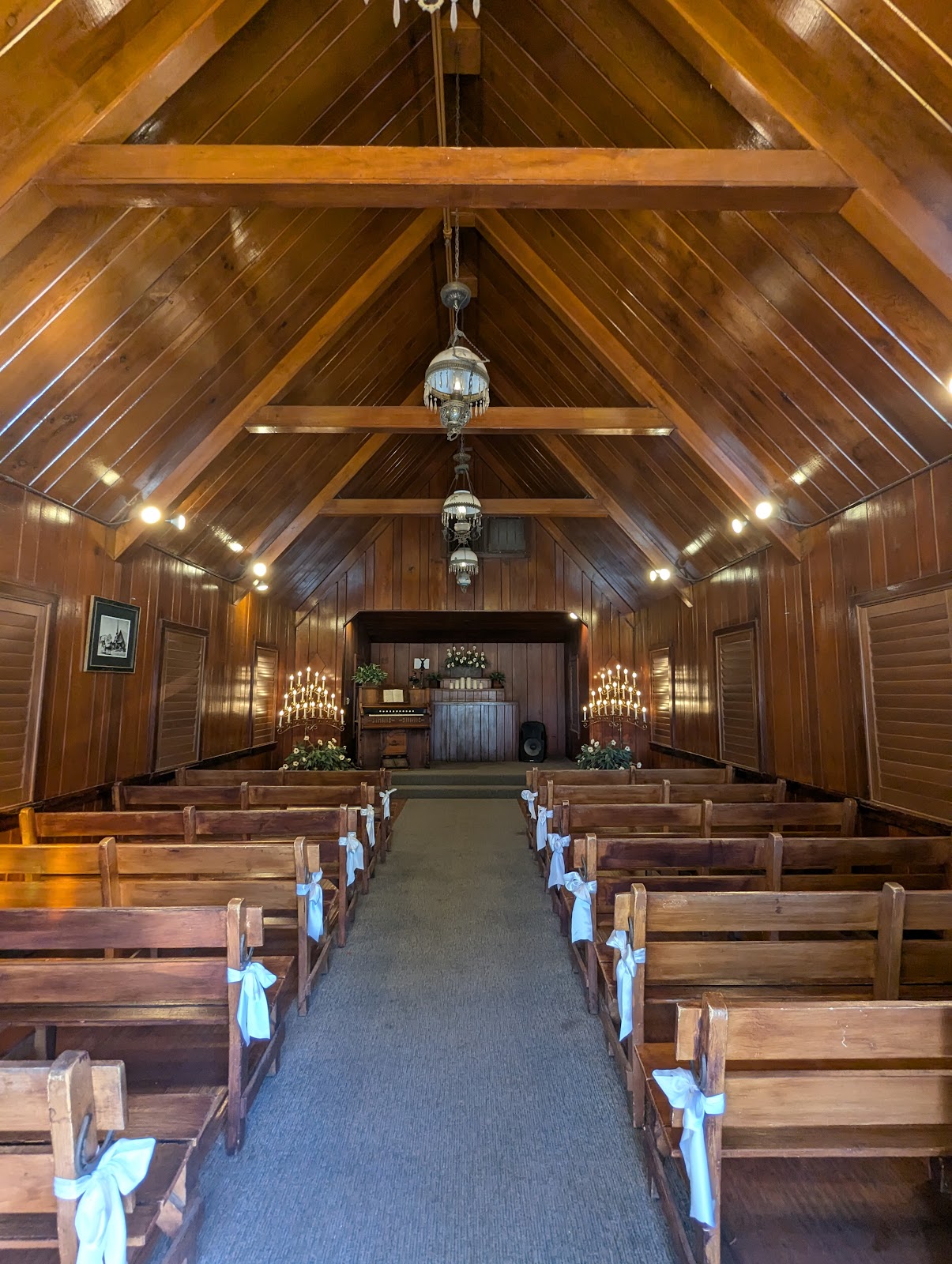
The exterior gets photographed first because a small chapel can be photographed whole — which in Las Vegas is genuinely unusual, since no Strip resort fits into a frame from any standing position. A timber church with the desert light on it, entire, with the couple in front, is one picture that records the day.
The grounds are the real asset and they should be understood as shade rather than as scenery. In this climate, at about thirty-six degrees north, the June midday sun sits roughly seventy-seven degrees above the horizon, and with very dry air scattering almost nothing the light comes down hard and straight: black eye sockets, a hard shadow under every chin, and a contrast range beyond what a sensor holds. Planting is the only thing that intercepts that.
But it has to be the right kind of shade, and the distinction is the one that decides whether the frames work. Full open shade — the whole subject shaded, with no direct sun reaching them — is excellent, and better in the desert than elsewhere, because the pale ground bounces light back up into the shadows a high sun carves. Dappled shade, where sun comes through a canopy in patches, is the worst light available: bright patches and deep shade on the same face within centimetres, at a ratio nothing can hold.
So the positions worth having are the ones in complete shade — the shadow side of the building, under a dense tree rather than a thin one, or behind a wall. Those should be located on arrival rather than searched for during a portrait block, and there are usually two or three.
Planting also throws colour. Dense green foliage puts a green cast on skin from whichever side it sits, localised enough that global white balance cannot separate it from the subject — and a metre further from the foliage roughly halves it. A custom white balance set on a face in the position being used is the fix, or one gelled source owning the faces.
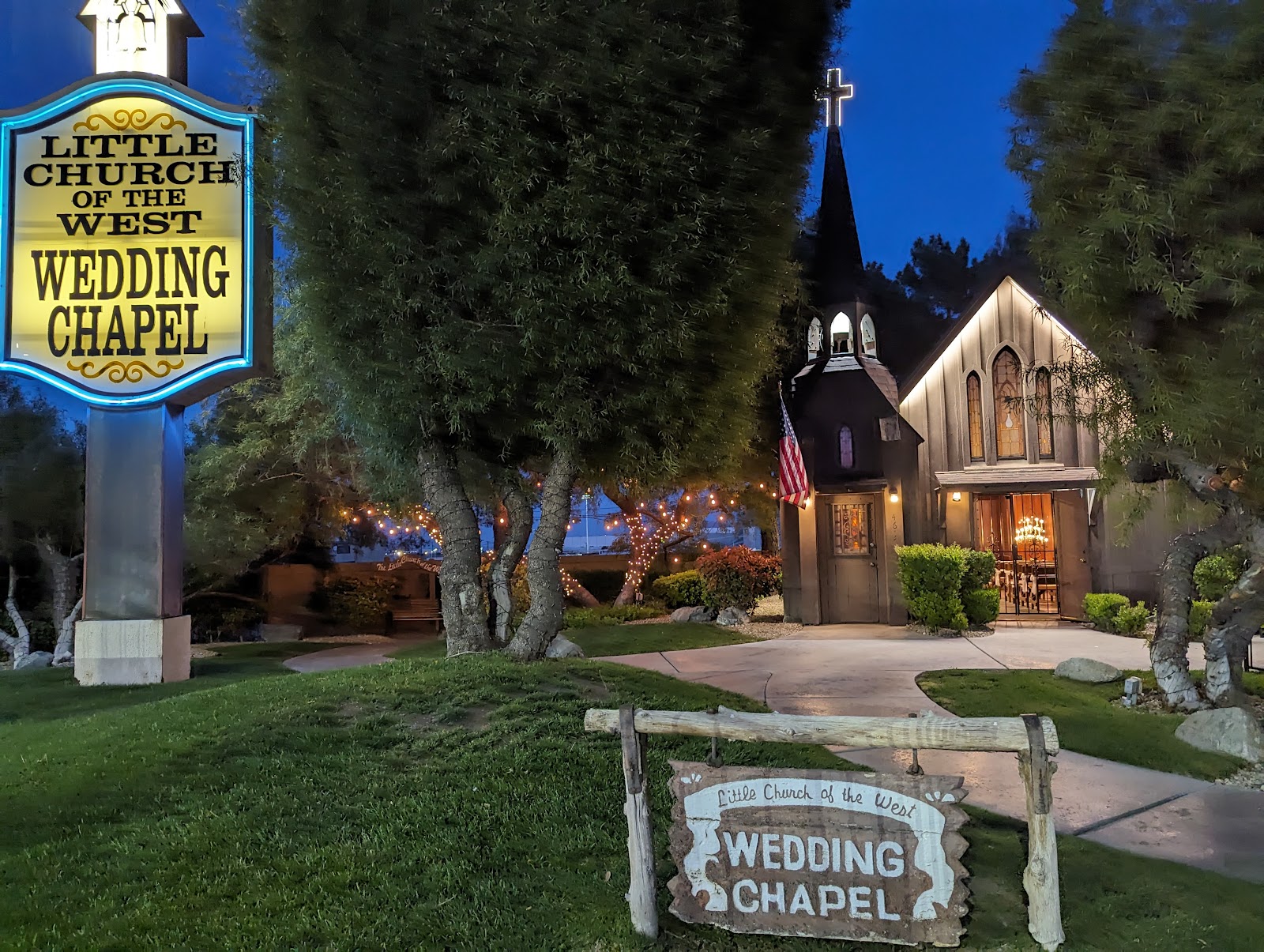
The best hours outdoors are the first hour after sunrise, the last hour before sunset, and roughly twenty-five minutes after it, when the sky still holds deep colour. That last window is short here because the dry air gives little afterglow, and it is the frame worth scheduling rather than hoping for — with a timber church and planted ground silhouetted against a desert dusk sky, it is the strongest picture the site gives.
And a recessed entrance or porch, if the building has one, is the reliable position in any weather: a roof above with walls to the sides and one open face makes a directional soft source at exactly the right size for two people.
Inside: the aisle, the timber, and the vows
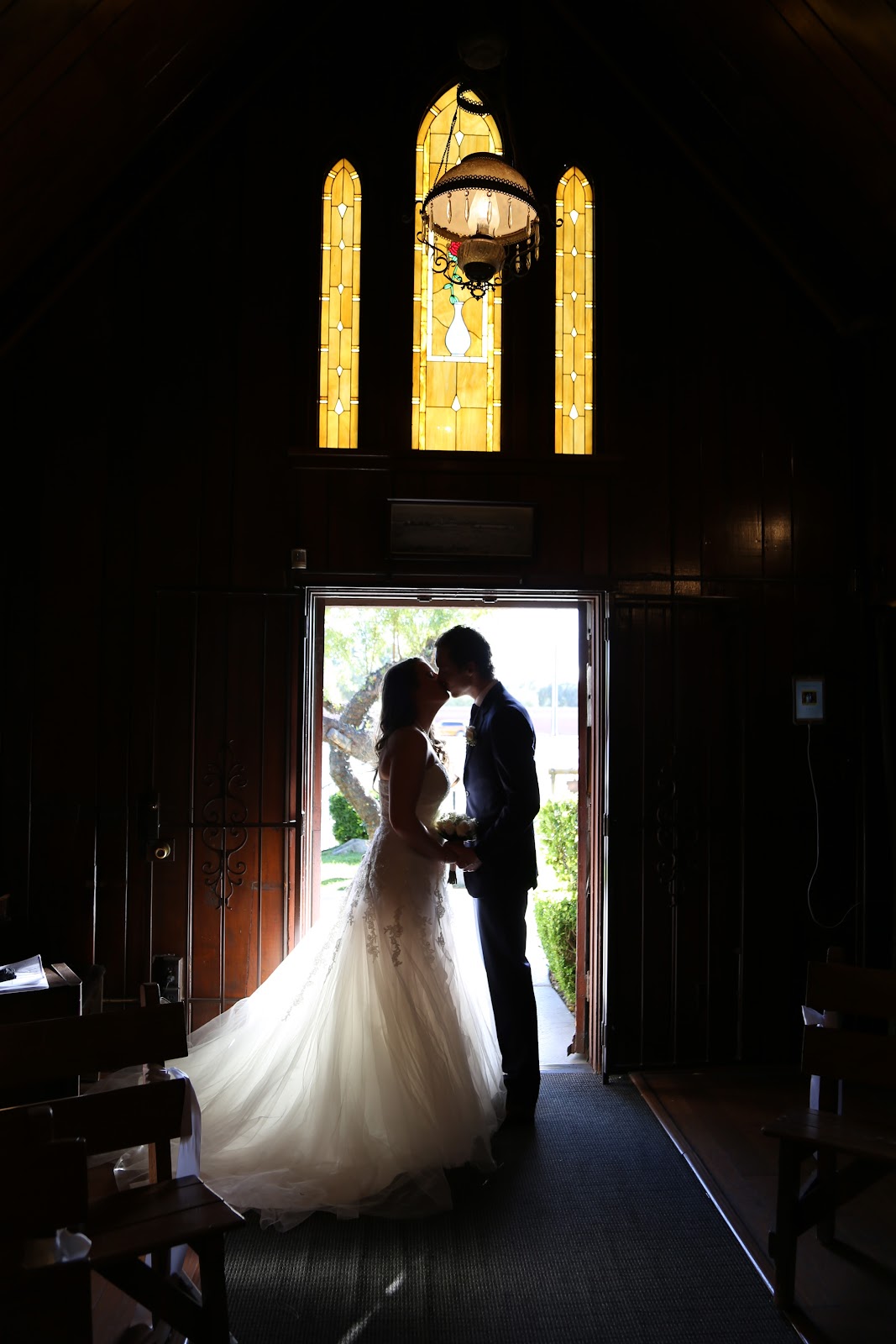
Inside, the first task is to establish the one position, and it should happen before the couple arrives rather than during the ceremony.
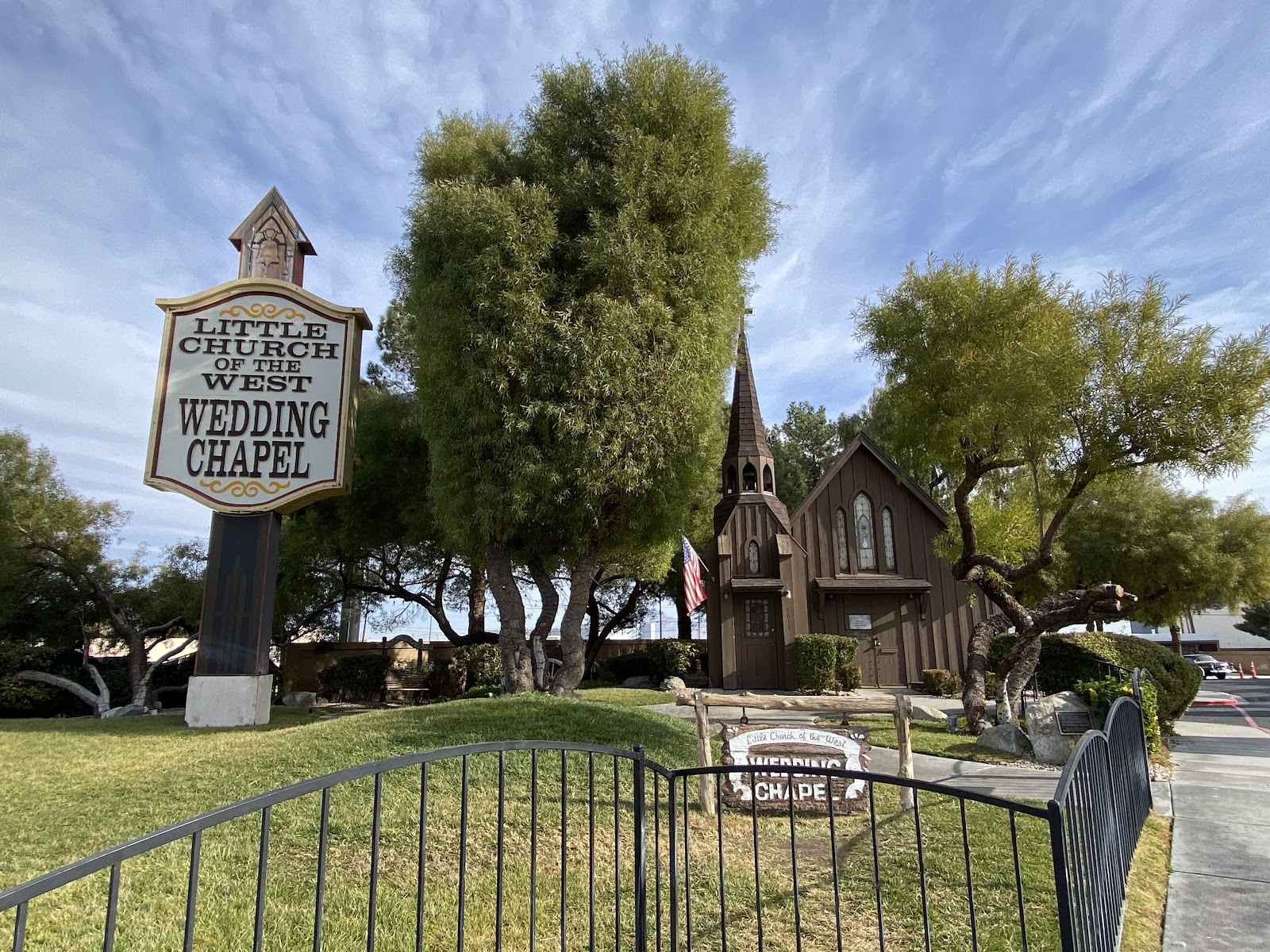
The geometry of a small chapel is fixed: a short aisle, a few rows of pews, and a front where the ceremony happens. The usable positions are the end of the aisle looking forward, a side aisle if there is one, and the front corner looking back — and they are not equally available, because the aisle blocks the guests’ view and the front corner may be inside the space the officiant is using. Ask which are permitted, choose one, and stay in it.
The lens choice follows, because changing lenses during a ceremony that may run twelve or fifteen minutes costs a meaningful fraction of it. A moderate zoom from a side position two or three metres out covers both the wide frame and a tighter one, and it is the configuration that works in most small chapels.
The timber is the technical problem and it is worth measuring rather than estimating. Dark wood absorbs: a timber-lined room sits two or three stops below a pale one with the same fittings, and it returns very little to a bounced flash — which removes the advantage a low ceiling normally gives in a small room. One test frame on arrival, aimed at the ceiling, tells you whether bounce is available or not, and in a dark-timber chapel the answer is usually no.
So the method is direct into a modifier rather than bounced: one source, off the camera axis, at face height, in a modifier large enough to be soft at two or three metres — which at that distance does not need to be large. Gelled to match the dominant fitting colour, with white balance set to the gel, and exposed so the room still reads as the warm dark space it is.
The exposure judgement matters here more than the power. Timber correctly exposed reads as timber; timber lifted to look pale reads as nothing, and a face two stops above a dark room floats in blackness. A stop above the ambient is enough, and the fall-off a dark timber room gives is free separation — a subject three metres in front of anything else sits against natural darkness.
Timber also needs raking light to read as material. Light running along a boarded wall or a beamed ceiling lifts every joint and grain line; the same light pointed at it makes a flat brown field. The positions where the available light grazes are worth finding on arrival.
Where there is a window, it is the most valuable thing in the building: directional daylight with a dark timber surround is the most flattering combination available here and it needs no equipment. Find it first. And mixed sources are likely — warm fittings, cooler ones added later, daylight through a door — so pick the temperature that should be correct and switch off or overpower whatever else lands on skin.
- Photograph the whole building; no Strip resort allows that
- Full shade only — dappled light through a thin canopy cannot be saved
- Test bounce aimed at the ceiling; dark timber usually returns nothing
- One source direct into a modifier, a stop above the room
- Find the window: directional daylight in a dark timber room needs nothing added
Out again, and the desert year
Out of the door, the exit and the grounds carry the rest, and the running order is decided by one thing: chapel bookings run to a schedule with ceremonies before and after, which means the room is not available early for setup or late for portraits. Everything needing the room happens in the allocated slot, and everything outside it is on the couple’s own clock.
That makes the grounds the portrait venue rather than the chapel, which is the reverse of how a church wedding usually works and worth agreeing in advance.
The year decides how much of the grounds are usable. Summer, June into September, has daytime highs regularly above forty degrees Celsius, which makes any outdoor block a matter of minutes at the very edges of the day — though planted grounds are cooler than open ground, and shade under mature trees is the most comfortable outdoor condition the city offers. An early-morning or late-afternoon summer booking makes the whole difference.
The monsoon from July into September brings occasional afternoon thunderstorms and blowing dust. For a chapel that is a minor problem, because the ceremony is indoors, and the porch or entrance is the wet-weather version of the outdoor block. Wet timber photographs better than dry — the grain darkens and the colour saturates — and a desert storm sky behind a small church is the most dramatic frame available here.
Winter is the good season and by some margin. Mild, the clearest air of the year, sunset in the middle of the afternoon in December — which means an afternoon ceremony runs straight into the last hour of daylight and then the crossing, the roughly twenty-five minutes after sunset when the sky still holds colour. That sequence is the best a chapel wedding can have and it is only available without a very late booking in winter.
The other winter advantage is specific to the grounds: with the sun never climbing high, shade is more available and dappling is milder, so the planted areas work through much more of the day than they do in July.
Spring is windy, and wind here means dust — haze that flattens anything distant, grit that gets into everything, and veils that behave unpredictably in an open garden. It also moves foliage, which matters for a frame that depends on shade: a canopy in wind gives shifting dappled light rather than steady shade, which is one more argument for the shadow side of the building over the shade under a tree.
Two closing practicalities. Bodies should be bagged between positions in dust. And fogging runs one way only in this climate — a cold body carried from an air-conditioned interior into hot dry air fogs immediately and does not clear quickly — so let the body warm before going out, which at a venue where the outdoor block is ten or fifteen minutes is the difference between having those frames and not.
More frames from The Little Church of the West
The Little Church of the West wedding photography: common questions
What does dark timber do to the light?
It absorbs. A timber-lined room sits two or three stops below a pale one with the same fittings, and it returns almost nothing to a bounced flash.
So how should the interior be lit?
Direct into a modifier rather than bounced — one source off the camera axis at face height, gelled to match the fittings, about a stop above the ambient.
What is the compensation?
Free separation. A subject three metres in front of anything else in a dark timber room sits against natural darkness with no equipment at all.
Why do the grounds matter so much?
Because in the Mojave shade is the scarcest photographic commodity there is, and planting is the only thing that intercepts a nearly overhead sun.
What kind of shade works?
Full shade only. Dappled light through a thin canopy puts bright patches and deep shadow on the same face at a ratio nothing can hold.
Where do the portraits happen?
Outside. Chapel bookings run to a schedule with ceremonies before and after, so the room is not available for portraits — the grounds are the portrait venue.
More Las Vegas, NV venue guides
We are writing a photographer’s guide to every venue we would happily shoot in Las Vegas, NV. Here are three more, plus the full index:
- The Luxor, Las Vegas: Field Notes on a Dark Themed Resort
- The Mandalay Bay, Las Vegas: Field Notes on Water in a Desert
- The MGM Grand, Las Vegas: The Problem, and Four Ways Out
Planning a wedding at The Little Church of the West?
The grounds are the portrait venue. Tell us your date and we will find the shade.