 The Rio, Las Vegas: A Walk Through an Off-Strip Resort
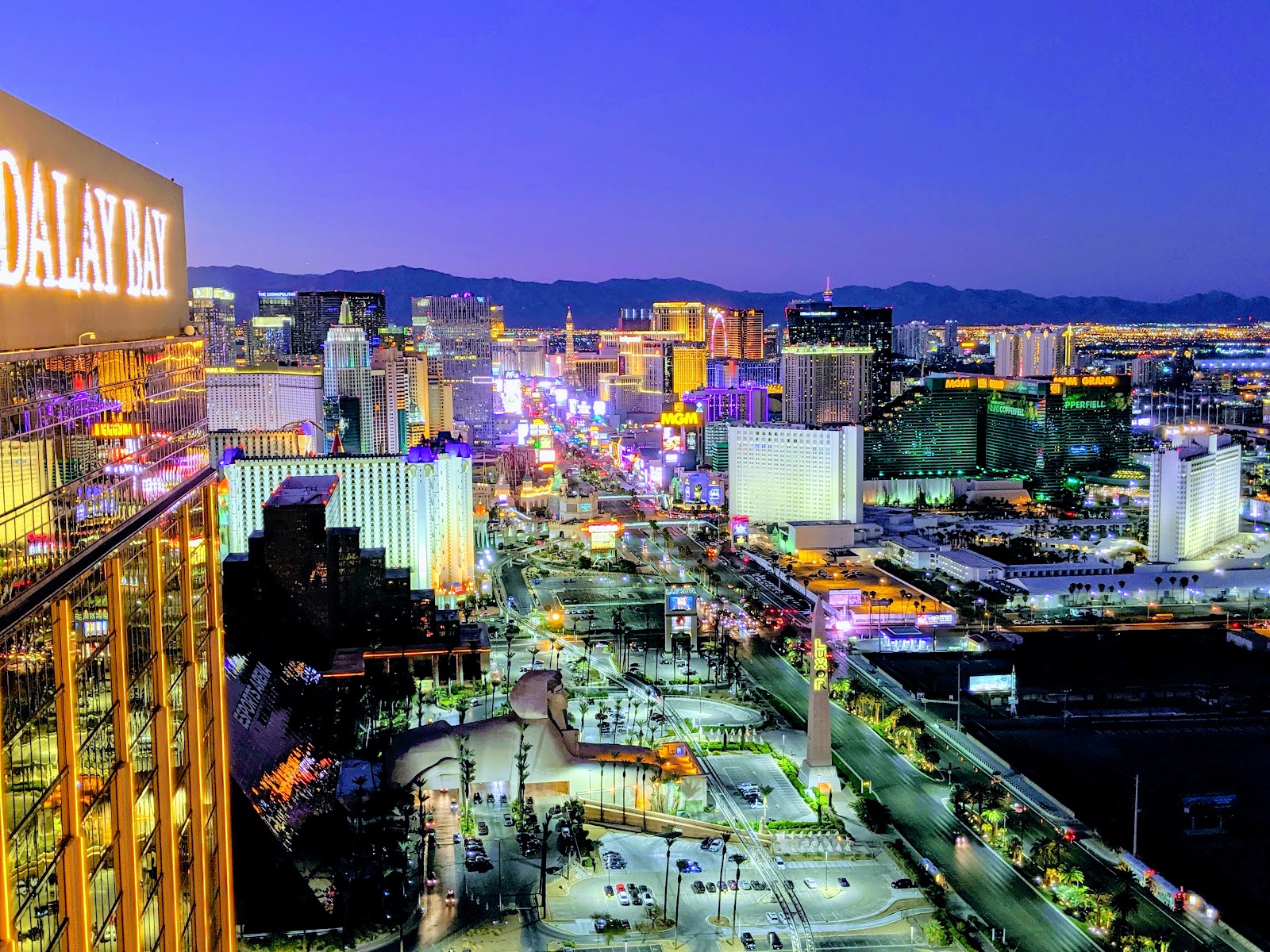
The Mandalay Bay, Las Vegas: Field Notes on Water in a Desert
Water in a desert is a reflector, a background and a hazard. All three matter, in that order.
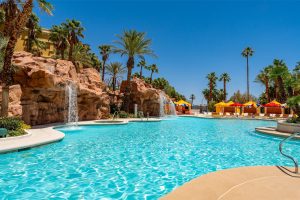
A Strip resort with large water features gives a photographer something the desert otherwise withholds, and it is worth being precise about what.
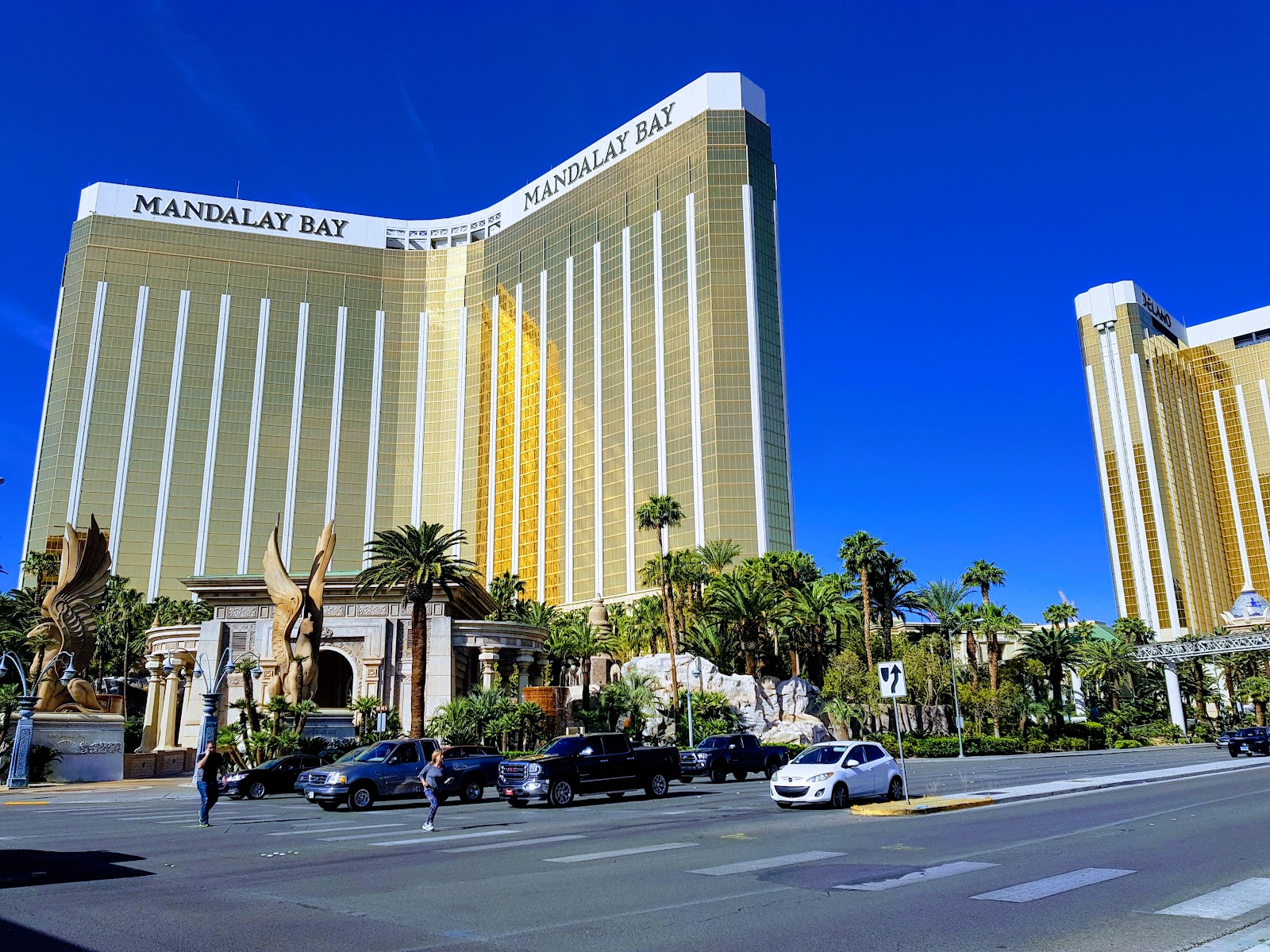
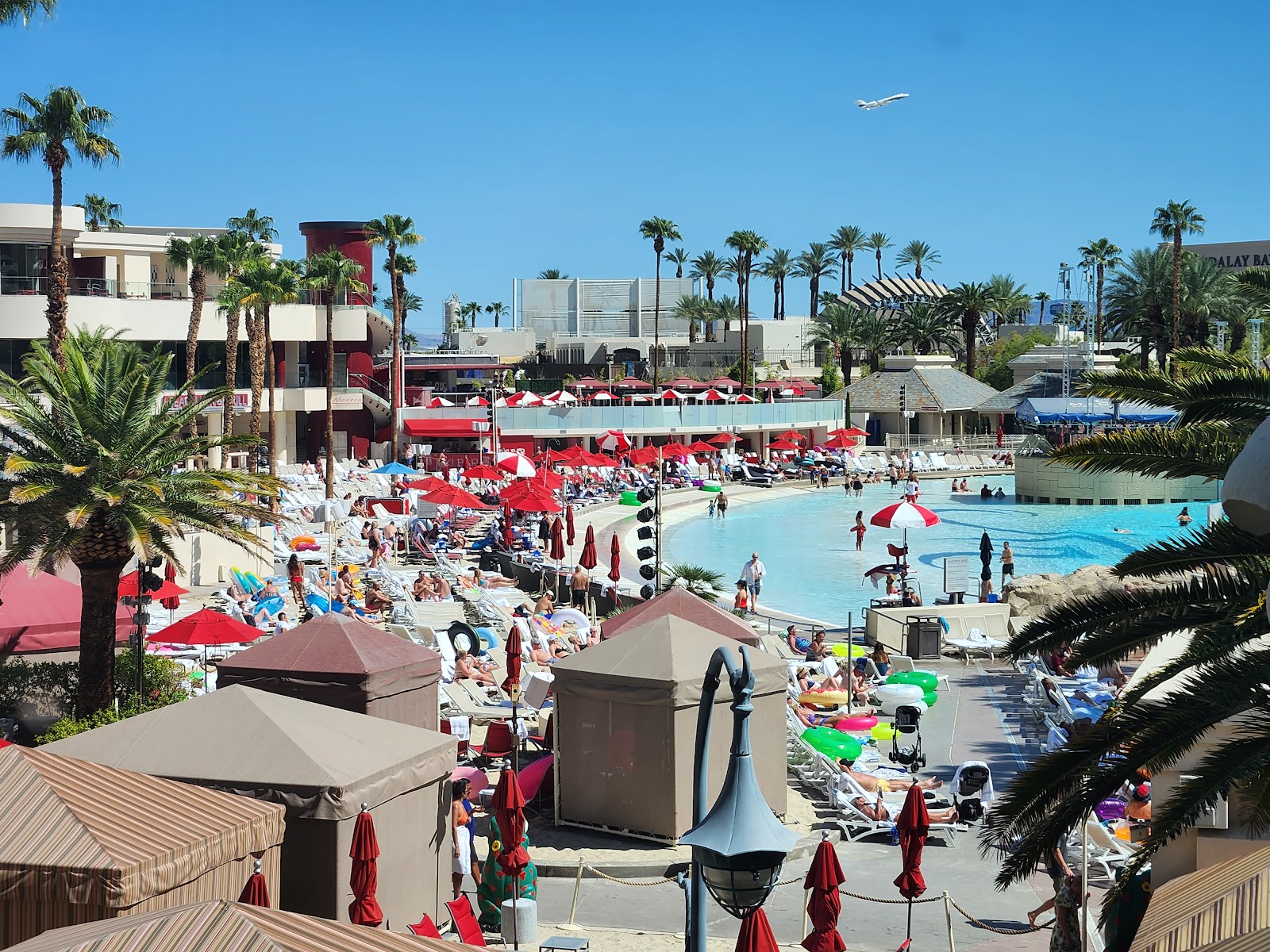
Water is a reflector. A large pale surface throws light back upward and sideways, which is exactly the correction a very high desert sun needs, and it means poolside shade is better light than shade anywhere else in the city. Water is also a background: it reflects the sky, the buildings and the lights, which doubles the visual information in a frame for nothing.
And water is a hazard, in ways worth planning for rather than discovering — glare that ruins exposures, a surface that goes black or white depending on angle, and an environment where cameras and dresses are both at risk.
These are field notes on all three. We have not photographed a wedding at the Mandalay Bay; large water features behave the way physics says they do, and the desert sun above them is predictable. Which spaces are included, whether pool or beach access is part of the offer and what the rules are around water are questions for their team.
The Mandalay Bay at a glance
| Where | Las Vegas Strip, Nevada |
| What water gives | A reflector, a background, and a second version of everything lit |
| What it costs | Glare, an angle-dependent surface, and real risk to equipment |
| The best position | Poolside shade, where light arrives from above and below |
| Ask first | Pool or beach access, rules around water, spaces included |
What water does well, and how to use it
The reflector effect is the most useful and the least noticed. A large water surface returns a significant proportion of the light falling on it, and in a desert with a very high sun that light arrives back upward — filling exactly the shadows under eyes and chins that a top-down sun carves. Standing in shade with water in front of you is materially better light than standing in shade with paving in front of you, and it is available at any hour the pool is.
The pale paving around a pool compounds it, so poolside open shade is the best natural light at most Las Vegas resorts that have a pool. The cost, as with all upward fill, is light under the chin and into the nostrils, which is solved by having a wall or structure on one side rather than standing in the open middle.
The reflection effect is the compositional one, and it follows one rule: the angle of view decides everything. Water seen at a shallow angle — camera low, looking across the surface — is mirror-like and reflects the sky and whatever is standing beyond it. Water seen steeply from above is transparent and shows the bottom. Between the two there is a transition, and a photographer moving the camera up and down by half a metre changes the entire character of a water frame.
That makes camera height the main variable in every water picture, and the low position is usually the good one: a couple reflected in still water, with the sky or the lit resort doubled below them, is the frame water exists to give.
Movement is the second variable. A long exposure smooths the surface into a soft field and strengthens reflections; a short one holds every ripple and breaks the reflection into fragments. Both are correct and the choice should be deliberate — which in daylight means a neutral density filter if the smooth version is wanted, and at dusk means nothing at all, because the exposures are already long.
The best water frame in the day is the crossing: roughly twenty-five minutes after sunset, when the sky still holds light, the resort’s illumination is up, and the water holds a reflection of both. One exposure carries the couple, the sky, the lit building and its double. At a venue with water it is the single most valuable ten minutes available, and it is shorter here than in a humid climate because dry air gives less afterglow.
And water at night is a light source in its own right if the pool is lit from within: an underwater fitting is a large soft source from below, which is an unusual and flattering direction when balanced against one gelled source from the side.
What water does badly, and the desert around it
Glare is the first cost. Direct sun on water produces specular highlights of enormous brightness — several stops above anything else in the frame — which clip completely and cannot be recovered, and which will also fool any metering system into underexposing the faces. The answer is a circular polariser, which reduces the specular component substantially and simultaneously deepens the sky, or a camera position where the sun is not being reflected toward the lens.
A polariser costs one and a half to two stops, which matters less in Las Vegas than almost anywhere, because there is far more light than needed. It is the one filter genuinely worth carrying here.
The angle problem is the second cost. Because water is either mirror or window depending on angle, a group photographed at a poolside can have a background that is brilliant sky in one frame and dark pool bottom in the next, from positions a metre apart. That is not a fault, it is a fact to control — establish the working camera height first, then arrange people.
The physical risk is the third and it deserves plain treatment. A poolside is wet, tiled and slippery; a long dress on a wet tiled surface is a genuine hazard; and a camera dropped into water is finished. Nothing photographic is worth a fall, and the frames near a water edge should be composed so nobody needs to stand on the edge. A bag left on wet ground is also a bag with water in it.
The fourth cost is specific to the desert and easy to overlook: in this climate the air immediately above a large water surface is humid in a way the rest of the city is not, and a cold body brought from air conditioning into that air fogs faster than it does elsewhere. The general desert rule — let a body warm for twenty minutes before going out — applies more strongly at a poolside than anywhere else on the property.
Beyond the water, the desert conditions are the usual ones. The sun gets very high, roughly seventy-seven degrees above the horizon at midday in June at this latitude, and the very dry air scatters almost nothing, so shadows are harder here than the same angle gives in a humid climate. With close to three hundred sunny days a year, cloud is a bonus rather than a plan, which is why shade and water matter so much.
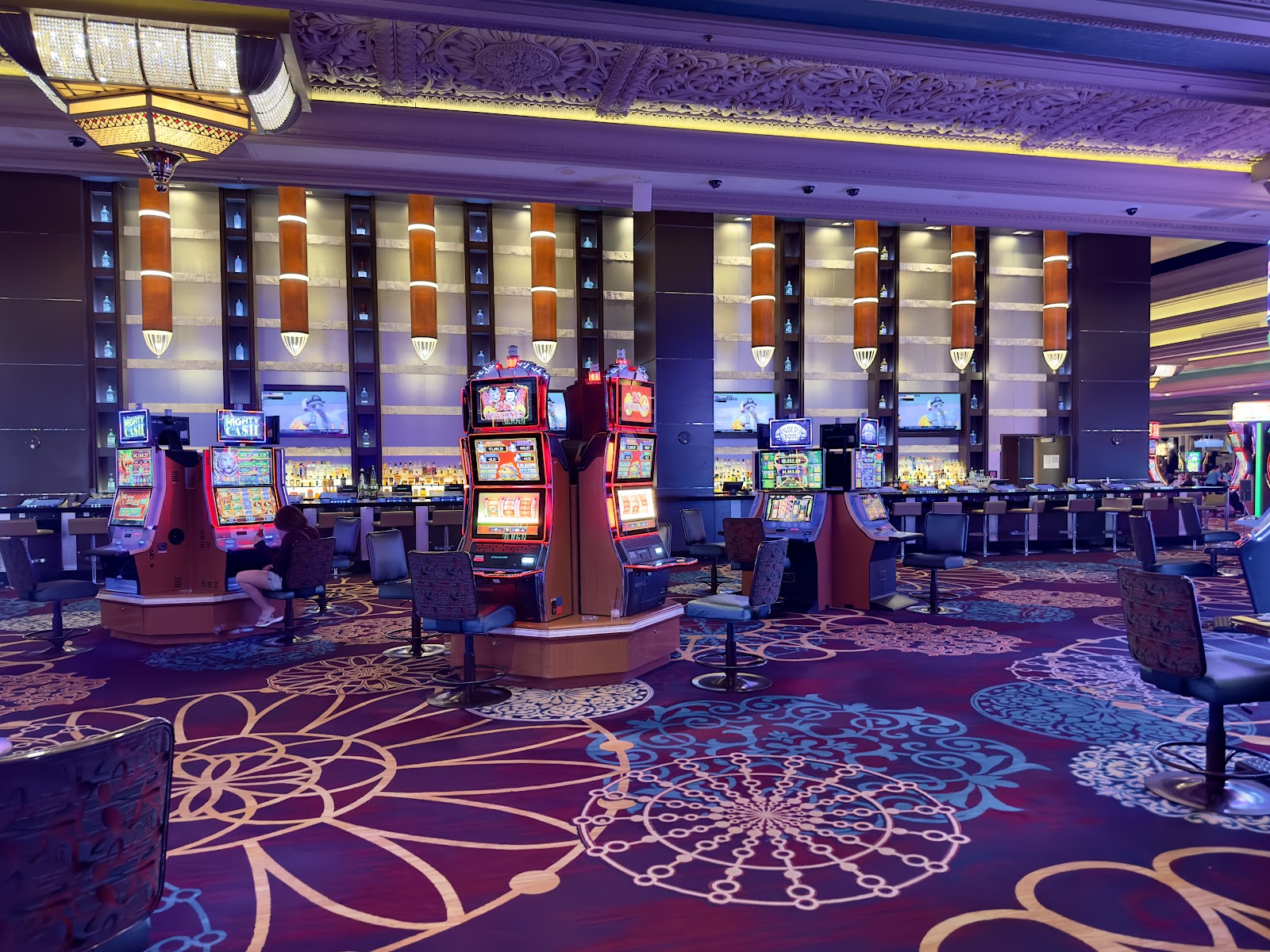
Indoors, the resort pattern applies: no daylight in the public spaces, so the interior never changes and every indoor frame is movable; dense overhead lighting that shadows eye sockets and needs direction rather than brightness; ceilings low enough over the largest floors that bounce flash usually returns something, worth one test frame; patterned carpet that competes with faces, solved by camera height or distance; reflective surfaces that show a badly placed light, solved by fifteen seconds of checking from the camera position; and mixed colour temperatures everywhere, solved by picking one and killing or overpowering the rest.
- Poolside shade is the best natural light on the property
- Camera height decides whether water is a mirror or a window
- Carry a polariser; here the two-stop cost is irrelevant
- Compose so nobody has to stand on a wet edge
- Warm the body before going out; poolside air fogs a cold lens fastest
The year, and the rest of the day
The seasons decide how much of this is usable. Summer, June into September, has daytime highs regularly above forty degrees Celsius — which paradoxically makes a water venue better than a dry one, because shade plus water plus a breeze is the only comfortable outdoor condition available, and because everybody wants to be near the water anyway. The rule about short excursions still holds: minutes at the edges of the day rather than an hour in the middle.
The monsoon from July into September brings occasional afternoon thunderstorms and blowing dust. For a water-based plan a thunderstorm is a real interruption and needs a named indoor alternative — though wet paving photographs better than dry, and a desert thunderstorm at dusk over water is the most dramatic frame the city can produce.
Winter is the good season for the light and the awkward one for the water: mild days, cool mornings, the clearest air of the year, sunset in mid-afternoon so both light windows fall at civilised hours — but a pool in January is a background rather than a place to stand for long. That is a fair trade, because the reflection and the crossing frame both work regardless of temperature.
Spring is windy, and wind is the enemy of water photography specifically: a rippled surface reflects nothing, so the mirror frame simply is not available on a windy afternoon. It is worth knowing that the still-water frames happen at the calmest part of the day, which in the desert is usually early morning and the hour around sunset.
Wind also means blowing dust, which flattens anything distant and gets into everything, so bodies stay bagged between positions in March and April.
The guest rooms are the only interior daylight and they follow the standard requests: largest window on the shaded side, every overhead fitting off so the room has one colour of light, lamps out of frame, two to three metres back from the glass. The local specifics are that direct sun through glass in this climate is unusually hard, so the shaded side is the whole difference; and that floor height matters less than in a dense city because the towers are far apart, so orientation is the better question.
Where a room overlooks the water, it is worth asking for specifically — a window facing a large pale water surface receives reflected light as well as sky, which makes it a brighter and softer window than one facing paving.
And the scheduling shape is the familiar resort one: everything indoors is available at any hour, everything outdoors is not. Protect the last hour of daylight and the twenty-five minutes after it, leave for them early with a route already known, and the rest of the day arranges itself.
More frames from The Mandalay Bay
The Mandalay Bay wedding photography: common questions
Why is poolside shade the best light?
Because water and pale paving both bounce light upward, filling exactly the shadows under eyes and chins that a very high desert sun carves.
What decides whether water reflects?
Camera height. A low camera looking across the surface sees a mirror; a high one looking down sees through to the bottom. Half a metre changes everything.
Is a polariser worth carrying?
Here, yes — it is the one filter that earns its place. It cuts the specular glare that clips and fools metering, and the two-stop cost is irrelevant in this much light.
What is the best frame at a water venue?
The crossing, about twenty-five minutes after sunset, when the sky still holds light and the water reflects both it and the lit building.
What are the real risks?
Wet tiled ground with long dresses on it, and cameras near a water edge. Compose so nobody has to stand on the edge.
Does wind matter?
More than anywhere else. A rippled surface reflects nothing, so the mirror frames only exist at the calmest times — early morning and around sunset.
More Las Vegas, NV venue guides
We are writing a photographer’s guide to every venue we would happily shoot in Las Vegas, NV. Here are three more, plus the full index:
- The MGM Grand, Las Vegas: The Problem, and Four Ways Out
- The Mirage, Las Vegas: One Frame, and How It Is Made
- The Neon Museum, Las Vegas: What It Suits, and What It Does Not
Planning a wedding at The Mandalay Bay?
Water, used deliberately. Tell us your date and we will time the still hour.