 The Rio, Las Vegas: A Walk Through an Off-Strip Resort
Graceland Wedding Chapel, Las Vegas: A Walk Through a Small Chapel
A small chapel gives you one position and about twelve minutes. Both are enough if you know it in advance.
A small Las Vegas wedding chapel is the most constrained venue a photographer is likely to work in, and the constraints are worth naming precisely because they are not the ones people expect.
It is not the light. A small room is actually easier to light than a large one: the ceiling is low enough that bounce flash works, the walls are near enough to return light into shadows, and a modest source at two metres is a large soft one.
It is space and time. There is one position from which the ceremony can be photographed, sometimes two, and moving during the ceremony is not possible without walking through it. And the ceremony itself is short — a chapel ceremony can be over in ten or fifteen minutes, which means there is no second chance at anything.
This is a walk through in the order it happens. We have not photographed a wedding at Graceland Wedding Chapel; small chapels behave consistently. Which times are available, how long the ceremony runs, whether photography from the aisle is permitted and what the guest capacity is are questions for their team.
Graceland Wedding Chapel at a glance
| Where | Las Vegas, Nevada |
| The constraints | One camera position, and a ceremony that may last twelve minutes |
| The advantage | A small room lights easily: low ceiling, near walls, short distances |
| Non-negotiable | Know the running order before it starts; nothing repeats |
| Ask first | Ceremony length, permitted positions, capacity, timings available |
Outside, and in at the door
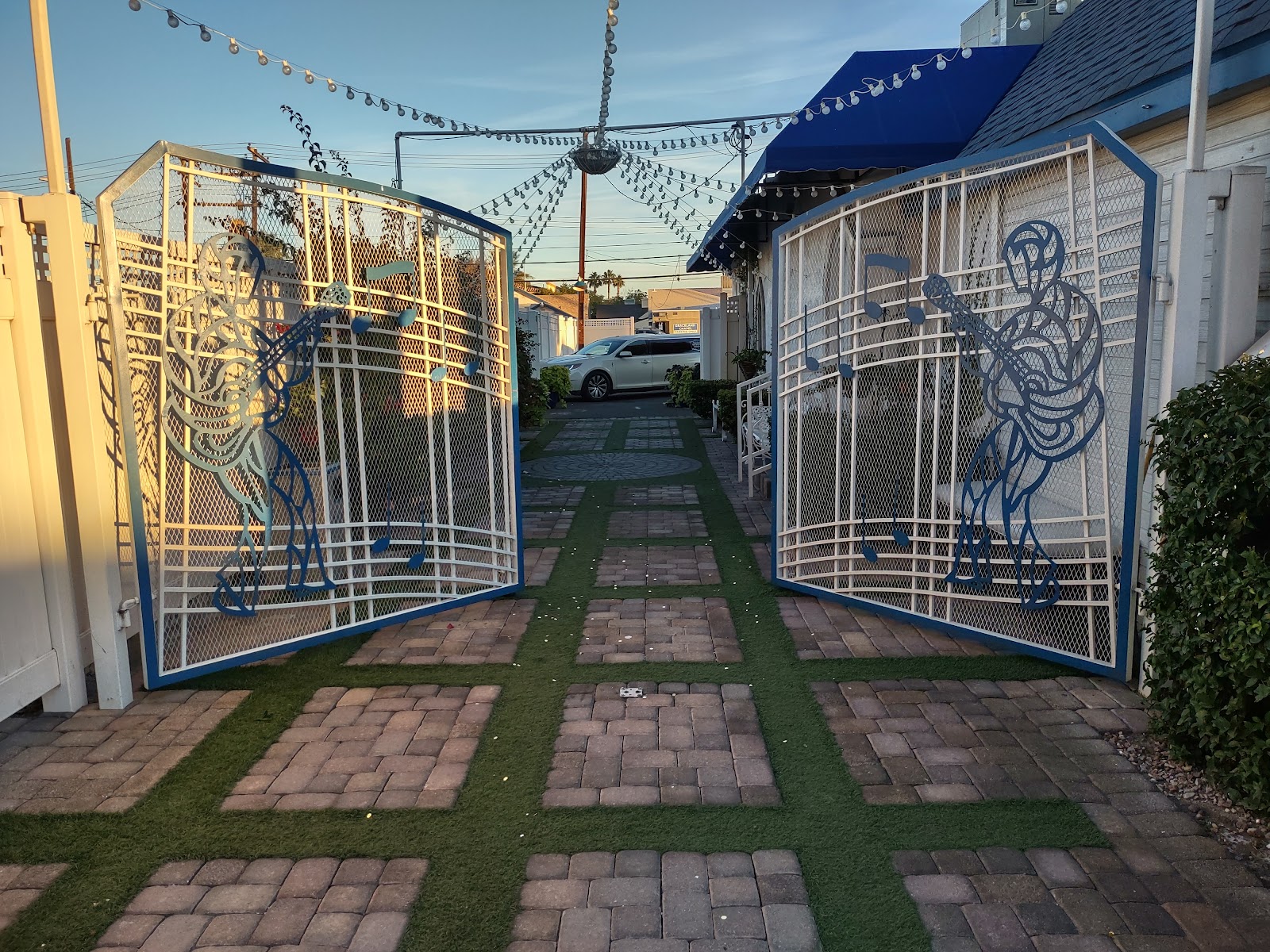
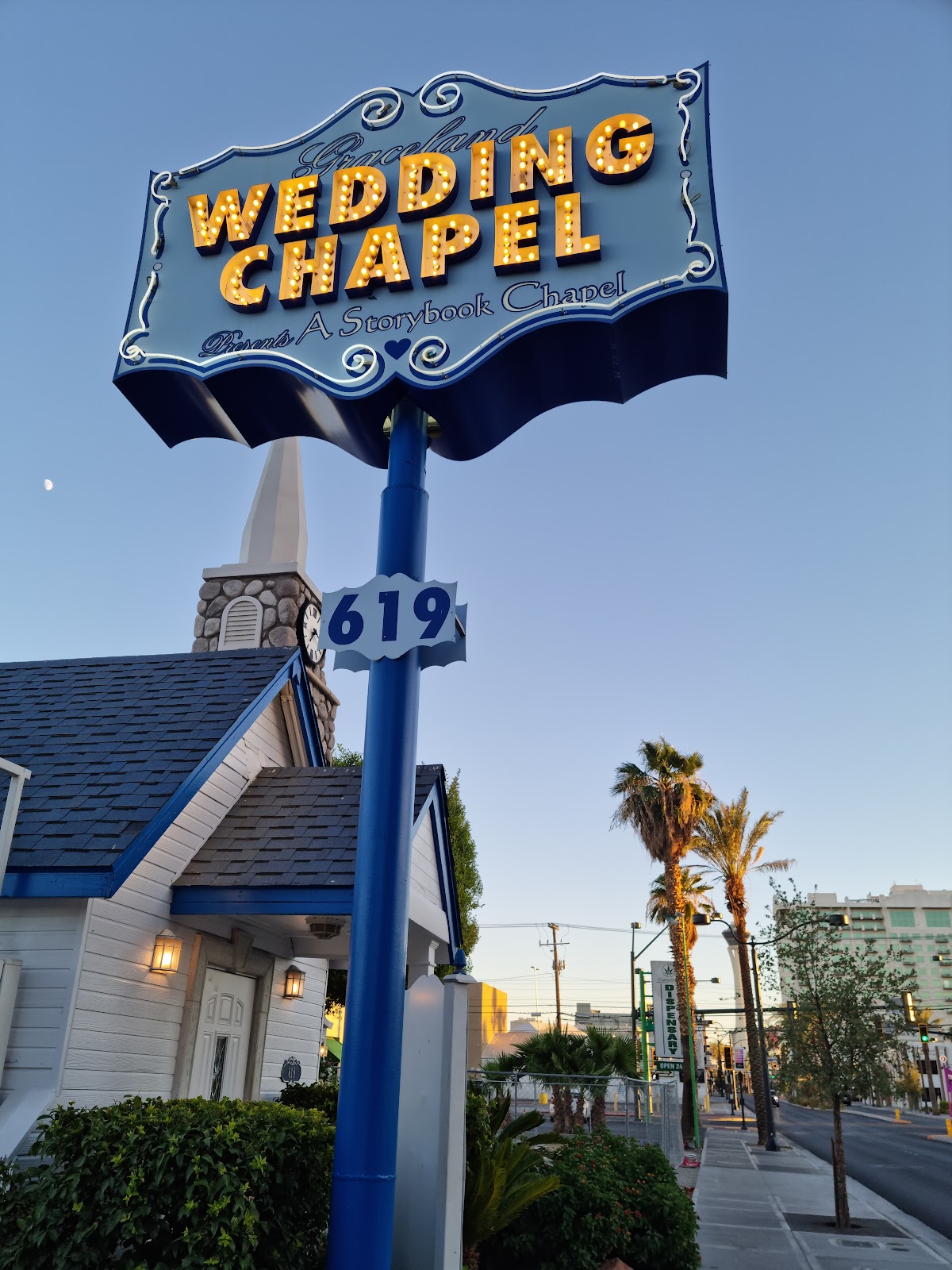
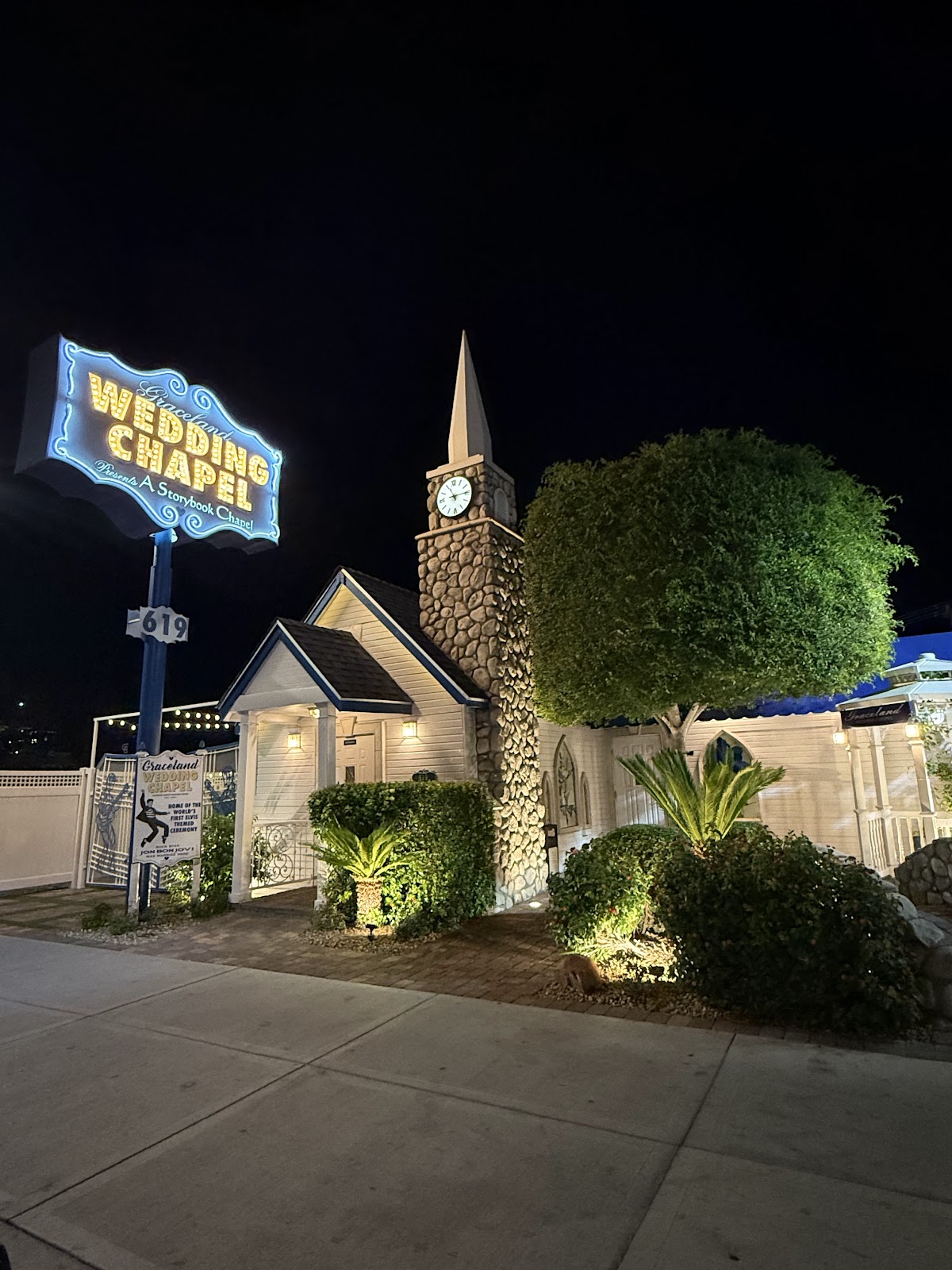
The exterior is the first frame and at a small chapel it is a genuine asset rather than a formality, because a small building can actually be photographed whole — which in Las Vegas is unusual. A Strip resort cannot be fitted into a frame from any legal standing position; a single-storey chapel can, and the whole thing with the couple in front of it is a picture that records the day in one image.
The signage is the other exterior asset and it should be used deliberately. A chapel sign is a strong graphic element with lettering, colour and often neon, and it says where this happened more clearly than any interior frame. The two versions worth making are the daylight one, where the sign is a shape and the lettering reads, and the after-dark one, where it is lit and becomes the light in the picture.
The night version needs the standard rule: saturated coloured signage is narrow-spectrum, so a face lit by it has almost no information in two of its three colour channels and no editing recovers that. The sign goes behind or above the couple, and one gelled source of your own lights the faces — gelled warm to roughly match the sign’s dominant colour, with white balance set to the gel, so the faces read as though the place is lighting them.
The daytime exterior obeys the desert. At about thirty-six degrees north the June midday sun sits roughly seventy-seven degrees above the horizon, and the very dry air scatters almost nothing, so light comes down hard and straight — black eye sockets, a hard shadow under every chin, and a range between lit and unlit that exceeds what a sensor holds. With close to three hundred sunny days a year, cloud is a bonus rather than a plan.
So the good exterior hours are the first hour after sunrise, the last hour before sunset, and roughly twenty-five minutes after it. At any other time the workable positions are the shadow side of the building itself, where pale ground bounces light up into the shade, and any porch, canopy or recessed entrance — which at a chapel is usually the best position on the site, because a roof above with walls to the sides and one open face makes a directional soft source at exactly the right size for two people, and it works in any weather.
In at the door, a chapel entrance is short: there is no lobby to work in and no stair. The frames here are the arrival itself — someone stepping out of a car, walking to the door, pausing at it — and they happen once, at whatever hour the booking is.
The aisle, the vows, and the position
Inside, the first thing to establish is the one position, and it should be established before the couple arrives rather than during the ceremony.
In a small chapel the geometry is fixed. There is a short aisle, a few rows of seating, and a front where the ceremony happens — which means the usable positions are the end of the aisle looking forward, the side aisle if there is one, and the front corner looking back. Those three are not equally available: the aisle blocks the view of any guests behind it, and the front corner may be inside the space the officiant and couple are using.
The practical answer is to ask which positions are permitted and then choose one main position with a lens that covers both the wide frame and a tighter one — because changing lenses during a twelve-minute ceremony costs a third of it. A moderate zoom from the side, two or three metres from the couple, is the configuration that works in most small chapels.
The light is the easy part and it is worth saying so, because photographers arriving from large venues expect a fight. A low ceiling means bounce flash returns a great deal — a ceiling two and a half metres up is a very large soft source, and a single bounced flash lights a small chapel evenly and pleasantly. Near walls return light into the shadow side without any equipment. And at two metres a small modifier is a soft source.
Two conditions apply. The colour of the ceiling matters: white or pale returns neutral light and a coloured or dark one absorbs and tints, so one test frame on arrival is worth taking. And bounce lights everything equally, which means it gives no direction — for the deliberate frames, one source off the camera axis at face height beats a bounced one, and for the ceremony itself bounce is the safer choice because it needs no aiming.
Mixed sources are likely: warm fittings, cooler ones added later, any coloured decorative lighting, and daylight through a door or window. In a small room those land on the same face from different sides, so pick the temperature that should be correct, set white balance to it, and switch off or overpower whatever else reaches skin. Switching a fitting off is frequently the cheapest improvement available.
And the ceremony itself needs its running order known in advance. Twelve minutes with no repeats means the moments — the entrance, the vows, the rings, the kiss, the turn to walk out — have to be anticipated rather than reacted to, and the only way to anticipate them is to have asked what happens and in what order. That single conversation is worth more than any equipment decision here.
- Photograph the whole building from outside; in Las Vegas that is rare
- Signage behind or above the couple, with your own gelled source on faces
- Establish the one permitted position before the couple arrives
- Bounce off a low pale ceiling for the ceremony; one test frame checks the colour
- Ask the running order — twelve minutes has no second chances
Out again, and the desert year
Out of the door, the frames are the exit, the sign and whatever the surroundings offer — and the last of those varies enormously, so it is worth looking at a map and a street view before the day rather than hoping.
The reliable positions near any Las Vegas chapel are the ones the desert makes: the shadow side of a building, where pale ground fills from below; a recessed entrance or canopy, which is directional and rainproof; and any wall in shade with something interesting on it, raked by low sun at the right hour.
The year decides which of those are usable. Summer, June into September, has daytime highs regularly above forty degrees Celsius, which makes an outdoor block a matter of minutes at the very edges of the day. At a chapel, where the booking may be at any hour, that means a midday summer ceremony is an indoor event with a very short exterior — and the sign at night is the better picture anyway.
The monsoon from July into September brings occasional afternoon thunderstorms and blowing dust. For a small chapel that is barely a problem, because the ceremony is indoors and the exterior frames are brief — and a recessed entrance is the wet-weather version of the outdoor block rather than its cancellation. Wet ground reflecting a lit chapel sign is a better frame than the dry version.
Winter is the good season: mild, the clearest air of the year, and sunset in the middle of the afternoon in December, which means an afternoon ceremony can be followed immediately by the last hour of daylight and then the crossing — the roughly twenty-five minutes after sunset when the sky still holds deep colour and the sign has come up. That sequence is the best a chapel wedding can have, and it is only available in winter without a very late booking.
Spring is windy, and wind here means dust: haze that flattens anything distant, grit that gets into everything, and veils that behave unpredictably. A small chapel is less exposed to this than most venues, but the exterior frames are not.
Two practical notes close it out. Fogging runs one way only in this climate — a cold body carried from an air-conditioned chapel into hot dry air fogs immediately and does not clear quickly — so let the body warm before going out, which at a venue where the exterior block is ten minutes matters a great deal.
And the timing itself: chapel bookings run to a schedule with other ceremonies before and after, which means the room is not available early for setup and not available late for portraits. Everything that needs the room has to happen in the allocated slot, which is the strongest argument there is for knowing the position and the running order before arriving. It is also why the exterior work matters so much here: outside the chapel, the clock is the couple’s own.
More frames from Graceland Wedding Chapel
Graceland Wedding Chapel wedding photography: common questions
What is the main constraint at a small chapel?
Space and time, not light. One usable camera position, and a ceremony that may be over in twelve minutes with no repeats.
Is a small room hard to light?
No — it is easier than a large one. A low ceiling makes bounce flash work, near walls return light into shadows, and a small source at two metres is a large one.
What should be asked in advance?
Which camera positions are permitted, how long the ceremony runs, and what happens in what order. That conversation is worth more than any equipment.
Why is the exterior important here?
Because a small building can be photographed whole, which in Las Vegas is rare — and the sign says where this happened more clearly than any interior frame.
Can the chapel sign light the couple?
No. Saturated signage is narrow-spectrum and leaves two colour channels almost empty. Keep it behind or above and use your own gelled source.
What is the best season?
Winter. Sunset in mid-afternoon means an afternoon ceremony can be followed straight away by the last hour of daylight and then the crossing after sunset.
More Las Vegas, NV venue guides
We are writing a photographer’s guide to every venue we would happily shoot in Las Vegas, NV. Here are three more, plus the full index:
- The Little Church of the West, Las Vegas: A Walk Through a Timber Chapel
- The Luxor, Las Vegas: Field Notes on a Dark Themed Resort
- The Mandalay Bay, Las Vegas: Field Notes on Water in a Desert
Planning a wedding at Graceland Wedding Chapel?
One position, one running order, twelve minutes. Tell us your date.