 The Rio, Las Vegas: A Walk Through an Off-Strip Resort
New York-New York, Las Vegas: The One Decision That Governs Everything
A building that quotes another city can be photographed two ways. Choosing one is the whole job.
At a resort designed to imitate another city, the governing decision is not technical. It is whether the imitation is photographed straight or photographed as an imitation — and the two produce entirely different galleries from the same afternoon.
Straight means composing so the frames read as the place being quoted: tight, selective, using the details that support the illusion and excluding everything that breaks it. The pictures say something about the reference rather than about Las Vegas.
As an imitation means the opposite: wide, inclusive, deliberately showing the joins — the desert sky above the city street, the casino floor visible past the facade, the scale that is not quite right. The pictures are about Las Vegas doing what Las Vegas does, and they are frequently the more interesting set.
Neither is wrong and drifting between them is. We have not photographed a wedding at New York-New York; resorts built on architectural quotation behave consistently. Which spaces are included, whether there is outdoor access and whether the lighting is adjustable are questions for their team.
New York-New York at a glance
| Where | Las Vegas Strip, Nevada |
| The decision | Photograph the imitation straight, or photograph it as an imitation |
| Straight | Tight, selective, excluding the joins |
| As imitation | Wide, inclusive, showing the desert sky above the city street |
| Ask first | Spaces included, outdoor access, lighting control, room orientation |
The two approaches, and how each is executed
Photographing the imitation straight is an exercise in exclusion, and it is more technical than it sounds. The illusion is maintained by what is left out of the frame, which means the working method is a long lens, a tight crop and a careful check of the edges — because one air-conditioning grille, one slot machine, one ceiling detail visible at the top of the frame collapses the whole thing.
The specific things that break it are consistent. The sky, wherever the space is interior and the ceiling is painted or lit to suggest sky, because a painted sky is a surface rather than a source and it reads as a ceiling in a photograph even when it does not to the eye. The floor, because carpet under a streetscape is the single clearest tell. And the scale, because quoted architecture is generally built smaller than the original and a wide frame makes that obvious.
So straight means eye-level or lower, long focal lengths, and framing that stops at a doorway or a window rather than showing a whole elevation. Done properly it produces a set of pictures that could plausibly have been made in the city being quoted, which is a genuine achievement and what a certain kind of couple wants.
Photographing it as an imitation is the opposite discipline and it needs just as much thought. The frames that work are the ones where the two things are both legible at once: a quoted facade with a real desert sky above it, a streetscape with the resort’s own signage beyond, a couple on a fabricated street corner with the actual Strip visible at the end of it.
That requires wide lenses, higher camera positions and deliberate inclusion of the joins. And it requires the couple to be in on it, because the pictures are affectionate rather than reverent — which is a conversation to have in advance rather than a surprise in a gallery.
The technical advantage of this approach is that it avoids the painted-sky problem entirely, because the frames that work best are the ones with real sky in them: the exterior quoted architecture under genuine desert light rather than the interior streetscape under fittings.
What does not work is a gallery that alternates without deciding. Half the frames maintaining an illusion and half puncturing it reads as indecision rather than range, and the fix is to choose the primary register and use the other for a handful of frames rather than half of them.
What follows from it
If the decision is straight, the schedule leans on the interior streetscapes and the small quoted details, which means it can happen at any hour — there is no daylight in these spaces, so nothing changes.
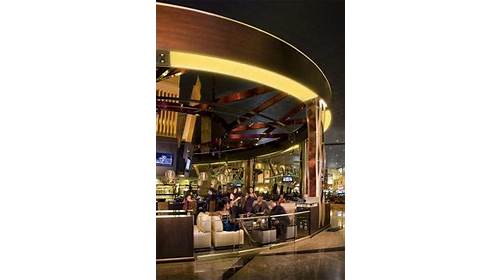
That comes with the painted-sky conditions. A ceiling lit to read as sky is dimmer than it looks, because it is lit to satisfy the eye rather than a meter — so the first frame on arrival should be a meter reading. It is not the source, which means the actual light comes from concealed fittings above and arrives as overhead light, with all the overhead problems: shadowed eye sockets and a hard line under every chin. And it carries colour, throwing blue and warm unevenly onto whatever is beneath it.
The method handles all three at once: one source, off the camera axis, at face height, gelled to match the dominant fitting temperature, with white balance set to the gel, exposed so the ceiling still reads the way the eye sees it. Overpowering the space makes the painted sky go dark and turns the conceit into a brown ceiling, which is the one unforced error available.
If the decision is as-imitation, the schedule leans outdoors and therefore obeys the desert’s two windows. The last hour before sunset, when low sun rakes the quoted facades and makes their material read — and it does read, because the exterior is real construction whatever it is quoting. And roughly twenty-five minutes after sunset, when the sky still holds deep colour while the resort’s illumination comes up, so one exposure holds the quoted city, the real sky and the couple together. That frame is the strongest argument for this approach, because it contains both things at once and cannot be mistaken for anywhere else.
The dusk window is short here, because the very dry air gives less afterglow than a humid sky. It is a scheduled ten minutes with a destination chosen in advance.
Either way, the rest of the building’s conditions apply. Patterned carpet competes with faces at the same spatial frequency and is the clearest tell in any streetscape frame — camera height that excludes it is both the compositional and the technical fix. Reflective surfaces will show a badly placed light at full brightness, solved by fifteen seconds of checking from the camera position. Ceilings over the largest floors are unusually low for their span, so bounce flash usually returns something usable, worth one test frame. And mixed colour is everywhere, solved by picking the temperature that should be correct and killing or overpowering whatever else lands on skin.
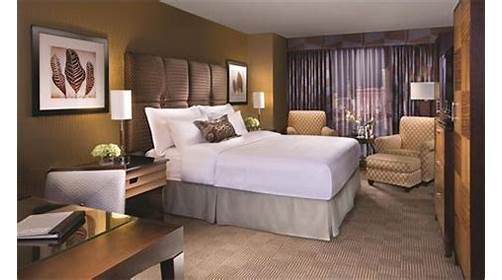
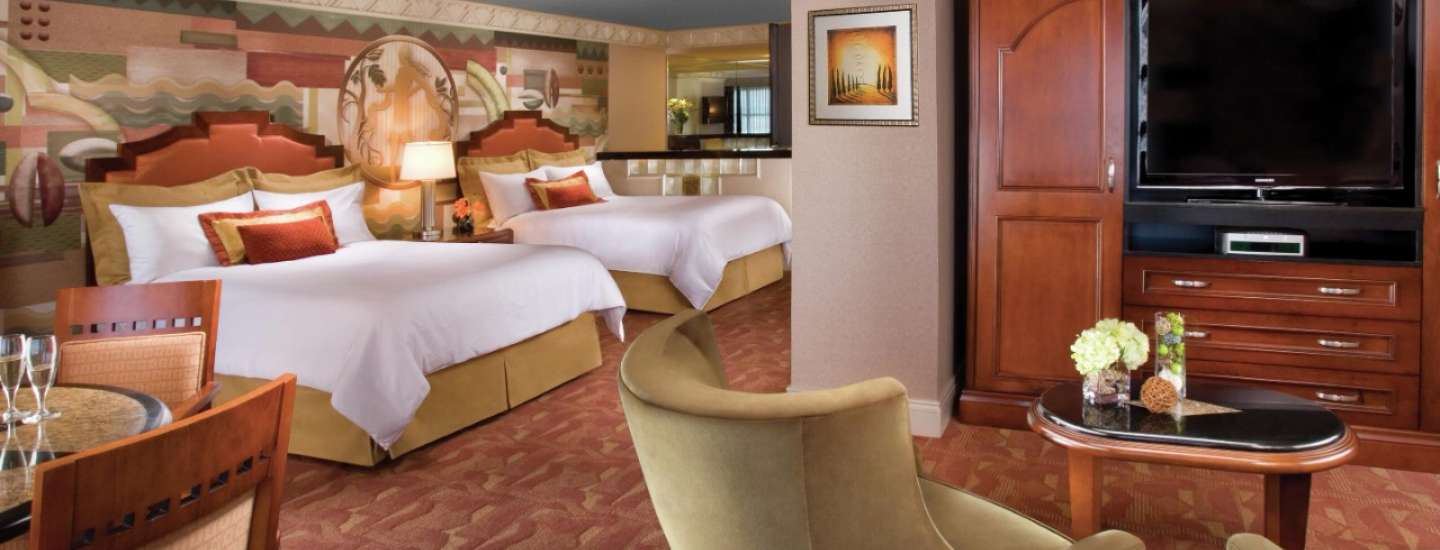
The guest rooms are the only real daylight: largest window on the shaded side, every overhead fitting off, lamps out of frame, two to three metres back. Direct sun through glass in this climate is unusually hard, so the shaded side is the whole difference; and floor height matters less than in a dense city, so orientation is the better question.
- Choose the register, then use the other for a handful of frames only
- Straight: long lens, low camera, check the edges — carpet is the clearest tell
- Meter the painted-sky spaces; they are dimmer than they look
- As-imitation: get real sky into the frame and go wide
- The dusk exterior is the strongest frame either way
Outside, and the desert year
Outside is the Mojave, and it gives the most extreme natural light of any major American city because two things compound. At about thirty-six degrees north the June midday sun sits roughly seventy-seven degrees above the horizon, near enough to straight down that eye sockets go black and every chin gets a hard shadow. And the air is very dry, so almost nothing scatters the light and the shadows are harder than the same angle gives in a humid climate.
With close to three hundred sunny days a year, cloud is a bonus rather than a plan. So there are two windows and no middle: the first hour after sunrise, when the Strip is genuinely empty and the light is the best of the day; the last hour before sunset, which rakes the quoted facades; and the crossing after it.
Open shade in the desert is better than it sounds, because pale ground bounces light up into exactly the shadows a high sun carves. The cost is uplight under chins and into nostrils, so shade with a wall to one side beats shade in the open — and at a resort with a fabricated streetscape outside, recessed doorways and arcades are the small-scale positions that do this best, and they work in rain.
After dark the Strip is one of the brightest exterior environments in the world, so night portraits outdoors need nothing added. The caveat is spectral: saturated signage puts most of its energy into a narrow part of the spectrum, so it does not render skin the way broad-spectrum light does and one channel clips before the others. Signage behind, one gelled source of your own on the faces.
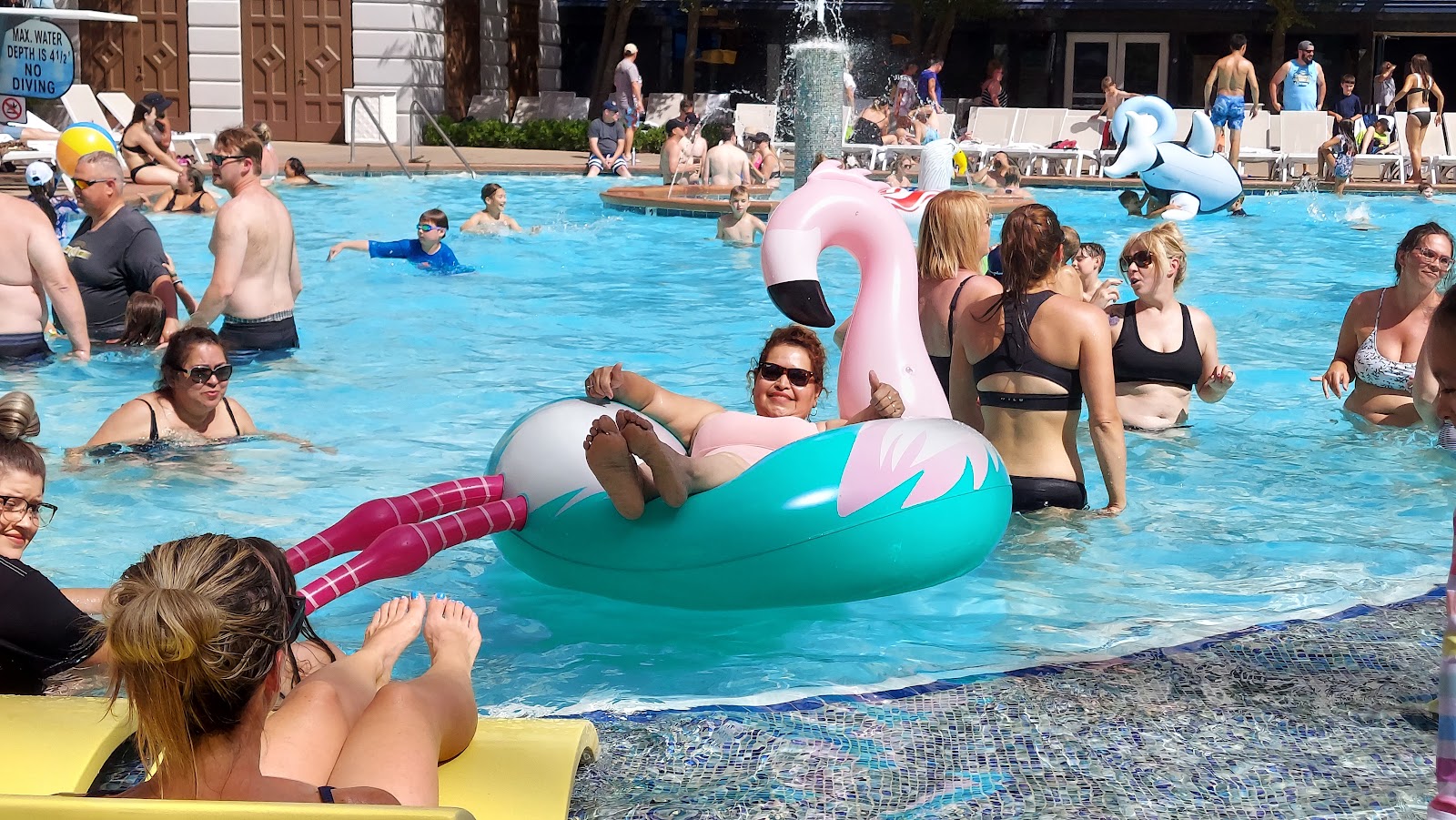
The year is two and a half seasons. Summer, June into September, has daytime highs regularly above forty degrees Celsius, which makes outdoor blocks a matter of minutes at the edges of the day — and which argues for the straight interior register at a summer wedding, because the interior streetscapes are air-conditioned. That is a real consideration rather than a joke: a fabricated city street at twenty-two degrees is more usable in July than a real one at forty-two.
The monsoon from July into September brings occasional afternoon thunderstorms and blowing dust, the one time cloud is likely. A storm sky above quoted architecture is the best as-imitation frame available, if the timing allows.
Winter is the good season: mild, the clearest air of the year, and sunset in mid-afternoon, which puts both windows at civilised hours. Spring is windy, and wind here means dust — haze that flattens anything distant, grit that gets into everything, bodies bagged between positions.
And fogging runs one way only in this climate: a cold body carried from air conditioning into hot dry air fogs immediately and does not clear inside the twenty-five minutes the dusk window lasts. Twenty minutes of warming before stepping out is the entire fix, and at a venue where the outdoor frames are the strongest ones, it is not a detail.
More frames from New York-New York
New York-New York wedding photography: common questions
What is the one governing decision?
Whether to photograph the imitation straight or as an imitation. The same afternoon produces two entirely different galleries depending on the answer.
How do you photograph it straight?
By exclusion. Long lens, low camera, tight crop, and a check of the edges — carpet under a streetscape is the single clearest tell.
What does photographing it as an imitation mean?
Wide frames that show the joins: quoted architecture under a real desert sky, or a fabricated street corner with the actual Strip at the end of it.
Why is a painted sky a problem?
Because it is a lit surface rather than a source. It reads as a ceiling in a photograph even when it does not to the eye, and it is dimmer than it looks.
Which is the strongest frame either way?
The exterior at dusk — about twenty-five minutes after sunset, when the quoted city is lit and the real sky still holds colour.
Does the season affect the choice?
Yes. In a July wedding the interior streetscape is air-conditioned and the real one outside is over forty degrees, which argues for the straight register.
More Las Vegas, NV venue guides
We are writing a photographer’s guide to every venue we would happily shoot in Las Vegas, NV. Here are three more, plus the full index:
- The Park MGM, Las Vegas: One Frame, and How It Is Made
- Red Rock Canyon, Las Vegas: What It Suits, and What It Does Not
- The Rio, Las Vegas: A Walk Through an Off-Strip Resort
Planning a wedding at New York-New York?
Pick the register, then commit. Tell us your date and we will plan for one.