Mackinac Island has prohibited motor vehicles since 1898, and that single fact shapes a photographer's day more than any question of light. Everything moves by horse-drawn dray, bicycle or on foot, including your equipment — so the kit is chosen before you board the ferry and carried all day. There is no car to leave a case in, no boot to return to for another lens, and no way to move a lighting kit quickly from one end of the island to the other.
The honest recommendation is to go light: two bodies, a standard zoom and a short telephoto, one or two small flashes, a collapsible reflector, and at most one stand. What to leave behind is heavy modifiers, battery packs and anything needing a wheeled case, because the streets are partly unpaved and the distances are walked. The compensation is substantial and easy to underestimate. With no cars there are also no parked vehicles, no road markings, no traffic signs and no modern tarmac — which removes almost everything that normally dates and clutters a historic street frame.
A photographer working a nineteenth-century street elsewhere spends real effort keeping cars out of shot; here the problem does not exist, and a wide frame down a village street reads as period without any work at all. What replaces the cars is horses, drays and bicycles, all of which are assets: a wedding party in a horse-drawn carriage is a frame available essentially nowhere else in this library.
The second governing fact is the latitude, and it is generous. At about forty-five and three-quarter degrees north in the Straits of Mackinac, midsummer days run to around fifteen hours thirty-five and civil twilight lasts roughly thirty-six minutes — half again what the southern venues in this library get. That turns the blue hour from a scramble into a genuine working session: three or four setups fit comfortably, which is the single biggest technical advantage of a northern venue.
In late June that window falls near ten in the evening, which puts the best frame of the day well after the reception has started rather than interrupting dinner; in the short shoulder seasons it comes much earlier. The third is the ferry, and it is the firmest constraint on the island. Guests, suppliers and photographer all arrive and leave on someone else's timetable, the last boat is an absolute deadline, and a strong blow across the open Straits can cancel crossings — uncommon in high summer and genuinely possible in the shoulder seasons.
Stay the night before and, if you can, the night of: catching the last ferry costs you that long twilight, which is an expensive way to save the price of a room. Staying also unlocks the island's best scheduling advantage. The first ferry does not arrive until mid-morning, which means a photographer already on the island has a complete nineteenth-century village entirely to themselves for an hour or two after sunrise — no day-trippers, no bicycles, no queues at the viewpoints — and the water is usually at its calmest then, because the overnight air is stable and the thermal circulation that builds wind has not started.
On an island that receives very large numbers of visitors in season, that window is completely reliable and almost nobody uses it. Two further notes. The Straits run clear and cold over a limestone bottom, and in bright overhead light the shallows read a genuine turquoise — a colour more Caribbean than Midwestern, and one that only appears at midday, when the sun is high enough to penetrate rather than reflect. So the hour usually worth avoiding is the right one for any frame about the water itself.
And the season is short: hotels of this kind run from roughly May to late October and much of the island effectively closes outside that. Late September into early October is the best fortnight — crowds thin sharply after Labor Day, the air clears, and the northern hardwoods turn, sugar maple to scarlet and orange and birch and aspen to yellow, against dark conifer and blue water. The colour peaks earlier here than in southern Michigan because of the latitude, usually in the first half of October, and the surrounding water holds it a little longer than the mainland at the same latitude.
The honest warning for that window is wind: autumn brings the season's first serious blows to the Straits, which affects ferries as much as veils, so a covered alternative that genuinely exists is not a formality.
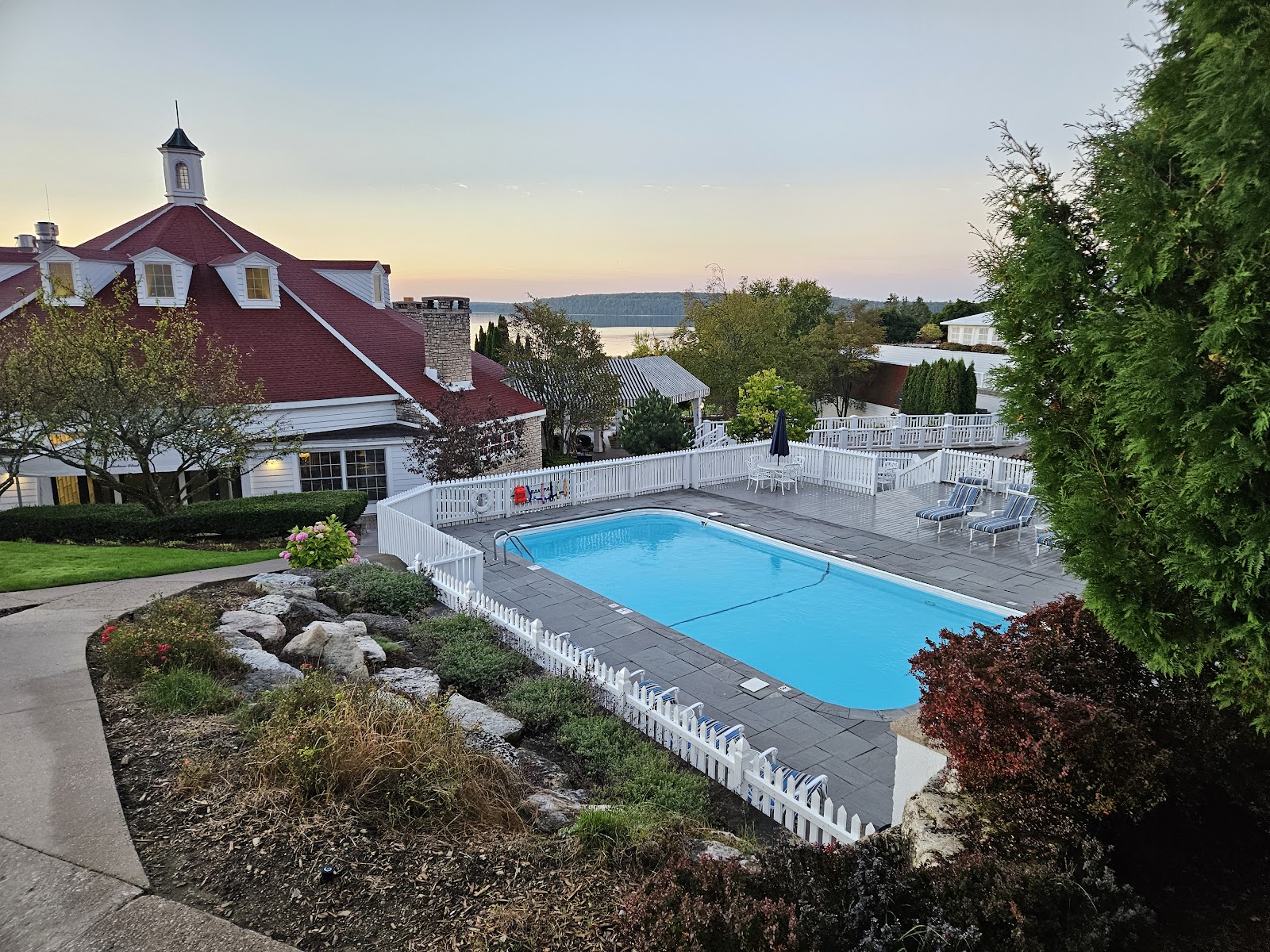
The Mission Point Resort, Mackinac Island: The Problem, and Four Ways Out of It
A resort on the exposed east end of Mackinac Island, with a great deal of open lawn facing open water.
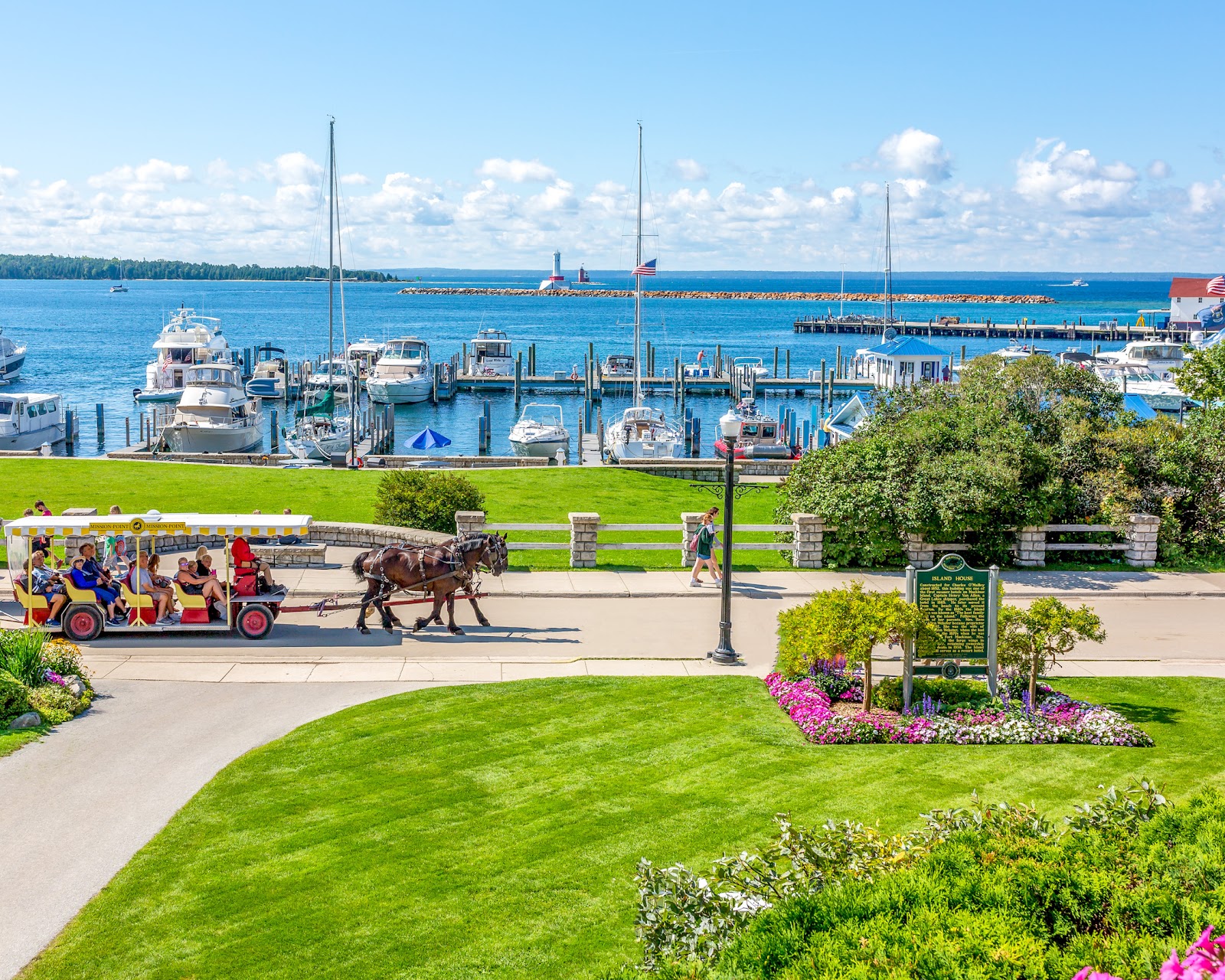
The Island House Hotel, Mackinac Island: The Light Through the Day
An 1852 waterfront hotel on Mackinac Island — the oldest on the island, facing open water across the harbour.
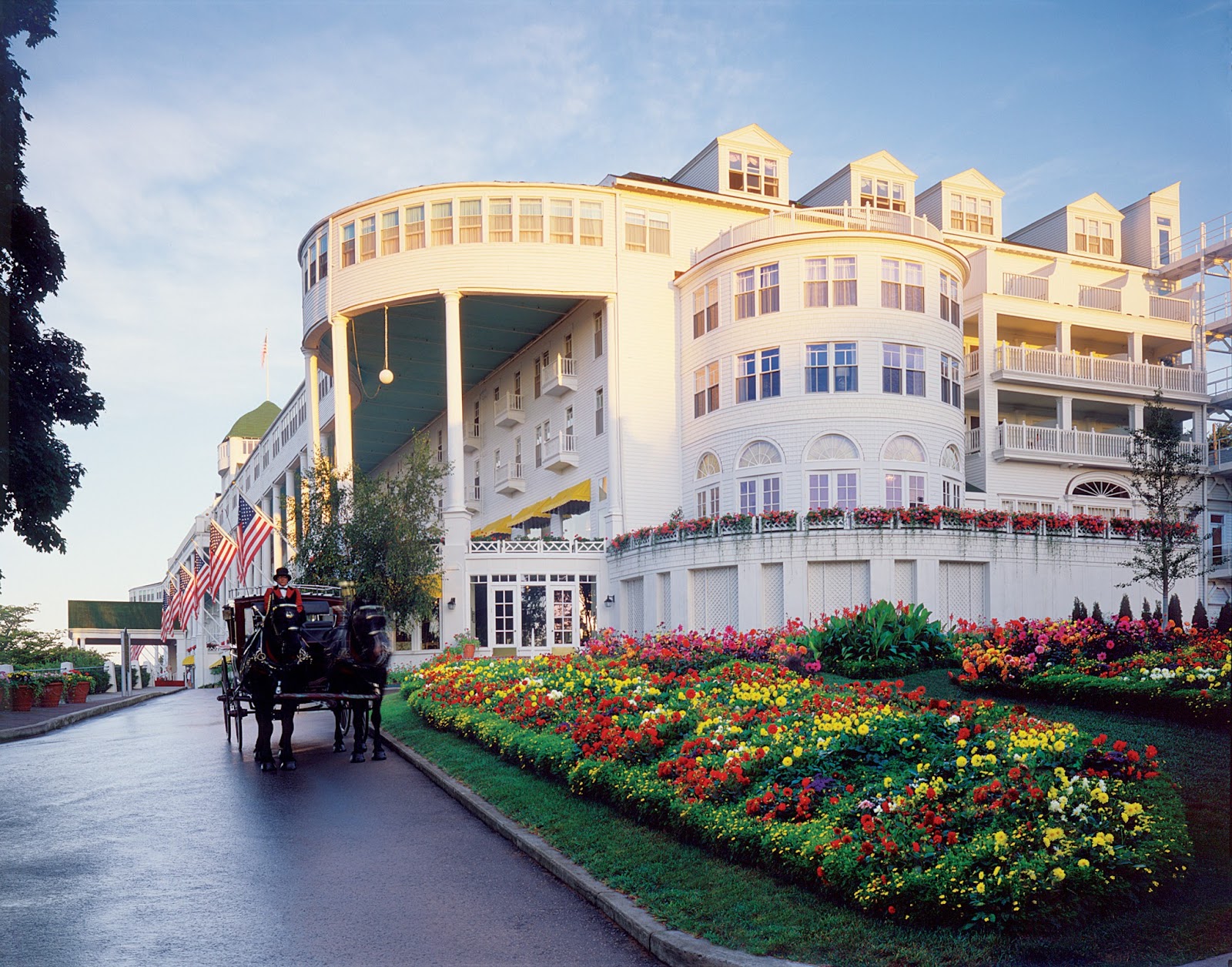
The Grand Hotel, Mackinac Island: A Walk Through the Building
An 1887 summer hotel on an island with no motor vehicles, and a porch said to be the longest in the world.