The single most useful fact about photographing on this shore is one that most people get backwards, and once it is understood every venue here makes sense. You are on the west bank of the Hudson. Manhattan, the Statue of Liberty and Ellis Island are all to the east. So at the end of the day, when the sun is low behind you, it is shining directly onto the west-facing walls of everything across the water — the skyline is front-lit and warm at sunset here, not silhouetted, with the sky deepening toward blue behind it.
From Battery Park or the South Street piers you are looking west into the sun at a dark outline; from Jersey City you are looking east at a lit facade with the good sky behind it. There is no trick required and no compromise to make, and it is the reason this side of the harbour is worth more to a wedding photographer than the New York side. The distance is close to ideal too.
The Hudson here is something like a mile and a half wide, which is the range at which a skyline still reads as a skyline — the towers separate, the layers have depth, and a long lens has something to compress. Much closer and the buildings become a featureless wall; much further and they become a texture. The water itself is the element that most photographers on this shore underuse. This is a tidal estuary, so the surface is usually moving and often genuinely choppy, which means it scatters rather than mirrors: lit windows and floodlit landmarks become long shimmering vertical columns rather than clean inverted images.
Get the camera low, near the water's own level, and that column runs the full depth of the frame — the strongest compositional element available at any of these venues, and it costs nothing but kneeling down. On a rare still evening the surface flattens into a true reflection, which is cleaner and cannot be arranged; dawn is when it happens most often.
The tide matters in one practical way that is easy to overlook: with a range of roughly a metre and a half, the height of a moored hull relative to a dock changes through the day by that much, and so does whether a pontoon is level with the dock or a step down from it. Tide tables for this harbour are published and free. Three numbers from the latitude — about forty and a half degrees north — set the schedule at every venue here. The midsummer noon sun reaches about seventy-three degrees, high enough to flatten the landmarks into pale shapes through the middle of a summer day.
The midwinter noon sun sits near twenty-six degrees, low enough to rake towers, masts and brickwork from the south all afternoon. And civil twilight runs about thirty minutes in midsummer, of which the genuinely useful balance point — where the skyline lights and the remaining sky are within a stop of each other, so both hold detail in one frame — runs twelve to fifteen minutes. That is enough for two positions if both are decided in advance and you walk rather than discuss.
There is a fourth number worth knowing because the landmarks here are spread across an arc of water: the sun's setting azimuth swings something like sixty degrees across the year at this latitude, from well north of west in late June to well south of west in late December. That changes the angle at which low light strikes each landmark and which parts of the skyline are lit rather than shaded by their neighbours, so a composition that worked beautifully in July will be lit differently in January. Check the azimuth for the actual date rather than trusting a summer scout.
Two practical matters recur across these guides. The first is that once the sun is low you are standing in the land's own shadow while everything across the water is still in sun, which means that at any exposure keeping the landmarks correct a face is unlit. Every evening frame here needs one small warmed source at low power, close to the subject and feathered so there is no visible pool on the ground, and it needs to be set up before the light arrives rather than during it.
After full dark the same applies with a tripod: the city on ambient at a second or two, the couple on your own light, and every room light behind you switched off so its reflection does not sit on the glass. Which leads to the second matter, because most venues on this shore are largely glazed. A pane with a dark space on the camera side and a bright scene beyond transmits nearly everything and reflects almost nothing — the reflections normally visible are reflections of the room you are standing in.
Remove the room's light, put the lens against the pane so there is no air path for a reflection to form, wear dark clothing, and the glass effectively disappears. That technique is worth having because outdoor deck access on an exposed harbour edge is frequently shared, limited, or closed by wind. Wind is a first-order planning consideration here rather than an afterthought.
With a mile and a half of open water to the east and low ground to the west, there is nothing to slow a breeze: a westerly arrives across a dock or a lawn with real force, a veil becomes a two-person job, lightstands need sandbagging, and an open-air microphone picks up noise that positioning cannot fix. Ask every venue what its indoor ceremony fallback is, and ask for the capacity as a number rather than as an assurance — that figure, against the guest list, is the most important fact in the booking conversation.
Salt air is the associated equipment cost: it is corrosive, and a breezy day on an exposed waterfront leaves a fine saline mist on lenses, bodies and contacts. Wipe down the same evening rather than the next week. The Statue of Liberty needs an expectation managed rather than a technique applied. At a couple of kilometres across open water it is small in a wide frame and needs a long lens to be readable — and a long lens compresses the distance so much that the couple must stand far from the camera to appear alongside it, at which point they are small.
The two versions that work are a long-lens landmark frame with no people in it, and a wide portrait in which the statue is a deliberate small element understood rather than displayed. The version couples ask for, at normal portrait distance with a large statue behind, is not available from this shore; say so early and offer the two that are. The exception is a silhouette in the ten minutes after sunset, when the statue is floodlit against a graduated sky and the couple are dark shapes — both are reduced to outlines, scale stops mattering, and it is the best statue frame the shore offers.
Ellis Island, meanwhile, is the underrated sightline and the one to lean on: a building group rather than a single object, so it fills a horizontal frame at eighty-five to a hundred and thirty-five millimetres and reads as architecture rather than as a symbol, with red brick that holds warm low light instead of going pale. Air clarity is the largest seasonal variable at every venue here, more than temperature and more than rain, because the principal subject is a mile and a half away and haze is what softens it.
Cold dry winter air over the harbour is far more transparent, so in January and February lower Manhattan resolves with genuine detail — individual windows, structural edges, separation between towers — where in July and August it dissolves into a pale grey mass. The clearest and most modelled views of the year are in midwinter, and the honest thing to tell a couple is that the skyline will look better in their February engagement photographs than on an August wedding day.
The partial fix in summer is to shoot longer and tighter, because haze accumulates with distance: a two-hundred-millimetre frame of one building group carries far less of it than a wide frame of the whole waterfront. Against that, winter's cost is the schedule — sunset before half past four in late December puts the balance point before five, during cocktails rather than after dinner, which must be a named item on the timeline or it passes while the room is being seated — and an exposed harbour edge in January is genuinely cold with nothing to shelter behind.
Late September into early November is the strongest all-round window: the humidity drops out, the air clears markedly, temperatures are comfortable in formal clothing outdoors, sunset lands around six so the crucial fifteen minutes fall at a civil hour, and the light stays low enough that the skyline is modelled through the whole afternoon. Late April and May are the other good window, with clearing air and lengthening evenings. Summer is long, comfortable and hazy, with sunset after eight in late June putting the balance point near half past eight, comfortably inside a reception.
Storms move through this metro quickly in the warm months, and the half hour after a cell clears is the best light of the year here: washed air so the skyline finally resolves, wet decking and paving reflecting the sky, and a low sun under a broken ceiling. If a cell goes through at six, do not pack. Two harbour notes to close.
There is real traffic out there — ferries crossing regularly, tugs and barges working the river, large vessels heading for the container terminals — and a vessel passing behind a subject during the balance point is a strong and very specific frame; the ferries run often enough to plan on rather than hope for. And helicopters use the river corridor, which is a noise consideration for an outdoor ceremony rather than a photographic one, and worth mentioning to a couple alongside the wind.
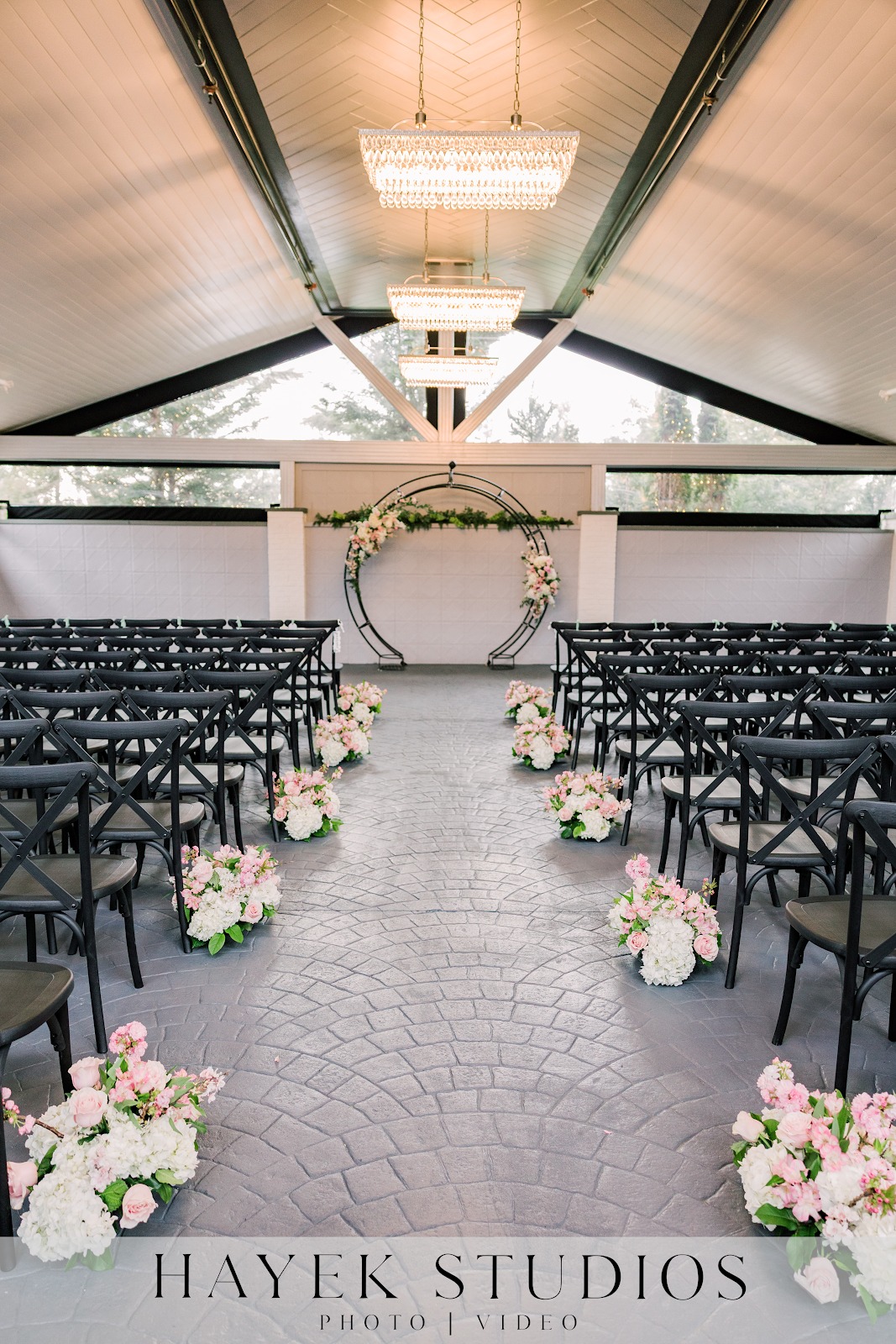
The Park Loft, Jersey City: The Problem, and Four Ways Out of It
A converted industrial loft in Jersey City — no view, no daylight to speak of after four, and four ways round both.
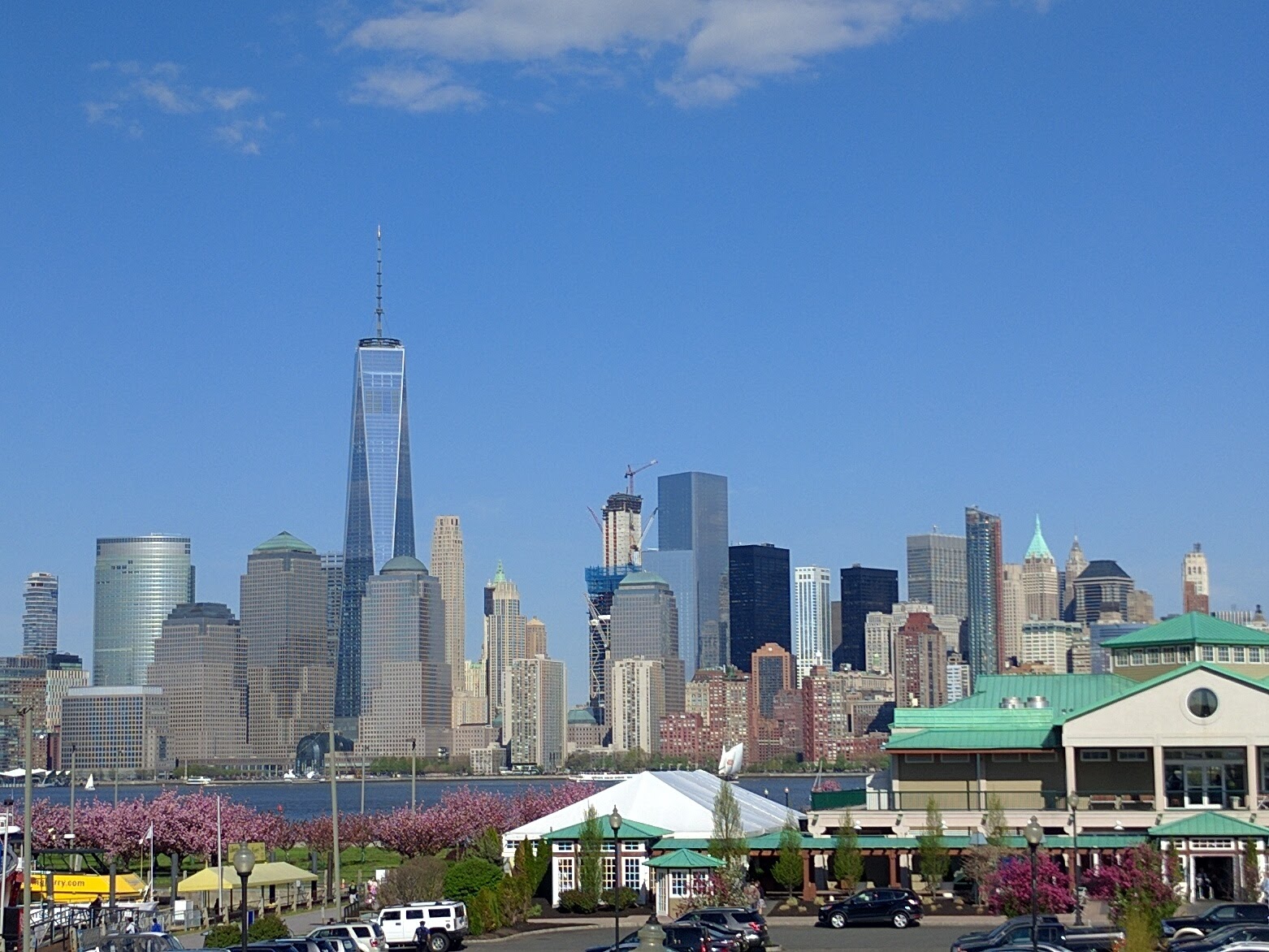
The Maritime Parc, Jersey City: Suits and Does Not Suit
A marina-side venue in Liberty State Park — a working waterfront, which suits some weddings exactly and others not at all.
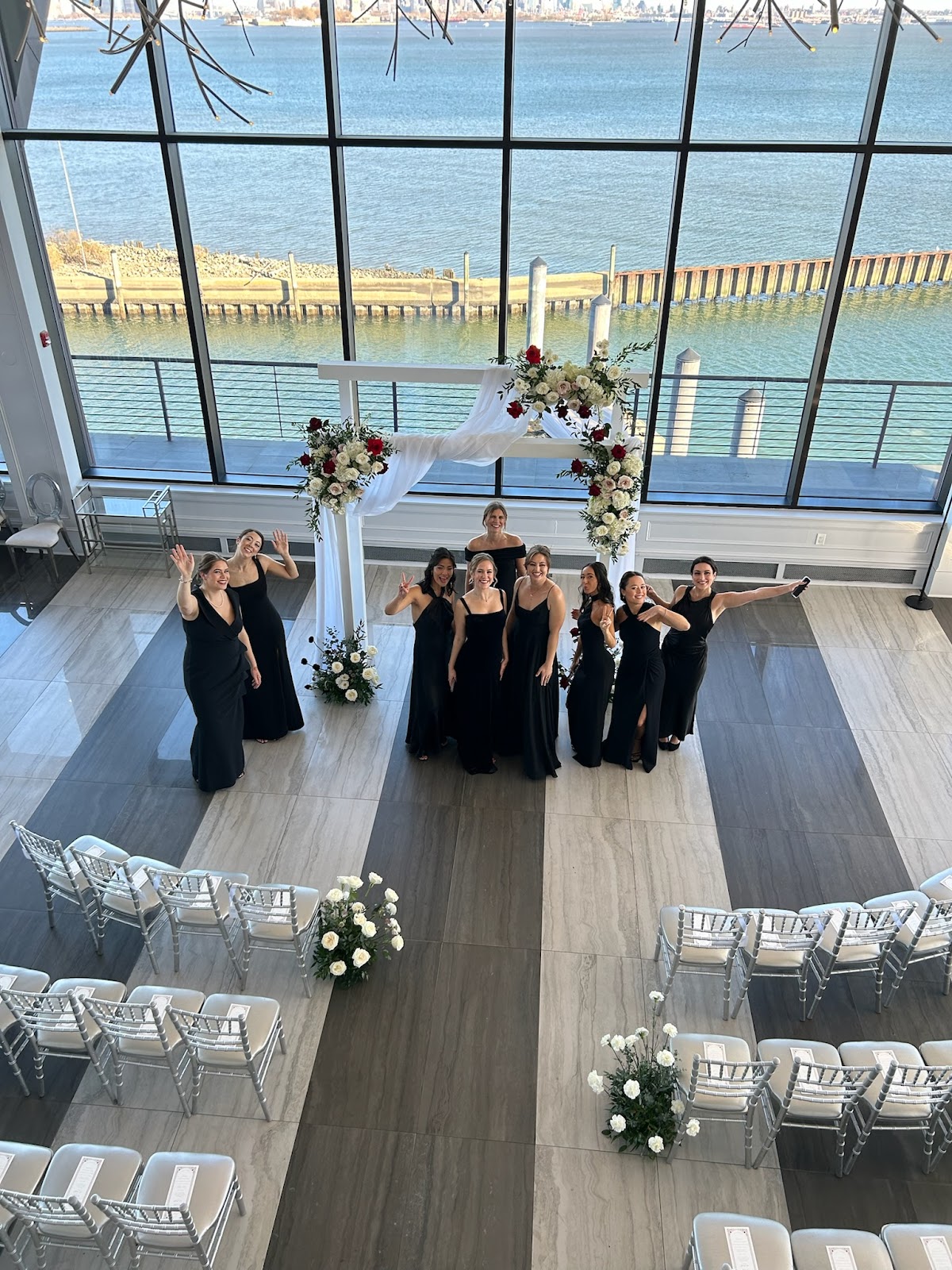
The Hudson House, Jersey City: One Frame, and How It Is Made
A waterfront venue where the best frame is made through the glass — and made so the glass is invisible.
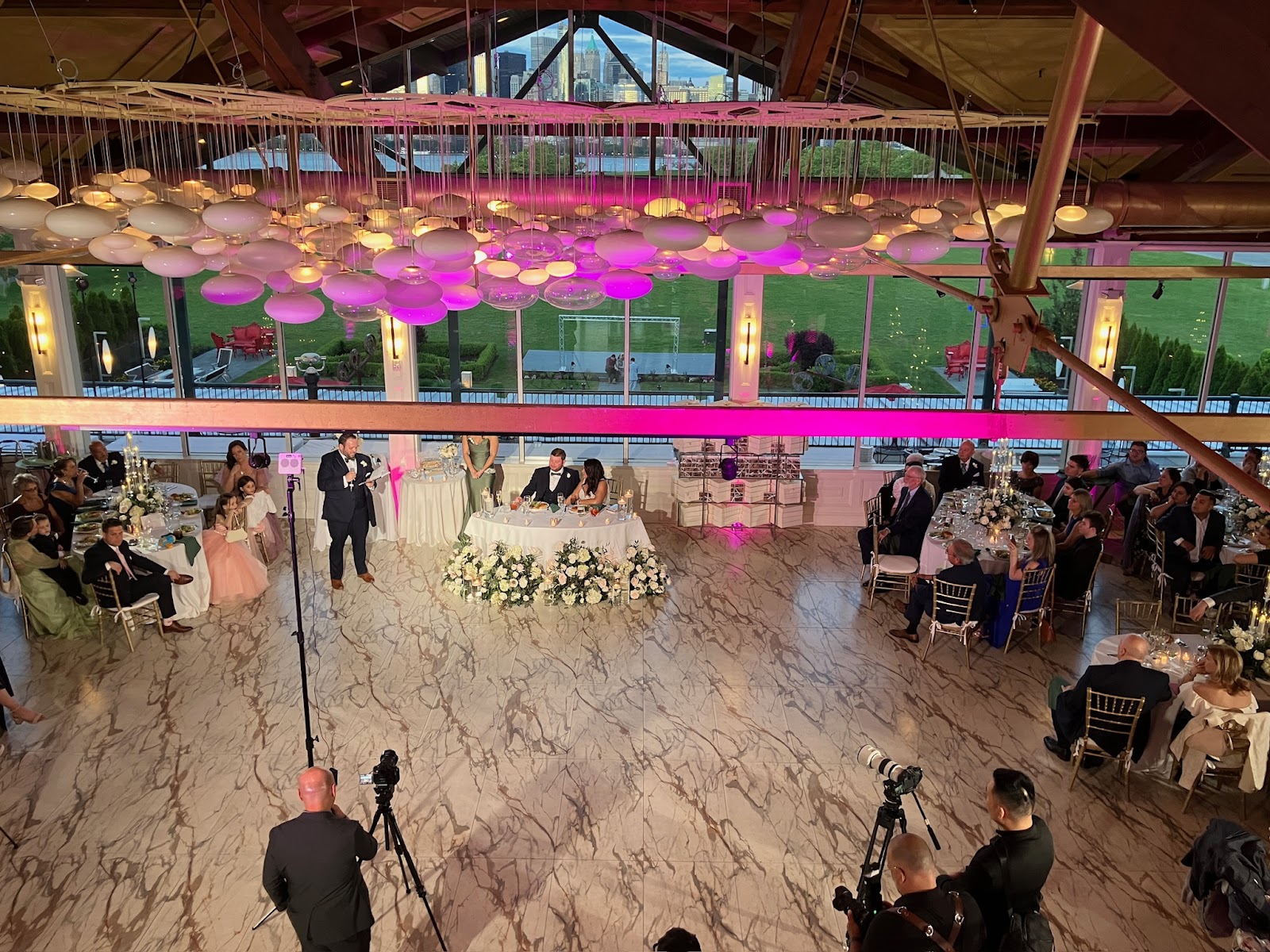
The Liberty House, Jersey City: The Venue’s Own Logic
A venue in Liberty State Park with three separate landmarks in three different directions — which is the whole planning problem.
The Battello, Jersey City: The Light Through the Day
A glass box on the Hudson's west bank — which means the skyline is lit rather than backlit at the end of the day.