 The Venetian, Garfield: The Building’s Own Logic
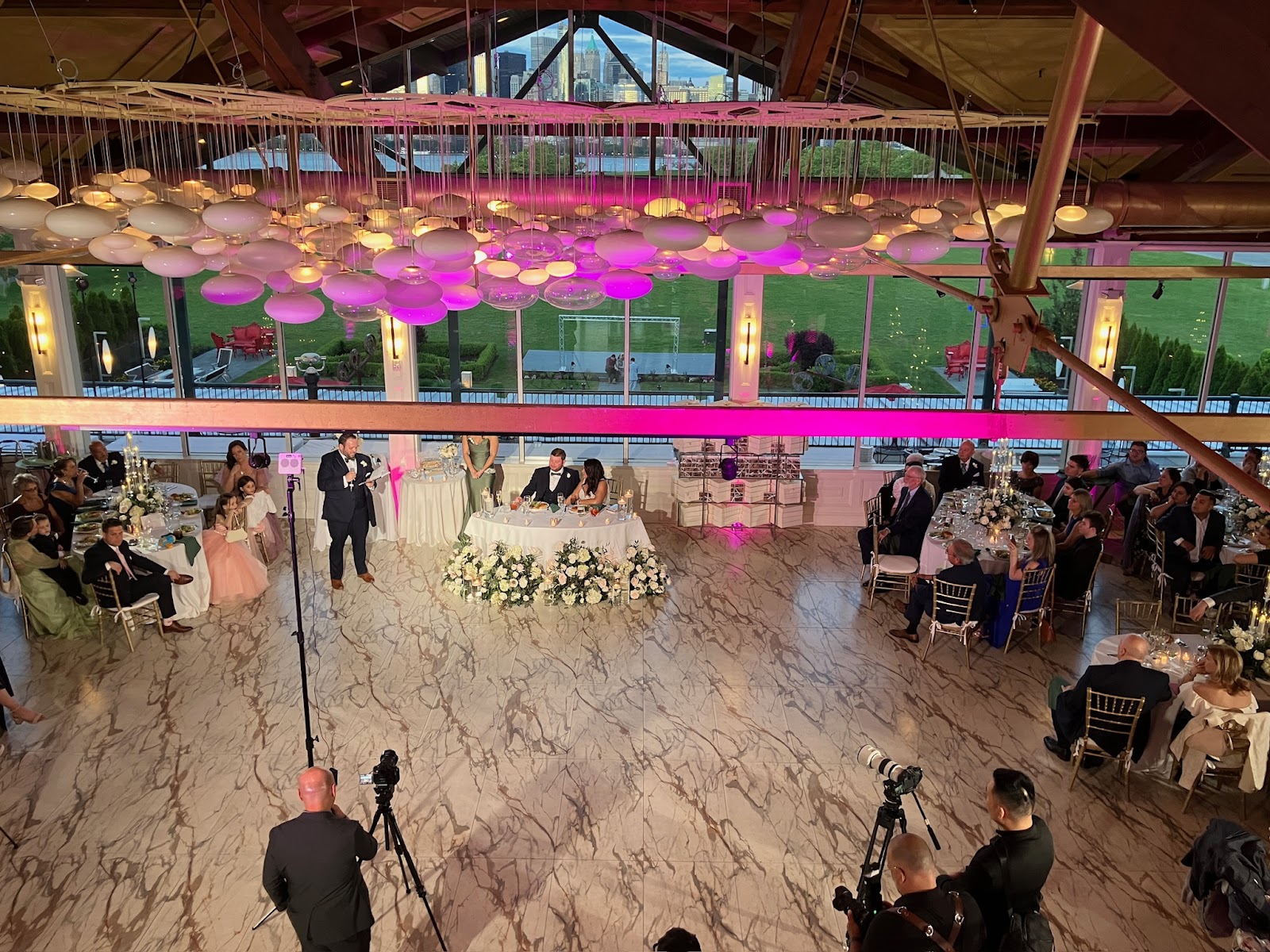
The Liberty House, Jersey City: The Venue’s Own Logic
Three sightlines, three directions, one evening. Choose.
The logic of this venue is not the building. It is that there are three separate landmarks in three different directions, and the good light only points one way at a time.
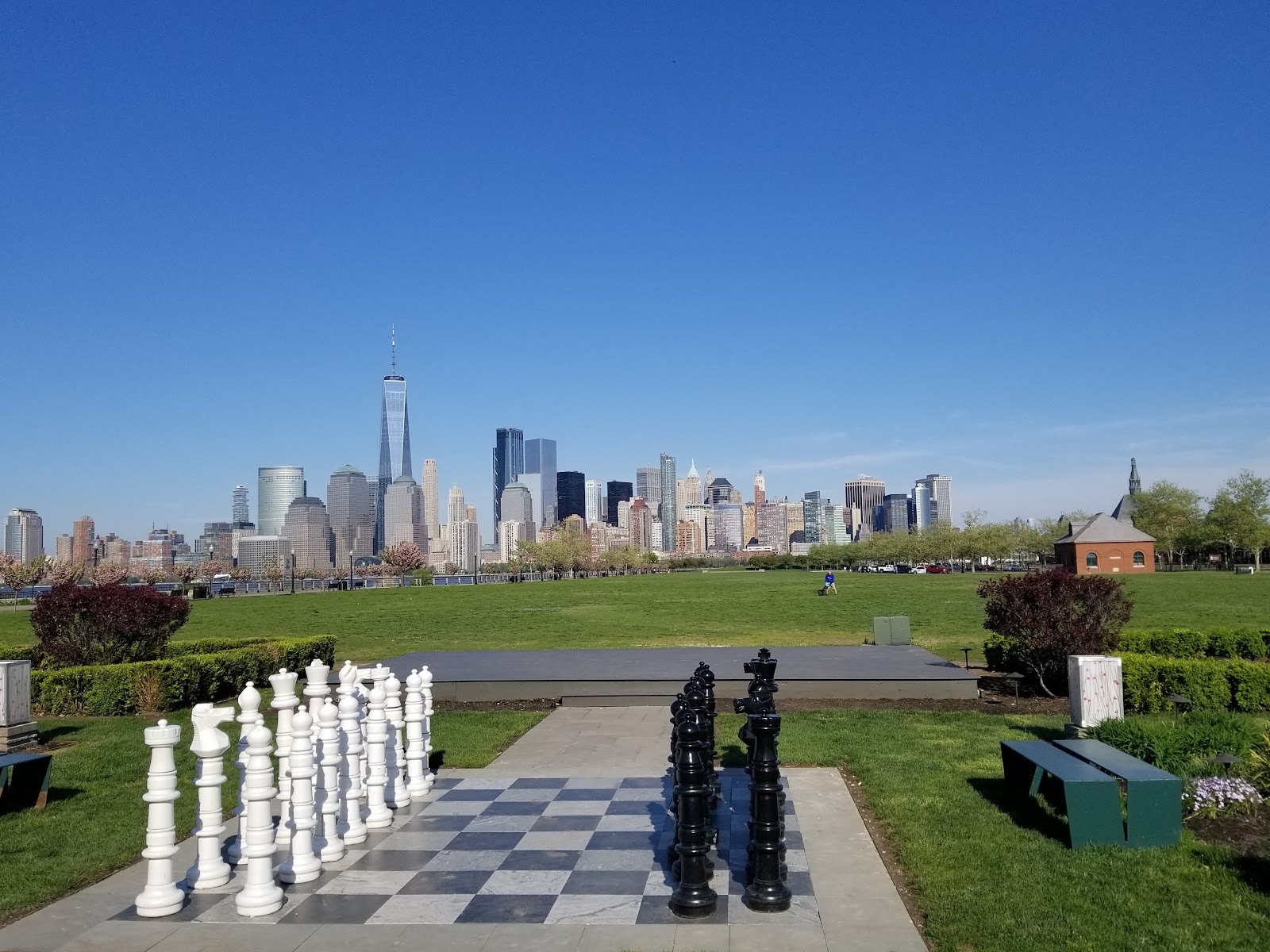
Liberty House sits on the waterfront inside Liberty State Park, on the Jersey City side of New York Harbour, and from that position three things are visible across the water: the Statue of Liberty, Ellis Island beside it, and the towers of lower Manhattan beyond. Each is in a different direction, each is a different distance away, and each wants a different hour.
That is the whole planning problem, and it is a genuinely good problem to have. Most waterfront venues offer one view. This one offers three and asks you to choose.
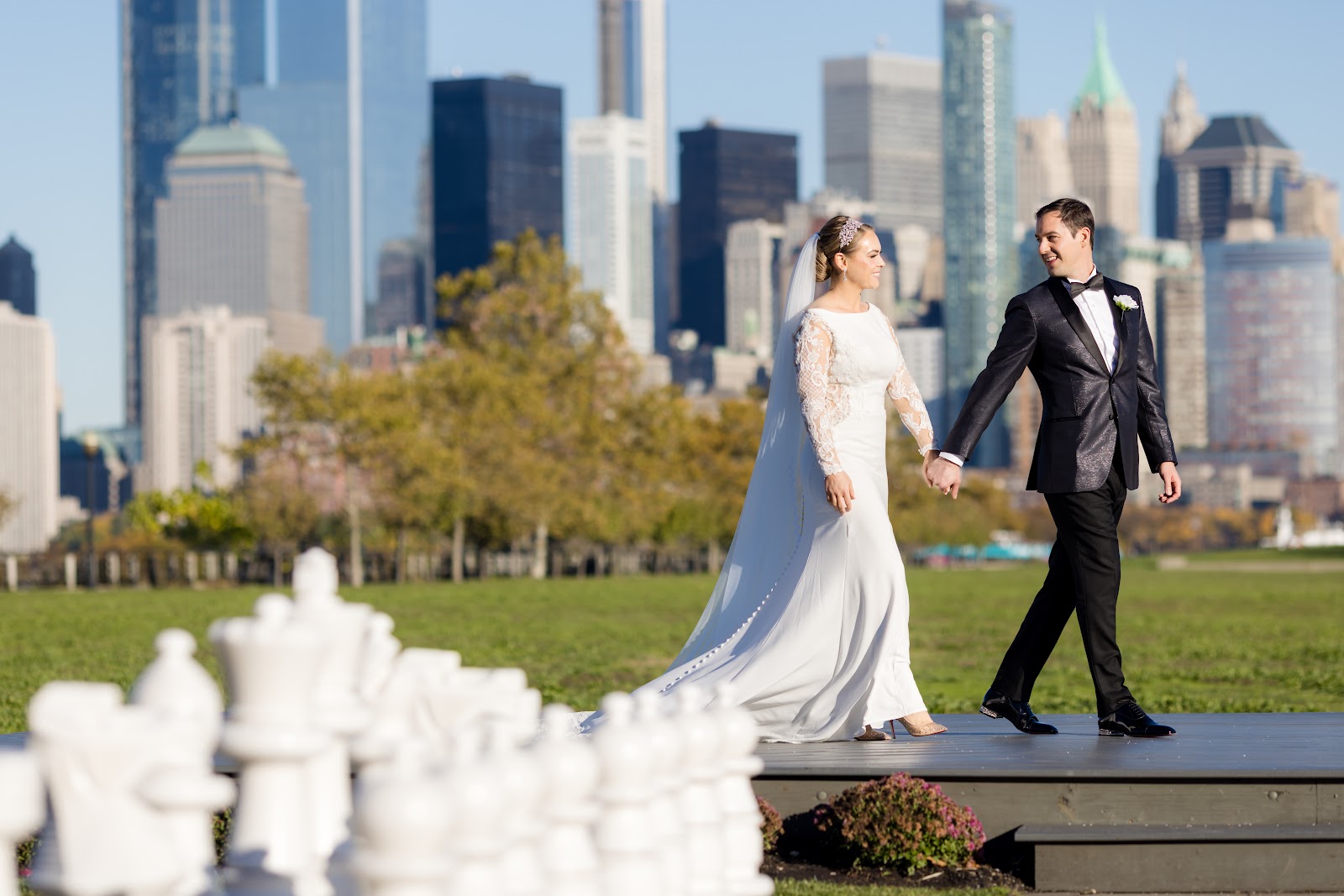
Start with the governing geographical fact, which applies to the whole Jersey side of the harbour and which most people get backwards. You are on the west bank. Everything you want to photograph is to the east. So when the sun is low at the end of the day it is behind you, shining onto the east-side landmarks — the statue, the island, the towers — and lighting their western faces warm while the sky behind them deepens toward blue.
The skyline is front-lit at sunset here, not silhouetted. That is the opposite of what a photographer standing in Manhattan gets, and it is the reason this side of the harbour is worth more to a wedding photographer than the New York side.
Now the three sightlines, roughly, and the exact bearings are worth checking on site because a few degrees changes which one a given window or lawn actually faces.
The statue is the nearest of the three and the most recognisable. At a couple of kilometres it is large enough in a long lens to be unmistakable and small enough in a wide one to be a detail, which means the lens choice decides whether the photograph is about the couple or about the landmark.
Ellis Island sits beside it, lower and broader, a group of red brick and pale stone buildings with a domed centre. It is less iconic and considerably more photogenic — a building group across water reads as a place, where a single statue reads as a symbol.
And lower Manhattan is the furthest and the largest: a dense cluster of towers at some distance, which at the right hour is the most spectacular of the three and at the wrong hour is a grey smudge.
Sort them by what each needs, route the evening accordingly, and the day works. Try to have all three in the same fifteen minutes and you will get none of them properly.
What follows is how to read each sightline, then the park around the venue — which contains one of the great pieces of industrial architecture on this coast — then the harbour year.
The Liberty House at a glance
| Where | A waterfront venue inside Liberty State Park, Jersey City, NJ |
| The logic | Three landmarks in three directions; the good light points one way at a time |
| The advantage | West bank, so all three are front-lit at sunset rather than silhouetted |
| Also on site | A vast surviving nineteenth-century railway train shed in the park |
| Ask first | Exact bearings of each space, park permit rules, and wind exposure |
Reading the three sightlines
Take the statue first, because it is the one every couple asks about and the one most often photographed badly.
The problem is scale. At a couple of kilometres across open water, the statue in a wide-angle frame is a small green vertical that a viewer has to be told about. In a two-hundred-millimetre frame it is large, detailed and instantly readable — but a long lens also compresses the distance between the couple and the statue, which means they have to be a long way from the camera for both to be in frame, and then they are small.
So there are two honest versions and the middle fails. Either a long lens on the statue alone, as a landmark frame with no people in it, which is worth making and takes thirty seconds. Or a wide frame in which the statue is a small but deliberate element in the background of a portrait, with the couple large and the landmark understood rather than displayed.
The version that does not work is the one people ask for: a couple at normal portrait distance with a large recognisable statue behind them. The optics do not allow it from this shore. Say so early and offer the two that do.
There is a third option worth knowing: a silhouette. In the ten minutes after sunset the statue is lit by its own floodlighting against a graduated sky, and at that point a long lens frame with the couple as dark shapes in the foreground works, because both are simplified to outlines and scale matters less. That is the strongest statue frame available and it happens inside the balance-point window.
Ellis Island is the underrated sightline and the one to lean on. It is a building group rather than a single object, which means it fills a horizontal frame at a moderate focal length — something in the eighty-five to one-hundred-and-thirty-five range — and it reads as architecture rather than as a symbol. Red brick takes low warm light exceptionally well, holding colour rather than going pale, and the domed centre gives the group a focal point.
It is also less crowded as a subject. Every couple who books a venue in this park comes home with a statue photograph; far fewer come home with a good frame of the island, and it is the better picture.
Lower Manhattan is the third and the most conditional. At its distance it depends entirely on air clarity, and in this metro area that varies enormously by season — which the last section covers. On a clear evening it is the most spectacular of the three: a dense cluster of towers, front-lit gold by the low sun, with the sky darkening above and the water carrying their reflection. On a hazy August evening it is a pale grey suggestion and no technique recovers it.
The practical route through an evening, then. Start with the sightline that needs the most light, which is Manhattan, while the sun is still up and raking the towers. Move to Ellis Island as the colour warms, because brick is at its best in the last ten minutes of direct sun. Then take the statue as a silhouette after the sun has gone, inside the balance point. That order follows the light rather than fighting it and it gets all three properly.
Light the couple throughout. Once the sun is low you are standing in the land’s shadow while the landmarks across the water are still in sun, so at any exposure that keeps them correct a face is unlit. One small warmed source at low power, close, feathered so there is no visible pool on the ground. Set it up before the light arrives.
The water is the element that ties all three frames together and it is worth using deliberately. The Hudson and the harbour here are a tidal estuary, so the surface is usually moving and often choppy, which means it scatters rather than mirrors — lights become long shimmering columns rather than clean inverted images. Get the camera low and that column runs the full depth of the frame. On a rare still evening you get a true reflection instead, which is cleaner and cannot be arranged.
One bearing note that matters more here than anywhere: check the actual compass direction of each space you are given, on site. Three landmarks spread across an arc of water means a room or a lawn may face one of them squarely and only catch another obliquely, and the venue’s own description will not be precise enough to plan from.
The park, and the train shed
The park around the venue is large, open and mostly flat, and it contains one building that is worth planning twenty minutes for.
At the northern edge of the park stands the terminal of a nineteenth-century railway — a station where trains met ferries, and where a great many immigrants arriving through the island opposite began the next part of their journey. The head house survives and so does the train shed behind it, and the shed is the thing to see.
A nineteenth-century train shed is a vast iron and glass canopy over parallel tracks, and photographically it is an extraordinary space: enormous volume, hard repeated structure, a translucent roof, and light falling in long parallel patterns down the length of it. It is the single best piece of architecture available to any venue in this park and most wedding photographers working here never walk to it.
Photograph it along the tracks rather than across them. The repetition of columns and trusses converging to a vanishing point is the frame, and a figure standing in that space reads as very small inside an enormous pattern, which is exactly the effect you want.
The light in a shed like that is peculiar and good. A translucent or partly glazed roof acts as a very large diffuse source directly overhead, so the light is soft but strongly top-down — which fills a space beautifully and puts shadows in eye sockets. The fix is to position near the open ends, where light also arrives horizontally, or to bring a low fill. A white card at waist height does most of it.
Contrast is the other consideration. An open-ended shed has bright ends and a dark middle, often four or five stops apart, so a frame down the length has a blown far end unless you either expose for the interior and accept it, or place the subject where the two are closer together. Expose for the interior and accept it is usually the better answer, because a glowing end to a dark tunnel reads as depth.
Rust, riveted iron and peeling paint are the material here and they want raking light for the same reason all texture does. A light placed almost parallel to a riveted column throws every rivet into its own small shadow; aimed at it, the column goes flat.
Two practical matters about the shed and the park generally. Access and permits: a state park will usually require a permit for commercial photography or for an event, and that requirement is not waived by a wedding. The park and the venue are not the same organisation, so ask the park directly and ask early. And distance: allow twenty to twenty-five minutes each way to move a party of a dozen in formal clothing across an open park, plus time on location. That is an hour committed, and it competes directly with the three sightlines at the end of the day. Pick one or the other.
The honest recommendation is to do the shed earlier in the afternoon, when its top light is at its most even and the walk does not cost you the evening, and to keep the last ninety minutes for the water.
The rest of the park is open lawn with paths and planting, which is useful in one specific way: it gives you an unobstructed low western sky. That is the one direction none of the three landmarks lies in, and it means a straightforward backlit portrait with a clean sunset behind the couple is available here — which at most waterfront venues it is not, because the view is in the way. Two frames facing west, then turn around for the landmarks.
And it is exposed. Open parkland on a harbour edge with a mile or more of water to the east has no wind shelter at all, and a westerly arrives across the lawn with nothing to slow it. That is a first-order planning consideration for a veil, for a lightstand, and for a ceremony with a microphone.
The harbour, and the year
Jersey City sits at about forty and a half degrees north, and three numbers from that govern the schedule.
The midsummer noon sun reaches about seventy-three degrees, which is high enough to flatten the landmarks into pale shapes through the middle of a summer day. The midwinter noon sun sits near twenty-six degrees, low enough to rake them from the south all afternoon. And civil twilight runs about thirty minutes in midsummer, of which the usable balance point — where the landmark floodlighting and the sky are within a stop of each other — runs twelve to fifteen minutes.
There is a fourth number that matters specifically here because the subjects are spread across an arc: the sun’s setting azimuth swings something like sixty degrees across the year at this latitude, from well north of west in late June to well south of west in late December. That changes the angle at which the low light strikes each of the three landmarks, and it changes which of them is lit most squarely. A composition that worked beautifully in July will be lit differently in January. Check the azimuth for the actual date rather than trusting a summer scout.
Air clarity is the single most important seasonal variable at this venue, more than temperature and more than rain, because two of the three sightlines are at a distance where haze dominates.
Winter is the clear season and it is not close. Cold dry air over the harbour is far more transparent than summer air, so lower Manhattan resolves with real detail — individual windows, structural edges, separation between towers — rather than dissolving into a grey mass, and Ellis Island’s brickwork holds its colour. Add the low raking sun and January and February give the sharpest and most modelled views of the year.
The costs are schedule and comfort. Sunset in late December is before half past four, which puts the balance point before five — during cocktails rather than after dinner, and it must be a named item on the timeline or it will pass while the room is being seated. And an exposed harbour lawn in January is genuinely cold with nothing to shelter behind, so outdoor work has to be brief, planned and close to a door.
Summer is the reverse on both counts. Sunset after eight in late June puts the balance point near half past eight, comfortably inside a reception, and the park and the waterfront are pleasant to be in. But metro-area summer humidity produces real haze, and a hazy lower Manhattan at that distance is a pale silhouette rather than a subject. July and August wide frames of the skyline from this shore are routinely disappointing, and the honest thing to tell a couple is that the distant view will look better in a February engagement session than on an August wedding day.
The partial fix in summer is to shoot longer and tighter, because haze accumulates with distance through the air: a long frame of one building group carries far less of it than a wide frame of the whole waterfront. It is also the season to lean on the statue and Ellis Island, which are nearer and therefore less affected, rather than on Manhattan.
Late September into early November is the strongest shoulder and arguably the best compromise of the year. The humidity drops out and the air clears markedly, temperatures are comfortable in formal clothing on an exposed lawn, sunset lands around six so the balance point falls at a civil hour, and the light stays low enough that all three sightlines are modelled through the whole afternoon. Late April and May are the other good window, with clearing air and lengthening evenings.
Two weather notes specific to this position. Wind is a first-order consideration rather than an afterthought — open parkland on a harbour edge, a mile or more of water to the east and a low city to the west, means there is nothing to slow a breeze, and a windy day here is a materially different event from a windy day in a courtyard. Ask what the venue’s indoor fallback for the ceremony actually is and what it holds, as a number.
And storms pass through this metro quickly in summer, with the half hour afterwards being the best light of the year: washed air so the distant skyline finally resolves, wet paths reflecting the sky, brick at full saturation, and a low sun under a broken ceiling. If a cell goes through at six, wait rather than pack.
The instruction that covers the whole venue: establish the exact bearing of every space, sort the three landmarks by what each needs, run the evening in the order the light dictates — Manhattan first while the towers are lit, Ellis Island as the colour warms, the statue as a silhouette after sunset — and put the shed in the afternoon rather than the evening. Written down, that is a straightforward plan. Improvised, it is three half-made photographs.
More frames from The Liberty House
The Liberty House wedding photography: common questions
Can we have a photograph with the Statue of Liberty large behind us?
Not from this shore, and it is better to say so early. The statue is a couple of kilometres across open water: in a wide frame it is a small green vertical that has to be pointed out, and a long lens large enough to make it readable also pushes the couple too far from the camera to be anything but small. The two versions that do work are a long-lens landmark frame with no people in it, and a wide portrait in which the statue is a deliberate small element. The best of all is a silhouette in the ten minutes after sunset, when the statue is floodlit against a graduated sky and both it and the couple are simplified to outlines.
Which of the three views is the best?
Ellis Island, and it is the one couples ask about least. It is a building group rather than a single object, so it fills a horizontal frame at eighty-five to a hundred and thirty-five millimetres and reads as architecture rather than as a symbol, and its red brick holds warm low light beautifully instead of going pale. Everyone leaves this park with a statue photograph; far fewer leave with a good frame of the island.
What order should the evening run in?
Follow the light. Lower Manhattan first, while the sun is still up and raking the towers, because it is the furthest and needs the most light. Ellis Island as the colour warms, because brick is at its best in the last ten minutes of direct sun. Then the statue as a silhouette after the sun has gone, inside the balance point. Trying to get all three in the same fifteen minutes produces none of them properly.
Do you need to bring lights?
Yes. Once the sun is low you are standing in the land’s shadow while everything across the water is still in sun, so at any exposure that keeps the landmarks correct a face is unlit. One small warmed source at low power, close, feathered so no visible pool appears on the ground — and set up before the light arrives rather than during it.
Is there anything else on site worth photographing?
Yes, and most photographers working here never walk to it: a surviving nineteenth-century railway terminal at the northern edge of the park, with its train shed intact. A vast iron and glass canopy over parallel tracks is the best architecture available to any venue in this park. Photograph along the tracks so the columns and trusses converge, and note that a translucent roof gives strongly top-down light, so position near the open ends or bring a low fill. Budget an hour there and back and do it in the afternoon, not the evening.
When is the best time of year?
Winter for the views and autumn for the compromise. Cold dry air is far more transparent, so January and February give the sharpest, most modelled versions of all three sightlines — but sunset before half past four puts the balance point during cocktails, and an exposed harbour lawn in January is genuinely cold. Late September into early November is the best all-round window: the humidity drops out, the air clears, temperatures are comfortable, and sunset around six puts the crucial fifteen minutes at a civil hour.
More Jersey City, NJ venue guides
We are writing a photographer’s guide to every venue we would happily shoot in Jersey City, NJ. Here are three more, plus the full index:
- The Maritime Parc, Jersey City: Suits and Does Not Suit
- The Park Loft, Jersey City: The Problem, and Four Ways Out of It
- The Battello, Jersey City: The Light Through the Day
Planning a wedding at The Liberty House?
Three sightlines, in the order the light dictates. Tell us your date.