Nashville sits in the Nashville Basin, and the basin explains more about photographing here than any individual venue does. It is the eroded core of an ancient dome: the rock arched up, the crown wore away, and what is left is a shallow bowl of Ordovician limestone ringed at a distance by the Highland Rim, which stands a few hundred feet above the city. Three consequences follow and all three show up in photographs.
First, the city is flat, with no useful natural elevation change and no high ground close in, so separation between a subject and a background has to come from optics or from lighting rather than from topography — which is why long lenses and off-camera light do more work here than they do in a hilly city. Second, the soil over the limestone is thin, which limits how large street trees get, and in the recently redeveloped districts there is almost no mature canopy at all.
Outdoors in central Nashville means brick, glass, concrete and asphalt with nothing overhead, and there is nowhere to retreat between about noon and half past two in summer, when the sun at this latitude reaches near seventy-seven degrees. Plan that block indoors and do not apologise for it. The exception, and it is a valuable one, is the university campus in Midtown, which is a registered arboretum and holds a rare concentration of mature specimen trees within walking distance of several venues. Third, the local stone is cool.
Nashville limestone is a hard blue-grey with visible fossil content in it — crinoid stems and shell fragments, because it was laid down as a shallow tropical sea floor — and it photographs cold, going genuinely blue in shade. It warms well but it has to be warmed deliberately, or older Nashville buildings will look lifeless beside the same frames made elsewhere. The thin soil over rock also produces cedar glades, a globally rare habitat of open stony ground and eastern redcedar, which is a juniper: dense, dark, narrow and evergreen.
You will not find a glade downtown, but redcedar is planted throughout the city and it is the reason a Nashville winter frame has dark evergreen mass in it rather than only bare branches.
The city's distinctive venue type is the contemporary hotel, and a great deal of what stands here was built between about 2016 and 2022, which means a particular set of technical conditions rather than a particular architectural period. Floor-to-ceiling glazing is the norm, and modern high-performance glass is coated to reject heat; those coatings do not transmit all wavelengths equally, so daylight arriving through them lands cooler and often slightly green, and the shift is not identical from pane to pane or elevation to elevation. A subject at the window and a subject five metres back are lit by measurably different colour.
Set a white balance for the position you are shooting from and reset it when you move. On a high floor there is a second effect that catches people out: no ground bounce. At street level, light from the sky hits paving and returns upward into a face as free fill, which is why a city portrait has a lift under the chin nobody arranged. Forty storeys up there is nothing below the window but air, so light arrives from above and from the side and nothing from underneath, and eye sockets and the underside of a jaw go darker than the same nominal brightness at ground level would give.
A white card at waist height fixes it once it is recognised. Height also inverts the usual advice about the middle of the day: at nearly overhead, a summer noon sun barely enters a vertical window at all, so a high floor in June at one in the afternoon is a large, soft, evenly lit, cool-toned room — easier than the same hour at street level, not harder. In December a thirty-degree noon sun comes deep into the rooms all afternoon instead.
After dark the city gives something almost no other American city offers at this scale: lower Broadway is a dense continuous wall of neon and LED signage, several blocks of it at high intensity in saturated reds, blues and greens, so the downtown core reads as a bright aggressively coloured patch rather than the even warm grid most cities present. It will not white-balance — the sources are different technologies with different and sometimes spiky spectra — so balance for your subject, light the subject yourself, and let the city be as lurid as it actually is.
Two numbers from the latitude, about thirty-six degrees north, govern the ends of the day: civil twilight runs about twenty-six minutes in midsummer, and the genuinely useful part, where the exterior sky and the interior or city lighting are within a stop of each other, lasts ten to twelve minutes. That is the most valuable block in the day at almost every venue here and it belongs on the timeline as a named line item rather than a general intention.
The year: October into early November is the best window, when the air dries out, the haze lifts and a skyline finally resolves from a rooftop, with sun angles low enough that the whole afternoon works and sunset around six putting the dusk block at a civil hour. April into May is the second window and it carries Middle Tennessee's real hazard, an active spring severe-weather season in which the systems arrive organised and fast rather than gently — which for a venue whose asset is a roof means the rain plan needs a substitute for the rooftop frame, not only for the ceremony.
Summer is comfortable indoors and hard outside, with low-nineties heat, low-seventies dewpoints filling shadows by about two stops, substantial haze on any distant view, and lenses that fog within seconds coming out of air conditioning; the compensations are a sunset after eight and the half hour after an afternoon storm clears, which is the best exterior light of the year. Winter is short and clean, and it has one genuine hazard worth naming: Nashville sits further north than Memphis and right on the boundary between winter rain and winter ice, so Middle Tennessee gets occasional freezing rain.
That is a logistics problem rather than a photographic one — closed roads, grounded flights, stranded suppliers — and a winter date deserves a contingency that assumes nobody can drive. Against it, the winter light is the best of the year in quality: a low noon sun models faces all afternoon, the air is completely clear, the skyline is at its sharpest, and neon reads better in cold air than in summer haze. But sunset before half past four means the dusk block falls during cocktails, and that has to be planned rather than discovered.
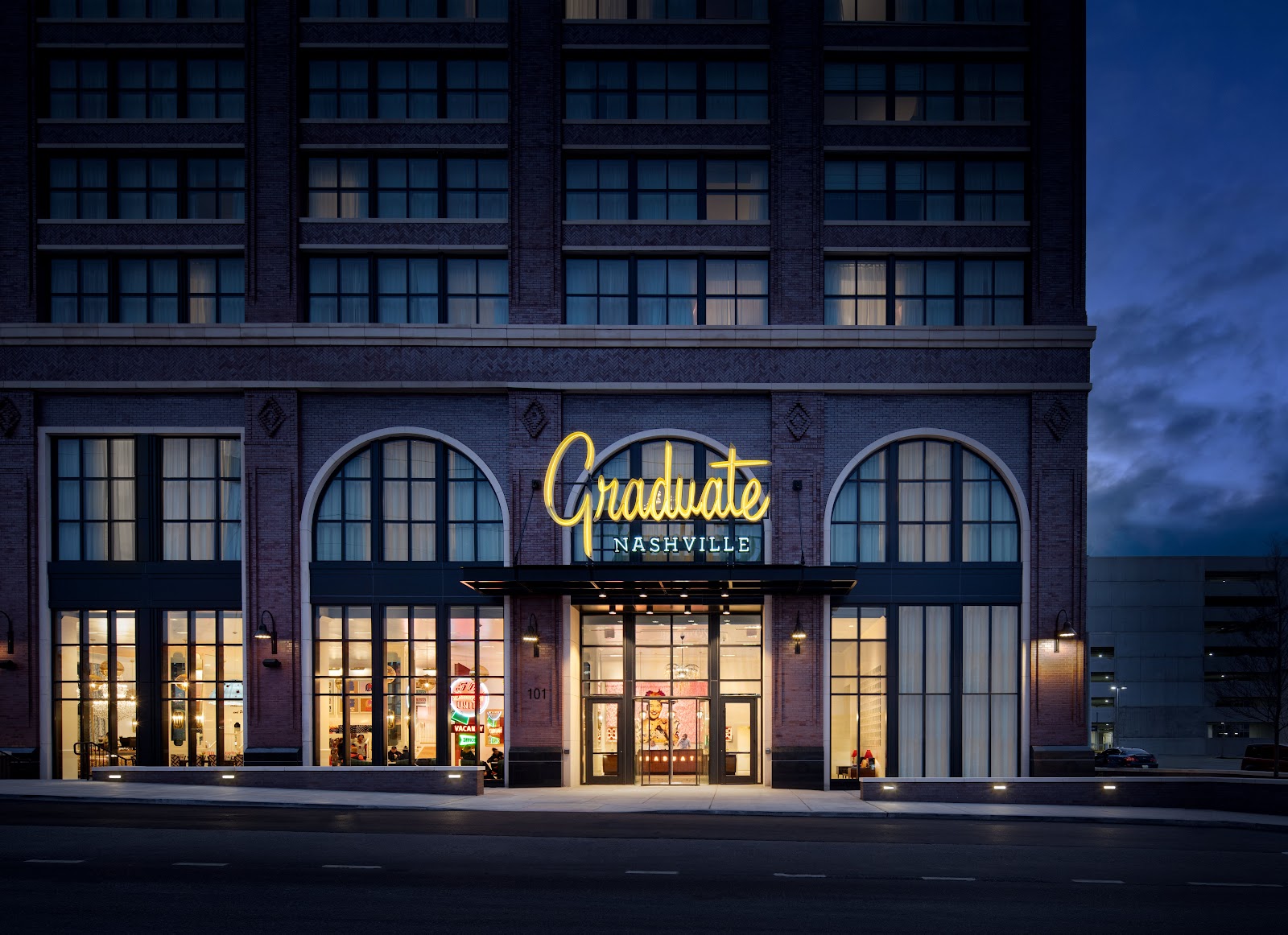
The Graduate Nashville: Field Notes, Problem and Solution
A maximalist hotel in Midtown where every surface is patterned — which is a problem with four specific solutions.
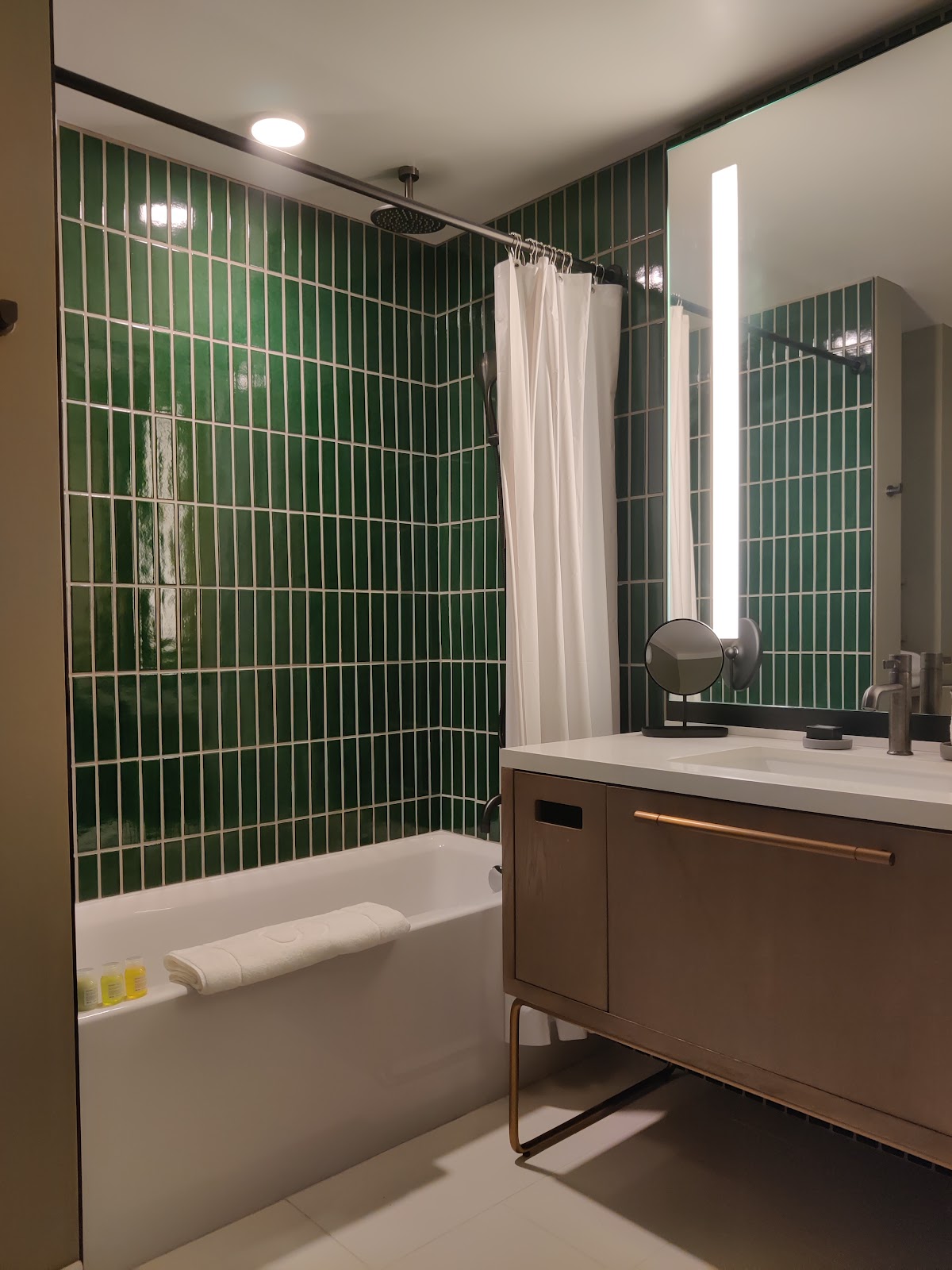
The W Nashville: One Frame, and How It Is Made
A design-led hotel in the Gulch, opened in 2021 — and one frame that only a building like this can give you.
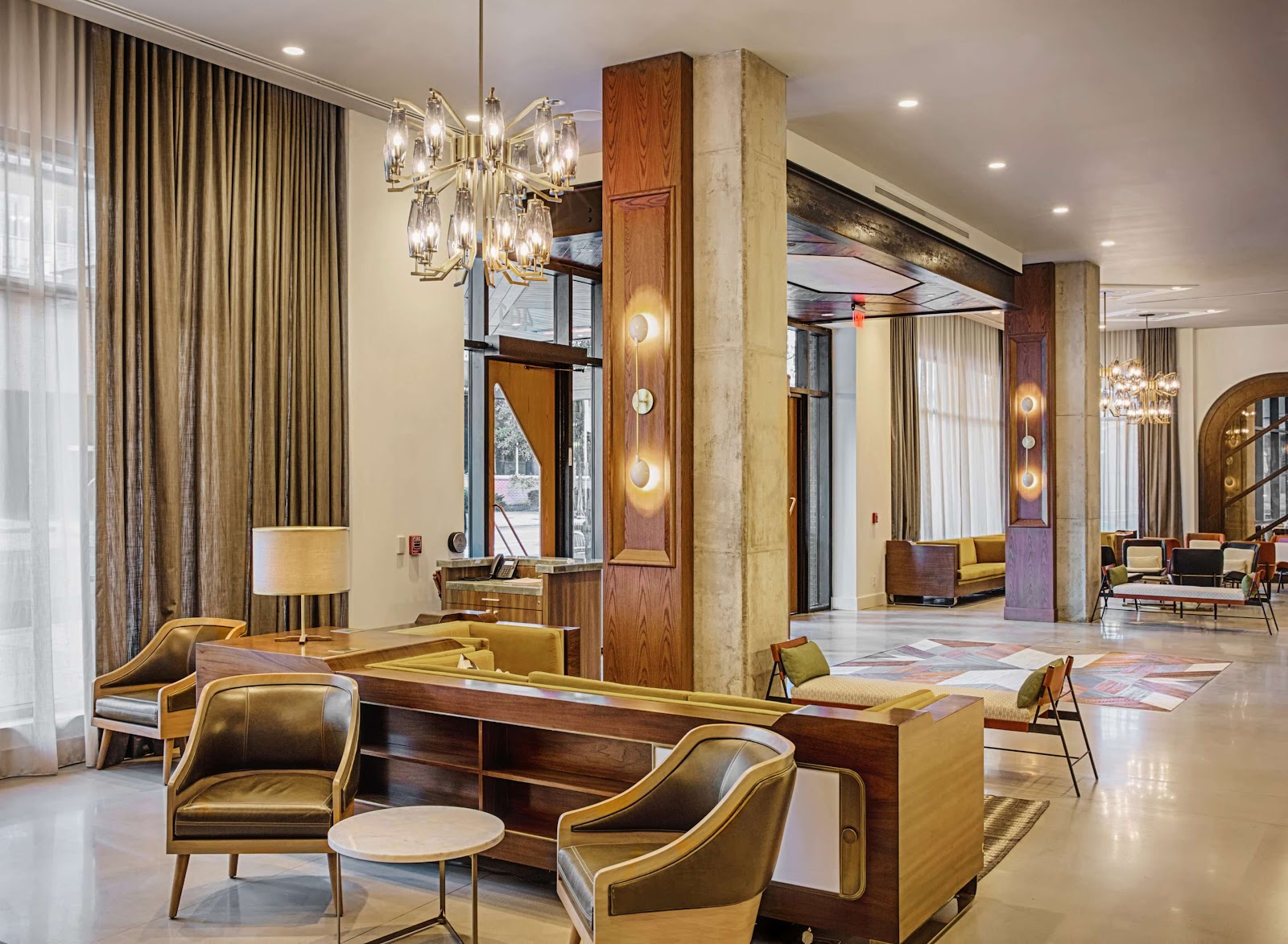
The Thompson Nashville: A Walk Through the Building
A mid-rise in the Gulch, opened in 2016, with a roof worth climbing to — and a neighbourhood built in a railway cut.
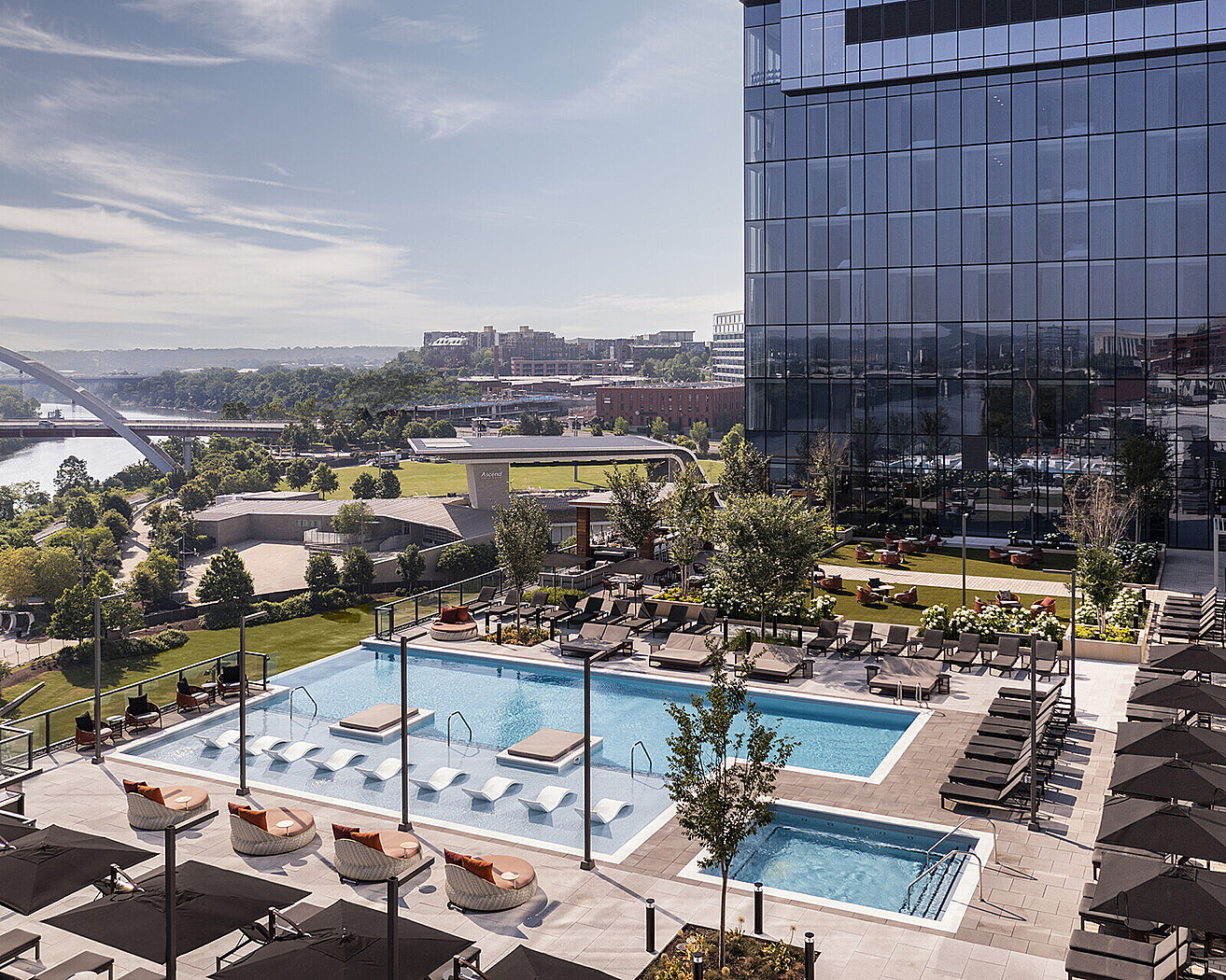
The Four Seasons Nashville: The Light Through the Day
A tower of around forty storeys in SoBro, opened in 2022 — and a set of light problems specific to modern glass.
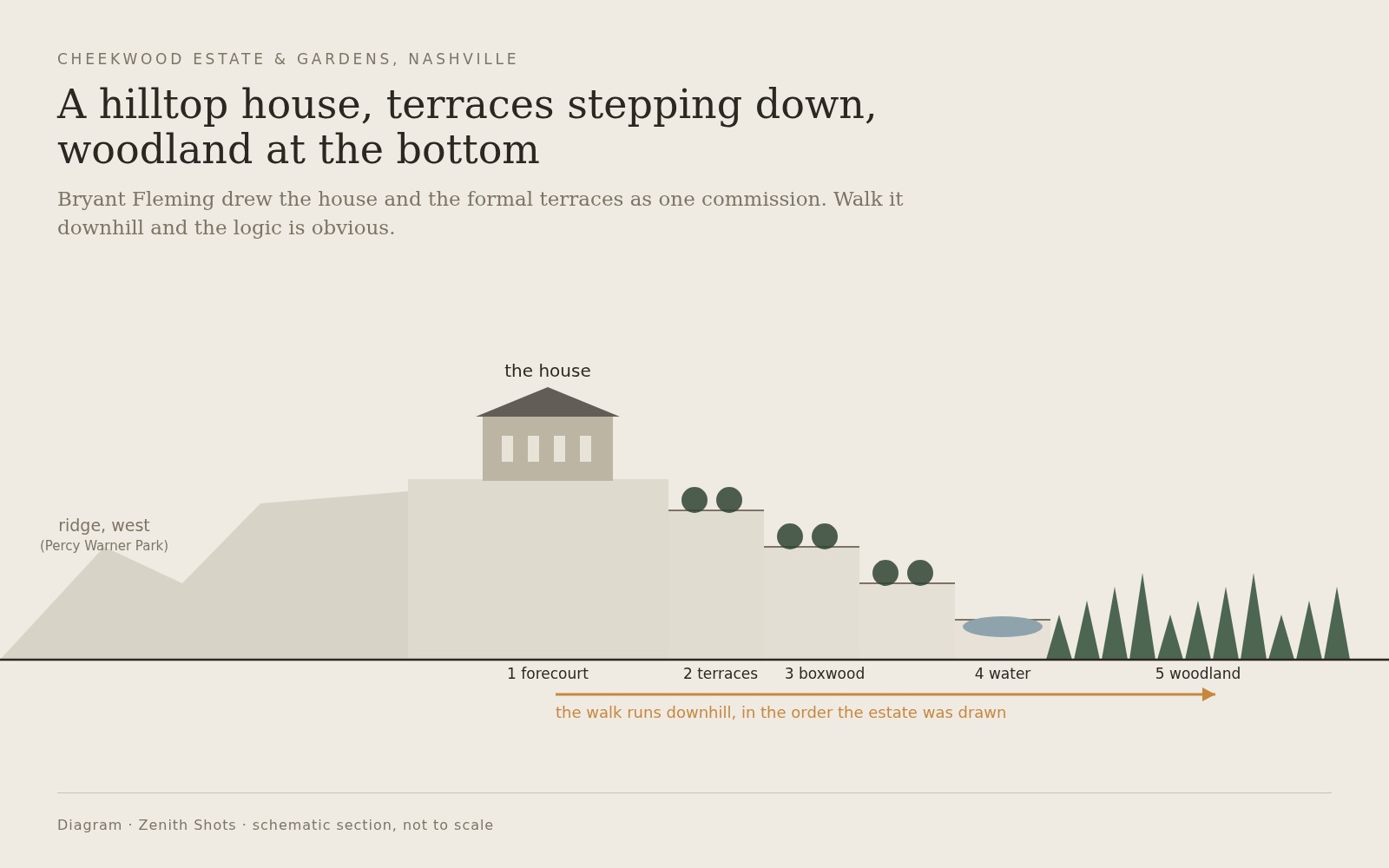
Cheekwood Estate & Gardens, Nashville: A Walk Down the Terraces
A limestone house and its gardens drawn by one hand in 1929 — which means the good sightlines are already there, waiting to be found rather than invented.