 The Memphis Zoo: The Problem, and Four Ways Out of It
The Four Seasons Nashville: The Light Through the Day
A day in a glass tower runs differently to a day in a building.
A wedding day in a modern glass tower does not have the light of a wedding day in a building, and the difference is worth understanding before the timeline is written rather than at four in the afternoon.
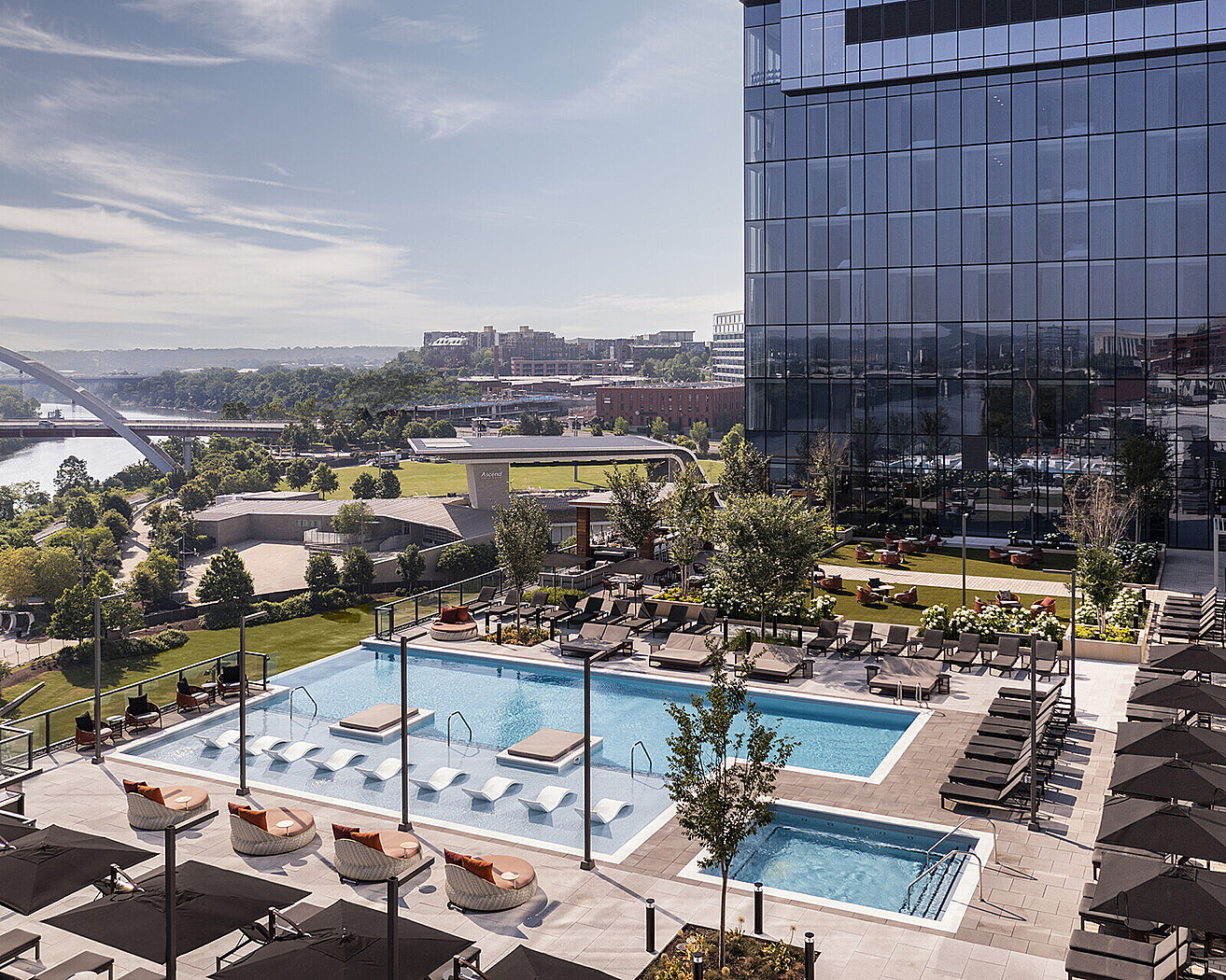
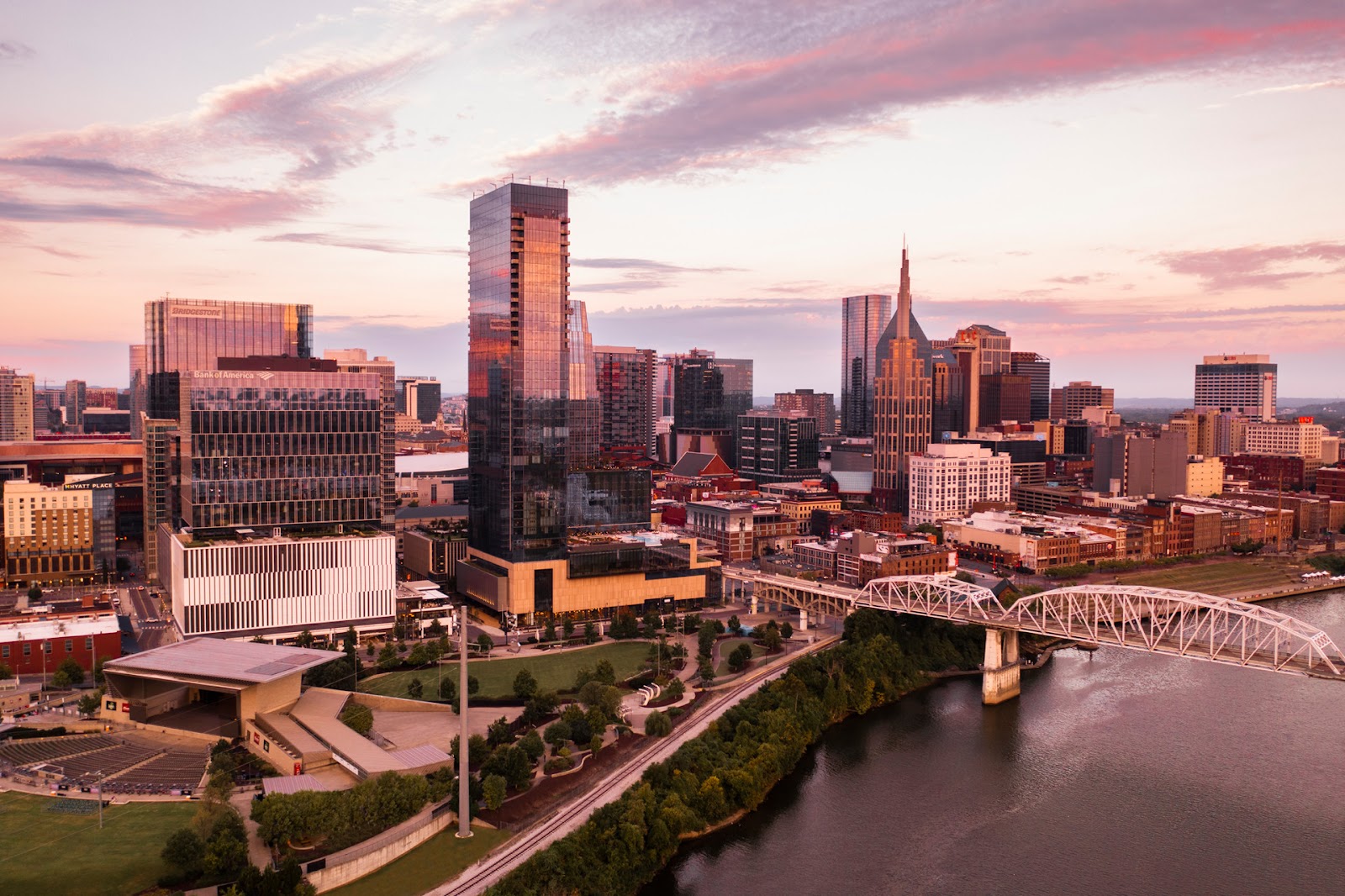
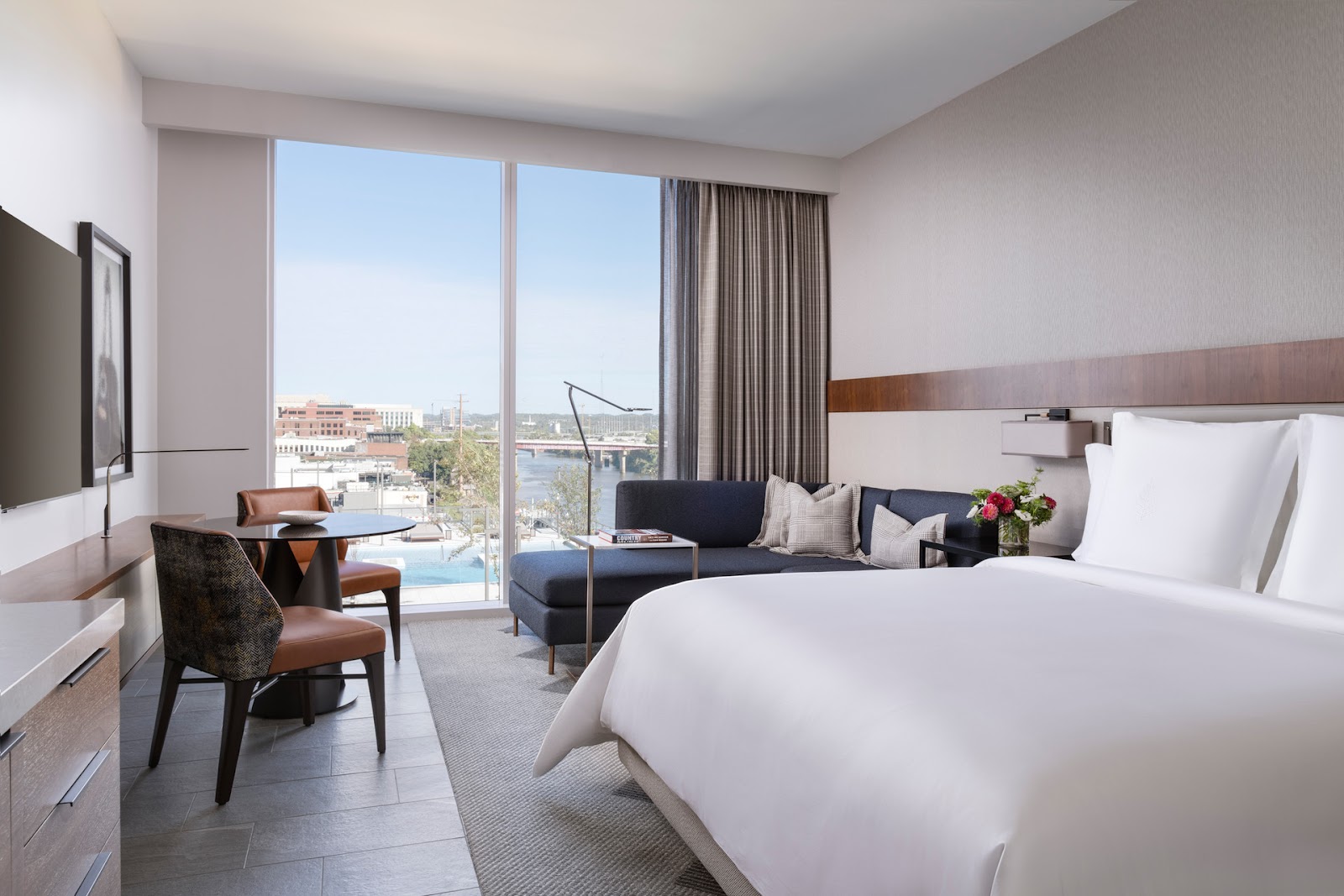
The Four Seasons Nashville is a tower of around forty storeys in SoBro, the district immediately south of lower Broadway, opened in 2022 and within a short walk of the Cumberland River and of the honky-tonk strip. It is new construction throughout: floor-to-ceiling glazing, clean lines, pale interiors, no period detail to speak of.
That combination produces a very particular photographic environment, and three properties of it shape everything.
The first is that the windows are the light. Not a source among others — the source. A room with a glass wall from floor to ceiling on one side and solid construction on the other three is a single enormous softbox with nothing opposing it, which means beautiful directional light on one side of a face and a deep unfilled shadow on the other. Learn to place people at forty-five degrees to the glass rather than square to it, and carry something white.
The second is the glass itself, and this is the part most photographers meet without diagnosing. Modern high-performance glazing is spectrally selective: it is coated to reject heat, and those coatings do not transmit all wavelengths equally. Daylight arriving through it lands cooler and often slightly green compared to the same daylight outside, and the shift is not identical from pane to pane or from one elevation to another.
The practical consequence is that a subject standing at the window and a subject standing five metres back in the same room are lit by measurably different colour, because the second is lit by a mix of transmitted daylight and whatever the ceiling fixtures are doing. Set a white balance for the position you are actually shooting from, re-set it when you move, and do not trust a single value across a room.
The third property is subtler and it catches people out at height. On a high floor there is no ground bounce. At street level, light from the sky hits paving and walls and comes back up into a face, which is why a portrait in a city street has a fill under the chin that nobody arranges. Forty storeys up, the only things below the window are air and, in the distance, a city too far away to return anything. So the light comes from above and from the side and from nowhere underneath, and eye sockets and the underside of a jaw go darker than they would in the same nominal brightness at ground level.
That is entirely fixable — a white card at waist height, or a wall, or a light at low power — but it has to be recognised first. It is why a high-floor suite that looks gorgeous to the eye produces flatter, heavier portraits than expected on the first pass.
With those three things in hand, the day itself has a clear shape, and it runs as follows.
The Four Seasons Nashville at a glance
| Where | A glass tower of around forty storeys in SoBro, Nashville; opened 2022 |
| The light | Floor-to-ceiling glass on one side and nothing opposing it |
| The catch | Cool green cast from the glazing, and no ground bounce at height |
| The payoff | A high-floor western sky, and Broadway’s neon after dark |
| Ask first | Which floors and suites are available, and roof or terrace access |
Morning and the middle of the day, on a high floor
Early morning on an east-facing high floor is the most dramatic light the building will offer and the hardest to use.
There is nothing between the window and the sunrise. No opposite building at that height, no tree line, no haze layer to soften the first hour. The sun arrives as a hard collimated beam through a glass wall and lays a sharp-edged rectangle across the floor, and anything in it is four or five stops above anything out of it.
That makes a particular kind of picture very easy and every other kind impossible. Put a subject in the beam, expose for the beam, let the room go black, and you have a strong graphic frame. Try to photograph a whole room of people getting ready in that condition and you will lose either the faces or the windows.
Preparation coverage therefore wants either the sheers closed — and modern hotel sheers are good, turning a glass wall into an even panel of soft light that is genuinely one of the best portrait sources in any building — or a subject placed deliberately in the hard light with everything else surrendered. Choose per frame. The sheers are the workhorse and the hard beam is the one or two special ones.
West-facing rooms in the morning are the opposite and quietly better for working in: no direct sun, a whole wall of open north-west sky, soft and even, with a cool cast from the glazing on top of an already cool source. Warm it in post deliberately rather than leaving it, because skin under coated glass with no direct sun goes genuinely blue and the eye does not notice until the frames are side by side.
The middle of the day is where a glass tower does something no ordinary building does, and it is worth knowing in advance. Nashville is at about thirty-six degrees north, so the midsummer noon sun sits near seventy-seven degrees — very nearly overhead. At that angle almost no direct sun enters a vertical window at all. The beam that dominated the room at eight in the morning is simply gone by one in the afternoon, and what is left is skylight only.
The effect is that a high floor at midday in June is a large, soft, even, cool-toned room with a gentle top-down direction — genuinely pleasant, if unexciting, and usable for anything. This is the reverse of the ground-level situation, where midday in June is the worst hour of the day. Up here it is one of the easier ones.
In December the reverse applies. A noon sun near thirty degrees comes deep into the room, all day, on whichever elevation faces it — a low raking beam crossing half the floor for hours. That is wonderful light and it is relentless; a winter wedding on a south-facing high floor is a day of managing one strong directional source rather than looking for one.
So the seasonal instruction inverts the usual advice. In summer, the high floors are best in the middle of the day and the good outdoor light is late. In winter, the high floors are dramatic all day and the day ends before five.
Two practical notes for the whole daytime block.
Reflections are a constant. A glass wall with a bright exterior and a dimmer interior reflects the room back at you, so a wide frame that includes the window will contain a ghost of the furniture, the light stands and quite possibly you. Move the camera off the glass axis, get close to the pane, or accept the reflection and compose it. A polariser helps a little and not as much as photographers hope, because the reflection is off a surface you are nearly perpendicular to.
And the view is not a background. Forty storeys up, a city reads as a pale hazed texture, particularly in a humid Tennessee summer, and at any exposure that keeps a face correct it will be blown to white. Either expose for the view and light the subject to match, which needs real output, or accept a bright window and treat it as negative space. Pretending both can be correct without a light is the commonest failure in this kind of room.
Late afternoon and the last hour
The second half of the day is when the building’s height pays for itself, and it does so on the western elevation.
Nashville sits in the Nashville Basin, a shallow bowl of eroded limestone ringed at some distance by the Highland Rim, which stands a few hundred feet above the city. There is no mountain and no ridge close in. From forty storeys the western horizon is low, distant and effectively unobstructed, which means the sun goes all the way down rather than disappearing behind something at five degrees of altitude.
That is worth a great deal. The last thirty minutes before sunset on a west-facing high floor gives a long, low, warm beam straight through the glass, and because the glazing cools everything by a stop of colour, the result is a warm light that is less orange and more golden than the same hour at street level. It flatters skin unreasonably well.
Place the subject side-on to the glass with the sun off to one side rather than behind them, and the falloff across the room does the modelling. If the sun is directly behind the subject you are photographing into a glass wall with the sun in it, which produces flare and a veiled, low-contrast frame — occasionally lovely, mostly a mess.
The Cumberland River is the other late-afternoon asset. It loops through downtown and from height it reads as a broad dark band with the sky on it. Moving water does not mirror, it scatters, so the river holds a soft luminous sheen rather than a reflection, and it stays visibly brighter than the land for a good while after sunset. A wide frame from a high floor after sunset, with the river still holding light and the city going dark, is a better photograph than the same frame at sunset itself.
Then civil twilight, which here runs about twenty-six minutes in midsummer and slightly less around the equinoxes. Inside that, the useful window — where the exterior sky and the interior lighting are within a stop of each other, so both hold detail in one frame — is about ten to twelve minutes. That is the single most valuable block of time in the entire day at this venue and it should be protected in the schedule by name.
Ten minutes is enough for two locations if they are in the same room and you have decided in advance what they are. It is enough for one if you are walking. It is enough for none if the discussion about where to go starts when the sun goes down.
So: decide the balance-point frames a week early. Write them on the timeline as a line item. Walk to them.
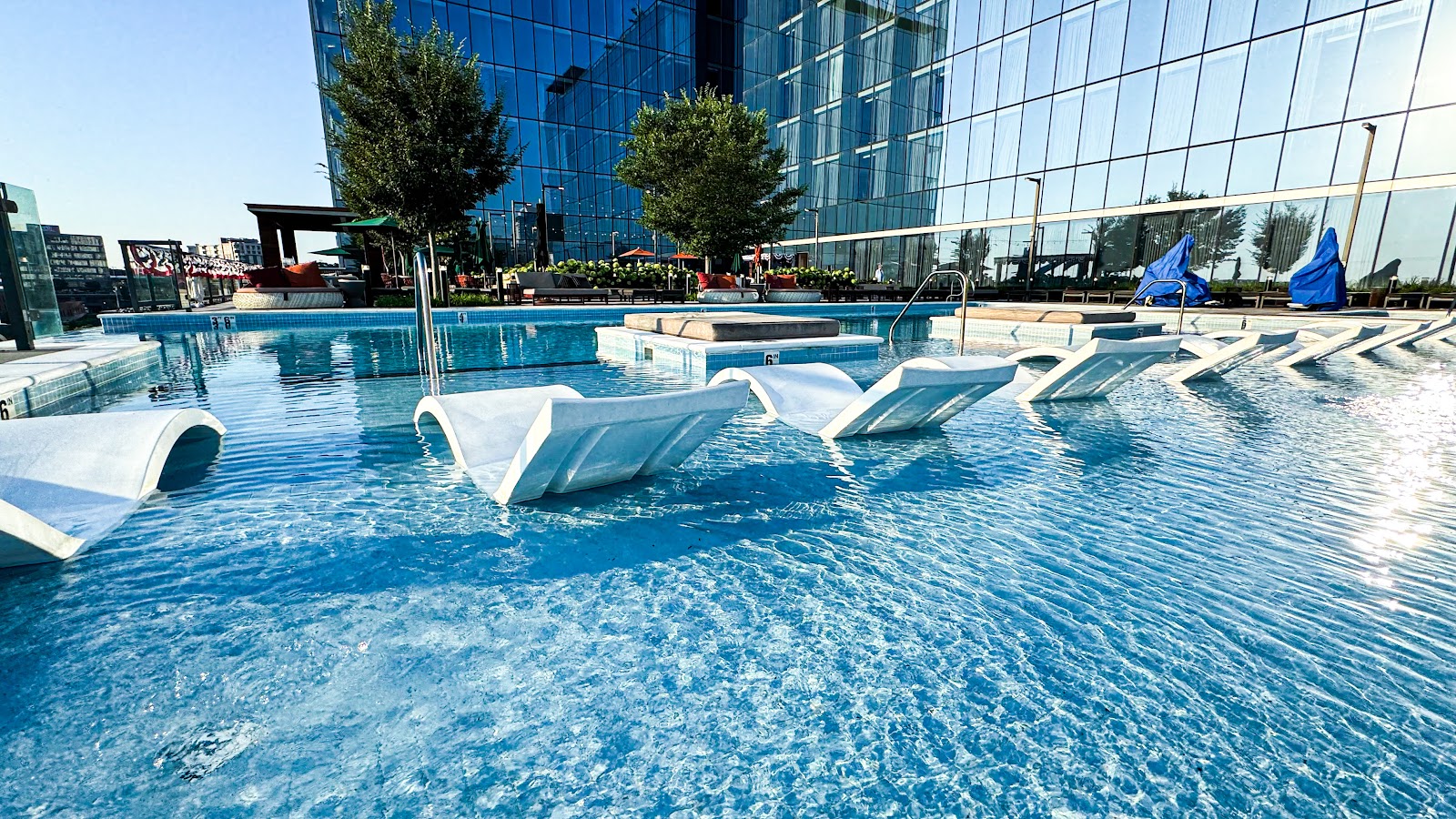
One question to settle with the hotel well before the date: whether there is any outdoor space at height, and if so, what its wind situation is. A terrace or pool deck on a tower is a completely different proposition from a window — real sky, real ambient, no glass cast, and a genuine horizon — and it is worth a lot. Forty storeys up, though, wind speeds are routinely double what they are at street level, and a veil in that is not an ornament, it is a hazard. Ask about railings, ask about height restrictions for equipment, and ask whether the space is shared with hotel guests at that hour.
If there is no outdoor space, the glass is the venue and that is a workable answer. It simply means the whole day’s light is filtered, cool and directional, and that a consistent warming decision applied across the set matters more than usual, because every frame shares the same cast.
After dark, the city outside, and the Nashville year
Once the sky is gone, Nashville hands you something almost no other American city does at this scale, and it is a colour problem before it is a gift.
Lower Broadway, a short distance from the tower, is a dense continuous wall of neon and LED signage — several blocks of it, at high intensity, in saturated reds, blues, greens and yellows. From a high floor at night the downtown core reads as a bright, aggressively coloured patch rather than as the even warm grid most cities present.
That is genuinely distinctive and it makes a strong background, but it will not white-balance. The sources are different technologies at different temperatures, some of them with spiky non-continuous spectra, and no single correction will neutralise them. Do not try. Set a neutral-ish balance for your subject, light the subject with your own source so their skin is correct, and let the city behind be as lurid as it actually is. Fighting it produces grey buildings and an odd-coloured couple.
The technical shape of a night frame from a high floor is: subject lit by you at a fraction of a second on a tripod, city exposed by the ambient, and the glass between them controlled. Kill every light in the room you are shooting from, or its reflection will sit on top of the city. Press the lens as close to the pane as it will go. Use a dark cloth against the glass if reflections persist. These are old copy-stand techniques and they work exactly as well at forty storeys.
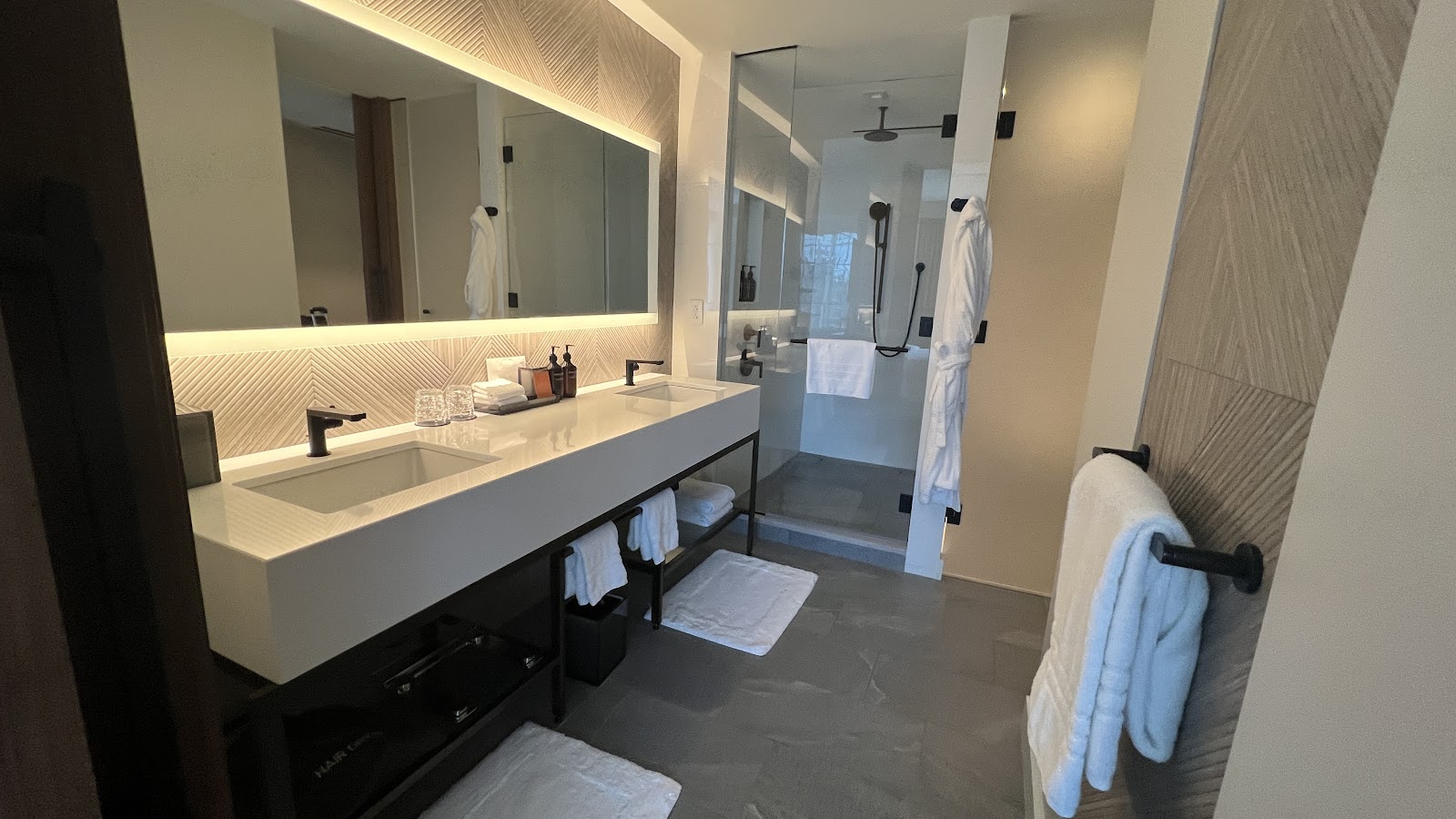
Interiors after dark in a new-build hotel are lit by a designed scheme, which is generally good news: modern hotels of this class light with high-quality warm sources that render skin well, at a low but consistent level. The difficulty is that it is low and it comes from above. Ceiling downlights put shadows in eye sockets and under noses, so a bounced light or a small on-axis fill is usually needed even in a room that looks beautifully lit to the eye.
Pale ceilings and pale walls throughout mean bounce works extremely well here, which is a real advantage over an older hotel with dark panelling. Two lights in opposite corners aimed up will lift a whole reception space cleanly and leave no visible evidence of having done so.
Now the year, briefly, because at a venue whose light is mostly interior the seasons matter less than at most places — but they still matter at the ends of the day.
October into early November is the best window. Dry air means the haze that flattens the view in summer is gone, so a wide frame from height actually resolves the city rather than dissolving it. Sun angles are low enough to come deep into the rooms through the afternoon, and sunset around six with a comfortable evening means the balance-point window lands at a civilised hour.
April into May is the second window and the riskier one. The light is lovely and the air is soft, but Middle Tennessee sits in an active spring severe-weather corridor and the systems that arrive are organised, fast and occasionally violent. At height, that has a specific consequence most people do not consider: a tower in a thunderstorm may restrict access to any outdoor space and, in some buildings, lifts run on a storm protocol. That is a schedule risk rather than a photographic one, and the hotel will know its own procedures. Ask.
Summer is comfortable indoors and unpleasant outside. July here means low-nineties heat with dewpoints in the low seventies, and the humidity has two visible effects: it hazes the view from height substantially, washing the distance to pale grey, and it fogs a lens instantly when a camera goes from an air-conditioned interior to outdoor air. Keep the body warm if any part of the day is outside. The compensating gift is the long evening — sunset after eight, so the balance point falls near half past eight and a late reception still gets its best frames.
Winter is short and clear. Sunset before half past four in December means the entire dusk sequence happens before most receptions have properly begun, which is worth planning for explicitly: at this venue in winter, the best twenty minutes of the day may fall during cocktails. The light itself is superb — a thirty-degree noon sun raking deep into the rooms all afternoon, clean air, and a city that looks its best at night in the cold.
The single instruction that covers all of it: in a glass tower, the light is a property of the hour and the elevation rather than of the room. Find out which way the rooms you have been given actually face, and the day plans itself.
More frames from The Four Seasons Nashville
The Four Seasons Nashville wedding photography: common questions
Why do the photographs look cool or slightly green?
The glazing. High-performance glass is coated to reject heat, and those coatings do not transmit all wavelengths equally, so daylight arriving through it lands cooler and often a little green. The shift also varies between panes and elevations, so a subject at the window and a subject five metres back are lit by different colour. Set a white balance for the position you are shooting from and reset it when you move.
Why are portraits heavier on a high floor than expected?
No ground bounce. At street level, light from the sky hits paving and returns up into a face as free fill. Forty storeys up there is nothing below the window but air, so the light arrives from above and the side and nothing from underneath, and eye sockets and the underside of the jaw go dark. A white card at waist height, a pale wall, or a low-power light fixes it immediately.
When is the best light inside?
It inverts the usual advice. In summer, the middle of the day is genuinely good on a high floor, because a nearly overhead sun barely enters a vertical window at all and the room becomes a large soft evenly lit space. In winter, a low sun comes deep into the rooms all afternoon and every hour is dramatic. The one universal is the last half hour before sunset on a west-facing elevation.
How long is the dusk window, and why does it matter so much?
Civil twilight is about twenty-six minutes in midsummer, and the genuinely useful part — where the exterior sky and the interior lighting are within a stop of each other so both hold detail in one frame — is ten to twelve minutes of that. It is the most valuable block in the day here and it needs to be a named line item on the timeline. Ten minutes covers two frames in one room, or one frame if you are walking, or none if you start discussing it at sunset.
Can we get the Nashville neon in our photographs?
Yes, and it is one of the distinctive things this location offers, because lower Broadway is an unusually dense and saturated wall of signage. But it will not white-balance: the sources are different technologies with different and sometimes spiky spectra. Balance for your subject, light the subject yourself, and let the city be as lurid as it is. For a night frame through glass, kill every light in your own room and press the lens to the pane.
Is there outdoor space at height?
Ask the hotel directly, because it changes the day considerably if there is — real sky, real ambient, no glass cast and a true horizon. Also ask about wind, which at forty storeys routinely runs at double street-level speed and makes a veil a hazard rather than an ornament, and about whether the space is shared with hotel guests at the hour you want it.
More Nashville, TN venue guides
We are writing a photographer’s guide to every venue we would happily shoot in Nashville, TN. Here are three more, plus the full index:
- The Graduate Nashville: Field Notes, Problem and Solution
- The Thompson Nashville: A Walk Through the Building
- The W Nashville: One Frame, and How It Is Made
Planning a wedding at The Four Seasons Nashville?
Which way do your rooms face? Tell us that and your date, and the day plans itself.