Four facts govern photography anywhere in the Napa Valley and none of them is about the venues. The first is that it is summer-dry. This is a Mediterranean climate: almost all the rain falls between November and April, and from June to September it essentially does not rain at all. An outdoor summer wedding in Napa is close to rain-proof, which is the opposite of every other region in this library and worth stating plainly, because it changes how much contingency a couple actually needs. What replaces rain as the summer risk is heat and, since the late twenty-tens, wildfire smoke. The second is the marine layer.
Cool air off the Pacific is drawn inland and pushes up the valley from San Pablo Bay, which produces a temperature and fog gradient along its length: the southern end, the Carneros, sits in the fog belt and wakes under low cloud on a great many warm-season mornings, burning off between mid-morning and noon, while the north of the valley is clearer and several degrees hotter. That fog is a gift rather than a nuisance.
It is a diffuser the size of the sky — no shadows at all, a contrast range that collapses to something a sensor holds comfortably, saturated colour because no specular highlight is washing it out, and skin that renders with almost no work. It also separates a vineyard into layers, with the nearest rows sharp and dark and the hills beyond a flat grey silhouette, which gives depth to a landscape that is otherwise fairly flat.
Two technical notes: fog frames come back flat and need contrast added rather than removed, so expose slightly to the right and build it afterwards; and fog is bright, so a meter will underexpose it — add half a stop to a stop and check a histogram. Work fast, because the transition from full fog to clear can take twenty minutes, and the half hour while it thins is the very best of it, when the soft light and the first shafts of sun arrive together and produce visible beams through the rows. The third fact is the ridge, and it is the one that catches photographers out.
The valley runs north-west to south-east between two ranges — the Mayacamas on the west and the Vaca hills on the east — and the western range takes the sun before it reaches the horizon. On the valley floor the effective sunset is commonly twenty to forty minutes earlier than the printed time, and in an enclosed side valley in the hills it can be thirty to fifty.
Go and look at the western skyline from the exact position you intend to use, judge the ridge and treeline height above the horizon, and bring the whole evening forward — including the ceremony, because that is a planning decision rather than an adjustment you can make on the day. The exception is worth knowing: a property on the eastern side of the valley, backed against the Vaca hills with the open valley in front, gets the evening sun low and unobstructed from across the valley and keeps direct light considerably longer, because the western range is far enough away that the sun has further to fall.
Those are the better evening properties in the region. The compensation everywhere else is that the eastern hills stay lit after the floor is in shade and glow warm above a cool foreground for about a quarter of an hour, which gives a couple in soft even light with a gold hillside behind them. Compress it: at twenty-four millimetres the lit hill is a band at the top of the frame, and at a hundred and thirty-five it fills the background as a wall of colour.
The fourth governing fact is the vine cycle, and it matters more than the weather because a vineyard is an agricultural landscape on an annual timetable rather than a garden. There are four conditions and they look nothing like each other. From about November to March the vines are bare brown stumps on wire in bare earth — which sounds unpromising and is in fact one of the best seasons of the year, because wild mustard flowers between the rows in February and March and turns the whole vineyard floor bright yellow beneath the bare vines.
It is a famous local season, it is genuinely beautiful, and almost nobody books a wedding for it. Bud break comes in March, the canopy fills through April and May, and by June the rows are a solid green wall at chest to head height, which is the condition most couples imagine and which lasts until autumn.
Harvest — crush — runs from about August into October depending on variety and year, and it is the single most important thing to ask a venue about: during crush, wineries work flat out and many will not host events at all or will restrict access considerably, so a vineyard property in September may be full of machinery, bins, trucks and pickers at five in the morning. That is not a reason to avoid it, because a working harvest is genuinely photogenic and a couple who understand they are marrying in the middle of it can have frames nobody else gets — but it has to be known.
Then the leaves turn yellow, orange and red through late October and November, which is a short and spectacular window and the other great season alongside the mustard. Ask which condition the date falls in, and ask when the venue expects to pick, because that date moves by weeks from year to year. Two compositional facts about vines are worth more than any amount of styling.
Vine leaves are translucent, so a low sun behind a row lights the leaves from within and turns the whole row into a glowing green screen — get the camera low, put the row between you and the sun, and place the couple in the lit row. And rows run in a fixed direction, so a low sun along them lights each row's full length and throws vine shadows down it in a rhythm, while the same sun across them lights only their tops. Establishing which way the rows run before anything else is the single most useful piece of preparation in any vineyard.
The valley's other constants are its oaks and its hills. California's valley and coast live oaks are broad, low-crowned and dense, and one mature specimen standing alone is a natural room that shades a group of forty and frames a ceremony with no structure at all — the only reliable midday position in open country, and a complete composition in itself against a lit slope. Two canopy rules apply without exception: position for open sky arriving from the side rather than light filtered through leaves, which is genuinely green, and avoid dappled shade entirely, because hard bright patches several stops above the surrounding skin cannot be recovered.
The canopy edge is a two-metre walk and it solves both. And the hills reverse the country's usual colour calendar, which is worth saying to a couple: California's grassland is green from the first rains in November through to about April and golden-brown from May to November, so a February wedding here has green hills, yellow mustard and bare vines while a September one has gold hills and a green canopy. Neither is more attractive; they are entirely different palettes. Two risks need honest handling.
Heat is the first: afternoon temperatures in the thirties are normal in July and August and considerably higher at the north end than in the Carneros, which on open ground in formal clothing is a welfare matter and pushes the practical shape of a summer day to the two ends with the middle under cover. The diurnal swing is also large — a drop of fifteen or twenty degrees between late afternoon and the small hours — so plan for people being warm at five and cold at ten, and for an outdoor reception needing heating. Wildfire smoke is the second and it needs stating plainly rather than softly.
This region has experienced major destructive fires in recent years, and since the late twenty-tens smoke has become a recurring feature of late summer and autumn — capable of filling the valley for days, turning the light orange, flattening all contrast and producing air quality that makes an outdoor event genuinely inadvisable. It cannot be forecast more than a few days out, so a September or October date in Napa needs an air-quality contingency as well as a heat one: a covered or indoor alternative with a known capacity, and a conversation about what happens if the air is unsafe.
That is a genuinely different kind of planning from rain contingency and it is the thing about this region that has changed most in the last decade. One photographic note is attached, as fact rather than consolation: smoke produces a warm, heavily diffused, low-contrast light with a red sun and layered ridges, and if the air is safe enough to be outside it gives frames that are unmistakable and that some photographers prefer to a clear evening. If the air is not safe, the answer is indoors and no photograph is worth otherwise.
Season by season, late April into early June is the best all-round window: the canopy filling, hills still green, days warm rather than hot, frequent morning fog in the south, no rain, and sunset after eight by June, which even minus the ridge leaves a generous evening. October into early November is the other strong window for vine colour and softer light, carrying the smoke risk and the harvest question.
February and March are the underrated ones — mustard between bare rows, green hills, air washed clear after rain, and a noon sun near forty-five degrees that models faces properly through the whole middle of the day — and they are the one time of year in Napa when a rain plan is genuinely needed. July and August are hot, reliable and visually the least varied, working with the schedule pushed to the ends of the day.
And the half hour after rain, in the wet half of the year, is the best light this valley produces: the air washes to clarity so both ranges resolve, wet earth between bare rows goes almost black, wet oak bark saturates, the hills glow green, standing water reflects everything, and a low sun comes under a broken ceiling onto a lit ridge. In a region where it does not rain for four months, that condition is rare enough to be worth waiting for whenever it happens. Two closing practicalities for any Napa property.
The valley floor is rural with very little light pollution, which means everything after twilight is lit entirely by the photographer — and also that the night sky is genuinely good, so a frame of the couple softly lit under stars is available here in a way it is not near a city. And ask whether there is any elevation on the property at all: a terrace, a knoll, a building roof or a contoured rise, because on flat ground even two metres of height changes a vineyard frame completely by letting you look across the rows rather than along them.
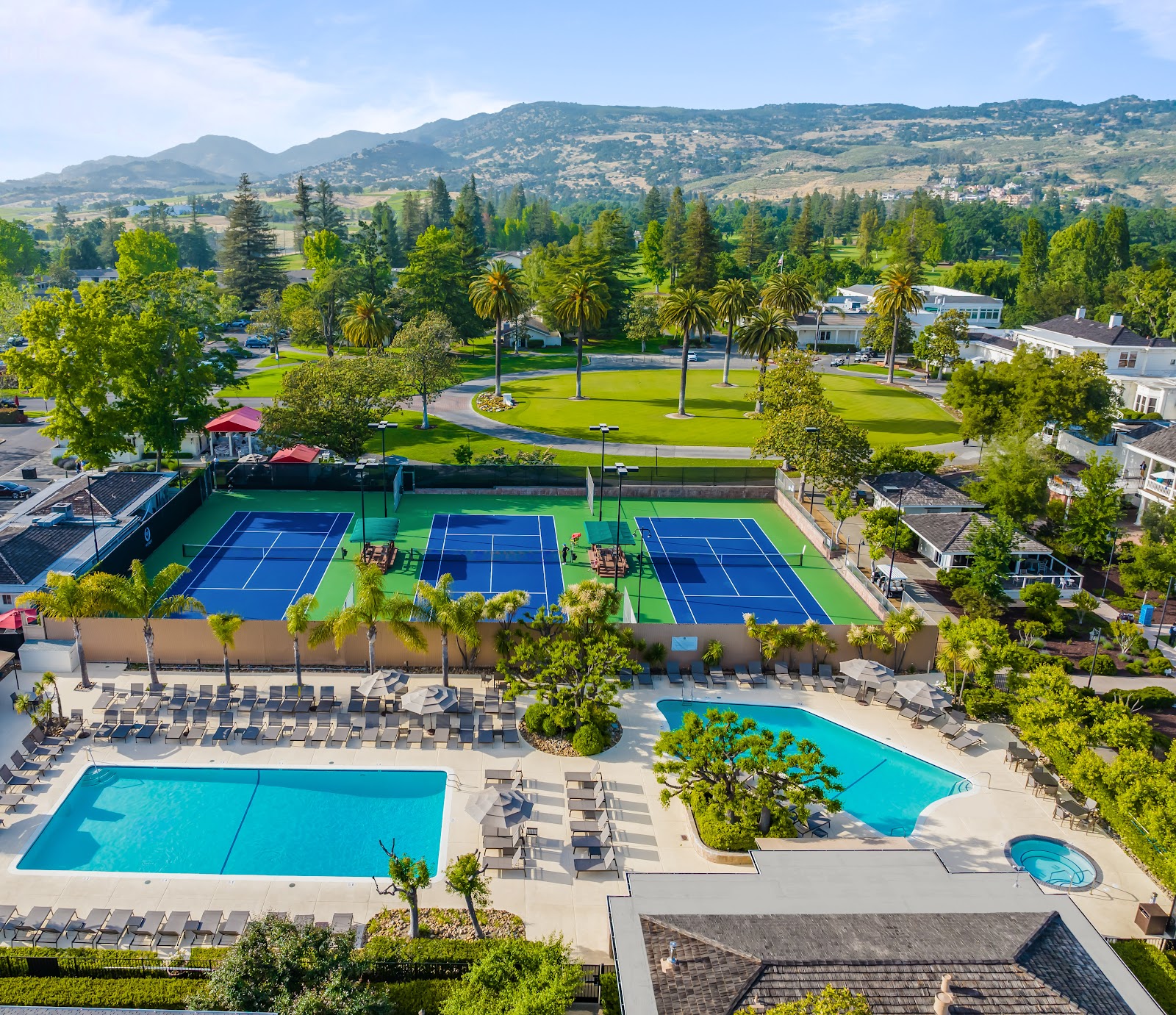
The Silverado Resort, Napa: A Walk Through the Property
A golf resort built around an 1870s mansion — a period house with several hundred acres of open ground behind it.
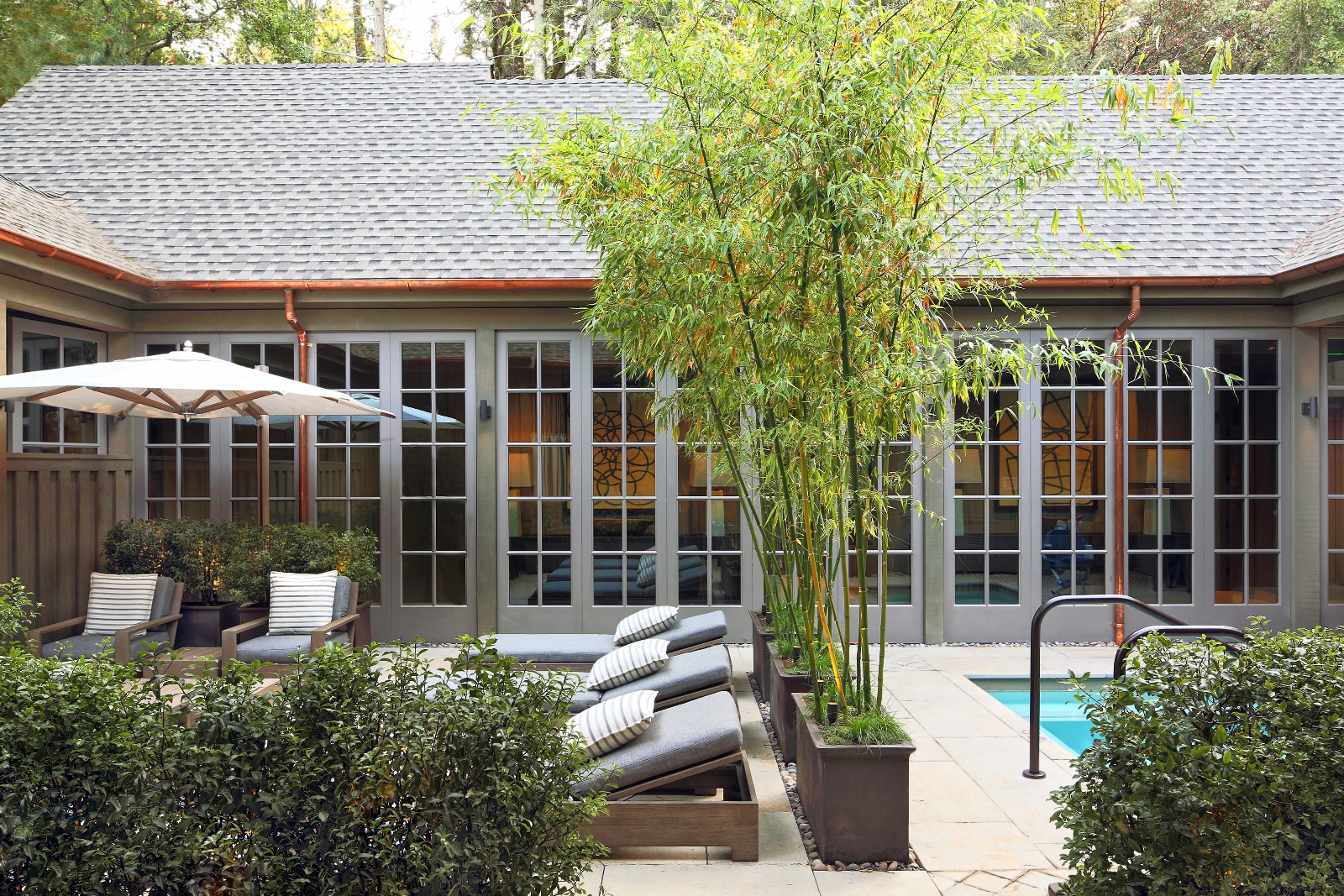
The Meadowood, Napa: Field Notes, Problem and Solution
A private resort in a wooded side valley — enclosed, shaded, and with the sun gone from the lawns early.
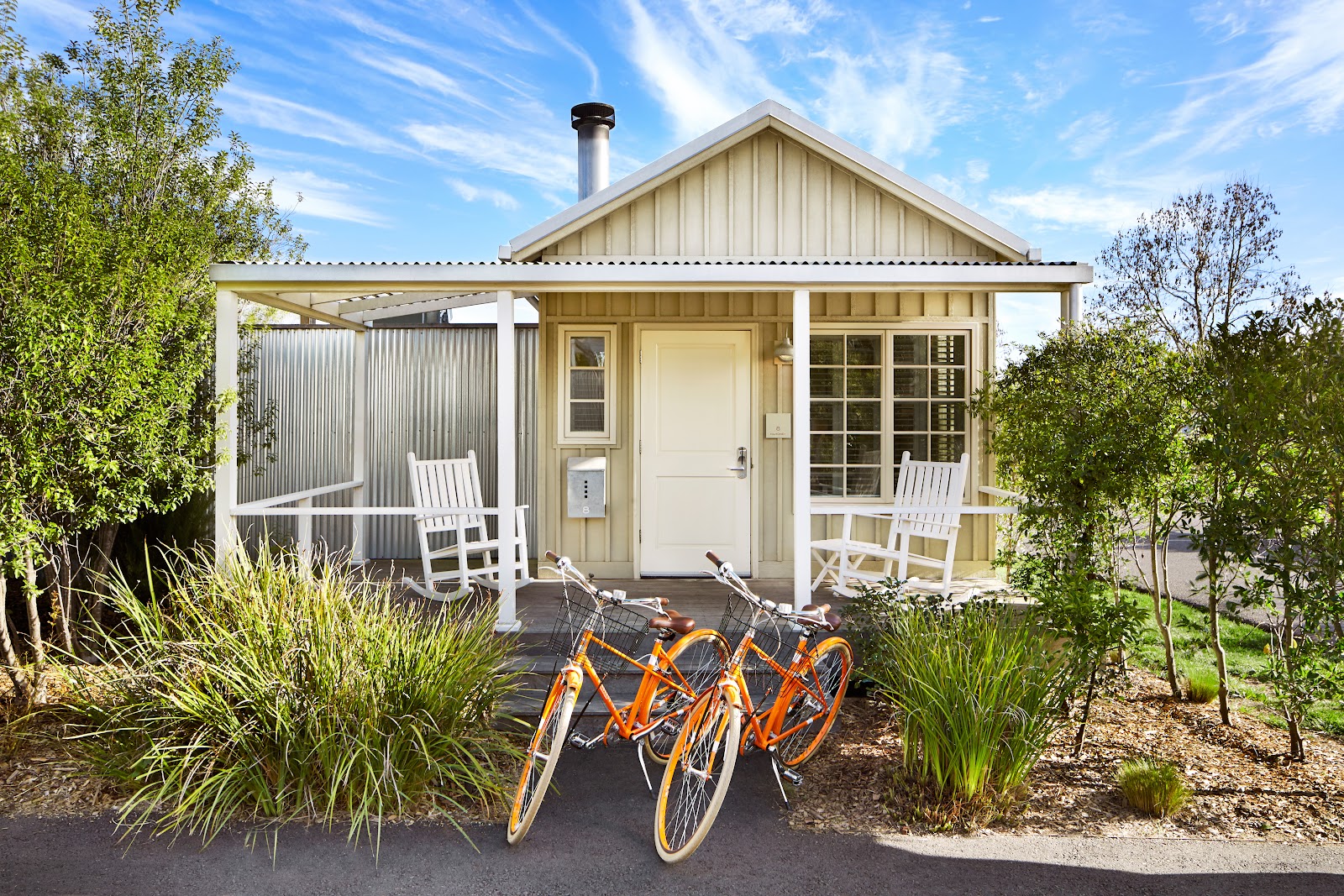
The Carneros Resort, Napa: The Light Through the Day
A cottage resort at the cool southern end of Napa — where the day starts under fog and almost never ends in rain.