 Park Hyatt Aviara, Carlsbad: The One Decision That Governs Everything
The Meadowood, Napa: Field Notes, Problem and Solution
A side valley in the hills. Enclosed, shaded, and dark early.
These are field notes, because this venue is a set of local conditions rather than one idea, and the conditions come from sitting in a wooded valley rather than on the open valley floor.
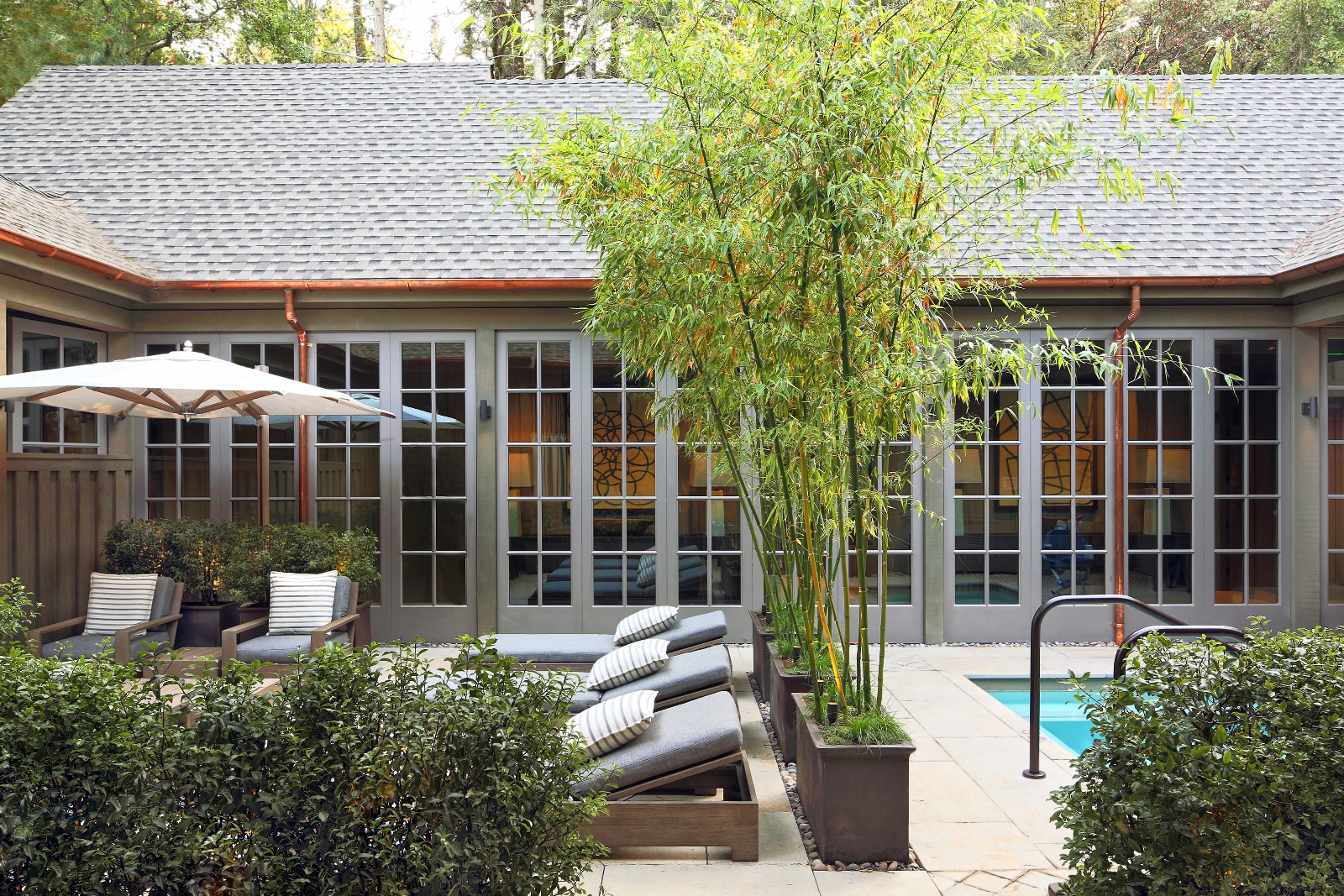
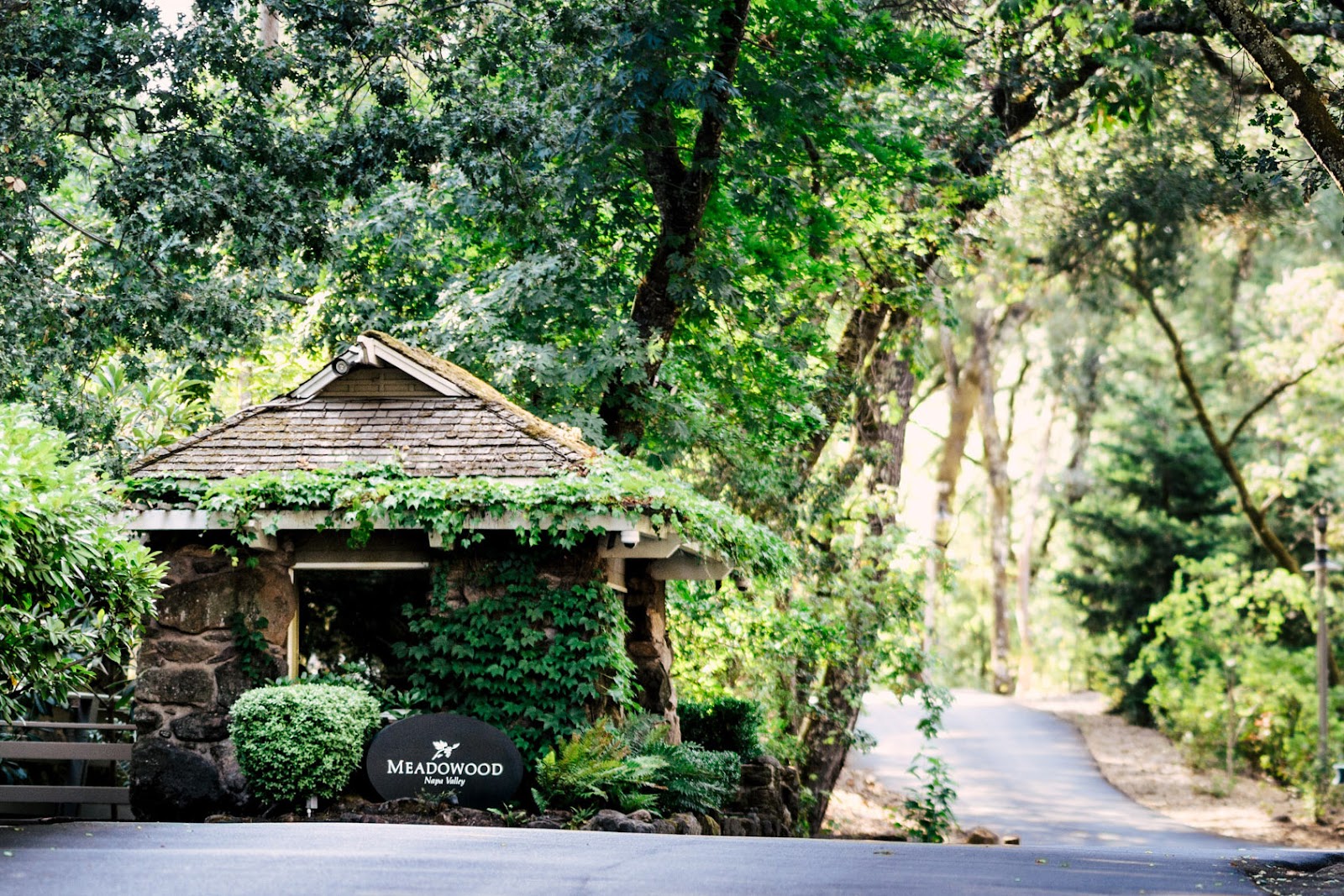
Meadowood is a private resort in the hills on the eastern side of the upper Napa Valley, laid out in a wooded side valley with lawns, oak woodland on the slopes, and buildings distributed along the bottom and up the sides rather than clustered together. There are croquet lawns, a golf course and tennis, and the whole thing is enclosed by hillside.
One thing has to be said before the notes. This valley was affected by a major wildfire in twenty-twenty, which destroyed some structures on the property, and the resort has continued to operate and rebuild since. The practical consequence for a photographer is worth knowing: the surrounding woodland shows fire history, with burn scars, standing dead trees and regrowth of varying ages, and some buildings are newer than others. That is a real part of the place and it is not a flaw. Oak woodland in California is fire-adapted and it recovers, and a hillside of blackened trunks with green regrowth beneath is a legitimate and rather powerful subject. Ask the venue what the current state of the grounds is rather than working from older photographs, because it changes year to year.
Now the four governing conditions.
The first is enclosure. A side valley is a bowl, which means the horizon is hillside in almost every direction and there are no long views out. That is the opposite of an open vineyard property and it changes the whole character of the frames: everything is backed by trees or slope rather than by sky, and the light is affected by the hills on all sides.
The second follows from it. The sun leaves the valley floor early — earlier than on the open valley floor, and considerably earlier than the almanac says. A wooded slope on the western side takes the sun before it reaches the horizon, and in a narrow side valley that can be thirty to fifty minutes before the printed sunset. The lawns go into shade while the hilltops are still bright.
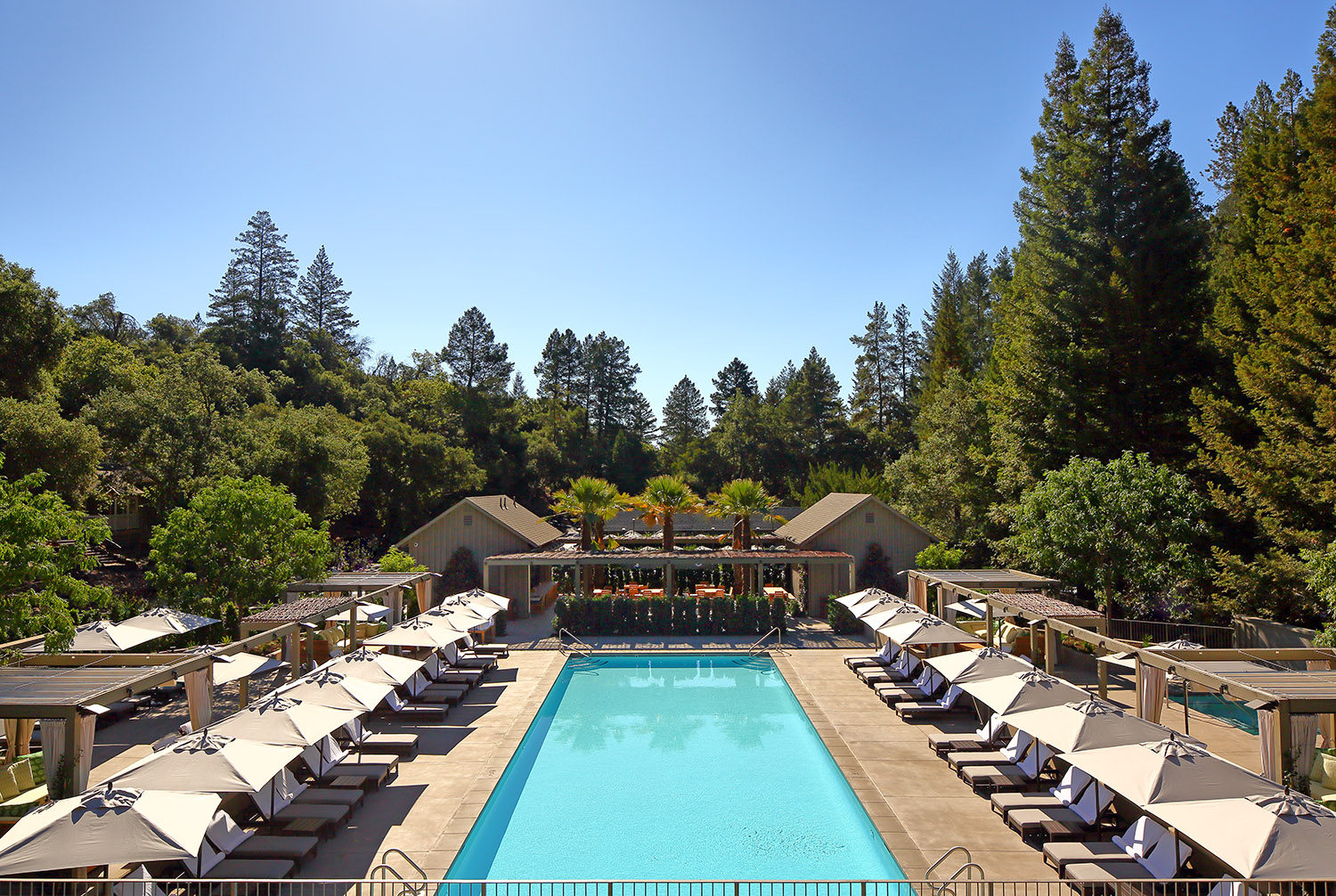
The third is shade. This is a wooded property, with oak canopy over a good deal of it, which makes it one of the few Napa venues where the middle of a summer day is genuinely comfortable and photographically workable. That is a significant advantage in a region where most properties are open to the sky.
And the fourth is that it is summer-dry. This is a Mediterranean climate: almost all the rain falls between November and April, and from June to September it essentially does not rain. An outdoor summer wedding here is close to rain-proof — which is unusual enough to say plainly, because it changes how much contingency a couple needs. What replaces rain as the risk is heat and, since the late twenty-tens, wildfire smoke.
Notes follow, grouped by where you are standing: the lawns, the oaks, the buildings, and the slopes. Then the year.
The Meadowood at a glance
| Where | A private resort in a wooded side valley in the hills of the upper Napa Valley |
| Enclosure | Hillside in every direction; no long views, everything backed by trees or slope |
| The catch | The sun leaves the valley floor thirty to fifty minutes before the printed sunset |
| The advantage | Genuine oak canopy, so the middle of a summer day is workable |
| Ask first | The current state of the grounds, lawn access, and whether stands are permitted |
What you meet, and what each one needs
The lawns. Problem: they are the open ground on an otherwise enclosed property, which means they are where the ceremony happens and where the sun is hardest — and at about thirty-eight degrees north a midsummer noon sun near seventy-five degrees on an open lawn gives flat light and black eye sockets. Solution: ceremony early or late, and if a midday ceremony is unavoidable, orient it so guests have their backs to the sun and the couple are side-lit rather than front-lit.
The lawns, second note. Problem: a manicured lawn in a wooded bowl is a bright green plane surrounded by dark trees, which is a five-stop relationship. A frame containing both a sunlit lawn and shaded woodland will hold one or the other. Solution: choose. Expose for the subject and let the surroundings go where they go, and prefer frames where the subject and the background are in the same light — a couple on the lawn with lawn behind them, or a couple at the woodland edge with trees behind them, rather than one standing in sun against a dark treeline.
The lawns, third note. Problem: croquet lawns and similar are precisely maintained and a venue will be protective of them. Solution: ask what may be walked on, in heels, and where chairs may go. This is a reasonable restriction and it will be a specific answer.
The oaks. Problem: none, they are the venue’s best asset. Solution: use them properly. California’s valley and coast live oaks are broad, low-crowned and dense, with heavy limbs that often run out horizontally, and one mature specimen is a natural room — it shades a group of forty and frames a ceremony with no structure at all. It is also the only reliable midday position on the property.
The oaks, second note. Problem: the two standard canopy faults. Solution: the two standard fixes, and they are not optional. Light that has passed through leaves is genuinely green, so a face lit only by filtered canopy light reads sickly and no white balance corrects it — position instead at the canopy edge, where open sky arrives from the side. And avoid dappled shade entirely, because broken light puts hard bright patches several stops above the surrounding skin and those cannot be recovered. Full shade or full sun, never the edge between them. The canopy edge is a two-metre walk and it solves both.
The oaks, third note. Problem: at the ends of the day the trees are the thing worth photographing rather than the shade they cast. Solution: a low sun rakes along a horizontal oak limb and picks out bark that is deeply furrowed and full of small shadow, so the tree goes from a dark mass with a bright edge at noon to a structure with texture in it at six. And a single oak against a lit hillside behind it is the region’s signature frame.
The buildings. Problem: a resort distributed through a valley means the buildings are separate and some are considerably newer than others, which affects how they photograph — newer construction at close range in flat light shows as newer. Solution: work at distance or in low raking light, which is the rule for any recent or rebuilt structure, and use the older fabric close.
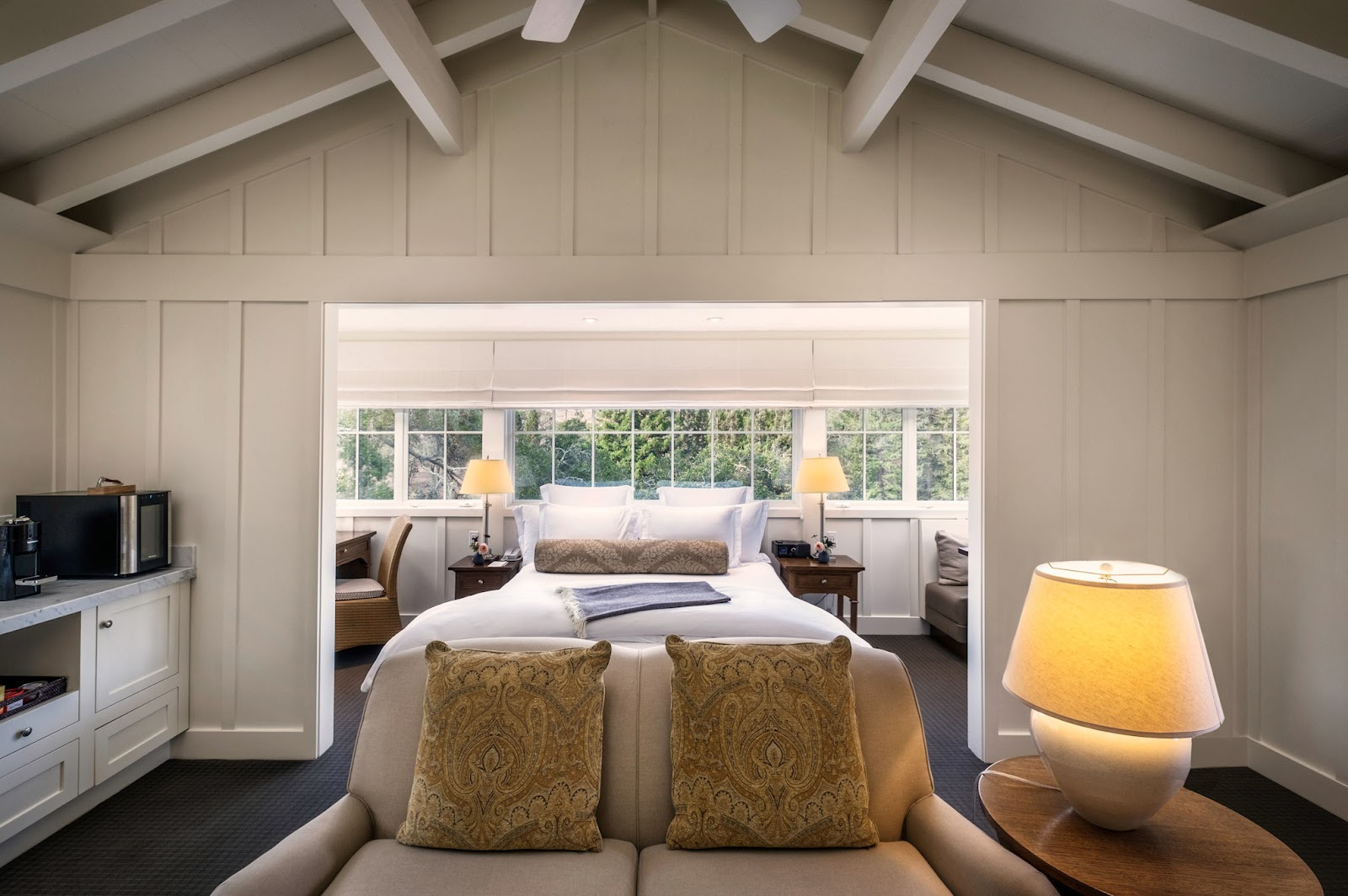
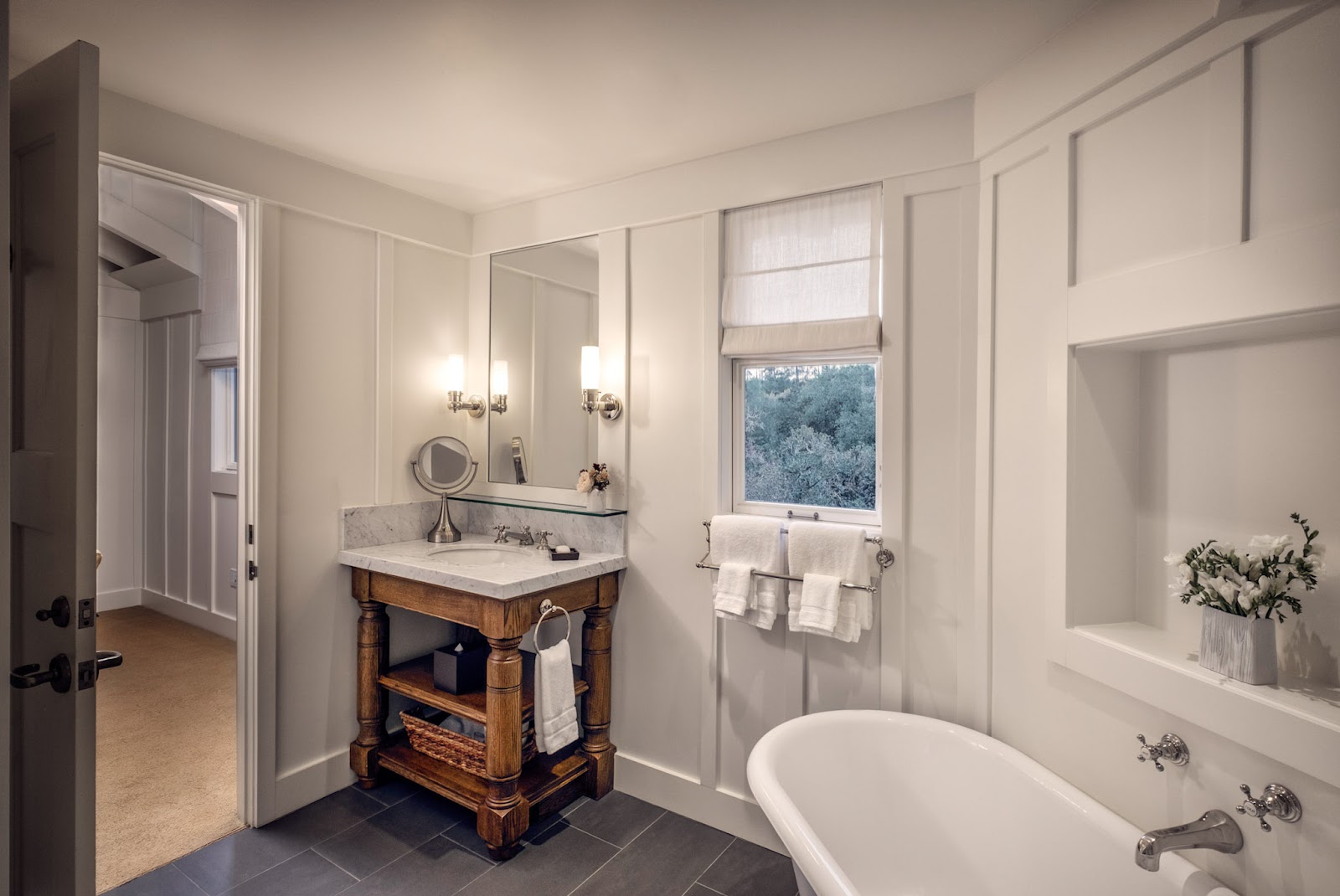
The buildings, second note. Problem: interiors at a resort of this kind are likely to be timber, warm and comparatively dark, which means bouncing does not work well — light aimed at timber comes back weak and orange. Solution: light directly, with one modifier close and feathered, and let the dim room behind separate the subject, which it will because the background sits four or five stops down. Warm your light to match the ambient.
The buildings, third note. Problem: the windows. Solution: ask which way the rooms face and check what is outside them, because in an enclosed valley a window may look at a bright lawn, a dark hillside, or a wall of trees a few metres away, and those are three completely different light sources. A window onto a sunlit slope is a strong directional source; one onto close woodland is dim and green.
The slopes and the woodland. Problem: the ground rises on all sides, which makes walking a wedding party anywhere above the valley floor a slower and harder proposition than it looks on a map. Solution: establish which positions require a climb and how long it takes with a party of a dozen in formal shoes, and whether a vehicle or cart can reach them. Elevation is valuable here — it is the only way to look across the valley rather than along it — but it has to be reachable.
The slopes, second note. Problem: fire history in the surrounding woodland, as described above. Solution: photograph it honestly if it is in frame. Blackened trunks with green regrowth beneath are a legitimate and powerful subject, and California oak woodland is fire-adapted. What does not work is composing carefully around it and pretending an intact forest, because the frames will not match. Ask the venue where the recovery is furthest along.
Everything, one general note. Problem: enclosure means no sky in most frames, so the compositional interest has to come from trees, slope, lawn and architecture rather than from a horizon. Solution: work more vertically than you would on the valley floor — up into canopy, up a slope, up a building — because the interest here is above and around rather than out.
The early sunset, and what to do with it
The single most consequential practical fact at this venue is that the day ends early, and it deserves its own section because a photographer working from an almanac will lose the best light while walking to it.
A wooded slope on the western side of a narrow side valley takes the sun well before it reaches the horizon. On the open Napa Valley floor that effect is typically twenty to forty minutes; in an enclosed side valley it can be thirty to fifty, depending on the aspect of the particular lawn and the time of year.
So go and look. Stand at the position you intend to use for the last portraits, look west, and judge how high the ridge and the treeline stand above the horizon. Then subtract accordingly and bring the whole evening forward — the ceremony, the group photographs, everything.
That is a conversation to have with the couple and the planner in advance rather than an adjustment to make on the day, because moving a ceremony thirty minutes earlier is a planning decision and moving a portrait session thirty minutes earlier is not possible once dinner is served.
The compensation is genuinely good and it is specific to a bowl. Once the valley floor is in shadow, the eastern slope stays lit — and because it is a wooded hillside rather than bare rock, what you get is a mass of oak and evergreen glowing warm above a cool foreground, for a quarter of an hour.
That produces the frame to plan for: the couple on the lawn in cool even shade, with a gold hillside rising behind them. It is a two-tone photograph, it requires no lighting at all because the foreground light is soft and adequate, and it is unavailable on an open valley floor where the whole landscape goes into shade at once.
Work it at a moderate to long focal length, because compressing the hillside makes it a wall of gold behind the subject rather than a distant slope. At twenty-four millimetres the lit hill is a small band at the top of the frame; at a hundred and thirty-five it fills the background.
Then the second phase, which is the sky. After the sun has left the hills, the sky above an enclosed valley holds colour for a good while, and in a bowl you are looking at a strip of it framed by dark slopes on both sides. A frame looking straight up the valley with the sky lit between two dark hillsides is a composition the geography makes for you.
At this latitude civil twilight runs about twenty-nine minutes with a usable balance point of twelve to fifteen — but in a valley the ambient is lower and the useful window feels shorter still, so treat it as ten and have the position chosen.
And after that it is properly dark. A wooded side valley in the hills has almost no light pollution, which means two things: everything from then on is lit entirely by you, and the night sky is genuinely good. A frame of the couple softly lit with stars above the valley is available here in a way it is not on the valley floor near a town, and it needs a tripod, a fast wide lens and about twenty seconds.
Two practical notes about the evening. The temperature drops fast once the sun is off the valley — a dry climate with cool nights, and a wooded bowl that pools cold air, means a July evening in the thirties can be in the mid-teens by ten. An outdoor reception needs heating and a bride in a summer dress will be cold.
And ask whether lights on stands are permitted outdoors and where. On a property with precisely maintained lawns and a fire history, a venue may reasonably have views about equipment on grass and about anything with a heat source, and the answer is worth having in writing.
The upper valley, and the year
This is the northern end of the Napa Valley, which is the hot end, and that changes the seasonal arithmetic from the Carneros in the south.
The marine fog that reaches the bottom of the valley most summer mornings often does not reach this far north, or arrives thinner and burns off earlier. So mornings here are clearer and the days are hotter — afternoon temperatures in the mid to high thirties are normal in July and August, several degrees above the south of the valley.
That makes the shade on this property more valuable than it would be elsewhere, and it makes the middle of a summer day a genuine welfare question rather than merely a photographic one.
The diurnal swing is large, which is the dry-climate signature and the reason this valley grows what it grows: hot days and cool nights, with a drop of fifteen or twenty degrees between four in the afternoon and four in the morning. Plan for people being warm at five and cold at ten.
The surrounding landscape reverses the country’s usual colour calendar and it is worth saying to a couple. California’s grassland is green from the first rains in November through to about April, and golden-brown from May to November — so a February wedding here has green hills and a September one has gold ones. The oaks are the constant: dark, broad and scattered, reading at any distance against either colour.
On the vineyard cycle, which surrounds this valley even if it is not in it: dormant bare vines from November to March, with wild mustard flowering yellow between the rows in February and March; a solid green canopy from June; harvest from about August into October; and vine leaves turning yellow, orange and red through late October and November. If any frames are planned in vineyards nearby, ask which condition the date falls in and when the pick is expected, because that date moves by weeks.
Harvest is also the thing to ask this venue about directly. The upper valley is working hard from August to October, which affects traffic on the valley road, availability of accommodation and the general tenor of the area — and a wedding in the middle of crush is a busier and more expensive proposition than one outside it.
Now the two real risks.
Heat is the first and it is manageable with the schedule pushed to the ends of the day and the shade used deliberately. This property has more shade than most in the region, which is its single biggest seasonal advantage.
Wildfire smoke is the second and it needs stating honestly rather than softly. This region has experienced major destructive fires in recent years, including one that affected this valley directly, and since the late twenty-tens smoke has become a recurring feature of late summer and autumn — capable of filling the valley for days, turning the light orange, flattening all contrast and producing air quality that makes an outdoor event genuinely inadvisable. It cannot be forecast more than a few days out.
So a September or October date in the upper Napa Valley needs an air-quality contingency as well as a heat one: a covered or indoor alternative with a known capacity, and a conversation about what happens if the air is unsafe. That is a different kind of planning from rain contingency, it is the thing about this region that has changed most in the last decade, and a photographer who raises it early is doing a couple a service.
There is one photographic note attached, and it is not a consolation so much as a fact. Smoke produces a warm, low-contrast, heavily diffused light that some photographers find beautiful — a red sun, layered ridges, and a landscape reduced to flat planes. If a date falls in smoke and the air is safe enough to be outside, that light is worth using rather than fighting, and the frames are unmistakable. If the air is not safe, the answer is indoors and no photograph is worth otherwise.
Season by season, then. Late April into early June is the best all-round window: warm rather than hot, hills still green, the woodland fresh, mornings clear and cool, no rain, and sunset after eight by June — which even minus the valley’s thirty to fifty minutes leaves a generous evening.
October into early November is the other strong window, with vine colour in the valley below, cooler air and softer light — carrying the smoke risk and the harvest question.
February and March are underrated: green hills, mustard in the vineyards below, clear air after rain, and a low noon sun near forty-five degrees that models faces properly through the whole middle of the day. This is the one period in Napa when a rain plan is genuinely needed, and the reward is a landscape most visitors never see.
July and August are hot and reliable and visually the least varied, with bleached hills and a green canopy under a high sun. They work, with the schedule at the ends of the day and the oaks doing the middle.
And the half hour after rain, in the wet half of the year, is the best light this valley produces: the air washes to clarity, wet oak bark goes almost black and far more saturated, the green hills glow, the woodland floor is bright with new growth, and a low sun comes under a broken ceiling onto a lit slope. In a region where it does not rain for four months, that condition is worth waiting for whenever it happens.
More frames from The Meadowood
The Meadowood wedding photography: common questions
What is different about a side valley rather than the valley floor?
Enclosure, and it changes everything. The horizon is hillside in almost every direction, so there are no long views out and every frame is backed by trees or slope rather than by sky — which means the compositional interest has to come from canopy, slope, lawn and architecture, and you work more vertically than you would on the open floor. It also means the sun leaves earlier and the shade is better.
How much earlier does the sun go?
Thirty to fifty minutes before the printed sunset, depending on the aspect of the particular lawn and the time of year, because a wooded slope on the western side takes the sun well before it reaches the horizon. On the open Napa floor that effect is twenty to forty minutes; in a narrow side valley it is worse. Stand at your intended position, look west, judge the ridge and treeline height, and bring the whole evening forward — including the ceremony, because that is a planning decision rather than an adjustment you can make on the day.
Is there a compensation?
A good one, and it is specific to a bowl. Once the valley floor is in shadow the eastern slope stays lit, and because it is wooded hillside rather than bare rock you get a mass of oak and evergreen glowing warm above a cool foreground for about a quarter of an hour. That gives a two-tone frame — couple in soft even shade, gold hillside behind — which needs no lighting at all and is unavailable on an open valley floor where everything goes into shade at once. Compress it: at a hundred and thirty-five millimetres the lit hill fills the background.
What did the 2020 fire change?
The surrounding woodland shows fire history — burn scars, standing dead trees and regrowth of varying ages — and some buildings are newer than others, since structures were lost and the resort has rebuilt. Ask the venue what the current state of the grounds is rather than working from older photographs, because it changes year to year. Photograph it honestly if it is in frame: blackened trunks with green regrowth beneath are a legitimate and rather powerful subject, and California oak woodland is fire-adapted. Composing carefully around it to imply an intact forest just produces frames that do not match.
Do we need a rain plan?
Not between June and September, and that is worth stating plainly. This is a Mediterranean climate — almost all the rain falls between November and April and in high summer it essentially does not rain at all. What replaces rain is heat, which the property’s oak canopy handles better than most Napa venues, and wildfire smoke, which since the late twenty-tens has become a recurring late-summer and autumn feature capable of filling the valley for days. A September or October date needs an air-quality contingency with a known indoor capacity.
When is the best time of year?
Late April into early June: warm rather than hot, hills still green, woodland fresh, clear cool mornings, no rain, and sunset after eight by June — which even minus the valley’s early shade leaves a generous evening. October into early November is the other strong window for colour, carrying the smoke and harvest questions. February and March are underrated, with green hills, mustard in the vineyards below and a noon sun near forty-five degrees that models faces all day; that is the one Napa period when a rain plan is genuinely needed.
More California venue guides
We are writing a photographer’s guide to every venue we would happily shoot in California. Here are three more, plus the full index:
- The Silverado Resort, Napa: A Walk Through the Property
- Auberge du Soleil, Rutherford: The Light Through the Day
- Bartholomew Estate, Sonoma: A Walk Through the Site
Planning a wedding at The Meadowood?
Look west first, then move the whole evening earlier. Tell us your date.