 Park Hyatt Aviara, Carlsbad: The One Decision That Governs Everything
Bartholomew Estate, Sonoma: A Walk Through the Site
Oaks, rows and stone. Three surfaces, three kinds of light, and one order that works.
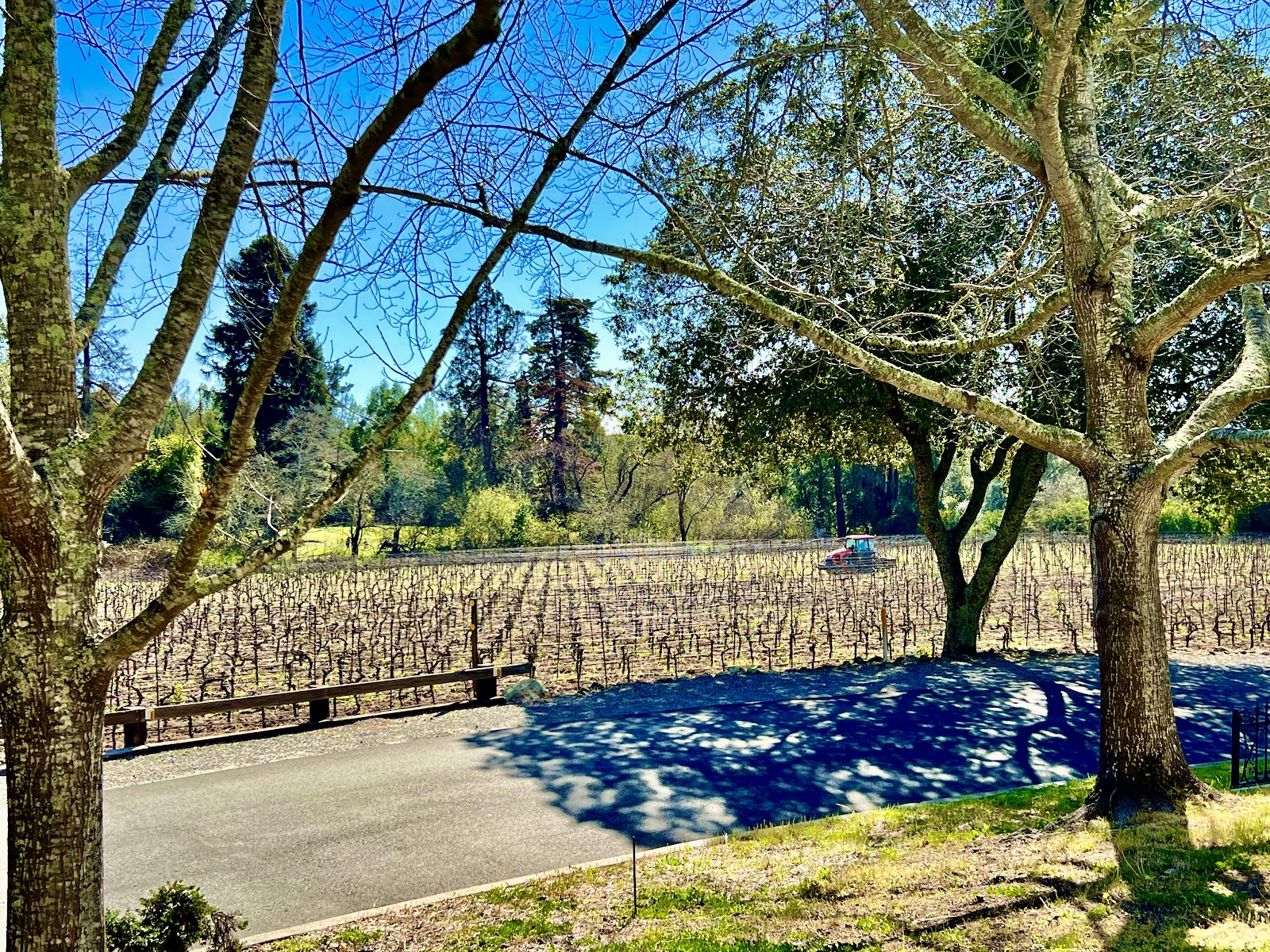
A Sonoma estate that combines vineyard with oak woodland has three distinct photographic environments on one property, and the reason to walk it in order rather than list it is that each one has an hour when it is at its best and an hour when it is unusable.
The three are these. The oak woodland, which is the shade and the coolest ground on the estate, and which is the most reliable light available at any hour. The vineyard, which is the opposite — entirely exposed, flat in the middle of the day and extraordinary in the last hour. And the built fabric, stone and timber, which absorbs and gives free separation and works in weather.
Under all of it is the Sonoma climate, which is Mediterranean: a dry season from roughly May to October when rain is genuinely unlikely, a wet winter, and a large daily swing driven by marine air pulling in from the bay and the Petaluma gap overnight. A fifty-five-degree foggy morning and a ninety-degree cloudless afternoon on the same July day is normal here.
We have not photographed a wedding at Bartholomew Estate; Sonoma winery estates with oak woodland behave consistently. Which areas are included, the covered alternative and its capacity, whether the trails are usable in formal shoes, and what the vineyard work schedule is on the date are questions for their team.
Bartholomew Estate at a glance
| Where | A winery estate at Sonoma, with vineyard and oak woodland |
| The woodland | Coast live oak — real shade, usable at any hour, and cool |
| The vineyard | Exposed and flat at midday, exceptional in the last hour |
| The stone | Absorbs, so it gives separation free, and it works in weather |
| The climate | Foggy mornings, hot dry afternoons, roughly no rain May to October |
The oak woodland, and the buildings
Start in the oaks, because in the dry season they are the only place on a Sonoma estate that works through the middle of the day.
Coast live oak is the characteristic tree of this landscape and it is an unusually good shade tree. It has a dense, broad, low-spreading crown of small stiff evergreen leaves, which blocks rather than filters, and because it keeps its leaves year-round it gives the same shade in February as in August. Under a mature specimen the shade is genuinely full, and the light comes in from the open sides, which models a face instead of flattening it.
The working position is a few metres in from the edge of the canopy on the side facing open sky. That gives direction along with softness, and it keeps a dark canopy behind the subject — which is three or four stops of free separation and no equipment at all.
It also carries the standard exposure trap and it matters here. A meter looking at a large area of dark oak tries to lift it toward mid-grey, which overexposes the face and everything else by a couple of stops. So the metering goes on the skin and the work is done in manual, particularly because a bright vineyard frame five minutes later fools the meter hard the other way.
The dappling caution is the other half. A dense canopy still has gaps, and a single hard patch of California sun on a cheek is unrecoverable. The test is always the face rather than the ground.
Colour under oak is worth a custom white balance. Light filtering through a dense evergreen canopy picks up green, and light bounced off dry brown ground picks up warmth, and the mix varies with position — so setting the balance on a face where it stands beats a preset and beats correcting afterwards.
Oak woodland on a Sonoma hillside is also usually open rather than closed: scattered trees with dry grass between them, which is the savanna form this landscape takes. That means the edges are everywhere, which is convenient, and it means the open patches between trees are full sun, which is not. Walking the route in advance and noting which gaps have to be crossed rather than stood in is a five-minute job that saves an hour.
The buildings come next, and old stone is the best of them. Stone absorbs, so a stone wall behind a subject reads dark and gives separation without any lighting decision. A doorway or arch in a stone wall restricts daylight to a horizontal band, which models a face the way a window does — and unlike a tree it cannot dapple, which makes it the most dependable position on the estate at any hour.
Two or three metres in from the opening is the working distance. Closer and the overhead sky reaches the face again; further and there is not enough light to hold the exterior. The catchlight tells you which: low and horizontal is right, high in the eye means step back.
Inside, cellar and barn spaces are dark and that is their virtue. A single window or open door in a dark stone or timber space gives steeply falling light that separates a subject from a background two metres behind it for nothing. Where a source is needed, one warm-gelled light at about a stop above the ambient with the white balance set to the gel does more than several, and it keeps the character of the space rather than erasing it.
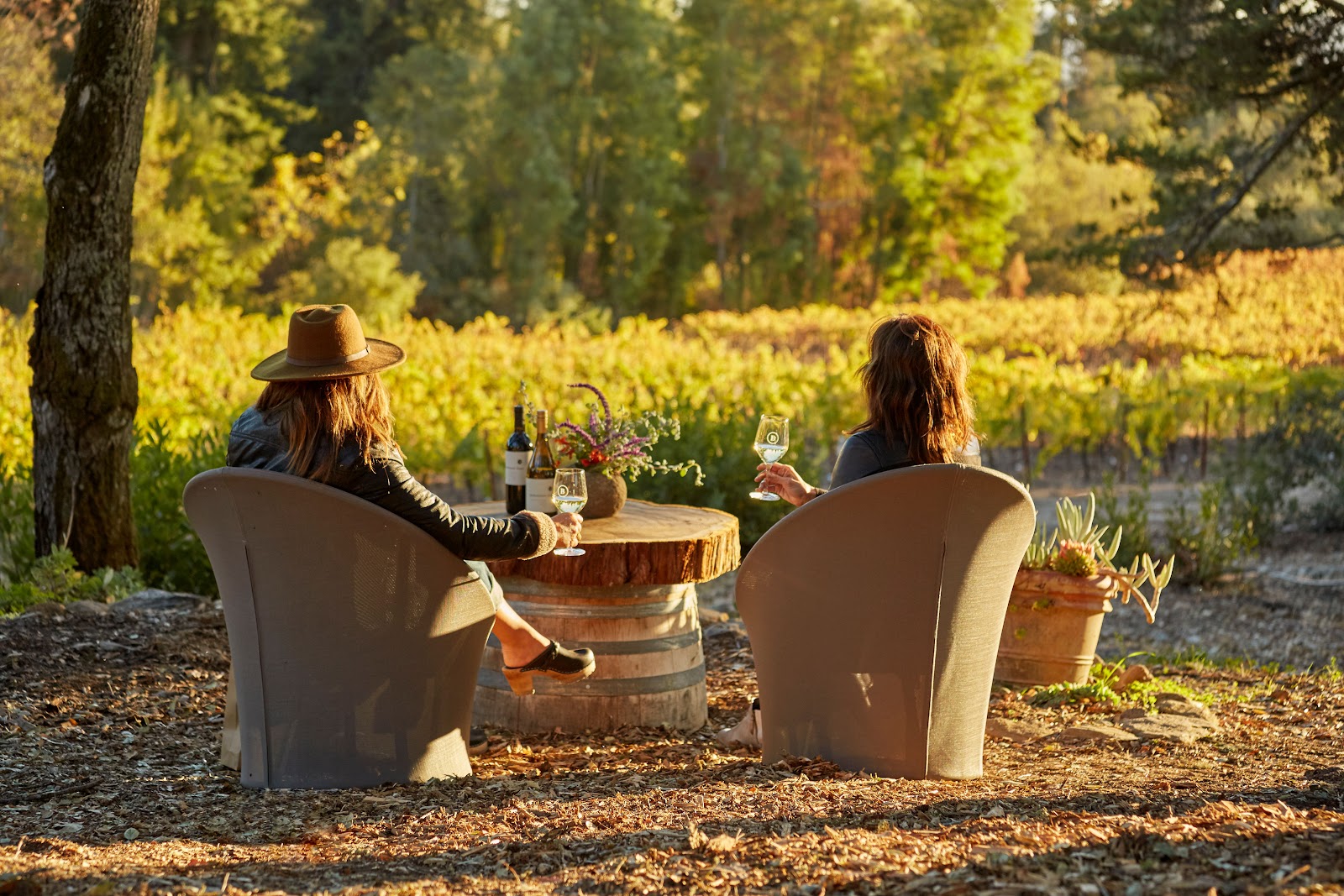
The vineyard, and the end of the day
The vineyard is the estate’s signature and it is the least forgiving ground on it, because it is completely exposed and it is planted in lines.
The exposure problem first. Dry-season California sun at midday over open vineyard is hard and high: vertical shadows under the brows, deep shadow under the chin, and squinting from anyone facing it. There is no technique that fixes a face in that light, and no shade between the rows — vines are trained at waist to chest height and shade nothing. So the vineyard is a morning and evening proposition, and in the middle of the day it is a place to walk through rather than to stand in.
Under fog or high cloud it changes completely. The brightness range collapses, the green saturates rather than glaring, and the vineyard becomes usable at any hour — so a grey morning here is an easy morning, which is worth saying to a couple hoping for sun.
The lines are the second thing and they are a gift if they are used deliberately. A vineyard row is a strong perspective line, and where the camera stands decides whether it leads into the frame or cuts across it. Standing in a row and looking down it gives convergence and depth; standing across the rows gives a repeating horizontal texture. Both work; the accident in between does not, and two steps either way is the whole difference.
Rows also run to a fixed compass direction that was chosen decades ago for the vines rather than for photography, which means the light along a row and the light across it are different at every hour. Walking the vineyard once at the hour the portraits will happen tells you more than any amount of planning from a map.
Lens choice matters here more than in most places. A longer lens compresses the rows into dense stacked texture and keeps the hills beyond large; a wide lens splays the rows and reduces the hills to a thin band. The long version is almost always the stronger picture, and in dry clear Sonoma air it holds detail with very little haze.
The last hour is what the vineyard exists for. Low sun rakes along and across the rows rather than falling onto them, which puts texture into every leaf and turns the canopy into a translucent green-gold layer — because vine leaves are thin enough to transmit light, which is why a backlit vineyard glows in a way a backlit hedge does not.
The exposure at that hour goes on the background rather than on skin, with the faces lifted by a close source gelled warm to match. Metering on faces gives a white sky and a flat vineyard, which is the standard failure. Close matters because there is nothing out there to bounce: a source at two metres needs roughly a quarter of the output it needs at four.
After the sun drops behind the western hills — which in Sonoma happens earlier than a sunset table says, because the hills are close — there is a long clean afterglow in dry air, and a window when the sky holds a genuine gradient and the vineyard has gone soft. It is a scheduled ten minutes rather than a wander.
The practical notes are ordinary but they decide comfort. Vineyard ground is worked earth, frequently uneven, dusty in summer and soft after rain, which is a shoe question worth raising in advance. There may be irrigation lines, bird netting or harvest equipment in place depending on the date, and what will be there is a question for the estate rather than a surprise for the day. And the diurnal swing means an evening that is warm at seven can be cold at nine, so coats matter more than people expect in a place they think of as hot.
- Oaks for the middle of the day; work in manual, and check the face not the ground
- Stone openings are the one position that cannot dapple
- Stand in a row or across it deliberately — the accident between fails
- Longer lens for the vineyard: it compresses rows and keeps the hills large
- Last hour: expose for the background, lift the faces close and gelled
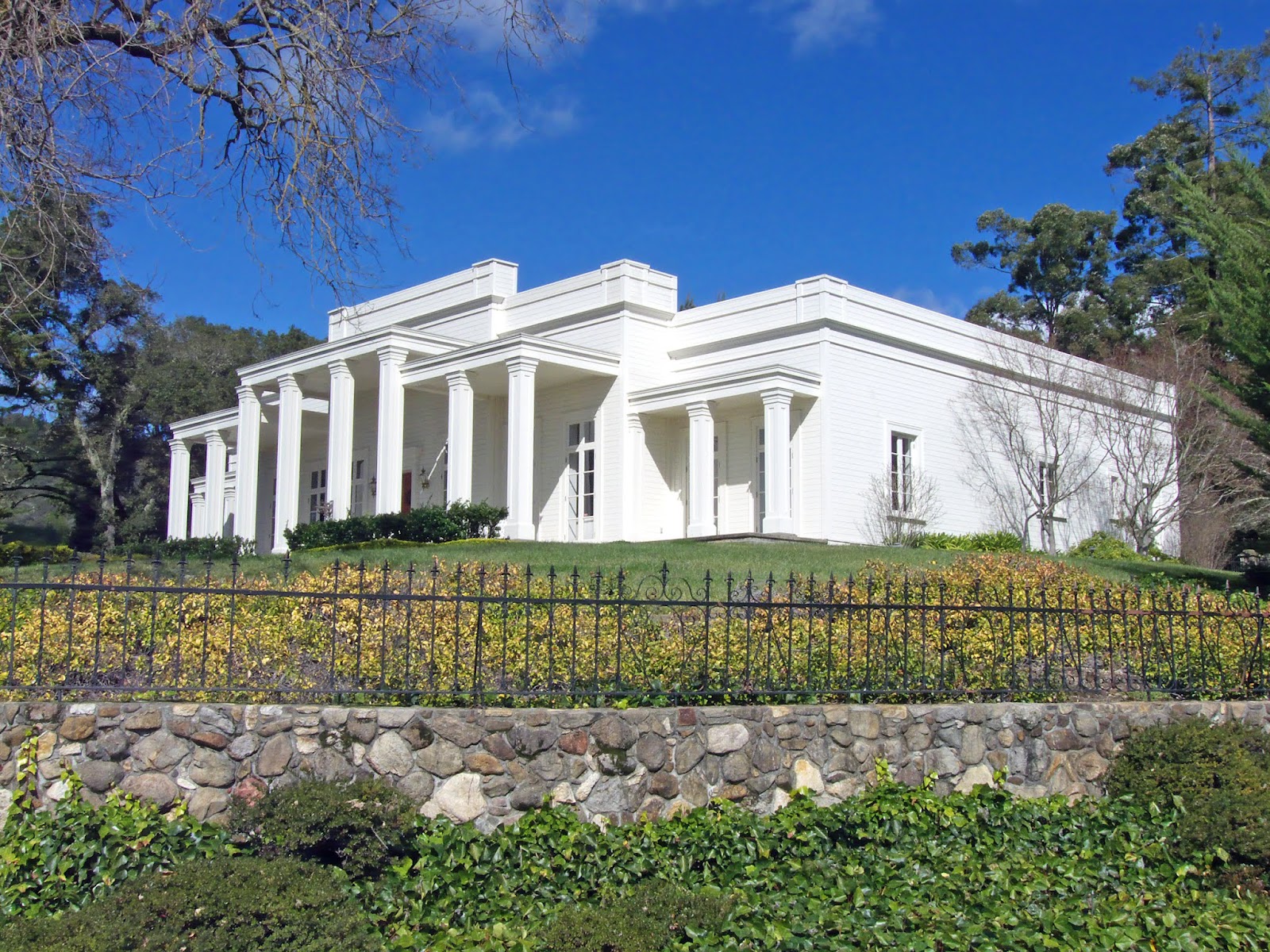
The Sonoma year
The estate changes more between February and October than most venues change in their whole calendar, because a vineyard is a deciduous crop and the hills here are green only in the wet half of the year.
Late winter is the surprise. From roughly February into March, mustard flowers between the dormant vines, which puts a solid yellow ground layer under bare brown trunks with green hills behind — the most colourful condition the estate has, and one almost nobody plans a wedding around. The oaks are unchanged, because they are evergreen, which means the woodland works exactly as it does in summer.
The cost is weather. The wet season runs roughly November to April and the covered alternative is not optional in those months. But the light on a wet winter day here is excellent — soft, even, saturated — and the ground is green rather than straw, so a rainy date is a different wedding rather than a spoiled one.
Spring is mild, green and comfortable, with the vines leafing out through April and May. Morning fog is at its most persistent in late spring and early summer, which for a site with real oak shade is simply an easier morning.
Summer is the reliable season and the hard one. Rain is genuinely unlikely from May to October, the hills have gone gold and dry, and the day splits: soft foggy morning, difficult hot middle, and an excellent last hour. It is a scheduling season rather than a technical one — the oaks and the stone handle the middle, and everything else waits for seven.
Heat is a welfare matter on the exposed parts of the estate. Sonoma afternoons commonly exceed ninety degrees Fahrenheit in July and August, and a party in formal clothes standing between vine rows at three is uncomfortable in a way that shows in the pictures.
Harvest is the best time to be here. Crush runs from roughly late August into October and it turns the estate from a decorative landscape into a working one: fruit on the vines, bins and tractors moving, and activity in the cellar. Photographed honestly rather than tidied away, it gives frames that no other season offers — and it is worth asking what will actually be happening on the date.
Then the vines turn, through late October and into November. Because a vineyard is planted in blocks of a single variety, the colour comes in large uniform panels of yellow, orange or red rather than tree by tree, and the contrast with dark evergreen oak is the strongest combination the estate produces. Autumn also brings the clearest air and the least fog of the year, which makes the compressed long-lens frames best, and a shorter day that puts the gold hour at a civilised time.
Winter after leaf-fall is spare and graphic: bare trained trunks in rows, wet dark earth, green grass and often dramatic cloud, with the oaks still full. The December sun at this latitude reaches only about thirty degrees above the horizon, so the whole short day rakes rather than floods, which removes the hard-light problem entirely and makes even the open vineyard usable from morning to evening. On the light alone it is the easiest season; on certainty, the least.
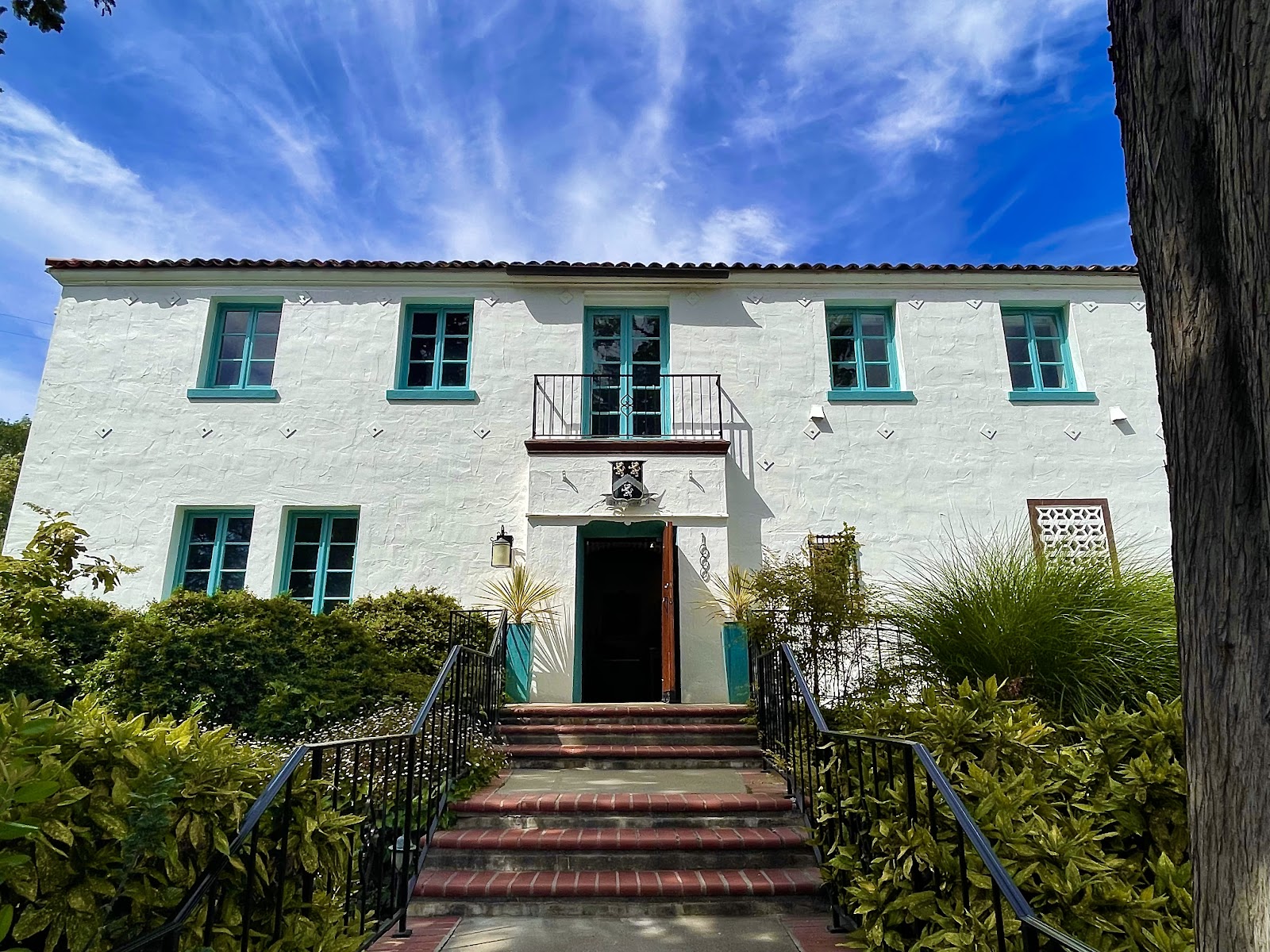
More frames from Bartholomew Estate
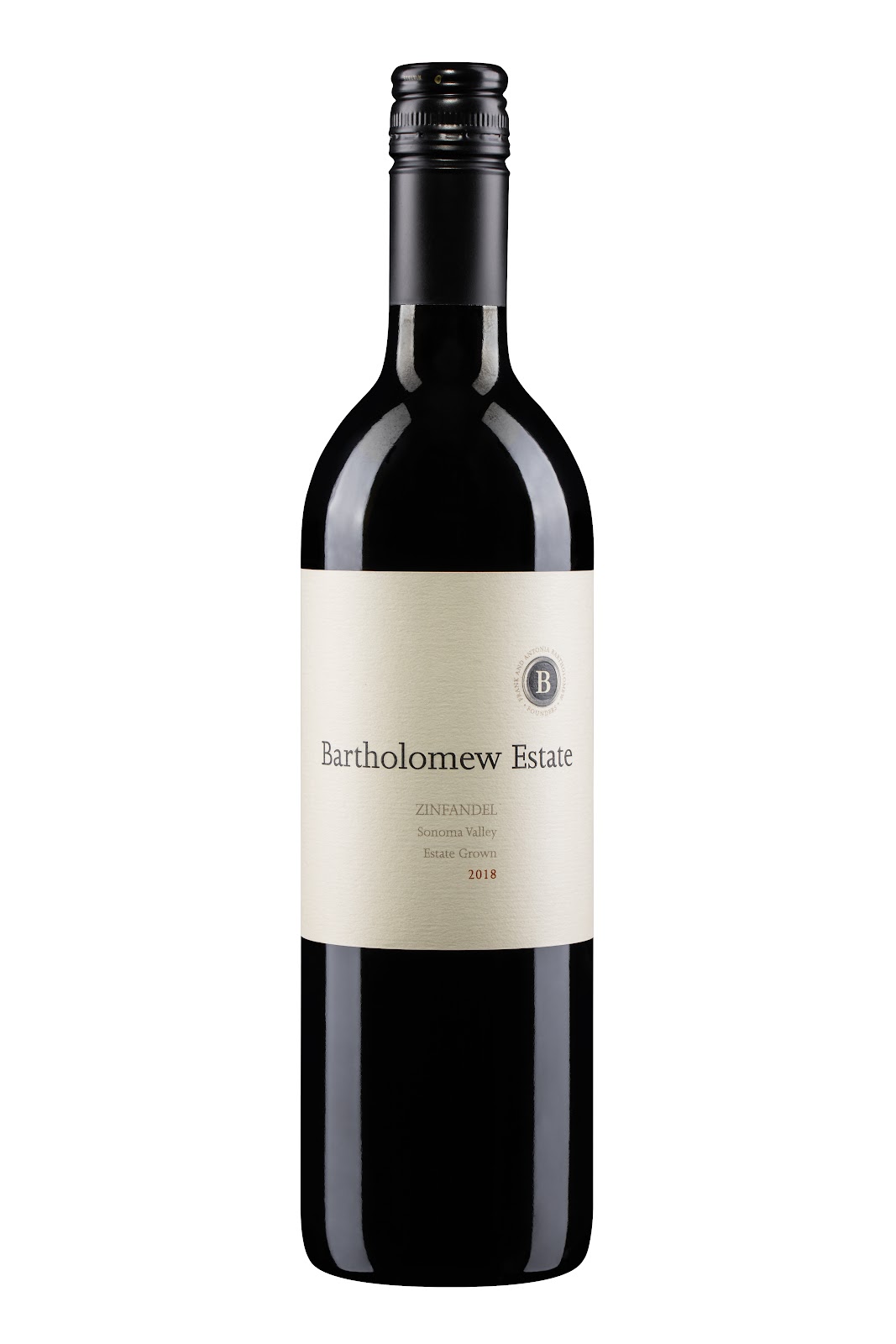
Bartholomew Estate wedding photography: common questions
What is the shade here?
Coast live oak — dense, broad, low-spreading and evergreen, so it gives the same full shade in February as in August.
Why work in manual?
Dark oak canopy makes a meter overexpose by a couple of stops and a bright vineyard fools it the other way, and both can happen five minutes apart.
When does the vineyard work?
Morning, the last hour, or under fog and cloud. At midday it is exposed with no shade anywhere between the rows.
How should vineyard rows be used?
Deliberately — down a row for convergence and depth, or across them for repeating texture. The accident in between is the failure.
What is the most reliable position on the estate?
A stone doorway or arch. It restricts the light to a horizontal band, gives a dark surround, and unlike a tree it cannot dapple.
When is the estate at its best?
Late October into November, when whole vineyard blocks turn one colour against dark evergreen oak — and February, for mustard between bare vines.
More California venue guides
We are writing a photographer’s guide to every venue we would happily shoot in California. Here are three more, plus the full index:
- Berkeley Hotel: One Frame, and How It Is Made
- Beverly Wilshire, Beverly Hills: The Light Through the Day
- Calistoga Ranch, Calistoga: The Problem, and Four Ways Out
Planning a wedding at Bartholomew Estate?
Oaks, rows and stone in the right order. Tell us your date and we will walk it.