 Park Hyatt Aviara, Carlsbad: The One Decision That Governs Everything
Berkeley Hotel: One Frame, and How It Is Made
A tall window, a dark room, and a face a metre from the glass. Everything else is a variation.
There is one frame a historic hotel gives better than any modern building, and it is worth describing properly because everything else in such a place is a version of it.
A subject stands a metre from a tall window in a deep room with dark walls. The light comes in horizontally, crosses the face rather than falling on it from above, and then falls away steeply into the room behind — so the background goes two or three stops down without anything being done to it.
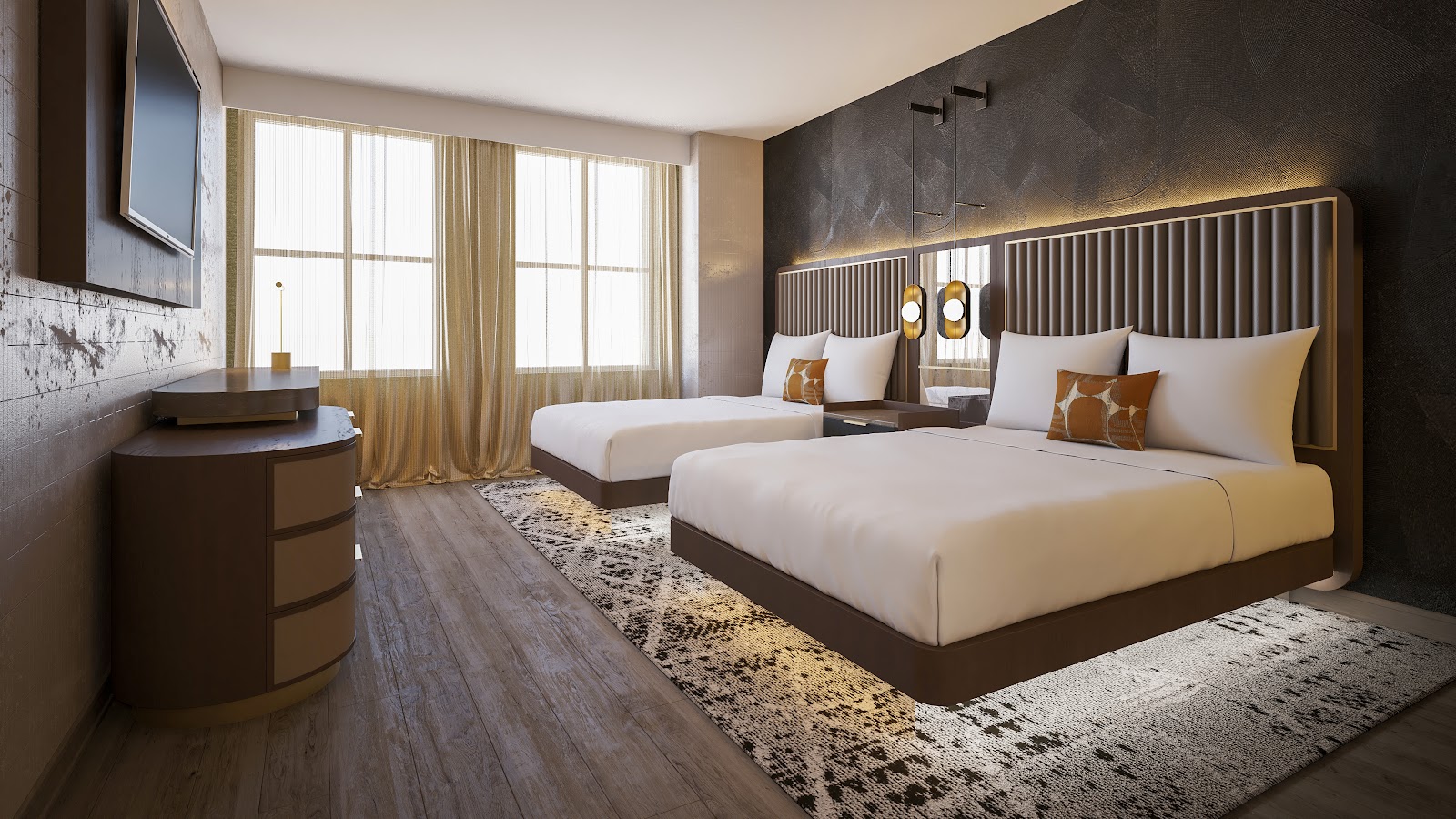
It works for reasons that are entirely architectural. A building of this era was designed before useful artificial light existed, which is why the windows are tall and the ceilings are high: daylight had to reach the back of a room. Tall glass means the light arrives at head height rather than from overhead, which is the single most flattering direction available. And a deep room means distance for the light to fall off in, which is what produces the separation.
A modern room inverts all three. Wide low windows put the light above the eyeline, pale walls bounce it around so it never falls off, and a shallow plan gives no distance for it to fall off in. The result is soft even light with no modelling and no separation — pleasant, and nothing like this frame.
We have not photographed a wedding at the Berkeley Hotel; historic hotels of this period behave consistently. Which rooms are included, whether the function-room lighting can be dimmed or adjusted, what the turnaround time between spaces is, and what access there is to the exterior are questions for their team.
Berkeley Hotel at a glance
| Where | A historic hotel in Berkeley, in the East Bay |
| The frame | A face a metre from a tall window in a deep dark room |
| Why it works | Horizontal light at head height, falling off steeply into the room |
| The rule | Turn the room lights off — two colours on one face cannot be fixed |
| What breaks it | Standing too far in, pale walls, and mixed artificial light |
How the frame is built
The distance is the first decision and a metre is not arbitrary. Light falls off with the square of distance from its source, and a window is effectively a large source close by — so at a metre the light is strong and soft, at two metres it is noticeably weaker, and at four it has largely gone. That steep gradient across a short distance is exactly what produces the separation between a lit subject and a dark background.
Which means the whole frame is made by standing in the right place. A metre from the glass, with the background three or four metres further back, gives two or three stops between them for free. The same subject in the middle of the room gives nothing.
The angle is the second decision and it is the one that determines whether the face is modelled or flat. Turned so the light comes across the face — roughly forty-five degrees from the window rather than facing it squarely — gives a lit side, a shadowed side and a gradient between them, which is what makes a face read as three-dimensional. Facing the window directly gives flat even light with no structure, which is a legitimate look and a much less interesting one.
The catchlight is the diagnostic. A large soft catchlight on the window side of each eye, low and broad rather than high and small, means the geometry is right. No catchlight on one side means the head has turned too far.
Height is the third. A tall window means light from head height to well above it, so standing a subject in the upper part of that band — rather than sitting them in a chair low down — keeps the light horizontal. A seated subject in front of a tall window gets light from above, which is a different and less flattering thing.
The room lights must be off, and this is not a refinement. Tungsten or warm LED mixing with cool window daylight puts two different colours on one face, and no single white balance renders both: correcting for the window leaves the artificial light orange on the shadow side, and correcting for the bulbs turns the window light blue. Switching them off costs nothing and solves it entirely.
The white balance is then set on a face in position rather than on a preset, because window light itself is not neutral: it is the colour of whatever is outside. A window facing open sky delivers cool blue light; one facing a sunlit pale building delivers warm light; one shaded by a tree delivers green. Thirty seconds of setting it changes every frame that follows.
The exposure is metered on the skin, in manual, and this is where a dark room catches people out. A meter looking at a deep dark room tries to lift it toward mid-grey, which overexposes the face badly — and the correct frame has a lot of near-black in it, which is the point. Metering on skin and letting the room go dark is the whole discipline.
Where the light is not quite enough, one source added just off the camera axis at about half a stop under the window — not above it — fills the shadow side without destroying the direction. More than that and the window stops being the light, and the frame stops being this frame.
And the background needs choosing rather than accepting. A dark wall, a dark doorway, a dark piece of furniture: the frame depends on there being something dark behind the subject, and in a room with one pale wall the difference between pointing the camera one way and the other is the whole picture.
What breaks it, and the rest of the building
Standing too far in is the commonest failure and it is invisible while it happens. A metre feels close, so people drift to two, and at two metres the light is a quarter of what it was and the separation has halved. The fix is to step forward until the light is obviously good and then not drift.
Pale walls break the frame completely, and some rooms in any hotel have them. A pale wall bounces the window light back into the room, which fills the shadow side of the face and lifts the background — so the modelling flattens and the separation disappears. The frame simply is not available in a white room, and looking for a dark one is faster than fighting a light one.
Direct sun through the window breaks it in the other direction. A hard shaft of sun on a face gives a range far beyond what one exposure holds, and window mullions cut it into geometric shapes across the skin, which is charming on a wall and unusable on a face. A sheer curtain fixes it by turning the window into a diffuser; where there is none, a north-facing window or a shaded one is the answer.
Reflections break it in glass-heavy rooms. A camera pointed toward a window at a shallow angle picks up the room and the photographer in the glass, and the fix is angle rather than equipment — a few degrees off perpendicular removes it.
The rest of the building is variations on the same physics. A stair with a high window is the frame with height added, and the important detail there is that the light comes from above: a subject looking up the stair catches it in the eyes, and the same subject looking down is in their own shadow. That one decision makes or breaks a stair picture.
A corridor with a window at the end is the frame stretched out — subject in the window light, corridor receding into darkness behind, and the fall-off doing all the separation with no equipment at all. It is the most reliable position in any hotel of this type.
A lobby is the frame’s hardest environment, because a lobby of this era is lit for atmosphere rather than for faces: warm downlights from a high ceiling, fittings that read as bright in the frame but illuminate almost nothing, and dark polished surfaces that absorb. So the top of a head is lit and the eyes are not. The answers are to find where daylight from the entrance reaches — a lobby’s usable light is almost always within a few metres of the door — and to add one warm-gelled source off the camera axis, about a stop above the ambient, enough to put light in the eyes without erasing the atmosphere.
A function room in the evening is the frame abandoned, and it needs its own approach. Expose the ambient for the room rather than for the faces — deliberately a stop or a stop and a half under what skin needs — then add one warm-gelled source just above what the ambient gives the faces, with the white balance set to the gel. That keeps the room’s colour and the fittings’ presence while making the faces readable, which is what such a picture has to do. A high ceiling means it is not available as a bounce surface; a pale nearby wall usually is.
Outside, the East Bay light is the mild version of the region’s. Berkeley sits inland of the Gate, so it gets less fog and more sun than San Francisco, and the hills behind the city take the sun earlier in the evening than a coastal site — which brings the last hour forward and shortens it. Street-level exteriors are steep, which means strong diagonals, and the pavement can be several stops from the shaded side of a building across it, so manual exposure metered on skin applies outdoors as much as in.
- A metre from the glass, forty-five degrees to it, standing not seated
- Room lights off; custom white balance set on the face in position
- Meter on skin and let the room go dark — that near-black is the frame
- Find a dark wall; the frame does not exist in a pale room
- Sheer curtain for direct sun, and a few degrees off perpendicular for glass
The East Bay year
Berkeley’s climate is the mild middle of the region: less fog than San Francisco, less heat than the inland valleys, and a wet winter with a dry summer.
The wet season runs roughly November through March. For a hotel wedding that matters far less than at an outdoor venue, which is one of the main arguments for this kind of building — the frame described above is entirely weather-independent, and a rainy day does not touch it.
What rain gives is the exteriors. Wet pavement on a steep street at night, with lit windows and reflections underfoot, is one of the strongest outdoor frames available in this region and it requires nothing but a willingness to step outside. A grey day also removes every dappling and squinting problem from street-level work.
Spring is mild, increasingly clear and comfortable, with lengthening light. It is the most straightforward season for combining indoor and outdoor coverage.
Summer is the fog season for the region, and the East Bay gets the mild version: mornings frequently grey with the layer pushing in through the Gate and across the bay, afternoons usually clear and warm. That pattern is convenient rather than difficult — a soft morning for preparations and a bright afternoon for exteriors.
The one summer caution is the direction of the light. A high summer sun barely reaches into a deep room through a tall window, which means the frame described above is weaker in June than at any other time of year: the light arrives steeply and does not travel far into the room. It still works close to the glass; it simply works over a shorter distance.
September and October are the region’s clearest and warmest months, and they are the best for exteriors — long light, sharp air, and views across the bay at their most legible.
Autumn colour is modest in a largely evergreen city, though street planting gives some yellow through November. What changes more is the angle of the light, which begins to matter indoors.
Winter is the technical gift and it is the point worth ending on, because it is the opposite of what most people assume. The December sun at this latitude reaches only about thirty degrees above the horizon, which means it enters a tall window almost horizontally and travels much deeper into a room than a summer sun ever does.
For the frame this guide is built around, that is decisive. In December the light reaches three or four metres into a deep room rather than one, which widens where a subject can stand, strengthens the modelling, and extends the whole usable window from a narrow band by the glass to most of the room. A historic hotel is better lit in winter than in summer, and for an indoor wedding in a building of this era, December light is the best of the year.
More frames from Berkeley Hotel
Berkeley Hotel wedding photography: common questions
What is the frame?
A subject a metre from a tall window in a deep dark room, turned about forty-five degrees to the glass. Horizontal light, and a background two or three stops down for free.
Why a metre and not two?
Light falls off with the square of distance. At two metres it is a quarter as strong and the separation has halved — the frame is made by standing in the right place.
Why turn the room lights off?
Warm bulbs mixing with cool window light put two colours on one face, and no white balance renders both. Switching them off costs nothing.
What breaks the frame?
Pale walls, which bounce the light and kill the fall-off. Direct sun, which cuts geometric shapes across skin. And drifting too far from the glass.
How do I meter it?
On the skin, in manual. A dark room makes a meter overexpose badly, and the near-black in the frame is the point rather than an error.
When is this frame strongest?
December. A low sun enters a tall window almost horizontally and reaches three or four metres into the room instead of one.
More California venue guides
We are writing a photographer’s guide to every venue we would happily shoot in California. Here are three more, plus the full index:
- Beverly Wilshire, Beverly Hills: The Light Through the Day
- Calistoga Ranch, Calistoga: The Problem, and Four Ways Out
- Cavallo Point, Sausalito: The Light Through the Day
Planning a wedding at Berkeley Hotel?
One frame, built properly, in any weather. Tell us your date.