 Park Hyatt Aviara, Carlsbad: The One Decision That Governs Everything
Cavallo Point, Sausalito: The Light Through the Day
Everything here arrives through one gap in the hills. Read the day and you can see it coming.
A former army post at the north foot of the Golden Gate has a day shaped by one piece of geography, and it is not the bridge. It is the strait itself.
The Golden Gate is the only sea-level break in the coastal hills for a long way in either direction, which means it is the channel through which marine air, fog and wind move from the Pacific into the bay. A site sitting immediately inside that channel therefore gets the weather first and gets it concentrated — fog pouring through rather than settling, and wind funnelled by the hills on either side.
The second governing fact is the buildings. A post of this period is built in white or cream clapboard with deep porches, arranged formally around open ground. White painted timber is an extremely efficient reflector, which means the site produces a great deal of bounced light and reads high-key — the opposite of a dark stone or timber venue.
The third is the water. The site is at the edge of the bay looking back across it at the city, which gives a horizontal reflector in front of the camera, long sightlines, and a background that is a recognisable skyline rather than a landscape.
We have not photographed a wedding at Cavallo Point; former military posts on this shore behave consistently, and the fog and wind pattern through the Gate is one of the most reliable in the region. Which buildings and outdoor areas are included, what the covered alternative is, whether amplified sound is permitted outdoors, and what permits apply to the surrounding public land are questions for their team.
Cavallo Point at a glance
| Where | A former army post at the north foot of the Golden Gate, Sausalito |
| Morning | Fog through the strait, or the clearest hour of the day if it is out |
| Midday | Deep porches and white clapboard — the site’s most reliable light |
| Evening | West-facing water, and the wind easing after sunset |
| Ask first | Areas included, covered alternative, outdoor sound, and permits nearby |
Morning: fog, or the clearest hour there is
The morning here is one of two completely different days and which one it is will be obvious by seven.
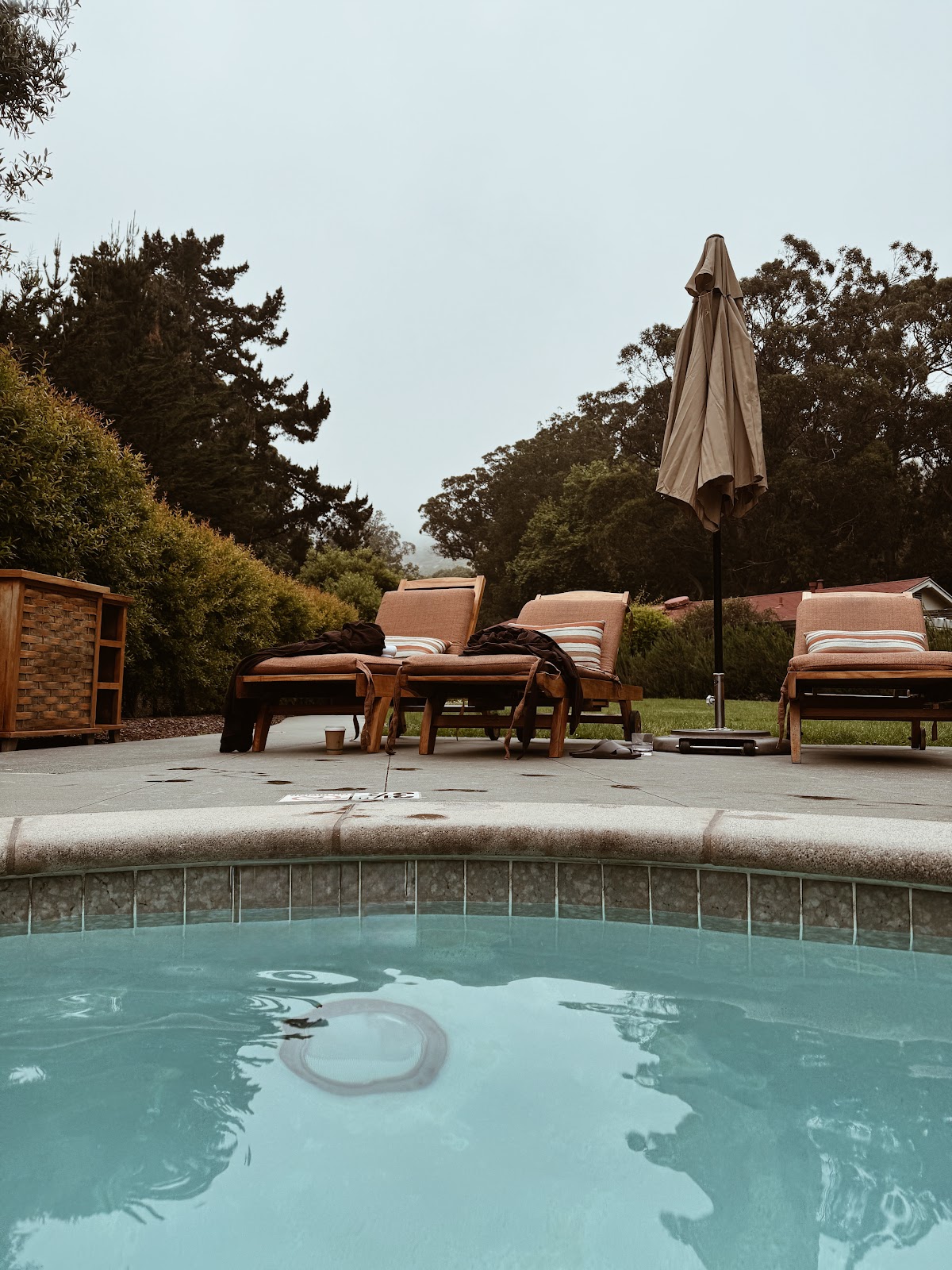
If the fog is in — which through June, July and August is more often than not — it arrives through the strait rather than sitting still, which is the distinctive thing about this location. Fog moving is visible: it pours through the gap, curls around the headlands, and can bury the bridge towers while leaving the water clear beneath them, or the reverse. That movement is the frame nowhere else offers, and it changes within minutes rather than hours.
Fog light is flat, cool and low in contrast, and the handling is consistent. Build the contrast the light will not supply, which on this site means using the dark surfaces — a shaded porch, an open doorway, dark cypress — behind a subject, because white clapboard in fog gives a pale subject against a pale background and nothing separates. Set a custom white balance on a face rather than using a daylight preset, which otherwise renders skin blue-grey. And add one source just off the camera axis at about half a stop above the ambient to restore the modelling fog removes, without making the frame look lit.
What fog gives in exchange is that every scheduling constraint disappears. No dappling, no squinting, no unrecoverable half-lit faces, no hour to avoid, and groups can stand anywhere. A ceremony at eleven works exactly as well as one at six.
If the fog is out, the morning is the clearest hour of the day and it is worth using immediately. Marine haze builds through the day here, so the sharpest view of the city across the water is early — and because the site faces roughly east and south across the bay, the city is front-lit in the morning rather than backlit, which is the only time of day it holds colour and detail rather than reading as a silhouette.
That is an important scheduling point and it runs against the usual instinct. At most view venues the evening is the moment; here the clear detailed skyline belongs to the morning, and the evening gives a different picture — a silhouette against a lit sky — rather than a better version of the same one.
Indoors in the morning, the light comes through sash windows in rooms with white or pale walls, which means it bounces around and fills rather than falling off steeply. That gives soft, even, flattering light with very little work, at the cost of free separation — a pale subject against a pale wall needs the separation built by position and lens rather than by exposure.
The metering correction is the one that goes with all pale interiors. A meter looking at white walls pulls them toward mid-grey, which gives grey walls and dark faces, so the direction is deliberately brighter than the camera suggests, metered on skin.
And turn the room lights off. Warm bulbs mixing with cool window light put two colours on one face, and no white balance renders both.
Midday to evening: porches, wind, and the water
By the middle of the day, if it is clear, the site is exposed. Open formal ground with low buildings and little mature canopy means the shade available is architectural, and here that is a real strength rather than a limitation, because a post of this era is built with deep porches on nearly every building.
A deep porch with a solid roof is the most reliable light on the property. It blocks the overhead component, restricts the light to a horizontal band that models a face the way a window does, bounces off a white-painted ceiling and a pale deck to fill from above and below, and it cannot dapple. Two or three metres in from the open edge is the working position, it works at any hour of any day, and there is one on every side of the building so there is always one facing the right way.
White painted timber is the reason those porches are so good. Paint on a porch ceiling is a large soft overhead source once light bounces into it, which fills the eye sockets that an open-sky position leaves dark — and it is neutral in colour, so unlike stone or timber it does not need correcting.
The exposure trap runs the pale-surface way throughout the site. Sunlit white clapboard is several stops brighter than a shaded face in front of it, and a meter averaging the two underexposes the face — so manual, metered on skin, brighter than the camera suggests.
Wind is the constant practical fact and it builds through the afternoon. Air funnelling through the strait is stronger here than at most bay locations, which means a lightstand is a liability, a held modifier is a sail and a veil is genuinely unpredictable. A source in a hand or on a bracket is the working configuration, and the lee side of a building is worth walking to rather than fighting the exposed side.
Sound follows from the same fact: vows spoken into funnelled marine wind do not reach the back row, which makes amplification a more important question here than the setting suggests.
The afternoon is when the water becomes useful. Bay water is a large horizontal reflector that doubles the sky and throws light upward into faces standing above it, which softens a hilltop or shoreline position measurably. It also means the background brightness changes with the state of the water — flat calm reflects like a mirror, chop scatters and goes darker — so the same frame metered yesterday is not the same frame today.
The lens decision for the city across the water matters. A wide lens renders the skyline as a thin distant band above a great deal of bay, which throws away the reason to be here. A longer lens compresses the water out and brings the city forward as a presence behind the couple — and in marine air that compression picks up haze, so a long-lens skyline frame is sharper in the morning or after a front has passed than in the middle of a summer afternoon.
Evening is a west-facing proposition and it has a specific character. The sun sets through or beside the strait, which means a couple standing on the shore is backlit by an open western sky, with the city to the side rather than behind. That is a rim-lit frame rather than a front-lit one, and the exposure goes on the sky with the faces lifted by a close source gelled warm to match. Metering on skin gives a white sky and throws away the whole reason for a west-facing shoreline.
And the ten minutes after the sun has gone is the best window of the day on this site. Wind typically eases at that point, the water holds the colour of the sky, the city’s lights come up against a sky that is still blue rather than black, and everything is calm for a short time. It is worth putting in the running order explicitly.
- Fog through the strait moves — it is a frame, not a setback
- The clear detailed city view belongs to the morning, not the evening
- Deep porches are the best light here: white paint fills from above and below
- Meter on skin and go brighter — white clapboard fools every meter
- The ten minutes after sunset is the calmest and the most colourful
The year at the Gate
This shore keeps San Francisco’s calendar rather than California’s, and the difference is worth stating early to a couple.
The wet season runs roughly November through March. Rain is real then, and on a site whose outdoor spaces are porches and open ground, a covered alternative is not optional in those months.
What winter storms give is the most dramatic conditions this location produces. Weather arriving through the Gate is visible coming — squall lines, broken cloud, shafts of sun on water — and the light between cells on a stormy winter day is extraordinary and brief. A wet winter day photographed from a porch looking out is a genuinely strong wedding rather than a salvaged one.
Spring is mild, green and clear, with the hills of the headlands green rather than the gold they are for most of the year, and wildflowers on the open slopes through spring. Fog is present but has not yet reached its summer strength, and the air is clean. It is the most straightforward season here.
Summer is the fog and wind season and it is the counterintuitive part of the year. June, July and August at the mouth of the bay are cool, grey and blowing more often than not, with temperatures that can sit in the fifties Fahrenheit while an inland valley an hour away is above ninety. A party in summer clothes at an evening ceremony here will be cold, and telling them in advance is worth more than any photographic note.
Photographically, summer is the easiest season and the least flattering to a brochure: everything works, nothing sparkles, and the pictures are soft and even. The compensation is that fog through the strait is at its most dramatic then, and that condition is unique to this site.
September and October are the best months by a clear margin, and they are the region’s real summer — the fog retreats, the air warms, the light is long and the city across the water is at its sharpest. If a date is movable and the couple want a clear view, this is the answer.
Autumn colour is not a feature, because the dominant trees here are evergreen cypress and pine. What changes is the clarity of the air and the angle of the light rather than the colour of anything.
Winter light is the technical bonus and it suits this site especially well. The December sun at this latitude reaches only about thirty degrees above the horizon, so the whole short day rakes rather than floods — which models white clapboard beautifully, puts texture into every board and shadow line, reaches deep into porches that a summer sun never enters, and makes the open ground usable from morning to evening.
The other winter feature is the water. A low sun across the bay produces a long path of broken reflection rather than a point, and on a calm winter afternoon the whole surface between the camera and the city becomes a field of light. It is the strongest thing the water does all year, and it lasts most of the short afternoon rather than twenty minutes.
More frames from Cavallo Point
Cavallo Point wedding photography: common questions
Why is the weather so pronounced here?
The Golden Gate is the only sea-level break in the coastal hills for a long way, so fog and wind funnel through it. A site inside the channel gets it concentrated.
When is the city view clearest?
The morning. Marine haze builds through the day, and the site faces the city, so the skyline is front-lit early and a silhouette in the evening.
What is the best light on the property?
A deep porch. White paint on the ceiling and deck fills from above and below, the roof restricts the light to a horizontal band, and it cannot dapple.
Why meter brighter than the camera says?
Sunlit white clapboard is several stops brighter than a shaded face, and a meter averaging the two gives grey walls and dark faces.
How bad is the wind?
Enough that a lightstand is a liability and a veil is unpredictable. Plan handheld sources, and ask whether amplified sound is permitted outdoors.
Which season is best?
September and October for clarity and warmth. Winter has the best light of the year, and summer has the most dramatic fog.
More California venue guides
We are writing a photographer’s guide to every venue we would happily shoot in California. Here are three more, plus the full index:
- Disneyland Grand Californian, Anaheim: The Building’s Own Logic
- Fairmont San Francisco: The Building’s Own Logic
- Ferrari-Carano Vineyards, Healdsburg: The Site’s Own Logic
Planning a wedding at Cavallo Point?
Fog, wind and a city across the water. Tell us your date and we will read the day.