 Park Hyatt Aviara, Carlsbad: The One Decision That Governs Everything
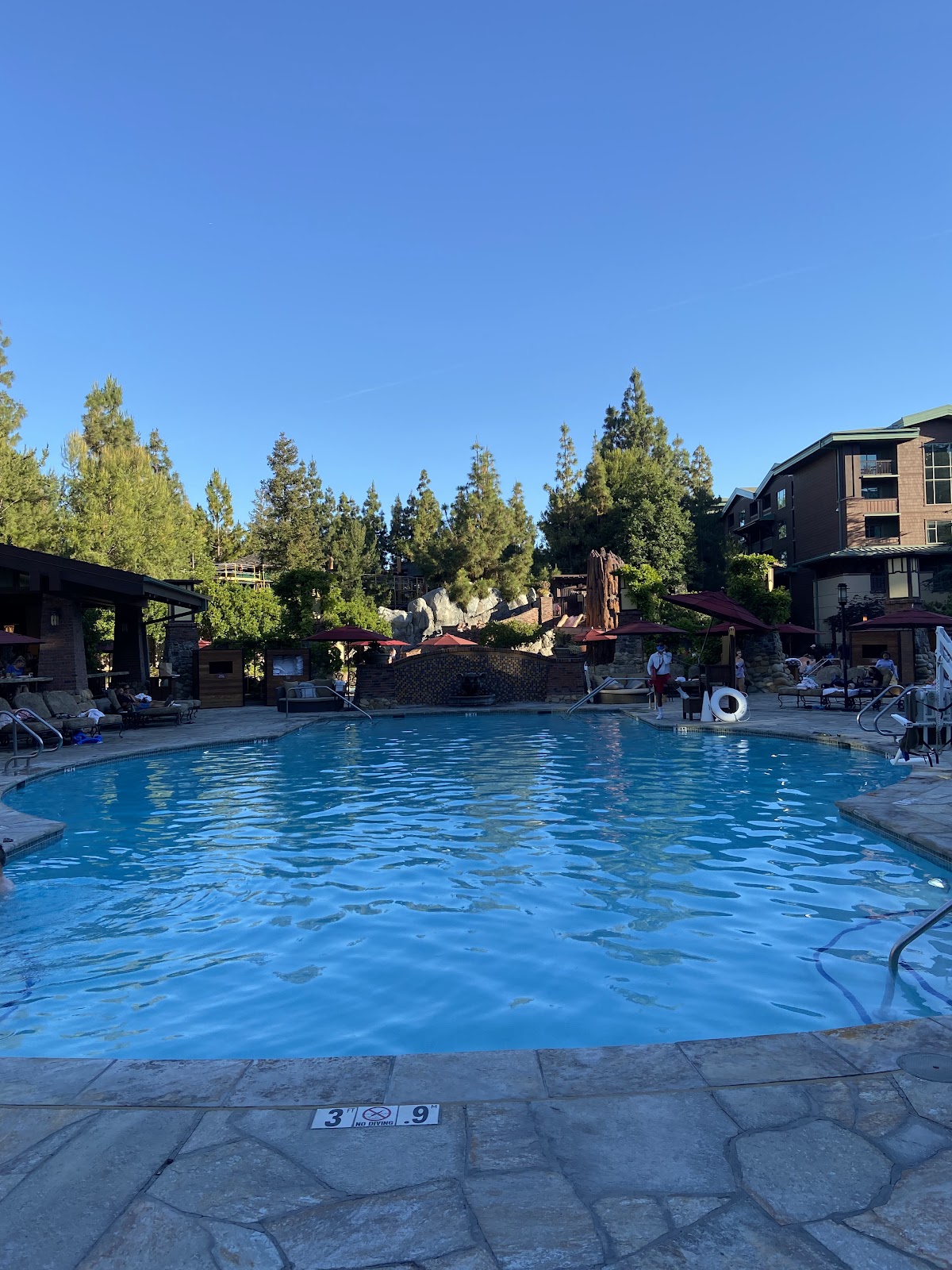
Disneyland Grand Californian, Anaheim: The Building’s Own Logic
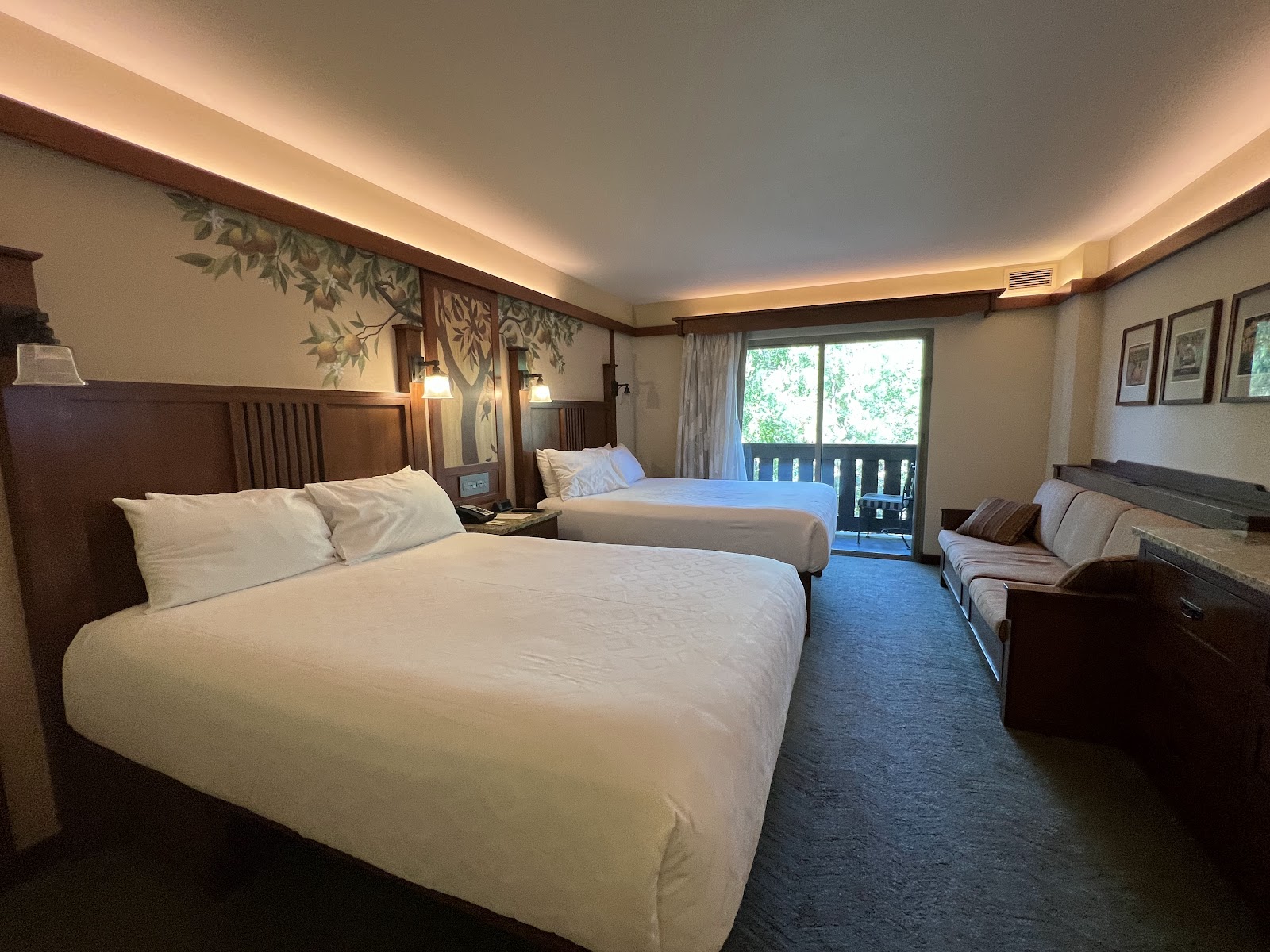
Craftsman architecture is warm, horizontal and absorbent. All three change how it has to be lit.
A hotel built in the Craftsman revival manner has an internal logic that came from a specific set of ideas, and reading those ideas tells a photographer almost everything about how the building will behave.
The style was a reaction against ornament. Its principles were honest materials left visible, structure expressed rather than concealed, horizontal emphasis rather than vertical, and warmth — which in practice means a great deal of exposed timber, heavy beams, joinery shown as joinery, and low broad proportions.
Three photographic consequences follow, and they are consistent through every space in such a building.
Timber absorbs. Where a pale plastered hotel bounces light energetically and fills every shadow, a timber-lined room swallows it — so the ambient is a stop or two lower than it looks, nothing bounces back into a face, and a background two or three metres behind a subject drops away for free. That is a problem of quantity and a gift of separation, at the same time.
The light is warm. Timber reflects the warm end of the spectrum and Craftsman interiors are lit to match, which means everything in such a building sits in amber light — and that is the character of it rather than a fault, but it has to be handled deliberately rather than corrected away.
And art glass is a light source with a colour. Stained and leaded glass is central to the style, and where it occurs the light coming through it is neither neutral nor even: it is coloured, patterned and directional, which makes it either the best light in the building or a cast on a face.
We have not photographed a wedding at the Grand Californian; large Craftsman-revival hotels behave consistently. Which rooms are included, whether the function-room lighting can be dimmed or adjusted, how much daylight reaches the main spaces, what the turnaround between rooms takes, and what the rules are about photography in public areas are questions for their team.
Disneyland Grand Californian at a glance
| Where | A Craftsman-revival hotel in Anaheim, Orange County |
| The logic | Honest materials, expressed structure, horizontal emphasis, warmth |
| The timber | Absorbs: low ambient, no bounce, and free separation |
| The glass | Art glass is a coloured, patterned, directional source |
| Ask first | Rooms included, lighting control, daylight access, photography rules |
Timber, and the great room
The first thing to do in a timber building is measure rather than estimate, because the eye adapts and the meter does not lie. A timber-lined room reads as comfortable and well lit and is frequently a stop or two below what a pale room of the same apparent brightness would be — which means the settings that worked at the last venue are wrong here.
The second thing is to use the absorption. In a pale hotel, separating a subject from the background is work; here it happens by itself. A subject lit by a window or a single source, with timber three metres behind them, has a background two or three stops down with no lighting decision involved. That is the most valuable property of the building and it is free.
The exposure discipline follows from it. A meter looking at a large area of dark timber tries to lift it toward mid-grey, which overexposes the face by a couple of stops. So the metering goes on skin, the work is done in manual, and the timber is allowed to stay dark — which is what makes the frame look like the room.
The third thing is that nothing bounces, which changes how added light behaves. In a pale room a source spills and fills the whole space; in a timber room the light that reaches a face is only the light aimed at it, and it falls off with the square of distance. A source at two metres needs roughly a quarter of the output of the same source at four, which is an argument for working close — and close is also softer relative to the subject.
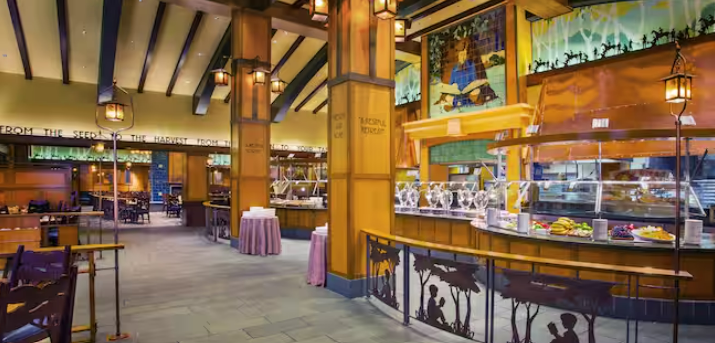
A large Craftsman great room is the signature space of such a building and it is a specific problem. It is tall, which means the ceiling is out of reach as a bounce surface: a flash aimed five or six metres up returns almost nothing, and what returns is coloured by the timber. It is dim, because the material absorbs. And it is warm, because everything in it is.
The approach that works is the ballroom approach applied to a lobby. Expose the ambient for the room rather than for the faces — about a stop or a stop and a half under what skin needs — so the space keeps its own depth and its fittings keep their presence, then add one source for the faces, gelled warm to match, set just above what the ambient gives the skin, and diffused or bounced off a nearby pale surface where one exists.
The white balance goes to the gel rather than to daylight. And the instinct to fix a dim warm room by raising sensitivity until it is bright is the thing to resist: it produces a flat, orange, characterless picture of the most characterful room in the building.
Horizontal emphasis is the last part of the logic and it affects composition rather than exposure. Craftsman spaces are broad and low, with long beams, deep eaves, banded windows and wide fireplaces — which means horizontal framing suits them and vertical framing fights them. A wide frame that uses the full breadth of a beam or a window band reads as the architecture intends; a tall frame in the same space reads as cramped.
It also means that strong horizontal lines are everywhere, so an out-of-level camera is immediately obvious. Square and level, checked rather than assumed.
Art glass, windows, and the Orange County day
Art glass is where the style is most generous to a photographer and it needs handling on its own terms.
Light through stained or leaded glass is coloured by the glass, which means a subject standing in it is lit in whatever colours the window happens to be. That can be extraordinary — a band of amber or green light across a face in an otherwise dark timber room is a frame that no equipment reproduces — and it is completely wrong if the colour lands where it is not wanted.
The controls are position and choice. The patch of coloured light moves as the sun does, so a position half a metre either way changes what falls where, and the decision is whether the colour crosses the face or falls behind it on the timber. Both are legitimate; the accident is not.
The white balance question has a clear answer here and it runs against the instinct. Do not correct coloured light out. The colour is the subject, and a white balance set to neutralise it destroys the frame while making the rest of the room look wrong. Set the balance for the room’s general light, let the coloured patch be coloured, and place it deliberately.
Leaded glass also has a pattern, which means the light through it is broken into shapes with hard edges. On a wall that is beautiful; on a face it is a bright band across one eye and a dark one across the other, and it is not correctable. The test is the universal one: look at the face rather than the surroundings, and any hard edge on skin means move.
Ordinary windows in a Craftsman building are banded and relatively low, because the style favours breadth over height. That has a real consequence: the light comes in at a lower angle and travels less far into a room than a tall window’s does, so the usable band by the glass is narrower. A metre is the working distance, and drifting to two loses much more here than it does in a building with tall sash windows.
The standard window rules still apply and both are free. Turn the room lights off, because warm bulbs mixing with cool daylight put two colours on one face and no white balance renders both. And set a custom white balance on a face in position, because in a timber building even the window light has picked up warmth from the reveals it passes.
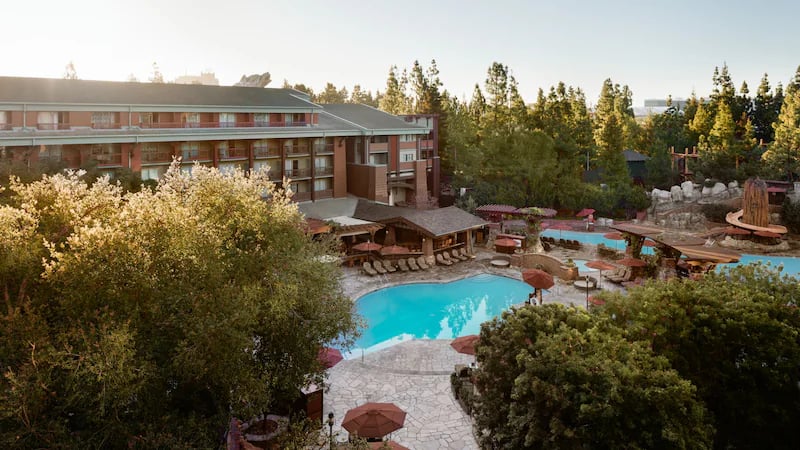
Outside, this is inland Orange County and the light is the hard, dry, reliable southern California kind: strong, high, contrasty, with hard-edged shadows and a face half in sun that is unrecoverable. A Craftsman building’s deep eaves and covered porches are the answer, and they are generous — the style’s wide overhangs exist to shade the walls, which means they shade people too.
A deep eave or porch blocks the overhead component, restricts the light to a horizontal band that models a face properly, and bounces off the decking to fill from below. It cannot dapple, it works at any hour of any day, and there is usually one facing whichever way is needed. Two or three metres in from the open edge is the working position.
The exterior exposure trap runs the opposite way to the interior one: bright pale paving and open sky make a meter underexpose a shaded face, where the timber indoors makes the same meter overexpose. A day that moves between the two needs the metering corrected in both directions within minutes, which is exactly what automatic exposure cannot do.
And the transition itself is the thing that catches people. Stepping from a dark warm timber interior into hard bright Orange County sun is a four or five stop change and a colour change at once, in the space of a few paces. Resetting exposure and white balance at each crossing, rather than once at the start of the day, is the whole discipline of working this kind of property.
- Measure the ambient — timber rooms are a stop or two darker than they look
- Meter on skin and let the timber go dark; that is the picture
- Expose the great room a stop under, then add one close warm-gelled source
- Place coloured glass light deliberately; never correct the colour out
- Horizontal framing suits the style; vertical framing fights it
The Orange County year
Inland Orange County has a mild, dry, marine-moderated climate with a small annual range, which makes the year a matter of cloud and light angle rather than of temperature — and for a hotel wedding it makes the calendar almost irrelevant to whether the day works.
The wet season runs roughly November through March and it is short and concentrated: a small number of substantial storms rather than steady rain, so the odds on a given winter date are good. For an indoor wedding it hardly matters at all, which is one of the strongest arguments for a building of this kind.
What rain gives is a set of exterior conditions that solve every outdoor problem at once: soft even light, no dappling under any eave, saturated timber, wet paving that mirrors the building, and no squinting. A grey day at a timber building is better than a bright one, because the material’s warmth reads rather than being overwhelmed by contrast.
Winter is also the clearest season in this basin, and that is the seasonal point worth knowing. Rain scrubs the air, so the days after a front are the sharpest of the year — which matters for any exterior frame with distance in it, and which is when the mountains inland are visible at all.
The December sun at this latitude reaches only about thirty-four degrees above the horizon, so the whole short day rakes rather than floods. Outdoors that removes the hard-light problem and models every beam, bracket and shingle on a Craftsman exterior, which is the architecture at its most legible. Indoors it is decisive: a low sun enters even a banded window almost horizontally and reaches further into a timber room than a summer sun ever does, which widens the narrow usable band by the glass considerably.
For a dark timber building, December light is the best of the year, and almost nobody chooses a date for it.
Spring is mild, comfortable and increasingly clear, with the hills around the basin green only in the wet half of the year. It is the most straightforward season for combining indoor and outdoor coverage.
Late spring and early summer bring the grey mornings that visitors never expect: through May and June the marine layer is persistent and frequently does not clear until midday, and it is consistent enough that people here have names for it. Photographically it is a gift — even soft light, no dappling, no hard patterns through leaded glass, and an easy morning outdoors.
High summer is hot, bright, hazier than winter, and entirely predictable, which makes it a scheduling season rather than a technical one. Inland Orange County runs warmer than the coast a few miles west, so a party in formal clothes outdoors in July feels it — and a deep-eaved Craftsman porch is genuinely cooler as well as better lit.
September and October are the warmest and clearest months and the best overall: long low light, minimal marine layer, and air well clear of summer’s haze.
Autumn is also the peak of southern California’s fire season and of its dry offshore winds, and both belong in a planning conversation rather than a footnote. Offshore wind days are hot, extremely dry and the clearest air of the whole year — photographically exceptional and physically uncomfortable, with wind strong enough that a lightstand outdoors is a liability. Smoke, when present, turns the sun orange and flattens contrast in a way no white balance resolves.
Autumn colour is not a feature in a largely evergreen region, and what little deciduous planting turns does so through late November and December, later than almost anywhere else in this guide.
More frames from Disneyland Grand Californian
Disneyland Grand Californian wedding photography: common questions
What does a timber interior do to the exposure?
It absorbs. The ambient is a stop or two lower than it looks, nothing bounces back into a face, and a background three metres behind drops away for free.
Why work in manual here?
Dark timber makes a meter overexpose a face by a couple of stops, and bright Orange County sun outside makes the same meter underexpose. Both within minutes.
How should a large dim great room be lit?
Expose the ambient about a stop under what faces need so the room keeps its depth, then add one close warm-gelled source just above skin level.
What about stained glass light?
Place it deliberately — across the face or behind it on the timber — and never correct the colour out. The colour is the subject.
Why is the window band narrower here?
Craftsman windows are broad and low rather than tall, so the light enters at a lower angle and travels less far into the room. A metre is the working distance.
When is the building best lit?
December. A low sun enters even a banded window almost horizontally and reaches further into a timber room than a summer sun ever does.
More California venue guides
We are writing a photographer’s guide to every venue we would happily shoot in California. Here are three more, plus the full index:
- Fairmont San Francisco: The Building’s Own Logic
- Ferrari-Carano Vineyards, Healdsburg: The Site’s Own Logic
- Four Seasons Westlake Village: The Problem, and Four Ways Out
Planning a wedding at Disneyland Grand Californian?
A warm, absorbent building with its own rules. Tell us your date.