 Park Hyatt Aviara, Carlsbad: The One Decision That Governs Everything
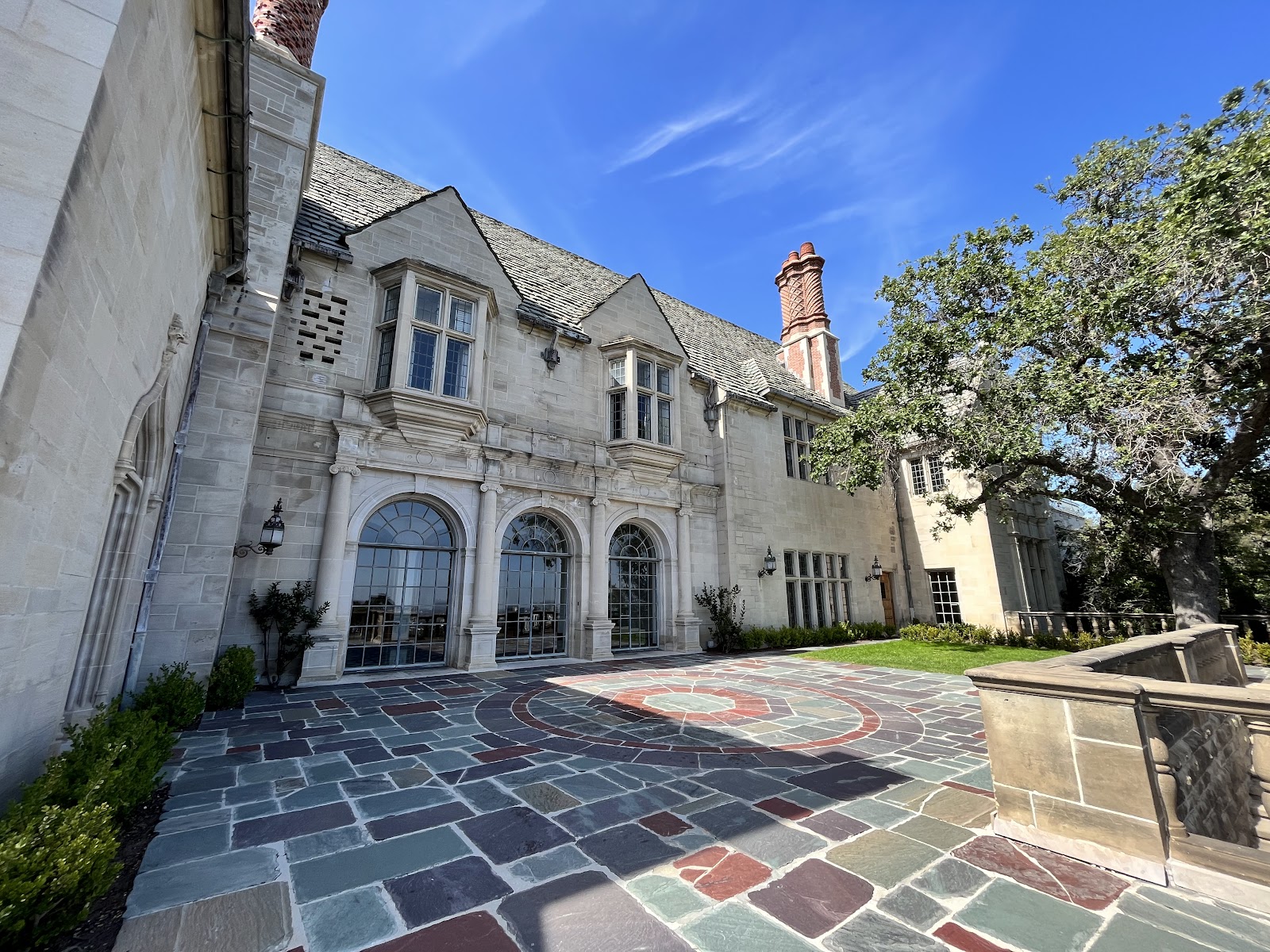
Greystone Mansion, Beverly Hills: A Walk Through the Site
Grey stone absorbs where pale stone bounces. In this city that is the whole difference.
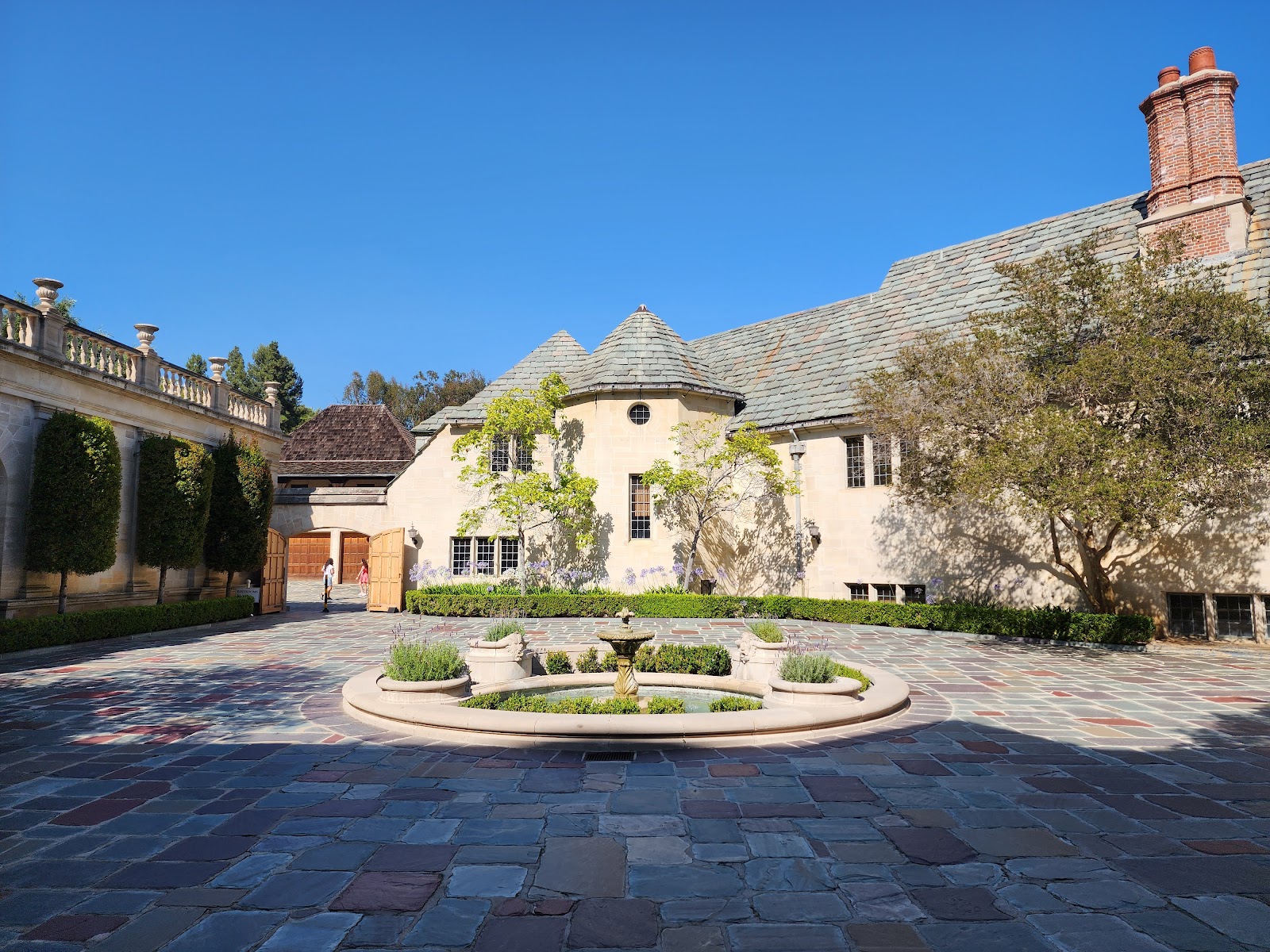
This is a walk through the site in the order a wedding day tends to use it, and the reason to walk it rather than list it is that the building and the gardens behave in opposite ways.
The governing material is the stone, and it is unusual for southern California. Most of the built fabric in this city is pale — stucco, light stone, white render — which bounces light energetically and makes shaded positions bright. Grey stone does the reverse: it absorbs, which means a grey stone wall behind a subject reads dark and gives separation for free, and a grey stone courtyard is a considerably darker place than a pale one.
That single fact runs through everything. Exposures indoors are lower than they look. Exteriors in the building’s shade are darker and cooler than exteriors ten metres away on pale paving. And backgrounds are available here that simply do not exist at most Los Angeles venues.
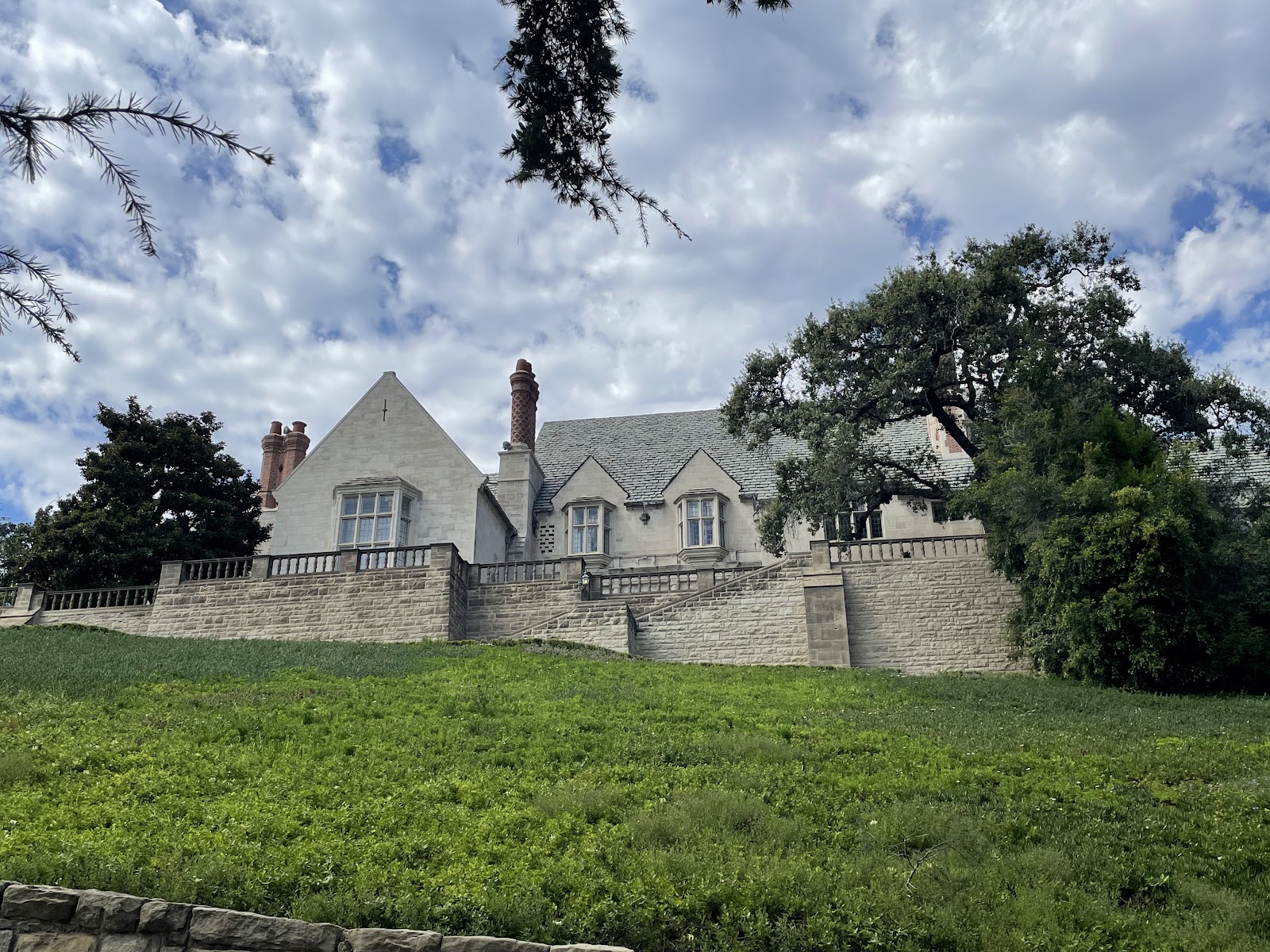
The second element is the hillside. A terraced garden on a slope above the city has retaining walls, steps, level changes and balustrades — which give architectural framing everywhere, and which mean the ground is rarely level and the paths climb.
The third is the orientation. A hillside property looking out over the basin means long views on one side, a slope rising behind on the other, and a sun that leaves the lower terraces before it leaves the upper ones.
We have not photographed a wedding at Greystone Mansion; stone revival houses with terraced gardens behave consistently. Which rooms and terraces are available, what permits and guest limits apply, whether interior spaces can be used and under what conditions, the covered alternative, and the rules about photography and equipment are questions for the site’s administrators — and those answers shape a day here considerably more than anything below.
Greystone Mansion at a glance
| Where | A terraced hillside estate above Los Angeles, in Beverly Hills |
| The stone | Grey, and it absorbs — dark backgrounds and lower exposures |
| The gardens | Terraced and formal: framing everywhere, level ground nowhere |
| The views | Over the basin on one side, slope rising on the other |
| Ask first | Rooms and terraces available, permits, guest limits, equipment rules |
The house: stone, windows, and openings
Start at the house, because its interiors are the least weather-dependent part of the site and because their behaviour is consistent.
A revival house of this period has tall mullioned windows in deep stone reveals, high ceilings and dark panelled or stone-lined rooms — because it was designed before artificial light was useful, and because the style calls for heavy materials. That combination gives the single best portrait condition in any historic building: horizontal light entering at head height, falling off steeply into a dark room.
The working position is a metre from the glass with the subject turned about forty-five degrees to it. That gives a lit side, a shadowed side and a gradient between — real modelling — and a background three or four metres further back that sits two or three stops down without anything being done to it. The catchlight is the diagnostic: broad and low on the window side of each eye means the geometry is right.
Two free rules. Turn the room lights off, because warm bulbs mixing with cool daylight put two colours on one face and no white balance renders both. And set a custom white balance on a face in position, because window light is the colour of whatever is outside — and here that is frequently grey stone, which is neutral, or foliage, which is green.
Mullions are the specific feature of this style and they cut the light into vertical bands. That is an asset used deliberately: a subject positioned so a band of light falls across them and the mullion’s shadow falls behind is a strong frame. It is a problem ignored, because a mullion shadow across an eye is not correctable. Half a metre either way is the whole difference.
Direct sun through a mullioned window is the one thing that breaks the position, because it lands as hard geometric shapes and the pattern on skin is unusable. A sheer curtain turns the window into a diffuser where one exists; where none does, a north-facing window or a shaded one is the answer.
Metering indoors here needs stating because grey stone misleads in the opposite direction to pale stucco. A meter looking at a dark stone or panelled room tries to lift it toward mid-grey, which overexposes the face by a couple of stops — so the metering goes on skin, in manual, and the room is allowed to stay dark. That near-black is the picture rather than an error.
Where a source is needed indoors, one warm-gelled light at about a stop above the ambient, with the white balance set to the gel, does more than three. High ceilings mean the ceiling is not a usable bounce surface; a nearby pale wall, where one exists, is.
Openings in stone are the other gift and they are the most dependable positions on the whole property. A doorway, arch or loggia in a thick stone wall restricts daylight to a horizontal band that models a face the way a window does, and unlike any tree it cannot dapple — which means it works at any hour of any day. Two or three metres in from the opening is the working distance, and a catchlight high in the eye means step back.
And the courtyards and terraces immediately against the house are the transitional ground. They are in the building’s shade for part of the day, which combined with grey stone makes them noticeably darker and cooler than the open garden — so the exposure and white balance both change on crossing from one to the other, and resetting at each transition rather than once at the start is the discipline of working a property like this.
The gardens, the terraces, and the view
Out in the gardens the material changes and the rules change with it.
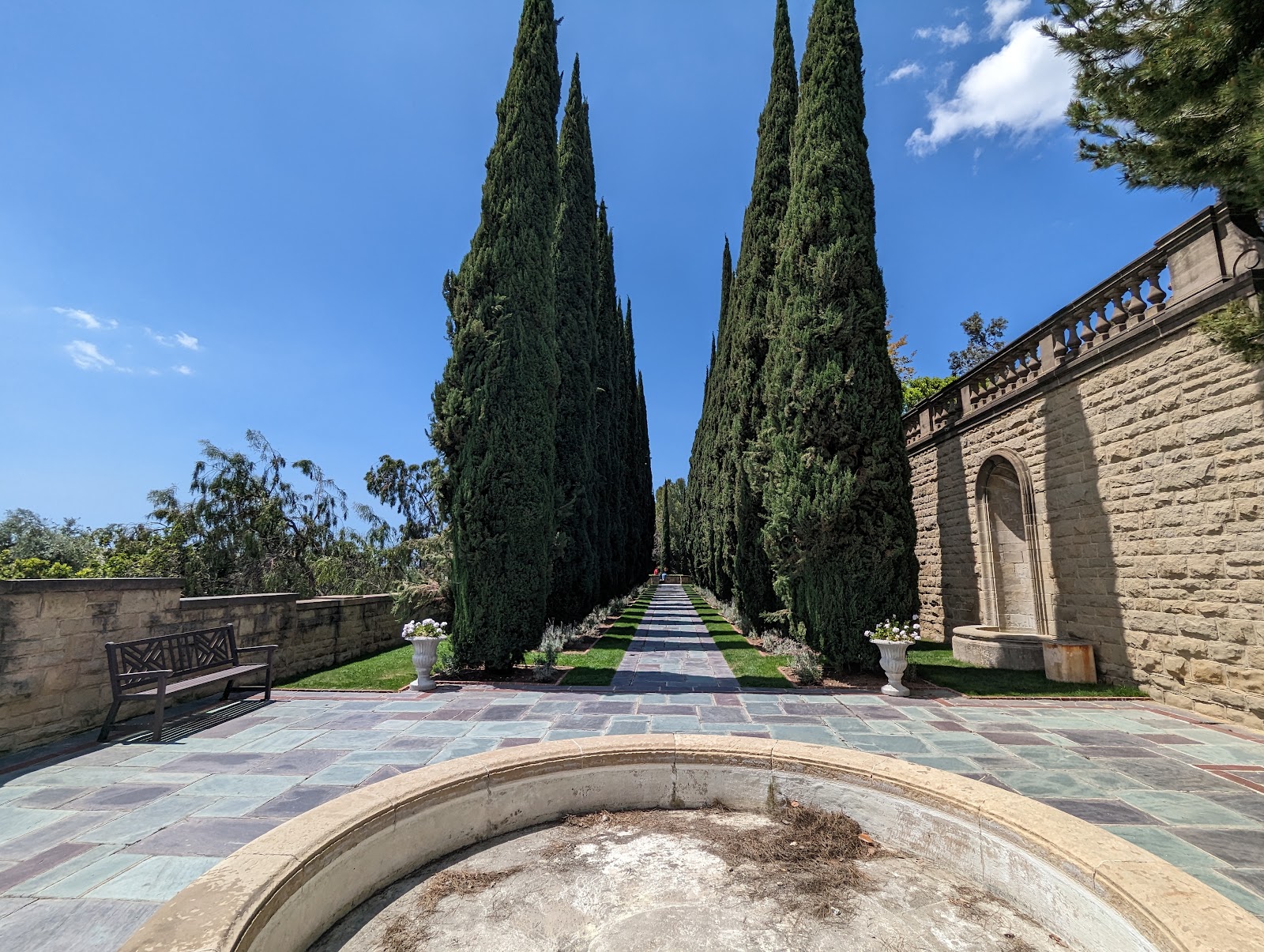
Formal terraced gardens are open by design, because the point of them is the sightline and the level change. That means very little overhead cover: clipped hedges are chest to head height and shade nothing, balustrades and steps shade nothing, and the planting is arranged to be looked over rather than sheltered under.
So the garden is a morning and evening proposition, and in the middle of a bright southern California day it is an exposed one. Direct sun here is strong, high and dry: hard-edged shadows, dark eye sockets, and a face half in sun that is unrecoverable rather than awkward.
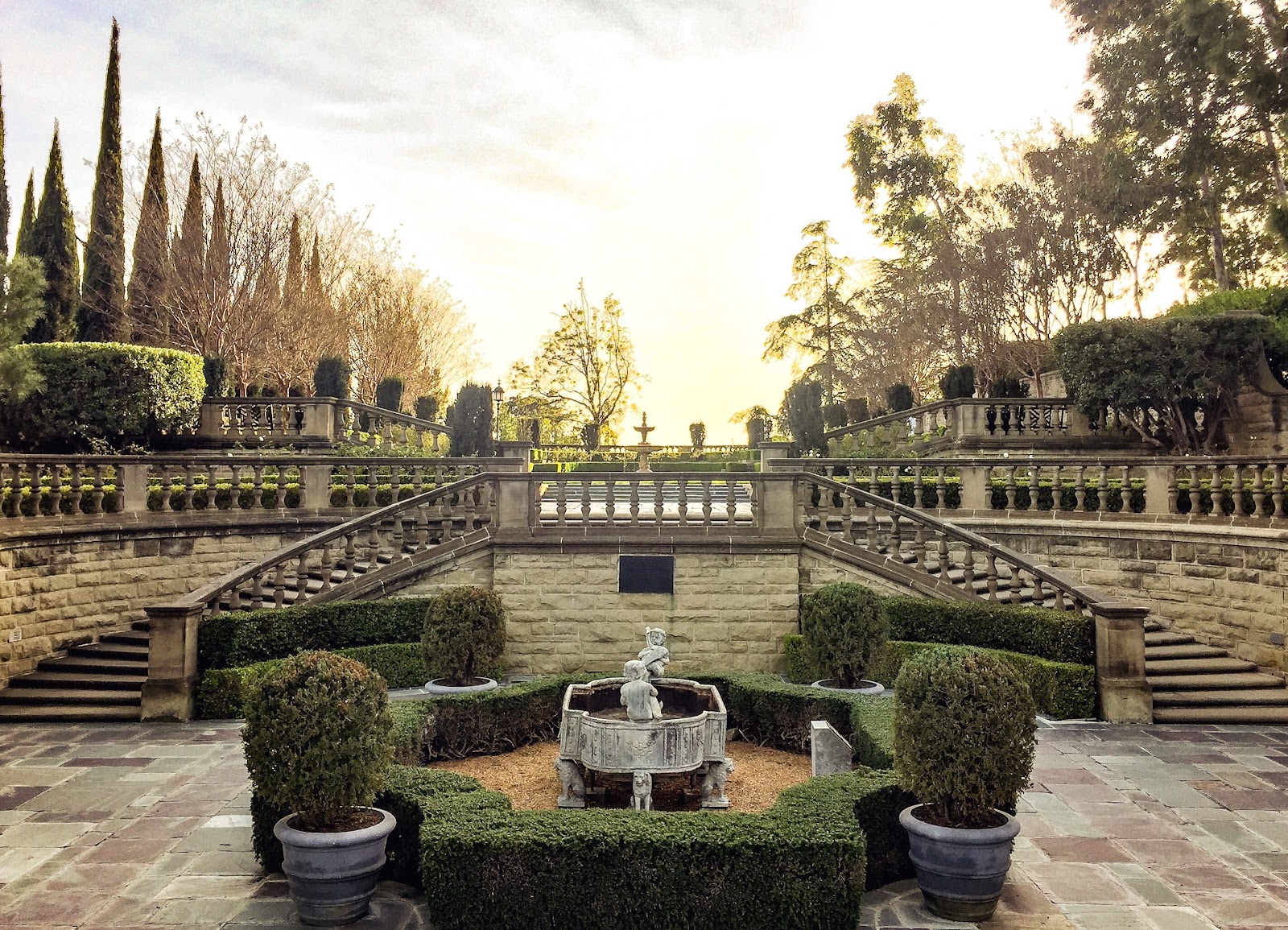
What the terraces give in exchange is framing and geometry. Retaining walls, balustrades, staircases, arches and pergola structures are all apertures and lines, and each of them isolates a subject or leads the eye. A couple on a stone stair between two walls, or seen through a balustrade, has the surround that open garden ground never provides.
The stairs in particular are the best positions in a terraced garden and for the same reasons a ceremonial stair works indoors: height without equipment, a frame on both sides, and a subject on a different level from everyone else.
Geometry demands the camera be square. Formal gardens are full of strong horizontals and verticals, and on sloping ground the instinct to level to the slope rather than to gravity is easy to follow by accident — which makes an out-of-level frame glaring against a balustrade.
Hedges are the best free background in a formal garden: dense clipped evergreen is a dark, even, textureless mass two or three stops under a subject. A meter looking at one overexposes the face, so skin metering applies outdoors as much as in — and within one afternoon here the correction runs both ways, dark against hedges and stone, bright against pale paving and open sky.
Where mature trees exist they are the only real shade, and in this part of the city that usually means broad evergreen canopy — which blocks properly rather than filtering. Under any tree the test never changes: look at the face rather than the ground, and a bright patch on skin means move a metre.
Water is worth using deliberately. A still formal pool doubles whatever is composed above it and gives the most characteristic frame a terraced garden offers — and it is a horizontal reflector, throwing light upward into a face standing beside it, filling the shadows a high sun carves. The caution is uplight under the chin, which something solid on one side corrects. A reflection runs about a stop darker than what it reflects, which matters when metering.
The view over the basin is the site’s wide frame and it needs the right handling. A wide lens gives a thin band of distant city above a great deal of garden, which loses it. A longer lens compresses the city into layers behind the couple — and in this basin the haze varies enormously, so that frame is sharp in winter after a front has passed and soft on a summer afternoon.
The exposure for it goes on the distance with the faces lifted by a close warm-gelled source, because metering on skin gives a white sky and a washed-out city. Close matters because a terrace bounces some light but not much.
Timing outdoors is set by the slope. On a hillside above a city, the lower terraces lose the sun before the upper ones, which means shade arrives in stages rather than all at once and a position that is lit at five is shaded at half past. The interval that follows is the reward: a couple in soft even light with the city and the upper terraces still lit behind them, for twenty or thirty minutes.
The practicalities are the ordinary ones of a hillside estate and they matter. Terraced paths and steps mean a party in formal shoes moves slowly, so three positions close together produces more than six spread across the slope. A publicly administered historic property is likely to have restrictions on equipment, on access to interiors, and on how many people may be where — which is a set of questions to resolve early rather than on the day.
- Grey stone absorbs: meter on skin, let the room and the walls go dark
- A metre from a mullioned window at forty-five degrees, room lights off
- Stone openings cannot dapple — the most dependable positions on site
- Stairs and balustrades give the framing that open garden ground does not
- Longer lens for the city; reset exposure and white balance at each transition
The Los Angeles year
This city’s year is a matter of cloud and light angle rather than temperature, and a hillside stone property experiences it in a particular way.
The wet season runs roughly November through March and it is concentrated: rain comes in a small number of substantial storms rather than steadily, so the odds on a given winter date are reasonable. A covered alternative still matters for an outdoor ceremony on open terraces.
What rain gives here is better than at most venues, and it is the stone. Wet grey stone darkens and saturates, the texture of it comes forward, and terraces become mirrors — while the light is soft and even with no dappling anywhere and no hard patterns through the mullions. A grey day at a grey stone house is the condition it looks best in, and it is worth presenting to a couple that way.
Winter is also the clearest season in this basin, which is the important seasonal point for a property with a view. Rain scrubs the air, so the days after a front are the sharpest of the year — when the mountains behind the city are visible and when the long compressed view holds real detail. A summer afternoon here is hazier than people expect.
The December sun at this latitude reaches only about thirty-four degrees above the horizon, so the whole short day rakes rather than floods. Outdoors that removes the hard-light problem and models every stone surface, every step and every balustrade. Indoors it is decisive: a low sun enters a tall window almost horizontally and reaches three or four metres into a deep room rather than one, which widens the whole usable area near the glass. The house is better lit in December than in June.
Spring is mild and green — the hills around the basin are green only in the wet half of the year — and the gardens are at their fullest through late spring. It is the most comfortable season and the most reliable for combining house and garden.
Late spring and early summer bring the grey mornings that visitors never expect: through May and June the marine layer is at its most persistent and frequently does not clear until midday. Photographically that is a gift — soft even light, no squinting, no mullion patterns, and a garden that works at any hour.
High summer is hot, bright, hazy and entirely predictable, which makes it a scheduling season rather than a technical one: morning, late afternoon, or in the house. Grey stone helps here, because the building’s shade is genuinely cool where a pale-walled courtyard would be a glare.
September and October are the warmest and clearest months and the best overall: long low light, minimal marine layer, and air that has left summer’s haze behind.
Autumn is also the peak of southern California’s fire season and of its dry offshore winds, and both belong in a planning conversation. Offshore wind days are hot, extremely dry and the clearest of the entire year — photographically exceptional and physically uncomfortable, with wind strong enough that a lightstand on an open terrace is a liability. Smoke, when present, turns the sun orange and flattens contrast in a way no white balance resolves.
Autumn colour is modest in a largely evergreen city, but deciduous planting in a garden of this kind turns through late November and into December — considerably later than most of this guide — and yellow foliage against grey stone is one of the strongest combinations the property offers, precisely because the stone is dark enough to hold it.
More frames from Greystone Mansion
Greystone Mansion wedding photography: common questions
What is different about grey stone?
It absorbs where most Los Angeles building material bounces. That gives dark backgrounds and free separation, and it makes every exposure lower than it looks.
What is the best indoor position?
A metre from a tall mullioned window, turned about forty-five degrees to it, with the room lights off. The fall-off into a dark room does the separation.
What about the mullion shadows?
Used deliberately they are a strong frame; across an eye they are uncorrectable. Half a metre either way is the whole difference.
Where is the shade in the gardens?
In stone openings, under mature evergreen canopy, and nowhere else. Formal terraces are open by design and hedges shade nothing.
How should the city view be photographed?
On a longer lens, exposed for the distance with the faces lifted by a close gelled source. Haze varies hugely — winter after a front is sharpest.
When does the property look best?
On a rainy day, when wet grey stone saturates — and in December, when a low sun rakes the terraces and reaches deep into the rooms.
More California venue guides
We are writing a photographer’s guide to every venue we would happily shoot in California. Here are three more, plus the full index:
- Hakone Gardens, Saratoga: The Problem, and Four Ways Out
- Hotel del Coronado, Coronado: Field Notes
- Montage Laguna Beach: The Light Through the Day
Planning a wedding at Greystone Mansion?
Grey stone in a bright city. Tell us your date and we will walk the terraces.