 Park Hyatt Aviara, Carlsbad: The One Decision That Governs Everything
Hotel del Coronado, Coronado: Field Notes
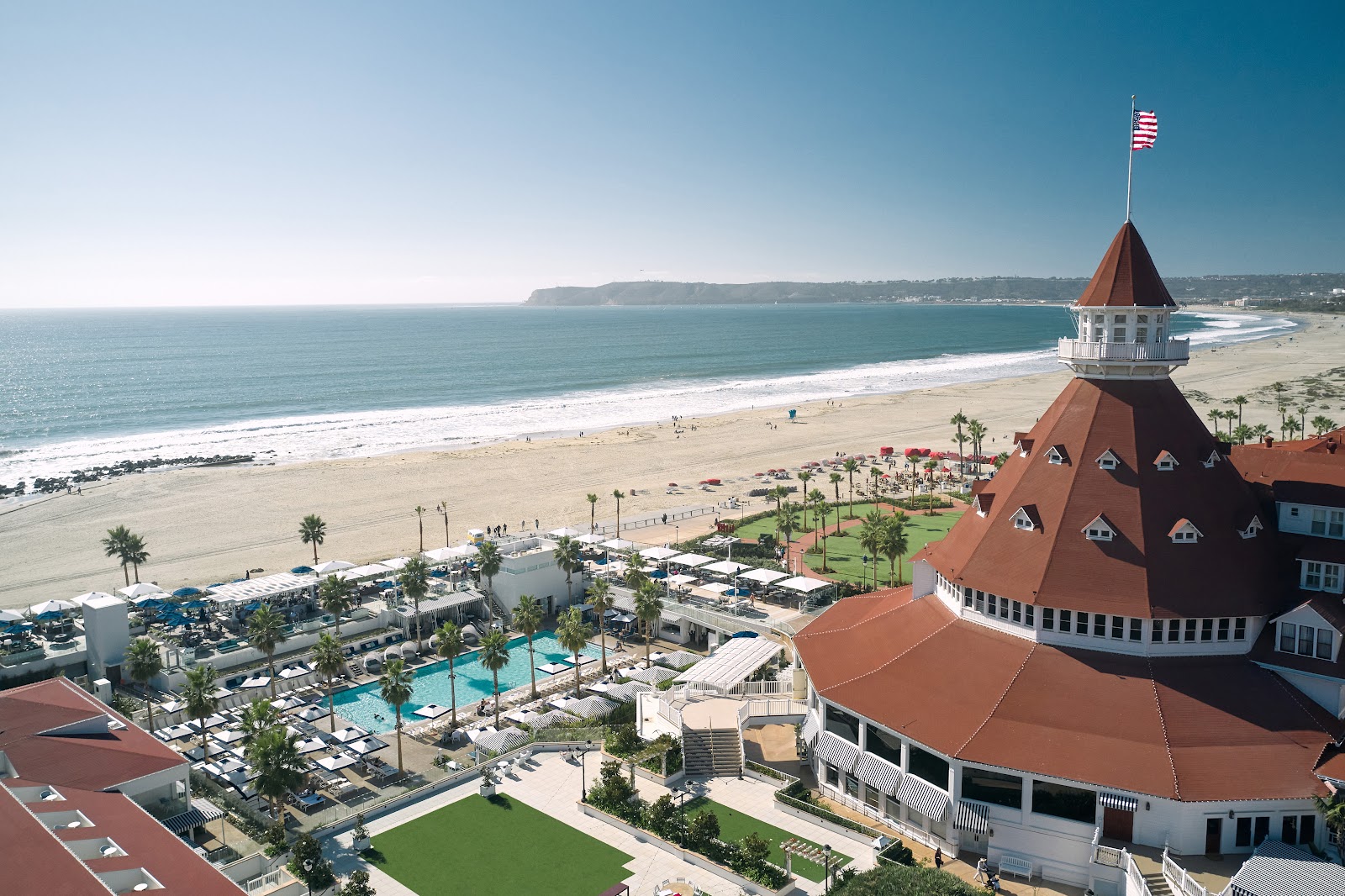
White timber and pale sand are the two brightest surfaces in this guide. Every meter on site is wrong.
These are field notes on a Victorian seaside hotel, and the first note is the one that governs every exposure on the property: almost every surface here is bright.
White-painted timber on a large scale is the most efficient reflector in built architecture. Pale dry sand is the most efficient one in a natural landscape. And the ocean is a horizontal mirror that doubles the sky. A site with all three is several stops brighter overall than a stone or brick venue, and it reads high-key whether or not anyone intends it to.
That produces two exposure traps and they run in the same direction. A meter pointed anywhere on this property tries to pull those bright surfaces toward mid-grey, which underexposes everything and gives grey buildings, grey sand and dark faces — the single commonest failure at beach and white-timber venues. And within the same frame the brightest part can be four or five stops above a shaded face, which is more than one exposure holds.
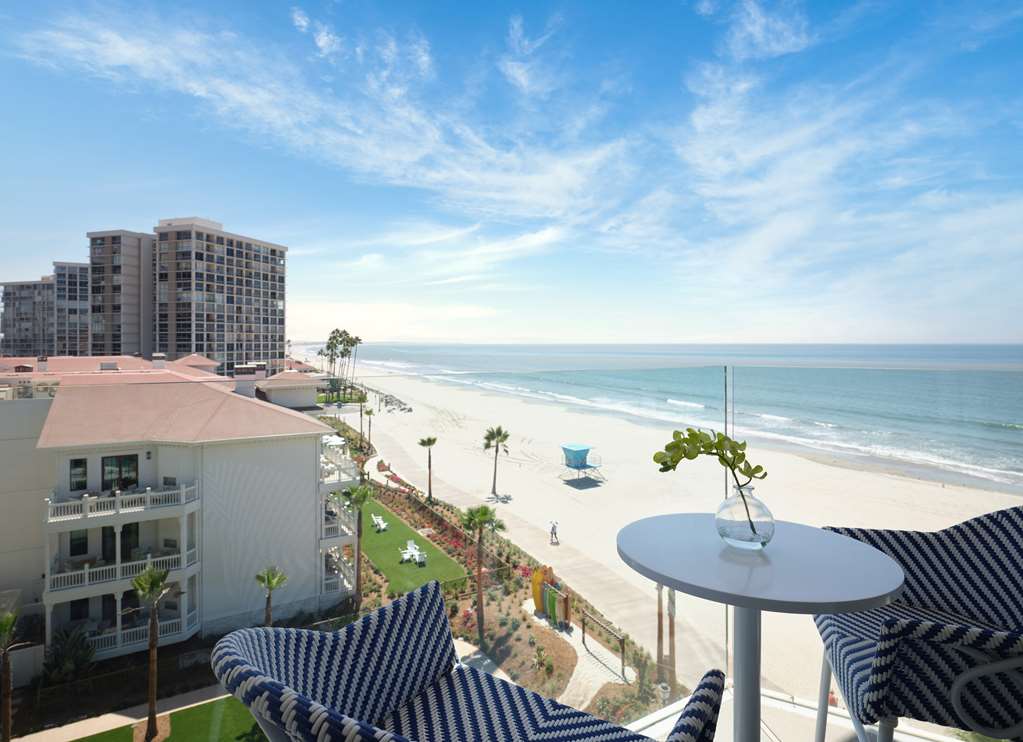
The second note is the orientation, and on this coast it is the good news. The beach faces roughly west into the open Pacific, which means the sun sets over the water and the last hour of the day is backlit and unobstructed — the strongest reliable light the site receives, available almost every clear evening of the year.
The third note is that a building of this period and scale has deep verandas, tall windows and a substantial timber interior, which gives it a complete set of weather-independent positions. That matters more than it sounds at a venue whose reputation rests on its beach.
We have not photographed a wedding at the Hotel del Coronado; large Victorian timber seaside hotels behave consistently. Which rooms, verandas and beach areas are included, what permits apply to the beach itself, the covered alternative, and whether the function-room lighting can be adjusted are questions for their team.
Hotel del Coronado at a glance
| Where | A Victorian timber hotel on a west-facing beach at Coronado, San Diego |
| The problem | White timber, pale sand and ocean — every meter underexposes |
| The solution | Manual, metered on skin, deliberately brighter than the camera says |
| The gift | A west-facing beach: backlit last hour, almost every clear evening |
| Ask first | Areas included, beach permits, covered alternative, lighting control |
The white building: the problem, and the solution
The problem with a large white-painted building is that it misleads the camera and flatters the eye at the same time, which is why it goes wrong so consistently.
Sunlit white timber can sit four or five stops above a face standing in the building’s shade, and a meter averaging the two lands somewhere in the middle — producing a building that is grey rather than white and a face that is dark rather than lit. Both errors are in the same frame and neither is what anyone saw.
The solution is a habit rather than a technique. Meter on skin, work in manual, and deliberately expose brighter than the camera suggests — often by a stop or more when a lot of white is in frame. The check is the highlights: white timber should read as white with texture in it, not as grey, and not as a featureless blank.
The second half of the solution is to use the white rather than fight it. A large sunlit white wall is one of the best soft sources available anywhere: a subject in the building’s shade facing that wall gets soft, directional, neutral light with real modelling, for nothing. It is neutral in colour too, which is a genuine advantage over stone or timber — no white balance correction needed for the bounce itself.
The working position is on the shaded side, facing the lit wall, with darker shaded timber behind the subject. That gives light in front and separation behind. The same position used backwards — facing away from the lit wall — gives flat light and a bright background, which is the standard way to waste the best resource on the property.
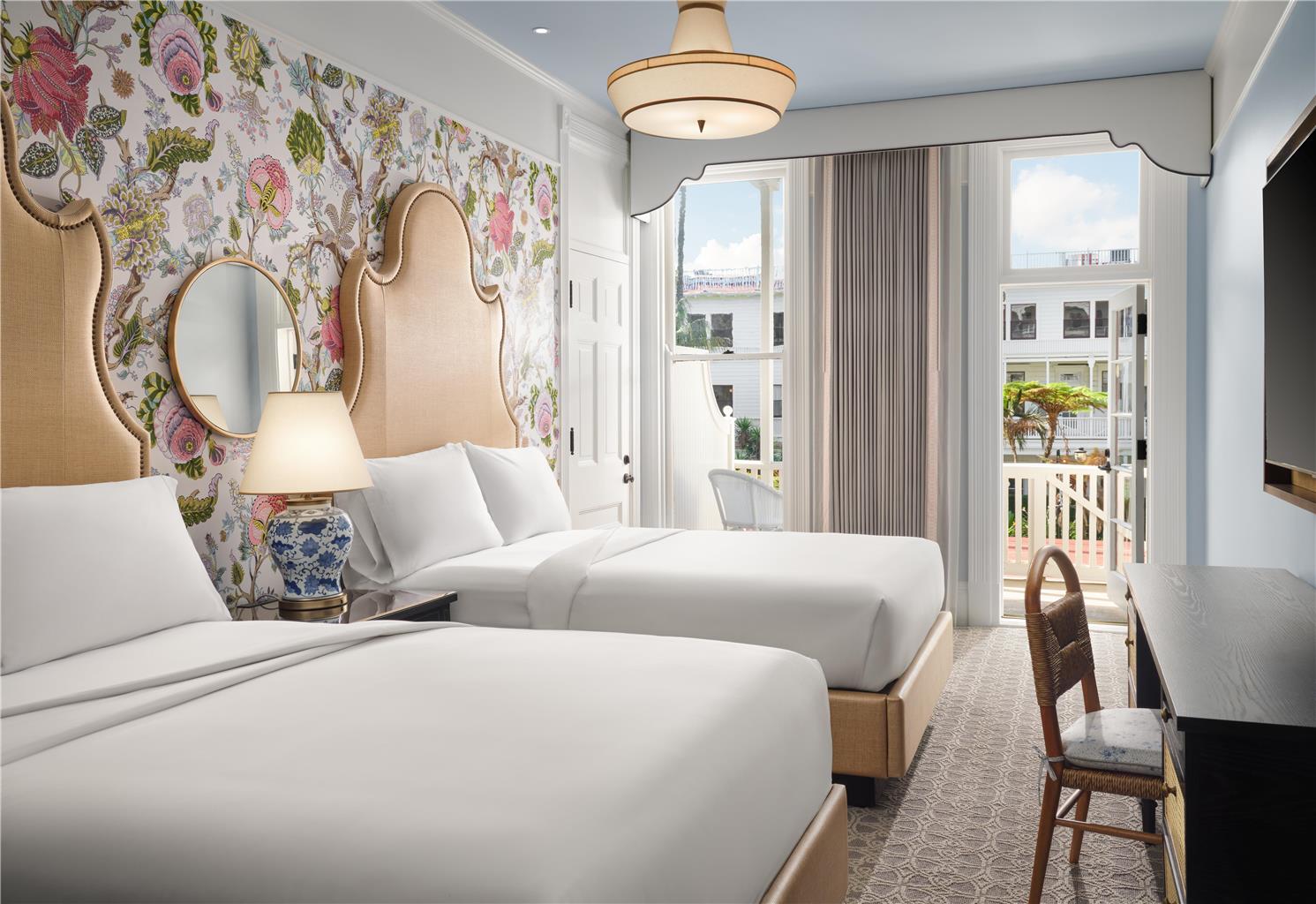
Verandas are the building’s other gift and they are the most reliable positions on site. A deep veranda with a solid roof blocks the overhead component, restricts the light to a horizontal band that models a face properly, bounces off a white-painted ceiling above and pale decking below, and cannot dapple. It works at any hour of any day, and on a large building there is one facing whichever way is needed.
The white-painted ceiling is the specific reason a veranda here is better than a veranda elsewhere: it acts as a large overhead-forward source once light bounces into it, which fills the eye sockets that an open-sky position leaves dark. Two or three metres in from the open edge is the working distance, and the catchlight confirms it — low and broad means the veranda is doing the work.
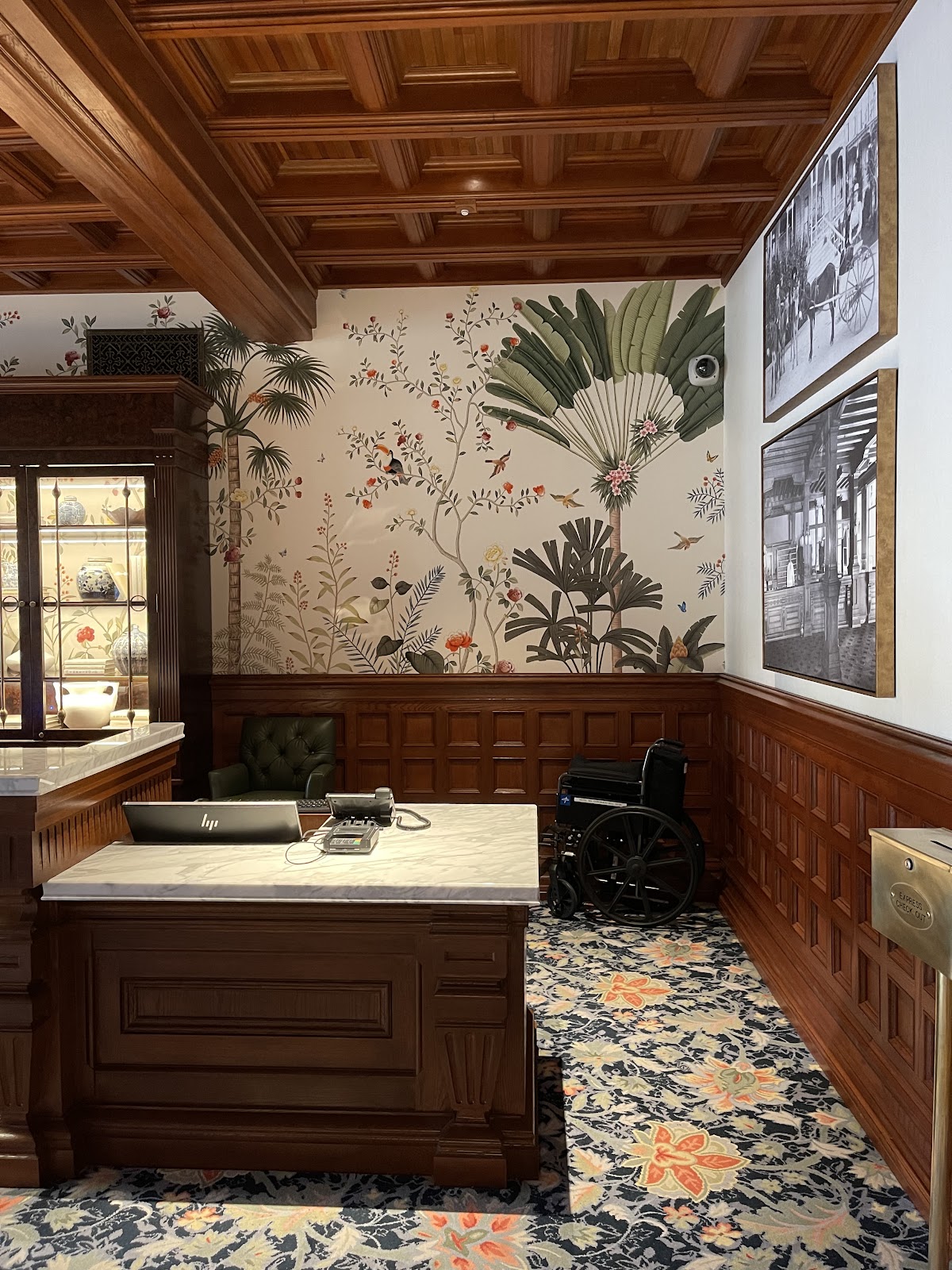
Indoors, the rules invert. A Victorian timber interior is dark: heavy joinery, panelling and deep rooms, which absorb rather than bounce and sit a stop or two below what the eye estimates. So the metering correction runs the other way — a meter looking at dark timber overexposes the face by a couple of stops — and a day that crosses between a white exterior and a timber interior needs the correction reversed within a few paces.
That inversion is the single most useful thing to know about working this kind of building, and it is why automatic exposure cannot hold a day here.
The compensation indoors is steep fall-off: a background three metres behind a subject drops away for free, so separation is available without equipment. And tall windows in deep rooms give the best portrait light in the building — a metre from the glass, turned about forty-five degrees to it, room lights off, with a custom white balance set on a face in position because a window facing the ocean delivers cool light and one facing a sunlit white wall delivers bright neutral light.
The beach: the problem, and the solution
The problem on a beach is that everything is bright, nothing gives shade, and the reflector is under the subject rather than in front of them.
Dry pale sand bounces a great deal of light upward. That fills the shadows a high sun carves under eyes and chins, which is genuinely useful — and it lights the underside of the chin and the brow, which is the characteristic unflattering beach look. The diagnosis is to look at the chin in the first frame, and the correction is something solid on one side, or a position angled so the bounce lights one side of the face rather than the front of it.
Wet sand is a different surface entirely and it is worth walking to. It is darker than dry sand, so it bounces less — and it is specular rather than diffuse, so it mirrors the sky and the figures standing on it. A couple on wet sand at the end of the day has a reflection beneath them, which is the single strongest beach frame available and it requires nothing but standing in the right place.
Midday on a beach is the hardest light anywhere on this property. High sun, no shade, sand bouncing from below and water glaring in front produces squinting, hard shadows and clipped highlights all at once. There is no technique for it, and the honest answer is not to schedule portraits there.
The solution to the whole beach problem is timing, and on a west-facing beach the timing is exceptionally good. In the last hour the sun is over the water and behind the subject, which gives rim light on hair and shoulders, a luminous ocean, sand that glows rather than glares, and a sky that holds colour.
The exposure at that hour goes on the sky and the water rather than on skin, with the faces lifted by a close source gelled warm to match. Metering on skin gives a white sky and throws away the whole reason for a west-facing beach. Close matters because although sand bounces, it does not bounce enough to lift a backlit face — a source at two metres needs roughly a quarter of the output it needs at four.
The ten minutes after the sun has gone is the best window of the day. The brightness range collapses into something a single exposure holds, the water keeps the colour of the sky, wind typically eases, and a couple can be photographed against the ocean with no added light at all. It belongs in the running order explicitly rather than being hoped for.
Wind is the constant practical fact on any beach and it dictates equipment. A lightstand in sand in onshore wind is a liability twice over — unstable footing and a sail above it — so a source in a hand or on a bracket is the configuration, planned from the start. A veil on a beach is unpredictable, which means shooting many more frames than usual, and long hair moves continuously.
Salt and sand are the maintenance note and they are not trivial. Both get onto front elements and into equipment, and the whole of the answer is lens changes made away from the beach, a cloth in a pocket, and nothing set down on the sand.
Scale is the last note. A beach is a horizontal expanse with almost nothing in it, which means a wide lens gives a small couple in a great deal of empty space — sometimes exactly right, and often not. A longer lens compresses the water and the breaking surf into a textured wall behind the couple, which keeps them as the subject and makes the ocean a presence rather than a backdrop. Both frames are worth making deliberately.
- Meter on skin and expose brighter — white timber and sand fool every meter
- Face the sunlit white wall from the shaded side; backwards wastes it
- Verandas with white ceilings are the most reliable light on the property
- Reverse the correction indoors: dark timber makes a meter overexpose
- Last hour on a west-facing beach: expose for the sky, lift faces close
The San Diego year
This is the mildest climate in this guide, with a small annual temperature range and very little rain — which makes the calendar more about cloud than about season, and makes almost any date workable.
The wet season runs roughly December through March and it is genuinely light: a small number of storms, and long stretches of clear weather between them. A covered alternative still matters for a beach ceremony, but the odds on any given date are better here than anywhere else in this guide.
What rain gives is the exteriors at their least difficult: soft even light, white timber that stops clipping, saturated colour, wet decking and paving that mirrors the building, and a beach with no glare. A grey day here is technically the easiest day of the year, and worth presenting to a couple that way.
Winter is also the clearest air of the year, which matters for any frame with distance in it — and a low sun does something specific on a west-facing beach. The December sun at this latitude reaches only about thirty-five degrees above the horizon, so the whole short day rakes across the sand and the water rather than falling onto them.
That removes the midday beach problem almost entirely: in December there is no hour at which the sun is high enough to flatten a face on the sand, which means the beach is usable from morning to evening. On the light alone, winter is the easiest season here, and the water is at its liveliest — winter swell on this coast is larger, which on a long lens is a subject in its own right. Grey whales pass offshore on migration through the winter as well.
Spring is mild, clear and comfortable, and the marine layer has not yet reached its strength. It is the most straightforward season for combining building and beach.
Late spring and early summer are the grey months on this coast and they are the part of the year visitors least expect. Cool water and warming air produce a persistent morning marine layer through May and June that frequently does not clear until midday or later, and it is consistent enough that people here have names for it.
Photographically that is a gift rather than a problem. Under the layer the brightness range collapses, white timber stops clipping, the sand stops glaring, there is no squinting and no bad hour — so a May morning is the most technically straightforward outdoor condition of the year. The one cost is that the sunset frame does not happen, because the layer sits over the water where the colour would be.
High summer is warm, bright and reliable, with the layer usually burning off by late morning. It is the busiest season and the hardest light, which makes it a scheduling season: veranda and interior through the middle, beach in the last hour.
September and October are the warmest and clearest months of the year here and the best overall — warm water, minimal marine layer, long low light, and sunsets over the ocean at their most reliable. If a date is movable, this is the answer.
Autumn colour is not a feature on this coast. What autumn brings instead is southern California’s dry offshore wind season, which produces the hottest and clearest days of the entire year and, on the coast, flat water and offshore-groomed surf. Those days are photographically exceptional and windy enough on a beach that handheld light is the only option. Fire risk inland is the honest note that accompanies them, and smoke, when present, turns the sun orange and flattens contrast in a way no white balance resolves.
More frames from Hotel del Coronado
Hotel del Coronado wedding photography: common questions
Why does every meter fail here?
White-painted timber, pale sand and the ocean are all highly reflective. A meter pulls them toward mid-grey, giving grey buildings, grey sand and dark faces.
What is the correction?
Meter on skin, work in manual, and expose brighter than the camera suggests — often by a stop or more when a lot of white is in frame.
What is the most reliable position on site?
A deep veranda. The white-painted ceiling acts as an overhead-forward source, the roof restricts the light to a horizontal band, and it cannot dapple.
Why does the correction reverse indoors?
A Victorian timber interior absorbs rather than bounces, so the same meter overexposes a face by a couple of stops. Both conditions are a few paces apart.
When is the beach best?
The last hour, backlit over the water, exposed for the sky with the faces lifted — and the ten minutes after sunset, which needs no added light at all.
Which season is easiest?
Winter, because a low sun never gets high enough to flatten a face on the sand. May and June mornings are easy too, but the sunset is usually lost to the layer.
More California venue guides
We are writing a photographer’s guide to every venue we would happily shoot in California. Here are three more, plus the full index:
- Montage Laguna Beach: The Light Through the Day
- Nestldown, Los Gatos: Field Notes
- Ojai Valley Inn, Ojai: What It Suits and What It Does Not
Planning a wedding at Hotel del Coronado?
White timber, pale sand and a west-facing ocean. Tell us your date.