 Park Hyatt Aviara, Carlsbad: The One Decision That Governs Everything
Nestldown, Los Gatos: Field Notes
Coast redwood is the most absorbent canopy there is. The whole plan is about where it stops.
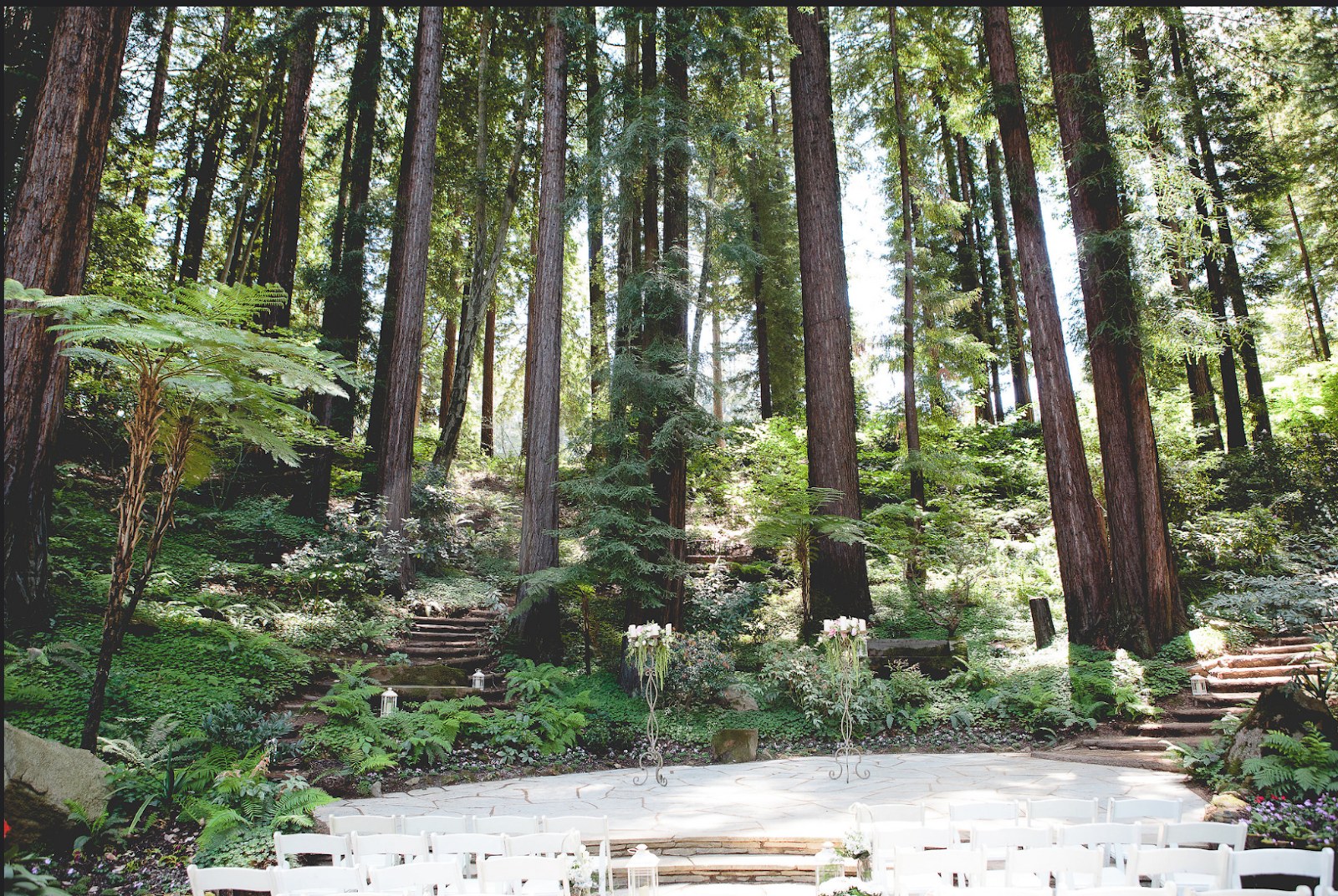
These are field notes on a garden estate set in coast redwood forest, and the first note governs the rest: redwood is the darkest canopy in this guide by a wide margin.
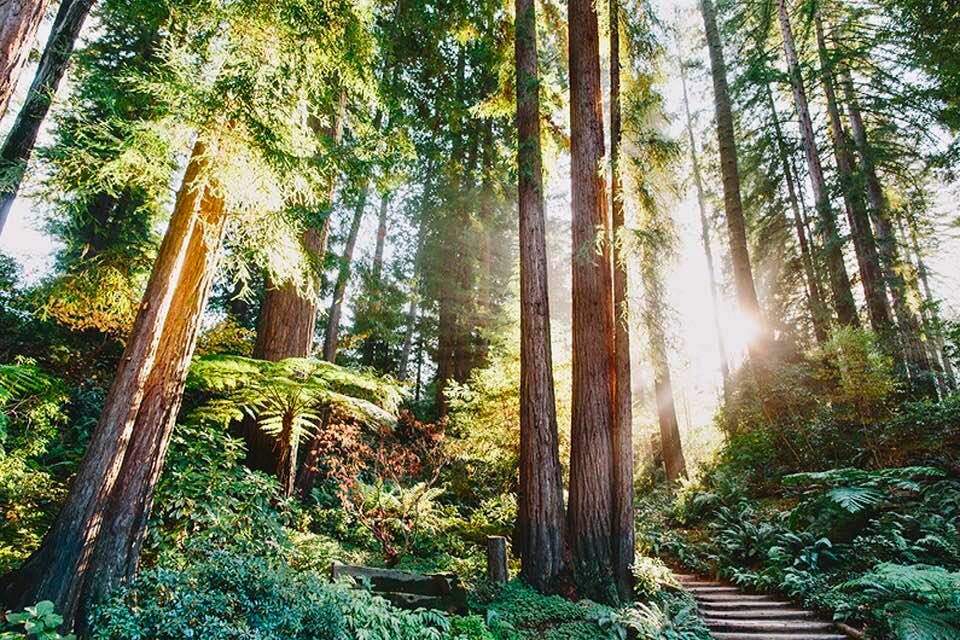
A mature coast redwood grove blocks almost everything. The trees are the tallest on earth, the crowns are dense and layered, and they grow close together — which means the forest floor can sit five or six stops below the open sky above it, and in the deepest parts more than that. Where an oak wood is dim, a redwood grove is genuinely dark.
The bark compounds it. Redwood bark is thick, fibrous and reddish-brown, and it absorbs rather than reflects — so unlike a birch or an aspen stand there is nothing in a redwood grove bouncing light back into a face. The trunks are pillars of shadow, not reflectors.
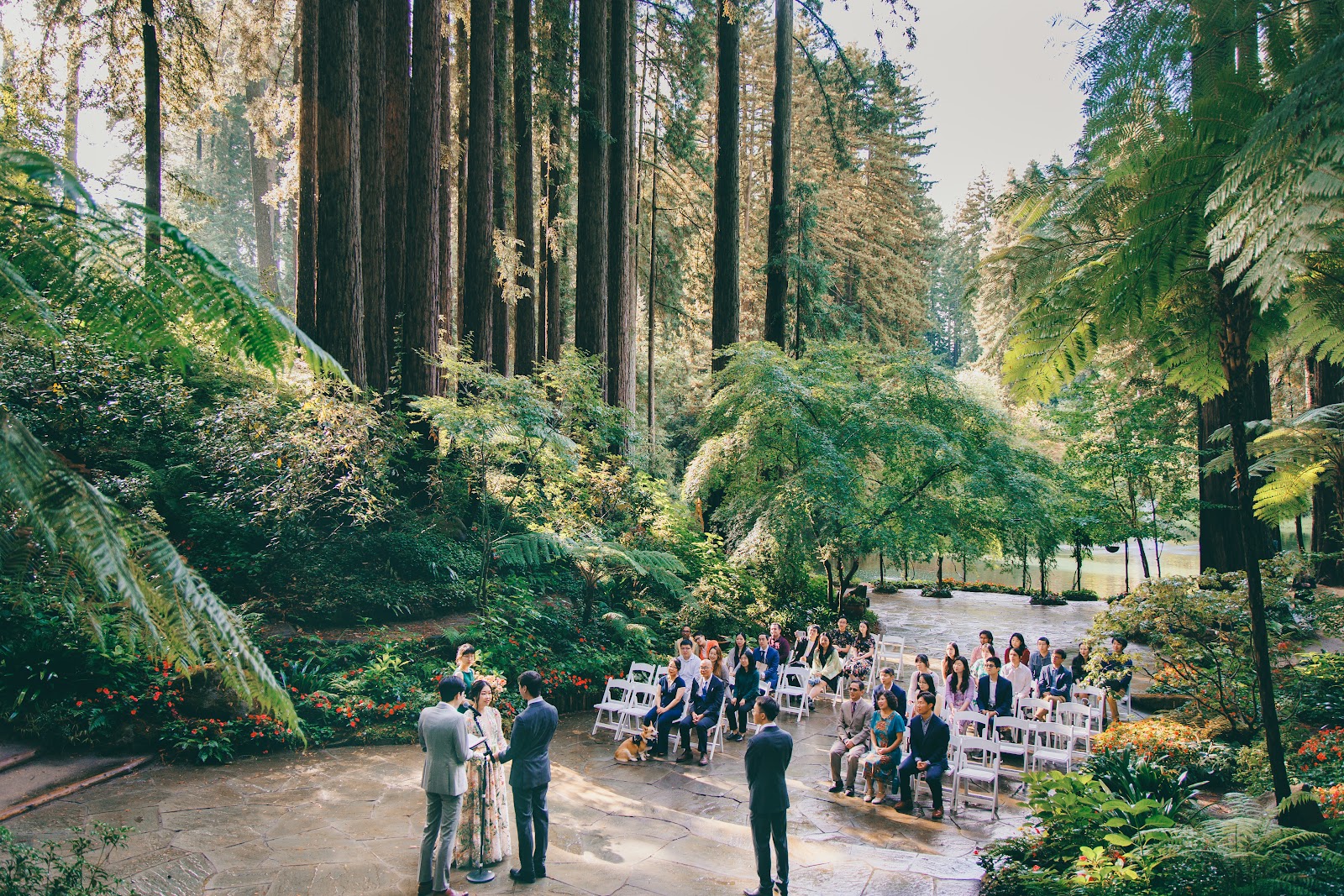
The second note is the one that makes the site workable: a garden estate in redwood is not all forest. It is a sequence of clearings, lawns, ponds and planted openings cut into the forest, and the entire photographic plan is about those edges — where the canopy stops and the light arrives.
The third note is the geography. This is the Santa Cruz Mountains, which means a steep site reached by a narrow mountain road, a marine influence that brings fog over the ridge from the west, and a climate noticeably cooler and damper than the valley below.
We have not photographed a wedding at Nestldown; coast redwood estates behave consistently. Which areas and buildings are included, the covered alternative, whether there is usable power at the outdoor positions, what the access and parking arrangements are, and what the guest limit is are questions for their team.
Nestldown at a glance
| Where | Coast redwood forest in the Santa Cruz Mountains above Los Gatos |
| The problem | Redwood blocks almost everything; the floor sits five or six stops down |
| The solution | Work the edges of the clearings, not the middle of the grove |
| The bark | Absorbs rather than reflects — nothing bounces in a redwood grove |
| Ask first | Areas included, covered alternative, power outdoors, access and guest limit |
The grove: the problem, and the solutions
The problem inside a redwood grove is not simply that it is dark. It is that the little light which does get through arrives as narrow, near-vertical shafts of very bright sun in an otherwise near-black space — which is the widest brightness range anywhere on a wedding day, and far beyond what one exposure holds.
A face with a shaft on it and shadow beside it is unrecoverable. A face beside a shaft is lit by almost nothing. And a meter presented with that combination produces something wrong in both directions depending on where it is pointed.
The first solution is to move rather than to solve. A grove is large and the shafts are narrow, so a position two metres away is frequently a position with no shaft in it at all — evenly dark, which is workable. The whole technique inside a grove is finding the evenly lit patches rather than fighting the unevenly lit ones, and the test is to look at the face and not at the ground.
The second solution is to accept that a grove is a low-key environment and photograph it as one. A face lit by a single source against a near-black forest is a strong picture; the same forest lifted until it is legible is a muddy grey picture. Redwood does not do bright and airy, and attempting it wastes the one thing the place offers.
Which means light has to be brought, and the grove makes two specific demands of it. It must be close, because nothing here bounces at all — the light reaching a face is only the light aimed at it, so a source at two metres needs roughly a quarter of the output of the same source at four, and close is also softer relative to the subject.
And it must be gelled. Light filtered through a green canopy and reflected off reddish bark is neither neutral nor consistent, and an ungelled flash in that environment produces a face that reads as cut out and pasted in. A custom white balance set on a face in position — and reset when the position changes — is the other half of the same fix.
The third solution is the one most often forgotten: use the shafts as subjects instead of as problems. Where a shaft cuts through a dark grove it is visible in the air, because dust and moisture scatter the light along its path — which makes it a solid object in the frame rather than a patch on the ground. Exposing for the shaft and letting everything else go black gives one of the most dramatic frames available at any venue in this guide.
That works best when there is something in the air — early morning after a damp night, or a morning when fog is burning off the ridge — and it needs a position looking toward the sun rather than away from it. It is a frame to plan for at a specific hour rather than to hope for.
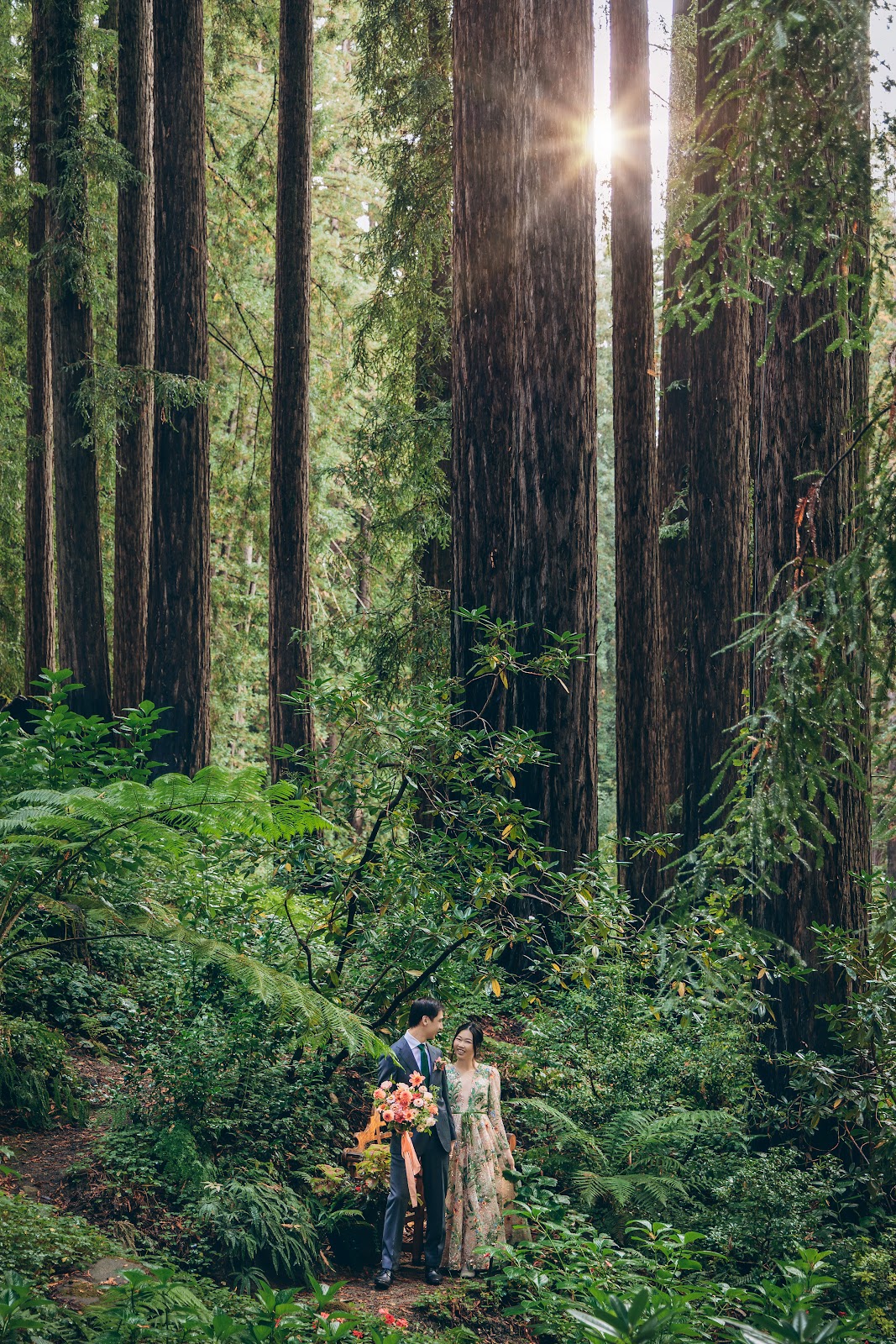
Scale is the last note on the grove and it is the hardest thing to convey. Redwoods are the tallest trees on earth and photographs routinely fail to show it, because a frame that includes the whole tree reduces the people to specks and a frame at human scale shows only a section of trunk. The honest solution is to include something of known size at a distance — a figure small in the frame, deep in the grove, with trunks rising past the top of the picture — and to accept that the tops are simply out of shot.
Vertical composition and a wide lens from close to a trunk exaggerates the height in a way that reads as true, which is one of very few situations where a wide lens is the right answer in woodland.
The clearings, the buildings, and the water
The clearings are where the wedding actually happens and the important thing about them is the edge rather than the middle.
The middle of a clearing is open sky: a subject there at midday is in top light with dark eye sockets and a hard shadow under the chin, and a subject there in low sun is beautifully raked. So the middle is an early and late position and nothing else.
The edge is the best light on the property and it is available all day. Standing a metre or two inside the canopy at the margin of a clearing gives soft directional light from the open side and near-total darkness behind — which is three or four stops of free separation and no equipment. Because redwood absorbs so completely, that background is darker than any other tree gives, which makes the effect stronger here than anywhere else in this guide.
It carries the standard exposure trap in its most extreme form. A meter looking at a near-black redwood background tries to lift it toward mid-grey, which overexposes the face by two stops or more. So the metering goes on skin, the work is done in manual, and the background is allowed to stay black — and a bright clearing frame a minute later fools the same meter hard the other way, which is precisely why automatic exposure cannot hold this site.
The lawns and planted openings behave like ordinary gardens with one difference: they are ringed by something very tall, which means they lose the sun far earlier than an open site would. A clearing in tall forest can be in full even shade by four on a summer afternoon while the sky above is still bright, and that shade is much darker than the sky suggests. The exposures at that hour are not the exposures of an hour before, and being surprised by it is a common way to lose the light.
The counterpart is that the shade is beautifully even, so those late-afternoon hours are technically the easiest of the day: no dappling, no squinting, groups can stand anywhere, and nothing needs adding except perhaps a touch of contrast.
Water in a redwood setting is worth more than it is elsewhere. A pond in a dark forest clearing is frequently the brightest thing at ground level, and it throws light upward into faces that the canopy leaves unlit from above — so a position beside water is measurably better lit than the same position two metres away. The caution is that upward light alone is unflattering, and a position angled so the water lights one side of the face corrects it.
A still pond also mirrors the trees, which is the one way to get redwood height into a frame twice over — and a reflection runs about a stop darker than what it reflects, which matters when metering.
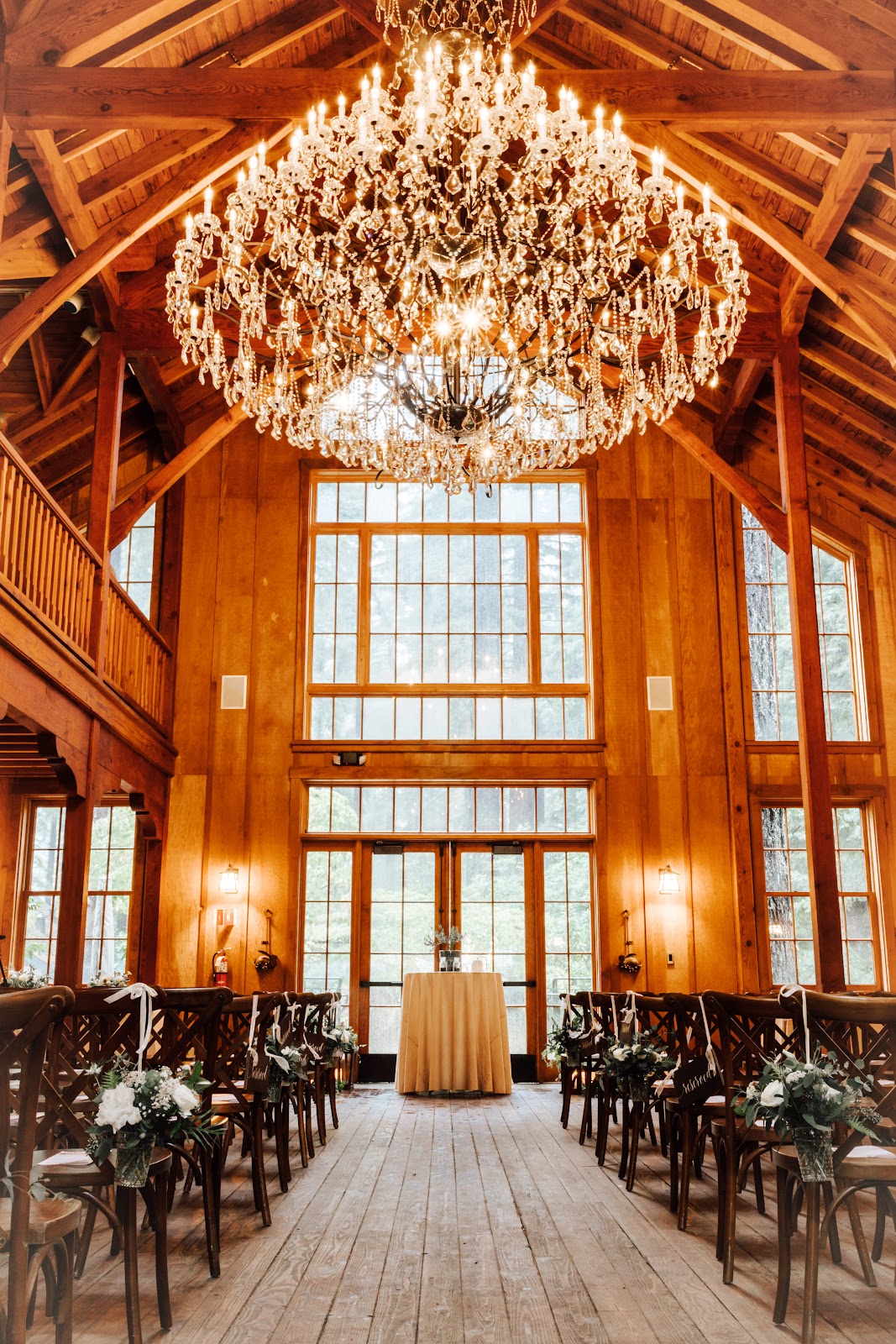
Buildings on an estate like this are usually timber, often redwood itself, and they are dark inside for the same reason the forest is. That puts an interior a stop or two below a pale room — measure rather than estimate — with the compensation of very steep fall-off, so a background two metres behind a subject drops away for nothing.
Windows are the good light indoors and they are better than they look, because the canopy outside softens everything arriving through them. One warm-gelled source at about a stop above the ambient, with the white balance set to the gel, does more than three lights and keeps the character of the room.
The practical notes matter on a mountain estate. A narrow access road means arrival logistics and parking are a real question rather than a detail. Distances between clearings on a wooded slope are longer in time than in metres, and formal shoes on forest paths are slow — so three positions close together beats six spread out. It is cooler here than in the valley below and damp underfoot for much of the year. And redwood forest is quiet, which means amplified sound carries and unamplified vows do not.
- Work the clearing edges, not the grove’s middle or its open centre
- Meter on skin and let the redwood go black; nothing here bounces
- Added light must be close and gelled — no bark reflects anything
- Shafts are subjects: expose for the shaft, let the rest go
- Clearings lose the sun hours early; the exposures change fast
The Santa Cruz Mountains year
These mountains sit between the ocean and the Santa Clara Valley, and the estate’s year is a compromise between the two — wetter and cooler than the valley, warmer and less foggy than the coast.
The wet season runs roughly November through March, and this range catches substantially more rain than the valley below it because the air rises to cross the ridge. A covered alternative is not optional in those months, and the ground stays damp well after the rain stops.
What rain gives a redwood estate is its best self. Redwood forest is a temperate rainforest in character, and it is only fully itself when wet: bark darkens to deep red-brown, ferns and moss saturate, the creek runs, and the whole range of the site narrows because the sky is an even grey rather than a hard source. The dappling and shaft problems vanish entirely, and the forest becomes photographable everywhere rather than in patches.
A soft rainy day here is genuinely better than a bright one, and it is worth saying that plainly to a couple with a February date.
Fog does the same job and it arrives over the ridge from the west. Redwoods depend on it — they take moisture directly from fog through their foliage, which is why they grow in this belt and not inland — so it is a frequent condition rather than an unusual one. Fog among redwood trunks, with shafts starting to cut through as it thins, is the single most atmospheric frame the site produces, and the window is the hour or two of burn-off.
Spring is green, cool and comfortable, with fern growth at its freshest and the creek still running. Any deciduous planting in the gardens leafs out through March and April, and the estate’s ornamental colour is at its fullest in late spring.
Summer is the driest and most reliable season and the hardest for light. Rain is genuinely unlikely from roughly May to September, and the forest is at its darkest relative to the sky because the sun is high — which makes the shaft problem worst and the clearing edges most valuable.
The compensation is real comfort. Redwood shade runs markedly cooler than the valley below, commonly ten or fifteen degrees Fahrenheit cooler on a hot afternoon, which makes this an excellent high-summer site for a party that would suffer in open country. A morning fog day in July is both the coolest and the easiest day of the season.
Fire risk is the honest note for these mountains in late summer and autumn, and it belongs in a planning conversation. The likelier photographic reality is smoke rather than flame — a smoke layer turns the sun orange, flattens contrast and shifts everything warm in a way no white balance fully resolves, and in a forest it also removes the shafts by scattering the light. It cannot be planned for, only acknowledged, and a venue’s own contingency is a fair question to ask.
Autumn brings the clearest air of the year and the first rains, and late autumn is when the deciduous planting in the gardens turns — through November here, later than in colder regions. Yellow and red foliage against near-black redwood is the strongest colour contrast the site produces, because the background is darker than any other setting provides.
Winter light is the technical gift. The December sun at this latitude reaches only about thirty-two degrees above the horizon, which in tall forest means it comes in almost horizontally through the trunks rather than down through the crowns — so the shafts become long and low and rake across the forest floor instead of stabbing down into it. That is the most beautiful light redwood forest receives all year, it lasts most of the short day rather than an hour, and almost nobody books a wedding to see it.
More frames from Nestldown
Nestldown wedding photography: common questions
How dark is a redwood grove?
The floor can sit five or six stops below the open sky, and deeper in places. Redwood bark absorbs rather than reflects, so nothing bounces back into a face.
Where should we actually stand?
At the edge of a clearing, a metre or two inside the canopy. Soft directional light from the open side, near-total darkness behind — the best free frame here.
Why can't automatic exposure handle this site?
A near-black background makes a meter overexpose a face by two stops or more, and a bright clearing a minute later fools it the other way.
What about the shafts of light?
Use them as subjects rather than problems: expose for the shaft and let the rest go black. They are visible in the air when there is moisture or dust.
Is it cooler than the valley?
Markedly — commonly ten or fifteen degrees Fahrenheit cooler in redwood shade on a hot afternoon, which makes it a good high-summer site.
When is the light best?
December, when a low sun comes almost horizontally through the trunks and rakes the forest floor all day instead of stabbing down into it.
More California venue guides
We are writing a photographer’s guide to every venue we would happily shoot in California. Here are three more, plus the full index:
- Ojai Valley Inn, Ojai: What It Suits and What It Does Not
- Park Hyatt Aviara, Carlsbad: The One Decision That Governs Everything
- Pema Osel Ling, Corralitos: What It Suits and What It Does Not
Planning a wedding at Nestldown?
The darkest woodland here, and the clearings that fix it. Tell us your date.