Washington is two states photographically, and the line between them is the Cascade crest. Seattle and Spokane sit at almost exactly the same latitude — about forty-seven and a half degrees north — and have almost nothing else in common, because the mountains between them wring the moisture out of the incoming Pacific air. West of the crest is a marine climate: something like two hundred and twenty-five cloudy days a year, around a hundred and fifty with measurable precipitation, and an annual rainfall total that is nonetheless lower than Atlanta's, because what the coast has is days rather than volume, mostly light drizzle over long periods.
East of the crest is semi-arid and continental: annual precipitation around seventeen inches, roughly a hundred and seventy sunny days, cold snowy winters, hot dry summers, and a large diurnal range that can take a July day from the fifties at dawn into the nineties by afternoon. That produces two opposite sets of photographic instincts and a photographer who knows one side of the state will get the other wrong.
On the western side the dominant condition is a high even overcast, which is a softbox the size of the sky: soft to non-existent shadows, even light at any hour, no bad time of day, easy skin tones, and the most forgiving portrait light in this library. What it costs is contrast and sky, so exclude the white ceiling — fill the frame, put the horizon high, and let saturated colour and texture carry the picture. Wet is an asset there rather than a problem, because drizzle saturates brick, stone, steel and foliage, and a wet street photographs better than a dry one.
On the eastern side none of that applies. Dry air at around eighteen hundred feet scatters very little, so shadows are deep, contrast is high, skies are a genuine saturated blue rather than white, and the sun has hard edges. Fill has to be brought or found, because the air will not provide it; midday in summer is harsh and belongs in real shade; and the sky is worth composing into a wide frame, which is not true on the coast. Bring Denver instincts east of the mountains and Puget Sound instincts west of them.
What the two halves share is the latitude, and it gives the state the largest seasonal swing in this collection. In late June the sun sets after nine, there are roughly sixteen hours of daylight, the noon sun reaches about sixty-six degrees, and civil twilight runs close to thirty-seven minutes — the longest dusk anywhere in this library. The usable balance point inside that, where the sky and any artificial lighting are within a stop of each other, lasts perhaps eighteen to twenty minutes, which is nearly double what a Gulf South venue gives and long enough for two or three positions rather than one.
In late December the sun is gone by about half past four, there are around eight and a half hours of daylight, and the noon sun never exceeds roughly nineteen degrees. A schedule that works in July is wrong in January by four and a half hours, and in winter the balance point falls during cocktails rather than after dinner — a named line item on the timeline, or it passes while the room is being seated. Two further latitude effects are worth knowing.
That midsummer noon sun at sixty-six degrees is a full seventeen degrees lower than the Gulf South equivalent, which means summer midday here still has direction in it: it models a face rather than flattening it, open shade works, and a portrait outdoors at one in the afternoon is reasonable. Midday is not the write-off it is further south.
And the sun's setting azimuth swings enormously at this latitude, from well north of west in midsummer to well south of west in midwinter, something like seventy degrees of movement — so which facade catches the last light changes by season by a wide margin, and a west-facing position scouted in July can be in shade on a January date. Check the azimuth for the real date rather than trusting a summer scout; it is the most common planning error at a west-facing venue this far north. One caution applies statewide and has grown since the late twenty-tens: wildfire smoke.
August and September now bring smoke from fires in the Cascades, eastern Washington, Idaho and British Columbia with some regularity, and the inland side is affected more often and more heavily than the coast. Smoke gives an orange low-contrast light that some people love and air quality that can make an outdoor event genuinely inadvisable, and it cannot be forecast far out. A late-summer outdoor plan in this state needs an air-quality contingency as well as a rain one. Season by season, the two halves diverge again.
West of the crest, July and August are the dry season — reliably sunny, warm rather than hot, and the most contested dates in the calendar — while October through May is a soft season better than its reputation, because this is evergreen country: Douglas fir, western red cedar and western hemlock hold dark green mass through the winter and the moss on trunks, walls and roofs is at its most vivid in the wet months, so a February frame carries more colour than a February frame almost anywhere else in this collection.
East of the crest, late September into October is the best all-round window — dry clear air, comfortable temperatures, low sun angles through the whole afternoon, and deciduous colour late in the month — while May and June bring the rivers to their highest from snowmelt, which makes waterfalls a different and far more impressive subject than they are in September.
Eastern winters are real winters with substantial snow and temperatures well below freezing, which gives superb light — snow on dark rock under a nineteen-degree sun raking all day — and a wedding party that cannot stand in it for more than a few minutes, so the exterior work has to be short, planned and close to a door.
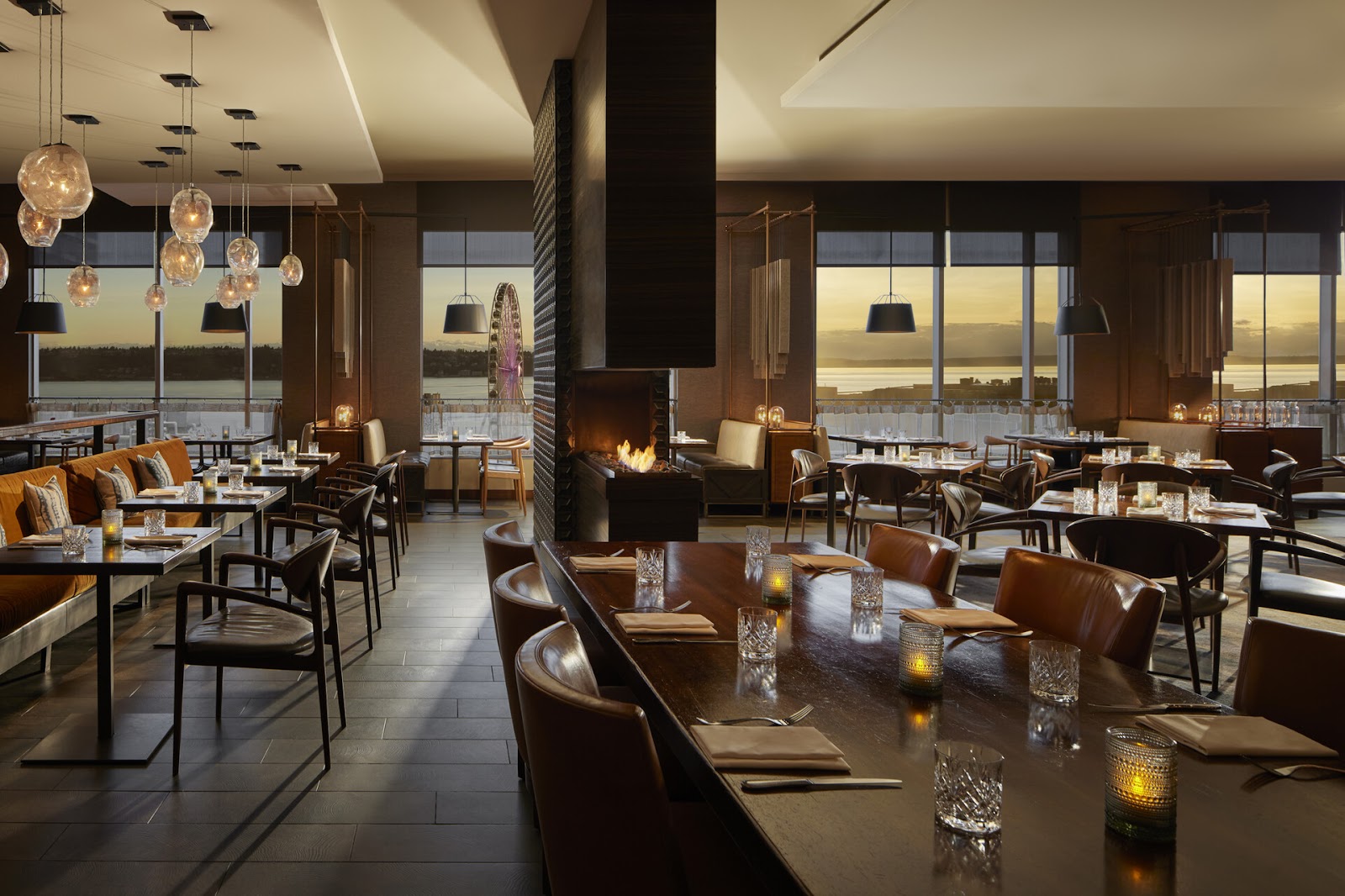
The Four Seasons Seattle, Seattle: Suits and Does Not Suit
A modern hotel above the waterfront near Pike Place — which suits some couples exactly and others not at all.
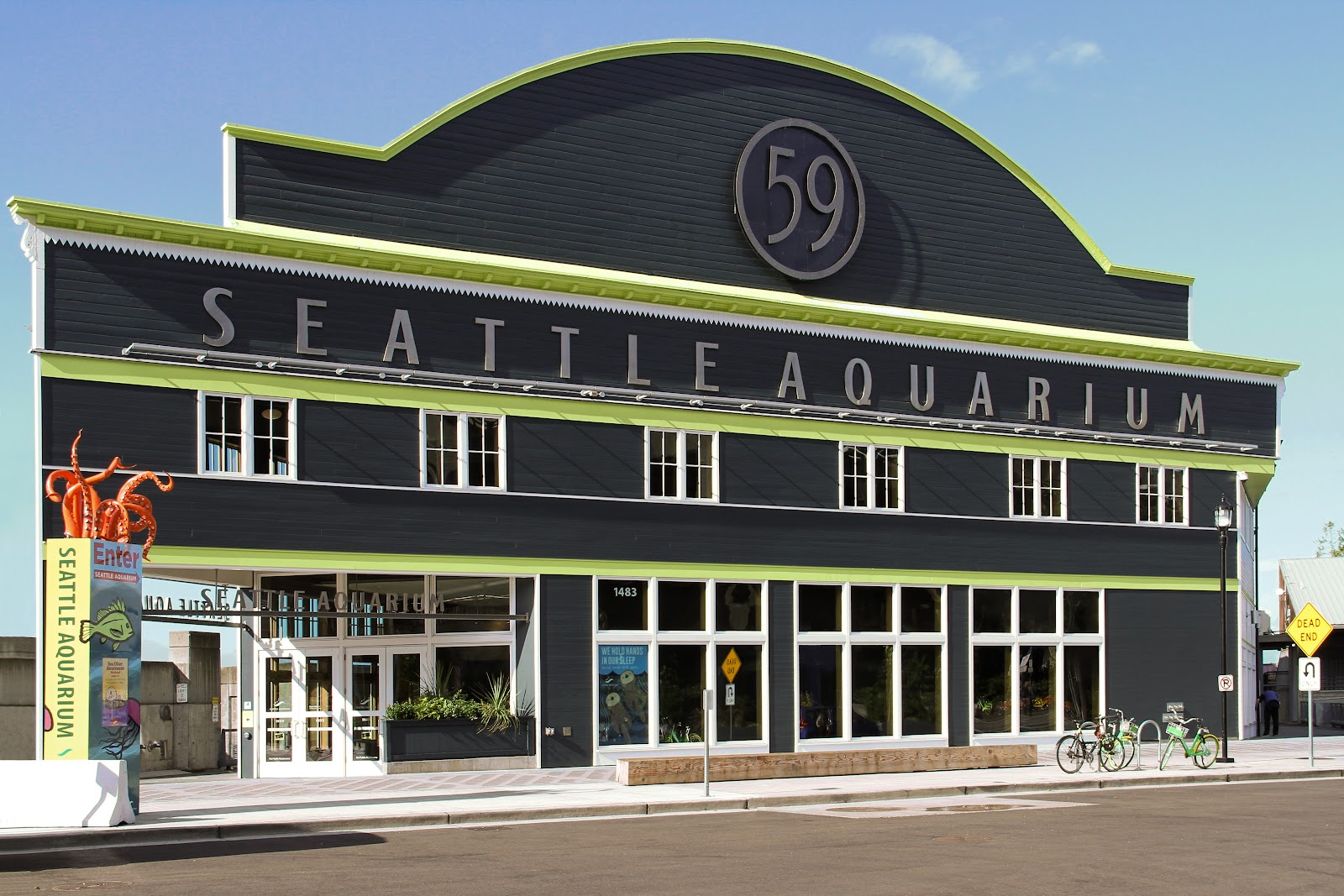
The Seattle Aquarium, Seattle: The One Decision That Governs Everything
An aquarium on a pier over Elliott Bay, with an unobstructed western horizon a few steps outside the door.
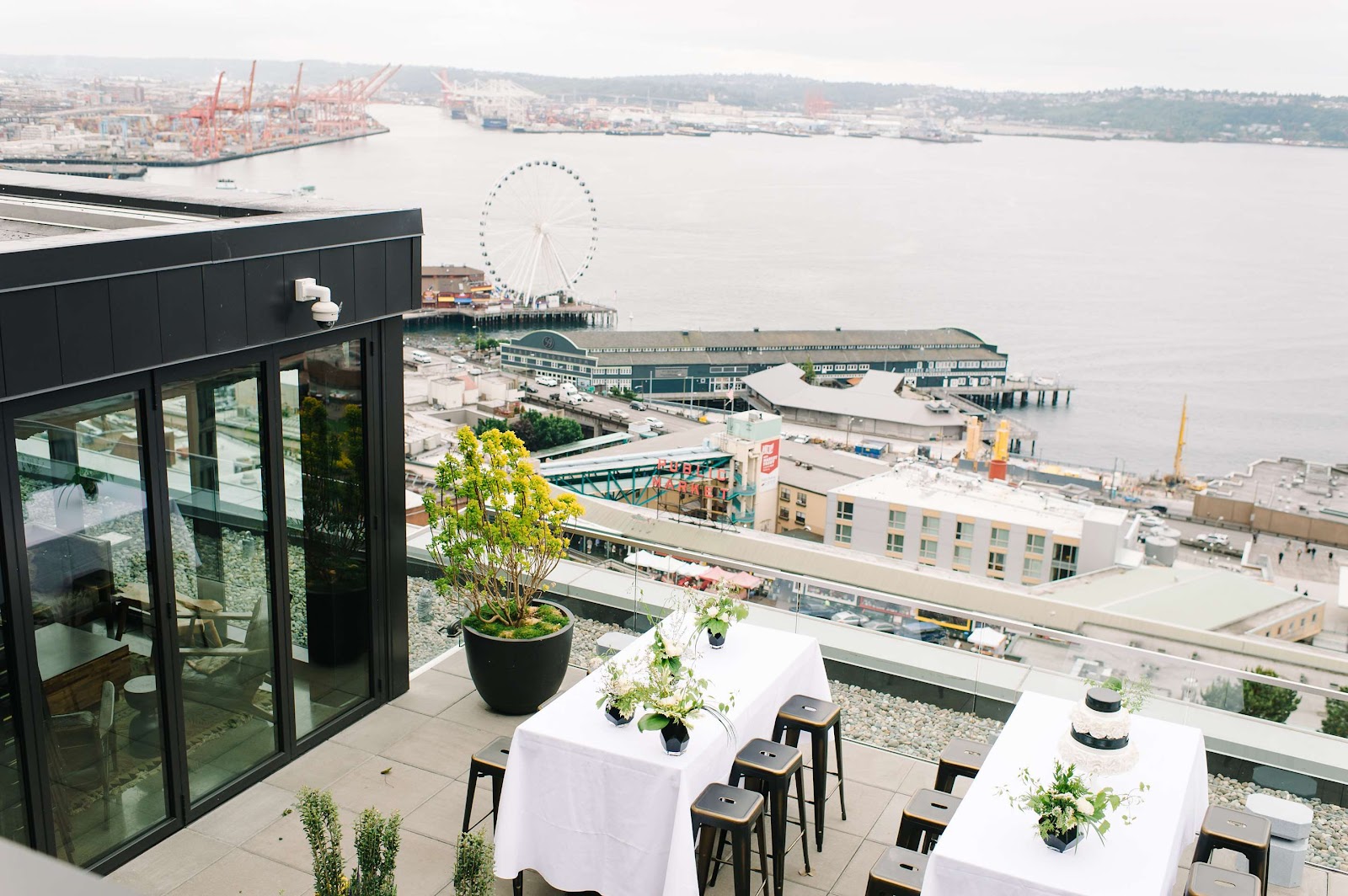
The Thompson Seattle, Seattle: The Light Through the Day
A glass hotel above the Seattle waterfront — where the dominant light is a softbox the size of the sky.
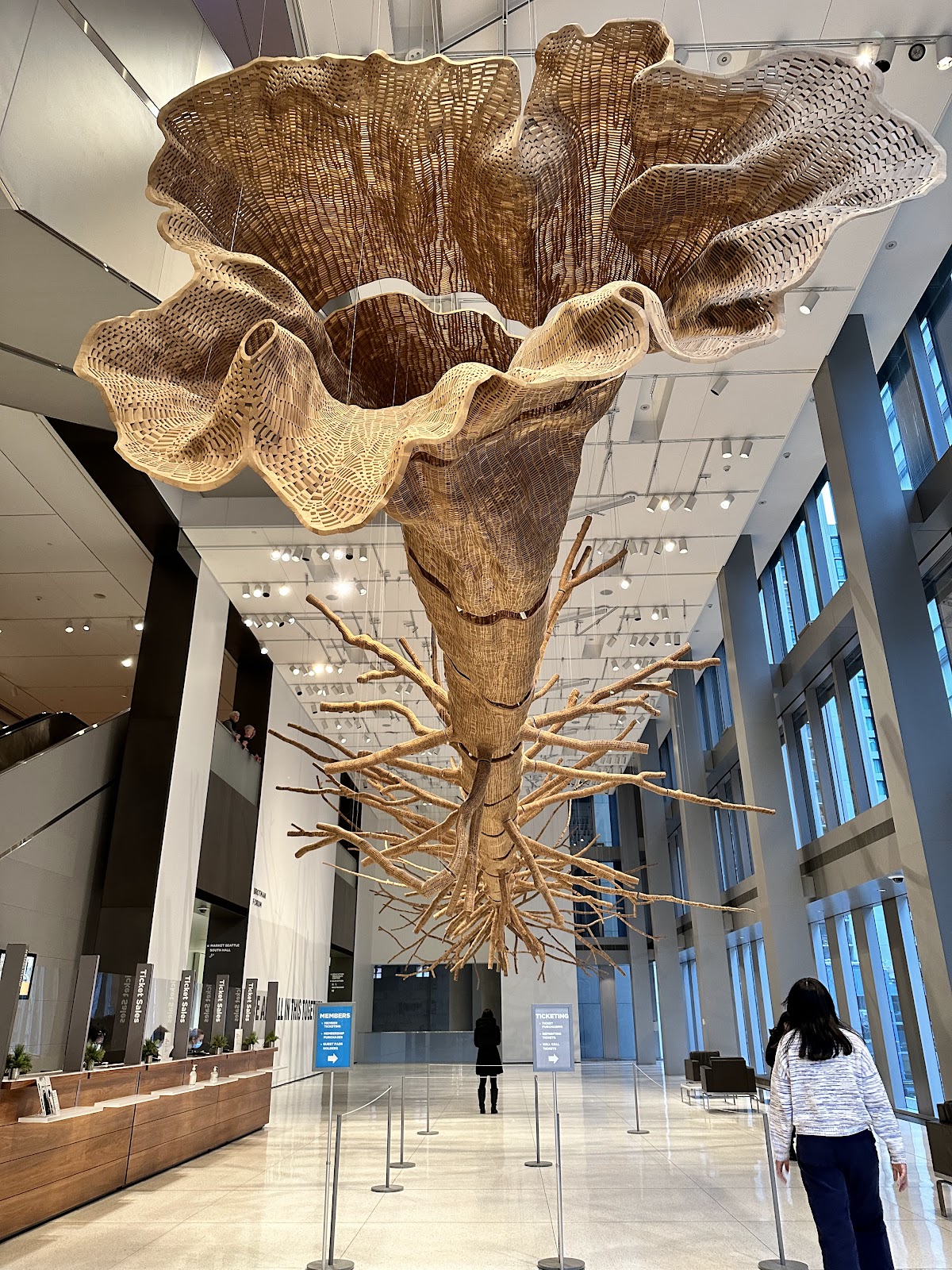
The Seattle Art Museum, Seattle: A Walk Through the Building
A downtown museum on one of Seattle's steep streets, with a forty-eight-foot black figure hammering outside the door.
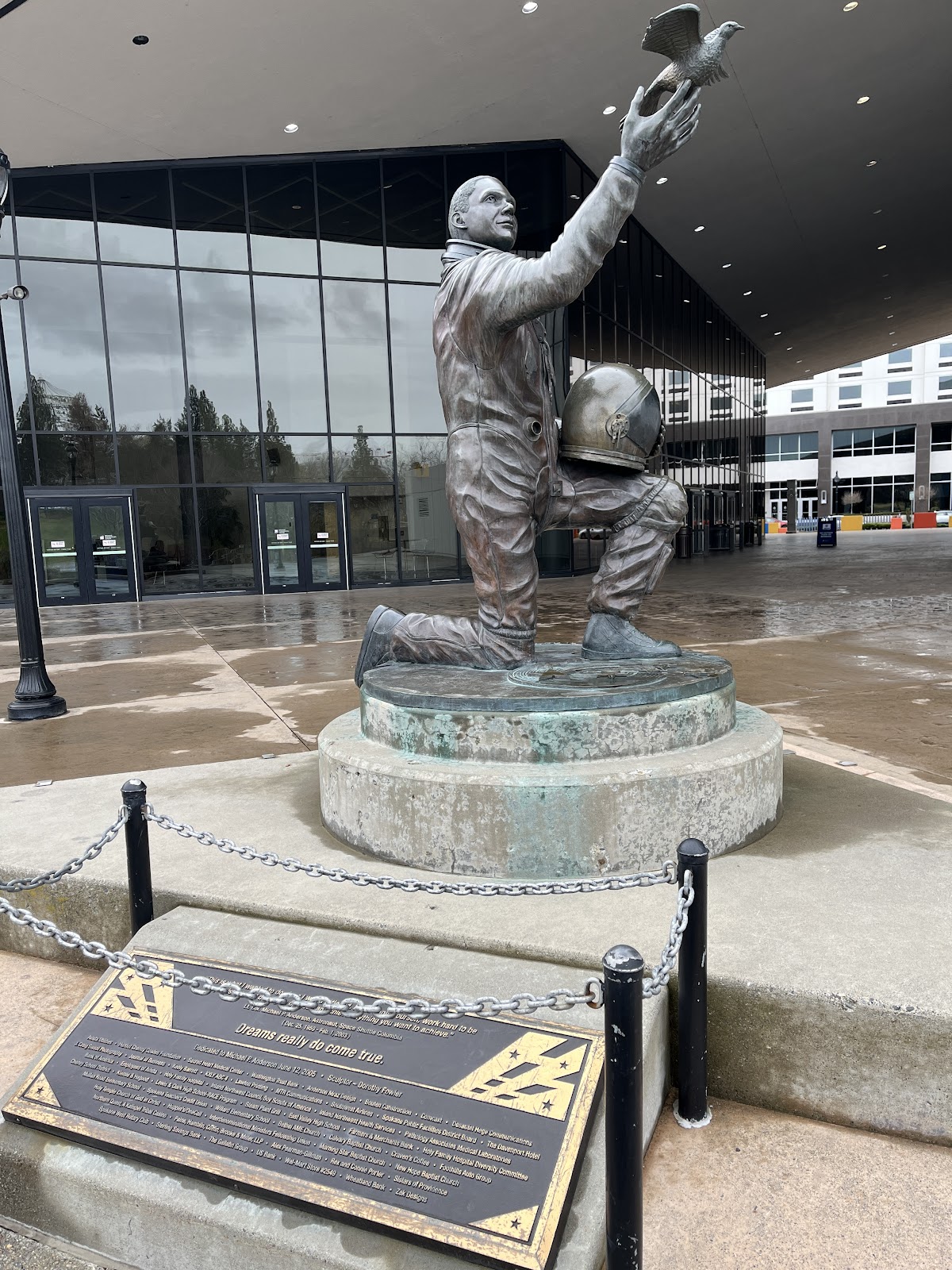
The Spokane Convention Center, Spokane: Field Notes, Problem and Solution
A riverside convention centre beside a waterfall — where the concourse glass and the park outside do most of the work.