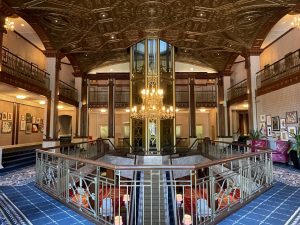
 The Graduate Providence, Providence: The Venue’s Own Logic
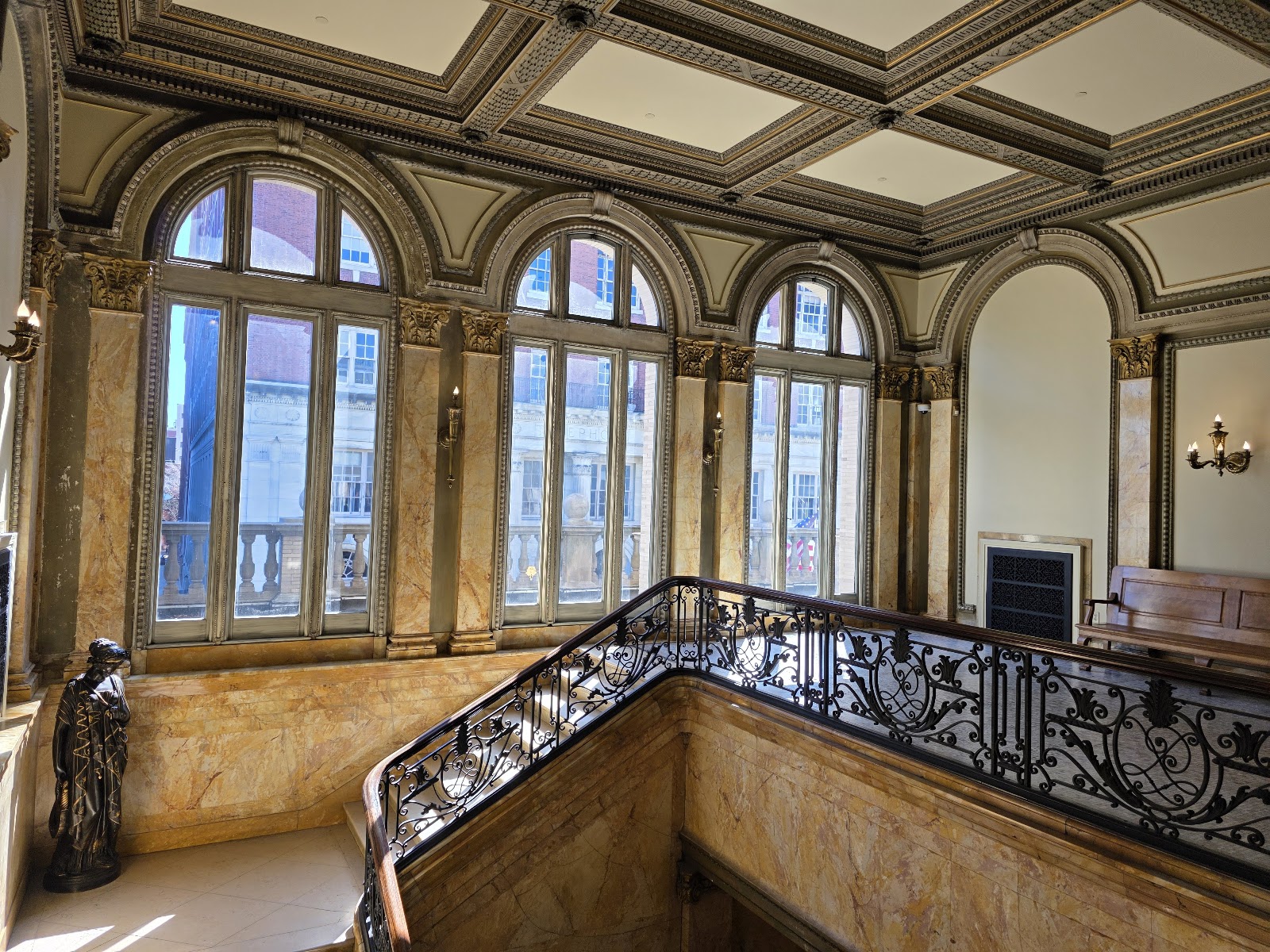
The Providence Public Library, Providence: The One Decision That Governs Everything
Two buildings in one. Choose which, per frame.
One decision governs every photograph in this building and it is which century the frame belongs to.
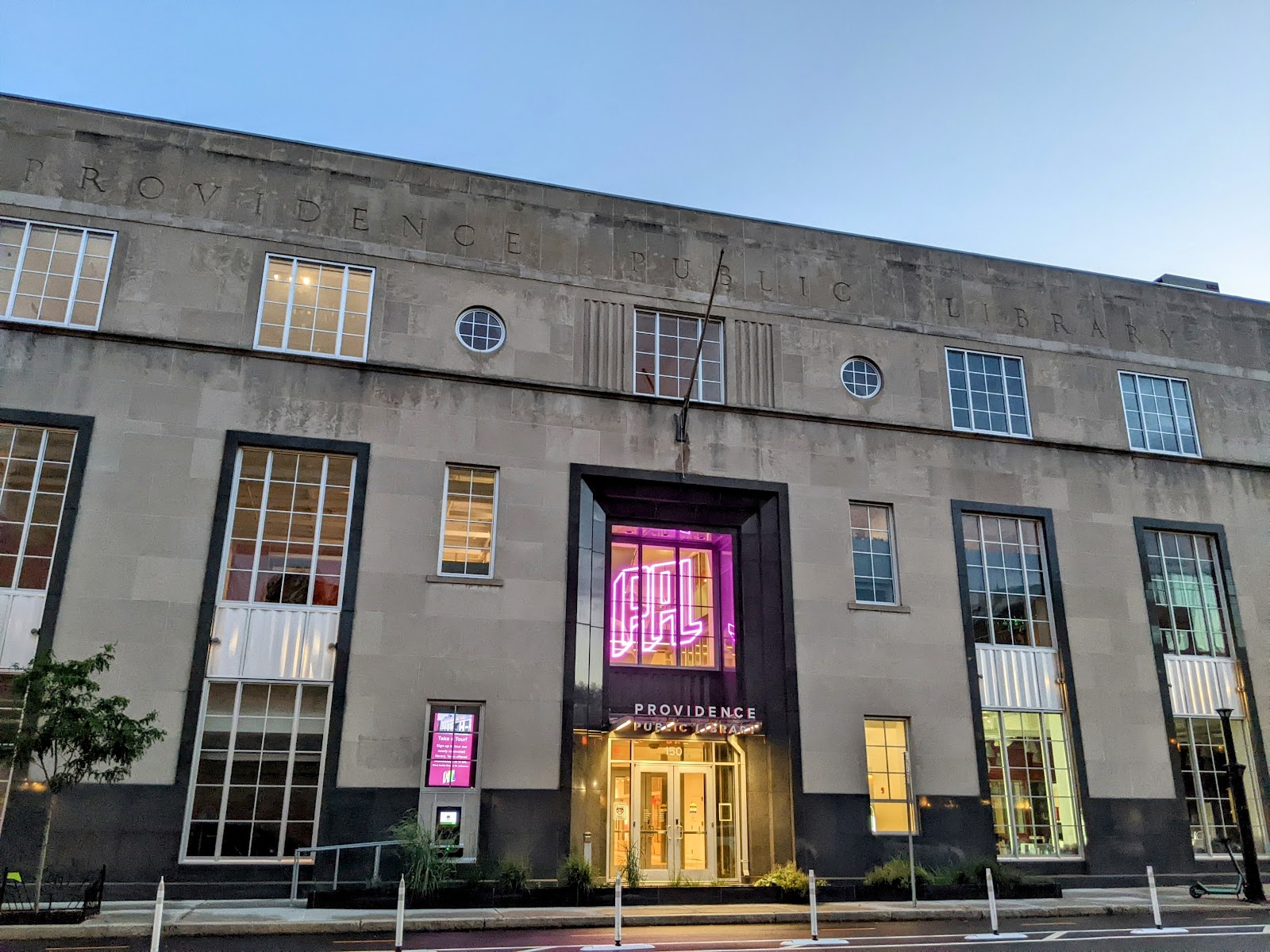
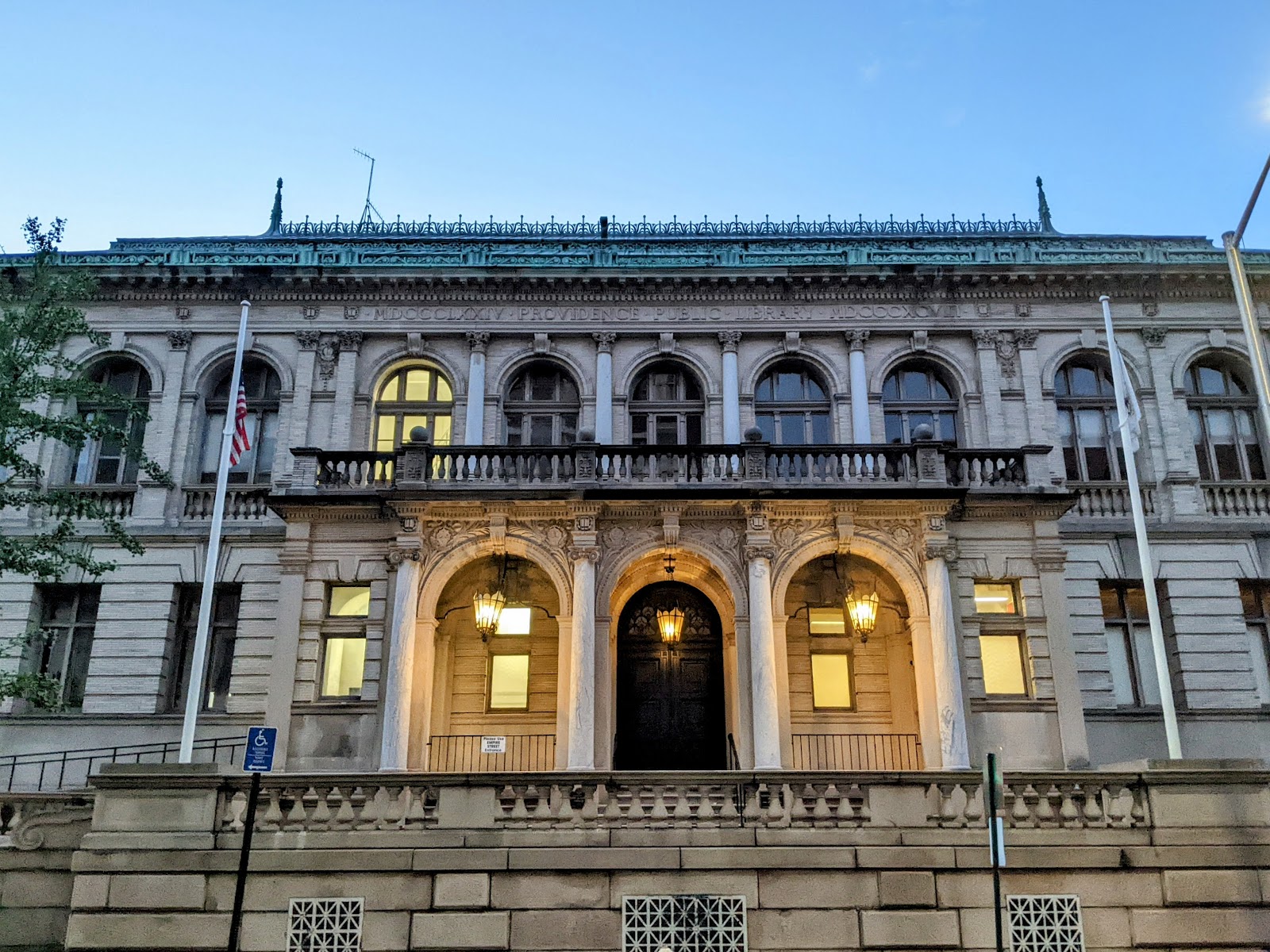
The Providence Public Library occupies a Beaux-Arts building of around nineteen hundred in downtown Providence, and it underwent a thoroughgoing renovation in the twenty-tens that opened up the interior and added contemporary spaces and interventions alongside the historic ones.
So there are two buildings here, joined. The older part is classical: stone, plaster, high ceilings, tall windows, arched openings, dark timber, the vocabulary of a public institution built when institutions expressed permanence through architecture. The newer part is contemporary: pale surfaces, glass, clean lines, exposed structure, and daylight brought deliberately into places that did not have it before.
Those two want opposite handling and they do not blend. A frame that straddles the join — half period plaster and half modern glazing, at a middle distance, with neither reading clearly — is the failure mode, and it is what a lot of photographs from renovated institutions look like.
So the choice is per frame, and once it is made deliberately the building becomes generous rather than confusing.
A period frame wants the older vocabulary to dominate: work square to the architecture, use the arched openings and tall windows as frames, let stone and timber be dark, and keep modern fittings, signage, screens and furniture out. Those things are the giveaway, and in a working library there are a great many of them.
A contemporary frame wants the opposite: clean lines, pale surfaces, a lot of daylight, modern geometry used as a graphic field, and the period detail either excluded or reduced to a single deliberate element. That frame is bright, spare and current, and it is the one couples with modern references actually want.
And there is a third kind, which is the one to make once rather than repeatedly: the join itself, composed deliberately so the hundred-plus years between the two halves is the subject. Old stone meeting new glass, framed so both read clearly and neither is incidental, is a genuinely good photograph. It is also a one-frame idea, and repeating it produces a set that looks indecisive.
Two further facts about this building type before the detail.
It is a library, which means books, and books are the single most distinctive background available in it — a wall of spines is a dense, warm, fine-grained texture that reads immediately and belongs to no other venue type. Use it.
And it is a working public institution, which means access is granted rather than booked. What a wedding may use, when, and with what equipment is set by the library rather than by an events market, and reading rooms may be in use, collections may be off limits, and photography near certain material may be restricted. Get all of it in writing months ahead.
The Providence Public Library at a glance
| Where | A c.1900 Beaux-Arts library in downtown Providence, with a 2010s renovation |
| The decision | Per frame: period vocabulary, or contemporary. They do not blend. |
| The failure | A middle-distance frame straddling the join, with neither half reading clearly |
| The signature | A wall of book spines — a texture no other venue type has |
| Ask first | Which spaces, which hours, flash and stand rules, and any collection restrictions |
Why the decision governs, and how to make each frame
Take the period frames first, because they are the harder of the two and the reason a couple chooses a historic library rather than a hotel.
A Beaux-Arts public interior of this date gives you four things: height, arched openings, tall windows in thick walls, and plaster or stone that takes light well. All four are compositional rather than decorative.
Height means getting low. A camera near floor level with a column, an arch or a door surround rising out of the top of the frame makes the volume read; at chest height the same room looks like a large room. On a stone or plaster wall two small figures at the base is a frame about the architecture, and it does not need a ceiling in it.
Arched openings are frames with built-in borders. Shoot through one at a subject beyond it and the arch does the composing, with a dark border and a lit centre. That is one of the most reliable good pictures in any classical interior and it takes thirty seconds.
The tall windows are the best natural light in the building, and in a wall of that thickness the reveal collimates the light into a defined directional beam with a fast falloff. Step the positions out rather than estimating — a metre and a half inside a deep reveal is superb and three metres in is not — and bring something pale to hold opposite, because a room with dark timber and carpet returns less fill than the window size suggests.
Plaster and pale stone are efficient bounce surfaces, which is the good news about lighting a period library: one light aimed at a wall or a high ceiling lifts a room by a stop and a half and leaves no evidence of having done so. Check the ceiling on arrival, because dark timber absorbs almost everything and puts you on a modifier instead.
The thing to keep out is the modern furniture. A working library’s period rooms contain contemporary desks, chairs, screens, power sockets, cabling, signage and book trolleys, and every one of those is a giveaway in a frame meant to read as nineteen hundred. Compose them out, or shoot from an angle that excludes them, or accept that the frame is a contemporary photograph of a period room — which is honest but is not the frame a couple asked for.
Now the contemporary frames, which are easier and genuinely good.
The renovation’s whole purpose was daylight and openness, which means the newer spaces have large glazed areas and pale surfaces. That produces the best working light in the building: soft, even, directional from one side, with efficient bounce off pale walls and floors. Put a subject side-on to the glazing at a metre and a half and photograph them; it needs nothing else.
Two corrections. Modern glazing is coated to reject heat, which shifts transmitted daylight cooler and often slightly green — warm the whole block consistently rather than frame by frame. And set a white balance for the position you are shooting from, because a subject at the glass and one five metres back in a room with period fittings are lit by different colour.
Contemporary architecture also gives you clean geometry to use as a graphic field: a run of glazing bars, a stair with a simple balustrade, a large plain wall, an exposed structural rhythm. Get square to it, stop down so the plane reads as a plane, and put the subject small and off centre. That is a modern frame and it is the counterpoint the set needs.
And then the join, once. Find the position where old and new meet most clearly — usually a threshold, a knuckle between wings, or a place where a modern insertion sits inside a period volume — and compose it so both halves read at full strength. Square on, stopped down, with the couple small or absent entirely.
Make it once and move on. A set built on that idea looks like a photographer who could not decide.
What follows from it: the books, and the rest
Once the century question is settled, the building has four more assets, and the first is the one nobody else has.
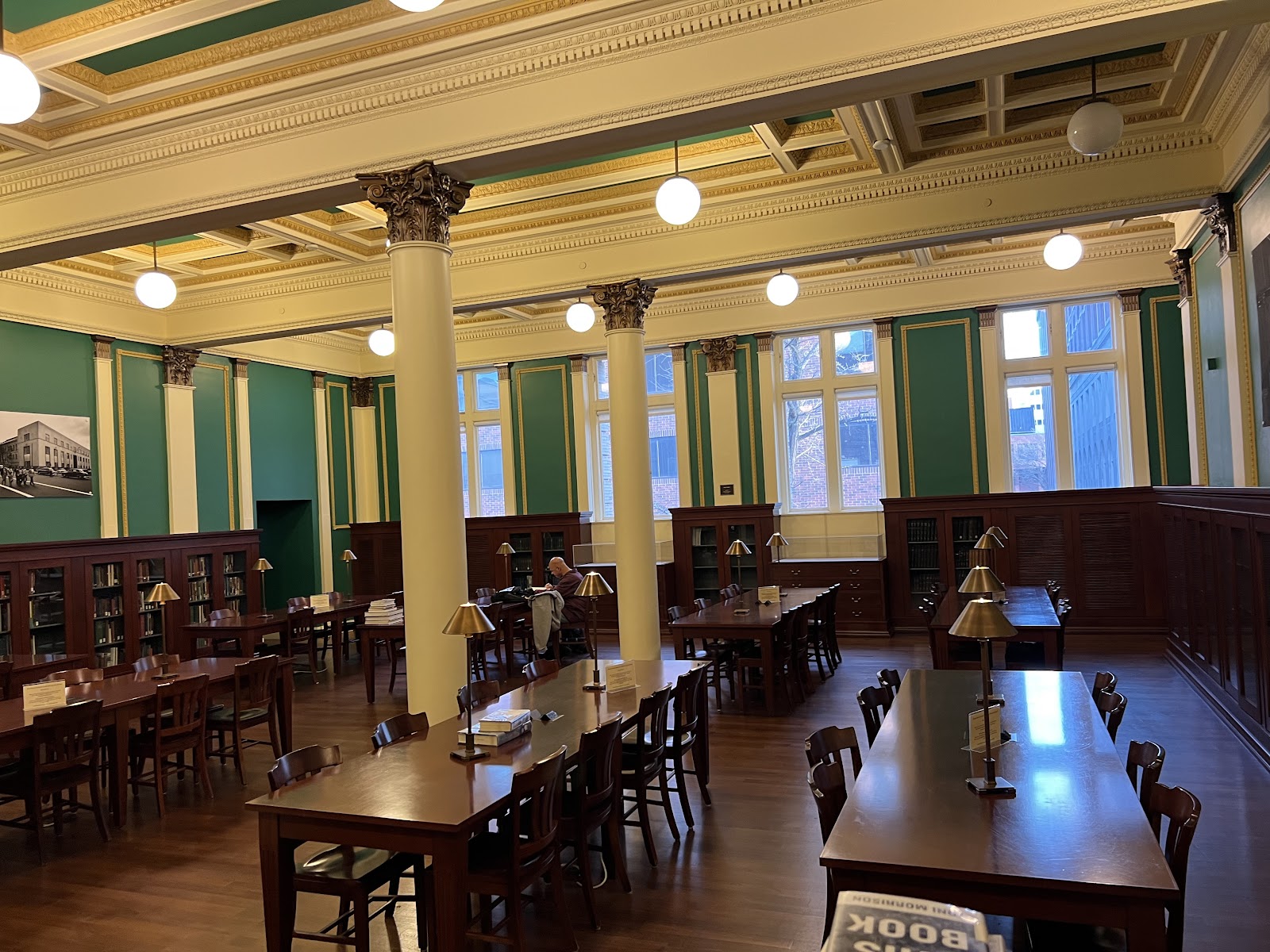
Books. A wall of spines is a dense, warm, fine-grained texture with a subtle horizontal rhythm in it, and it is a background that belongs to no other venue type in this library. Put a subject two metres in front of a run of shelves at eighty-five or a hundred and thirty-five millimetres and the spines render as a soft warm field that reads unmistakably as a library.
Light it from the side rather than the front. Frontal light flattens the spines into a pattern, and raking light gives every book its own edge and small shadow so the wall reads as a mass of individual objects. That difference is considerable.
Two practical notes about shelving. It is usually warm in colour — leather, cloth, aged paper — which means it throws a warm cast onto anybody standing close, so keep two metres between subject and shelves or accept the cast deliberately. And a frame looking along an aisle between two runs of shelving is a tunnel with a strong vanishing point, which is a completely different picture from one against a shelf face. Make both.
Establish which shelving is accessible and whether anything on it is restricted. A library’s open stacks are usually fine and its special collections are usually not, and material of value may have rules about proximity, flash and even presence. Ask, and take the answer seriously — a photograph is not worth a conservation problem.
The second asset is the reading room, if there is one available. A Beaux-Arts reading room is a tall, top-lit or side-lit volume with long tables, and it is the single most recognisable kind of library interior. If access is granted, photograph it empty and wide first — the whole volume, square on, with the tables receding — because that frame is the room and it will not exist once people are in it.
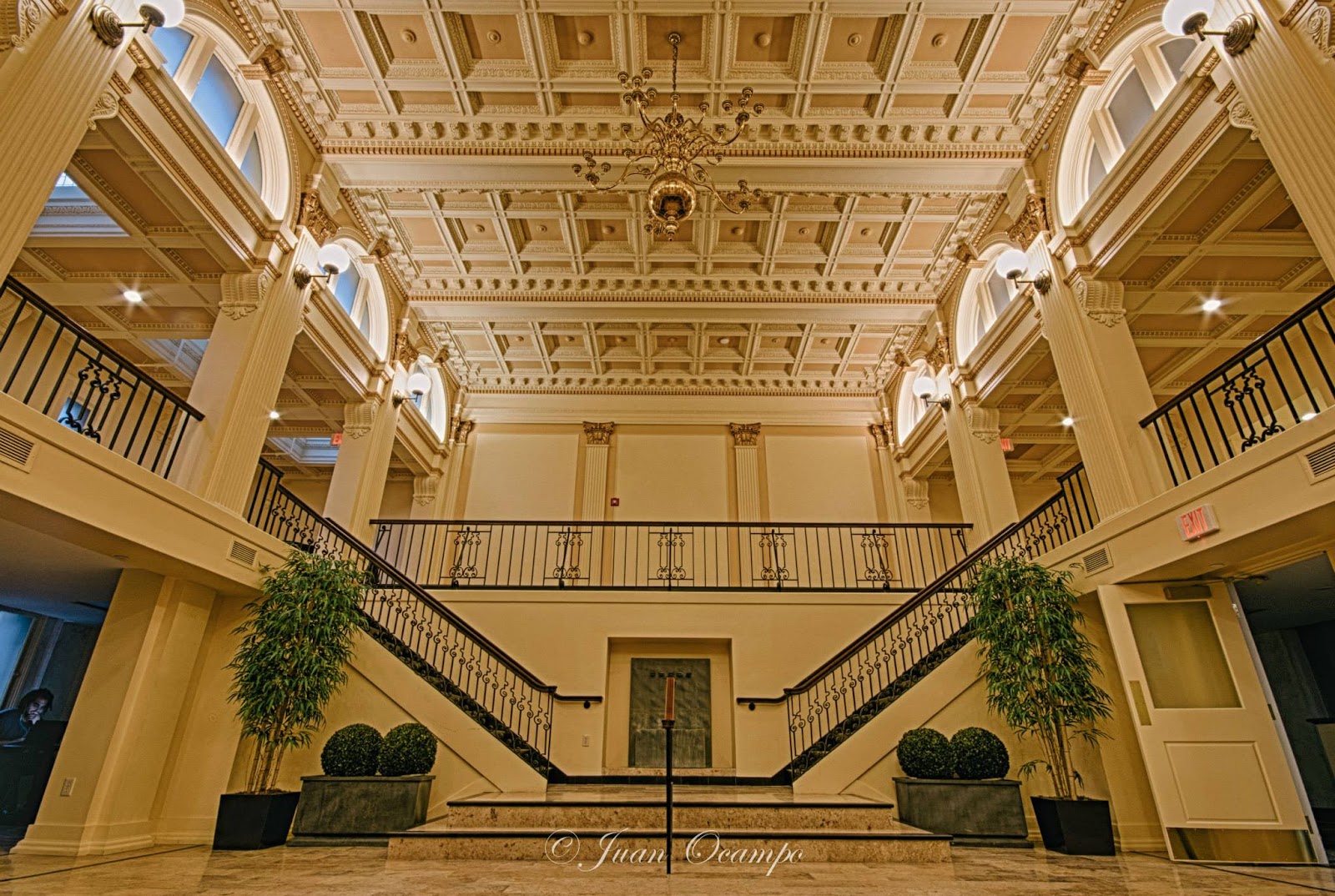
The third is the stair, which every building of this date has and which should be used in the first twenty minutes while everybody is tidy. A height difference, a diagonal, a leading line, a reason for somebody to look somewhere other than at the lens, and a way to arrange a group at several levels with no riser. From the bottom looking up for drama, from the top looking down for pattern.
If the renovation added a modern stair as well, then you have two — one period and one contemporary — which is a neat way of making the century decision explicit in a pair of frames.
The fourth is the exterior, and a Beaux-Arts public front wants the usual treatment: raking light, because the elevation is all relief, and either dead on the centre line or firmly off axis, never two or three degrees off. At noon a classical stone front is a flat plane; in the last hour it is a surface with depth, and every string course and window surround throws a shadow.
Use scale. Two small figures at the base of a large order is a stronger frame than a tight portrait against a column, and a public library’s steps are a natural place for a group.
Now the institutional practicalities, which matter more here than at a hotel and which should be settled months ahead in writing.
Which spaces are available, and at which hours — a working library has opening hours, and a wedding is likely to be in the evening after closing or in a wing that can be separated from public use. Whether flash is permitted, and where; whether lights on stands and tripods are permitted, which in a building with collections may reasonably be restricted. Whether any material or any room is off limits to photography. And what the capacity of each space is, as a number.
That last one matters because a library’s grand spaces are often long and narrow rather than square, which affects how a hundred people actually fit and where a ceremony can face.
One more, easily forgotten: ask about sound. A tall stone and plaster volume with a hard floor is acoustically live, which affects an officiant and a band far more than it affects a photographer, but a photographer moving around during a ceremony in that room is heard as well as seen. Choose a position and stay in it.
Downtown Providence, and the year
Providence is a compact, genuinely photogenic city and a downtown venue can use it on foot, which is worth a great deal at the end of a day.
Four things are within a short walk and each is a different register.
The state house, standing on rising ground above the downtown with a large marble dome — among the largest self-supporting marble domes anywhere. It is a monumental classical building on open lawn, which makes it a scale frame: two small figures on grass with a white domed building behind them. Photograph it dead on the centre line or firmly off axis, and in low raking light, because at noon it is a flat white plane.
The river through the middle of the downtown, with walkways, bridges and stone embankments. A river in a city centre gives reflections, a low camera position and bridges as frames.
And the river carries one thing worth building a wedding around. On scheduled evenings a public art installation lights a long line of braziers in the middle of the water — open fires burning on the river at dusk, with the walkways full of people, warm light on stone embankments, and a foreground of practical flame that no other city offers. Check the schedule, because it runs on specific dates rather than every evening. If a wedding date coincides, the dusk session belongs on the river and nowhere else.
Two technical notes for it: fire is very warm and very bright relative to a dusk sky, so expose for the flames and let the surroundings go, or light the couple with a warmed source to match; and a long exposure turns individual flames into soft continuous glows while a short one freezes their shape. Decide rather than defaulting.
Third, the colonial hill east of the river, which has an unusually intact street of eighteenth and early-nineteenth-century houses — painted clapboard and brick with fanlights and ironwork, on a slope. That is a completely different material world from a Beaux-Arts library and it is a fifteen-minute walk. The slope also gives gradient, which separates a subject from a background by geometry alone, and which a flat downtown does not.
Fourth, the downtown’s own commercial architecture from the same decades as the library: stone, brick and terracotta, which means exterior frames within a block sit naturally beside the interior ones. Look for a large flat field of stone at a long focal length, and a deep doorway that gives a band of open shade — the latter is the answer to the middle of a summer day.
Now the year. Providence sits at about forty-two degrees north in a humid continental climate with four distinct seasons. Civil twilight runs roughly thirty-one minutes in midsummer with a usable balance point of thirteen to sixteen minutes — among the longer dusks in this library and generous enough for two exterior positions if both are decided in advance.
The midsummer noon sun reaches about seventy-two degrees, meaningfully lower than the South’s, so midday outdoors still has some direction in it and open shade functions properly. The midwinter noon sun sits near twenty-five degrees and rakes stone facades from late morning to mid-afternoon — the best exterior light of the year, lasting hours rather than minutes.
Late September into early November is the strongest window: the summer humidity drops out so stone reads crisply, temperatures are comfortable for walking, sunset lands around six so the balance point falls at a civil hour, and New England’s colour peaks in the second half of October — street trees and the hill above the river rather than open countryside, but genuine and brief.
May into June is the other good window, mild and lengthening, with sunset after eight by late June.
Summer works with the middle of the day indoors, which at this venue costs almost nothing — the period rooms are lit by fixtures and the modern ones by a large area of sky rather than by direct sun, so neither changes much between eleven and three. July dewpoints around seventy fill shadows by roughly two stops outdoors, at the cost of a pale washed sky and a lens that fogs coming out of an air-conditioned building into humid air. In a building with collections the air conditioning will be firm, so that transition is a recurring one.
Thunderstorms pass quickly in the warm months and the half hour afterwards is the best exterior light of the year: washed air, wet stone several tones darker and far more saturated, reflections in the street and the river doubling everything, and a low sun under a broken ceiling into a street canyon.
Winter is long and cold, with sunset before half past four in late December, snow in most years and temperatures well below freezing — which puts the balance point before five, during cocktails, and therefore a named timeline item, and limits any outdoor session to minutes. In exchange, a library is exactly the venue type that does not care: the period rooms and the modern ones are unaffected by the season, and a January date will be easier to book.
The hazard is the nor’easter, which brings wind and heavy wet snow to this coast and is a travel problem for guests and suppliers rather than a photographic one. A winter date deserves a contingency that assumes some people cannot drive.
One closing instruction, and at an institutional venue it matters more than anywhere: photograph the rooms empty in the first twenty minutes, before the chairs and tables arrive. A Beaux-Arts reading room and a wall of books with nobody in them are the frames that show what the building actually is, and after that you will not see either again that day.
More frames from The Providence Public Library
The Providence Public Library wedding photography: common questions
What is the one decision?
Which century the frame belongs to. This is a c.1900 Beaux-Arts building with a thoroughgoing modern renovation attached, so there are two buildings joined — one classical in stone, plaster, high ceilings and arched openings, one contemporary in glass, pale surfaces and deliberate daylight. They want opposite handling and they do not blend. The failure mode is a middle-distance frame straddling the join with neither half reading clearly, which is what a lot of photographs from renovated institutions look like.
How do you keep a period frame reading as period?
Keep the modern fittings out. A working library’s historic rooms contain contemporary desks, chairs, screens, sockets, cabling, signage and book trolleys, and every one is a giveaway. Compose them out or shoot from an angle that excludes them. Then use the four things the architecture actually gives: height, which means getting low so a column or arch rises out of the frame; arched openings, which are frames with built-in borders; tall windows in thick walls, which collimate the light; and pale plaster, which bounces efficiently.
What is the library's signature background?
A wall of book spines — a dense, warm, fine-grained texture with a subtle horizontal rhythm that belongs to no other venue type. Put a subject two metres in front of a run of shelves at eighty-five or a hundred and thirty-five millimetres. Light it from the side, because frontal light flattens spines into a pattern while raking light gives every book its own edge and shadow. Keep two metres of distance, though, because shelving is warm in colour and throws a cast onto anyone close to it.
Should you photograph the join between old and new?
Once, deliberately, and then move on. Find where the two halves meet most clearly — a threshold, a knuckle between wings, or a modern insertion inside a period volume — and compose it square and stopped down so both read at full strength, with the couple small or absent. It is a genuinely good photograph and a one-frame idea; a set built on it looks like a photographer who could not decide.
What should we establish with the library?
A great deal more than at a hotel, because access is granted rather than booked. Which spaces are available and at which hours, since a working library has opening hours and a wedding is likely to be after closing or in a separable wing. Whether flash, stands and tripods are permitted and where. Whether any room or any material is off limits to photography, because special collections usually are and material of value may have rules about proximity. And each space’s capacity as a number, since library rooms are often long and narrow rather than square.
Is there anything outside worth building the day around?
Yes, and it needs checking against a schedule. On specific evenings a public art installation lights a long line of braziers in the middle of the river through downtown — open fires on the water at dusk, warm light on stone embankments, and a foreground of practical flame no other city offers. If the date coincides, the dusk session belongs on the river. Expose for the flames or light the couple to match, and decide whether a long exposure smoothing the fire or a short one freezing its shape is the photograph.
More Providence, RI venue guides
We are writing a photographer’s guide to every venue we would happily shoot in Providence, RI. Here are three more, plus the full index:
Planning a wedding at The Providence Public Library?
Decide the century per frame. Tell us your date.