 The Riverside Hotel, Boise: The Light Through a Day
The Barn at Stillwater, Coeur d’Alene: The Problem, and Four Ways Out of It
Timber absorbs. Four ways round that.
The problem with a barn is the material. Everything else follows from it.
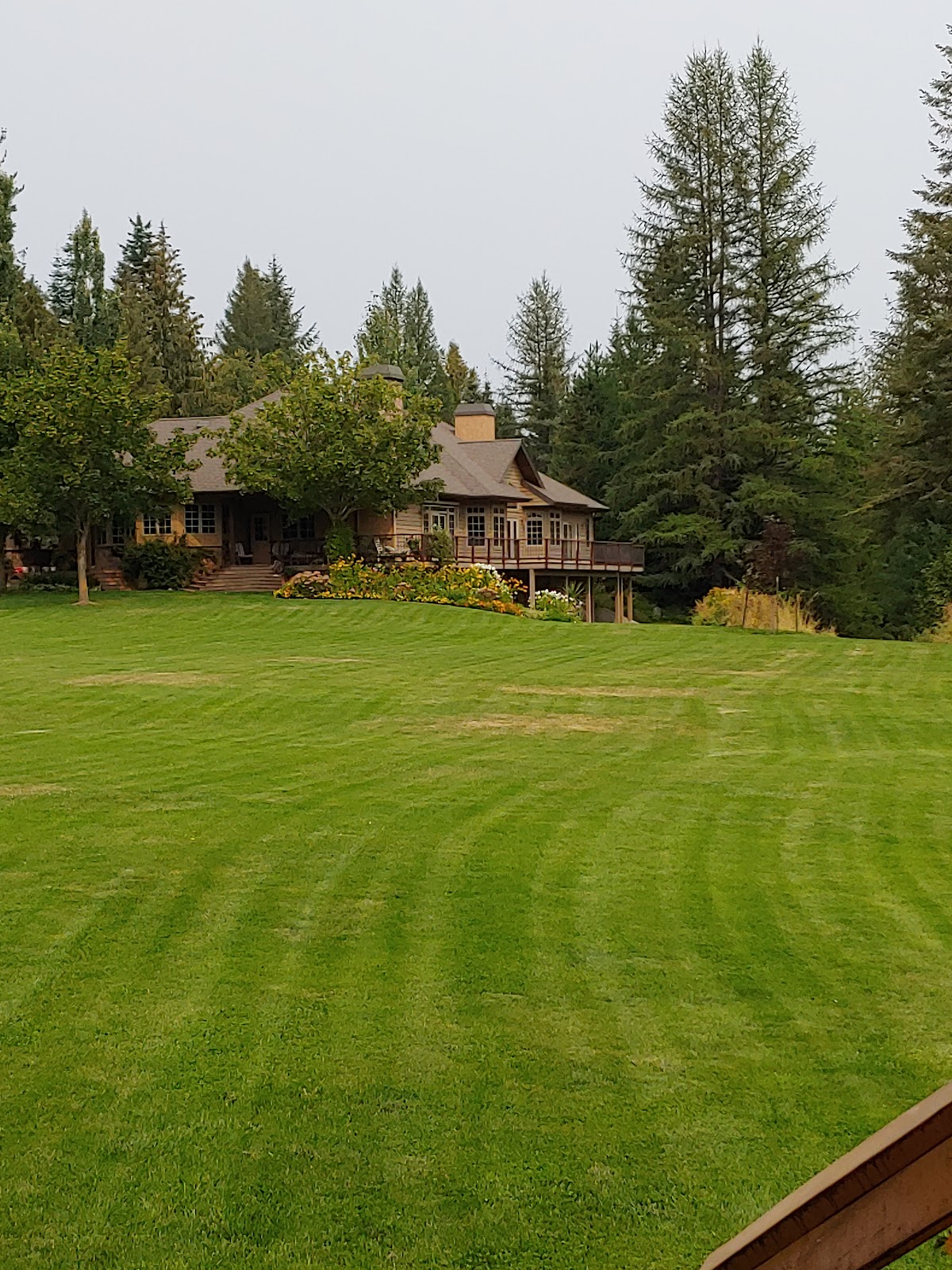
The Barn at Stillwater sits on farmland near Coeur d’Alene, in the north of Idaho, and it is what the name says: a timber barn adapted as an event space, on open agricultural ground with mountains visible on the horizon.
Timber is a dark, matte, warm-toned material. A stained or weathered board reflects perhaps ten or fifteen per cent of the light that falls on it, where a white plastered wall reflects eighty. So a room whose walls, ceiling and often floor are all timber is a room that absorbs light rather than returning it, and that single fact creates four connected problems.
There is no bounce. The technique that lights a hotel ballroom — two lights aimed at a pale ceiling, lifting the whole room invisibly by a stop and a half — simply does not work in a barn. Light aimed at timber comes back weak and strongly orange-tinted, and most of it does not come back at all.
The levels are low. Barn interiors are lit by whatever has been added, which is usually filament festoon or string lighting chosen for atmosphere rather than for illumination, and the ambient will be several stops below what a camera wants.
The colour is warm and mixed. Festoon bulbs are very warm, any added fixtures may be cooler, and daylight through a door or a window is cooler still — three sources at three temperatures in one room, which no single white balance reconciles.
And the geometry is awkward. A barn’s ceiling rises to a ridge but its eaves come down low, so the useful headroom is in the middle and the walls are not vertical at the edges. Wide frames catch roof structure and a lot of empty dark volume.
None of that makes a barn a bad venue. Barns produce warm, atmospheric, unmistakably rural photographs and a great many couples want exactly that. But the good frames come from four specific manoeuvres rather than from working the room as though it were a hall.
The first is the doorway, which in a barn is the best light source for several hundred kilometres.
The second is to stop trying to lift the room and light small instead, using the darkness as an asset.
The third is to go outside, because the setting here is genuinely remarkable and it is what the venue actually has.
And the fourth is to work close, because timber at close range is a superb textural subject even when it is a difficult background.
Each of those in detail, then the year — which at this latitude is more extreme than most people expect.
The Barn at Stillwater at a glance
| Where | A timber barn on farmland near Coeur d’Alene, in the Idaho Panhandle |
| The problem | Timber absorbs light: no bounce, low levels, mixed warm colour, awkward volume |
| Four ways out | The doorway, lighting small, going outside, and working close |
| The setting | Flat glacial outwash farmland, enormous sky, mountains on the horizon |
| Ask first | Whether lights on stands are permitted, and the rain plan’s capacity as a number |
Ways one and two: the doorway, and lighting small
The doorway first, because it is the single best thing about photographing in a barn and it is regularly underused.
A barn door is an enormous rectangular opening in a dark wall. When it is open, you have a very large light source — several metres by several metres — set in a surface that reflects almost nothing, which means the light is directional, soft, and has an extraordinarily fast falloff. There is no fill coming back off the walls to soften the transition, so a subject standing inside a doorway is beautifully lit on one side and genuinely dark on the other.
That is a portrait light of real quality and it is free. Stand the subject just inside the opening, a metre or so in, facing out or at forty-five degrees to it, and the modelling is as good as anything a studio produces. The dark interior behind them separates them completely with no aperture tricks required.
Step the positions out rather than estimating, because falloff in a dark-walled room is faster than instinct suggests — perhaps a stop and a half per metre near the opening. Three metres in and the same subject is underlit and flat.
If the light coming in is direct sun rather than skylight, it will be hard and contrasty. Two fixes: work when the sun is off that elevation, so the opening delivers skylight instead, or hang something translucent across the opening if the venue allows it, which turns the whole door into a softbox. Ask first.
A second doorway or a window on the opposite side changes everything, because then you have a source and a fill. Look for one, and if it exists, use the smaller as the fill by positioning between them rather than by adding anything.
Now the second manoeuvre, which is the one that makes the reception work.
Ask first whether lights on stands are permitted, where, and at what hours. Barn venues vary, and a timber building has fire-safety considerations that make a venue’s answer legitimate whatever it is. Get it in writing.
Assuming they are, do not attempt to raise the ambient. You cannot: there is no bounce surface, and a barn’s volume is large enough that lifting it a stop would need more output than is practical. Instead light small and let the darkness work for you.
A dark timber interior is effectively a black studio. A subject lit by one modifier at one end of it separates completely from the background, because the background is four or five stops down and records as almost nothing. That is separation for free, without a long lens and without a wide aperture, and it is the single most useful property of the building.
So: one light, close, feathered, on a stand, with a good depth of dark room behind the subject. That gives a clean, warm, deliberate portrait in about ninety seconds and it repeats anywhere along the floor without moving anything but the stand.
Warm your light. The ambient in a festoon-lit barn is very warm, and a neutral flash in that room reads distinctly cold and looks inserted. A light warming gel closes the gap and makes the source look as though it belongs.
For the wider reception frames, light the people rather than the space. A small source bounced off a nearby pale surface — if there is one, and there may not be — or a modifier close and feathered, plus whatever the festoon is doing, is usually enough. The festoon bulbs themselves are a feature: get them in frame, let them clip, and they read as warmth rather than as blown highlights. A barn frame with the string lights deliberately in shot is a better photograph than one carefully composed to exclude them.
On the mixed colour: choose the dominant source, which in the evening is the festoon, balance for that, gel your own light to match, and let any daylight through a door go cool and blue. A frame with warm interior light and a cool doorway reads as a room; the same frame corrected to neutral throughout reads as nothing. Do not average.
Ways three and four: outside, and close
The third manoeuvre is to leave the building, and at this venue the setting is the strongest asset it has.
The ground north of Coeur d’Alene is the Rathdrum Prairie — a flat plain of glacial outwash, laid down by catastrophic floods at the end of the last ice age when ice-dammed lakes to the east burst and swept gravel westward. It is now farmland, and it is genuinely flat, with the mountains of the Panhandle rising on the horizon around it.
For a photographer that produces a specific and rather grand setting: an enormous sky, a level horizon, open fields in the foreground and forested mountains as a distant backdrop. It is the opposite of the enclosed lake landscape a few kilometres south, and it is what makes a barn out here better than a barn in a wood.
Use the sky. When the horizon is level and the foreground is low, the frame is two-thirds sky whether you like it or not, so compose for it: put the horizon low, and shoot when the sky has something in it — cloud, colour, a storm edge. A flat blue sky over flat fields is the one condition here that gives you nothing, and a broken sky is worth waiting for.
Use the crop, and find out what it is. Farmland changes completely through the season: bare tilled soil in spring, green growth through early summer, ripening to gold in July and August, harvested stubble in late summer, and bare again in autumn. A wheat or barley field at full height and full colour in late July, backlit by a low sun, is a glowing screen — the grain heads are translucent and they light from behind exactly as prairie grasses do. That is the best exterior frame the venue offers and it is available for perhaps three weeks.
So ask the venue what is planted and when it will be cut. It is a question nobody thinks to ask and the answer changes the photographs more than anything about the building.
The level horizon has one technical consequence worth stating: with no relief anywhere, any camera tilt is immediately obvious. Use a level outdoors here, not only indoors.
And the flatness means there is no shade. On open farmland in the middle of a summer day there is nowhere to stand, which puts the middle of the day inside the barn — which is fine, because the barn does not care what hour it is.
The fourth manoeuvre is to work close, and it is where the timber stops being a problem and becomes a subject.
Weathered and sawn timber at close range is one of the best textural surfaces there is: grain, splits, saw marks, nail heads, knots, the greyed silvering of an exposed board. It rewards raking light absolutely — a source placed almost parallel to the surface throws every ridge and split into its own small shadow, and the board reads as material. The same board lit frontally goes flat and becomes a brown plane.
That gives you a whole register of detail frames — rings on timber, hands on a rail, fabric against a board, a bouquet on a bench — which have nothing to do with the room’s lighting problem and can be made at any hour with one small light held at a shallow angle.
Barn hardware is the other close subject: hinges, latches, iron straps, sliding-door tracks, bolts. Old metal against old wood, raked, is a set of frames that place the photographs firmly in a working rural building rather than in a decorated one.
Two practical notes about outside. Farm ground is farm ground: after rain it is mud, and in dry weather it is dust, and neither is kind to a long dress or to a lens being changed in the open. Establish what is surfaced. And dust and pollen in the air in a dry summer are a real thing here — they scatter light, which softens a low sun beautifully and also gets on a sensor. Change lenses with your back to the wind, low down, or not at all.
North Idaho, and the year
This is a high-latitude, mountain-adjacent, semi-continental setting and the year is more extreme than the mild-sounding word Idaho suggests.
Coeur d’Alene sits at about forty-seven and three-quarter degrees north, the same latitude as Seattle, which gives the largest seasonal swing outside the far north of this collection. In late June sunset is after nine, there are roughly sixteen hours of daylight, civil twilight runs close to thirty-seven minutes and the noon sun reaches about sixty-six degrees. In late December sunset is before four, there are around eight and a half hours of daylight, and the noon sun never rises above about nineteen degrees.
Thirty-seven minutes of civil twilight is the longest dusk in this library, and the genuinely usable balance point inside it runs eighteen to twenty minutes. At a barn that is the most valuable block in the day, because it is when the interior’s festoon lighting and the exterior sky are within a stop of each other — which means you can make one frame containing a lit barn and a graduated sky, which neither the interior alone nor the exterior alone gives you.
That frame is the one to protect. Camera outside on a tripod, the barn doors open with the festoon lights on inside, the sky still holding colour above the roofline, and the couple in the doorway lit by the interior with a touch of your own fill. It takes ten minutes to set up and five to make, and it is the photograph a barn wedding should end with.
There is a caveat and it is the mountains. Forested ridges are close enough on some horizons to take the sun before it sets, so the effective sunset can be earlier than the printed time — less than at the lake a few kilometres south, because the prairie is open, but worth checking. Look at the western skyline from the barn itself.
The midsummer noon sun at sixty-six degrees is a full seventeen degrees lower than the Gulf South’s, which means midday outdoors here is more workable than it is further south. Open shade functions properly and a portrait in the field at one in the afternoon is a reasonable proposition, if an unremarkable one. The lack of shade is the constraint rather than the sun angle.
The climate is Inland Northwest: drier than the coast, wetter than Spokane, with real snow in winter and warm dry summers. July and August are the reliable season — warm dry days, cool nights, dependable sun — and they are also when the grain is at its best and when the two late-summer hazards bite.
Afternoon thunderstorms build over the mountains through July and August, localised and quick, and on open farmland with a tall isolated timber building they carry genuine lightning risk. That is a safety matter rather than an inconvenience: know where everyone goes and how long it takes to get there. Ask what the covered capacity actually is, as a number, and compare it to the guest list — at a barn venue that number is usually the barn itself, which is reassuring, but confirm it.
Wildfire smoke is the other, and it has become a serious recurring feature of August and September across the Inland Northwest. Smoke from fires in Idaho, eastern Washington, Montana and British Columbia can fill this region for days, turning the light orange, flattening all contrast and producing air quality that makes an outdoor event genuinely inadvisable. It cannot be forecast far ahead, so a late-summer plan here needs an air-quality contingency as well as a weather one — and a barn is unusually resilient to it, since the ceremony and reception can both be indoors.
Mid to late October is the most beautiful window and the reason is a tree. The forests here include western larch, a deciduous conifer, which turns brilliant gold in the second half of October and then drops its needles — so the mountain slopes on the horizon carry bands and patches of gold through dark evergreen for about a fortnight. On a flat prairie with mountains in the distance, that colours the entire backdrop. It is one of the most distinctive seasonal effects in this collection and almost nobody plans for it.
Spring is the least photogenic season here: bare tilled fields, brown ground, and the wettest part of the year on farm soil. May and June improve quickly as the crop comes up and the evenings lengthen.
Winter is a real winter, with substantial snow and temperatures well below freezing. That produces genuinely good material — a dark timber barn on white ground under a low nineteen-degree sun is maximum tonal separation, and the festoon-lit interior against early darkness is at its best — and it makes any outdoor work a ten-minute planned proposition rather than an hour.
Two winter cautions. Access on rural roads in snow is a real travel problem for guests and suppliers rather than a photographic one, and a January date deserves a contingency that assumes some people cannot drive. And valley inversions can put low cloud or freezing fog over the prairie for days, which is atmospheric and flattering if you work with it rather than waiting for sun that is not coming.
The compensation in any season is the half hour after a storm clears: washed air so the mountains resolve on the horizon, wet timber several tones darker and far more saturated than dry, standing water in the field reflecting the sky, and a low sun coming under a broken ceiling across open ground. Wet weathered timber is a considerably better material than dry weathered timber. If a cell goes through at six, do not pack.
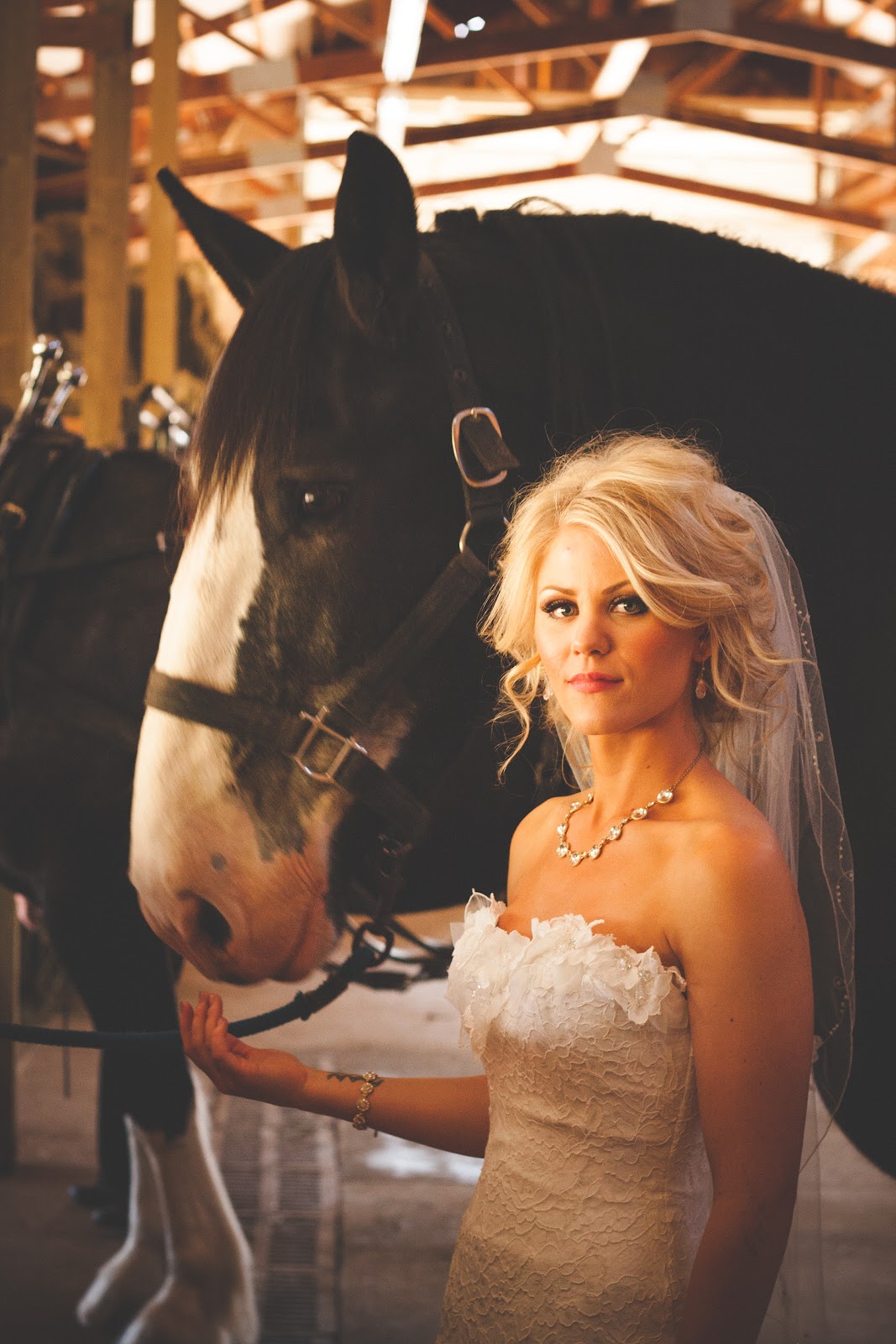
More frames from The Barn at Stillwater
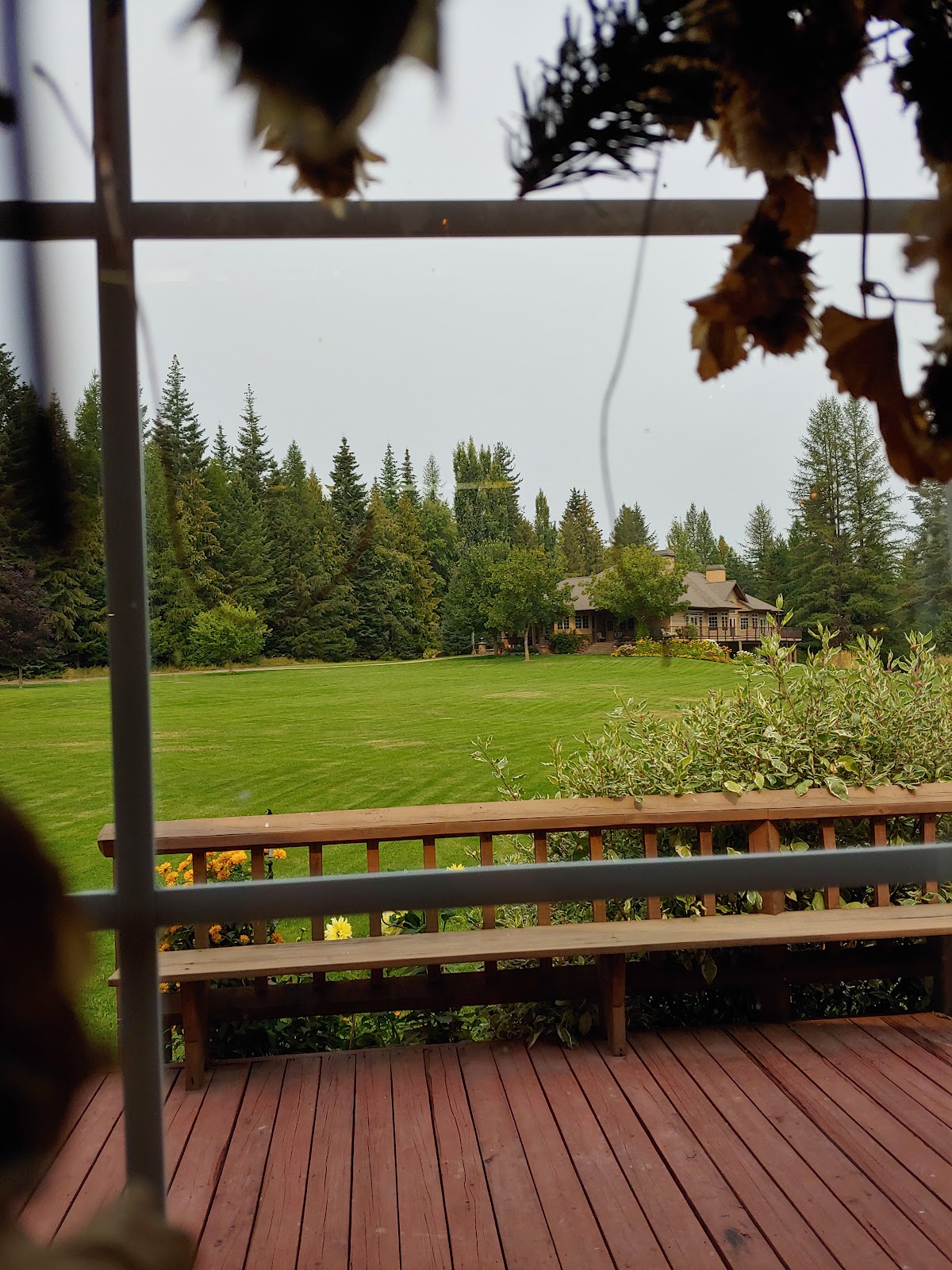
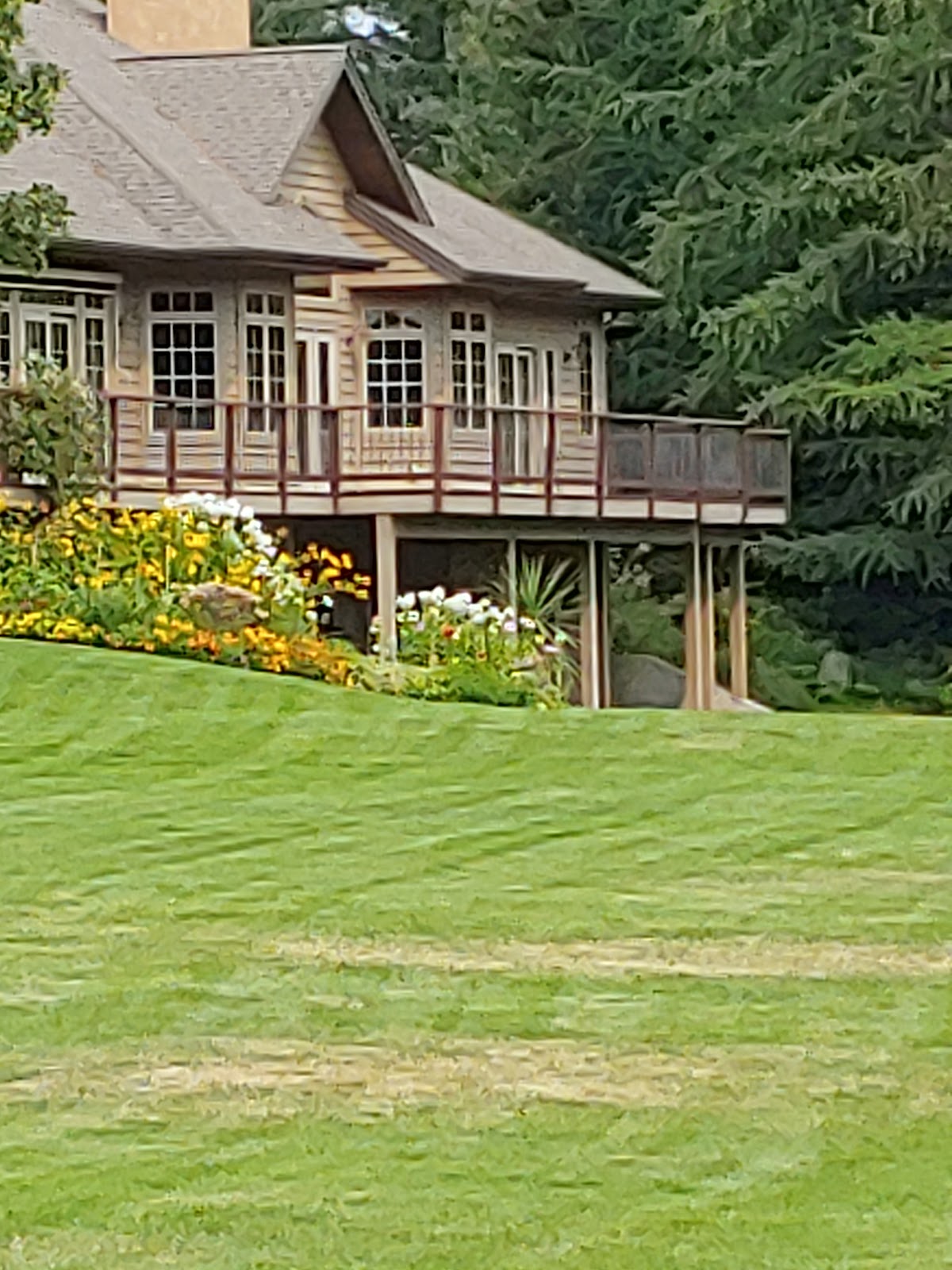
The Barn at Stillwater wedding photography: common questions
Why is a barn interior so difficult?
The material. Stained or weathered timber reflects perhaps ten or fifteen per cent of the light falling on it, against eighty for a white plastered wall — so a room whose walls, ceiling and floor are all timber absorbs light rather than returning it. That removes the bounce, which is how a hotel ballroom gets lit; a light aimed at timber comes back weak and strongly orange, and most of it does not come back at all.
So how do you light it?
Small, not big. Do not attempt to raise the ambient — there is no bounce surface and the volume is too large to lift a stop at any practical output. Treat it as a black studio instead: one modifier, close and feathered, with a good depth of dark room behind the subject, which separates them completely because the background is four or five stops down. Warm your light with a gel, because the festoon ambient is very warm and a neutral flash reads cold and inserted.
What is the best light in the building?
The doorway, and it is regularly underused. An open barn door is a very large source set in a surface that reflects nothing, so the light is directional, soft and has an extraordinarily fast falloff — a metre inside the opening a subject is beautifully modelled with a genuinely dark side, and the dark interior behind separates them with no aperture tricks. Step the positions out rather than guessing: falloff near a barn opening can be a stop and a half per metre.
What should we ask the venue?
Whether lights on stands are permitted, where and at what hours, since a timber building has legitimate fire-safety considerations. The covered capacity as a number, compared to the guest list. What is planted in the surrounding fields and when it will be cut — nobody thinks to ask, and the answer changes the exterior photographs more than anything about the building. And whether anything can be hung across a doorway to diffuse direct sun.
What is the best exterior frame?
A grain field at full height, backlit by a low sun. The heads are translucent and light from behind exactly as prairie grasses do, turning the field into a glowing screen — and on this flat glacial outwash plain, with an enormous sky and mountains on the horizon, that is a genuinely grand setting. It is available for about three weeks in late July and August, which is why the crop question matters. Note also that with a level horizon and no relief, any camera tilt is obvious: use a level outdoors.
When is the best time of year?
Mid to late October for the landscape, because the forests here include western larch — a deciduous conifer that turns brilliant gold in the second half of October before dropping its needles, so the mountain horizon carries bands of gold through dark evergreen for about a fortnight. Late July and August for the grain and the reliable weather, with two cautions: mountain thunderstorms carry real lightning risk around a tall isolated timber building on open ground, and wildfire smoke is now a recurring August and September feature that needs an air-quality contingency.
More Coeur d'Alene, ID venue guides
We are writing a photographer’s guide to every venue we would happily shoot in Coeur d'Alene, ID. Here are three more, plus the full index:
- The Coeur d’Alene Resort, Coeur d’Alene: A Walk Through the Building
- The Lakeview Lodge, Coeur d’Alene: Suits and Does Not Suit
Planning a wedding at The Barn at Stillwater?
The doorway, one light, and the field at the right week. Tell us your date.