 The Somerset Club on Beacon Street: Is It Right for You?
The Langham Boston: Field Notes on a Converted Federal Reserve Building
A bank was built to look permanent. Height, symmetry and stone are the whole vocabulary, and all three matter.
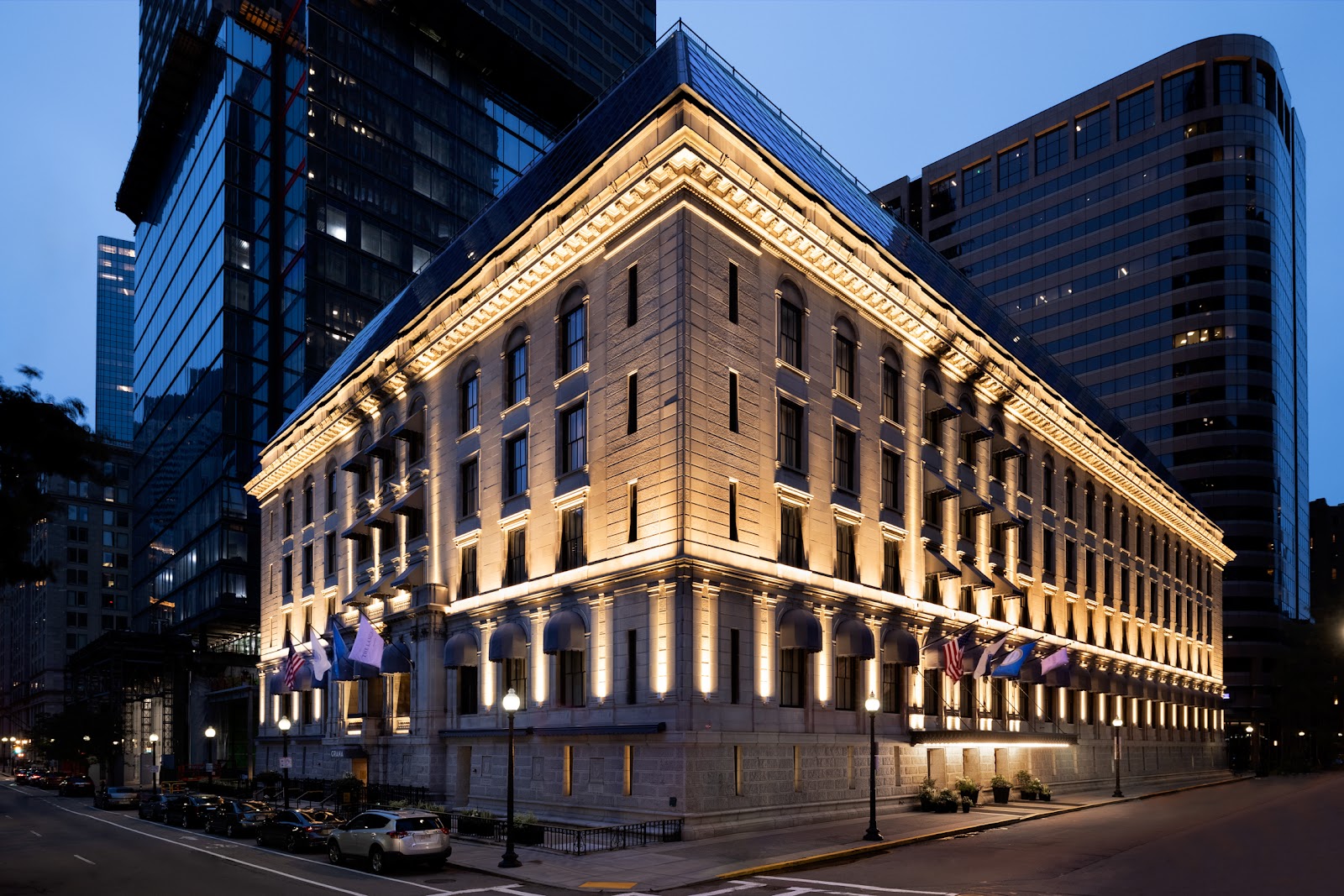
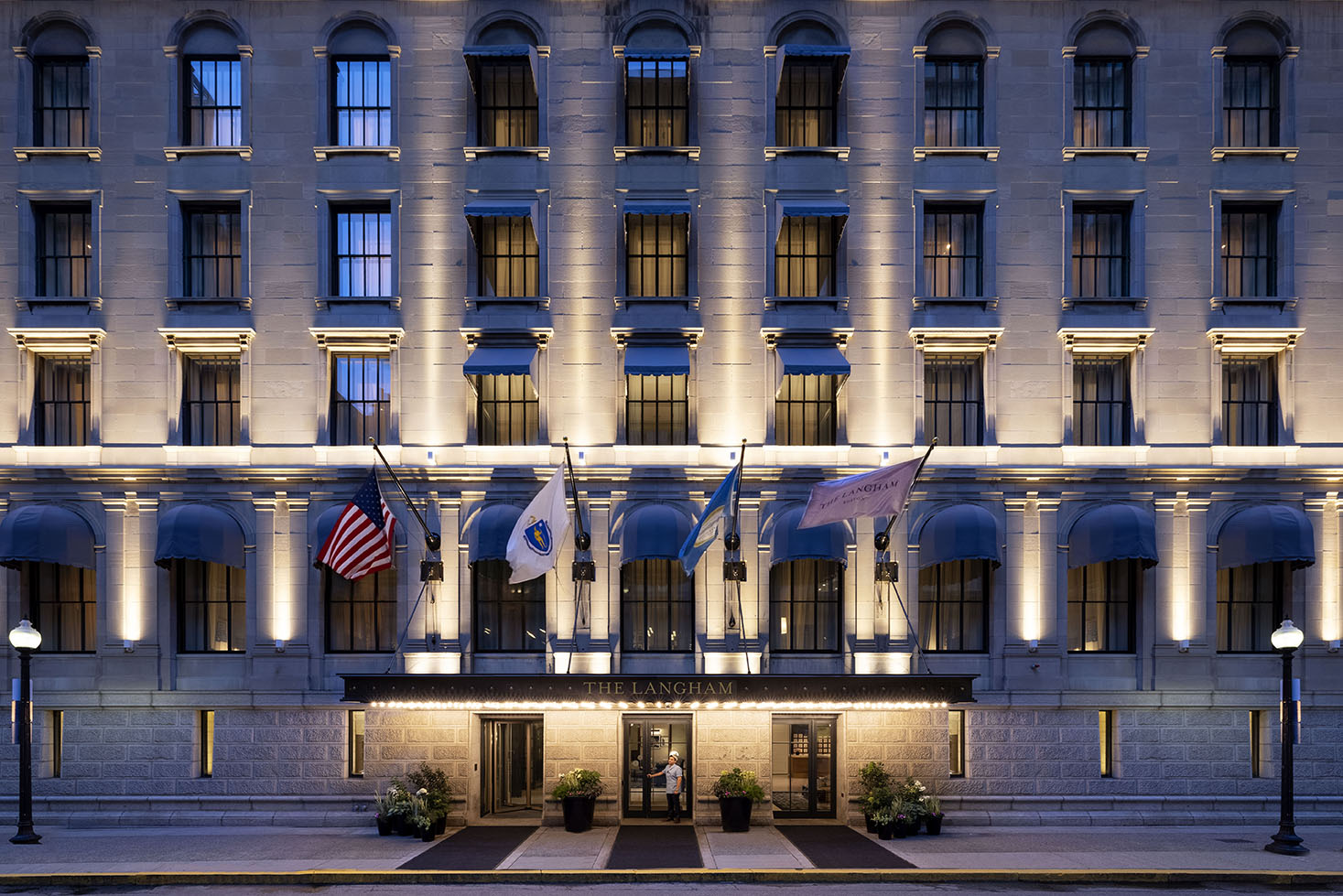
The Langham Boston occupies what was originally the Federal Reserve Bank building, blending — as its own description has it — historic significance with contemporary refinements.
A former bank is a specific and unusually consistent kind of conversion, because banking architecture was designed to communicate one thing: permanence. That produced a repeatable set of decisions — a tall single-volume public hall, strict symmetry, stone or marble rather than plaster, windows set high above head height, and ornament concentrated at the cornice and the entrance. Every one of those has a direct photographic consequence, and together they make a converted banking hall behave unlike any hotel built as a hotel.
These are field notes: the conditions you will meet and what each one needs. We have not photographed a wedding at the Langham; converted banking halls behave consistently. Which spaces are included, whether the function room lighting is adjustable, and what may be attached to stone are the questions for their team — stone almost never takes a fixing.
The Langham Boston at a glance
| Where | Boston, Massachusetts |
| Character | A hotel in a former Federal Reserve Bank building |
| The vocabulary | Tall single volume, strict symmetry, stone, high windows |
| Consequences | No bounce, cool fill, hard separation, and precision matters |
| Ask first | Spaces included, lighting control, fixings to stone |
What you meet, and what each one needs
Height is the first condition and it removes the reflex indoor move. A banking hall ceiling is far enough away that a flash aimed at it returns almost nothing usable, so bounce barely functions. The substitutes are a pale wall at a sensible distance, a reflector, or direct modified light, and one test frame in the first minute settles which.
Stone is the second and it behaves differently from brick, plaster or timber in two ways worth knowing. It bounces neutral to cool rather than warm, which means a stone interior fills a face with cool light and can render skin slightly grey — where a brick building would flatter it. A warm-gelled key, or a warm reflector, is the correction, and it is worth carrying specifically for stone interiors.
And polished stone is partly specular: it returns a bright reflection of any source rather than a soft scatter, so a light aimed near a polished plane produces a visible hot spot rather than a gentle lift. Angle sources away from polished surfaces, or place the reflection deliberately where it is wanted.
High windows are the third condition and they are photographically excellent. A window set well above head height sends light down into a room at a steep angle from one side, which is close to a classical portrait position by the time it reaches a face — directional, elevated, and soft because it has travelled. The position to find is where that light rakes across the space rather than falling straight down, and it is usually further from the wall than instinct suggests.
The steepness does bring the usual problem in a milder form: light from above darkens eye sockets and marks under the nose. A reflector held low, a lifted chin, or a small face-height source fixes it — and in a hall this size a reflector is often easier to place than a light.
Symmetry is the fourth and it changes how frames have to be made. A symmetrical hall photographed slightly off its axis reads as careless, because the eye detects a two-degree error in a symmetrical composition instantly while forgiving a large error in an asymmetrical one entirely. The near-miss is the only failure available — so centre exactly or step clearly away, and use the electronic level.
Contemporary fit-out is the fifth and it brings mixed sources: track lighting, decorative fittings and accent lighting on architecture, at different colour temperatures and rarely agreeing with the daylight from high windows. Three colour temperatures in one frame cannot be resolved afterwards — pick the one that should be correct, set a manual white balance to it, and switch off or overpower whatever else lands on skin.
Using the volume, and the rest of the building
The axial frame is the strongest a converted banking hall offers and it is worth the two minutes it needs. Shot down the length of the hall on the centre line, it gives depth, repetition and a vanishing point at once, which is the most forceful composition architecture provides.
The couple belongs in the depth of that frame rather than at the front of it. Placed two-thirds of the way into a tall hall they become the focal point of the architecture and read as two people in a very large room built for something else — which is the emotional content of a bank conversion. Placed close to the camera they block the volume and the frame becomes a portrait with a ceiling.
A large dim volume gives free separation, which is the opposite of the pale-modern-hotel problem and should be exploited rather than filled in. Light falls off steeply, so a subject three metres in front of anything else sits against natural darkness with no equipment at all.
Any surviving bank fittings — a vault door, counters, screens, brass, stone plinths — are the details that identify the building and they are worth photographing on a fast lens at a raised ISO. A vault door in particular is a frame nobody has at their wedding and it takes two minutes.
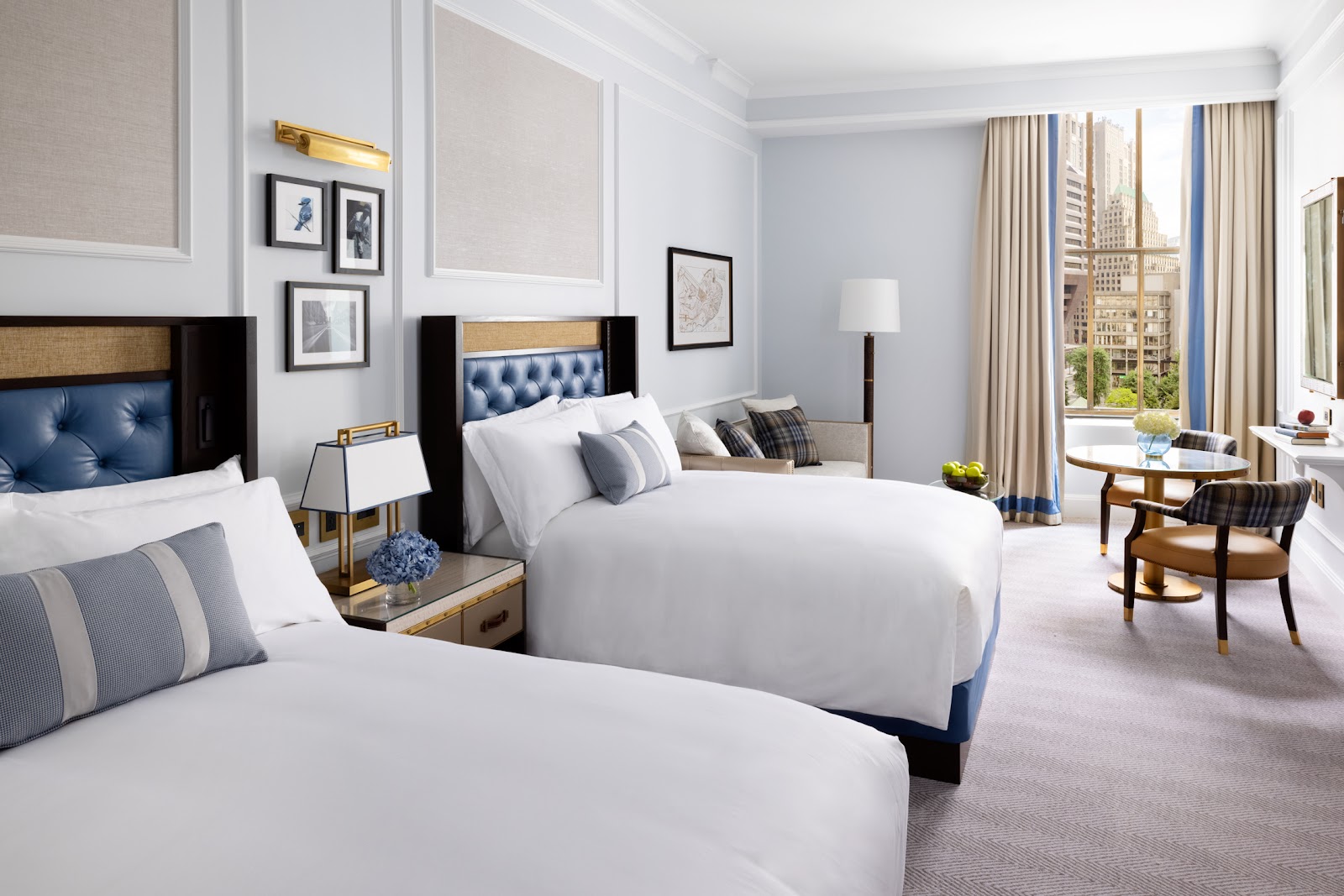
Guest floors are where the best portrait light is, as in any hotel: domestic-sized windows with close walls that bounce, and ceilings low enough that a flash aimed upward returns something usable. Ask for the largest window on the shaded side, switch off every overhead so the room has one colour of light, and move the lamps out of frame.
A grand stair, where the conversion retains one, solves the group problem that tall halls otherwise handle badly: steps make rows automatically, and thirty people arrange themselves with everybody visible in a way a flat floor never allows.
The dusk crossing is the one timed frame and at a building with high windows it is particularly good. For roughly twenty minutes after sunset the street falls to about the brightness of the interior lighting, and one exposure holds the lit hall, the couple and the city beyond. After it the windows become large dark reflective planes high in the frame, so keep sources off-axis and shoot obliquely.
- Test bounce once; a banking hall ceiling returns almost nothing
- Stone fills cool — carry a warm gel or a warm reflector for it
- Angle lights away from polished stone, or place the reflection on purpose
- Level and centre the axial frame; the near-miss is the only failure
- Put the couple two-thirds into the hall and let fall-off separate them
Outside, and Boston through the year
Boston’s material colour rule matters at a stone building more than at most: brick and brownstone bounce warm and flatter skin, while granite and limestone bounce cool and can grey it. A converted bank is usually clad in the cool kind, so the warm material is across the street rather than on the building — which makes the choice of which side to stand on a real decision rather than an aesthetic preference.
Boston’s street plan is the other local fact. Outside Back Bay the streets are irregular rather than gridded, which means which way a street runs relative to the setting sun is a block-by-block question rather than one answer for the city. A short walk with the sun’s position in mind is worth more here than a map, and it is the single most useful ten minutes of preparation.
Alleys and side streets are the most dependable positions in any downtown: walls on both sides give directional light, a contained background with nothing distracting in it, and shelter. Service elevations hold the most texture because nobody ever tidied them.
New England seasons differ sharply. Summer is humid but rarely extreme, and the long June days put sunset late enough that the golden hour arrives after a reception has started — which at a hotel is easy to accommodate as a short agreed excursion, because the interior does not care what time it is. Autumn brings the region’s foliage peaking in mid-October, which against cool stone is a strong complement.
Winter is the hard season. Sunset falls in the middle of the afternoon in December, compressing the outdoor window into a couple of hours and possibly placing it before the ceremony. Snow is the compensation and it is the best natural fill there is, lifting exactly the shadows a low sun carves while fooling a meter by about two stops — and against pale stone it needs watching, because snow and limestone together will clip if the exposure is not checked.
Coastal weather brings nor’easters in winter and fog in spring and early summer. A large hotel survives either without a decision, and fog is worth stepping out into: it reduces an irregular downtown to receding soft shapes and produces the frame nobody plans for.
One equipment note: a heated dry winter interior and cold outside air fog a lens in both directions, and a stone building holds cold longer than a modern one. Let kit come towards the temperature of where it is going before it gets there.
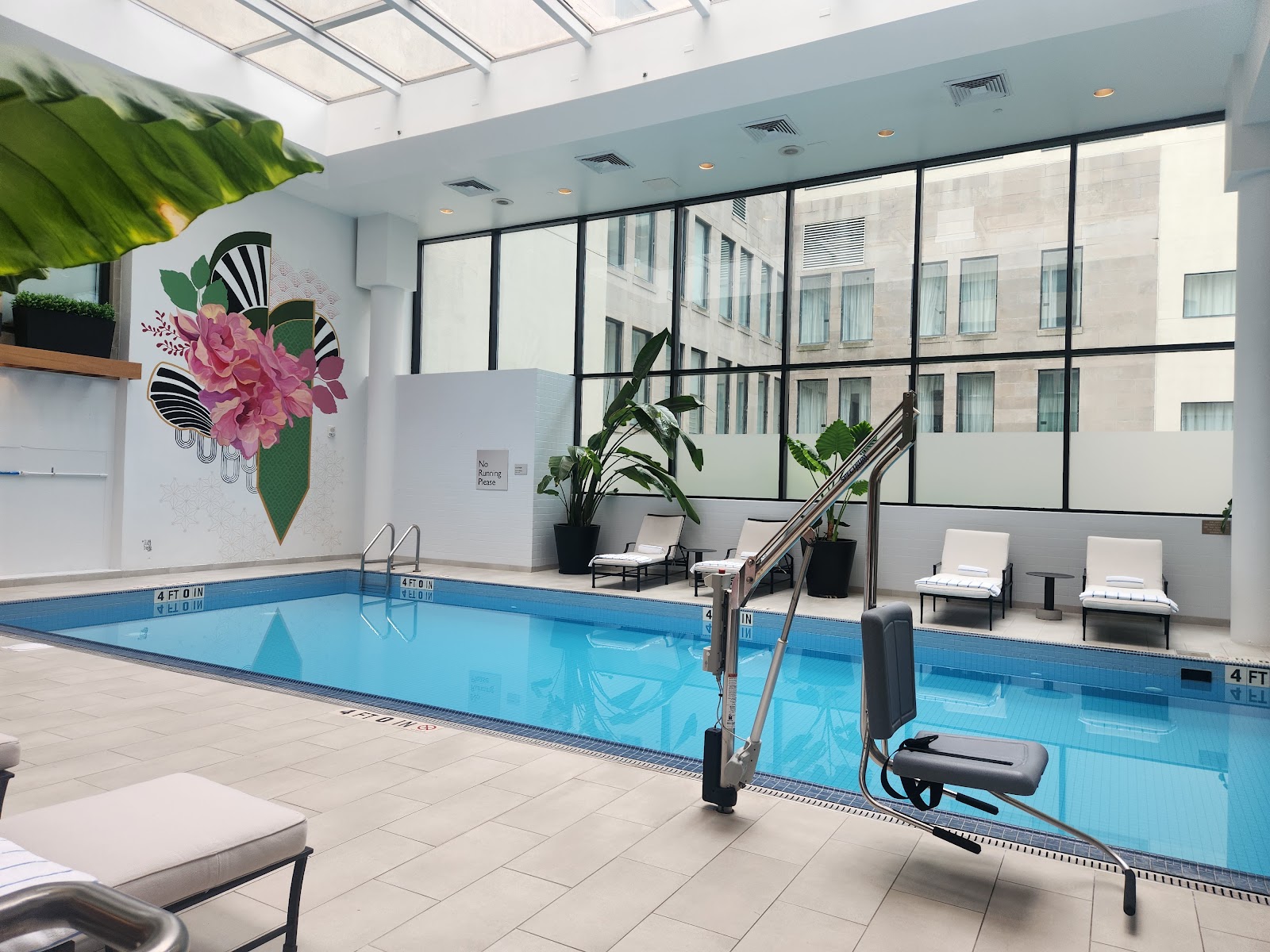
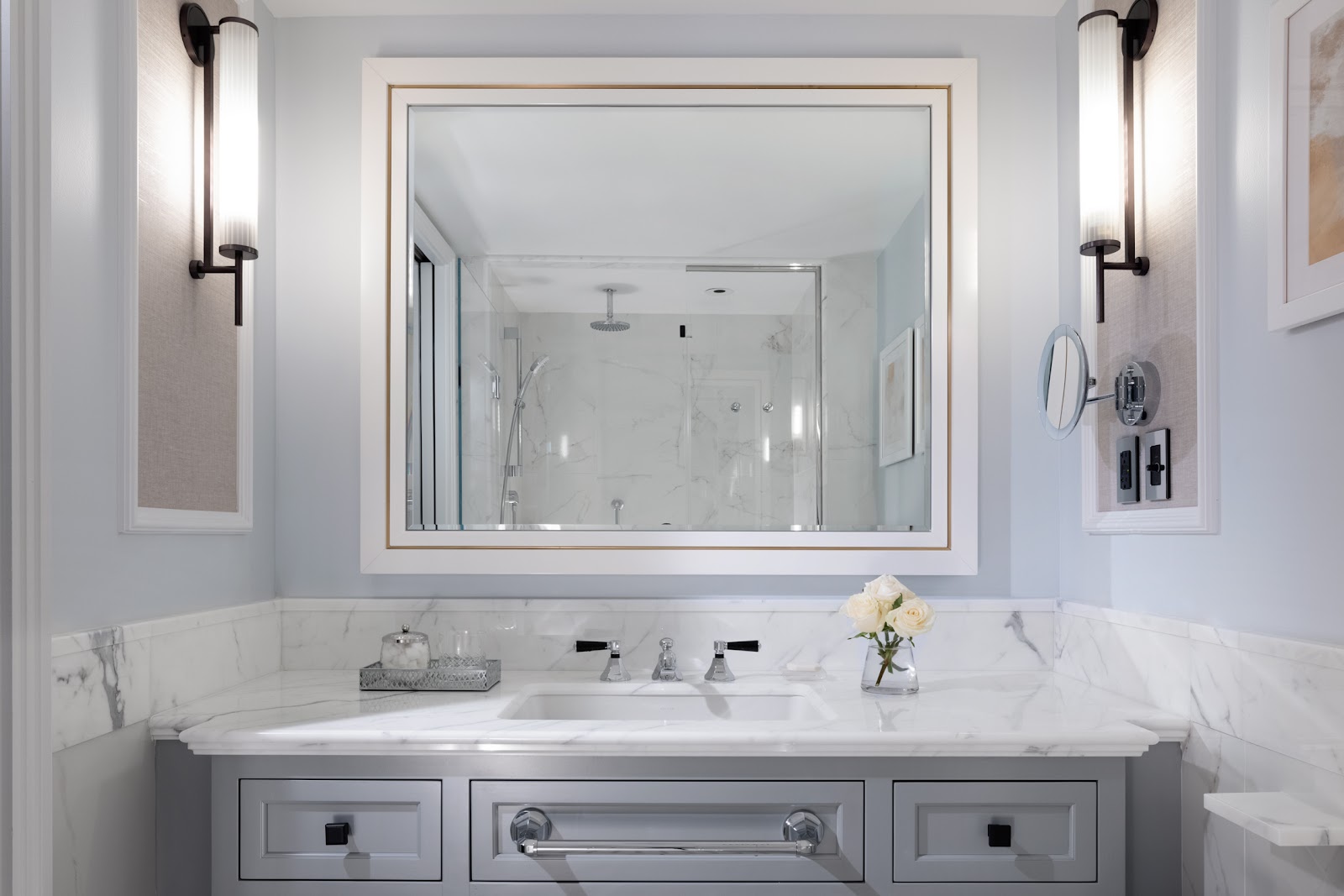
More frames from The Langham Boston
The Langham Boston wedding photography: common questions
What is a banking hall's defining feature?
A single tall volume built to communicate permanence — which means no usable ceiling bounce, stone rather than plaster, high windows and strict symmetry.
How is stone different from brick?
It bounces neutral to cool rather than warm, so it fills a face with cool light and can render skin slightly grey. A warm gel or a warm reflector is the correction.
What about polished stone?
It is partly specular, returning a bright reflection of any source instead of a soft scatter. Angle lights away from polished planes, or place the reflection deliberately.
What do high windows give you?
Light entering at a steep angle from one side — close to a classical portrait position, directional and soft by the time it arrives. The position to find is further from the wall than instinct suggests.
Where should the couple stand?
Two-thirds of the way into the hall, so they become the focal point of the architecture and read as two people in a room built for something else.
What is the Boston street trap?
Outside Back Bay the plan is irregular rather than gridded, so which way a street runs relative to the sun is a block-by-block question. Ten minutes of walking beats a map.
More Boston, MA venue guides
We are writing a photographer’s guide to every venue we would happily shoot in Boston, MA. Here are three more, plus the full index:
- The Lenox Hotel, Boston: What It Suits and What It Does Not
- The Mandarin Oriental Boston: How the Light Moves
- The Museum of Fine Arts, Boston: Four Ways Out of the Gallery Problem
All Boston, MA Wedding Venues →
Planning a wedding at The Langham Boston?
Stone needs a warm gel and a level. Tell us your date and we will bring both.