 The Somerset Club on Beacon Street: Is It Right for You?
The John F. Kennedy Library, Boston: The One Decision That Governs Everything
A glass pavilion on the water is one room that changes completely four times a day.
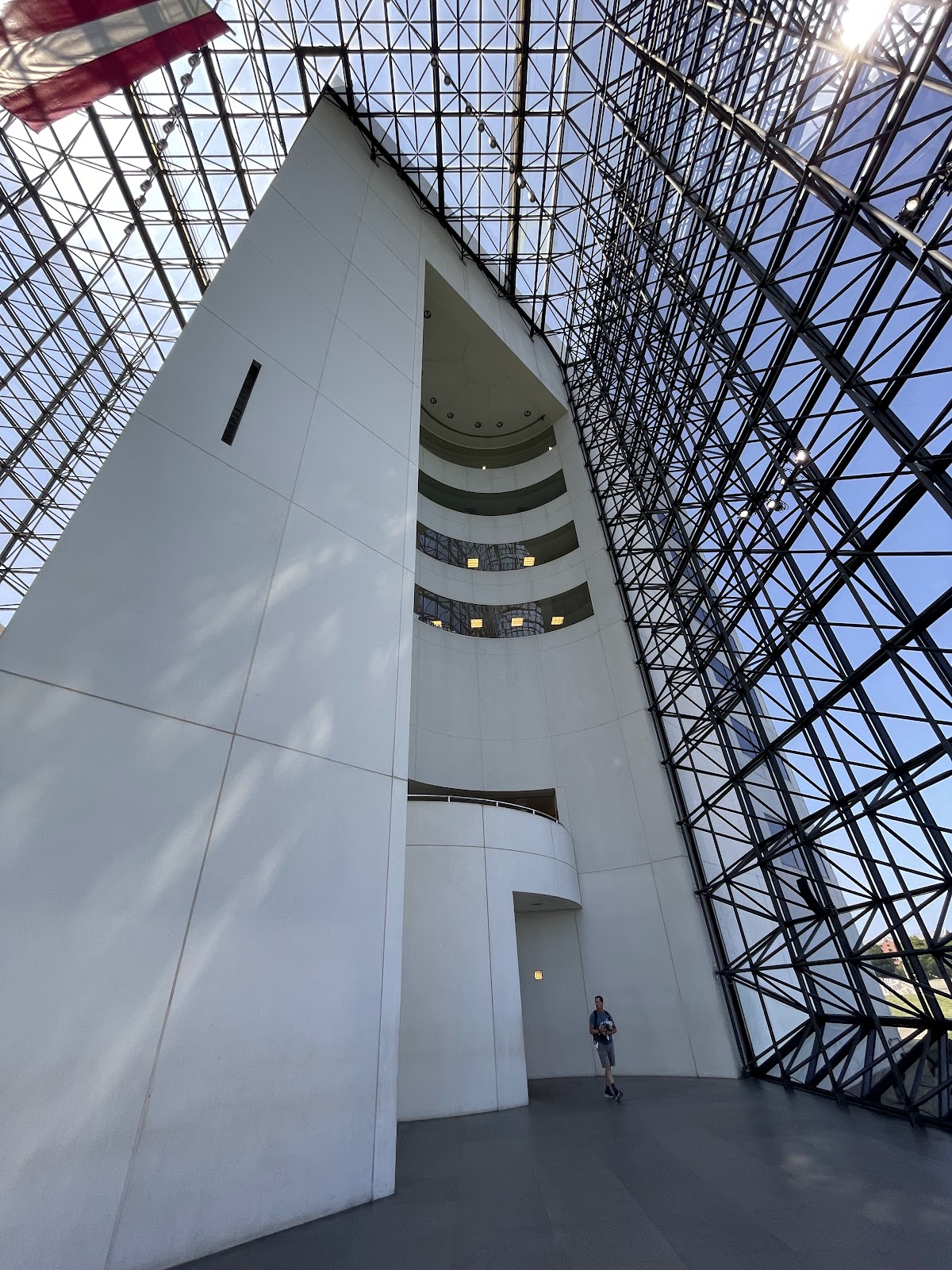
The John F. Kennedy Library is a striking example of modern design, as its own description has it, with clean lines and expansive glass facades on Boston’s waterfront.
One decision governs the photographic day and it is when you are in the glass. A large glazed pavilion is not a room with windows; it is a room made of windows, which means it has no fixed light of its own at all. Its character is entirely whatever the sky and the water are doing, and both change through the day more than any interior does. The same space is a bright even softbox under cloud at noon, a hard-shadowed grid in afternoon sun, a warm raking volume at six, a mirror at nine, and — for about twenty minutes in between — the best single frame the site can produce.
So the decision is which of those you want, and everything else in the schedule arranges itself around it. This is written around that decision. We have not photographed a wedding at the library; large glazed pavilions behave consistently. Which spaces a booking includes, whether photography is permitted in exhibition areas, and what the waterfront access allows are the questions for their team — and at a public institution they belong in writing.
The John F. Kennedy Library at a glance
| Where | The waterfront, Boston, Massachusetts |
| Character | A modern library and museum with an expansively glazed pavilion |
| The decision | When you are in the glass, because it has no light of its own |
| The one frame | Roughly twenty minutes after sunset, with the water beyond |
| Ask first | Spaces included, exhibition photography, waterfront access |
The four states of a glass pavilion
Under overcast the pavilion is at its most straightforward and its most flattering. Cloud diffuses the light before the glass does, so illumination arrives from the whole sky through the whole envelope — soft, even, shadowless, from everywhere at once. Position stops mattering, groups are easy, nothing needs carrying. Two small adjustments: add half a stop to a stop, because a bright grey sky in frame pulls a meter dark; and bring shape back subtractively, by placing the couple near anything dark, because a uniformly bright envelope has no direction to work with.
In direct sun the same space becomes a hard-light environment and the structure is the problem. Expansive glazing is held in a frame, and in sun that frame prints a grid of hard shadow across the floor, the walls and anybody standing in them — bands a stop or two apart running across a face, which cannot be corrected because it is a genuine exposure difference across the subject and cannot be posed around because it covers everything.
The answers are the usual three: find where the structure is densest overhead so the shadow reads as shade rather than as stripes; use the grid deliberately on a wall or floor rather than on skin, where it is genuinely attractive; or shift the hour so the sun comes through the flank rather than the roof.
In the last ninety minutes the pavilion becomes the best interior it is capable of. Low sun enters horizontally through one elevation, which turns the whole glazed wall into a large directional source at head height rather than an overhead one — the single most flattering condition a glass building offers. Which elevation depends on orientation, and one visit at approximately the right hour settles it.
After dark the glass inverts entirely, and in a pavilion the effect is total rather than partial: the lit interior is brighter than the outside, so every wall becomes a mirror and the water and city disappear. Lights go off the camera axis, frames go oblique, and reflections become material — a couple doubled in dark glass with the harbour beyond is a good frame, provided no stand is in it. Glazed corners reflect from both sides at once, so check them before guests arrive.
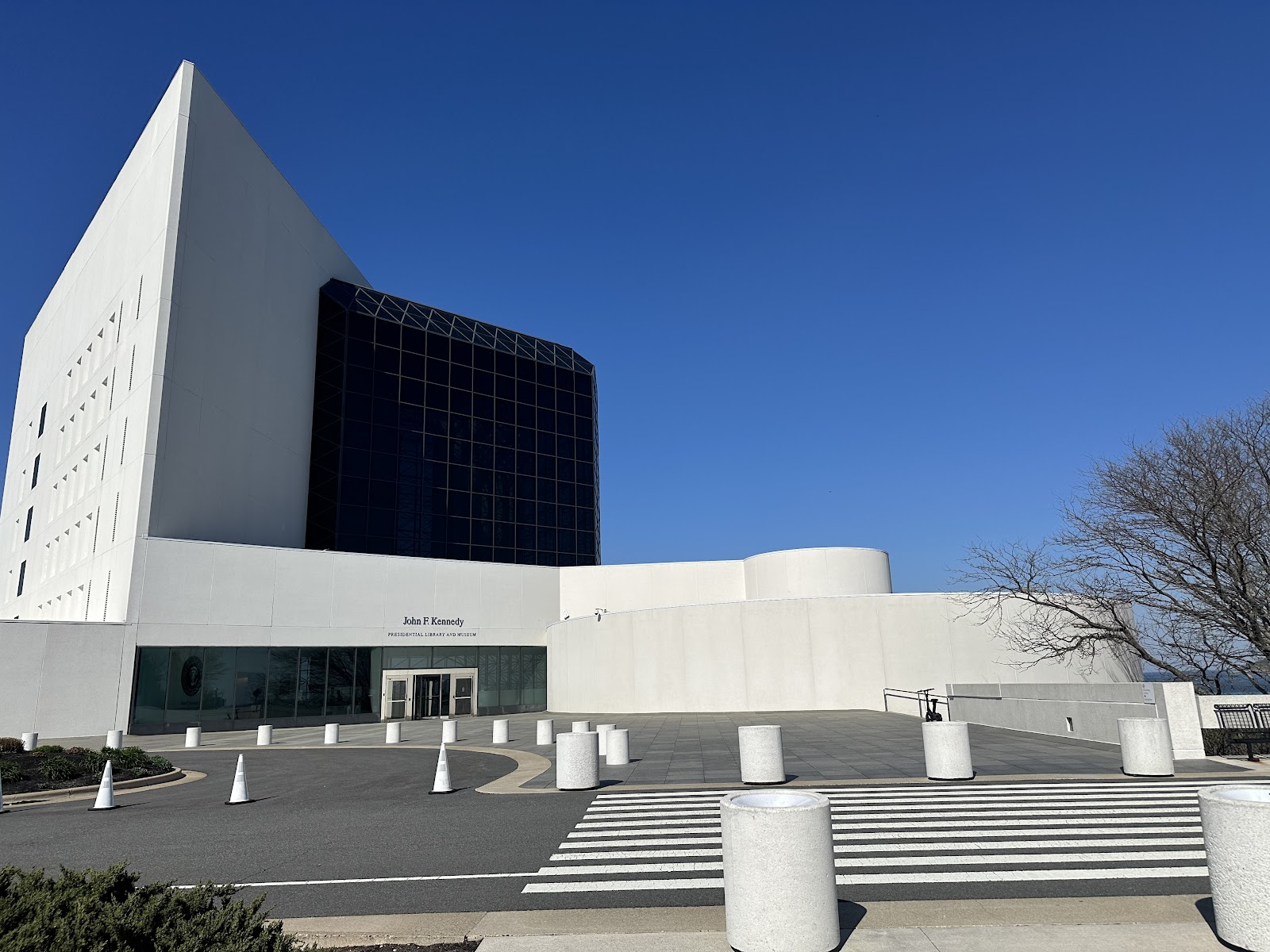
The twenty minutes that matter
Between the last of the daylight and full dark there is one window in which everything the building has works at once, and at a glazed pavilion on water it is exceptional.
For roughly fifteen to thirty minutes after sunset the outside falls to about the brightness of the interior lighting. In that window a single exposure holds the lit pavilion, the couple, the water beyond the glass and a sky that still has colour in it — four things that at every other hour of the day are mutually exclusive. It is the frame the building exists to give and it is the reason to book it.
It is also an appointment rather than an opportunity. Take the sunset time for the date, add fifteen minutes, be standing in position with the couple already there, and bracket a sequence as the sky falls so that one frame is exactly right. Arriving to look for it and then fetching people has already lost it.
One warm-gelled source at face height, set about a stop under the sky, is worth having ready: without it the couple will read as silhouettes against a bright sky and a bright water surface. With it, the faces hold and everything else stays as luminous as it is.
The water is the element that makes this better here than at an inland glass building. A harbour is a broad flat reflector, so the pavilion receives light twice through the day — from the sky and bounced up off the surface, which raises ambient and fills shadows from below. And at the crossing the water is holding the same colour as the sky, which doubles the amount of colour in the frame.
Modern architecture around all of this is spare, which means backgrounds must be built rather than found: depth, a long lens at a wide aperture, one directional source for a shadow side, and placement against the darkest element available. Pale on pale under even light is the default failure in any modern building, and negative fill fixes it more cheaply than another light.
Symmetry in a building of this kind rewards precision. Clean lines and repeated modules make compositions that read immediately and collapse under small errors, so level deliberately and either centre exactly or clearly do not.
- Overcast: shoot anywhere, add half a stop, subtract with something dark
- Sun: the frame prints a grid — use it on walls, never on faces
- Last ninety minutes: low sun through one flank is the best interior light here
- Sunset plus fifteen, in position, couple already with you, bracketed
- One warm source a stop under the sky, or they silhouette
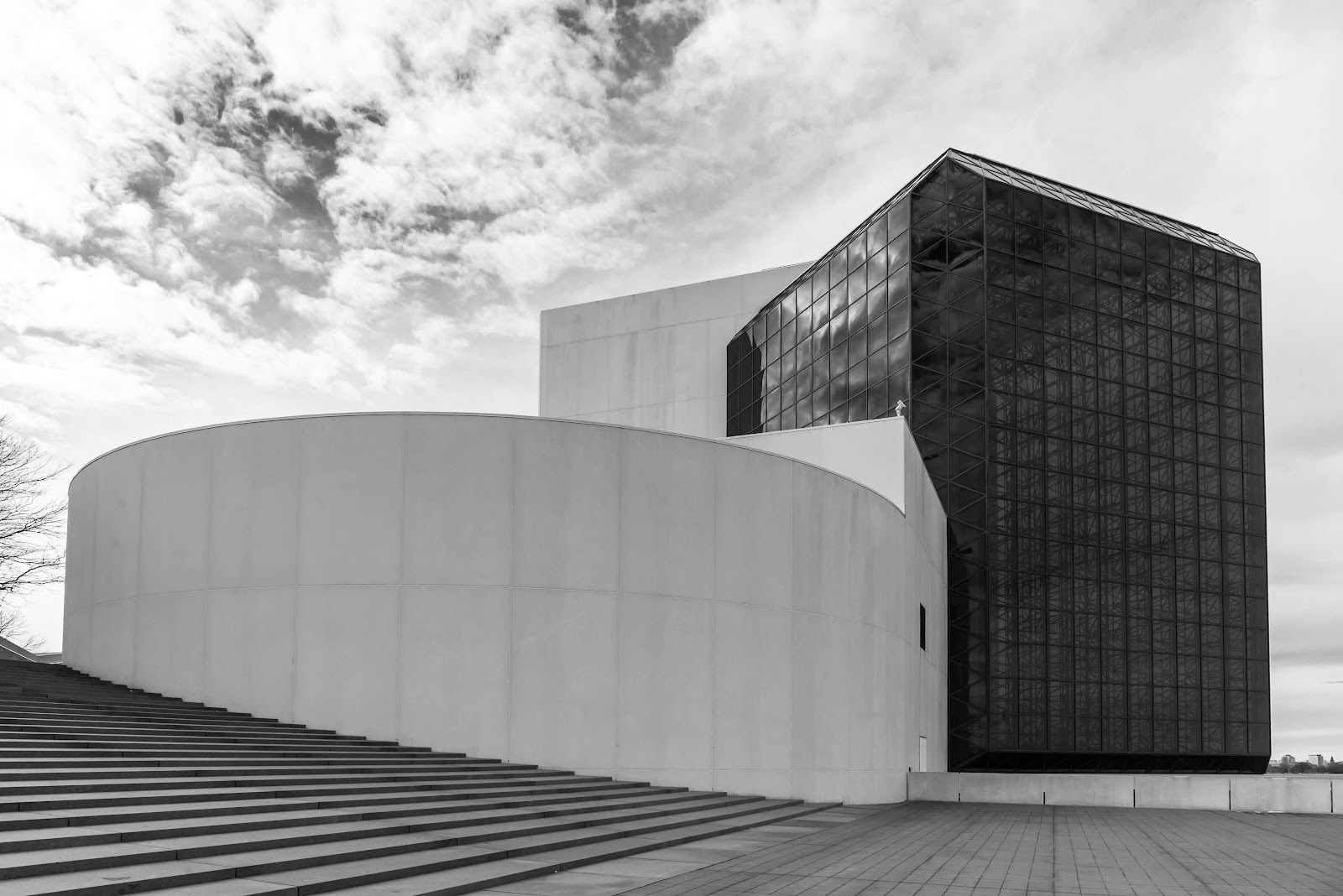
The waterfront, and Boston through the year
Outside, the waterfront follows the ordinary rules. A low camera stretches the water’s edge towards the horizon and gives the frame depth; a long lens compresses harbour, far shore and city into layers that a wide lens reduces to a strip; and the sun’s specular path on the water must be kept off the line between camera and couple, because at the exposure a face needs it is unrecoverable white.
Wind is stronger and gustier at the water’s edge than inland, which matters for a veil, for hair and for any light stand — and an exposed waterfront site catches more of it than a sheltered quay in the city. Still water mirrors early in the day and breaks into texture as the breeze builds, so a reflection frame is a morning proposition.
New England seasons differ sharply and they change a glass building more than most. Summer is humid but rarely extreme, and the long June days put the crossing late enough that it lands well into the reception — worth agreeing in advance as a short deliberate excursion, because it is the one frame that cannot be moved.
Autumn brings the region’s foliage peaking in mid-October, which from a waterfront site reads as a coloured band on the far shore at a long focal length rather than as canopy overhead.
Winter is the hard season and it cuts both ways here. Sunset falls in the middle of the afternoon in December, which means the pavilion’s daylit character may be gone before guests sit down and the crossing may fall before or during the ceremony — but a cold clear winter evening gives a deeper and longer-lasting colour in the sky than a humid summer one, so the crossing frame itself is better. An exposed waterfront in a north-easterly is genuinely cold, so outdoor blocks become three or four minutes.
Snow is the compensation and it is the best natural fill there is, while fooling a meter by about two stops. Snow seen through a glass pavilion, with a warm lit interior inside it, is one of the better frames a building like this offers all year.
Coastal fog in spring and early summer is worth stepping out into, and inside a glass pavilion it does something unusual: it closes the view down to a few metres and turns a building defined by its outlook into an enclosed, softly lit room. That is a genuinely different photograph and nobody plans for it.
One equipment note: a heated interior and cold harbour air fog a lens comprehensively in both directions, and the crossing will not wait. Get a body out to ambient temperature well before the window.
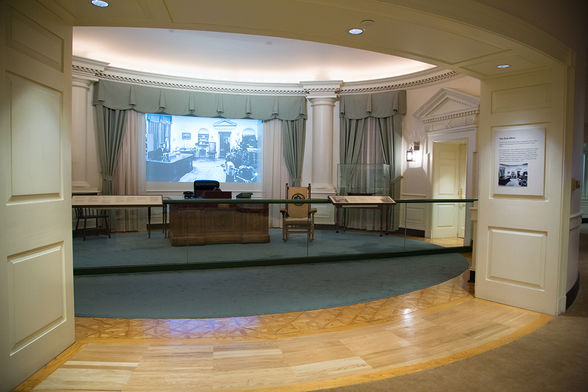
More frames from The John F. Kennedy Library

The John F. Kennedy Library wedding photography: common questions
What is the one decision?
When you are in the glass. A glazed pavilion has no light of its own, so its character is entirely what the sky and water are doing — and that changes completely four times a day.
When is it most flattering by daylight?
Under overcast, when cloud diffuses the light before the glass does and it arrives from everywhere at once; and in the last ninety minutes, when low sun through one flank turns a whole wall into a source at head height.
What does direct sun do?
The structural frame prints a grid of hard shadow across everything including faces — a real exposure difference across the subject that cannot be edited out or posed around.
What is the frame the building exists for?
Sunset plus about fifteen minutes: one exposure holding the lit pavilion, the couple, the water beyond and a sky that still has colour — four things mutually exclusive at every other hour.
What does that frame need?
A clock time, not an intention. And one warm-gelled source at face height about a stop under the sky, or the couple reads as a silhouette against bright sky and bright water.
Is winter better or worse here?
Both. The daylit character may be gone before guests sit down, but a cold clear evening gives deeper, longer-lasting sky colour — so the crossing frame itself is better than in summer.
More Boston, MA venue guides
We are writing a photographer’s guide to every venue we would happily shoot in Boston, MA. Here are three more, plus the full index:
- The Langham Boston: Field Notes on a Converted Federal Reserve Building
- The Lenox Hotel, Boston: What It Suits and What It Does Not
- The Mandarin Oriental Boston: How the Light Moves
All Boston, MA Wedding Venues →
Planning a wedding at The John F. Kennedy Library?
One appointment, fifteen minutes after sunset, with a light ready. Tell us your date.