 The Somerset Club on Beacon Street: Is It Right for You?
Old South Church, Boston: The One Decision That Governs Everything
In a working church the rules come before the light, and they are not negotiable on the day.
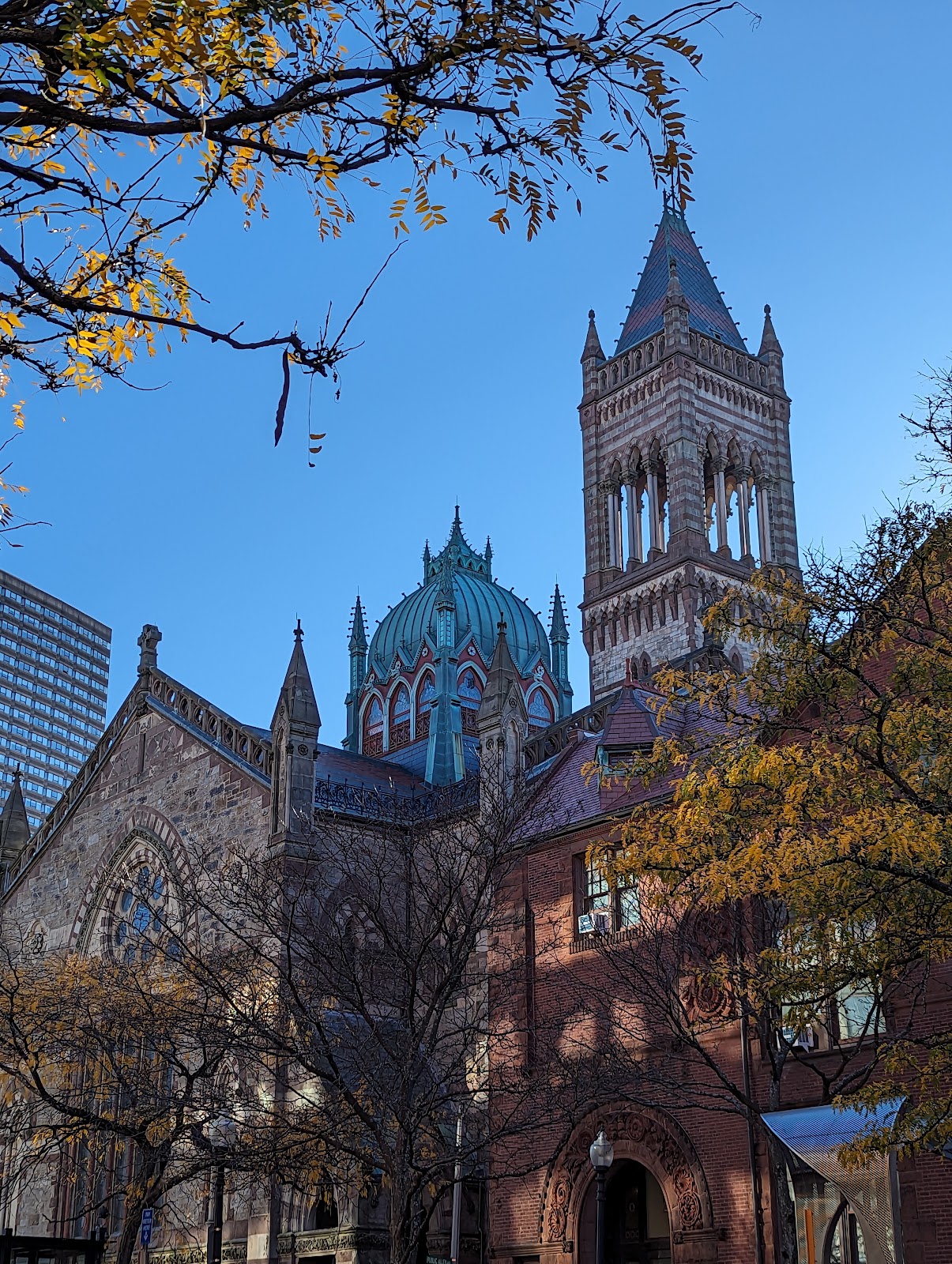
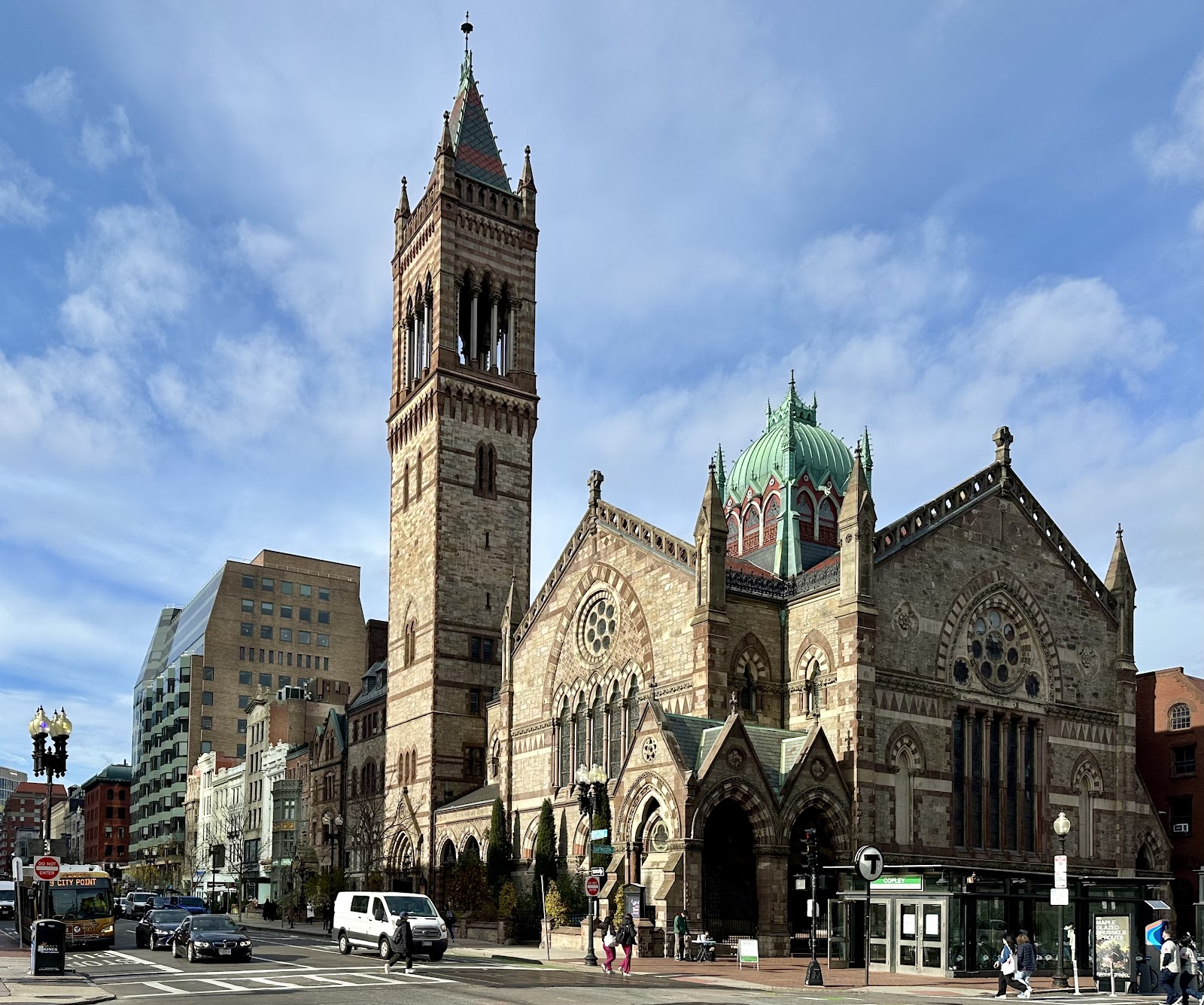
Old South Church in Copley Square has, by its own description, intricate wood carvings, splendid stained glass and ornate interior detailing.
All of that is real and it is not the thing that decides the day. One decision governs everything at a working church, and it is what the church itself permits: where a photographer may stand, whether movement during the service is acceptable, whether flash is allowed, how long the slot runs, and whether the sanctuary may be entered at all. Those answers are set by the parish rather than negotiated on an afternoon, and they determine which of the building’s assets are actually available.
Establishing them in writing, early, is the whole of preparing for a church. Once they are known, the technique is straightforward. This is written around that decision. We have not photographed a wedding at Old South Church; historic urban churches behave consistently, and a congregation that hosts weddings will have a clear and considered answer to every one of those questions.
The Old South Church at a glance
| Where | Copley Square, Boston, Massachusetts |
| Character | A historic church with carved wood, stained glass and ornate detail |
| The decision | What the church permits — positions, movement, flash, slot length |
| Why it matters | It decides which of the building’s assets are available |
| Ask first | All of it, in writing, before the schedule is drafted |
Working inside the rules
A fixed and often short slot changes the approach towards preparation rather than towards speed. When there is an hour rather than an afternoon, the frames that get made are the ones decided in advance — which means walking the building beforehand, at approximately the hour of the ceremony, and leaving with a short list of specific positions rather than a general impression.
Prescribed positions are usually strict in a church: a rear position, perhaps a side aisle, sometimes a gallery, and frequently no movement during the service itself. That sounds more limiting than it is, because the frames that matter most from a ceremony are all available from a fixed point with a long lens. A 70-200 from a rear or side position covers the aisle, the exchange and the faces of the people watching, and a second body with a wider lens covers the room.
Restraint is part of the job and it is worth saying plainly: a church is a place of worship that hosts weddings, not a venue that happens to have pews. Work within what is permitted without testing it, keep movement minimal, and treat the service as the event rather than as a backdrop. That is both the right thing to do and the thing that keeps churches willing to host weddings at all.
Where flash is prohibited — which is common — the answer is a fast lens at a raised ISO, and it is entirely adequate. Grain in a dim historic interior looks like what it is; a church flooded with flash looks like a lit room with pews in it, and the first is the better photograph as well as the permitted one.
Where any added light is allowed, keep it modest: one warm-gelled source at face height, off the camera axis, exposed so the church still reads as the dim resonant space it is. A church lit to an even brightness stops being a church, and the whole reason for the venue disappears with it.
Tripods are a separate question from flash and worth asking separately, because the answers frequently differ. A church may prohibit flash entirely while permitting a tripod, which changes the technique completely: a second of exposure with people asked to stay still turns a marginal frame into a clean one.
What the building gives, once you know what you have
Carved wood is the first asset and it is the most forgiving material a church interior can have. Timber is a mid-tone that meters predictably, and carving is three-dimensional, which means it holds detail beautifully — but only when light crosses it at an angle. Light running along carved joinery lifts every cut; light pointed at it flattens the same panel into a plain brown field. The positions worth finding are those where existing light grazes the woodwork rather than facing it.
Timber also bounces strongly warm, so the shadow side of a face near carved wood picks up an orange cast that global white balance cannot separate from the subject. Where your own light is permitted, let it be the authority on faces; where it is not, set a manual white balance on a face in the position being used and hold it through the block rather than letting auto drift.
Stained glass is the second asset and it needs one firm rule. Light that has passed through coloured glass is genuinely coloured rather than white light that looks coloured, because the glass transmits only the wavelengths it passes — so a face in a coloured patch records in that colour, with no information in the other channels to recover from. A face half in amber and half in blue has two problems at once and no single correction.
So coloured light is background and atmosphere, never a portrait key. Patches of colour on timber, on stone, along a pew or across an aisle read as the effect they are and photograph better than they look, because a camera records the saturation that the eye corrects away. The frame to aim for is the couple in neutral light with coloured patches behind or beside them, and in most churches that is a matter of moving two or three metres.
Finding the neutral light is the practical skill: walk the nave at roughly the ceremony hour and look for where a hand held out reads as skin rather than as colour. The patches sweep across an interior as the sun moves, so a check in the morning is not valid in the afternoon.
The long view down the nave is the frame a church reliably gives and it rewards precision: aisles are symmetrical and axial, so a frame down the centre line collapses if the camera is off centre or a degree out of level. The near-miss is the only failure available.
Steps at the entrance or the sanctuary are the group solution, as at any building with them: steps make rows automatically, which a flat floor never does.
- Walk the building at the ceremony hour and leave with specific positions
- A long lens from one permitted position covers a ceremony properly
- Ask about tripods separately from flash; the answers often differ
- Coloured patches behind or beside the couple, neutral light on the faces
- Graze the carved wood rather than facing it, or it goes flat brown
Copley Square outside, and Boston through the year
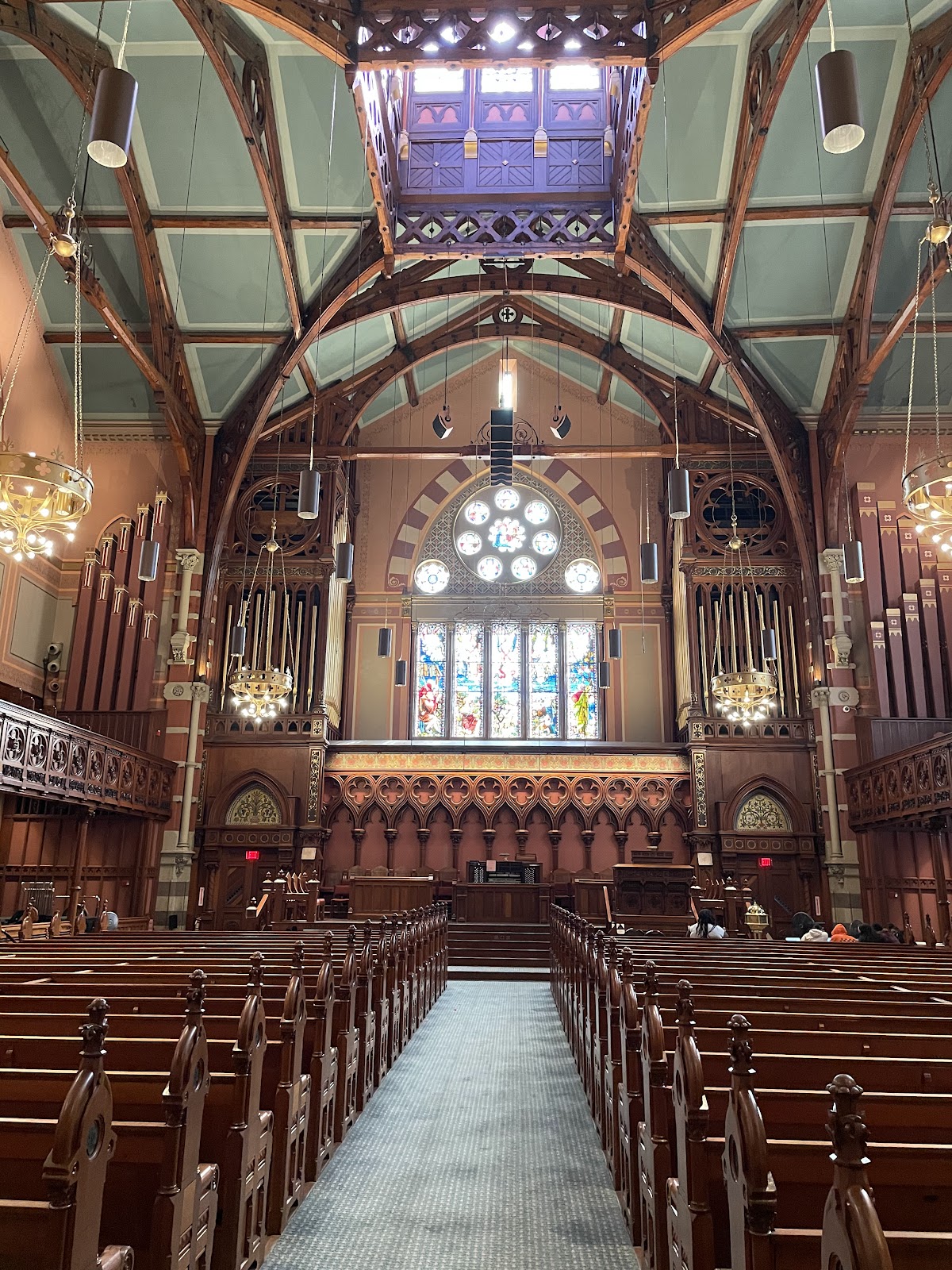
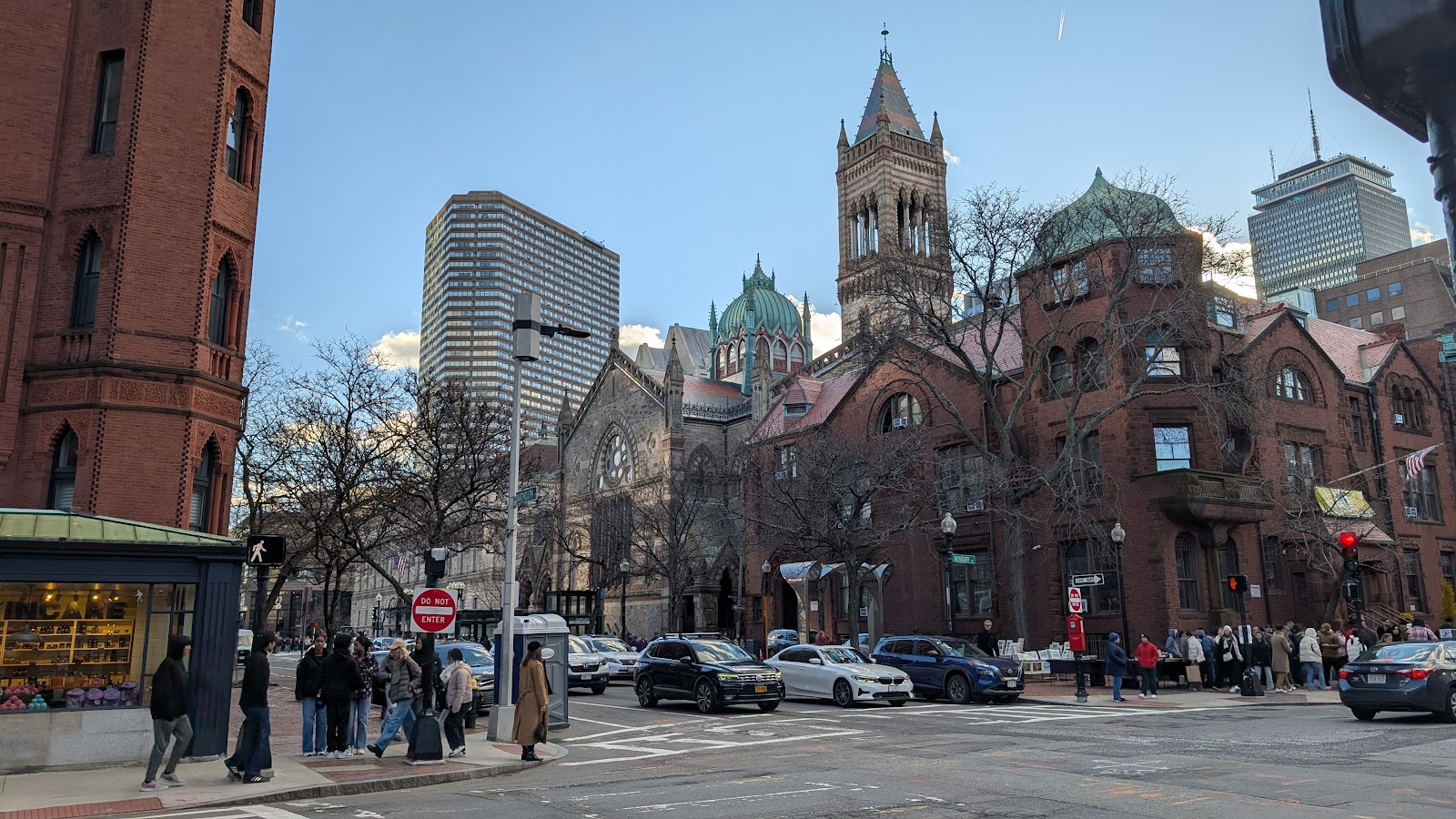
Copley Square and Back Bay are the outdoor half and they are unusually good. Back Bay is one of the very few gridded parts of Boston, which means low sun reaches street level and runs the full length of a cross street rather than being lost in an irregular plan — so the outdoor block can be planned from a map rather than discovered on foot.
The material colour rule matters here because the square mixes registers: brownstone and brick bounce warm and flatter skin, while granite and limestone bounce cool and can grey it. Which side of a street or square a couple stands on changes the colour of a face in Boston more than in most cities, and the warm side is the one to choose.
Church exteriors are best in the last ninety minutes for the same reason all masonry is: stone shows its texture only when light runs along it, and a facade that looks flat and chalky at noon separates into planes and shadowed detail in raking light. Which elevation receives it depends on orientation, so one walk around the building is worth more than any accessory.
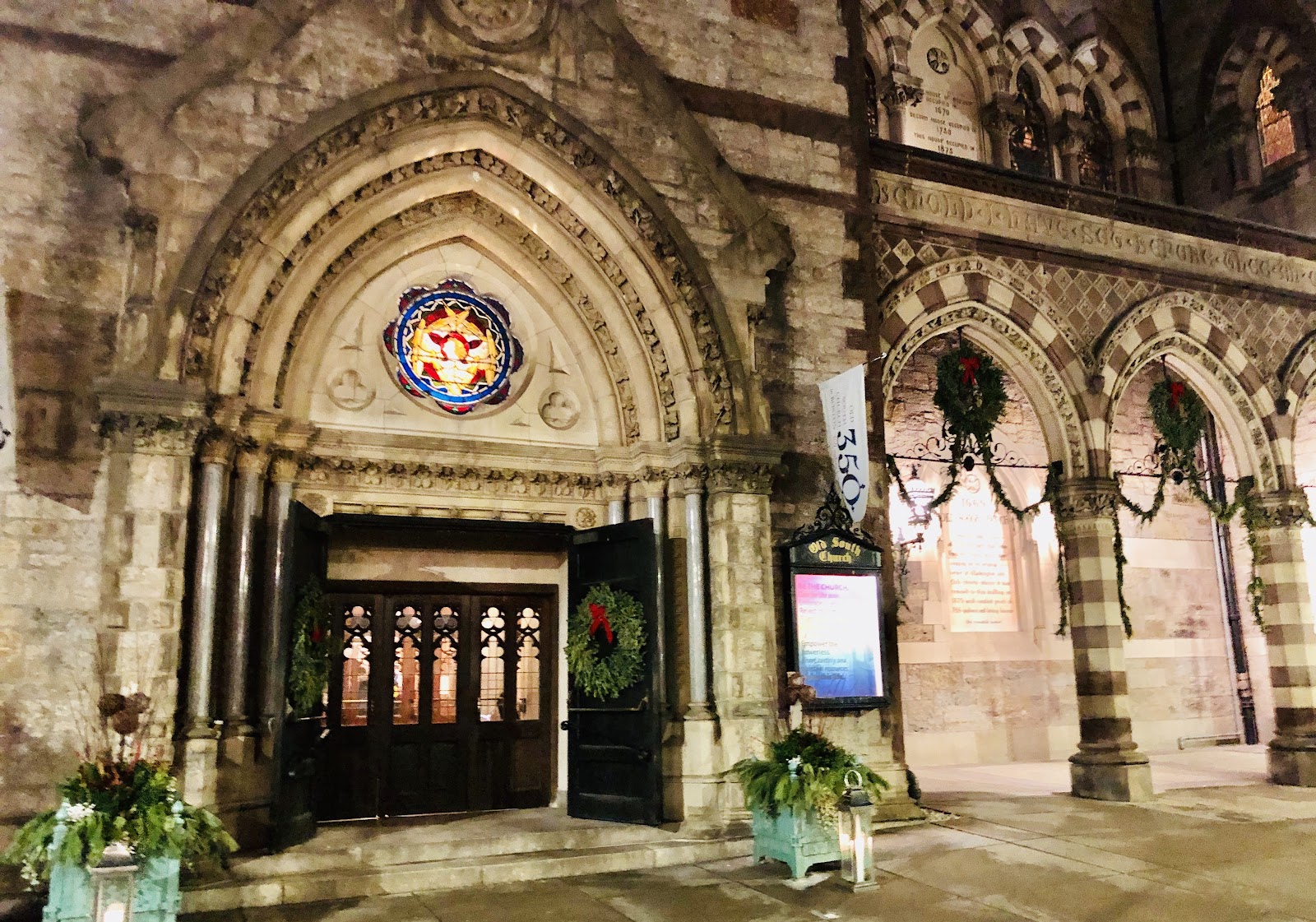
The other exterior frame specific to a church is the silhouette after sunset: a tower or gable against a sky that still holds colour reads instantly, and it needs the sky lit rather than the building — which puts it in the twenty minutes after sunset rather than during it. And coloured glass reverses after dark, so a lit interior seen from the square turns the windows into glowing coloured panels from outside. If the church will be lit in the evening, that is a frame nobody plans for and it takes two minutes.
New England seasons differ sharply. Summer is humid but rarely extreme, and the long June days put sunset late enough that the golden hour arrives after the ceremony — useful, since the church interior does not change. Autumn brings the region’s foliage peaking in mid-October, which in Back Bay appears at street level along planted avenues.
Winter is the constraint. Sunset falls in the middle of the afternoon in December, which for a church wedding can mean the confetti, the group and the departure all happen in the dark — a real scheduling fact rather than a detail, and one that argues for an earlier ceremony. Snow is the compensation and it is the best natural fill there is, lifting exactly the shadows a low sun carves while fooling a meter by about two stops.
One equipment note: a cold camera carried into a warm church will fog comprehensively and take many minutes to clear, which in a short fixed slot is a real risk. Arrive early with the camera already at ambient rather than walking in cold at the last moment.
More frames from The Old South Church
The Old South Church wedding photography: common questions
What is the one decision here?
What the church permits — positions, movement, flash, tripods and slot length. Those answers are set by the parish, not negotiated on the day, and they decide which assets are available.
How do you cover a ceremony from one position?
With a long lens. A 70-200 from a rear or side position covers the aisle, the exchange and the faces of the people watching, with a second body wider for the room.
What if flash is prohibited?
A fast lens at a raised ISO, and it is entirely adequate. Grain in a dim historic interior looks like what it is; a church flooded with flash looks like a lit room with pews in it.
Why can't coloured light be corrected?
Because the glass transmits only certain wavelengths, so the light really is amber or blue. A face half in each has two problems at once and no single correction.
What does carved wood need?
Raking light. Light running along carved joinery lifts every cut; light pointed at it flattens the panel into a plain brown field. And it bounces warm, so white balance needs setting on a face in position.
What does December do to a church wedding?
Sunset falls mid-afternoon, so the confetti, the group and the departure can all happen in the dark. That argues for an earlier ceremony rather than for more equipment.
More Boston, MA venue guides
We are writing a photographer’s guide to every venue we would happily shoot in Boston, MA. Here are three more, plus the full index:
- The Algonquin Club on Commonwealth Avenue: Questions Answered
- Arlington Street Church: Field Notes for Wedding Photographs
- The Boston Athenaeum: Planning the Shot List
All Boston, MA Wedding Venues →
Planning a wedding at The Old South Church?
Get the permissions in writing, then walk it at the right hour. Tell us your date.