 The Somerset Club on Beacon Street: Is It Right for You?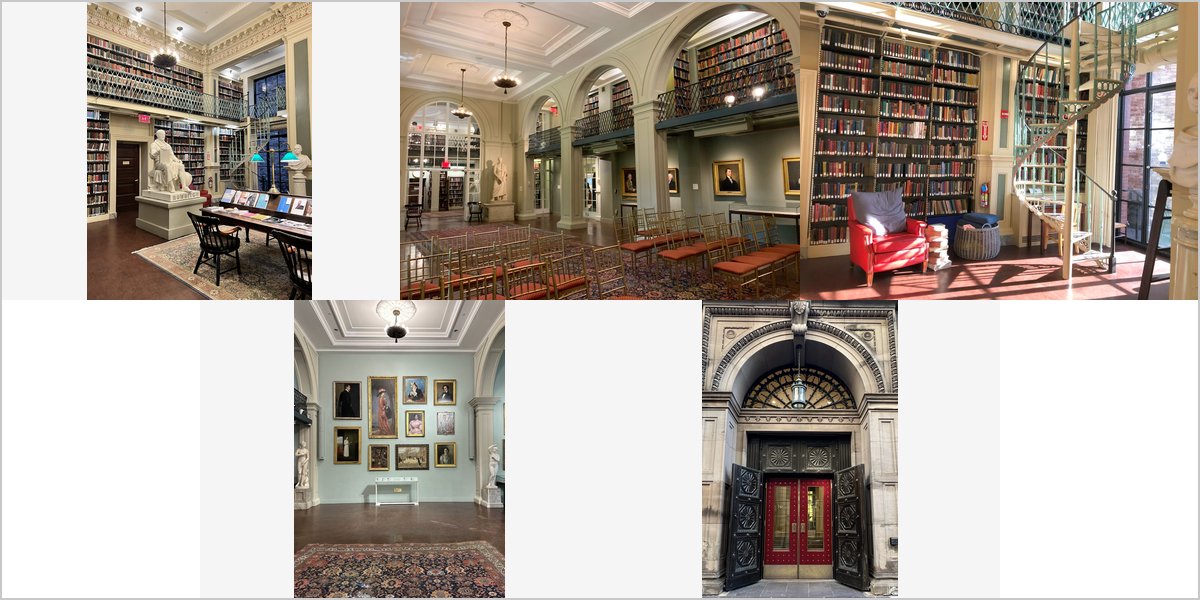
May 12, 2026
The Boston Athenaeum: Planning the Shot List
Libraries photograph like nothing else — warm, layered, intellectual. They also have conservation rules that decide your shot list before you arrive.
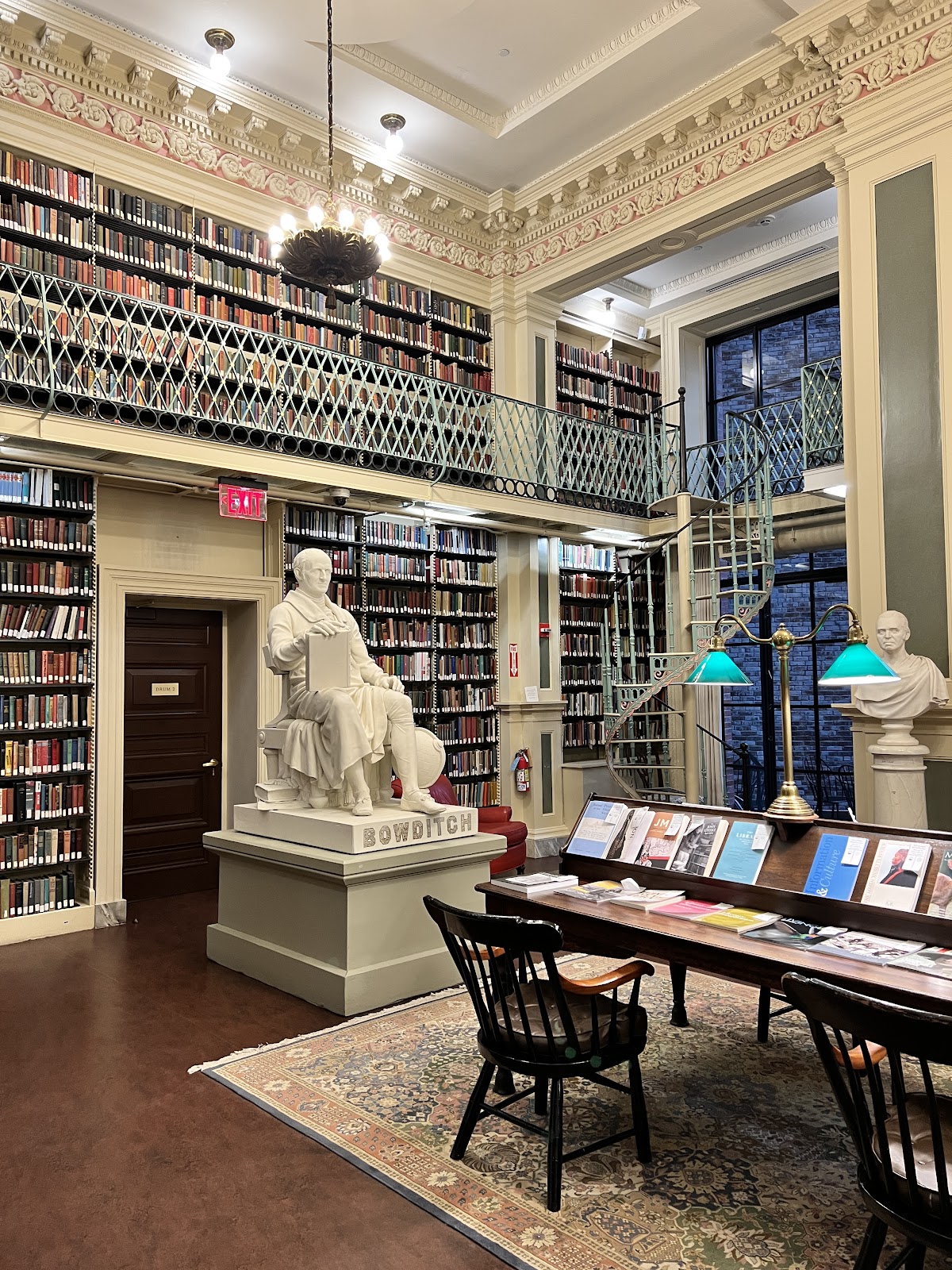
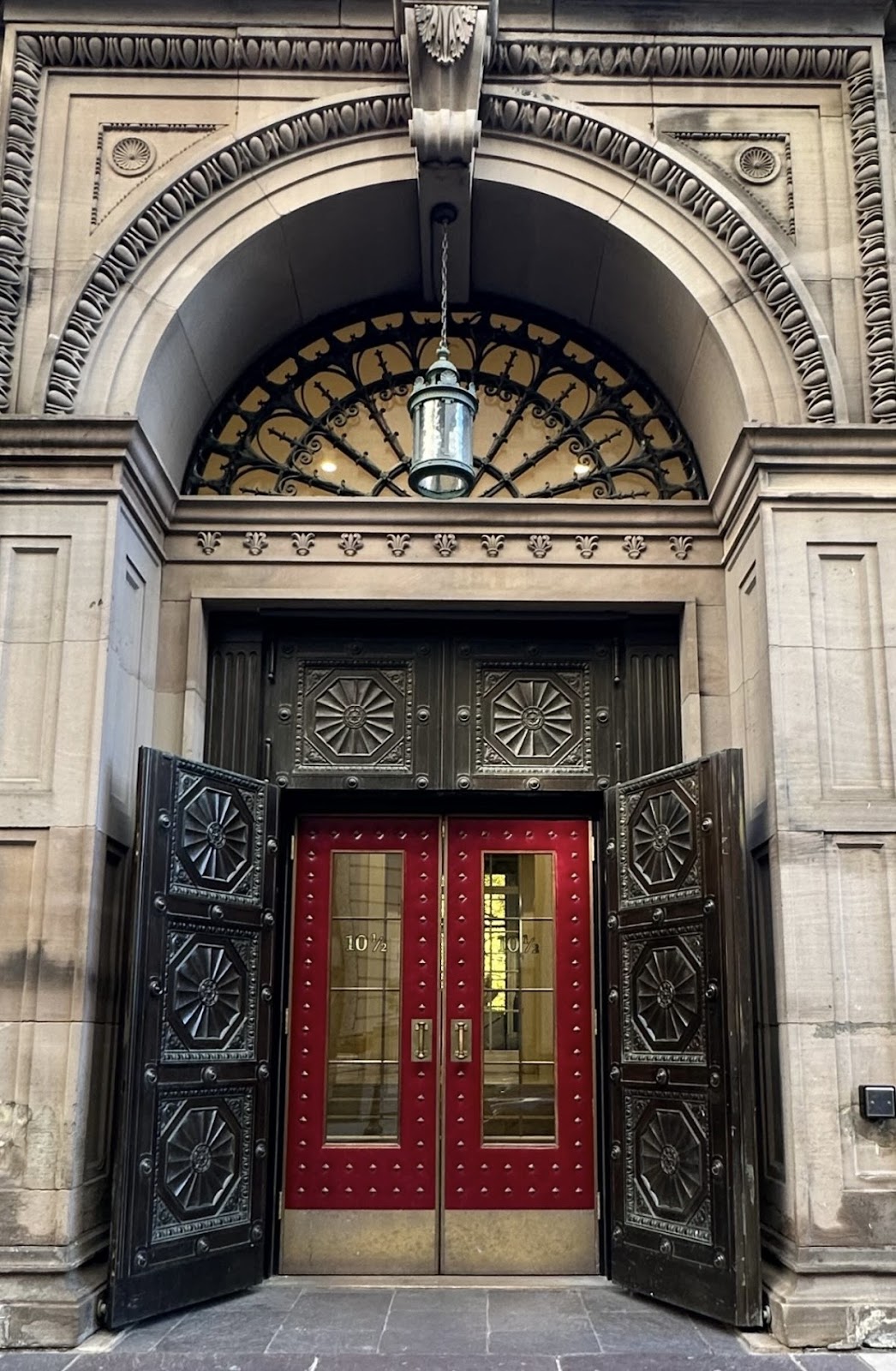
The Boston Athenaeum was founded in 1807 and is among the oldest independent libraries in the United States. Its building at 10½ Beacon Street dates from 1849 and sits immediately beside the Massachusetts State House at the top of Beacon Hill. Inside are reading rooms, galleried book stacks, sculpture and a collection that has been accumulating for more than two centuries.
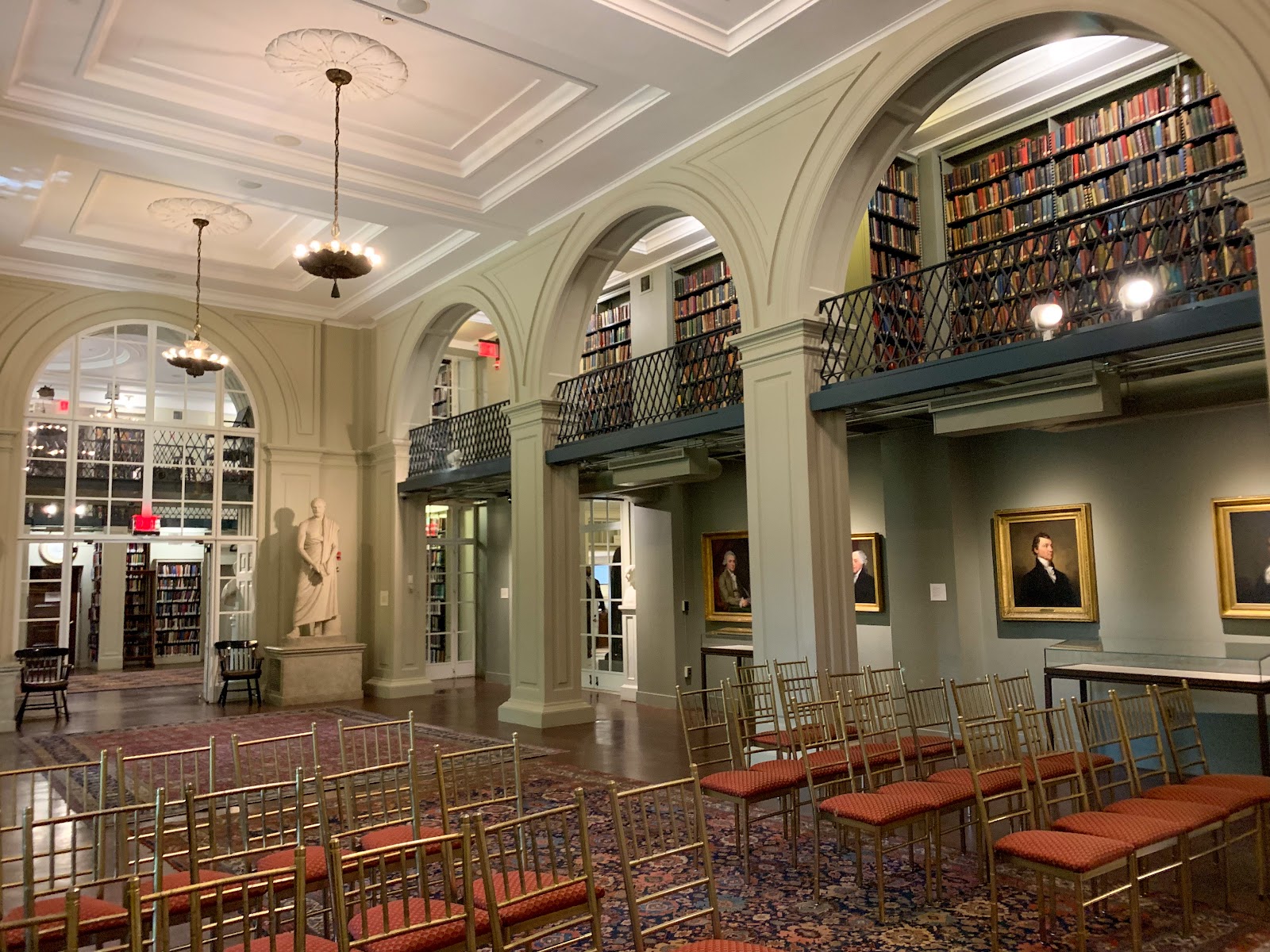
For photographs, a library of this kind offers something no other venue type does: depth made of books. Shelves receding into a frame give layered, textured, warm-toned backgrounds with a scale and seriousness that hotel rooms and gardens cannot match. Reading rooms often have tall windows, and galleried levels give you elevation — the two things most urban interiors lack.
It also has conservation requirements, because the contents are irreplaceable. Assume restrictions on flash, on where people and equipment may go, on food and drink near collections, and on numbers in particular rooms. This guide is built as a shot list precisely because at a venue like this, knowing exactly which frames you want makes it far easier to get permission for them.
Boston Athenaeum at a glance
| Where | 10½ Beacon Street, Beacon Hill, Boston — beside the State House |
| Founded | 1807; the present building dates from 1849 |
| Character | Reading rooms, galleried stacks, sculpture, and a two-century collection |
| Light | Tall reading-room windows, warm artificial light in the stacks; dim overall |
| Assume | Conservation rules on flash, equipment, movement and numbers per room |
Establish what is permitted before you plan anything
At a working library with a historic collection, the list of what you may do is shorter than at a hotel and the reasons are legitimate. Flash near old paper and bindings is commonly restricted, tripods and light stands may be limited by floor loading and circulation, and some rooms will be off limits entirely or capped at small numbers.
The productive approach is to arrive with a short, specific list of frames rather than a general request to photograph. “We would like ten minutes in the reading room with the couple and no equipment beyond a camera” is an easy yes. “We want to photograph throughout the building” invites a no.
Ask three questions specifically: which rooms are included, whether any lighting equipment may be used and where, and what the maximum group size is in each space. Those three answers define the shot list completely.
The shot list, in priority order
Six frames. If access is limited, the first three are the ones worth fighting for.
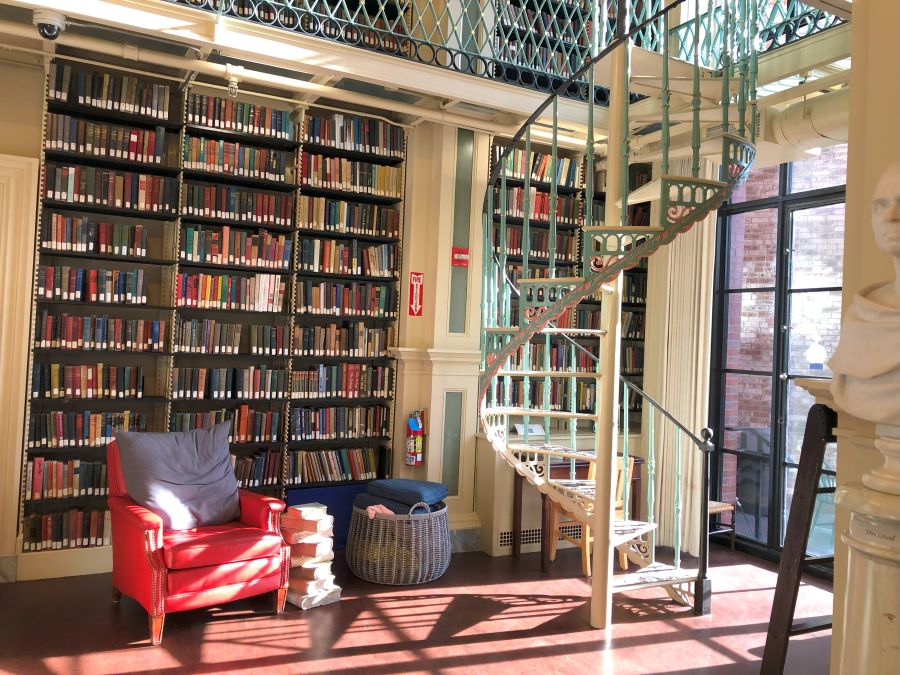
- The stacks receding. Couple in the foreground, shelves running away behind them, shot at a wide aperture so the books become layers of warm texture. This is the frame that says library and nothing else.
- The reading room window. Tall library windows are excellent key lights. Place the couple beside one, facing along the window wall, and the light does all the work.
- Elevation from a gallery level. Looking down into a room from a balcony explains the architecture in a way a ground-level frame cannot, and it is the one angle most photographers never get.
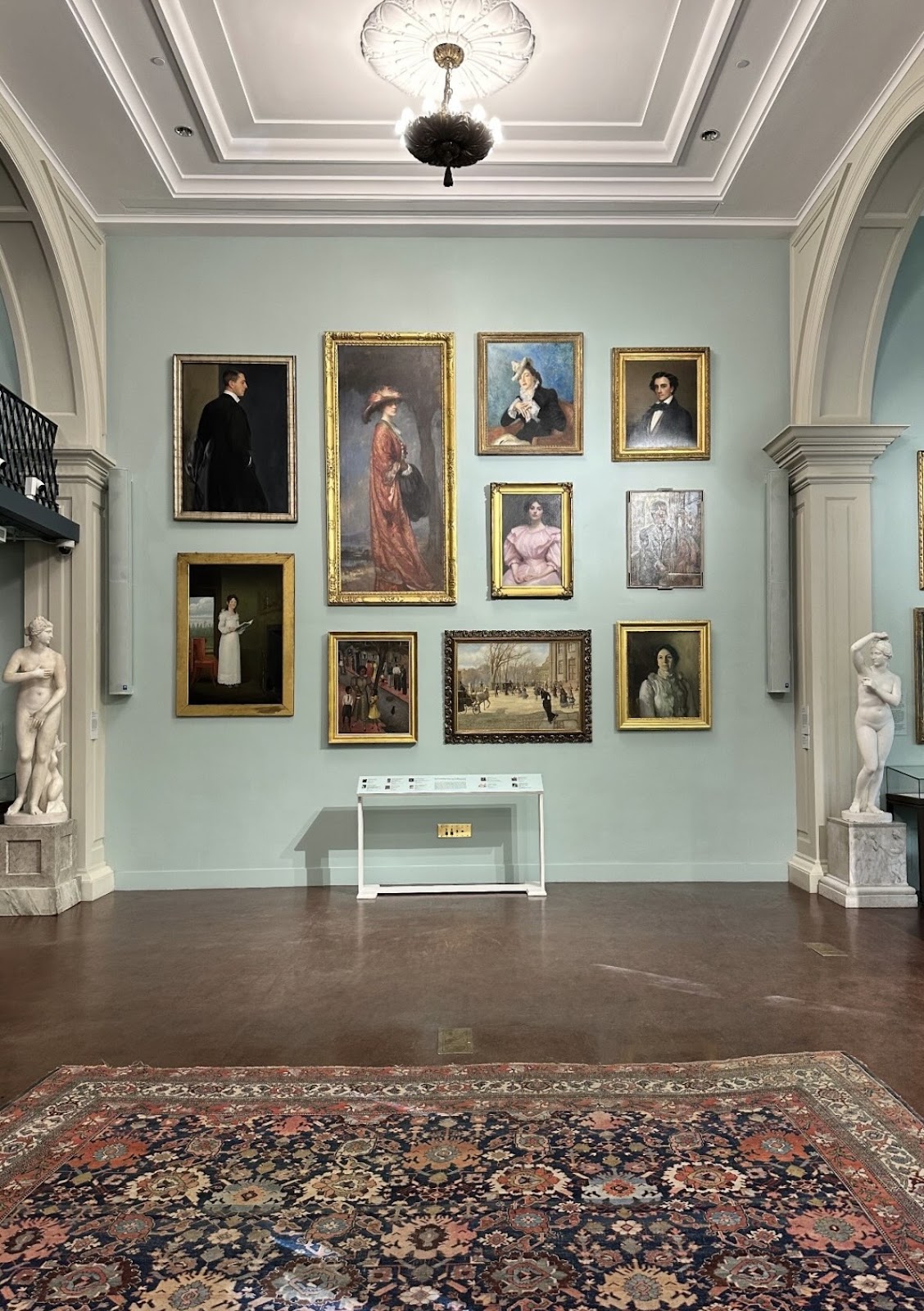
- A quiet detail. A hand on a spine, a page, a bust, the reading lamps. Libraries reward close frames and they cost nothing in permissions.
- The staircase. As in any nineteenth-century building, the stair is a strong vertical frame with a natural key light.
- Beacon Street and the State House. Outside, the gilded dome is a minute away and Boston Common is at the bottom of the hill. This is your group-photograph and wide-portrait location.
Working in library light without flash
Library interiors are typically lit for reading at desk level, not for illuminating a room: pools of warm light from table lamps and directional fittings, with the stacks themselves in comparative shadow. Combined with likely flash restrictions, that sets the technical approach firmly.
Fast primes wide open, high ISO accepted in advance, and white balance set manually per room — the mix of tungsten table lamps and daylight through a tall window is a two-temperature problem, and it is worth deciding which one you are honouring. Our preference in a library is to let it stay warm: the amber tone is part of what makes the room feel like what it is.
Placement matters more than anywhere. Put faces where the reading lamps actually fall, or beside the window, and use the darker stacks as background. The mistake is standing people in the middle of a dim room and hoping ISO solves it — it will not, and the frame will be flat as well as noisy.
Timeline: short, specific, and escorted
Institutional venues run on access windows, and movement inside them is usually escorted. That makes the timeline less flexible than at a hotel, and it makes over-ambition the main risk. Three excellent locations, unhurried, will produce a better gallery than eight rushed ones.
Plan the interior block as a single continuous period rather than returning to the building repeatedly, because each return costs escort time. And take the frames you most want first, while everyone is fresh and the schedule has not yet slipped — the last item on a library shot list is the one that gets cut.
Preparation happens elsewhere; a library has no getting-ready space. A Beacon Hill hotel room with a tall window is the sensible pairing, and it puts you a short walk from the ceremony.
What works in your favour
- Book stacks give warm, layered depth available in no other venue type
- Tall reading-room windows are genuinely good key lights
- Galleried levels offer elevated angles that most venues cannot provide
- Beacon Hill location: the State House, Boston Common and brick streets all minutes away
- Close detail frames are easy, cost nothing in permissions, and suit the setting
What to plan around
- Conservation rules will restrict flash, equipment and access — plan around them, not against them
- Dim interiors lit for reading rather than for rooms; high ISO is unavoidable
- Mixed tungsten and daylight requires a manual white balance decision per room
- Escorted movement and firm access windows make the timeline inflexible
- Likely caps on group numbers in particular rooms; no getting-ready space
More frames from Boston Athenaeum
Boston Athenaeum wedding photography: common questions
Can you use flash inside the Boston Athenaeum?
Assume not until told otherwise. Flash near historic paper and bindings is commonly restricted at libraries with collections of this age, and tripods and stands may also be limited. Ask specifically which rooms allow what, and plan a natural-light approach as the default.
What is the signature library photograph?
The stacks receding behind the couple, shot at a wide aperture so the shelves dissolve into layers of warm texture. It is the frame that could only have been taken in a library, and it is worth prioritising above everything else if access is limited.
How do you handle the low light?
Fast primes wide open, high ISO accepted in advance, and placement rather than illumination. Put faces where the reading lamps actually fall or beside a tall window, and use the darker stacks as background. Standing people in the middle of a dim room and relying on ISO produces frames that are both noisy and flat.
Should the photographs be warm or neutral?
Warm, in our view. Library interiors mix tungsten table lamps with daylight, so no single white balance is correct, and correcting everything to neutral removes the amber tone that makes the room feel like a library. Decide which source you are honouring and be consistent.
How many locations should we plan?
Three, done properly. Institutional access windows are firm and movement is escorted, so over-ambition is the main risk. Shoot the frames you care most about first — the last item on a library shot list is always the one that gets cut when the schedule slips.
More Boston venue guides
We are writing a photographer’s guide to every venue we would happily shoot in Boston. Here are three more, plus the full index:
- The ICA Boston: Harbour Light and How to Time It
- The Castle at Park Plaza: Lighting a Brick Armory
- Fairmont Copley Plaza: The Technical Side of a Grand Ballroom
Planning a wedding at Boston Athenaeum?
Library weddings are won in the permissions conversation. Tell us your date and we will help you arrive with a short, specific shot list that a conservation-minded institution can comfortably say yes to.