 The Ozark Mountain Lodge, Eureka Springs: The Problem, and Four Ways Out
The Grandview Venue, Bentonville: The One Decision That Governs Everything
Above them or below them. On sloping ground that is the whole decision.
On flat ground camera height is a small adjustment. On sloping ground it is the decision that governs everything, and this venue is on sloping ground.
Northwest Arkansas is a dissected limestone plateau — flat-topped uplands cut by steep valleys — which means almost nothing here is level and a site named for its prospect is on high ground with the land falling away from it. That produces a single binary choice that has to be made for every frame: is the camera above the subjects or below them?
Below the subjects, looking up, they stand against open sky. There is no horizon behind them, nothing in the background at all, and every distraction on the property — buildings, vehicles, signage, guests, power lines — falls out of the frame because it is all at or below their level. That is the cleanest background available at any venue in any weather, and it costs nothing but walking downhill.
Above the subjects, looking down, the country behind them fills the frame: the valley, the far ridges, the woods and the sky above that. That is the picture the venue’s name promises and it is the reason anyone chooses a site on high ground.
Those are completely different photographs. The first is about the people, with the place removed. The second is about the place, with the people in it. Both are right and a set of photographs needs both, but each frame has to be one or the other — and the failure mode is the middle, where the camera is at the subjects’ eye level and the background is a confusing band of distant country cut by a horizon running through their heads.
Everything else at this venue — the exposure, the lens, the lighting — follows from which of the two has been chosen.
Bentonville sits in the far northwest of Arkansas at about thirty-six and a third degrees north. The June noon sun reaches around seventy-seven degrees, the December noon sun about thirty, days run from about nine hours fifty to fourteen hours twenty-five, and civil twilight is around twenty-eight minutes.
We have not photographed a wedding at this venue. Which spaces and grounds are included, what covered alternatives exist and what the permitted hours are, are questions for their team.
The Grandview Venue at a glance
| Where | A venue on high ground near Bentonville, on the Ozark plateau |
| The decision | Camera above the subjects, or below them |
| Below | The cleanest background there is: sky, with every distraction out of frame |
| Above | The valley and the ridges — the picture the site promises |
| Ask first | Included grounds, covered alternatives, permitted hours |
Working the decision
From below, the frame is simple and the technique is about the sky.
A subject photographed against open sky is almost always in a backlight or side-light situation, because if the sun were behind the camera it would be low and in their eyes. That means the sky behind them is brighter than they are — usually by two or three stops, more if the sun is in or near the frame.
Two approaches work. Expose for the sky and lift the subjects with a close source, warm-gelled to match the light and at about a stop over the ambient on them, which keeps the sky’s colour and the faces correct. Or turn the subjects so the sun is behind the camera, which lights them frontally and puts the darkest part of the sky behind them — the band opposite the sun is always deeper in colour, and using it deliberately gives a richer background at no cost.
The second is the one that cannot fail and the one to take first when time is short.
The choice of sky is what makes the frame. A clear blue Arkansas sky is even and featureless, which is better than a cluttered background but not interesting. A convective sky with structured cumulus — common on an Arkansas afternoon from spring through summer — is the best background this venue ever has, and it is worth watching for and moving quickly when it appears.
How far below to stand is a matter of geometry rather than taste. The camera needs to be low enough that the horizon falls below the subjects’ shoulders, which on a moderate slope means fifteen or twenty metres downhill, and on a steeper one means less. Getting only halfway there produces the middle-distance failure described above, and is worse than not trying.
A low camera at close range is a different and equally useful version: lying or kneeling with grass across the bottom of the frame and the subjects against sky above it. That works anywhere on the property, including flat parts, and it is the fastest way to a clean background.
From above, the frame is about compression and about the brightness range.
Compression first, because it is the decision most often got wrong. A wide lens renders distant country at its true angular size, which is small — so a wide frame from high ground shows a lot of foreground and a thin band of distance, and the view that looked spectacular to the eye looks like nothing. A moderate telephoto brings the ridges forward and stacks them, which is the version that works.
That requires the camera to be a long way back from the subjects, which on a slope means the photographer uphill and the couple downhill with twenty or thirty metres between them — and a clean stretch of ground in between.
The brightness range is the technical problem. A lit distant landscape under a bright sky sits well above a foreground, and by late afternoon a frame containing both can run three or four stops wide. Expose for the distance — that is what the frame is about — and lift the subjects with a close warm-gelled source. Metering on faces gives a white sky and a washed-out valley, which removes the reason for standing on high ground at all.
And the haze decides whether the frame is available. Layered ridges separate into tonal bands only when the air is clear, which in an Arkansas summer it frequently is not. That makes the above-the-subjects frame a seasonal proposition in a way the below-the-subjects frame is not.
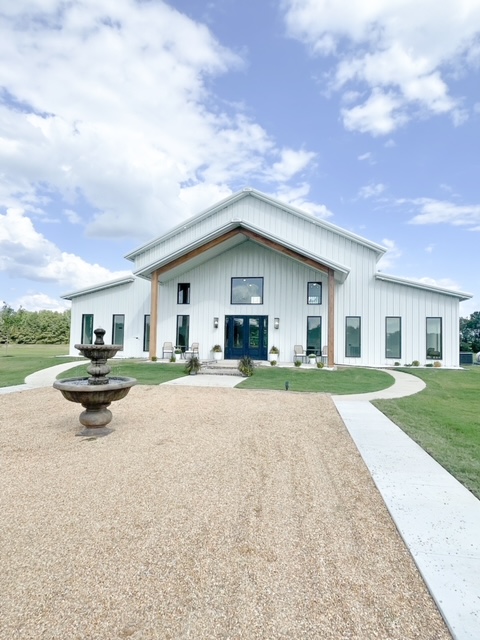
The rest of the property
The groups are the one subject for which the decision resolves itself, because a group can only really be photographed from slightly above.
A large group needs everyone visible, which means either a level change in the ground or a camera raised above them. On sloping ground the level change is free: arrange the group up the slope in ranks, with the camera downhill and slightly elevated if possible, and every face is visible without anyone standing on anything.
The requirement, as always, is everyone in the same light: full open shade, full overcast, or full sun with the sun behind the camera. On high open ground all three are available at different hours, and the dappled option is the one to avoid.
The margins are where the midday work happens. At seventy-seven degrees of June elevation the sun puts eyes in shadow and foreheads in light, and open high ground has no cover at all.
In northwest Arkansas the useful species is eastern redcedar. It is a juniper rather than a true cedar, dense and very dark, and it blocks almost all direct light — so a subject standing a metre inside a redcedar margin, facing out toward the lit ground, has soft directional light in front and three or four stops of near-blackness behind. It reads as near-black rather than as green, which solves the colour problem as well as the light one.
Redcedar colonises thin limestone soils and old fields, which on Ozark upland means it grows exactly at the boundaries. Locating the cedar margins on arrival is five minutes well spent.
Oak and hickory canopy is the lesser option: soft even light with a green cast, corrected by standing at the canopy edge rather than deep inside it.
Limestone is the local stone and on upland ground it shows as ledges, outcrops and old field walls. Pale grey and weathered, it is the most valuable background colour available in a green landscape because it is genuinely low in saturation, and it is a high-frequency texture that is spectacular in raking light and dull under flat light — a first-and-last-hour surface. A low ledge is also a strong horizontal at seated height.
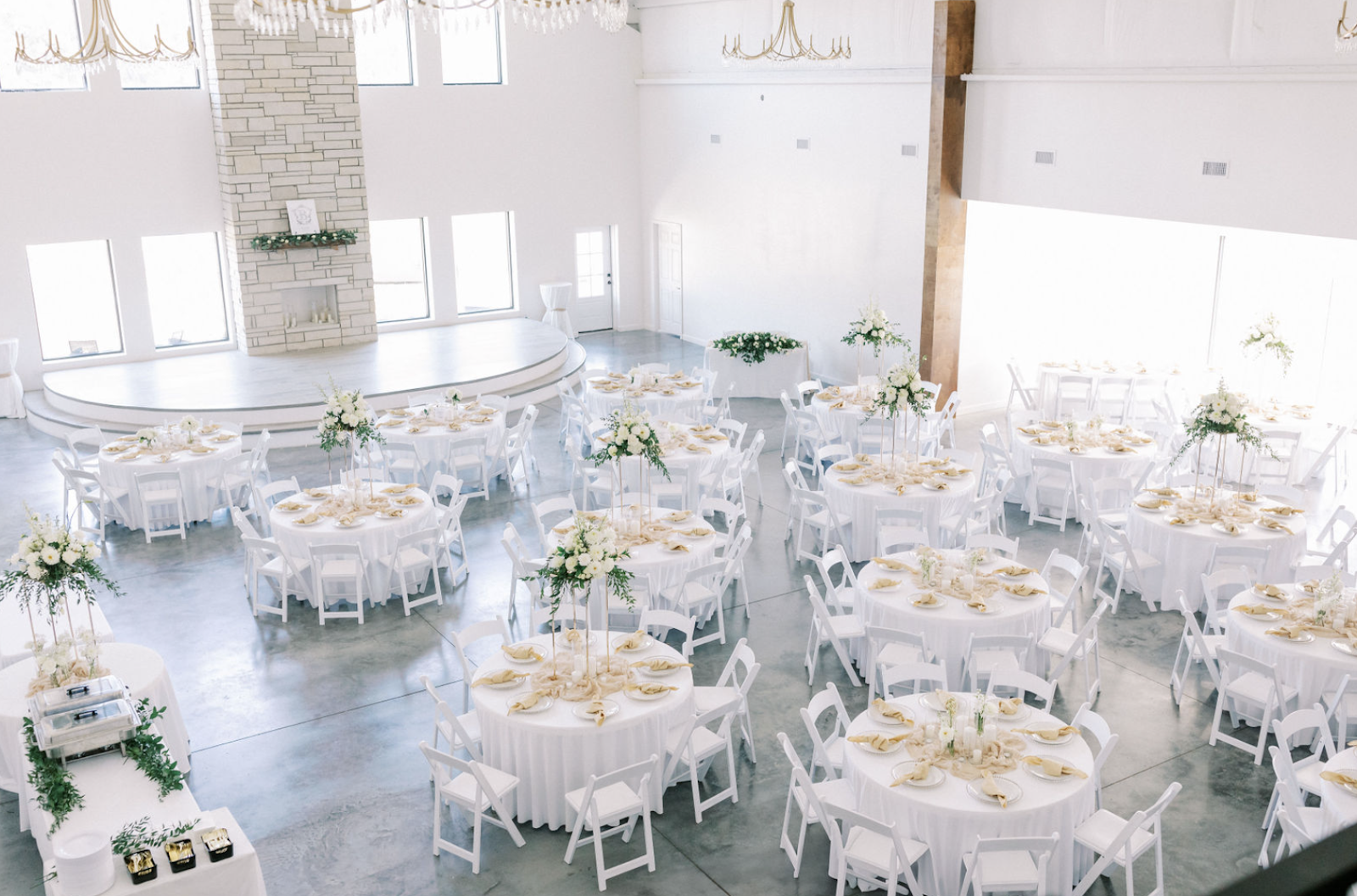
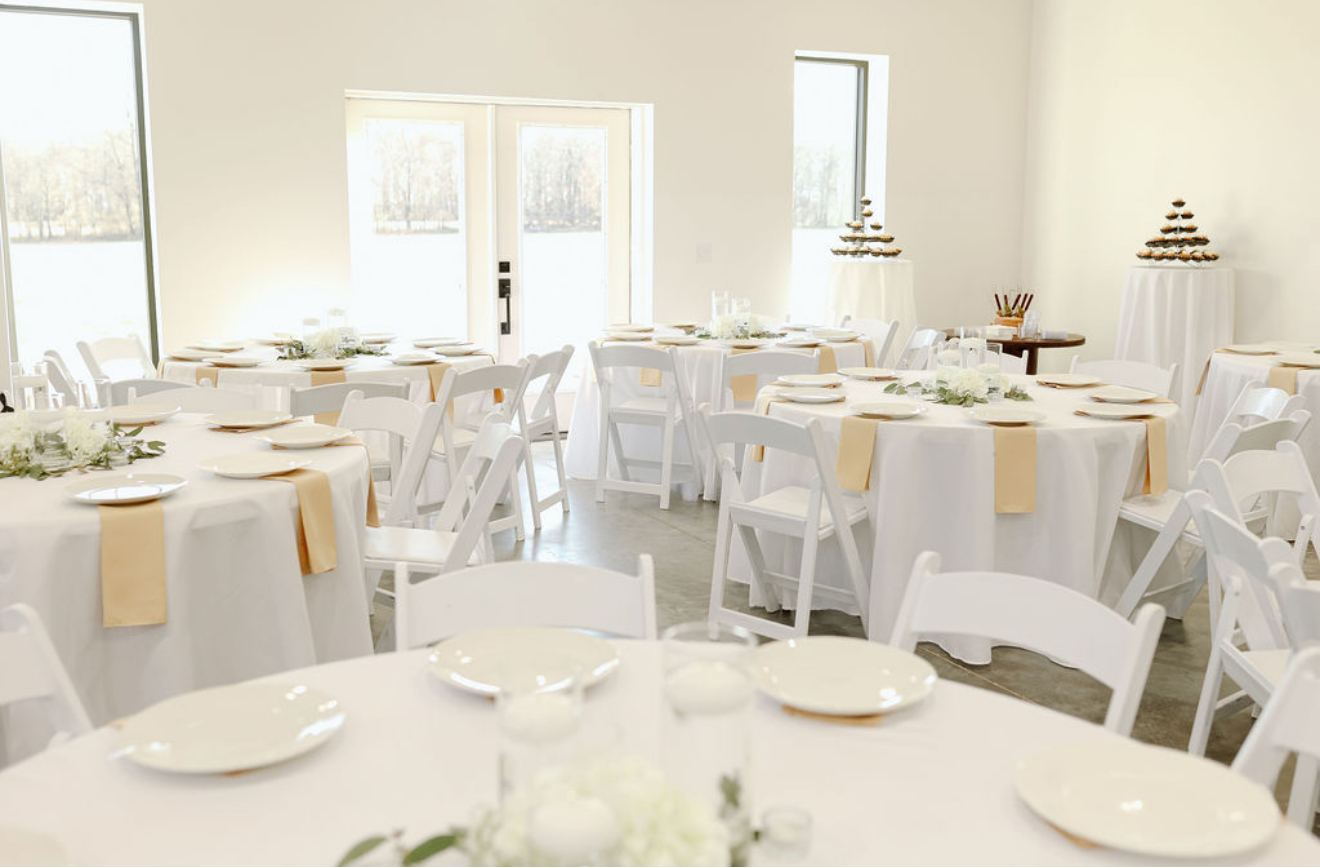
Indoors, a modern rural event building is typically pale with generous glazing, which means light is never the problem and separation always is. Find something dark, use the glazing as a directional source at forty-five degrees, or add a source a stop over ambient so the subject has a shadow side at all.
Where the buildings are timber, the problem inverts and improves: timber absorbs, the ambient sits a stop or two below what the eye estimates, and the background falls away for free. Meter on skin and let the room go dark.
Two practical matters. High open ground in northwest Arkansas is windy as a baseline rather than occasionally, which makes a lightstand a liability and means every source is handheld or weighted. It also keeps haze down, which is the one advantage of a breezy site and directly benefits the above-the-subjects frame.
And Arkansas sits in the secondary severe-weather corridor of the southeastern United States, with peaks in April–May and a smaller one in November. High open ground is exactly where nobody wants to be in a thunderstorm, which makes a named indoor alternative in those months a requirement rather than a courtesy. Chiggers and ticks are a genuine consideration in tall grass from about May into September.
- Below: fifteen or twenty metres downhill, or not at all
- Turn the subjects so the sun is behind the camera and the deep sky is behind them
- Above: a moderate telephoto, twenty or thirty metres back, exposed for the distance
- Groups arrange themselves up a slope — every face visible, free
- Redcedar margins read near-black, which solves light and colour at once
The Ozark upland year
Four real seasons with long shoulders, and a site whose two signature frames behave in opposite ways across the year.
The below-the-subjects frame is seasonal only in what the sky is doing, which makes it the more reliable of the two. Structured convective cloud is commonest from spring through late summer, when afternoon heating builds cumulus over the plateau; clear even blue is commonest in autumn and winter, which is less interesting as a background but cleaner.
The above-the-subjects frame depends entirely on air clarity, which is at its worst in summer and its best from late autumn through winter. Dew points in the low to mid twenties Celsius in July put enough moisture in the air that the far ridges soften into a pale band — which removes the layering that makes the frame worth taking.
That is the key seasonal fact here: the view this venue is named for works properly from about late October to April and only intermittently in between.
Winter is short, cool and clear. The December noon sun at around thirty degrees never rises high enough to flatten anything, which means the whole short day models and there is no bad hour. At nine hours fifty the day is meaningfully longer than a northern winter one.
Bare hardwoods remove the green problem entirely — brown grass, grey trunks, pale limestone, near-black cedar — and the air is at its clearest of the year, which is exactly when the distant ridges matter. A clear winter afternoon on high ground here is the best the site ever looks.
Snow occurs but rarely lasts. The characteristic Arkansas winter event is freezing rain, which glazes every twig in clear ice: spectacular for a day, hazardous for longer, unplannable.
Spring is the region’s best outdoor season and it is early. Leaf-out runs from late March into early April, and before the canopy closes redbud flowers magenta on bare wood and dogwood white beneath — both lit directly rather than filtered, which makes them far stronger than the same flowers under a closed canopy would be.
Redbud against pale limestone or a weathered timber wall is the strongest colour combination this venue offers all year, and it lasts about two weeks.
The cost is the severe-weather peak in April and May, and on exposed high ground that is a serious planning matter rather than a footnote.
Summer is hot and humid. The green problem is at its worst, the haze removes the distance, and the June noon sun at seventy-seven degrees is the hardest light of the year. The honest strategy is the below-the-subjects frame, the cedar margins and the ends of the day.
Days run to fourteen hours twenty-five at the solstice, which means the low light arrives after half past eight and lasts — a genuine advantage over the southern half of this guide, where it arrives and goes in twenty minutes.
Autumn is the other strong season and it is late. Oak-hickory forest turns from the last week of October into the first week of November — three to five weeks behind New England — with hickory gold, oak russet and deep red, sweetgum purple-red and sassafras orange, holding for a genuine three weeks.
From high ground that colour reads as a landscape rather than as a canopy, which is the right way round: blocks of warm colour receding over successive ridges, with near-black cedar between them, in air that by late October has begun to clear. The last week of October into the first week of November is the best combination of colour and clarity this site sees.
November brings a second, smaller severe-weather peak, and by late in the month the woods are bare, the limestone is exposed, the air is clear and the low sun models everything all day.
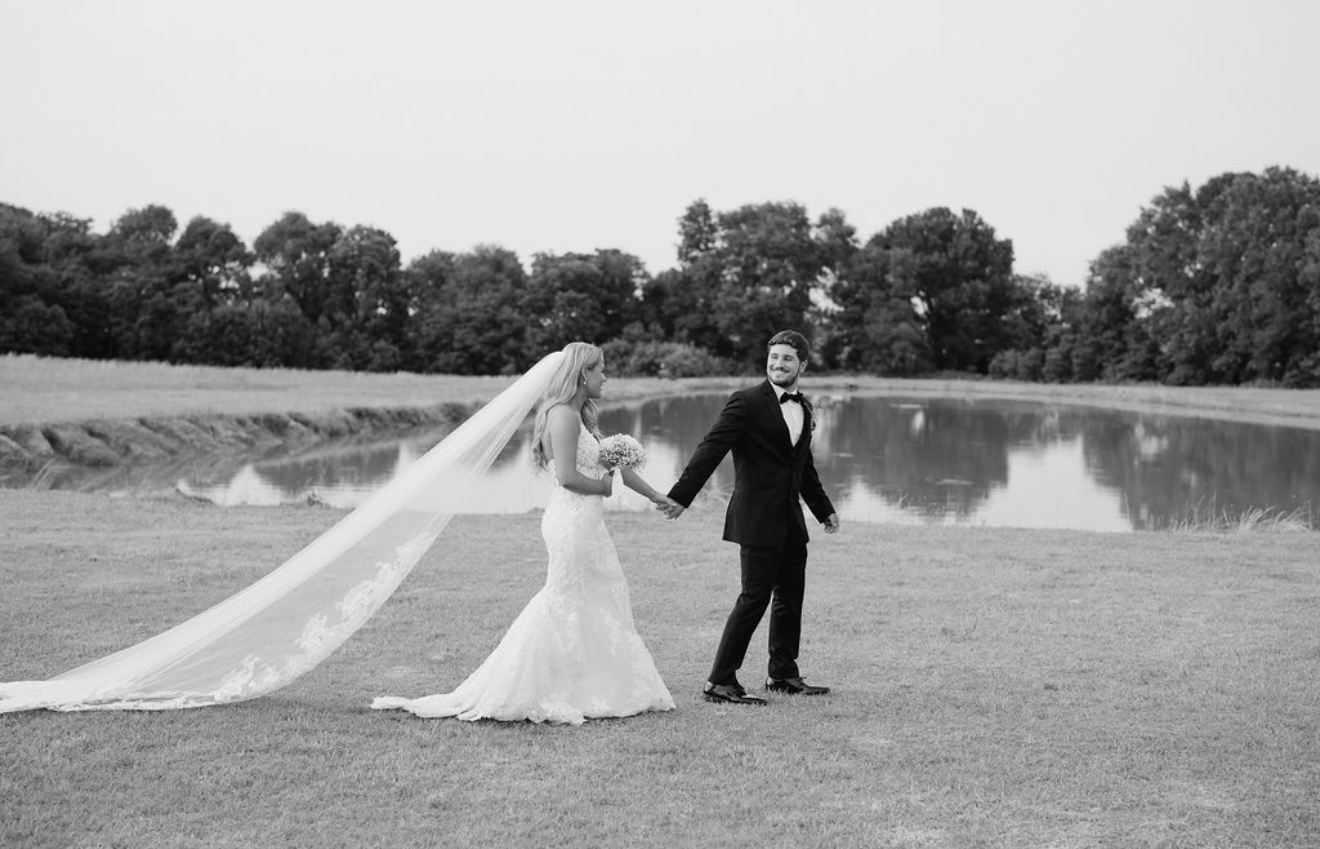
More frames from The Grandview Venue
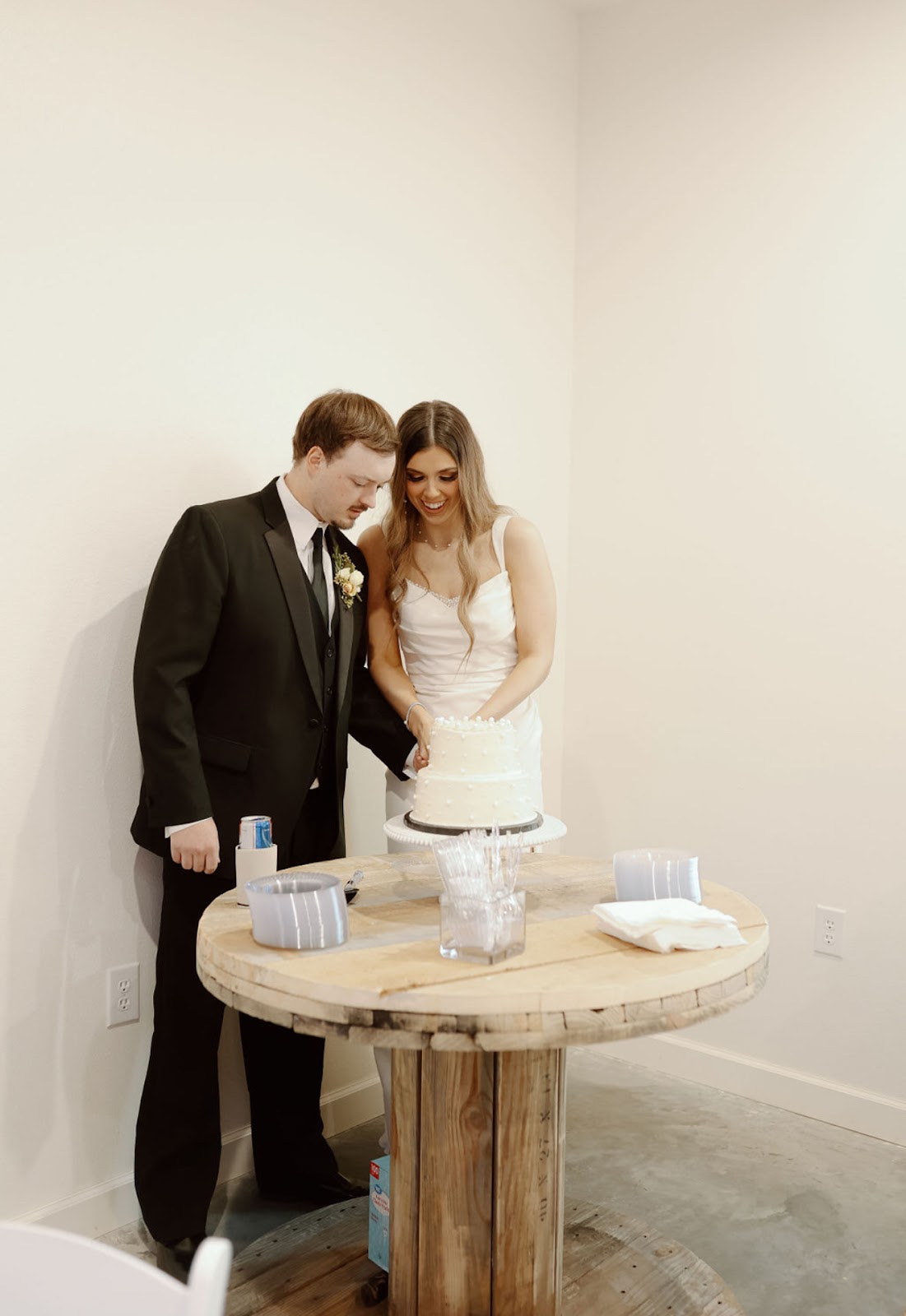
The Grandview Venue wedding photography: common questions
What is the one decision?
Whether the camera is above the subjects or below them. On sloping ground those are two completely different photographs.
What does the below position give me?
The cleanest background available anywhere: open sky, with every building, vehicle, sign and guest falling out of frame because they are all below the subjects.
How far below do I need to be?
Low enough that the horizon falls below the subjects’ shoulders — fifteen or twenty metres downhill on a moderate slope. Halfway there is worse than not trying.
What lens for the view?
A moderate telephoto. A wide lens renders distant ridges at their true angular size, which is small, and the view that looked spectacular looks like nothing.
How do I expose the view frame?
For the distance, and lift the subjects with a close warm-gelled source. Metering on faces gives a white sky and a washed-out valley.
When does the view actually work?
Late October to April. Summer dew points in the low to mid twenties Celsius soften the far ridges into a pale band and remove the layering.
More Arkansas venue guides
We are writing a photographer’s guide to every venue we would happily shoot in Arkansas. Here are three more, plus the full index:
- The Greenbrier, Greenbrier: Field Notes, Problem and Solution
- Pratt Place Inn, Fayetteville: How the Light Moves
- The River Market, Little Rock: A Walk Through the Site
Planning a wedding at The Grandview Venue?
Above or below — we decide it for every frame. Tell us your date.