 The Ozark Mountain Lodge, Eureka Springs: The Problem, and Four Ways Out
The 1886 Crescent Hotel, Eureka Springs: Field Notes on a Hillside Hotel
Pale limestone and extreme terrain. One is a light source and the other is a set of viewpoints.
A large Victorian hotel on an Ozark hilltop gives a photographer two things that most venues do not, and both come from the site rather than the building.
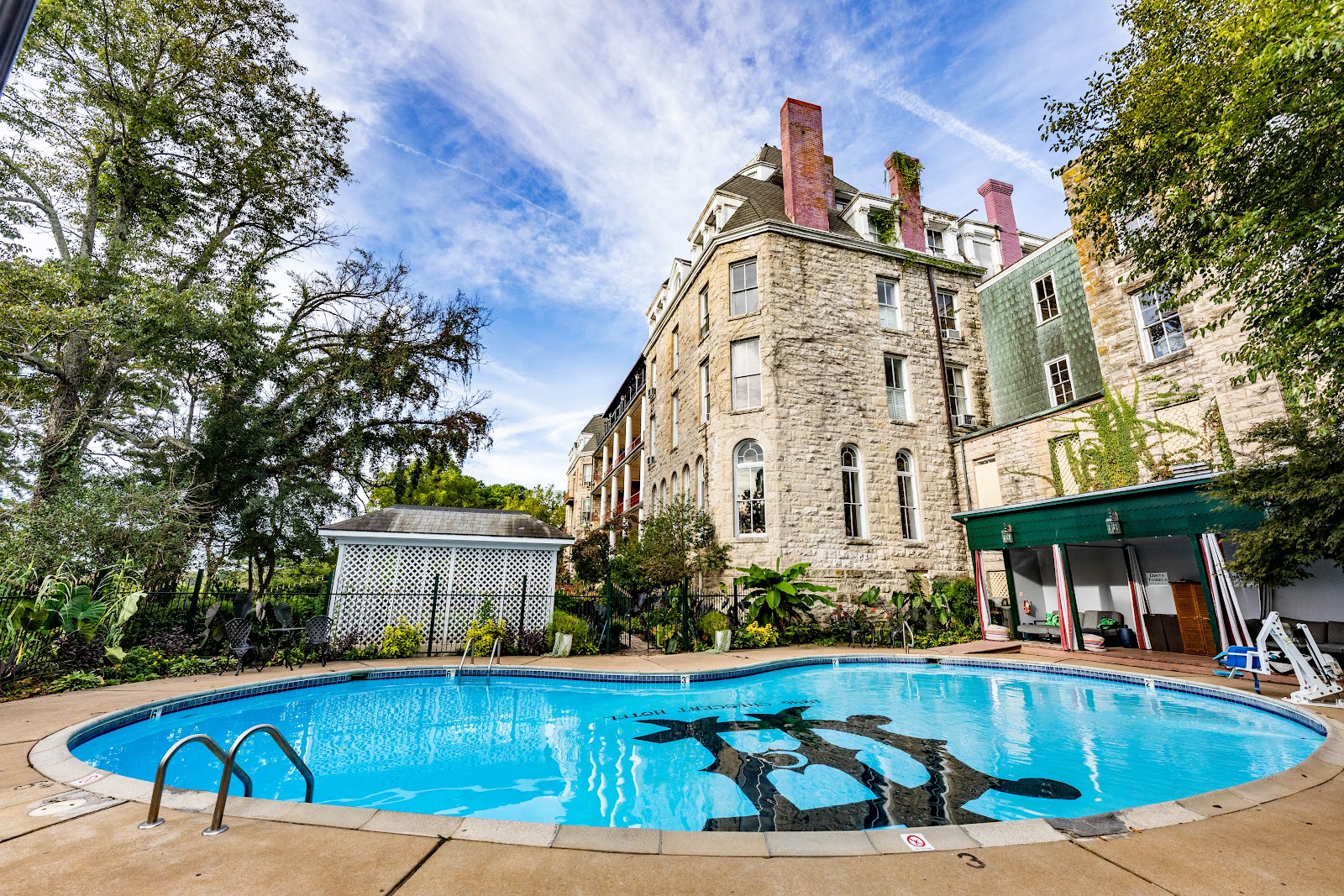
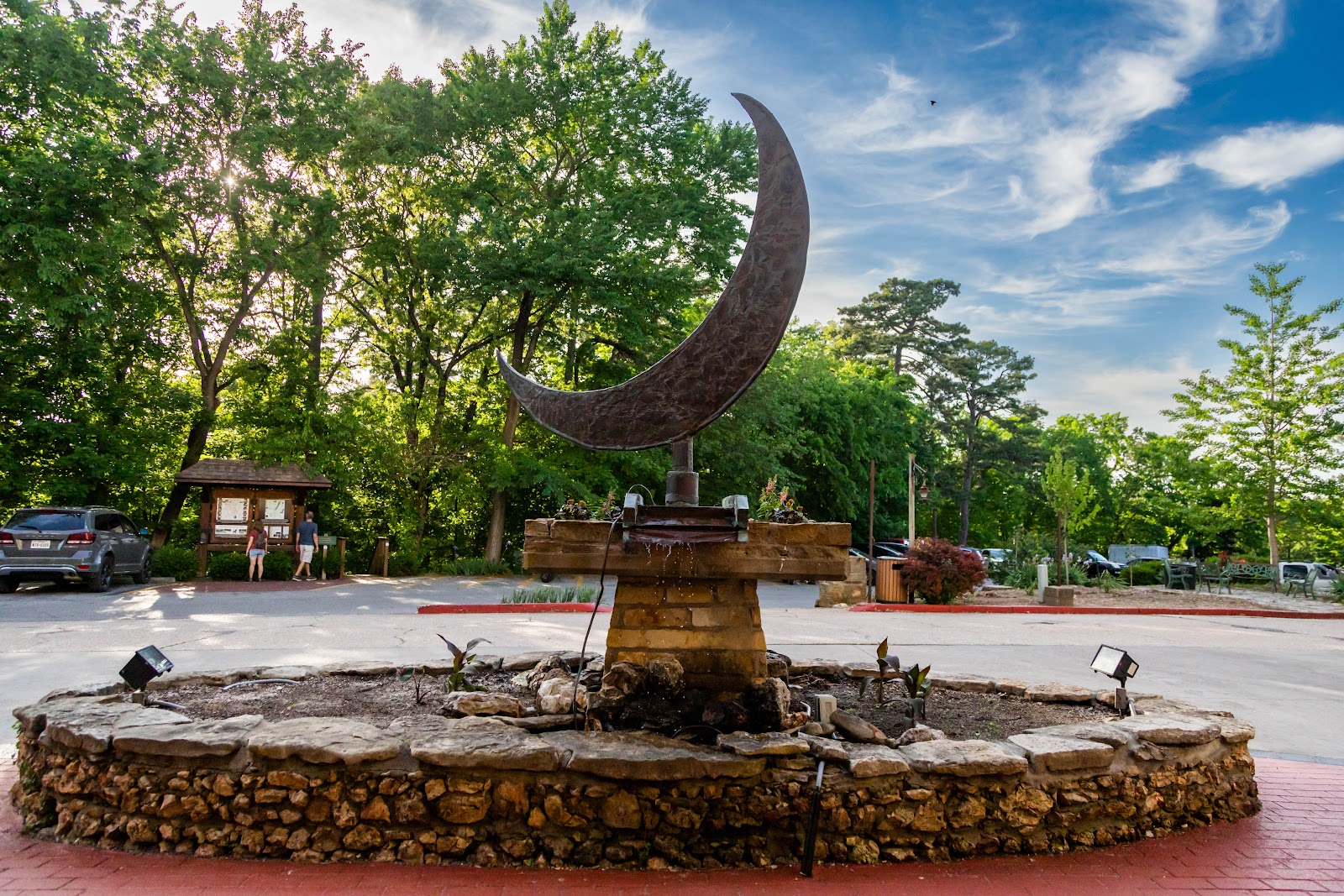
The first is the stone. Local limestone is pale and warm, which makes it a reflector rather than a background: a sunlit limestone elevation returns a great deal of light, so a couple standing in shade three or four metres out from one, facing it, is lit by a source the size of the wall. That is the best free light on the property and it needs a custom white balance, because limestone bounce is markedly warmer than daylight.
The second is the terrain. Eureka Springs is built on exceptionally steep ground — streets at several levels, buildings whose entrances are storeys apart front and back — which means there are positions above and below almost everything. A subject can be photographed from a genuinely elevated or genuinely low viewpoint with no equipment at all, and a hilltop building has long views in several directions.
Against those, the interiors are Victorian: tall, warm, absorbent and deep, with steep light gradients from the windows inward.
These are field notes on all three. We have not photographed a wedding at the 1886 Crescent Hotel; large Victorian hotels and Ozark terrain behave consistently. Which spaces are included, whether the grounds are available and whether the lighting is adjustable are questions for their team.
The 1886 Crescent Hotel at a glance
| Where | A hilltop in Eureka Springs, Arkansas |
| The stone | Pale warm limestone — a reflector, not a background |
| The terrain | Extreme steepness gives viewpoints above and below everything |
| The interiors | Victorian: tall, warm, absorbent, with steep window gradients |
| Ask first | Spaces included, grounds access, lighting control, fixings |
What you meet, and what each one needs
Limestone bounce is the first condition and it is worth using deliberately rather than merely receiving. A sunlit pale limestone wall returns a large proportion of what falls on it, which makes it a soft source at architectural scale — soft because it is large, directional because it comes from one side, and warm because the stone is warm.
The distance matters: closer than two metres and the fall-off across two faces becomes uneven; further than five and the open sky above takes over as the dominant source. Three to four metres out, facing the wall, with the camera positioned so the wall is behind the photographer rather than in the frame.
The colour has to be matched rather than corrected. Limestone bounce is markedly warmer than daylight, so a daylight setting renders it orange — and because the cast arrives from one side rather than everywhere, a global correction neutralises the lit side and throws the rest cold. A custom white balance set on a face in the position being used is the fix, and any added source should be gelled warm with white balance set to that gel.
The texture is the compensation and it needs raking light. Coarse limestone reads as stone only when light runs along it, lifting every course and tool mark; the same light facing it flattens the wall into a pale field. So the elevations worth photographing are the ones the sun is skimming, and a short walk to find them is worth more than any accessory.
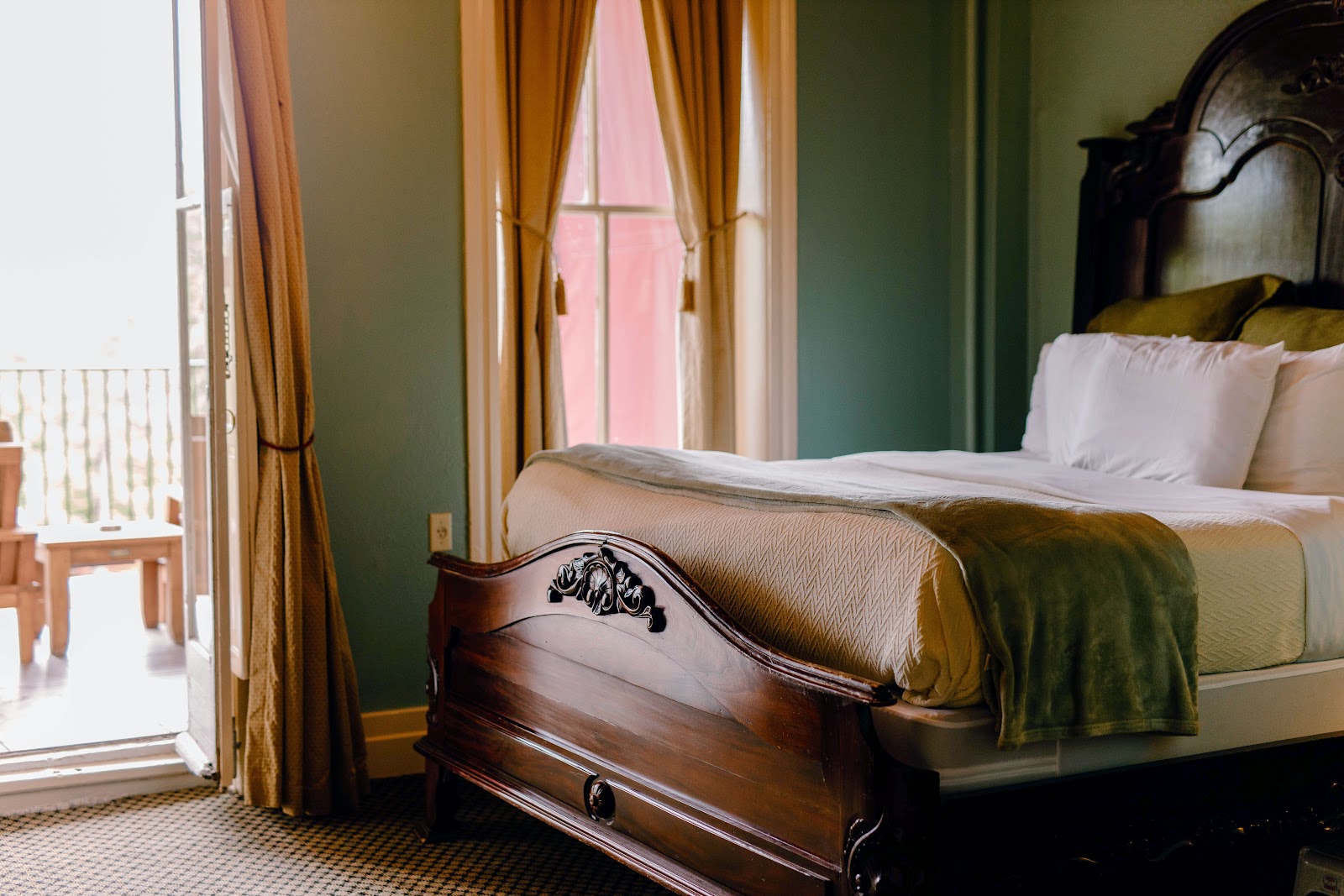
The Victorian interior is the second condition and it is a set of familiar problems. Timber, deep paint, heavy drapery and dense upholstery all absorb, which puts a room a stop or two below a pale one with identical fittings — measure it on arrival rather than estimating, because eyes adapt and meters do not.
Test bounce with one frame per room, because the answer varies: grand ground-floor rooms with tall ceilings return little while upstairs rooms are frequently lower and work well. Thirty seconds each and it changes what has to be carried.
Warm bounce is the interior colour problem. Timber, brass and warm paint reflect strongly warm onto the shadow side of a face from several directions at once, localised and bounced so global white balance cannot separate it from the subject. One warm-gelled source with white balance set to the gel is the method, and a global correction turns skin grey.
The window gradient is the third and it decides where to stand. A tall Victorian sash extends close to the floor, which means the light wraps upward as well as sideways and fills under the chin — something a modern casement cannot do. Two to three metres back is the working distance; past four, a furnished room has absorbed almost everything.
Every overhead and lamp fitting should be off, so the room has one colour of light rather than two landing on the same face. And the shaded side is the requirement: at this latitude, about thirty-six degrees north, a north-facing room is shaded all year and is the most reliable.
Steep fall-off is the compensation and it is free separation: three metres of distance in a warm dim room puts natural darkness behind a subject with no equipment at all.
The terrain, and the views
The steepness of this town is genuinely unusual and it is worth exploiting rather than merely navigating.
The first thing it gives is elevation without a climb. In flat country, photographing a group from above requires a stair or a balcony; here there is almost always a path, a terrace or a street a storey higher than the one a couple is standing on. A camera above a group sees faces rather than the backs of heads, which is the single most useful perspective for a large formal, and here it costs a short walk rather than a piece of architecture.
The second is the reverse: positions genuinely below a subject, which puts sky behind them rather than ground. A couple photographed from below on a rise or a step is separated completely, at no cost — and on this terrain those positions are everywhere.
The third is long views in several directions from a hilltop. That is rare in wooded country, where a canopy usually closes sightlines, and it means the wide frames actually work: a couple with the Ozarks receding behind them in layers. The exposure for those should be set for the sky and the distance with the faces lifted by a close source, because metering on skin gives a white sky and a flat view.
The terrain also creates deep hollows, and deep hollows with moisture in them produce morning fog readily. From a hilltop that is a specific and excellent frame: fog filling the valleys below while the hilltop is clear, with successive ridges separating into grey layers above it. That is available on many autumn and spring mornings and it burns off, so it is an early opportunity rather than something to schedule.
The practical cost of the terrain is real and worth planning for. Steep streets, steps and paths in formal clothes are a genuine consideration, and the distance between two positions that look close on a map may involve a storey of climbing. A short route to close positions beats an ambitious one, and it should be walked in advance rather than improvised.
The building itself can be photographed whole from a distance, which a hilltop position allows and an urban site does not — and it is worth one frame, raked by low sun so the limestone reads as stone rather than as a pale shape.
The timed frame is the crossing: twenty-five to forty minutes after sunset, when the sky still holds colour at about the brightness of the building’s own lighting, so one exposure holds couple, building and sky. From a hilltop that window is slightly longer than at valley level, because the horizon is lower — and it is the one unmovable frame of the day.
The grounds, where there are any, follow the woodland rule absolutely: full shade under a dense crown is excellent, while dappled light through a thin one puts bright patches and deep shadow on the same face at a ratio nothing holds. Dense Ozark hardwood supplies full shade reliably in summer, and it throws green onto skin, which a custom white balance set on a face in position handles.
- Three to four metres out from a sunlit limestone wall, facing it
- Custom white balance on a face; limestone bounce is much warmer than daylight
- Use the terrain for elevation — a camera above a group is worth a short walk
- Expose the long views for the sky; faces lifted by a close source
- Walk the route in advance; a storey of climbing in formal shoes is real
The Arkansas year
Spring is the region’s best planting season and it is short and specific: dogwood and redbud through late March and April, azaleas alongside them, mild temperatures, and the clearest air of the growing year. And critically a canopy that has not yet closed, so more light reaches the ground and the dappling problem is at its mildest.
Summer is hot and genuinely humid, and the humidity rather than the heat is the photographic fact: moist air scatters light, which softens shadows and slightly flattens the long views from the hilltop — which can dissolve into haze in July in a way they do not in November. For a venue whose asset includes distance, that is worth knowing when a date is chosen.
The fogging problem is severe in this climate and it runs the opposite way from a cold one: a body carried from an air-conditioned interior into July air fogs on every surface at once and does not clear quickly. A large hotel is cooled hard, which makes the difference larger — so a bag opened twenty minutes before going out is the whole fix, and at a venue whose one unmovable frame is a timed crossing, a fogged lens means missing it.
Severe afternoon thunderstorms are a real possibility from late spring onward, which at a building with full interiors costs a decision rather than a picture. Wet limestone darkens and saturates, which photographs better than dry, and wet steep streets reflecting lit windows are a better frame than the dry version — so a shower is an opportunity delayed rather than a day lost.
Autumn is the other good window and the stronger one here. Ozark hardwood colour usually peaks from late October into the first week of November, and from a hilltop that colour reads across whole hillsides and in receding layers rather than in patches — which is the best frame the location produces all year. The humidity drops, the air clears so the long views hold detail, and low sun arrives at a civilised hour.
Morning fog is the autumn bonus and from this terrain it is exceptional: fog filling the hollows below with ridges separating above it is a frame that flat country cannot give at all.
Winter is mild with frost occasional rather than constant, and it is underrated here for three reasons. The bare canopy opens the sightlines, which for a hilltop venue means the views are at their most complete in January. The December midday sun at about thirty degrees above the horizon comes into tall windows at a low angle rather than from overhead, which means the interior light is directional and usable through the whole short day instead of for two hours at each end. And low winter sun on pale limestone is the best that material ever looks.
In a building whose main interior problem is dark absorbent rooms, that low-angle winter light is a substantial gain rather than a marginal one. Snow is occasional here and when it comes it turns the ground into a reflector, brightening every window — and snow against warm limestone is a strong contrast.
The winter constraint is the short day, which compresses the outdoor block into a couple of hours and means the steep route and the positions should both be decided in advance rather than explored.
More frames from The 1886 Crescent Hotel
The 1886 Crescent Hotel wedding photography: common questions
Is limestone a background or a light?
A light. Pale warm limestone reflects a large proportion of what falls on it, so a sunlit elevation is a soft source the size of the wall.
What white balance does that need?
A custom one set on a face in the position being used. Limestone bounce is markedly warmer than daylight, and a global correction throws everything else cold.
What does the terrain give?
Elevation and depression without equipment. There is almost always a path a storey higher or lower, which gives a camera above a group or sky behind a couple.
How should the long views be exposed?
For the sky and the distance, with the faces lifted by a close source. Metering on skin gives a white sky and a flat view.
What is the practical cost of the steepness?
Real. Steep streets and steps in formal clothes are a genuine consideration, and two positions close on a map may be a storey apart. Walk the route in advance.
When is the location at its best?
Late October into early November for colour across whole hillsides in receding layers — and January, when the bare canopy makes the views most complete.
More Arkansas venue guides
We are writing a photographer’s guide to every venue we would happily shoot in Arkansas. Here are three more, plus the full index:
- The Ozark Mountain Lodge, Eureka Springs: The Problem, and Four Ways Out
- Thorncrown Chapel, Eureka Springs: What It Suits, and What It Does Not
- All Souls Chapel, Fayetteville: The Problem and Four Ways Out of It
Planning a wedding at The 1886 Crescent Hotel?
Pale stone and steep ground. Tell us your date and we will use both.