 The Ozark Mountain Lodge, Eureka Springs: The Problem, and Four Ways Out
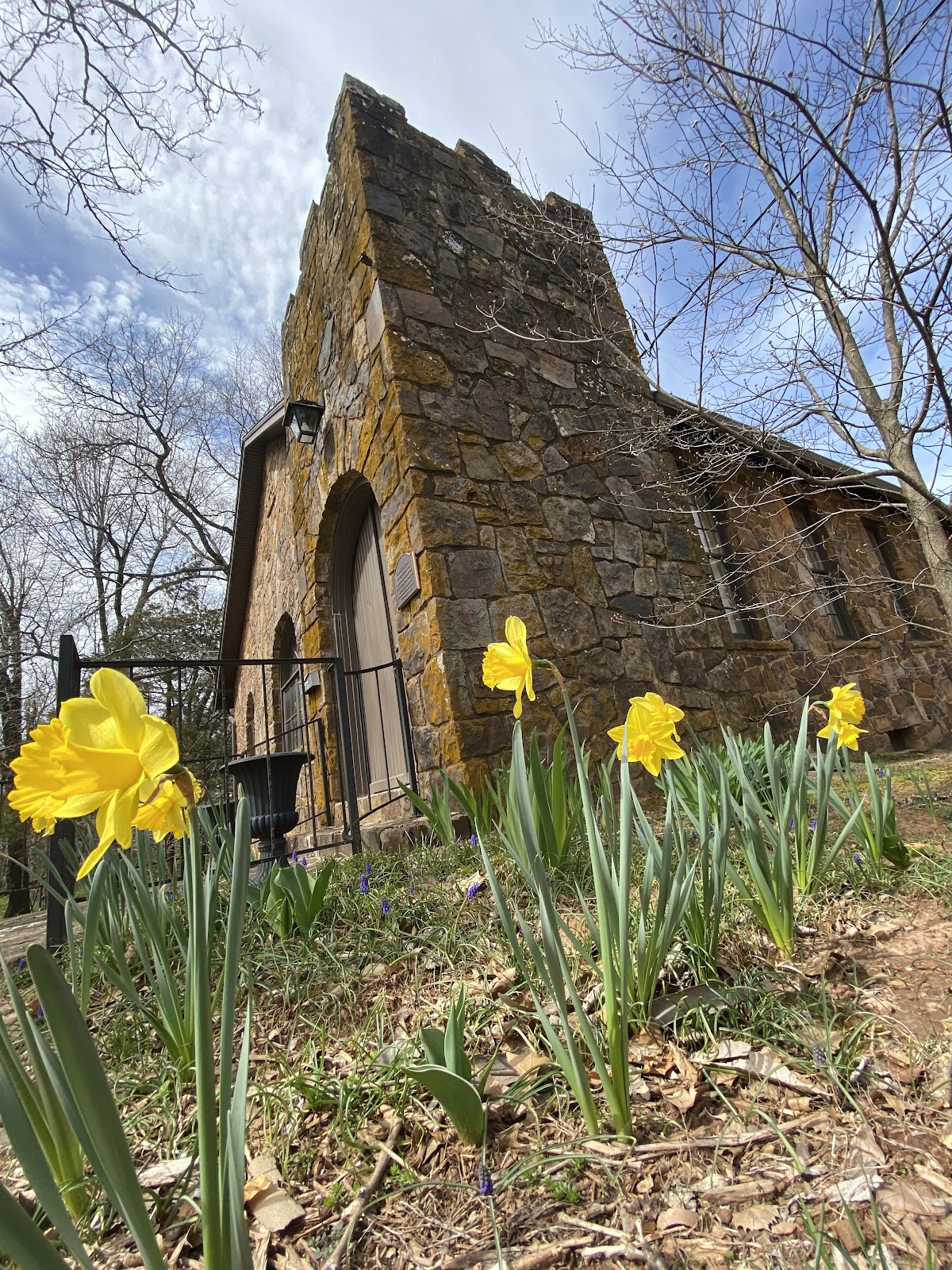
All Souls Chapel, Fayetteville: The Problem and Four Ways Out of It
A dark room with bright windows is the oldest problem in this work.
Every chapel presents the same problem and it is worth solving properly once rather than improvising each time.
The problem is a brightness range. A chapel is a small, tall, enclosed room with a limited number of openings, and those openings are usually the brightest things a camera will see all day. The interior surfaces are dark or mid-toned and they absorb; the windows are lit by the open sky. The difference between a face in the nave and the glass in a window can run to seven or eight stops, which no sensor holds in one exposure.
That produces the three failure modes everyone recognises. Exposed for the faces, the windows are blank white rectangles and the architecture dissolves around them. Exposed for the windows, the congregation and the couple are silhouettes. Metered as an average, both are wrong at once and the picture looks muddy.
There is a second problem stacked on the first: the geometry. A chapel puts the couple at one end, facing away from the camera for most of the ceremony, with a fixed aisle position and almost no room to move. The photographer’s position is constrained in a way it is at no other point in the day.
And a third: the colour. Older chapels mix daylight from the windows with warm artificial fittings, and where there is stained glass the light arriving on a face may be tinted by it. A single white balance will be wrong somewhere in the room.
Those three problems have four distinct solutions between them, and choosing among them deliberately is the whole job.
Fayetteville sits in the Arkansas Ozarks at about thirty-six degrees north. The June noon sun reaches around seventy-seven degrees, the December noon sun about thirty degrees, days run from about nine hours fifty to fourteen hours twenty, and civil twilight is around twenty-eight minutes.
We have not photographed a wedding at this chapel. Which spaces are included, where a photographer may stand during a ceremony, whether flash is permitted and what the permitted hours are, are questions for their team — and the question about position and flash is the one that decides which of the four solutions below is available.
All Souls Chapel at a glance
| Where | A small chapel in Fayetteville, in the Arkansas Ozarks |
| The problem | Seven or eight stops between a face in the nave and the glass in a window |
| Four ways out | Let the windows go; expose for them; add light; move the people |
| The second problem | A constrained camera position and subjects facing away |
| Ask first | Photographer positions, flash permission, included spaces, hours |
The first two ways out
The first way out is to let the windows go, and it is the right default rather than a concession.
Expose for the faces, accept that the windows will be blank, and compose so that as little window as possible is in frame. That means a tighter crop, a lower camera, a longer lens, or a position that puts a wall rather than a window behind the subjects.
This works because the photograph is of people, not of architecture, and a blown window at the edge of a frame reads as light rather than as a mistake — whereas a silhouetted face is unambiguously wrong. It is also the only one of the four that works during a ceremony without any cooperation from anybody.
Metering matters here. A camera pointed down a nave sees a great deal of dark surface and a few very bright openings, and it will settle on something that is wrong for both. The reliable method is to meter on skin — spot, or by test frame — and to hold that exposure regardless of how the overall scene reads, because the overall scene is not what is being photographed.
The second way out is to expose for the windows and make the architecture the subject. That inverts the priority: the glass renders correctly, the tracery and the window surround read, and the interior goes dark with the people as shapes within it.
This is a genuinely strong photograph and it is the one that says what kind of building this is. A small chapel with light coming through its windows into a dark room is an image with a long history, and one or two frames of it in a set are worth more than five more frames of faces.
Where there is stained glass, this is the only way to photograph it at all. Stained glass renders as colour only when it is exposed for; exposed for the room, it is white. That means the decision is binary: either a frame in which the glass is the subject and the people are dark, or a frame in which the people are lit and the glass is not there.
The practical way to get both in the same photograph is not to compromise the exposure but to introduce light, which is the third solution.
One note on the interior surfaces. A small chapel with timber or stone finishes absorbs rather than bounces, which means the fall-off from a window is extremely fast — often three or four stops between a face at a window and the wall two metres behind it. That is an asset, not a difficulty: it means a subject standing near a window has a dark background for nothing, which is exactly what a portrait wants.
The second two, and the rest of the site
The third way out is to add light, and it is the only way to have the windows and the faces correct in one frame.
The method is to expose for the windows — the value that keeps the glass and the tracery reading — and then to bring the faces up to that level with a source of your own. Because the ambient in the room is several stops below the windows, the source needs surprisingly little output, and because the interior surfaces absorb, it will not spill onto the walls.
Placement matters more than power. A source off to one side, at about forty-five degrees and slightly above eye level, close enough to fall off before it reaches the back of the room, gives the subjects modelling and leaves the architecture as it is. A source on the camera axis gives flat light and announces itself. A source bounced off a ceiling in a small chapel gives top-heavy light and dark eye sockets.
The gel is important. Where the room has warm artificial fittings, or where the daylight has passed through stained glass, an ungelled daylight source puts faces of a different colour into the room, which reads as artificial immediately. A warm gel and a white balance set for the room fixes it in one move.
And whether flash is permitted during a ceremony is a question to ask well beforehand, because in a good many chapels it is not. Where it is not, the first solution — let the windows go and meter on skin — is the only one available, which is a strong argument for knowing that in advance rather than discovering it.
The fourth way out is to move the people, and it applies to everything except the ceremony itself.
A chapel’s best portrait position is almost never where the ceremony happens. It is a metre or two from the largest window, at forty-five degrees to it, with the dark interior behind — which gives a huge soft source, three or four stops of background fall-off, and none of the geometric constraints of the aisle. That position exists in every chapel and it takes thirty seconds to find.
The second-best is the doorway. A chapel door open to daylight is a very large soft source with a hard mask, and a subject standing a metre inside it gets the effect a photographer would otherwise build: lit face, dark surroundings, and the frame supplied by the architecture. Depth back from the opening sets the ratio, so a step changes the picture.
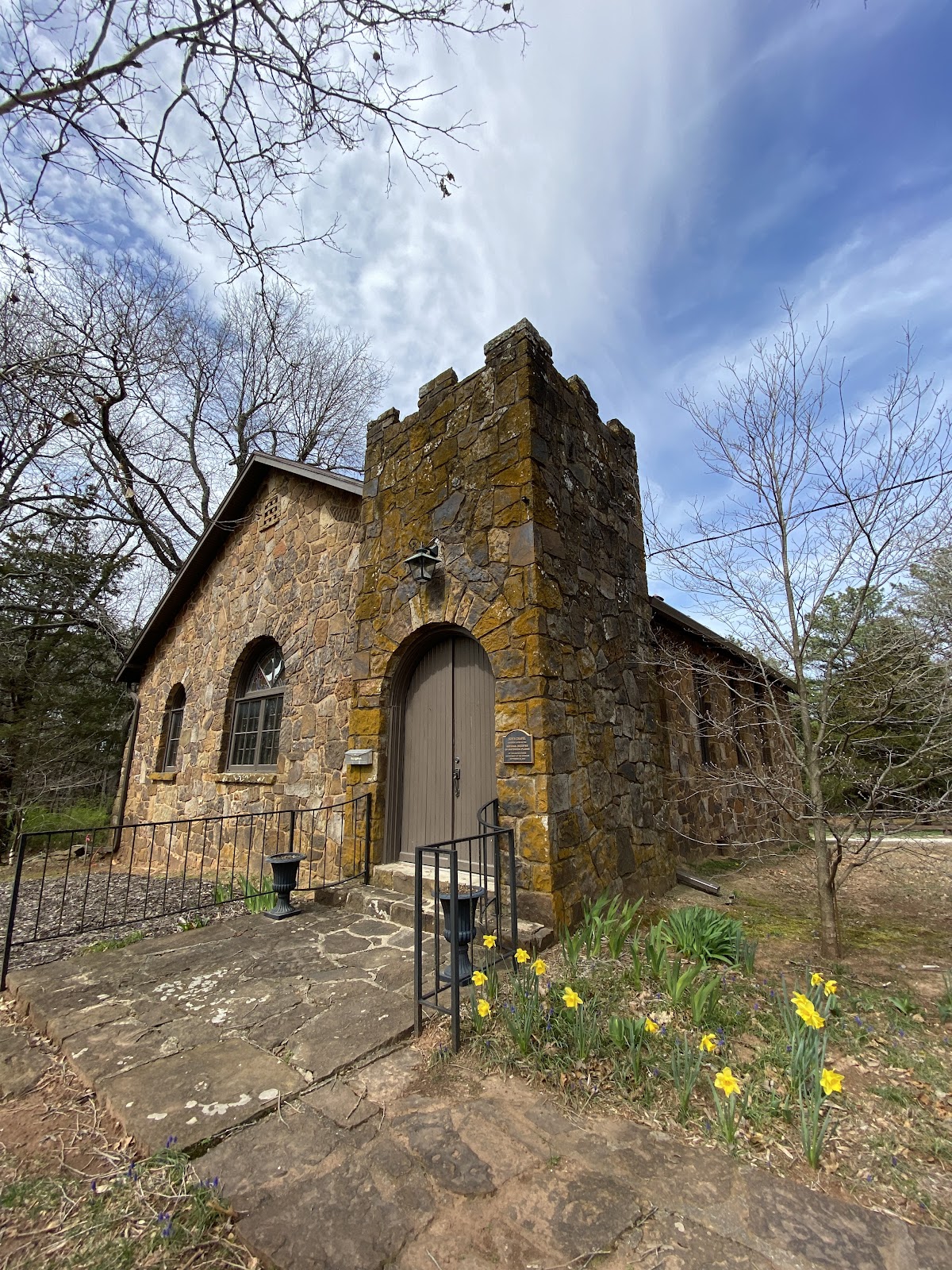
The exterior of an Ozark chapel is the fifth environment and it is the one that tells you where you are. Northwest Arkansas is a dissected limestone and sandstone plateau — flat-topped uplands cut by steep wooded valleys — and the forest is oak and hickory with eastern redcedar on the thinner ground.
That species mix decides the shade. Redcedar is dense and very dark and blocks almost all light, which makes its edge the best free separation available outdoors: a subject a metre inside a cedar margin has soft directional light in front and three or four stops of near-black behind. Oak and hickory canopy gives soft even light with a green cast, corrected by standing at the edge rather than deep inside it.
Limestone is the other material worth knowing. Pale grey, often weathered into ledges and small bluffs, it is a low-saturation background that treats skin and white fabric kindly, and a high-frequency texture that is spectacular under raking light and dull under flat light.
Two practical notes. Chiggers and ticks are a genuine Arkansas consideration in any tall grass or woodland edge from about May into September, and they belong in the planning conversation rather than in the surprises. And Arkansas sits in the secondary severe-weather corridor of the southeastern United States, with a spring peak in April and May and a smaller one in November — so a named indoor alternative for anything outdoors in those months is a requirement rather than a courtesy.
- Default: meter on skin, let the windows go, compose them out
- One frame exposed for the windows, with the people as shapes
- Add light only to get both — off-axis, low output, warm-gelled
- Move the people: a metre from the biggest window at forty-five degrees
- Ask about flash and positions before the day, not during it
The Ozark year
Northwest Arkansas has four real seasons and the shoulder seasons are much longer and more generous than in the northern states.
Winter is short, cool and variable. Snow occurs but rarely lasts; the more characteristic Arkansas winter hazard is freezing rain, which coats every twig in clear ice and is spectacular for about a day and dangerous for longer. An ice-glazed oak against a grey sky is one of the most unusual photographic conditions in this guide and it cannot be planned for.
The December noon sun at around thirty degrees means the whole short day models rather than flattens, and at nine hours fifty the day is considerably longer than a New England winter one. Inside a chapel, winter light is better than summer light for a specific reason: bare trees outside mean more sky reaching the windows and less green cast, so the interior is brighter and more neutral in January than in July.
Spring is the region’s best season and it is early. Leaf-out runs from late March into early April in the Ozarks, and before it happens the flowering understory does the work: redbud flowering magenta on bare wood, dogwood white beneath the canopy, and serviceberry. Redbud is the one worth planning for, because it flowers before its own leaves and before the canopy closes, which means it is lit directly rather than filtered — a saturated magenta mass in full light, for about two weeks.
The cost is severe weather. Arkansas sits in the secondary tornado corridor of the southeastern states and April and May are the peak months, with supercells, hail and high winds. That is a safety consideration rather than a photographic one, and it makes a named indoor alternative a requirement for any spring outdoor ceremony.
Summer is hot and humid, with dew points in the low to mid twenties Celsius, which puts haze into the air and takes contrast out of anything at distance — in dissected plateau country, where the views are across wooded valleys, that matters. The June noon sun at seventy-seven degrees is the hardest light of the year and the answer is the cedar margins, the chapel and anything with a roof.
Summer’s compensation is the water. The Ozarks are karst country — limestone with caves, sinkholes and springs — which means the streams run clear and cold year-round and hold a blue-green tint from dissolved carbonate that is quite unlike a muddy lowland river. A limestone-bedded creek in shade is one of the most reliable photographic subjects in the state, and the shade prevents the blown highlights that ruin a sunlit stream.
Chiggers and ticks are at their worst from May through September, and fireflies in the Ozark valleys in June are worth a frame if an evening session runs late.
Autumn is the other strong season and it is much later than in the north. Oak-hickory forest turns from the last week of October into the first week of November — three to five weeks behind New England — and it holds for longer, because oak in particular is slow to colour and slow to drop.
The palette is different too: hickory gold, oak russet and deep red, sweetgum purple-red, sassafras orange, and black gum almost claret. Against pale limestone and near-black redcedar, that is a richer and more varied autumn than the mountains’ pure reds, and the window is genuinely three weeks rather than two.
November brings a second, smaller severe-weather peak, and by late November the woods are bare, the limestone ledges are exposed, and the low sun models everything all day. It photographs austerely and well.
More frames from All Souls Chapel
All Souls Chapel wedding photography: common questions
What is the problem in a chapel?
Seven or eight stops between a face in the nave and the glass in a window. No sensor holds that in one exposure.
What is the right default?
Meter on skin, let the windows blow, and compose them out of frame. A blown window reads as light; a silhouetted face reads as a mistake.
How do I photograph stained glass?
Expose for it. Stained glass renders as colour only when it is exposed for — exposed for the room, it is white. That frame has dark people in it, and that is fine.
How do I get both the glass and the faces?
Expose for the windows and add a low-output source off-axis at forty-five degrees, warm-gelled, close enough to fall off before it reaches the back wall.
Where is the best portrait position?
A metre or two from the largest window at forty-five degrees to it, with the dark interior behind — not where the ceremony happens.
When is the best time of year outdoors?
Late March to mid-April for redbud flowering on bare wood, and the last week of October into early November for a three-week oak-hickory autumn.
More Arkansas venue guides
We are writing a photographer’s guide to every venue we would happily shoot in Arkansas. Here are three more, plus the full index:
- The Barn at the Springs, Garfield: A Walk Through the Site
- The Barn at Twin Oaks, Rogers: The Venue’s Own Logic
- The Box Turtle Venue, Rogers: The Problem and Four Ways Out of It
Planning a wedding at All Souls Chapel?
A dark room and bright windows. Tell us your date and we will plan which way out.