 The Ozark Mountain Lodge, Eureka Springs: The Problem, and Four Ways Out
The River Market, Little Rock: A Walk Through the Site
Brick, steel and a large river, all within a short walk.
The useful way to describe this place is to walk it, because it is a district rather than a building and the district has four distinct environments within a few hundred metres.
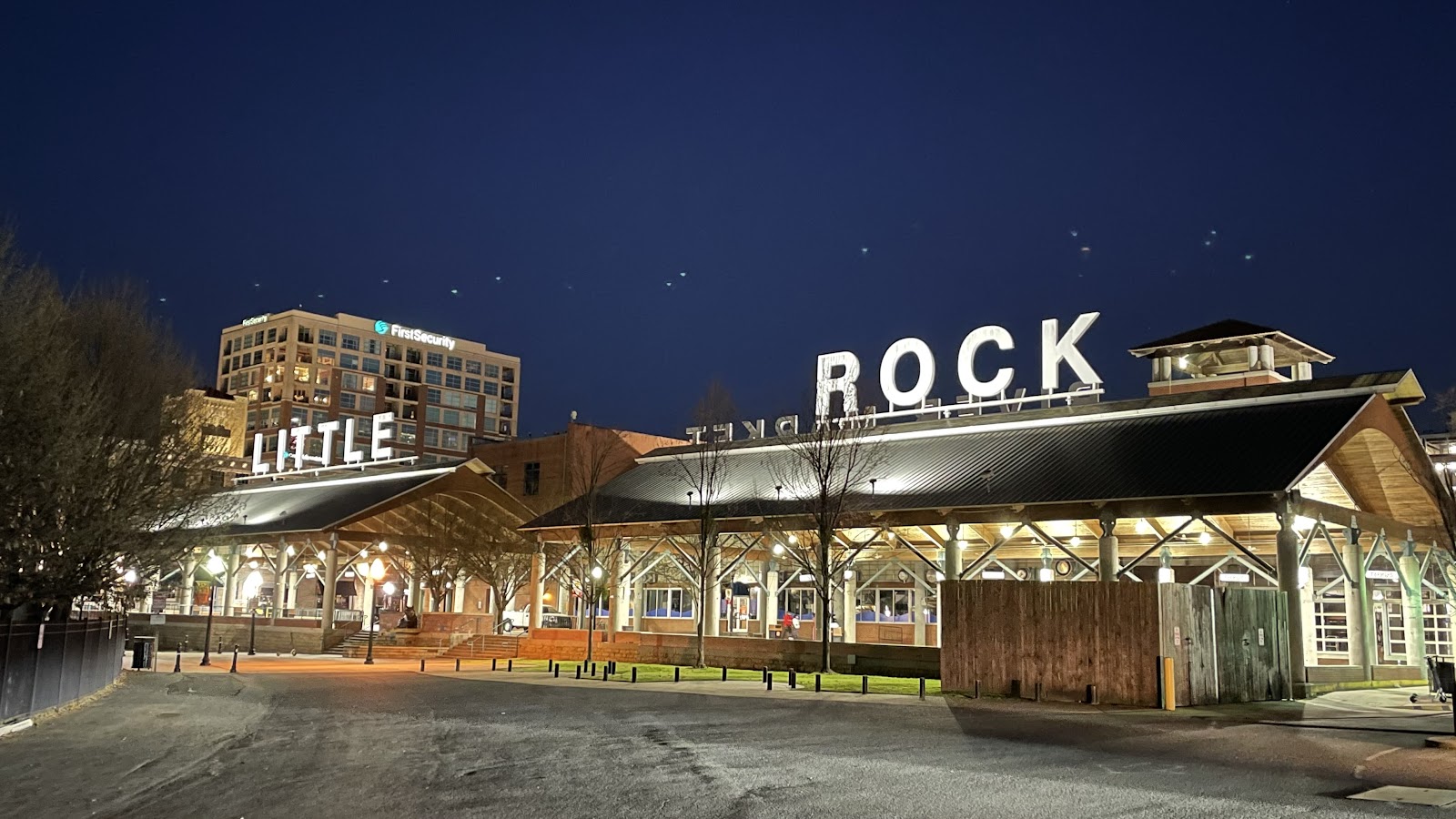
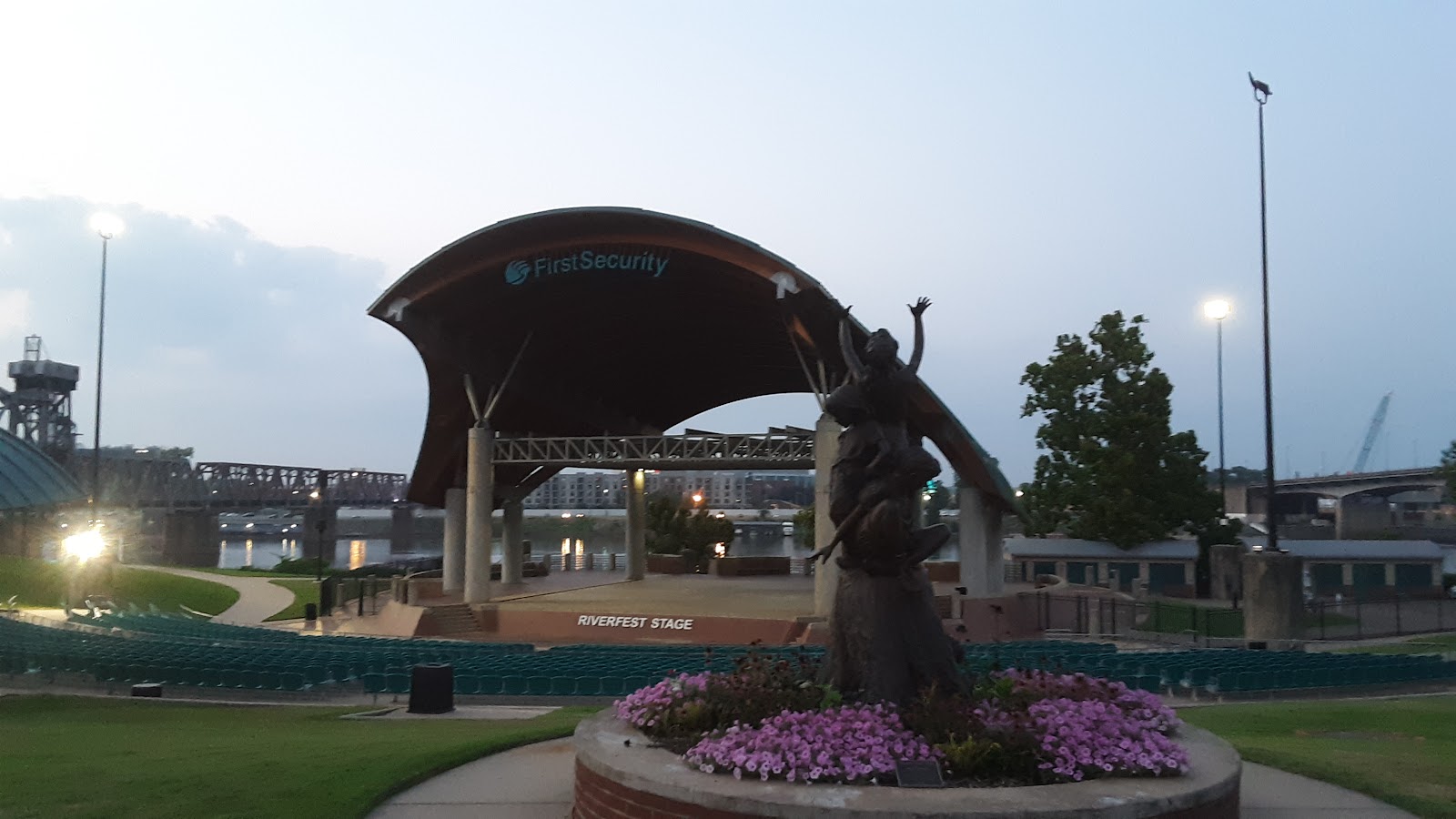
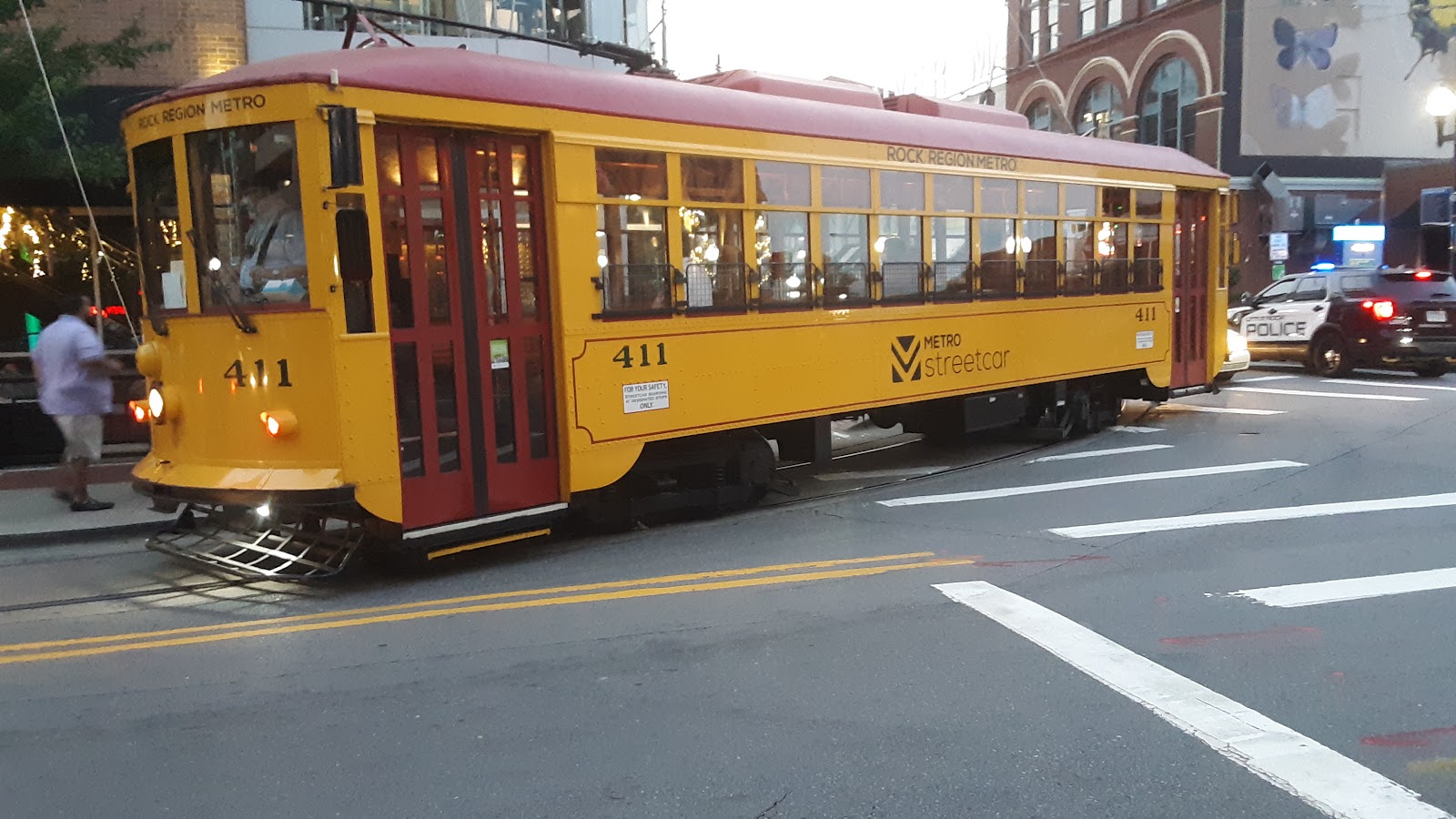
The River Market occupies the old warehouse quarter of Little Rock, between the downtown streets and the Arkansas River. What that means practically is nineteenth and early twentieth-century brick commercial buildings, converted market and event spaces, a riverfront park, and the river itself — which at this point is very large, carries barge traffic, and is crossed by several bridges.
Four environments, then: the brick streets, the interiors, the riverfront, and the bridges. They photograph completely differently and a walk that takes them in that order moves from the most enclosed to the most open, which is the right direction for a day that ends in low light.
Two facts about the material set the technical approach. Nineteenth-century brick is a mid-toned, strongly saturated red-brown surface — which makes it a far better background for a white dress than any pale wall, because the tonal contrast does the separating, and which means it bounces its own colour onto skin at close range.
And converted industrial interiors are dark. Warehouses were built with brick walls, timber or steel structure and a limited number of windows, because their purpose was storage rather than habitation. That produces a dark volume with a few bright apertures, which is what a studio is — and it means the light inside these buildings is better than the light in a purpose-built function room, provided it is used rather than overridden.
Little Rock sits at about thirty-four and a half degrees north. The June noon sun reaches around seventy-nine degrees, the December noon sun about thirty-two, days run from about ten hours to fourteen hours ten, and civil twilight is around twenty-seven minutes.
We have not photographed a wedding in this district. Which spaces are included, what street and riverfront access allows, whether any permits are needed for public areas and what the permitted hours are, are questions for the relevant venue and for the city.
The River Market at a glance
| Where | The old warehouse district on the Arkansas River, downtown Little Rock |
| Four environments | Brick streets, converted interiors, riverfront park, and the bridges |
| The brick | Mid-toned and saturated: separates a white dress, and bounces warm |
| The interiors | Dark volumes with few apertures — a studio, if used rather than overridden |
| Ask first | Included spaces, street and riverfront access, permits, hours |
The streets and the interiors
Start in the streets, because the brick is the district’s signature and it behaves in ways worth knowing before using.
Brick is a high-frequency texture: an irregular surface of units, mortar joints and weathering at a scale of centimetres. Under light arriving face-on it photographs as a flat field with a faint pattern; under light raking across it at a shallow angle, every projection casts a shadow and the texture appears in full relief.
That means a brick wall is a different surface at different times of day, and a five-minute check of which walls face which way is worth more than any amount of walking. A wall rakes for roughly twenty or thirty minutes once a day — and in an urban street grid, that timing is further complicated by the buildings opposite, which may block the low sun entirely.
The bounce is the other brick property and it is controllable. At two metres from a sunlit brick wall, a significant part of the light on the shadow side of a face has come off the brick and arrives distinctly warm and red — flattering on most skin, and visible on a white dress. At eight metres it is a gentle warm cast. At twenty it has gone.
That is a lighting control available with no equipment, and using it deliberately — close for warmth, far for neutrality — is more useful than correcting it afterwards.
An urban street’s other gift is the alley. A narrow gap between tall buildings is a light corridor: illumination arrives almost entirely from the strip of sky overhead and along the alley’s axis, while the walls absorb. That produces soft directional light with fast fall-off to the sides, and a subject facing along the alley with the dark walls to either side gets a lit face against a dark ground at architectural scale.
Facing across an alley puts a wall in front of the subject and is the one orientation that does not work. The colour needs a custom white balance on a face, because light filtered down a brick corridor is warm and light from a narrow strip of sky is cool, and the mixture varies with depth.
Then the interiors. A converted warehouse is a dark volume with a limited number of large openings, and the working method is the barn method: depth back from an opening is the lighting control, and it is a complete one.
At a large window or a loading door the light is bright and nearly frontal. Three metres back the ratio is dramatic and the interior behind the subject has fallen four or five stops. Deciding that depth deliberately, rather than standing where the party happens to be, is the single most useful thing to do inside a building like this.
Exposed structure is the other interior asset. Timber beams, steel columns, riveted plate and brick piers are strong graphic elements, and the useful thing about them is that they are dark — which means a subject placed in front of a structural member has separation for free. The hazard is clutter: converted industrial spaces have services, ducts, signage and lighting tracks, and those appear in frames taken without checking edges.
Meter on skin, never on the scene: a camera reading a dark warehouse with a bright window will overexpose everything that matters. And set a custom white balance on a face in position — brick and timber both bias warm, and the deeper a subject stands the warmer the light on them becomes.
The riverfront and the bridges
The riverfront is the third environment and it changes the character of the day completely, because it is the only place in the district with space and sky.
The Arkansas River here is large — a major navigable river with barge traffic — and it runs roughly east at Little Rock, which means the riverfront faces broadly north and the far bank is North Little Rock. The practical consequences are that the sun crosses the river’s length rather than setting into it, and that both a morning and an evening frame with light along the water are available.
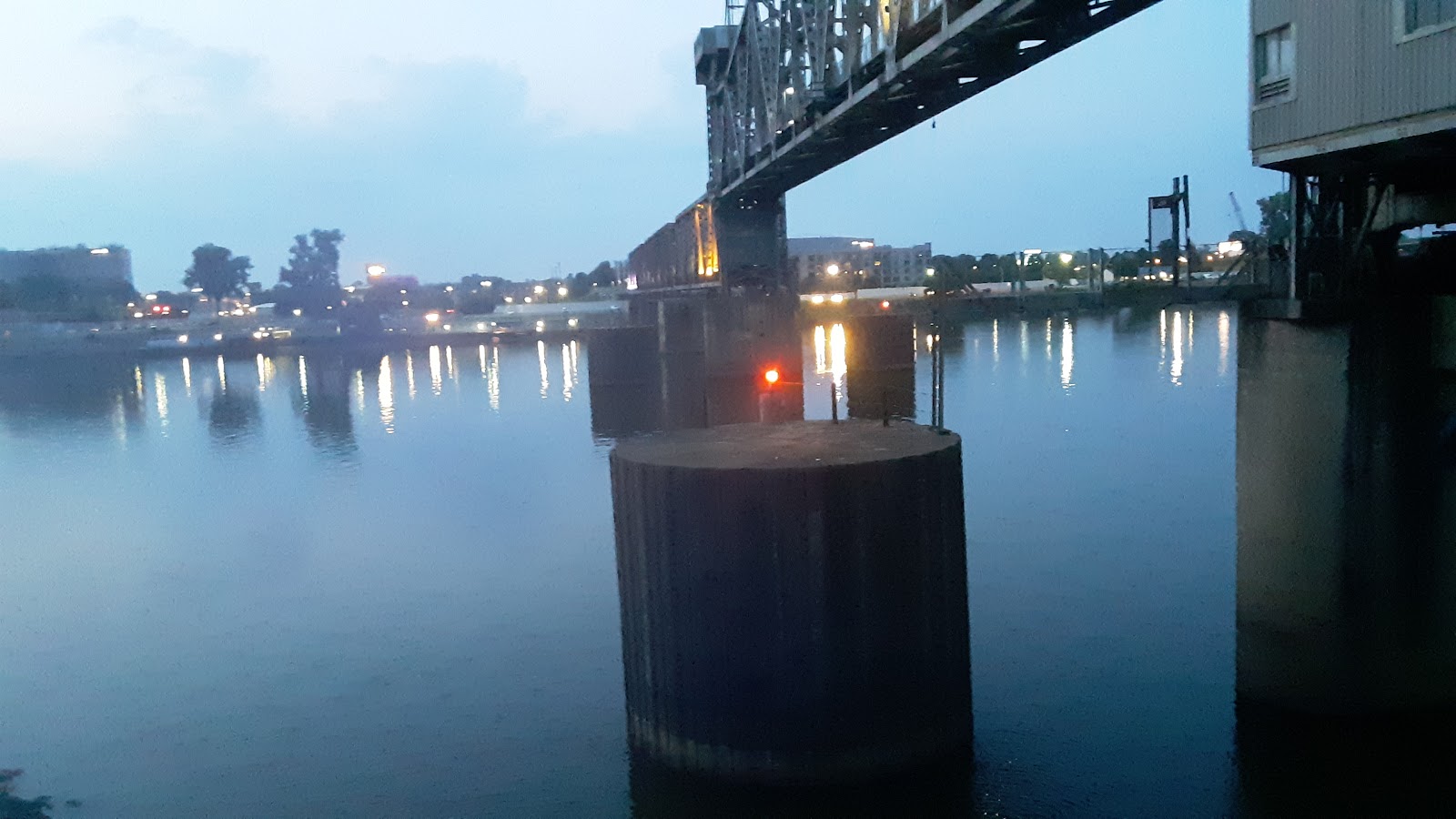
A large river does three useful things. It is a horizontal reflector that fills faces from below, which is precisely where a high sun leaves people dark. It is a mirror when calm, which on a river means the early morning and the last hour as the air settles. And it supplies space, which is the one thing a warehouse district lacks — a wide frame at the river has depth that no street can offer.
The water colour is worth knowing: the Arkansas River carries sediment and reads brown-green rather than blue, which means the colour in a river frame comes from the sky rather than from the water. On a clear evening that is an advantage, because the sky’s colour is the only colour and it reads cleanly.
The riverfront park is where the groups belong. It is level, open, clean and generous, which is what a group photograph needs, and there is enough of it to arrange people in ranks rather than in a line. The requirement is everyone in the same light — full open shade, full overcast, or full sun with the sun behind the camera — and an open riverfront offers all three at different hours.
The midday problem applies as it does everywhere: at seventy-nine degrees of June elevation the sun puts eyes in shadow and foreheads in light, and a riverfront park has limited cover. The answers are the trees where there are trees, the bridge undersides, the building recesses back in the district, and the interiors.
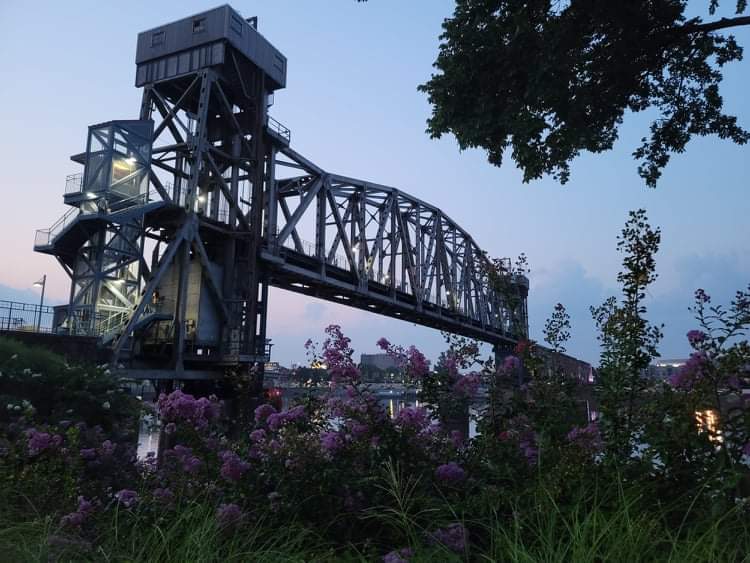
The bridges are the fourth environment and they are the most under-used. A large river crossing gives three completely different things: a structure to photograph against, a vantage above the water, and — underneath — a covered space with directional light.
The underside of a bridge is one of the best pieces of found lighting in any city. It is a roof with open sides, which makes it a directional soft source with rapid fall-off, and the structure above provides strong graphic geometry. It also works in rain, which on an Arkansas afternoon in April is not a small consideration.
From on a bridge, the frame changes scale entirely: the city on one side, the river below, and a long view that no ground-level position offers. The practical cautions are wind, which on a river crossing is persistent, and traffic, which is a safety matter rather than an aesthetic one.
At dusk the district comes into its own, and the crossing point is the frame. The sky and the lit brick façades and bridge lighting sit within about a stop of each other for roughly ten minutes, and at this latitude civil twilight runs only around twenty-seven minutes — so the whole window is short and has to be planned rather than waited for, with the camera position scouted in daylight.
Two practical notes. Mixed artificial light after dark is the technical problem of any urban evening: sodium, LED, neon and window light at different temperatures in the same frame. The answer is to choose one dominant source and balance for it, or to use enough flash to override the mixture entirely. And Arkansas sits in the secondary severe-weather corridor of the southeastern United States, with peaks in April–May and a smaller one in November, so a named indoor alternative for anything outdoors in those months is a requirement.
- Check which brick walls face which way — a wall rakes for twenty minutes a day
- Control the brick bounce with distance: close for warmth, far for neutral
- Alleys are light corridors — face along them, never across
- Depth back from a warehouse opening is the whole lighting control
- A bridge underside is directional light that works in rain
The central Arkansas year
Four real seasons with long shoulders, and an urban district that is less seasonal than any rural venue in this state — with two specific exceptions.
The first exception is the brick, and winter is its season. The December noon sun at around thirty-two degrees never rises high enough to flatten a south-facing wall, which means the raking light that reveals brick texture is available for most of a winter afternoon rather than for twenty minutes. A brick district in January has hours of usable raking light; the same district in June has minutes.
That is the most useful seasonal fact on this page. Combined with a sunset just after five in December, it puts the whole exterior sequence — raking brick, then the dusk crossing point — inside the late afternoon rather than after eight at night.
The second exception is the trees, and it cuts the other way. Little Rock’s streets and riverfront have street trees and park plantings, and in summer they provide the only natural cover in the district while in winter they provide none. A summer date has shade available outdoors; a winter date does not, and does not need it.
Winter here is short and cool. Snow occurs but rarely lasts. The characteristic Arkansas winter event is freezing rain, which glazes brick edges, railings and bridge cables in clear ice — spectacular for about a day, hazardous for longer, and impossible to plan for. A lit warehouse frontage in an ice storm is one of the more remarkable conditions in this guide.
Spring is the region’s best outdoor season and it is early. Leaf-out runs through late March, and before the canopy closes redbud flowers magenta on bare wood and dogwood white beneath — both present in Little Rock’s streets and river parks. Magenta redbud against saturated red-brown brick is an unusual combination that works, because the brick is much darker than the flower.
The cost is the severe-weather peak in April and May. Supercells, hail and high winds are real, and in an urban district the practical answer is that the interiors and the bridge undersides are the plan rather than the fallback.
Summer is hot and humid, with dew points in the low to mid twenties Celsius putting haze into the air. At close range in a brick street that costs almost nothing; across a large river it costs a great deal, because the far bank and any distant bridge soften into a pale band.
The honest summer strategy is to weight the day toward the interiors, the alleys and the close frames, and to save the river for the last hour when the light is low and the haze is least visible. Days run to fourteen hours ten at the solstice, which puts the dusk sequence after half past eight — usually after the point in a reception when people can be taken out.
Autumn is the other strong season and it is late. Central Arkansas turns from the last week of October into the first half of November — three to five weeks behind New England — with oak russet, hickory gold, sweetgum purple-red and sassafras orange, holding for a genuine three weeks.
Against nineteenth-century brick, that warm palette is a considerably better match than northern reds would be, and by late October the sun is already low enough that the raking window on the brickwork has begun to lengthen. The last week of October into the first week of November is the best combination of colour, light and comfort this district offers.
November brings a second, smaller severe-weather peak, and by late in the month the street trees are bare, the brick rakes all afternoon, and the dusk crossing point arrives at a civilised hour.
More frames from The River Market
The River Market wedding photography: common questions
What are the four environments?
The brick streets, the converted warehouse interiors, the riverfront park, and the bridges. They photograph completely differently.
Why is brick a good background?
It is mid-toned and strongly saturated, so the tonal contrast separates a white dress better than any pale wall — and it bounces warm light onto skin at close range.
How should I use an alley?
As a light corridor. Face the subject along it, with the dark walls to either side, so the sky band lights them and the walls give fall-off. Never across it.
How do I work a converted warehouse interior?
Like a barn: depth back from a large opening is the whole lighting control, and three metres in gives four or five stops of fall-off. Meter on skin.
What is the most under-used spot?
The underside of a bridge — a roof with open sides, which gives directional light with fast fall-off and strong geometry, and works in rain.
When is the district at its best?
The last week of October into early November for colour and comfort — and any winter afternoon, when a low sun rakes the brickwork for hours rather than minutes.
More Arkansas venue guides
We are writing a photographer’s guide to every venue we would happily shoot in Arkansas. Here are three more, plus the full index:
- The Stone Chapel at Mattix Farms, Lowell: One Frame and How It Is Made
- The Venue at Cedar Creek, Maumelle: Field Notes, Problem and Solution
- The Venue at Hickory Creek, Alexander: Field Notes, Problem and Solution
Planning a wedding at The River Market?
Brick, steel, river and bridge. Tell us your date and we will walk all four.