 The Tlaquepaque Arts Village, Sedona: Field Notes on Courtyards
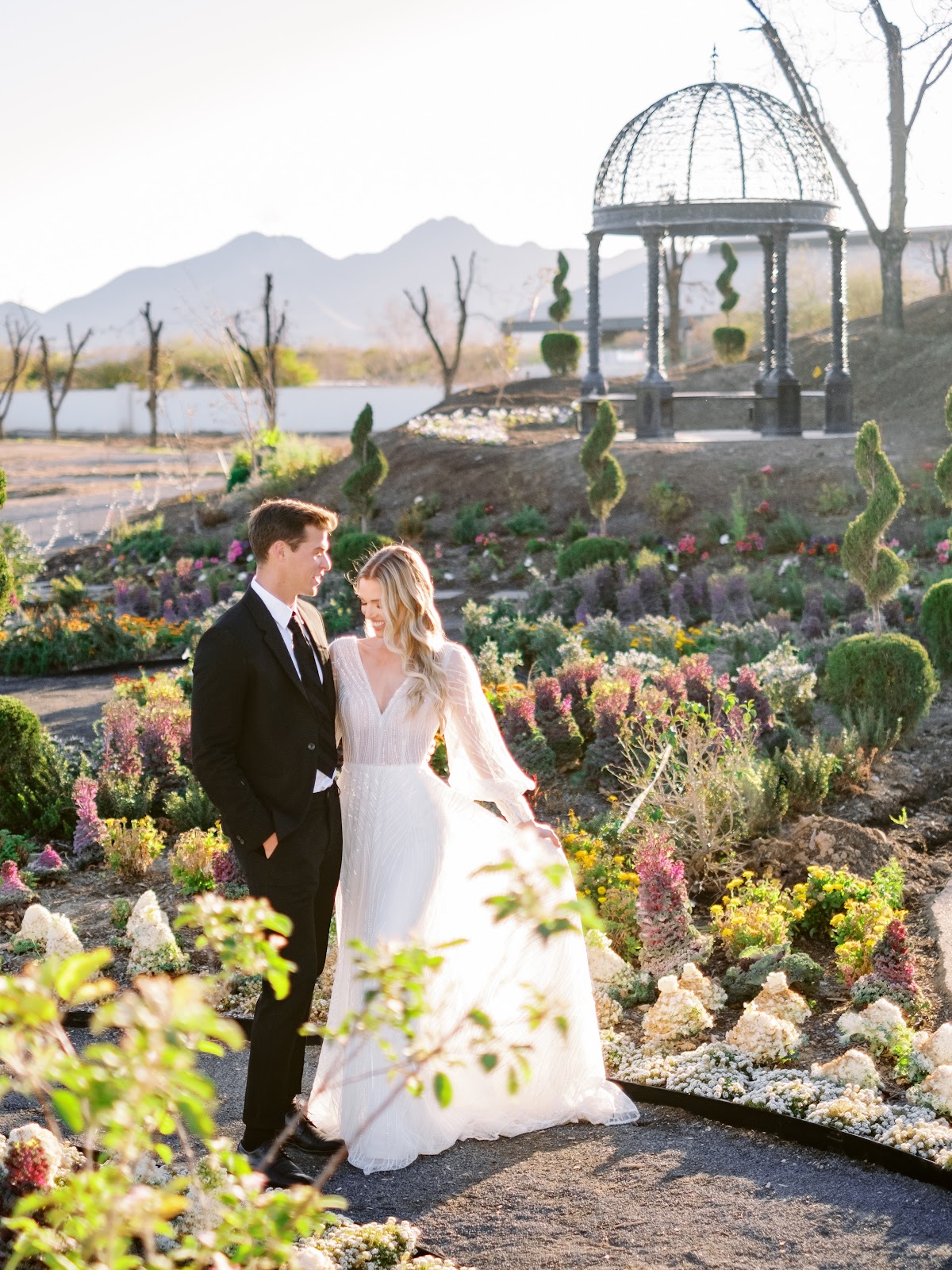
The Garden at The Orchard, Queen Creek: The Light Through the Day
Citrus gives what the desert otherwise does not: real shade.
The important fact about this site is horticultural rather than architectural, and it distinguishes it from every other venue in the low desert: citrus casts real shade.
That needs context. The Sonoran Desert’s native trees — palo verde, mesquite, ironwood — have leaves measured in millimetres and open, filigree branch structures, adaptations to drought that make them almost useless as cover. Under a palo verde at midday a face is covered in small hard-edged patches, and at eighty degrees of sun elevation in unmodified desert air that is unrecoverable.
Citrus is different because it is not a desert plant. Orange, lemon and grapefruit are evergreen broadleaf trees from a subtropical origin, irrigated into this landscape, and they carry a dense glossy canopy year-round. Stand under a mature grapefruit at noon in June and the light overhead is genuinely blocked.
That makes a citrus orchard the best midday location in the low desert, and it is the thing to plan the day around. In a region where the middle six hours are effectively unusable for uncovered portraits, a place where they are usable is worth organising the schedule to exploit.
Queen Creek sits at about thirty-three degrees north at roughly fifteen hundred feet, in the East Valley south-east of Phoenix. The June noon sun reaches around eighty degrees, the December noon sun about thirty-four, days run from about ten hours fifteen to fourteen hours twenty, and civil twilight is roughly twenty-five minutes — short.
What follows is the day in order. We have not photographed a wedding here; which parts of the orchard are accessible, what is built, and the permitted hours are questions for the venue.
The Garden at The Orchard at a glance
| Where | A garden in a citrus orchard, Queen Creek, east of Phoenix |
| The distinguishing fact | Citrus is evergreen broadleaf — it casts real shade, unlike desert natives |
| The consequence | The one site in the low desert where midday is genuinely workable |
| The bloom | Fragrant white citrus blossom, February into March |
| Ask first | Accessible orchard, built structures, permitted hours |
Morning, and the shade that exists
The early hours belong to the edges of the orchard rather than its interior, because a low sun does not get inside a canopy.
In the first hour after sunrise the sun is below ten degrees and travelling almost horizontally, which means it strikes the outward face of the perimeter trees and stops there. Inside the rows it is dark. The frame in that hour is the edge: a couple at the end of a row with the low sun raking across the outward faces of the trees, glossy leaves catching and throwing back a hard green-gold.
Citrus foliage is worth noting for exactly that reason. The leaves are thick, waxy and glossy, which makes them specular rather than diffuse — so a citrus canopy in low sun glitters in a way a matte-leafed tree does not, and the highlights are small and bright rather than broad. That is a real characteristic to expose for: hold the highlights, let the shadow inside the canopy go, and the tree reads as texture.
Desert mornings are still, which matters here more than at most sites. The thermal circulation that produces the afternoon breeze has not begun, so the canopy is motionless and a slow shutter is available. Citrus leaves in motion are a mess of moving speculars; citrus leaves at rest are a pattern.
Through mid-morning the sun climbs fast at this latitude and the orchard interior begins to work. By nine or ten the beam is steep enough to reach between the rows, which produces the site’s signature light: shafts and pools of hard sun on the orchard floor beneath a dark canopy, with the rows receding.
That is a strong frame and it needs one decision — whether the subject is in a pool of light or out of it. In a pool, the subject is a bright figure in a dark space and the exposure is set on them; the surroundings go four stops down and the frame becomes theatrical. Out of the pools, in full canopy shade with the lit floor beyond, the subject is soft and even and the background carries the light.
The second is more reliable for faces, and it works because of the reflected floor. An orchard floor is bare earth or low cover, and a sunlit patch of it a few metres away throws a warm bounce up under the canopy — which fills from below, opens the eye sockets and produces a very flattering light that needs no equipment at all.
By the middle of the day the site is doing what nothing else in the low desert does. At seventy or eighty degrees of sun elevation the canopy is blocking almost all of the direct beam, the interior of the orchard is in genuine shade, and the reflected light from the sunlit rows gives it direction and warmth.
The practical consequence is that formal portraits at noon are possible here, and that is worth saying plainly because it reverses the standard desert advice. A midday slot in an orchard is not a compromise.
The colour needs attention. Light filtering through a dense green canopy is green, and light bouncing off warm bare earth is orange, and a face lit by both is being lit by two different colour sources at once. Set white balance on a grey card in the actual position rather than on a preset, and expect the correction to be less obvious than it feels.
One caution about the dapple. A citrus canopy is dense but not solid, and there will be small gaps — which means occasional hard bright spots on a face even in good positions. The fix is a step, not a filter: move the subject half a metre and look again.
Afternoon, evening, and the citrus year
The afternoon brings wind, and in an orchard that is a specific problem rather than a general one.
By early afternoon the desert floor has heated and a breeze is established, building through the afternoon. In a citrus canopy that means every glossy leaf becomes a moving specular, and the still, patterned canopy of the morning becomes a shimmer. For frames that include the canopy as texture, the afternoon needs a fast shutter; for frames where the canopy is only background, it does not matter.
It also means falling blossom in spring and falling leaves never, since citrus is evergreen. A February afternoon breeze through a flowering orchard puts white petals in the air, which is genuinely photogenic and entirely free.
Through mid-afternoon the sun descends and the shafts on the orchard floor lengthen and lower. By the time the sun is below thirty degrees the light is coming into the rows almost horizontally again, which reverses the morning: now the inward faces are lit and the light travels down the rows rather than across them.
Shooting down a row into a low sun is the site’s best frame. The canopy edges rim, the trunks silhouette, the floor glows where the light reaches it, and a subject positioned in the last pool is backlit with a warm halo. Block the sun itself behind a trunk to get the rim without the flare.
The last half hour before sunset is short and it is very good. Desert dusk colour is stronger than coastal dusk colour, because dry dust-laden air scatters long wavelengths efficiently and there is no marine haze to grey it — so the sky above an orchard here can go a saturated orange through violet across the whole western half.
Civil twilight is about twenty-five minutes and the fall-off in clear air is abrupt. Two or three frames planned in advance fit; improvisation does not. The orchard’s own contribution at that hour is the silhouette: a row of rounded citrus crowns against a colour sky is a distinctive shape, quite unlike the spiky desert profile the region otherwise offers.
The citrus year runs opposite to almost everything else in these guides and it is worth knowing in detail.
Bloom is February into March. Citrus flowers white, in clusters, and the scent is powerful enough to be the defining feature of the site for those weeks — which is not a photographic fact but is the thing everyone present will remember. Visually it is a mass of small white flowers against dark glossy green, which photographs best close and against shade rather than wide.
Fruit ripens through the winter. Oranges and grapefruit colour up from November and hang through March, which means a January or February wedding here has both fruit on the trees and blossom starting — the orchard at its fullest. That coincides exactly with the desert’s good season, which is a rare alignment.
Summer is fruit-set and growth: green fruit, full canopy, and the heat. The fruit is inconspicuous, the canopy is at maximum density and therefore maximum shade, and the site is as usable at midday as it ever gets — which partly offsets the temperature.
There is no autumn. Citrus is evergreen and the desert produces no leaf colour, so an October frame here looks like an August frame. Nothing in the picture will say autumn, which is worth managing as an expectation.
The desert’s seasons govern the comfort. November to April is the season: mild, dry, calm, with a low winter noon sun that models all day. February to April adds the wider desert bloom outside the orchard — brittlebush yellow, Mexican gold poppy, ocotillo red, palo verde in mass yellow through April — which depends on the previous winter’s rain.
May to September is the honest constraint: afternoons above a hundred and ten degrees are a welfare matter for a party in formal clothes, and the orchard’s shade helps but does not solve it. The monsoon from July is the compensation — convective cloud over the mountains, thunderstorms late, washed air and the best evening light of the year afterwards, and the unplannable haboob, a wall of dust advancing ahead of a collapsing cell.
- Citrus is the only real overhead cover in the low desert — plan midday around it
- Glossy leaves are specular: expose for the highlights, let the canopy shadow go
- Let the sunlit orchard floor bounce warm light up under the canopy
- Grey-card the white balance under canopy — green above, orange below
- January and February give fruit and blossom together, in the good season
Working the rows
An orchard is a grid and the grid is the compositional resource, which makes position more important here than almost any technique.
The rows give three distinct frames and they need different lenses. Down a row, with a moderate telephoto: the compression stacks the trunks and the canopy closes overhead into a tunnel, which is the strongest architectural frame the site has. Across the rows, at an angle: the trunks read as a rhythm rather than a tunnel and the frame is wider and airier. And from a corner, diagonally: both grids appear at once, which is visually busy and works for a wide establishing frame rather than a portrait.
The tunnel frame rewards precision about the centre. A camera exactly on a row’s axis renders it symmetrically and the eye reads it as formal; a camera half a metre off axis renders it as a diagonal and the eye reads it as casual. Both are legitimate; choosing is the point.
The trunks matter to placement. Citrus trunks are short and often multi-stemmed, and the canopy starts low — sometimes below head height on older trees. That has a practical consequence: a standing adult in an orchard row may have foliage at face level, which means the position that looks clear from the camera’s eye level is not.
So check the frame rather than the scene. And prefer the ends of rows, the gaps where a tree has been removed, and the wider service alleys, all of which give height that the interior rows do not.
Groups are the real test. A citrus orchard cannot accommodate a group of thirty inside a row, because the row is not wide enough and the canopy is not high enough — which means large group frames belong on whatever open ground the site has, and that ground will be in full desert sun.
The honest planning answer is to do the large groups at the ends of the day and the small ones under the canopy at any hour. That is the reverse of the usual arrangement and it follows directly from the shade being where it is.
Two further notes. The ground is irrigated, which in a desert orchard means it may be genuinely wet or muddy on a flood-irrigation cycle rather than merely dusty. That is a dress question and it is worth asking whether irrigation is scheduled near the date.
And the orchard is a working one, which means equipment, irrigation lines, pruning debris and netting are part of the real environment. None of that is a problem and some of it is good — a frame with an irrigation standpipe and a stack of picking crates says working orchard in a way a manicured garden cannot. But it needs to be chosen rather than tolerated, and the cheapest improvement to almost any frame here is thirty seconds spent moving one object out of it.
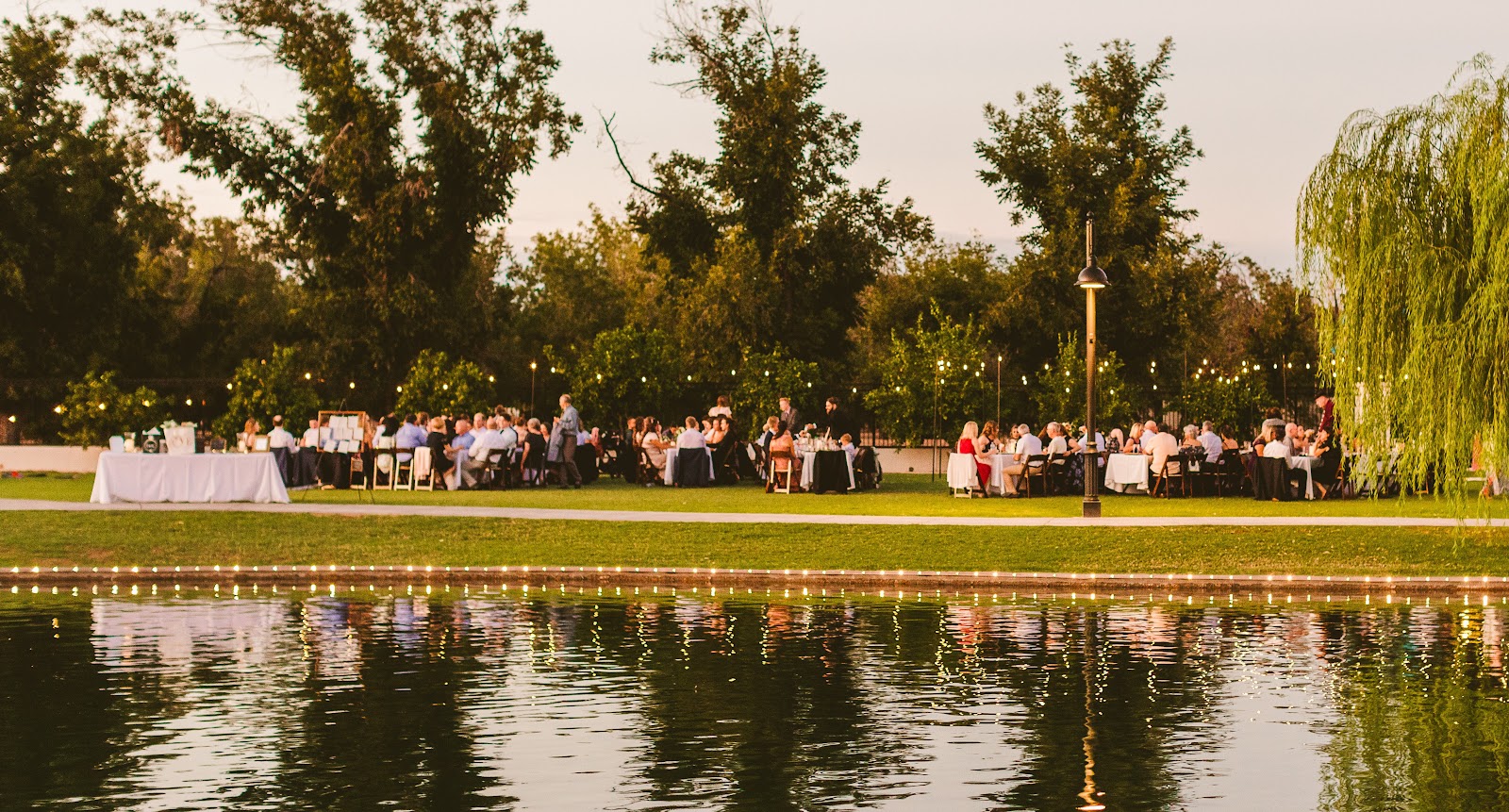
More frames from The Garden at The Orchard
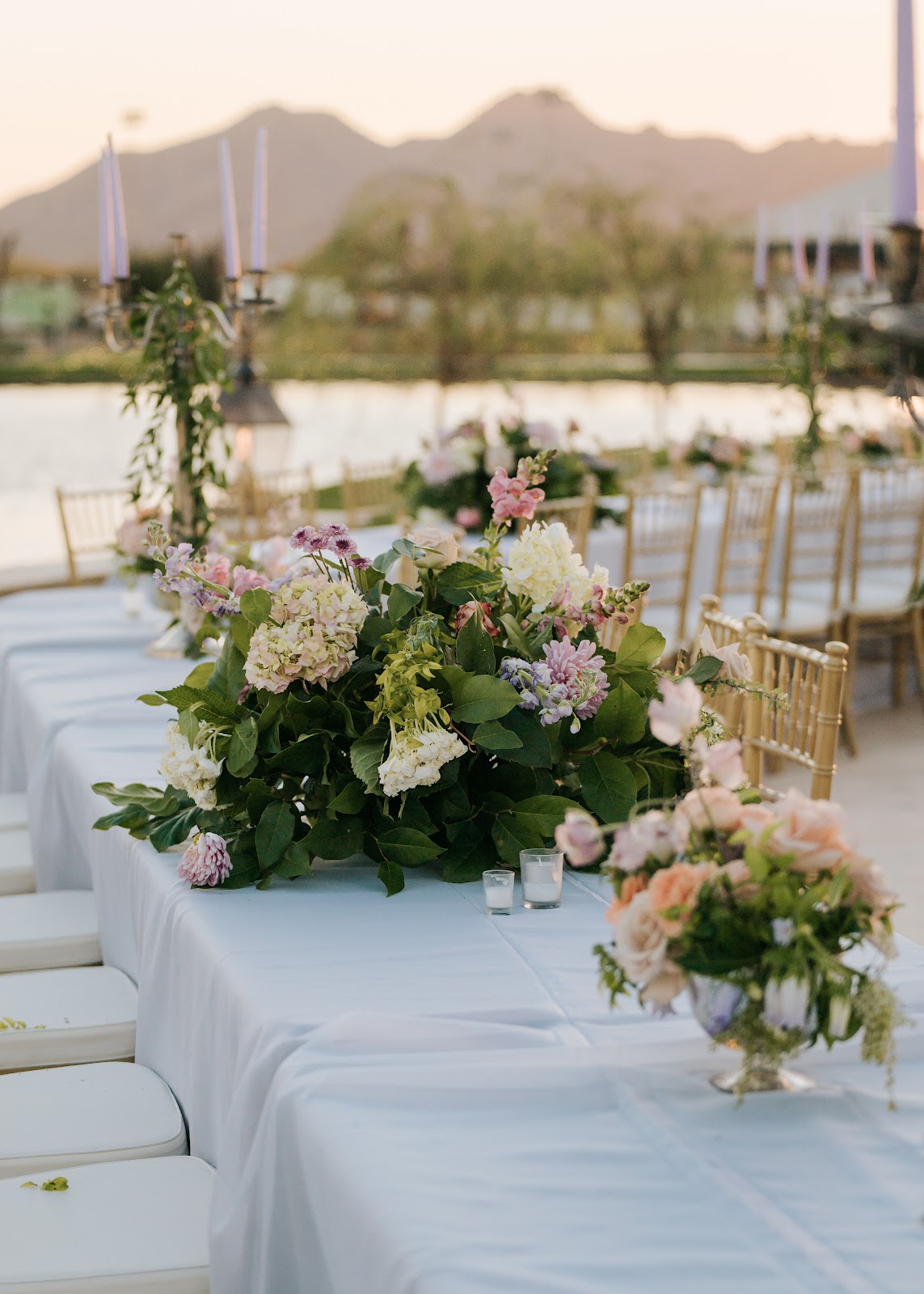
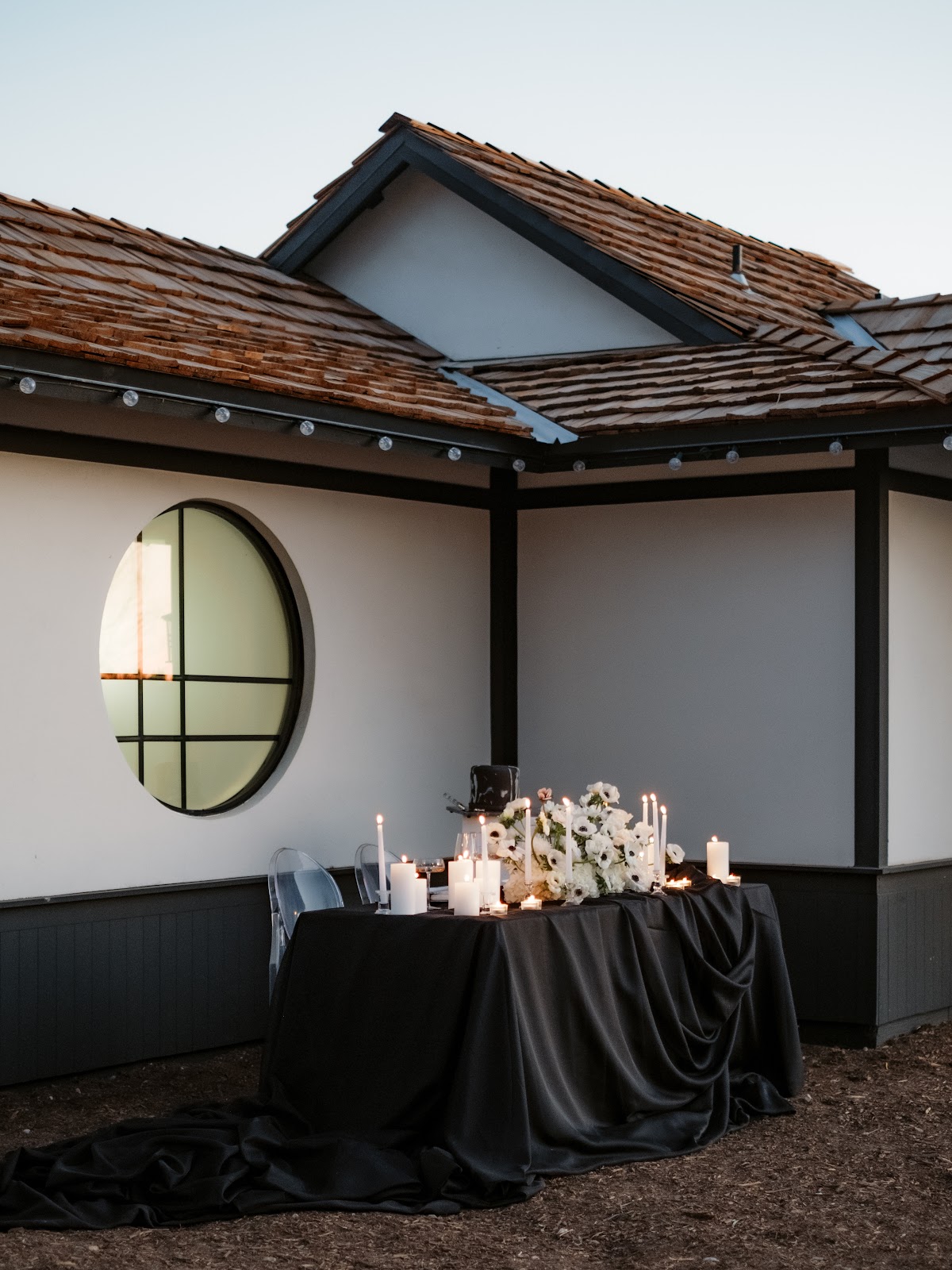
The Garden at The Orchard wedding photography: common questions
Why does citrus matter photographically?
It is an evergreen broadleaf from a subtropical origin, so it carries a dense glossy canopy that genuinely blocks overhead sun — unlike the desert’s native palo verde and mesquite.
Can we do portraits at midday here?
Yes, and that is unusual for the low desert. The canopy blocks the direct beam and the sunlit orchard floor bounces a warm fill up underneath.
When does citrus flower?
February into March, in masses of small white flowers with a powerful scent. Photograph it close and against shade rather than wide.
When is the orchard fullest?
January and February — fruit coloured up and hanging while the blossom starts, which coincides with the desert’s best season.
Is there autumn colour?
None. Citrus is evergreen and the desert produces no leaf colour, so October looks like August here.
Where do large groups go?
On whatever open ground the site has, because the rows are neither wide nor high enough. Which means large groups belong at the ends of the day.
More Arizona venue guides
We are writing a photographer’s guide to every venue we would happily shoot in Arizona. Here are three more, plus the full index:
- The Haas House, Scottsdale: The Venue’s Own Logic
- The Hacienda del Sol, Tucson: A Walk Through the Building
- The Loews Ventana Canyon, Tucson: Field Notes
Planning a wedding at The Garden at The Orchard?
The one orchard in the desert that gives you noon. Tell us your date.