 The Somerset Club on Beacon Street: Is It Right for You?
The Four Seasons Boston: One Frame and How It Is Made
The best thing about this hotel is on the other side of the street, and it is a botanical garden.
The Four Seasons Boston overlooks the Public Garden — and as the venue’s own material points out with some enthusiasm, that is not just any park but the first public botanical garden in America.
That is the right thing to lead with, because the garden is where the photographs are. A luxury hotel interior is a constant: controlled, even, pale and unchanging from mid-morning to midnight. A mature botanical garden across the street is the opposite — it changes hour by hour and month by month, it has specimen trees that exist nowhere else in the city, and it is the one thing about this address that no other hotel can copy.
So the frame worth building the day around is in the garden, and this is written as that frame and the conditions it needs. We have not photographed a wedding at the Four Seasons; luxury hotels behave consistently and mature botanical gardens behave predictably. Which rooms face the garden, whether the ballroom lighting is adjustable, and what permits or restrictions apply in the public garden are the questions to settle — the last one is a city matter rather than a hotel one.
The Four Seasons Boston at a glance
| Where | Overlooking the Public Garden, Boston, Massachusetts |
| Character | A luxury hotel facing a mature botanical garden |
| The frame | In the garden: specimen trees, low light, the couple small beneath |
| It needs | Continuous shade, a low camera, and one white balance decision |
| Ask first | Garden-facing rooms, ballroom lighting, city permits for the garden |
The frame, and the three things it needs
A botanical garden differs from a park in a way that matters photographically: its trees were planted as specimens rather than as cover, which means individual trees are unusually large, unusually well formed, and separated from one another. A specimen tree with space around it can be photographed as a single object, and a couple placed beneath one reads as small beneath something particular rather than as standing in generic woodland.
The first condition is continuous shade rather than dapple. A mature canopy is the resource; the same canopy with the sun above it rather than beside it puts hot spots several stops above the surrounding shadow across a face, shifting with every breath of wind, impossible to correct and impossible to predict. Full shade, open light, or wait for the sun to drop below the canopy — but never a face in dapple. Locating the largest area of unbroken shade on arrival is the most useful five minutes available.
The second condition is a low camera. Large trees only read at their real scale from a low viewpoint: dropping close to the ground exaggerates their height, pushes the horizon down, and lets the canopy fill the upper frame as a ceiling. Standing at eye level beneath a specimen tree photographs it as a shrub with a trunk.
A low camera also lets the pools of light on the ground lead towards the couple, which is what makes the last hour work — because low sun comes in underneath the canopy rather than down through it, arriving horizontally in shafts and landing as discrete pools rather than as a flood.
The third condition is a white balance decision. Dense foliage bounces green onto any nearby skin, and because the cast is localised rather than global, auto white balance cannot correct it — a sequence that fails to match itself in a garden is nearly always auto white balance drifting. Set a custom white balance on a face in the position actually being used, and reset it when the position changes materially. Any pale path, paving or gravel nearby is a neutral bounce surface and worth using deliberately.
Water, where a garden has it, adds two things: a mirror when the surface is still, which is a morning proposition because wind builds through the day; and fill from below, which is useful at low sun and unflattering at high sun.
The hotel, and what it needs brought in
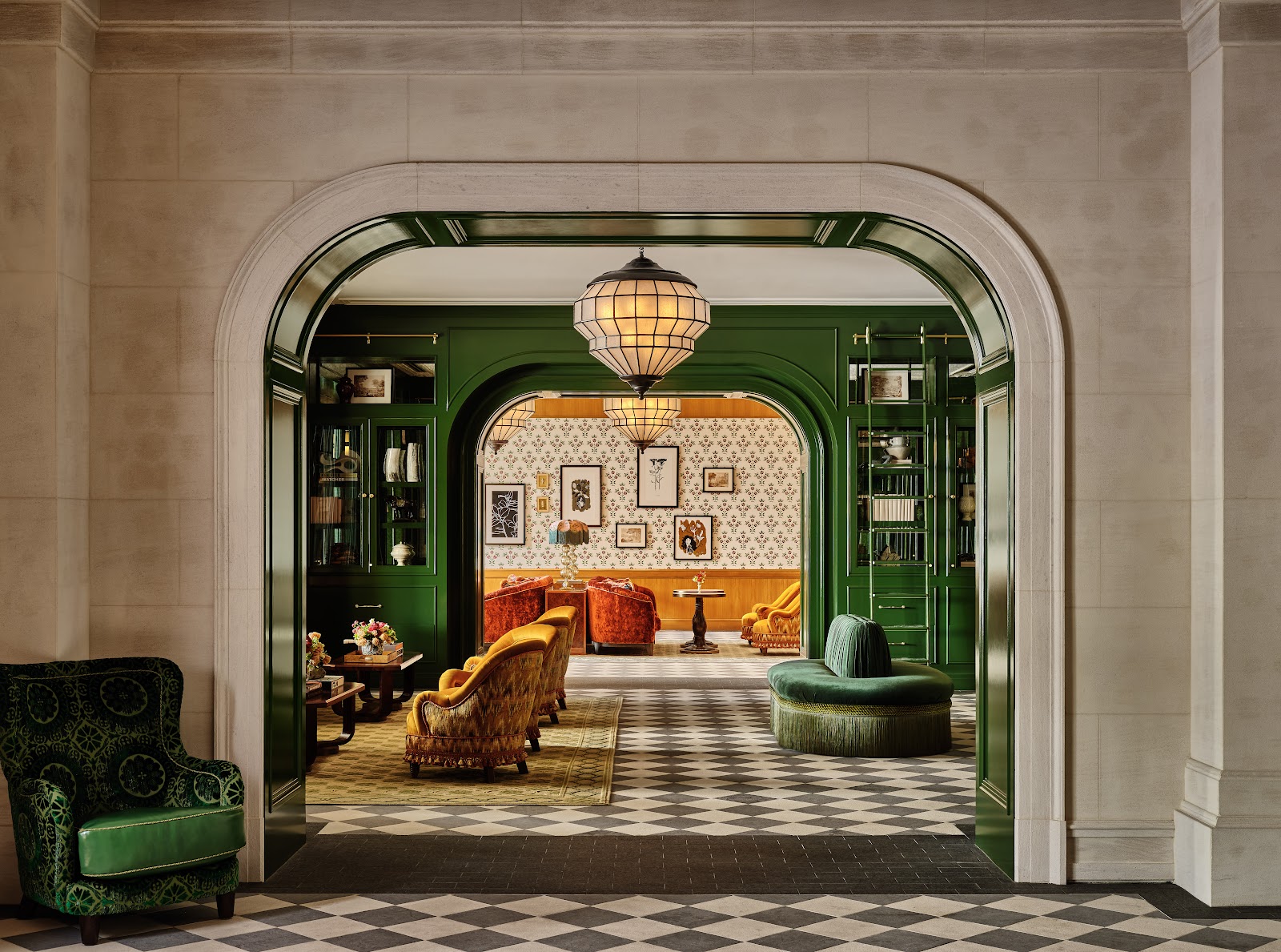
Inside, the luxury problem is two problems disguised as qualities. Light is deliberately even, because unevenness reads as cheap; surfaces are pale and uncluttered, because that reads as calm and expensive. Even light erases the gradient across a face that the eye reads as shape, so a technically correct exposure can still look flat. Pale surfaces erase the tonal difference between a subject and a background.
One directional source fixes the first and it does not need to be strong: off the camera axis at face height, set close to the ambient level rather than above it, restoring a shadow side without making the frame look lit. Half a stop in one direction does more than two stops overall.
For the second, four tools stack: depth so the background sits well behind the subject, a wide aperture so it goes soft, placement against the darkest element in the room, and negative fill. Negative fill is the under-used one and it costs nothing — something dark on the shadow side of a face subtracts bounced light and deepens the gradient, and in a pale room it works where adding light does not.
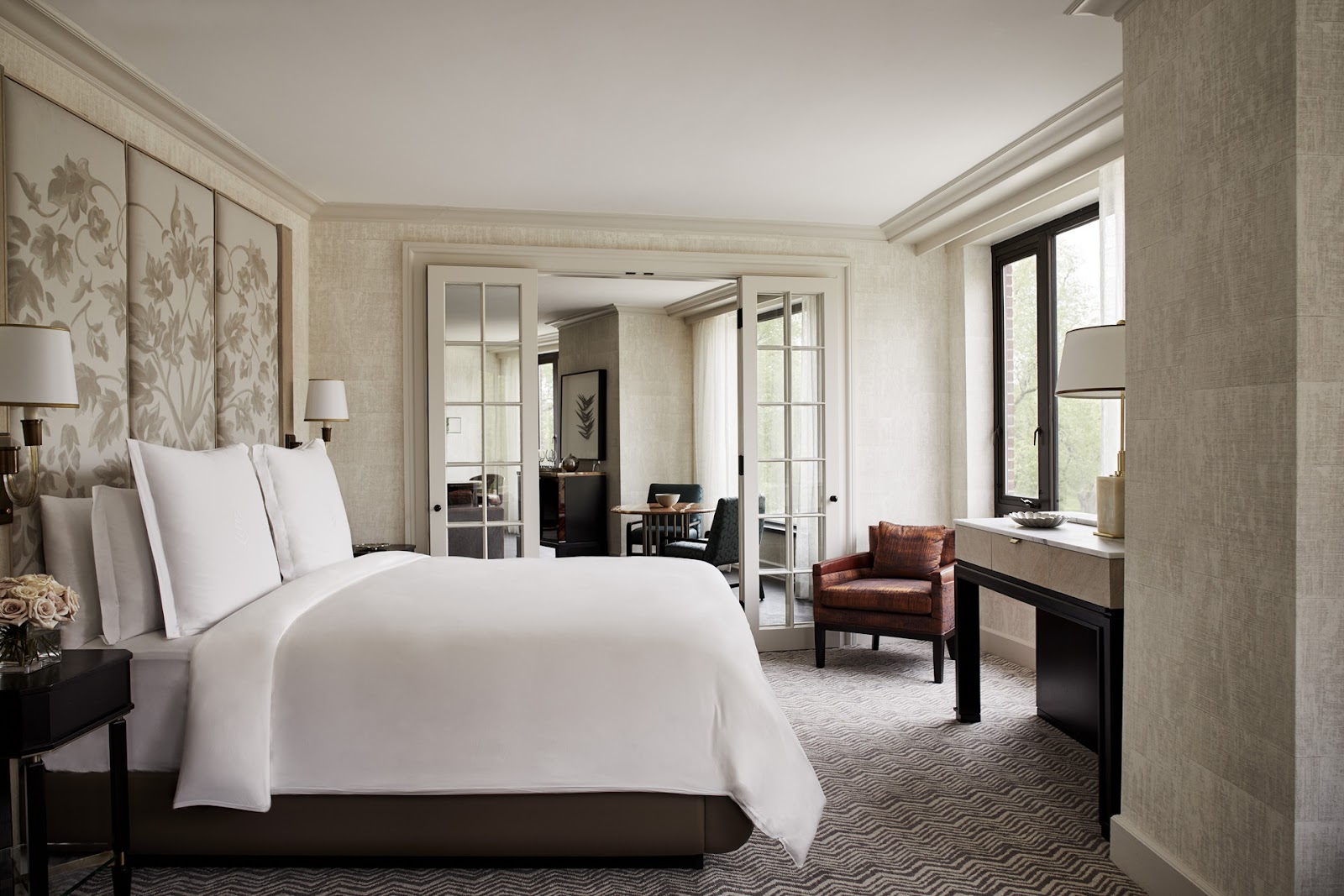
Guest rooms are the best portrait light in the building, and a garden-facing room is worth asking for specifically. Looking out over mature canopy gives a background at window height that no city-facing room offers, and in autumn it gives a wall of colour behind a subject standing at the glass.
The setup is the usual three moves: biggest window on the shaded side, every overhead fitting off so the room has one colour of light, lamps out of frame.
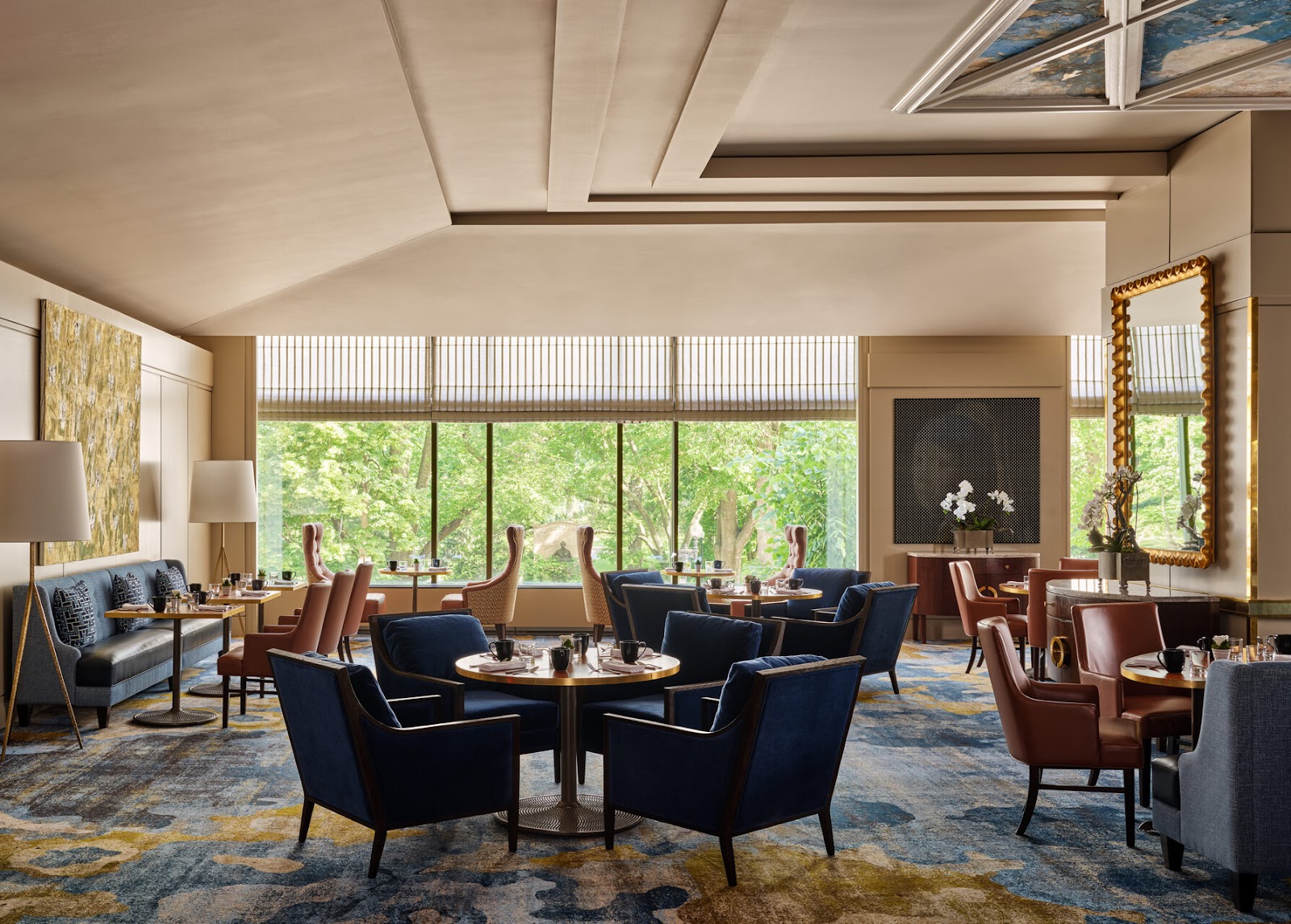
The ballroom is the evening: a high ceiling with no usable bounce, warm fittings, overhead sources and steep fall-off — the free separation the daytime interiors refuse to provide. Expose for the room so it stays warm and dim, add one warm-gelled source at face height where legibility matters, set white balance to the gel and hold it. Ask whether the lighting can be dimmed to pools rather than set evenly; it usually can, and the difference exceeds any equipment decision.
The dusk crossing is the one timed interior frame: roughly twenty minutes after sunset the garden outside falls to about the brightness of the interior lighting, and one exposure at a garden-facing window holds the lit room, the couple and the trees beyond. After it the glass becomes a mirror.
- Find the largest continuous shade first; it is the default position
- Never a face in dapple — full shade, open light, or wait
- Get low so the specimen trees read at their real height
- Set white balance on a face among planting; green bounce is local
- Ask for a garden-facing room, and especially in October
The garden through the year, and Boston weather
A botanical garden changes more through the year than any other kind of venue setting, and at this address that is the dominant scheduling fact.
Spring brings flowering and fresh foliage, which is the most photogenic phase of the planting and also the shortest. Early summer gives full canopy, which means maximum continuous shade — the most reliable condition of the year and the one that makes a July afternoon workable.
Autumn is the region’s strongest card and it peaks in the middle of October for roughly two weeks. Foliage colour is a genuine asset rather than a cliché: backlit by low sun it becomes a luminous field rather than a flat mass, and a couple placed beneath a turning specimen tree is a frame that exists for a fortnight a year. If the date is in that window, the schedule should be built around it.
Winter strips the canopy entirely, which changes the garden from a shaded enclosure into an open space with graphic bare structure. That is not a loss so much as a different photograph: bare branch structure against sky is strong material, and the absence of canopy means low sun reaches the ground everywhere rather than in pools.
Winter also brings the hard scheduling constraint. Sunset falls in the middle of the afternoon in December, compressing the outdoor window into a couple of hours, and an exposed garden in a cold wind limits blocks to minutes rather than tens of minutes. Snow is the compensation and it is the best natural fill there is, lifting exactly the shadows a low sun carves while fooling a meter by about two stops — and snow on bare branch structure is one of the best frames the garden offers all year.
Boston’s summers are humid but rarely extreme, and the long June days put sunset late enough that the golden hour in the garden arrives after a reception has started. That needs agreeing in advance as a short deliberate excursion, and at this address it is easy — the garden is across the street.
Coastal fog in spring and early summer is worth stepping out into: in a garden it separates one specimen tree from the next and turns a familiar setting into something unfamiliar. And rain is workable in a mature garden, because canopy provides real cover and wet bark and saturated foliage photograph better than dry — though a public garden has no shelter for guests, which is a separate question from photographing in it.
More frames from The Four Seasons Boston
The Four Seasons Boston wedding photography: common questions
Why is the garden the frame rather than the hotel?
Because the hotel interior is constant and generic while a mature botanical garden is specific, changes hourly and seasonally, and has specimen trees that exist nowhere else in the city.
What is a specimen tree worth?
A great deal. Planted with space around it, it can be photographed as a single object — so a couple beneath one reads as small beneath something particular rather than standing in generic woodland.
Why avoid dappled light?
Because it puts hot spots several stops above the surrounding shadow across a face and shifts with every breath of wind, so it can neither be corrected nor predicted.
Why get the camera low?
Because large trees only read at their real scale from a low viewpoint, and a low camera lets the pools of light on the ground lead towards the couple.
When is the garden at its best?
Mid-October, for roughly two weeks. Backlit turning foliage becomes a luminous field rather than a flat mass, and a couple beneath a turning specimen tree is a frame that exists for a fortnight a year.
Is winter a loss?
No, a different photograph. Bare branch structure against sky is strong material, low sun reaches the ground everywhere rather than in pools, and snow on bare branches is one of the best frames the garden offers.
More Boston, MA venue guides
We are writing a photographer’s guide to every venue we would happily shoot in Boston, MA. Here are three more, plus the full index:
- The InterContinental Boston: What It Suits and What It Does Not
- The John F. Kennedy Library, Boston: The One Decision That Governs Everything
- The Langham Boston: Field Notes on a Converted Federal Reserve Building
All Boston, MA Wedding Venues →
Planning a wedding at The Four Seasons Boston?
The garden decides this day, and the month decides the garden. Tell us your date.