 Roxy’s Downtown: Photographing a Small Stage Room
The Orpheum Theatre, Wichita: Photographing an Atmospheric Interior
The ceiling is the venue, and the one thing that destroys it is the technique most photographers reach for first.
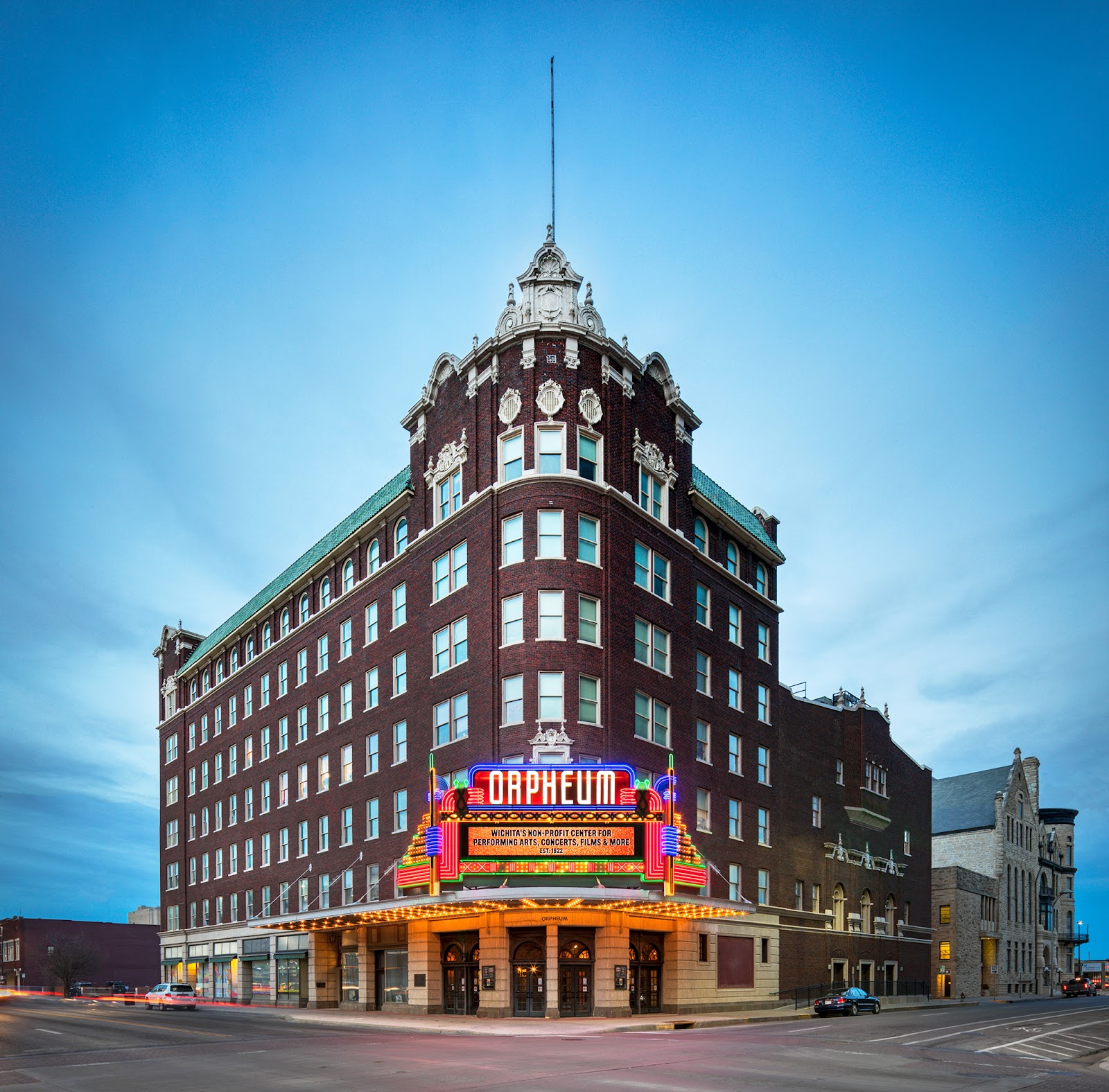
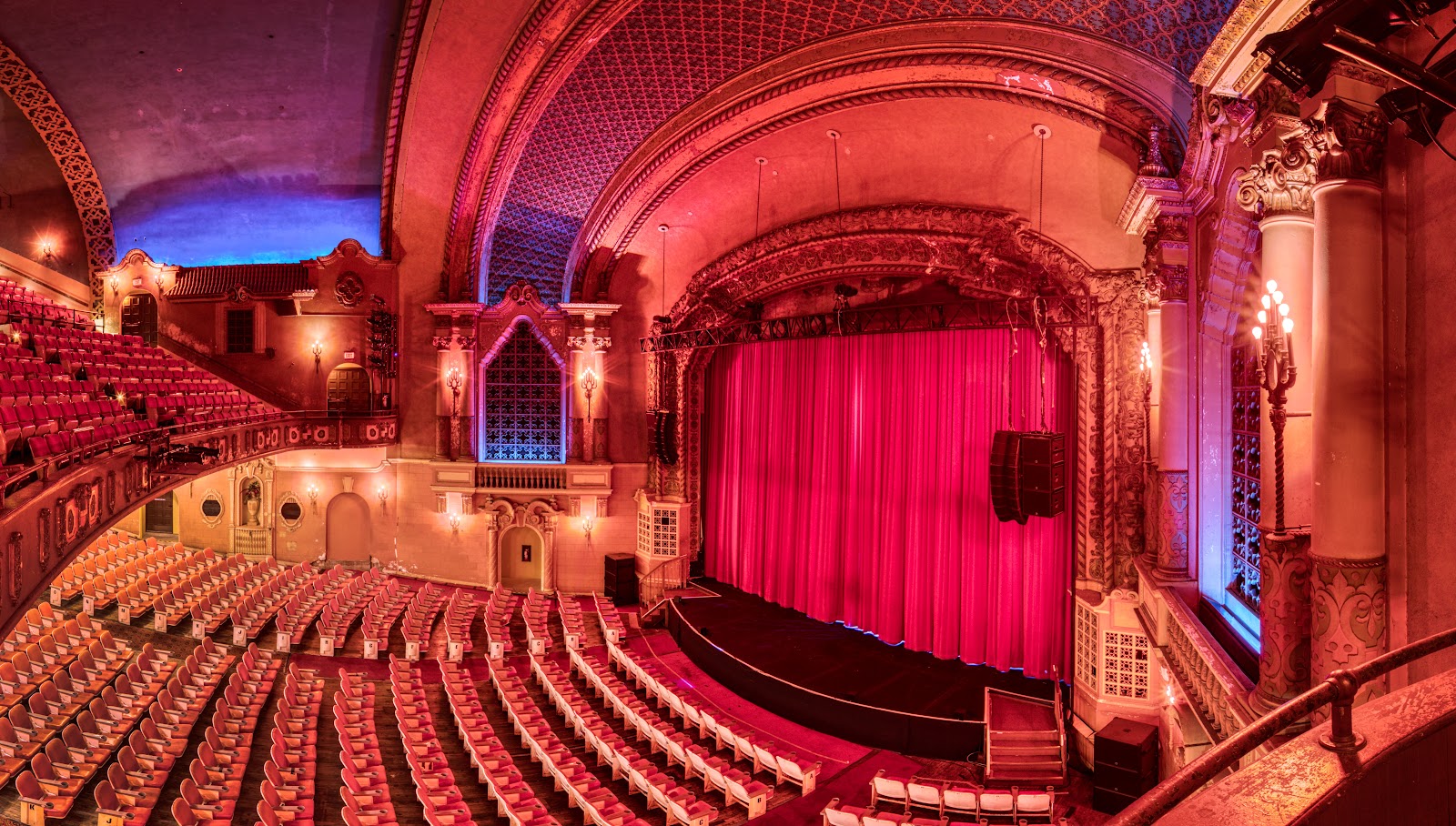
The Orpheum Theatre in downtown Wichita, Kansas, opened in 1922 as an atmospheric movie palace — the genre of that decade in which the auditorium is dressed as an outdoor courtyard, with ornamental architecture around the walls and a ceiling painted as a night sky with small lights set into it as stars.
Atmospheric interiors present a photographic problem that is specific and easy to get wrong, because the effect depends entirely on contrast. The stars are not bright in absolute terms; they are bright relative to a ceiling that is very dark. Put light on that ceiling and the paint does not become bright, it becomes a dull grey — and the stars, unchanged, drop from several stops above their background to one or two. The illusion the building exists to create simply stops working, and it happens without the photographer noticing on a small screen.
So the frame worth building is the one that keeps the sky as a sky. We have not photographed a wedding at the Orpheum; atmospheric ceilings and balconied auditoria behave the same wherever they were built. Which spaces are available and whether house or stage lighting can be operated are questions for their events team.
The Orpheum Theatre at a glance
| Where | Downtown Wichita, Kansas |
| Character | A 1922 atmospheric movie palace with a painted sky ceiling |
| The frame | Couple lit, with the ceiling still reading as a night sky |
| What ruins it | Bounce flash — the default indoor move is the worst one here |
| The method | Gridded, directional light, and nothing aimed upward |
Step one: nothing goes upward
The rule is absolute and it is worth stating before anything else: no source in the room is aimed at the ceiling, and no source is allowed significant upward spill. That rules out bounce flash entirely, along with a bare speedlight with a wide spread and an umbrella pointed anywhere near vertical.
Every light should be controlled — gridded, snooted, flagged on top, or a small softbox with the upper spill blocked. In a room where the ceiling is the venue, spill control is not refinement but the core technique.
The exposure follows from the same logic. To keep the ceiling dark in the photograph, expose for the lit subject rather than for the room, which means a shutter fast enough that the ambient contributes little. The star lights will still record as points, because they are small and bright relative to a near-black surround.
And check the top of the frame every time. It is easy to watch faces on the screen and miss a light clipping the ceiling, and one lifted ceiling in a sequence is glaring when the set is seen together. Glance at the upper frame edge before committing to a position.
Step two: light the couple, and let the walls do the rest
Once nothing is going upward, the technique is simple and gives very good results. One source at face height, gridded so the beam stops at the subject, gives clean directional light on the couple with the room falling away into darkness — and darkness is what you want, because that is where the ceiling lives.
A second source behind them as a low rim separates them from the dark surround and stops the frame reading as two lit faces floating in black. Set low, it also catches shoulders and hair without spilling up. Two controlled lights are the entire kit for this room.
Gel them warm. An atmospheric auditorium is lit by warm fixtures and the ornamental architecture is in warm plaster tones, so a neutral flash sits in the frame as a cold patch. A warm gel with white balance matched keeps skin correct and lets your light belong to the room.
For the wide frame that shows the whole illusion, the same logic at a different scale: keep the beam off the architecture and the ceiling, light the couple small in the frame, and expose for the room’s own wall fixtures. That courtyard lighting was designed to read as evening outdoors, and left alone it does exactly that.
Shutter speed is the variable worth using deliberately. Faster, and the ceiling stays very dark with the stars as clean points — the graphic version, and the one that belongs as a wide establishing frame. Slower, and the warm wall fixtures glow and the room reads as a lit courtyard, at the cost of the ceiling lifting slightly. Both are legitimate and they are different photographs, so take both.
- Nothing aimed at the ceiling; flag the top of every source
- One gridded key at face height, one low rim behind
- Gel warm and match white balance; the room is a warm interior
- Expose for the lit subject, not the room, so the dome stays dark
- Take both a fast version and a slow version — they are different frames
Step three: the balcony, the stage and the rest of the building
The balcony is underused and it gives two things. Looking down over the rows towards the stage produces a geometric composition no ground-level position offers, and it places a couple against the seating as a pattern rather than inside it as a component — which is also a much easier exposure, because the background becomes a distant tone you can let fall dark.
The stage is the other frame only a theatre gives: the couple in stage light seen from the dark auditorium. It depends on someone rostered to operate lighting, which means asking the events team weeks ahead rather than on the day — a warm front-of-house wash, a backlight if possible, and house lights low rather than off so the rows read faintly as context instead of vanishing into a void.
If the lighting desk is not available, light the stage yourself. A dark auditorium is the most forgiving environment there is for added light, because there is nothing nearby to bounce off and therefore no spill to manage: one gridded source at forty-five degrees and one behind at low power gets close to the same result.
The lobby is the easiest room in the building and the most useful for detail work. Movie palace lobbies are reflective — gilding, mirrors, pale stone or terrazzo — so the ambient is high, shadows fill themselves and faces are flattered with no effort. Just watch what the mirrors are showing, because they will include you and your lights.
Back-of-house is the underrated asset: bare brick, steel stairs, dressing rooms with mirror lights, corridors with pipework. Hard directional light and a completely different register from the plush out front — and a gallery made only of ornament is relentless, so those frames give it grit.
Outside, downtown Wichita gives period commercial frontages and a low-rise grid, which means low evening sun reaches street level and runs the length of a street. That is the daylight block to schedule, since the auditorium is entirely time-independent and can absorb any delay.
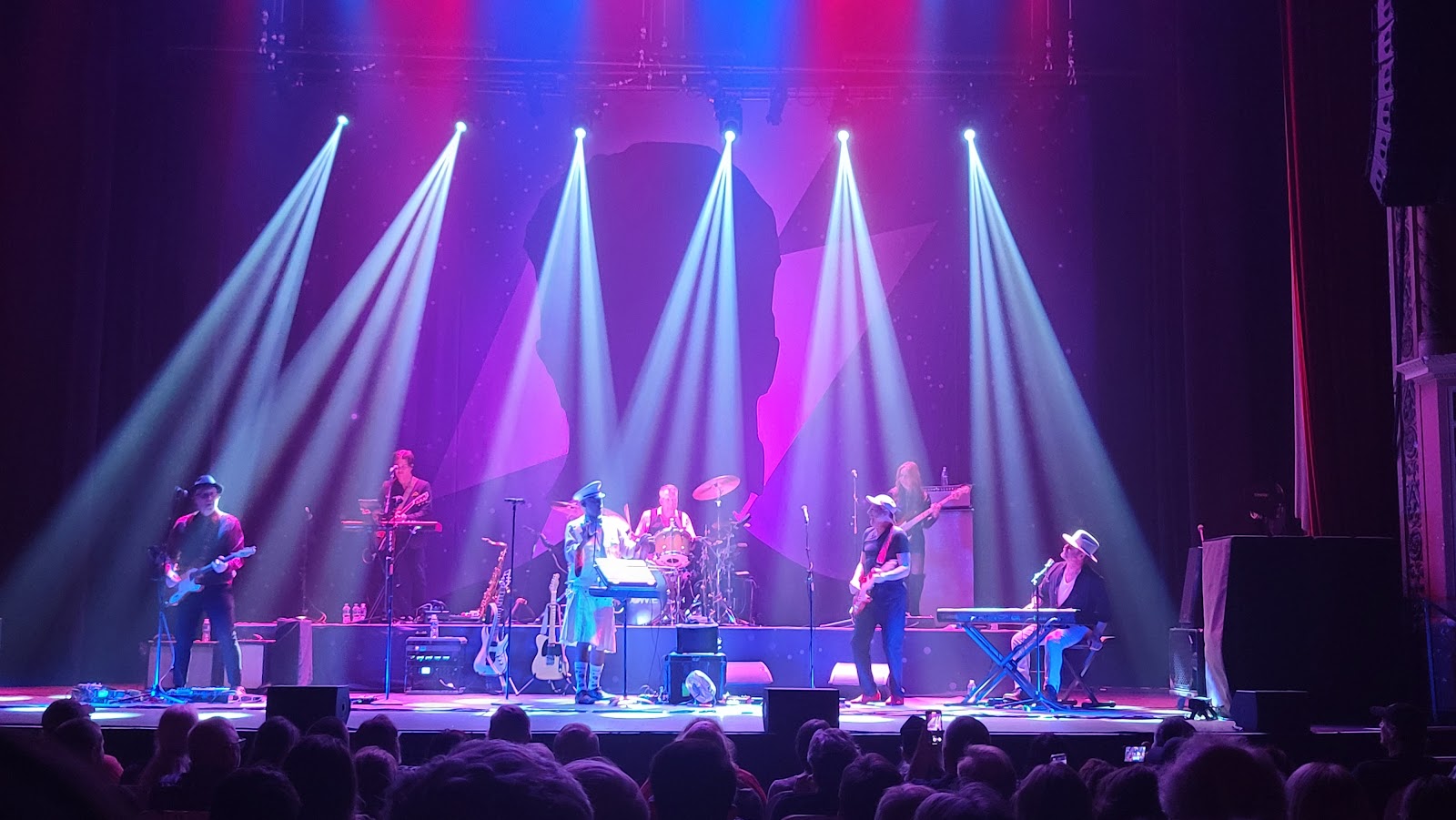
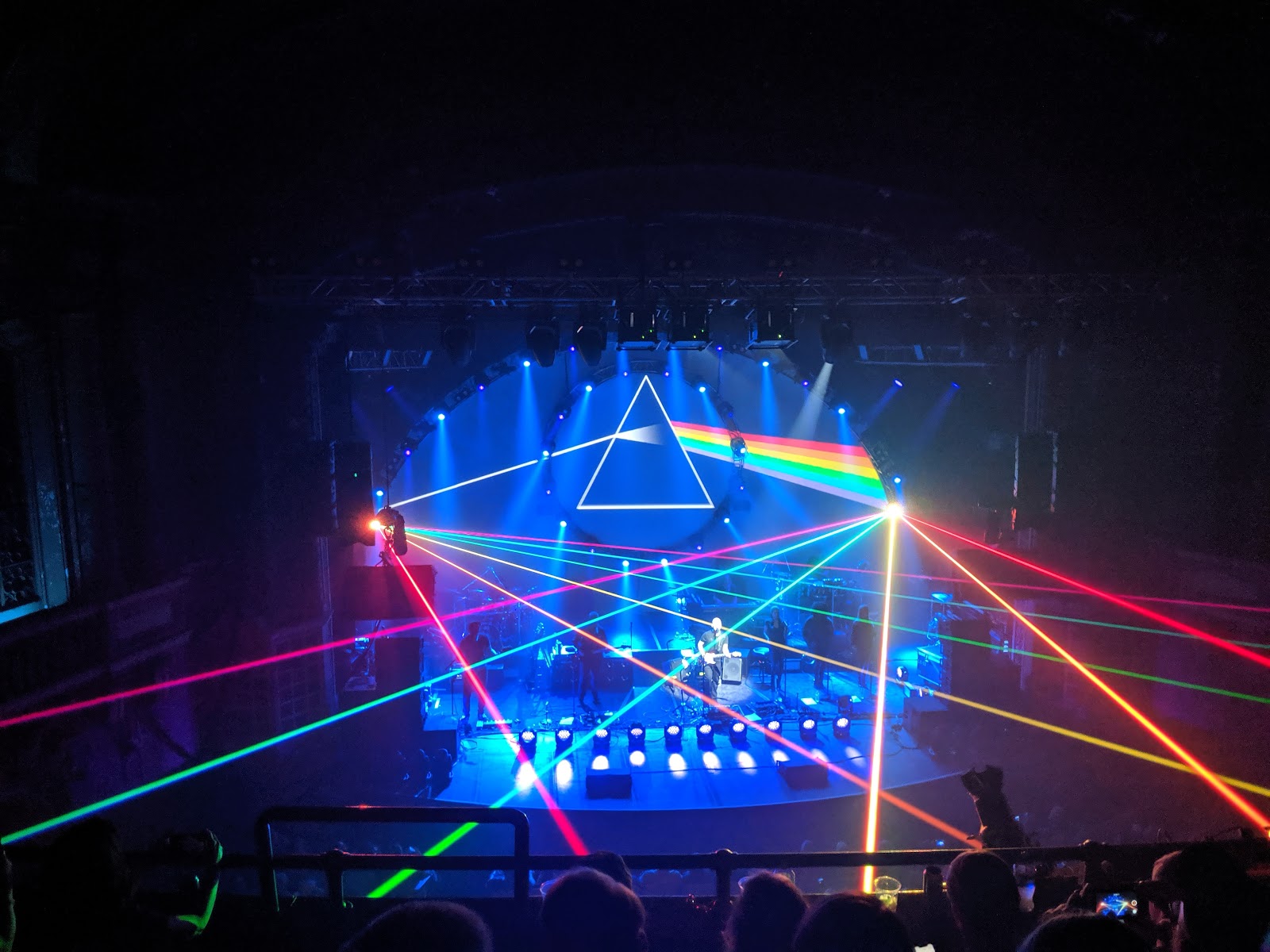
More frames from The Orpheum Theatre
The Orpheum Theatre wedding photography: common questions
Why does the painted sky ceiling look grey in photographs?
Because light has reached it. The stars are only bright relative to a near-black ceiling, so bounce flash or upward spill lifts the paint to dull grey and the stars drop from several stops above their background to one or two.
So how is the room lit?
With nothing aimed upward. One gridded source at face height on the couple, one low rim behind, both gelled warm, and the beams flagged so they stop at the subject. Two controlled lights are the whole kit.
Does shutter speed matter?
It is the main variable. Fast keeps the ceiling very dark with the stars as clean points — the graphic version. Slower lets the warm wall fixtures glow so the room reads as a lit courtyard, at the cost of the ceiling lifting slightly. Take both.
What should be checked on every frame?
The upper frame edge. It is easy to watch faces on the screen and miss a light clipping the ceiling, and one lifted ceiling in a sequence is obvious when the set is viewed together.
What does the balcony give you?
A geometric frame looking down over the rows, and a much easier exposure — the couple sit against the seating as a pattern rather than inside it, so the background becomes a distant tone you can let fall dark.
Can you get the lit-stage frame?
Only if someone is rostered to operate the lighting, so ask weeks ahead for a warm front wash, a backlight if possible, and house lights low rather than off. Failing that, light it yourself — a dark house means no spill to manage at all.
More Kansas venue guides
We are writing a photographer’s guide to every venue we would happily shoot in Kansas. Here are three more, plus the full index:
- The Petroleum Club: Dark Panelling and a High Window
- Reflection Ridge Golf Club: Reading Water on a Course Through the Day
- Roxy’s Downtown: Photographing a Small Stage Room
Planning a wedding at The Orpheum Theatre?
One rule here: nothing points at the ceiling. Tell us your date and we will bring the two lights this room needs.