 The Drury Plaza Broadview: One Decision About Which Way You Work
Roxy’s Downtown: Photographing a Small Stage Room
A small stage room gives you theatre lighting in a space with no room to stand back. Both facts matter equally.
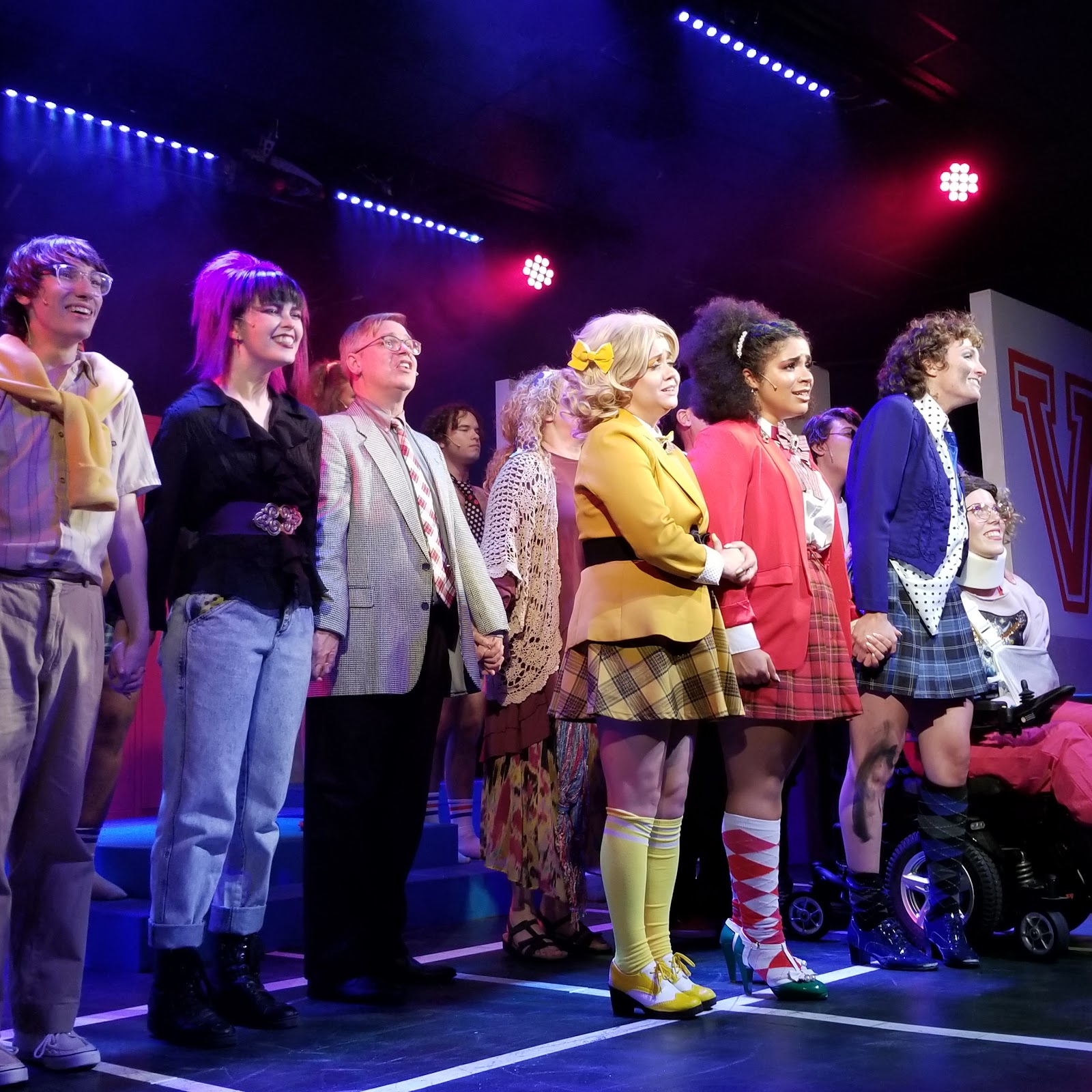
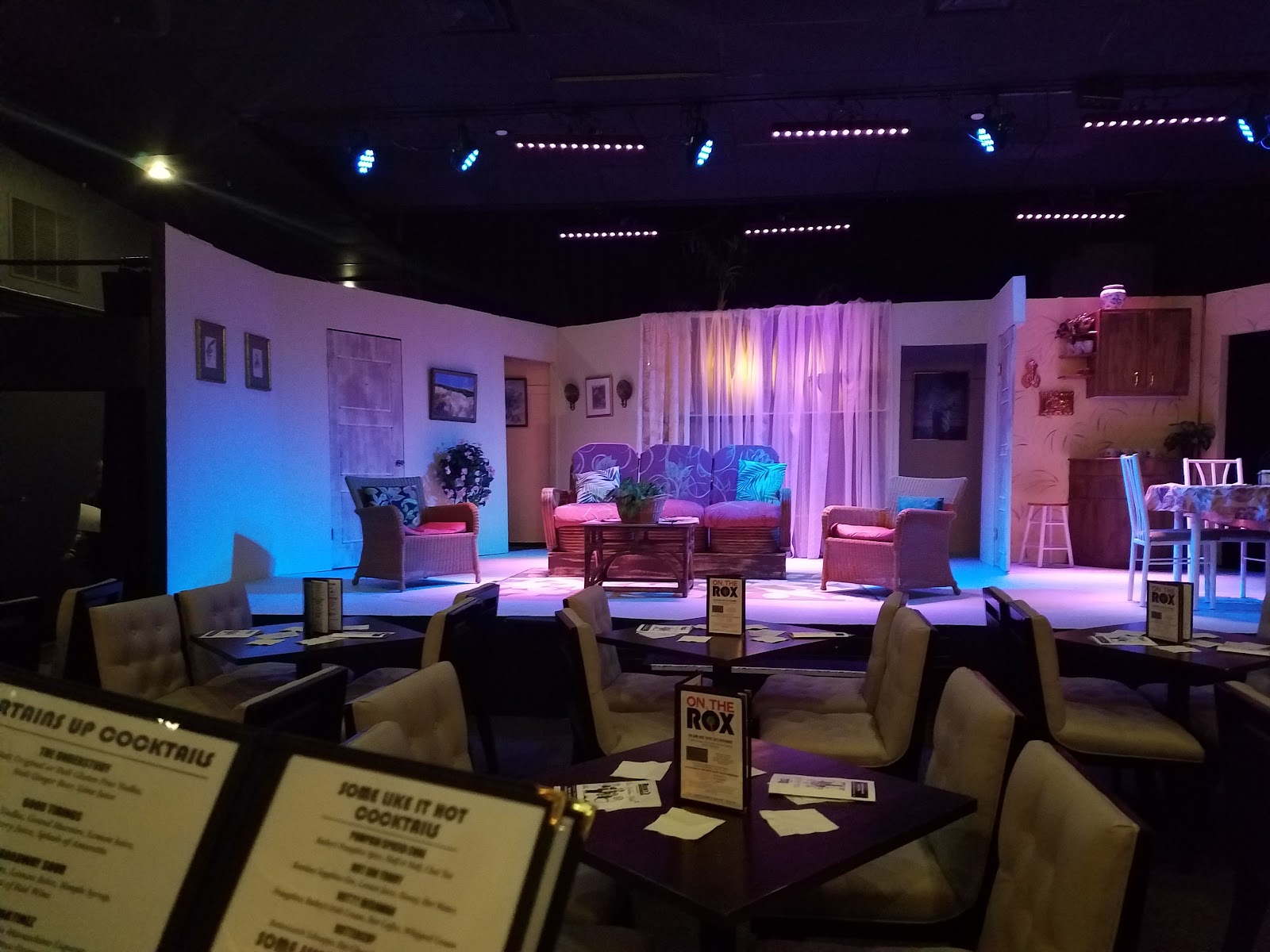
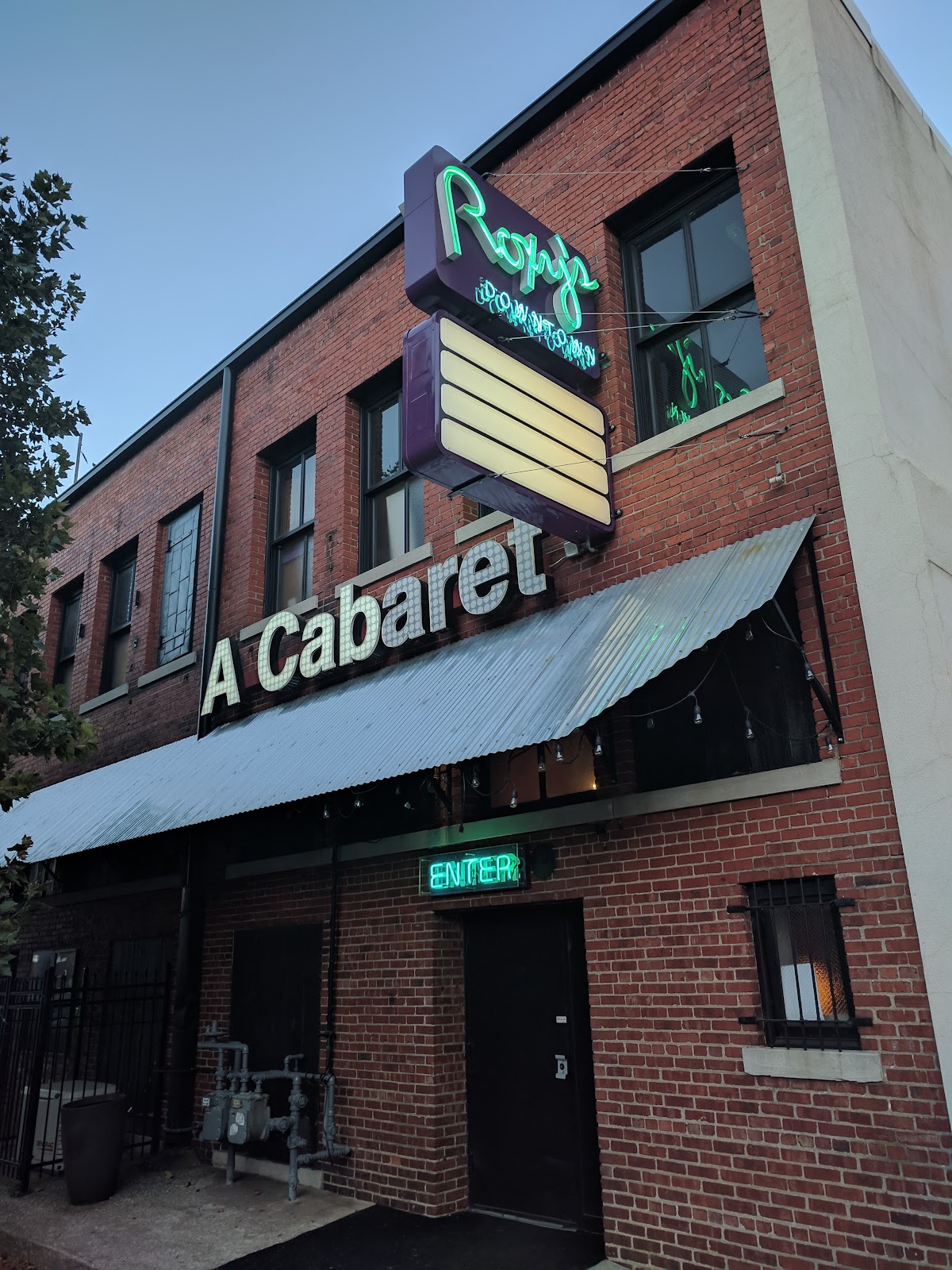
Roxy’s Downtown occupies a building in downtown Wichita, Kansas, operating as a small theatre and cabaret venue with a stage, close seating and the brick fabric of a converted commercial property.
Small stage venues are a distinct type and they combine two conditions that usually appear separately. From a theatre they get stage lighting — a rig designed to put controllable directional light on a defined area, which is the single most useful thing any venue can have. From a small room they get the constraint that camera position is decided by the walls rather than chosen, so whatever lens covers the frame from the only available position is the lens you are using.
That combination is genuinely favourable once understood, and it makes for a straightforward day. This follows the venue’s own logic. We have not photographed a wedding at Roxy’s; small stage rooms behave the same wherever they are. Capacity, whether the lighting rig can be operated for a wedding, and what may be attached to anything are questions for their team — and the lighting answer is the one that matters.
Roxy's Downtown at a glance
| Where | Downtown Wichita, Kansas |
| Character | Small theatre and cabaret venue with a stage, close seating and brick |
| From the theatre | A lighting rig designed to light a defined area directionally |
| From the small room | The wall picks your focal length; there is one position |
| Ask first | Whether the rig can be operated, and by whom |
The stage lighting, which is the venue's real asset
A stage rig is a lighting kit that is already rigged, already aimed and already powered, and it is aimed at exactly the place a couple will stand. That is worth asking about before anything else, because a venue that can put a warm front wash and a backlight on its stage has given you a two-light setup with no stands, no cables across a floor and no setup time.
The request is specific and small: a warm front-of-house wash for the faces, a backlight from upstage for separation, and the house lights at a low level rather than off. That last part matters — completely dark, the room disappears and the frame becomes two people in a void; slightly lit, the seating and the brick read faintly as context and the photograph says where it was taken.
It needs a person who knows the board, and that person needs to be scheduled. A request made on the day to whoever is on shift usually gets a polite no; the same request made to the events team three weeks earlier usually gets someone rostered. That single email is the difference between the venue’s best frame and its absence.
If the rig cannot be operated, a small dark room is the easiest possible place to add light: nothing is far away, the surfaces are close enough to bounce from, and the ambient is low so modest power goes a long way. One source at forty-five degrees and one behind, both gridded, reproduces the effect closely.
Colour is the one caution. Stage fixtures are frequently gelled in saturated colours, and saturated colour on skin is difficult to correct. Ask for warm or open white rather than a colour, and if the rig is fixed in a colour, gel your own key to match rather than fighting it — matched is always better than mixed.
The small room, and what it decides
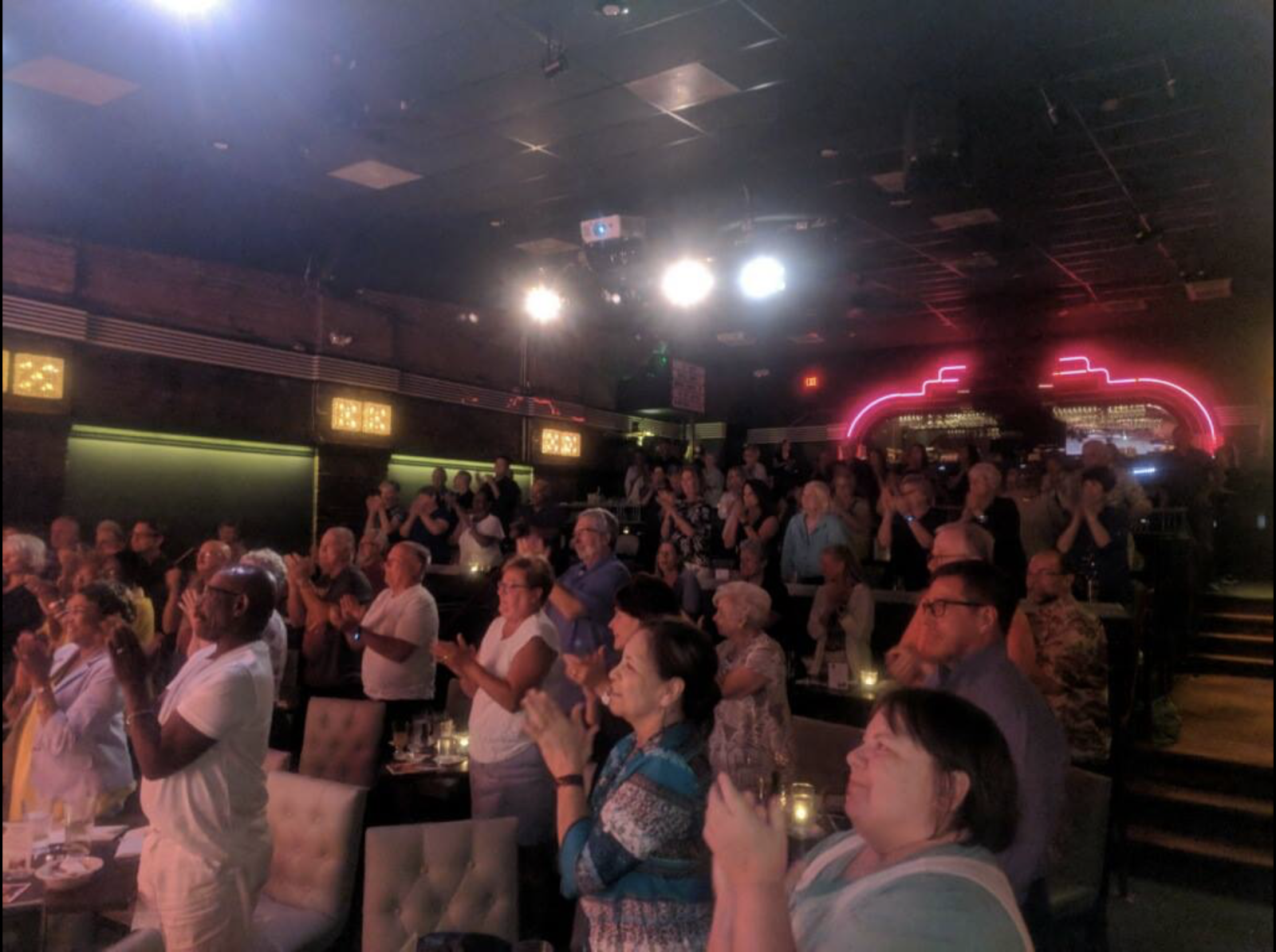
Camera position is fixed by the walls, which in practice means a 28mm or 35mm for anything with more than two people in it and an 85mm for faces across a table. Wide lenses at close range stretch whatever sits near the frame edge, so keep faces towards the centre and arrange any group in a shallow arc rather than a straight line.
Density is the aesthetic that suits the space. A frame packed with people, seating and brick reads correctly in a small cabaret room in a way it never would in a ballroom, so the instinct to show the whole room should be resisted in favour of filling the frame with faces. The room is context, not subject.
Everything is in shot, which makes tidying part of the work. There is nowhere to hide a case, a coat or a cable in a room this size, and two minutes spent clearing the corner you are shooting into improves a frame more than any camera setting.
Groups past about a dozen will not work indoors. Tiered seating helps — steps arrange people at different heights automatically, which solves the back-row problem — but the floor area is what it is, so anything larger belongs outside on the street or in a nearby space, agreed in advance rather than improvised.
Brick is the background and it behaves well: a mid-tone with texture, holding detail at almost any sensible exposure, unlike a white wall that clips or a dark panel that blocks. It reflects strongly warm, so set a custom white balance for the faces rather than the wall, and light along the brick rather than at it so the mortar lines read as masonry.
- Ask three weeks ahead for a warm front wash, a backlight, and low house lights
- Ask for warm or open white rather than a saturated colour
- 28mm or 35mm for groups; faces centred, arranged in an arc
- Fill the frame with people; the room is context, not subject
- Tiered seating solves heights, but groups past a dozen go outside
The evening, and downtown outside
After dark a small brick room with theatre lighting is one of the easier venues in this series. The ambient is low and warm, the surfaces are close, and the rig is already aimed. Fast lenses wide open with a raised ISO give frames that look like the room actually looks, and the grain suits the venue — a clean flash-lit frame in a cabaret room looks imported.
The useful discipline is to switch deliberately rather than drift: ambient and stage light for the candid and atmospheric coverage, where warmth and grain are the point, and a controlled added source only where legibility is non-negotiable — speeches, the cake, posed pairs. A set that drifts between the two without intent looks uneven; one that alternates deliberately reads as range.
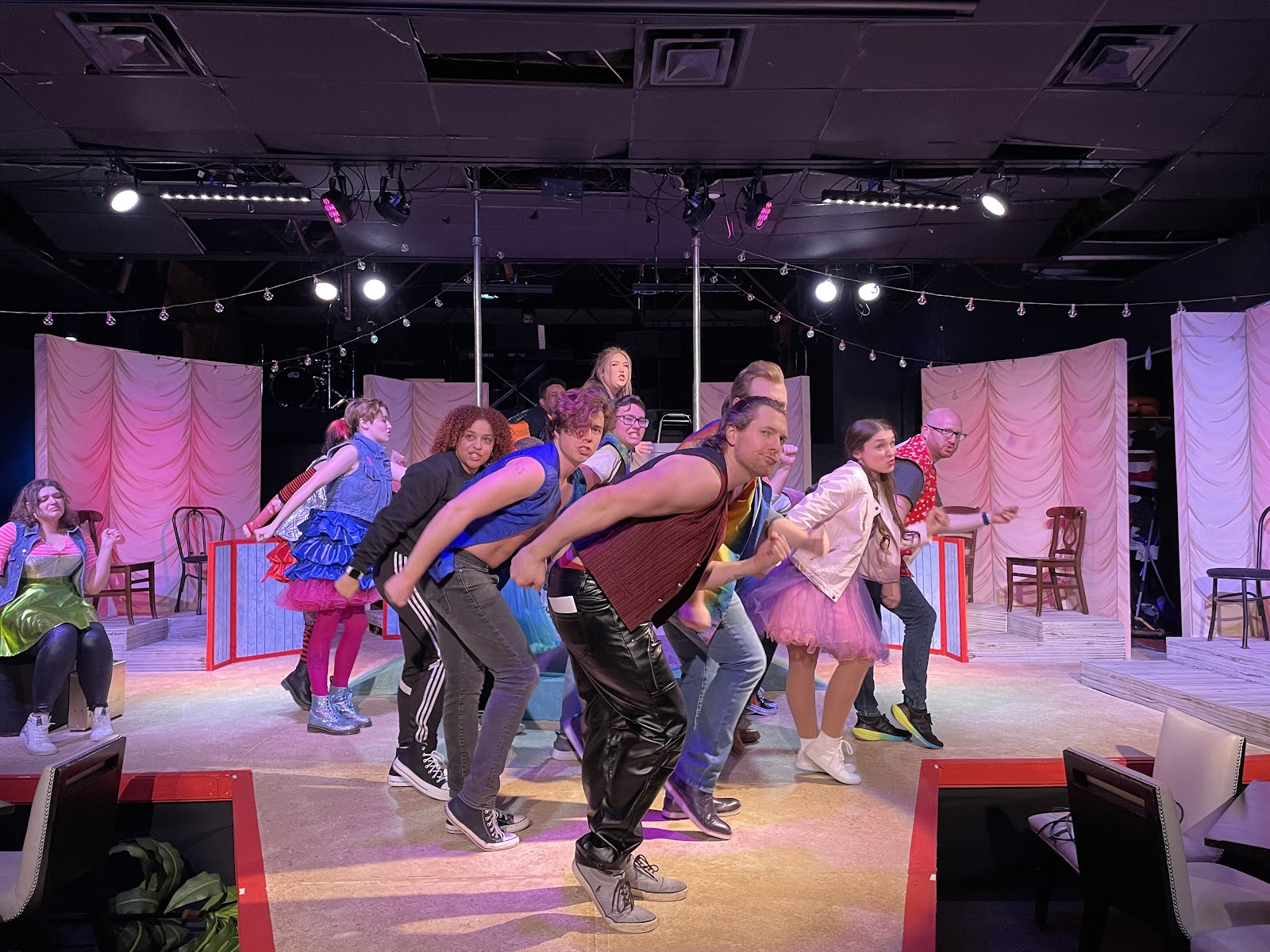
The stage itself gives the frame only stage venues can: the couple lit on a defined platform with the room falling away dark around them. In a small house that is more intimate than in a large theatre, because the seating is close and the audience reads as present rather than as an empty auditorium — which is arguably the better version of the frame.
Outside, downtown Wichita is low-rise, which means low evening sun reaches street level and runs the length of a street rather than being blocked by towers. That is where the daylight frames get made, and it is worth timing, because the interior is entirely time-independent and can absorb any delay. Finding which streets run roughly east-west takes ten minutes on a site visit.
One Kansas note for any street block: wind is a constant rather than an occasional event here, so a veil is a held-or-removed decision and anything that stands up needs weight. On a downtown street the buildings give some shelter, which makes the streets a better outdoor option than open ground at this venue’s scale.
More frames from Roxy's Downtown
Roxy's Downtown wedding photography: common questions
What is the best thing about a small stage venue?
The rig. Stage lighting is a kit already rigged, aimed and powered, pointing at exactly where a couple will stand — a two-light setup with no stands, no cables and no setup time, if someone can operate it.
What exactly should be requested?
A warm front-of-house wash, a backlight from upstage, and house lights at a low level rather than off. Ask the events team three weeks ahead so someone who knows the board is rostered — asking on the day usually gets a polite no.
Why house lights low rather than off?
Because completely dark, the room disappears and the frame becomes two people in a void. Slightly lit, the seating and brick read faintly as context and the photograph says where it was taken.
What if the rig is gelled a strong colour?
Ask for warm or open white instead. Saturated colour on skin is hard to correct, and if the rig is fixed, gel your own key to match rather than fighting it — matched is always better than mixed.
What does the small room decide?
Your focal length. There is one camera position, so 28mm or 35mm covers groups and 85mm covers faces across a table. Keep faces centred because wide lenses stretch the frame edges, and arrange groups in an arc rather than a line.
Where do larger groups go?
Outside. Tiered seating sorts out heights, but the floor area is fixed, so anything past about a dozen belongs on the street or in a nearby space — agreed in advance rather than improvised on the day.
More Kansas venue guides
We are writing a photographer’s guide to every venue we would happily shoot in Kansas. Here are three more, plus the full index:
- Sedgwick County Zoo: What a Plains Zoo Suits and What It Does Not
- The Wichita Art Museum: Field Notes on Glass Under a Big Sky
- Colbert Hills Golf Course, Manhattan: What It Suits, and What It Does Not
Planning a wedding at Roxy's Downtown?
One email three weeks early turns the rig into your lighting kit. Tell us your date and we will send it.