 Roxy’s Downtown: Photographing a Small Stage Room
Crestview Country Club: How the Fairway Frame Is Actually Made
A golf course gives one photograph nothing else does, and it needs low sun, a long lens and permission.
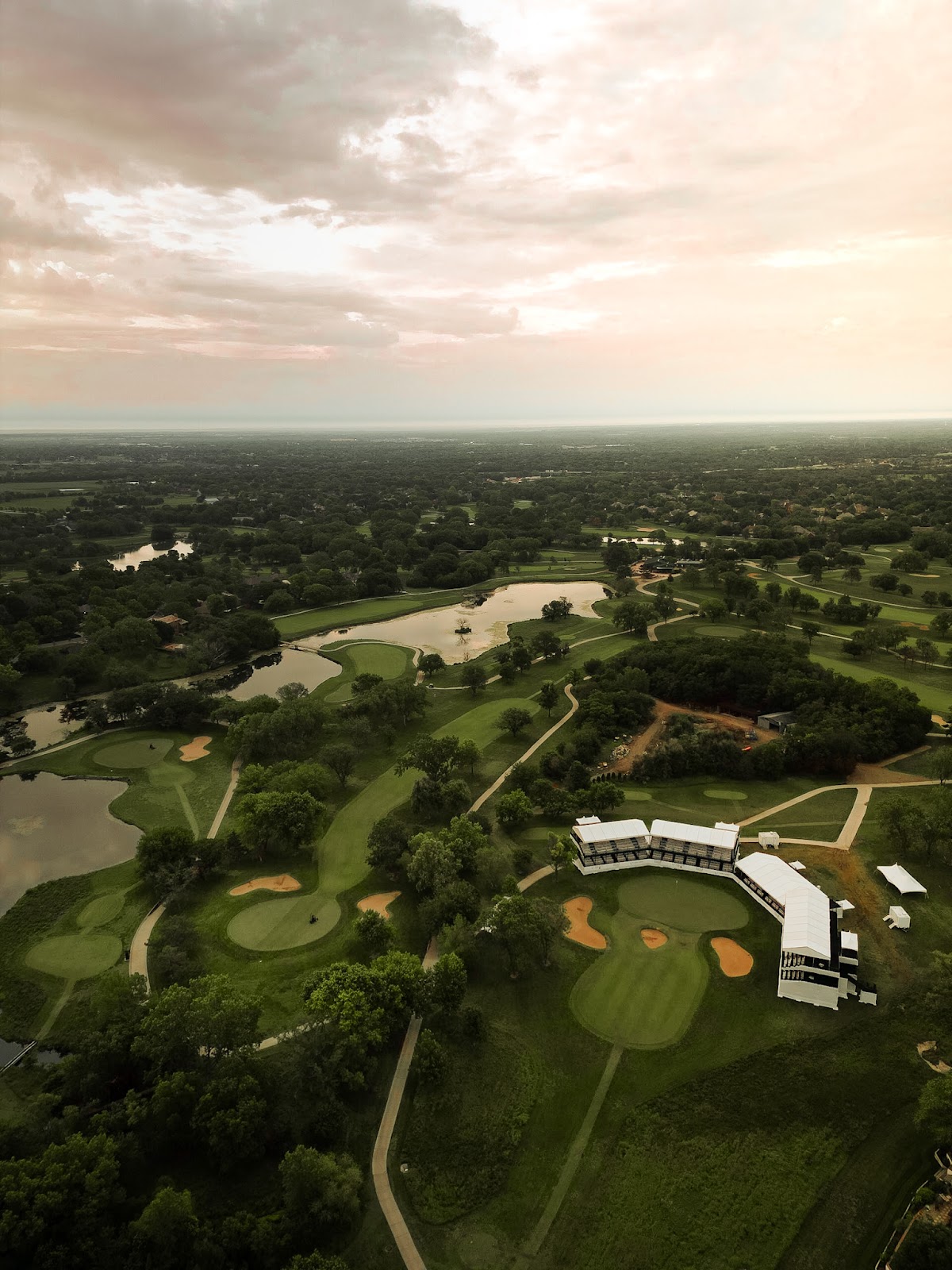
Crestview Country Club sits outside Wichita, Kansas, with a golf course, clubhouse event spaces and the mature planting that lines fairways on a course of any age.
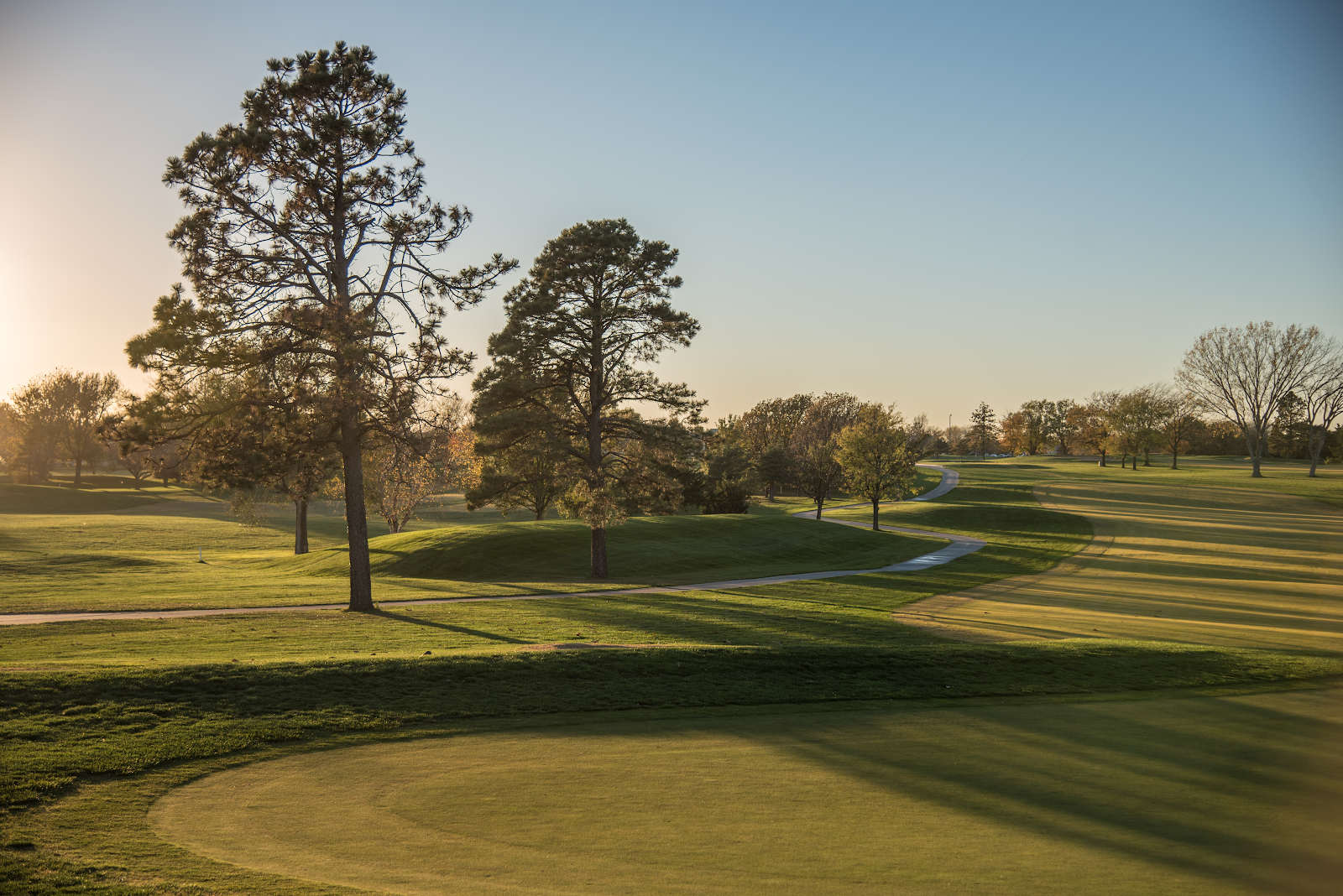
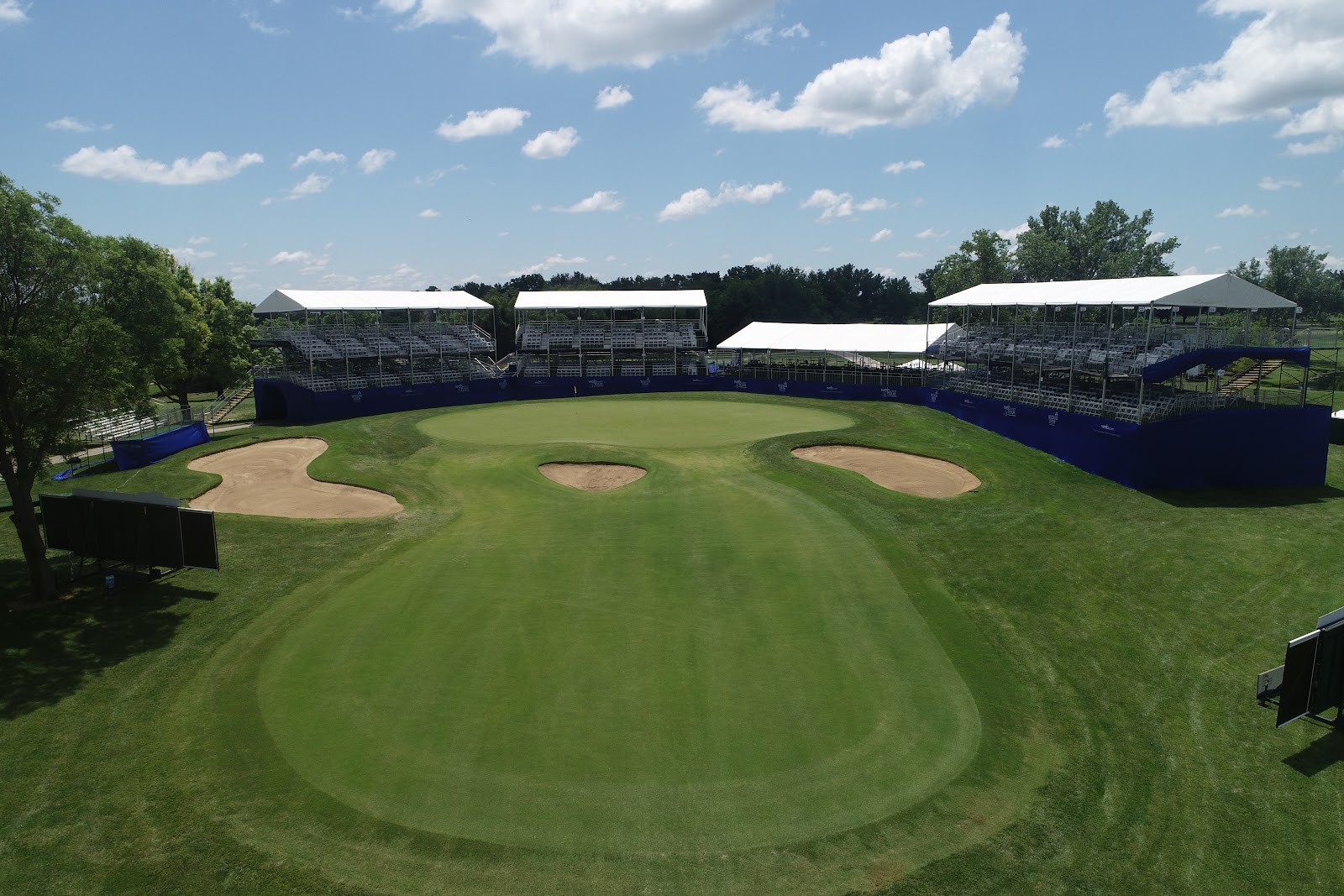
Golf courses as wedding venues are common and their photographic value is narrower than it looks. A clubhouse interior is a clubhouse interior — a ballroom with a patterned carpet and warm overhead lighting, much like any other. What a course gives that nothing else does is one specific frame: a wide, deep, manicured landscape with a couple placed in it, mown into stripes, framed by mature trees, receding to a horizon. It is a genuinely distinctive image and it exists nowhere except on a course.
Making it work needs three things, and one of them is not photographic. This is an account of all three, and of what the rest of the venue offers. We have not photographed a wedding at Crestview; golf courses and clubhouse interiors behave the same wherever they are. Course access during play, cart availability and which holes may be used are questions for their events team — and course access is the one that decides whether the frame is possible at all.
Crestview Country Club at a glance
| Where | Outside Wichita, Kansas |
| Character | Golf course with clubhouse event spaces and mature fairway planting |
| The frame | A couple placed in a deep manicured landscape, framed by trees |
| Three requirements | Low sun, a long lens, and permission to be on the course |
| Ask first | Whether the course is in play, and how far you may go |
Requirement one: low sun, because mown grass only works raked
A fairway is mown in stripes, and stripes are visible because the grass is bent in alternating directions so it reflects light differently. That effect depends entirely on the angle of the light: with the sun low and across or behind the mowing direction, the stripes read strongly and the whole fairway becomes a graphic surface. With the sun high, the stripes flatten into uniform green and the course looks like a lawn.
The same applies to everything else in the frame. Low sun rakes across the ground so undulations read as form rather than as flat colour, mature trees along the fairway are backlit and their canopies glow, and every figure gets a rim. High sun gives none of that and adds squinting, shadowed eye sockets and a clipping sky.
So the fairway frame is a last-ninety-minutes proposition and there is no substitute. On open plains ground that window is longer than in country with topography, because the sun stays visible almost all the way to the horizon — which is a genuine advantage and means the block does not have to be rushed.
The corollary is that the middle of the day belongs to the clubhouse. A course at one in the afternoon offers nothing a photographer wants, which is worth telling a couple early so the timeline is built the right way round.
Requirement two: a long lens, and where to stand
A wide lens on a fairway produces the photograph nobody wants: a small couple in the middle of a large expanse of green with a lot of empty sky above and empty grass below. Everything is at true angular size, so the trees are small, the horizon is far and the frame is mostly nothing.
A long lens compresses. At 135mm or beyond, the trees along the fairway stack up behind the couple, the horizon comes closer, the depth of the landscape reads as layers rather than as distance, and the couple sit against a substantial background instead of a void. That is the frame, and it requires standing a long way back — which on a fairway is easy, because there is nothing in the way.
The arrangement is therefore counterintuitive and worth planning: put the couple where you want them, then walk a long way down the fairway yourself. The distance between camera and subject is what makes the compression work. At that range you cannot direct in a normal voice, so agree the posture and the movement before separating, and expect to work on available light — which at the hour the frame works is warm, low and entirely sufficient.
Shoot from low. Dropping the camera closer to the grass pushes the horizon down, increases the apparent length of the fairway and lets the stripes run towards the viewer, which strengthens everything the frame is doing. Standing at eye level flattens it.
- Last ninety minutes only; high sun flattens the mown stripes
- 135mm or longer, from a long way back down the fairway
- Drop the camera low so the stripes run towards the viewer
- Agree posture before separating; you cannot direct at that range
- Confirm course access and cart availability well in advance
Requirement three: permission, and the rest of the venue
The third requirement is access, and it is not a photographer’s decision. A golf course is a working facility with paying members on it, and whether a wedding party may walk onto a fairway — and how far, and at what time — is a club matter that has to be agreed in advance. It is entirely reasonable for the answer to be no, or to be limited to a specific hole near the clubhouse, or to depend on the day’s play.
That single answer determines whether the venue’s distinctive frame is available. A plan built on walking three holes out, discovered on the day to be impossible, leaves nothing but a clubhouse ballroom. Ask early, ask specifically, and ask whether a cart is available, because the difference between walking and being driven is the difference between a fifteen-minute block and a forty-minute one in formal clothes.
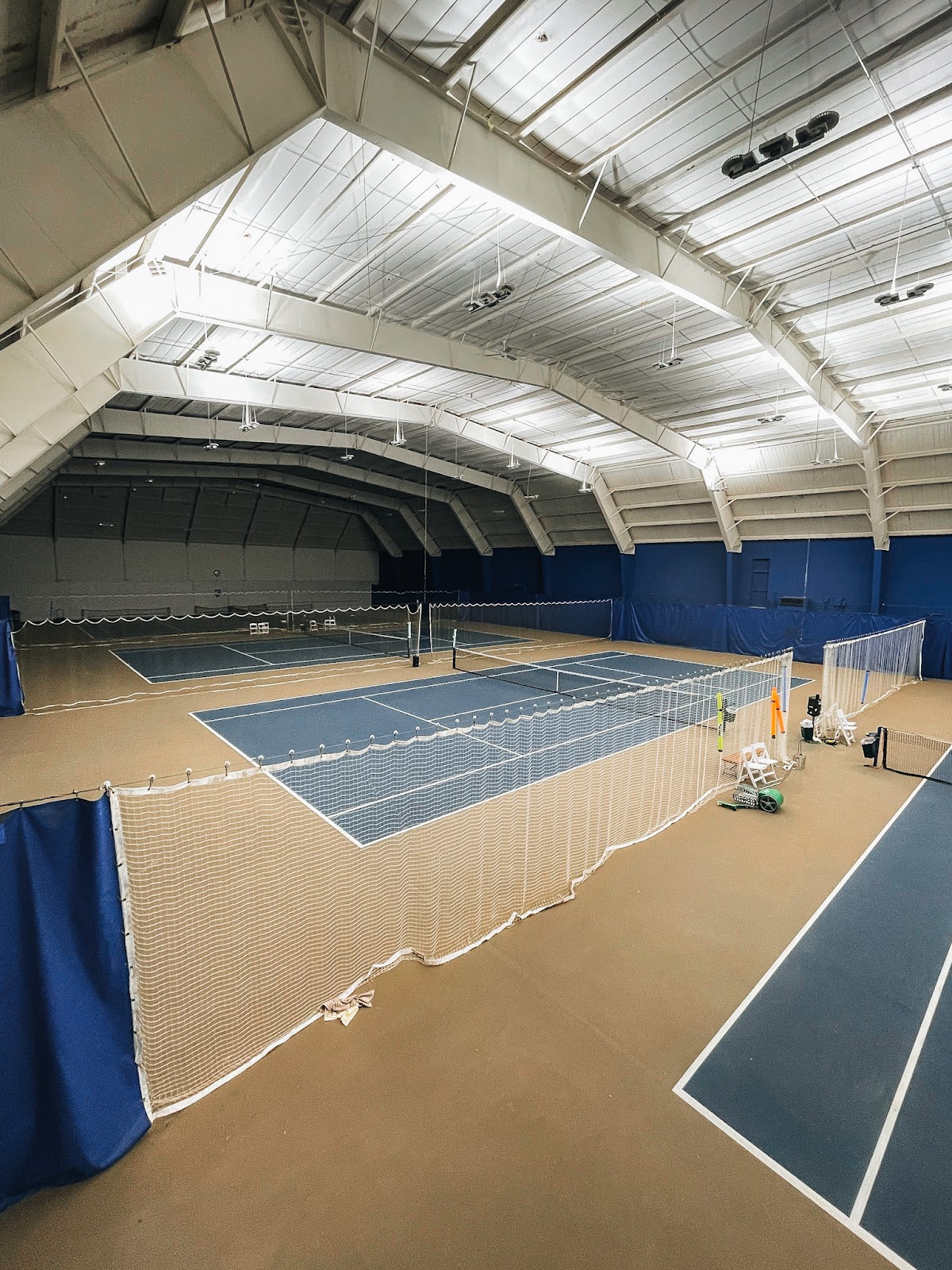
The clubhouse is the rest of the day and it behaves like any club: panelled or carpeted interiors, warm overhead lighting that shadows the eye sockets, and no daylight in the function rooms. One warm-gelled source at face height at about forty-five degrees fixes the top-light problem, a second behind as a rim finishes the dance floor, and because the ambient never changes the setup holds all evening.
Windows in a clubhouse usually face the course, which is useful: a large window looking out over open ground with nothing tall opposite gives clean directional light, and the grass outside bounces a soft green-tinted fill upward. Set white balance in the room for faces rather than letting the grass bounce dictate it.
Two Kansas notes. Wind is a constant here, so a veil is a held-or-removed decision and any stand needs weight — and on an exposed fairway there is no shelter at all. And severe storms occur in spring and early summer, building fast, which on an open course means a real decision point and a shelter plan rather than optimism. The clubhouse is the fallback that keeps the wedding, though not the frame.
More frames from Crestview Country Club
Crestview Country Club wedding photography: common questions
Why does the fairway need low sun?
Because mown stripes are visible only when light rakes across the bent grass — with the sun high they flatten into uniform green and the course looks like a lawn. Low sun also backlights the fairway trees and rims every figure.
Wide or long lens?
Long, decisively. A wide lens renders everything at true angular size, so you get a small couple in a large expanse of green with empty sky above. At 135mm or beyond the trees stack behind them and the landscape reads as layers.
How does that change where you stand?
You place the couple, then walk a long way back down the fairway. The distance is what makes the compression work. At that range you cannot direct in a normal voice, so agree posture before separating and expect to shoot on available light.
Is there a camera height that works better?
Low. Dropping close to the grass pushes the horizon down, lengthens the apparent fairway and lets the stripes run towards the viewer. Eye level flattens all three.
What decides whether the frame is possible?
Course access, which is a club decision rather than a photographer’s. Ask early and specifically how far onto the course a wedding party may go and at what time, and whether a cart is available — walking versus driving is a fifteen-minute block versus forty.
What is the clubhouse like?
Like any club function room — warm overhead lighting that shadows the eye sockets, no daylight, and a fixed condition all evening. One warm-gelled key at face height fixes it and the setup holds, and the windows facing the course give good directional light.
More Kansas venue guides
We are writing a photographer’s guide to every venue we would happily shoot in Kansas. Here are three more, plus the full index:
- The Drury Plaza Broadview: One Decision About Which Way You Work
- Exploration Place: Photographing Curved Architecture on a River
- The Orpheum Theatre, Wichita: Photographing an Atmospheric Interior
Planning a wedding at Crestview Country Club?
The fairway frame needs low sun, a long lens and permission. Tell us your date and we will secure all three.