 Roxy’s Downtown: Photographing a Small Stage Room
Colbert Hills Golf Course, Manhattan: What It Suits, and What It Does Not
A course in open prairie gives you the whole sky and takes away every windbreak. Both matter.
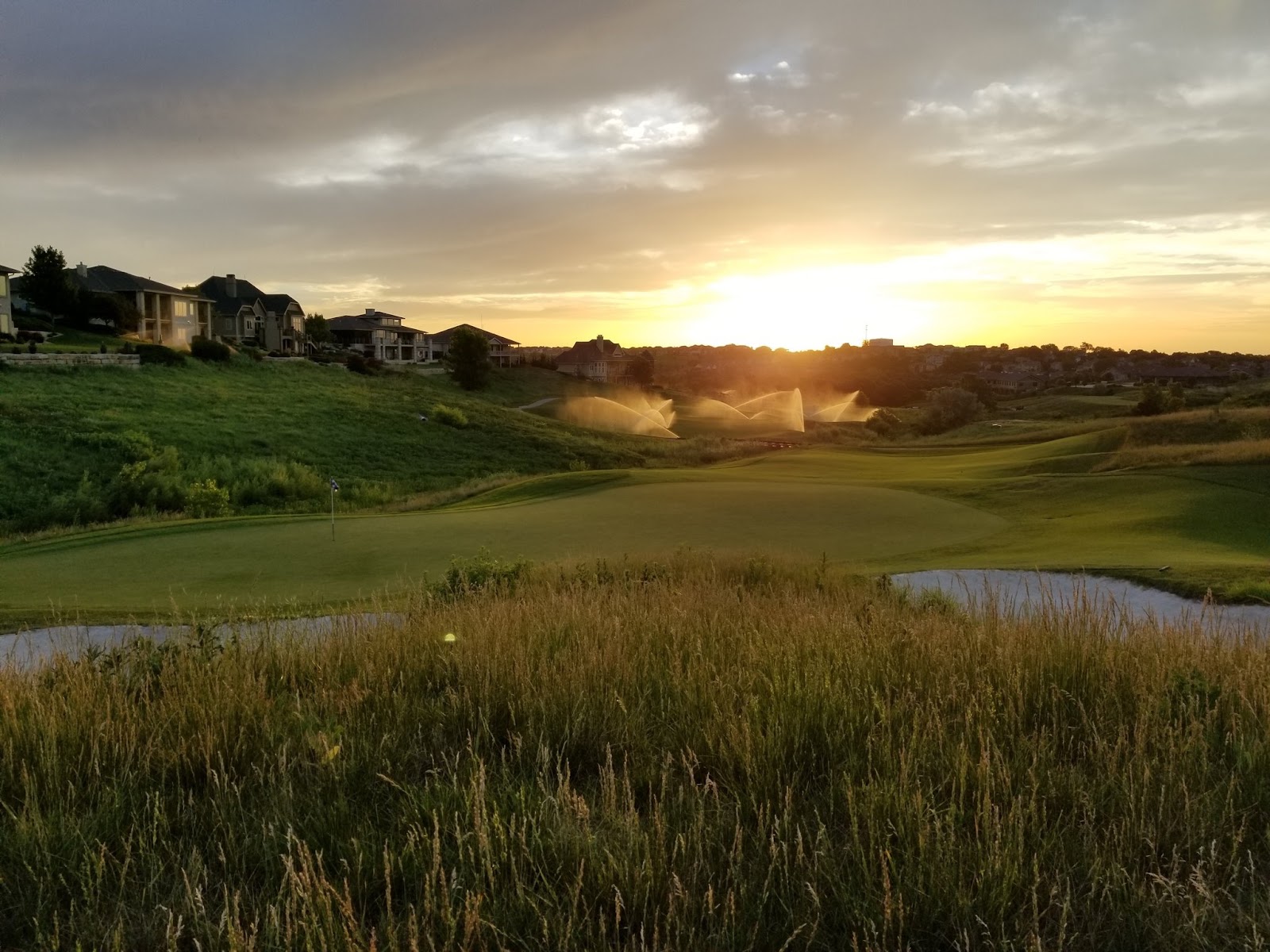
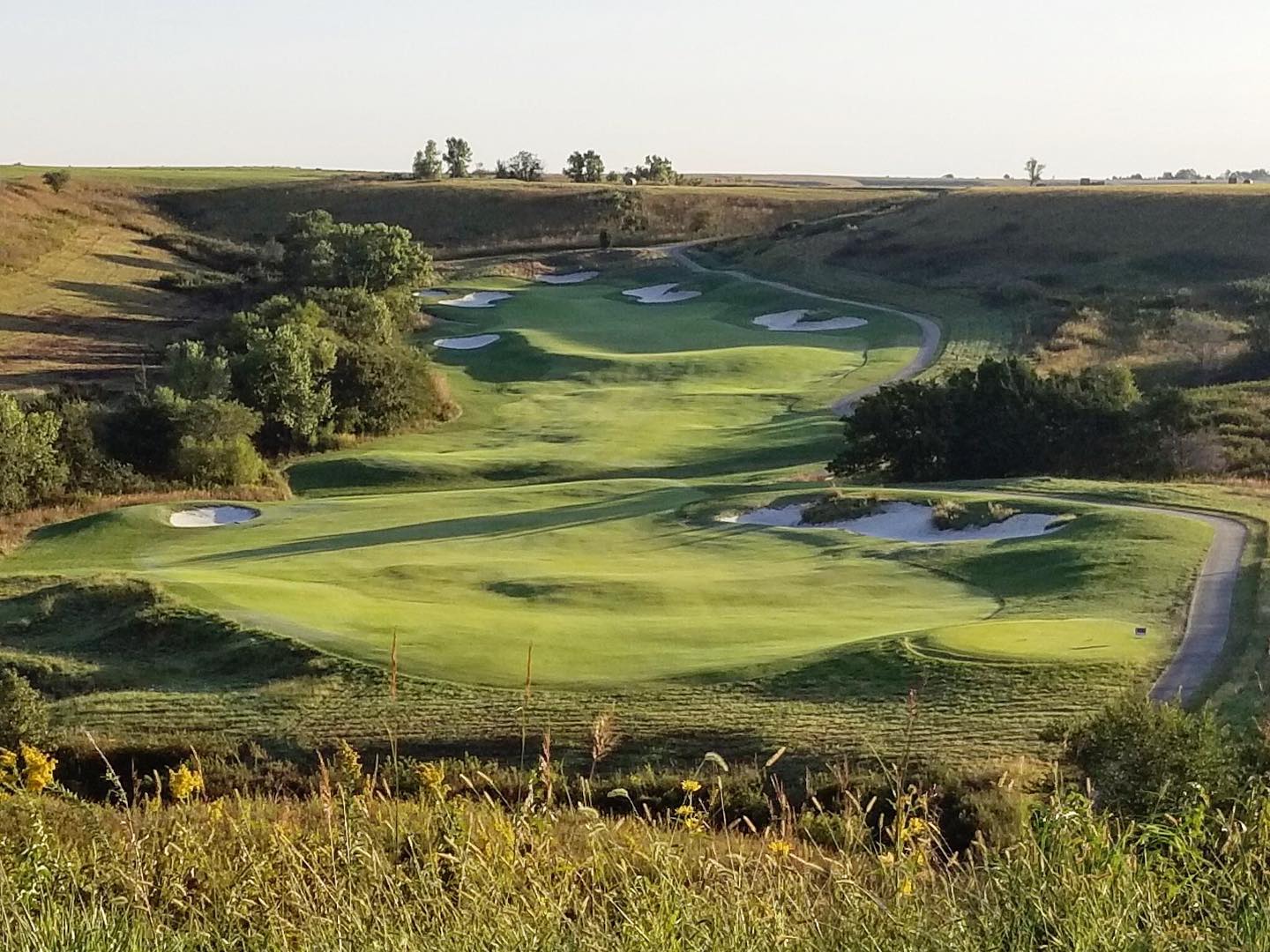
A golf course laid out across Flint Hills terrain gives a photographer something unusual for this region: genuine relief. The ground rolls, there are limestone outcrops near the high points, and elevation is available — which is not what most people expect of Kansas and which changes what a wide frame can contain.
What it gives beyond that is open mown ground with nothing in it, deliberate planting placed for the game rather than for shelter, and an enormous sky over a horizon with almost no tall cover. Those are real assets and they produce frames a building cannot.
What it asks is what open ground always asks. There is no shade to speak of, no shelter at all, and nothing whatever to break the wind — which on prairie is a constant rather than an occasional condition. And a golf course has its own operational reality, which governs where and when a wedding party can go.
We have not photographed a wedding at Colbert Hills Golf Course; prairie courses behave consistently. Which areas are available and when, whether the course may be used, and what the covered alternative is are questions for their team.
Colbert Hills Golf Course at a glance
| Where | Manhattan, Kansas, in the Flint Hills |
| Suits | Real relief and elevation, open mown ground, an enormous sky |
| Resists | No shade, no shelter, and no windbreak anywhere |
| The best frame | Low sun across mown ground with a dark treeline and sky above |
| Ask first | Course access and timing, areas available, covered alternative |
What it suits
The relief is the first thing and it is the one people do not expect. Flint Hills terrain rolls genuinely rather than gently, with limestone outcrops near the tops of the hills — which means a course laid out across it has high ground, and high ground gives two things no flat site does: a long view, and a low horizon line beneath a subject standing on it.
That second point is worth dwelling on. A couple photographed from slightly below, standing on a rise, has sky behind them rather than ground — which separates them completely, costs nothing, and is the simplest strong composition available on any rolling site.
Open mown ground is the second asset and it is better than photographers credit. It is even, so there is nothing in it to clutter a frame. It takes raking light beautifully, because low sun across mown grass picks up every blade and every mowing line — so the same ground that looks like a flat green field at midday becomes a textured, directional surface at seven in the evening. And it is a mild reflector, which throws a little light upward to fill under the chin.
The mowing lines deserve their own note: they are strong directional graphic elements, and they either lead into a frame deliberately or cut across it distractingly. Which one depends entirely on where the camera stands, and it is worth two steps either way to check.
Deliberate planting is the third asset. A course has trees placed as hazards and screens rather than scattered, which means there are discrete dense stands rather than continuous canopy — and a dense stand is the darkest natural background available, separating a subject by three or four stops with no equipment. A couple in lit mown grass with a dark treeline behind is the frame this kind of site exists to give.
That carries one exposure trap: a meter looking at a dark treeline tries to lift it towards mid-grey and overexposes everything else by two stops. The background must be allowed to stay dark, which means metering on the faces and working in manual.
The sky is the fourth asset and in this landscape it is the subject rather than the background. The horizon is rolling and open with very little tall cover, so the sky occupies most of any wide frame — which means the exposure should be set for it, with the faces lifted by a close source. Metering on skin gives a white sky, and that is the commonest failure in this country.
And the clubhouse is the fifth, giving generous windows because a clubhouse is designed to look out at the course, plus normal ceiling heights where bounce flash works — a distinction worth confirming with one test frame.
What it does not suit
No shade is the first refusal and on an open course it is close to absolute. At this latitude, about thirty-nine degrees north, the June midday sun reaches roughly seventy-four degrees above the horizon, which is high enough to put eye sockets in shadow and a hard line under every chin — and on mown fairway there is nowhere to escape to.
The workarounds are limited and worth knowing. The shadow side of a dense tree stand is real shade and it is directional, because the trees block the overhead component while the lit grass in front bounces back up — that is a genuinely good position and there are usually several. The shadow side of the clubhouse or any structure is the other. And a held diffusion panel works, needs a person, and fails in wind.
The honest answer beyond that is scheduling: a course is a morning-and-evening venue, and a midday ceremony on open ground needs either a marquee or an acceptance that the pictures happen at the ends of the day.
Wind is the second and it is the defining difficulty here. On open prairie there is nothing at all to break it, and the consequences are specific rather than general. A lightstand will go over and is a liability rather than a tool. A veil will not behave, and that needs saying to a couple in advance rather than discovering it. A held diffusion panel becomes a sail. Hair needs managing. And anything not held will move.
The compensations are real: wind means movement, and a dress or veil moving in a frame is a good picture when it is anticipated. And the lee side of a tree stand is a calm pocket with good light, because the sky is still working while the wind is not — those positions are worth finding on arrival with the wind direction noted.
The third difficulty is weather, and it is operational rather than aesthetic. Severe thunderstorms are a real possibility from spring through summer, and on an open course with metal-shafted equipment and no shelter they are a genuine hazard rather than an inconvenience. A named covered alternative with a known capacity, agreed at booking, is a requirement — and the decision to use it belongs to whoever is responsible for the party.
A storm approaching over open prairie is visible for a long time before it arrives, which is both a useful warning and the most dramatic sky the landscape produces.
The fourth is the course’s own operation, and it is easy to overlook. A working course has play on it, carts moving, irrigation running on a schedule, and maintenance in the early morning — all of which govern where a wedding party may go and when. Those are questions with definite answers and they should be asked rather than assumed, because they decide whether the high ground and the treelines are actually available at the hour the light is good.
And the ground itself is a practical consideration: mown grass after irrigation or rain is wet, fairways are uneven, and formal shoes on a slope are a hazard. A short route to close positions beats an ambitious one.
- Shoot from slightly below on a rise; sky behind a subject is free separation
- Check the mowing lines — they lead in or cut across, depending where you stand
- Work in manual; a dark treeline makes a meter overexpose by two stops
- No stands outdoors. Note the wind direction and use the lee of a tree stand
- Ask when the course is actually available; play and irrigation govern access
The Flint Hills year
Manhattan sits in the Flint Hills, the largest remaining expanse of tallgrass prairie in North America — preserved because layers of flint-bearing limestone close to the surface made the hills unploughable, so they were grazed rather than cultivated. The same rock that gives the region its building material saved its landscape.
On a course that rough prairie sits alongside the mown ground, which is a genuine asset: the contrast between a mown fairway and unmown tallgrass beside it is a strong graphic element, and the rough is where the region’s own character lives.
Tallgrass changes through the year more dramatically than almost any surface. Big bluestem and Indian grass grow through summer and by late August stand well above head height, which makes them a foreground and a background at once — a couple standing in the rough is enclosed by it rather than posed in front of it, a frame available almost nowhere else. In autumn it turns bronze and russet and holds that colour standing through winter, so the prairie has warm colour in January when nothing else does.
Spring brings the burning and it is worth knowing before a date is chosen: ranchers burn the surrounding grassland in late March and April, giving blackened ground, smoke on the horizon, and then an intense green flush within a few weeks. Those are three completely different landscapes inside two months, and late April into May — when the new growth is vivid and even and the course is at its greenest — is the strongest outdoor window of the year.
Summer is hot and humid, and the humidity rather than the heat is the photographic fact: moist air scatters light, which softens shadows and slightly flattens the rolling distance — good for faces, less good for a long view from high ground. Comfort on an open course in July is a real consideration and argues for a short block at the edges of the day.
The fogging problem is the equipment issue in this climate: a body carried from an air-conditioned clubhouse into July air fogs on every surface at once and does not clear quickly, so a bag opened twenty minutes before going out is the whole fix.
Autumn is reliable and comfortable and it is the best season here overall: the grass is at its bronze best from October, the air is at its clearest so the long views from high ground actually hold detail, and low sun arrives at a civilised hour rather than late in the evening.
Winter is cold and the course is dormant, but three things compensate. The December midday sun at about twenty-seven degrees above the horizon makes the whole short day raking light rather than overhead light, which is exactly what mown ground and limestone both need. Standing bronze tallgrass in the rough keeps warm colour in the frame. And snow is the best natural fill available outdoors, lifting exactly the shadows a low sun carves while fooling a meter by about two stops — with snow over rolling ground and bronze grass through it being a genuinely distinctive local frame.
The constraint in winter is simply exposure to cold on open ground with no windbreak: five minutes with coats rather than twenty without, and nobody standing still in it.
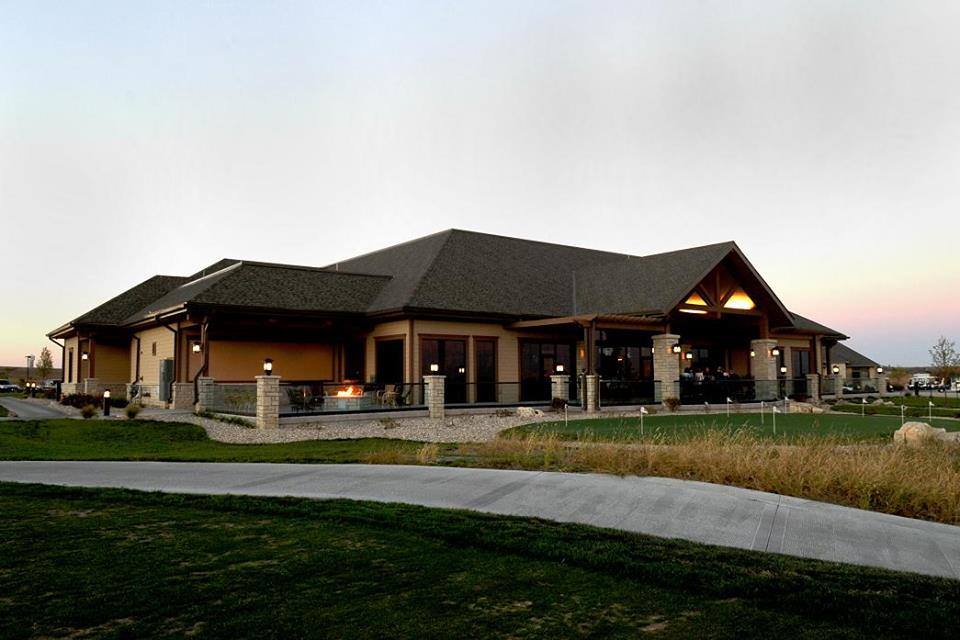
More frames from Colbert Hills Golf Course
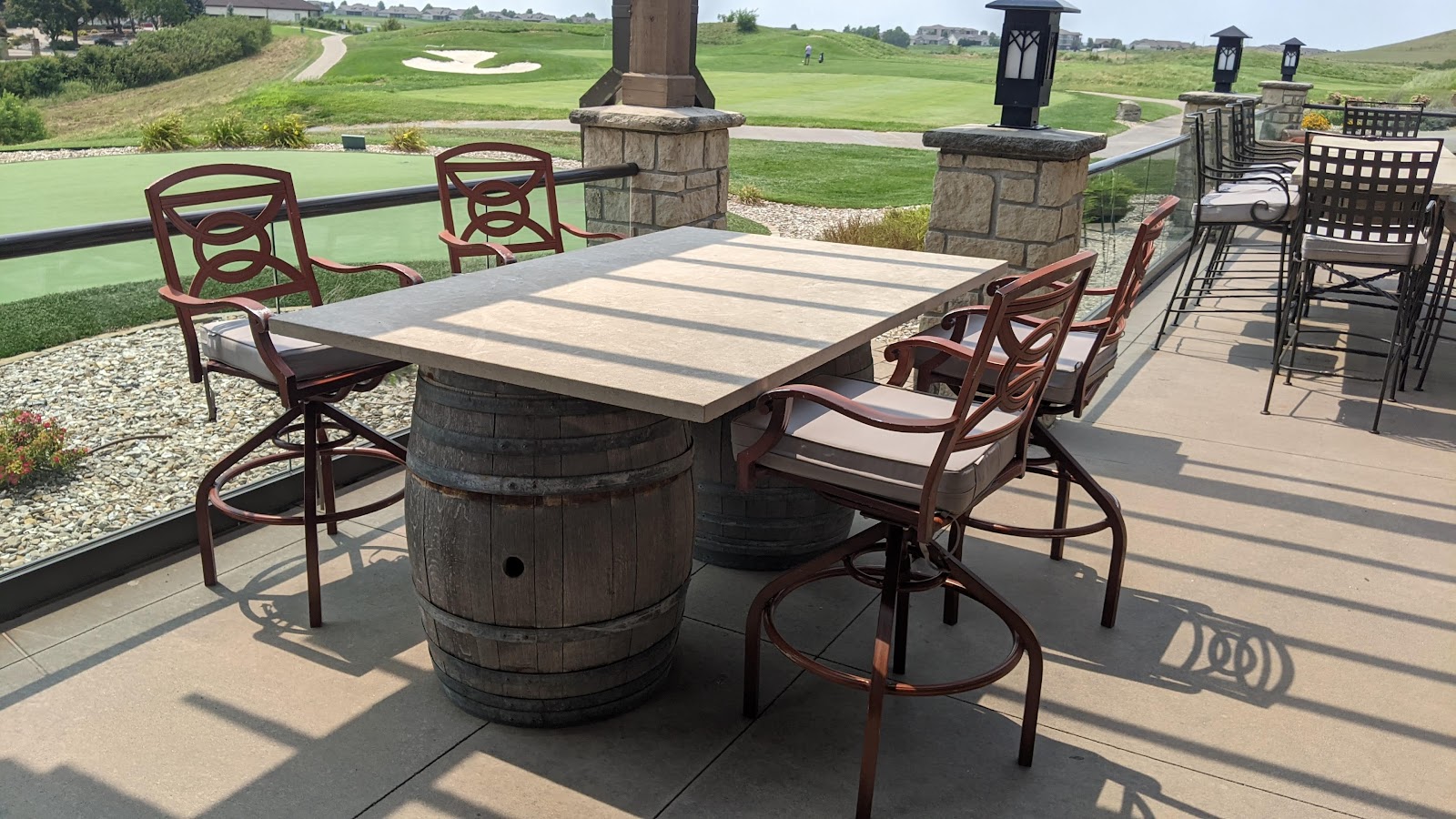
Colbert Hills Golf Course wedding photography: common questions
What does a prairie course give that people do not expect?
Real relief. Flint Hills terrain rolls genuinely, with limestone outcrops near the tops, so high ground and long views are available.
What is the simplest strong composition?
Shooting from slightly below a couple standing on a rise, so the sky is behind them rather than the ground. It separates them completely for nothing.
Why work in manual?
Because a dark treeline makes a meter overexpose everything else by two stops, and the background has to be allowed to stay dark.
How bad is the wind?
It is the defining difficulty. No stands, a veil that will not behave, and a diffusion panel that becomes a sail — so note the direction and use the lee of a tree stand.
What has to be agreed in advance?
A named covered alternative, and when the course is actually available — play, carts and irrigation all govern access at the hours the light is good.
What is the best season?
Autumn. The grass is bronze from October, the air is at its clearest so long views hold detail, and low sun arrives at a civilised hour.
More Kansas venue guides
We are writing a photographer’s guide to every venue we would happily shoot in Kansas. Here are three more, plus the full index:
- The Flint Hills Discovery Center, Manhattan: One Frame, and How It Is Made
- The Kansas State University Alumni Center, Manhattan: The One Decision That Governs Everything
- The Manhattan Arts Center, Manhattan: A Walk Through the Building
Planning a wedding at Colbert Hills Golf Course?
Open ground, real relief, and a wind plan. Tell us your date.