 Roxy’s Downtown: Photographing a Small Stage Room
The Flint Hills Discovery Center, Manhattan: One Frame, and How It Is Made
A prairie sky through full-height glass is the best frame in the building and the hardest exposure in it.
A modern museum with a fully glazed elevation gives one frame that neither an older building nor a windowless one can, and it is worth building deliberately.
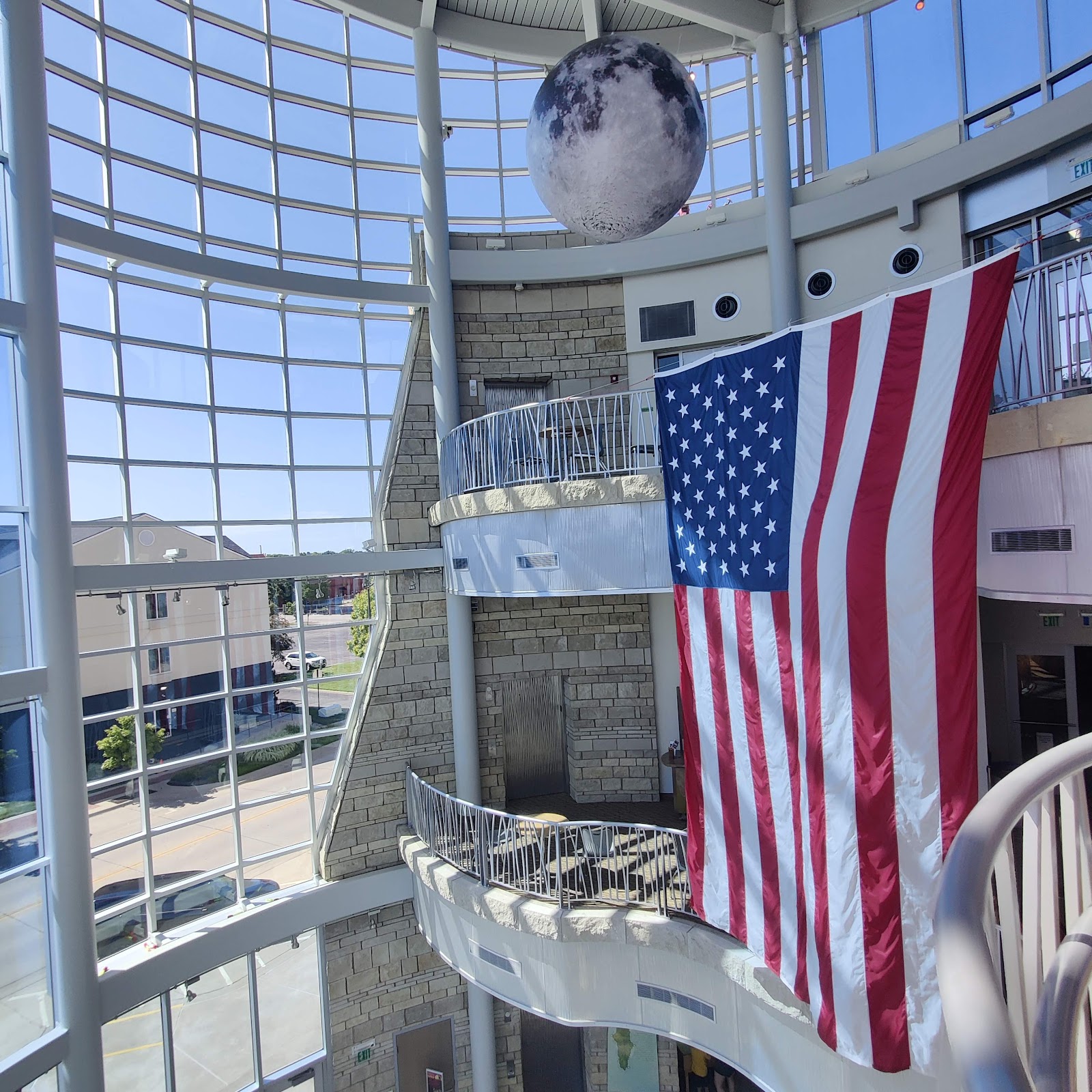
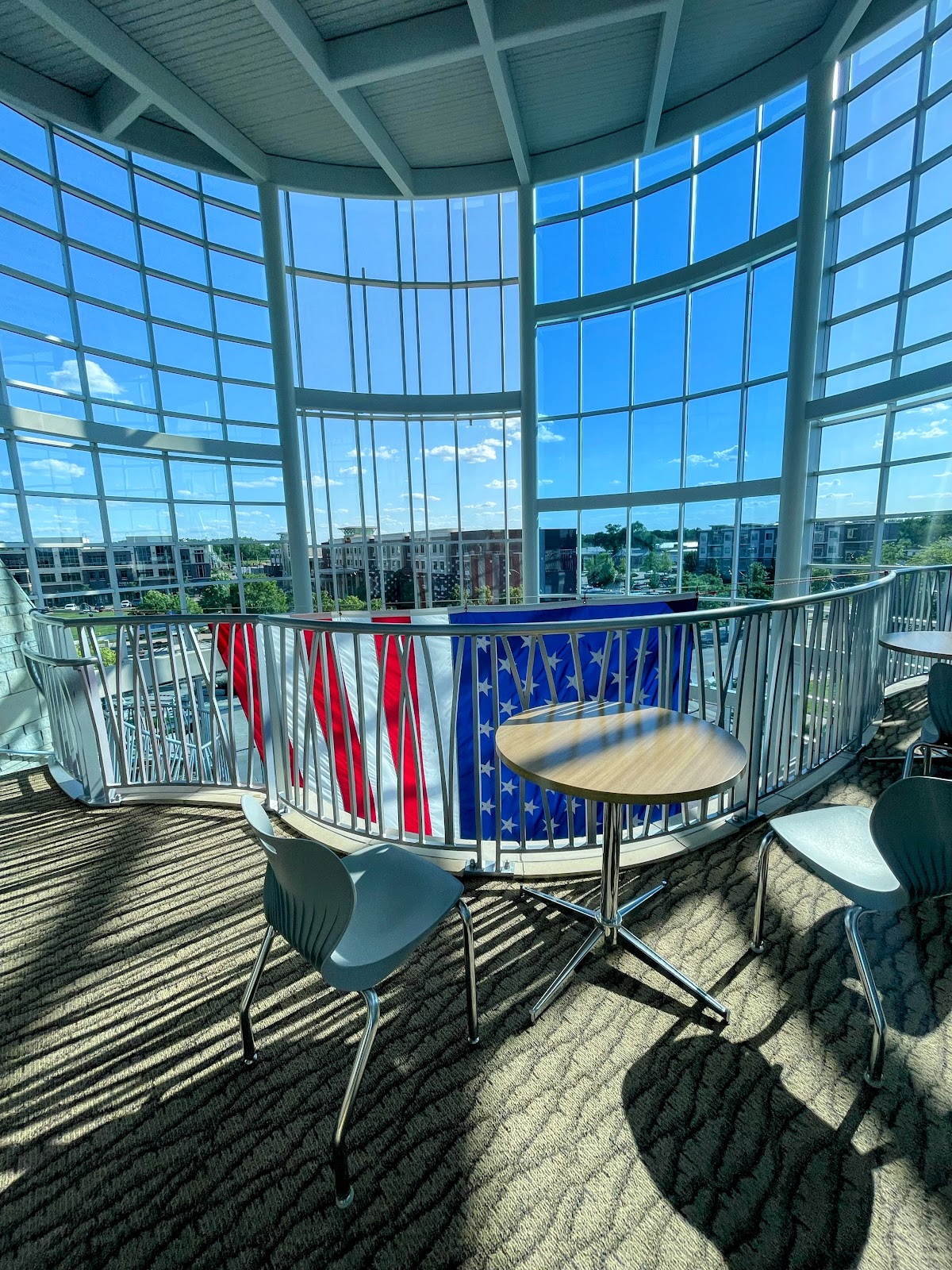
The frame is this. A couple stands beside glazing that runs from floor to ceiling. The light comes in from the side, soft, large enough to wrap both faces and to reach a whole group. Beyond the glass the Flint Hills sky occupies the view — the enormous, rolling, tall-cover-free horizon that is the region’s defining feature. Their faces are correct and the sky outside is correct, which means the range between them has been bridged rather than split.
That last part is the difficulty. A bright prairie sky and an interior face can differ by four or five stops, which exceeds what a single exposure holds once both skin tone and sky detail are required, and automatic metering resolves it by failing at both.
Six decisions make the frame. We have not photographed a wedding at the Flint Hills Discovery Center; modern museums with full-height glazing behave predictably, and the exposure problem is arithmetic. Which spaces are included, the rules on flash and proximity to exhibits, and whether the glazing is tinted are questions for their team.
The Flint Hills Discovery Center at a glance
| Where | Manhattan, Kansas, in the Flint Hills |
| The frame | Couple at full-height glazing with the prairie sky legible beyond |
| The difficulty | Four or five stops between an interior face and a bright sky |
| The three answers | Expose for the faces, expose for the sky and light them, or wait for dusk |
| Ask first | Spaces included, flash and exhibit rules, glazing tint |
Decisions one to three: the elevation, the distance, the tint
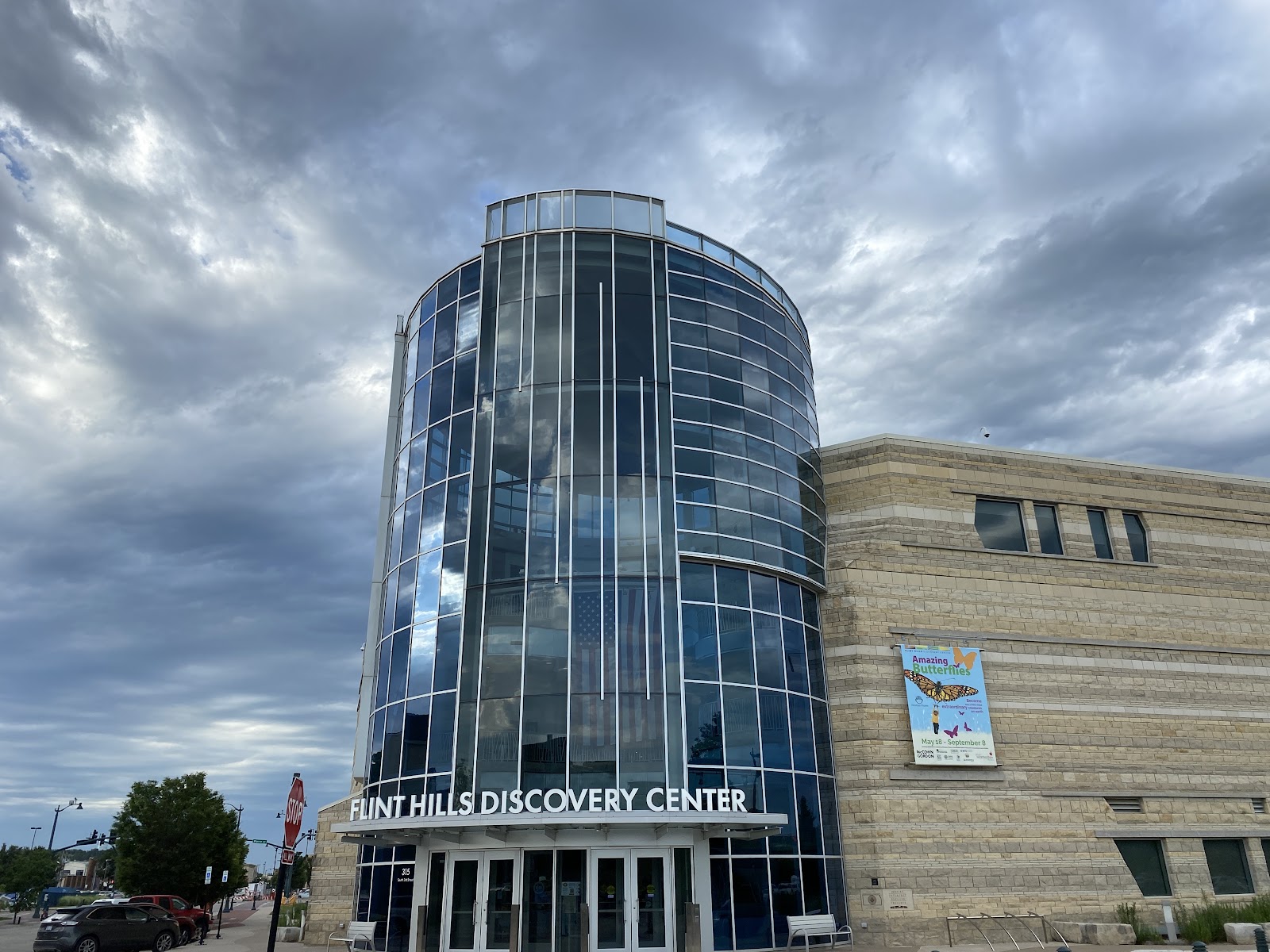
The first decision is which glazing, and it is settled by orientation rather than by view. A glazed wall carrying direct sun is not a soft source but a hard one with a hard edge, producing a brilliant stripe across the floor and a face half blown and half black — so the working elevation is the one in shade at the hour being used.
At Manhattan’s latitude, about thirty-nine degrees north, the midday sun reaches roughly seventy-four degrees above the horizon in June and about twenty-seven in December. So a north-facing glazed wall is shaded all year and is the most reliable in the building, while a south-facing one is a high source in summer and carries direct low sun through most of a winter afternoon. Which elevation works is a seasonal question with a definite answer, and the venue will know it.
The second decision is the distance from the glass, and it is the same as at any window with one bonus. Two to three metres is the working range: at half a metre the fall-off across two faces darkens the far one, while at two or three the light is directional but even across both. The bonus is that full-height glazing extends to the floor, which means the light wraps upward as well as sideways and fills under the chin — something a normal window cannot do.
For a group the number is three metres rather than one: a row of people parallel to glazing at a metre has a two-stop spread across it, while at three it is even. That single figure is what makes a glazed museum capable of lighting a thirty-person formal with no equipment, which is a capability most venues do not have.
The third decision is the tint, and it is worth checking in the first frame rather than in editing. Modern architectural glazing is frequently coated for solar control — and in a museum it may additionally be specified to cut ultraviolet, for the sake of the exhibits — which does two things. It reduces the light, which matters little. And it shifts the colour, usually green or blue, as a localised cast on anything near the glass that global white balance cannot separate from the subject.
The fix is a custom white balance set on a face in the actual position, or one gelled source owning the faces. What does not work is a global correction, which neutralises the face and turns the sky outside magenta.
A fourth practical note belongs here: full-height glazing reflects. From some positions the glass shows the room behind the camera, including the photographer and any stand, which is solved the way mirrors are — stand where the camera will stand, look at the glass, and move whatever is showing.
Decisions four to six: the exposure, the source, the timing
The fourth decision is the exposure and it is where this frame is usually lost. There are three honest resolutions and one that is not.
Expose for the faces and let the sky go white. This is legitimate and frequently right for a portrait: the glazing becomes a bright field, the couple reads perfectly, and the picture is about them. It is not the frame described at the top.
Expose for the sky and light the faces. This is the frame: the ambient set so the prairie sky outside holds its colour and its cloud, with the faces then lifted by a source to match. In this landscape that is worth the trouble, because a Flint Hills sky is genuinely the subject rather than the background — the horizon has almost nothing tall in it, so the sky occupies most of the view through the glass.
Or wait for the two to converge, which is the sixth decision and the best answer.
The one that is not honest is a compromise exposure: a grey sky and slightly dark faces, which is what automatic metering produces and which fails at both jobs. Choose, then commit.
The fifth decision is the source, and it must be close and gelled. Close, because competing with a bright exterior at close range needs proximity rather than power — a modifier at two metres needs a quarter of the output of the same modifier at four. Gelled, because daylight through tinted glass is not the same colour as an ungelled flash, and the faces need to agree with the view rather than sit in front of it.
One source, off the camera axis, at face height, in a modest modifier, in a hand or on a bracket — because a museum will generally restrict stands near exhibits, and that restriction exists to protect objects that cannot be replaced. It should be established at booking along with the flash rules.
The sixth decision is the timing, and it is the one that removes the difficulty entirely. In the twenty-five to forty minutes after sunset the exterior falls towards the brightness of the interior, and for a period they are close enough that one exposure holds the lit room, the couple and the whole prairie sky beyond the glass with no equipment at all.
That is the best frame the building gives and it happens once. It should be treated as a scheduled ten minutes with the couple already in position rather than something to drift into — and in a museum, where the galleries do not change through the day, taking it costs nothing.
- Use the elevation that is shaded at the hour; north is shaded all year
- Three metres back for a group, two to three for a couple
- Check the glazing for tint in the first frame, not in editing
- Choose: faces correct, sky correct, or wait for the crossing
- Never accept the compromise exposure that metering gives you
The galleries, and the Flint Hills year
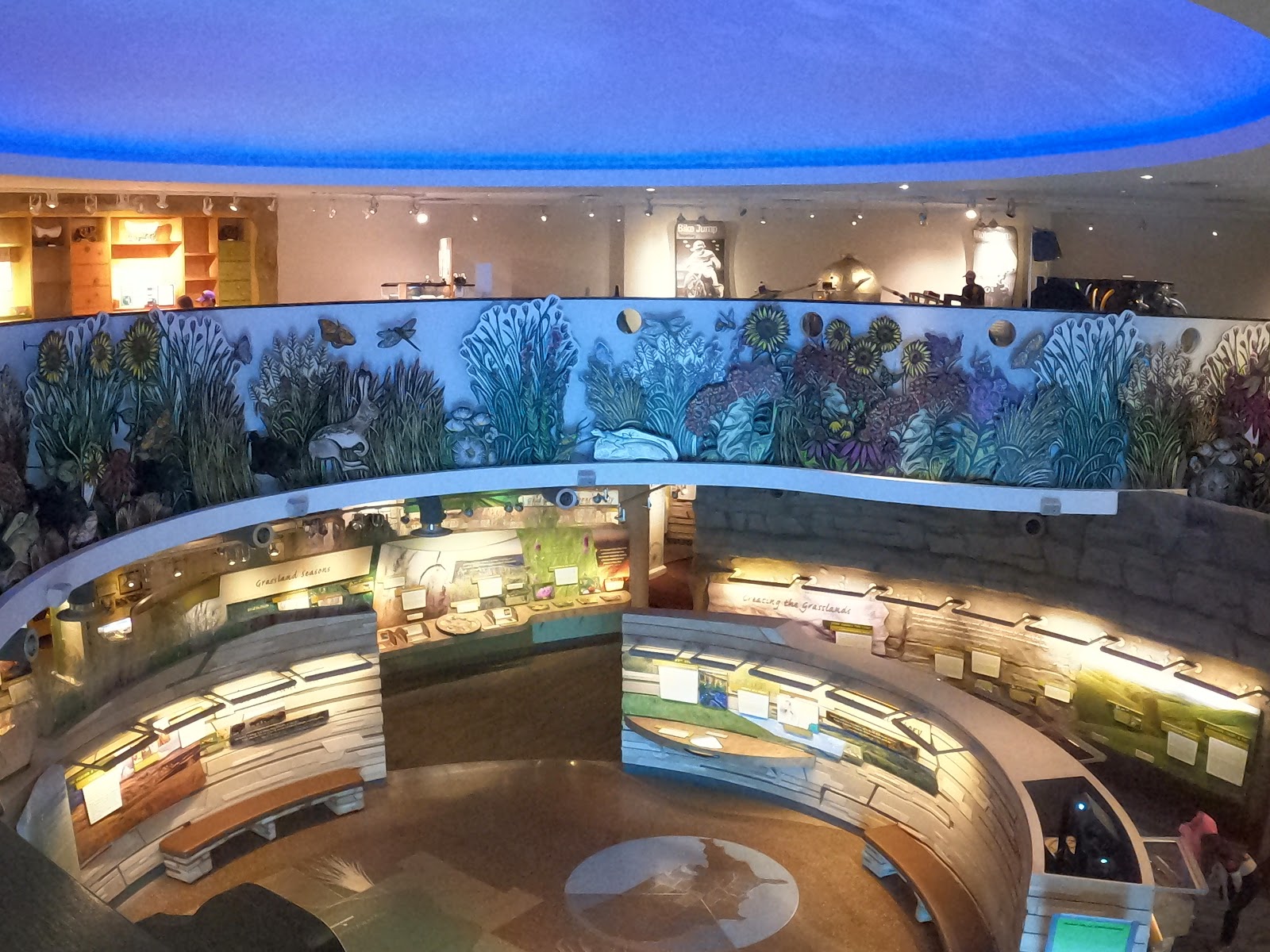
Away from the glazing the building is a museum, and museum conditions apply. Galleries are lit at low levels with directional fittings aimed at exhibits, because light damages objects cumulatively and irreversibly — which means the ambient is well below a normal interior, the light arrives in bright pools with darkness between, and a subject standing between two pools is unlit while the case beside them is correct.
Used deliberately that is the steepest free separation any venue type offers: a subject in a pool of directed light with an unlit gallery behind them is separated completely with no equipment. Two minutes of walking to note where the pools fall determines every position worth using.
Display glass behaves like a mirror pointed wherever the camera is, so the fifteen-second check applies — look at every glazed surface in the frame from the camera position and place the source where none of them shows it.
And the threshold between a dark gallery and the bright glazed space is the building’s other good frame: standing two or three metres inside the gallery facing out gives a very large soft source in front and total darkness behind, which needs nothing added.
Outside, Manhattan sits in the Flint Hills at the confluence of two rivers, with limestone bluffs above the valley — so there is genuine relief here rather than the flat prairie people expect, and elevation is available.
The Flint Hills is the largest remaining expanse of tallgrass prairie in North America, and it survived because layers of flint-bearing limestone close to the surface made the hills unploughable: they were grazed rather than cultivated and the original grassland remained.
Tallgrass is the ground and it changes through the year more dramatically than almost any surface. Big bluestem and Indian grass grow through summer and by late August stand well above head height, making them foreground and background at once — a couple in tallgrass is enclosed by it rather than posed in front of it. In autumn it turns bronze and russet and holds that standing through winter, so the prairie has warm colour in January when nothing else does, and bronze grass against pale limestone is the region’s own colour pairing.
Spring brings the burning, worth knowing before a date is chosen: ranchers burn the grassland in late March and April, giving blackened ground, smoke on the horizon, and then an intense green flush within a few weeks. Late April into May, when that green is vivid and even, is the strongest outdoor window of the year.
Wind is the constant and there is little to break it on open ground — which matches the handheld configuration a museum requires anyway. Summer is hot and humid, with severe thunderstorms a real possibility from spring onward and a body carried from a climate-controlled museum into July air fogging on every surface at once, so a bag opened twenty minutes early is the fix. Winter is cold with a low sun that rakes all day, and snow that turns the ground into a reflector and brightens every window in the building.
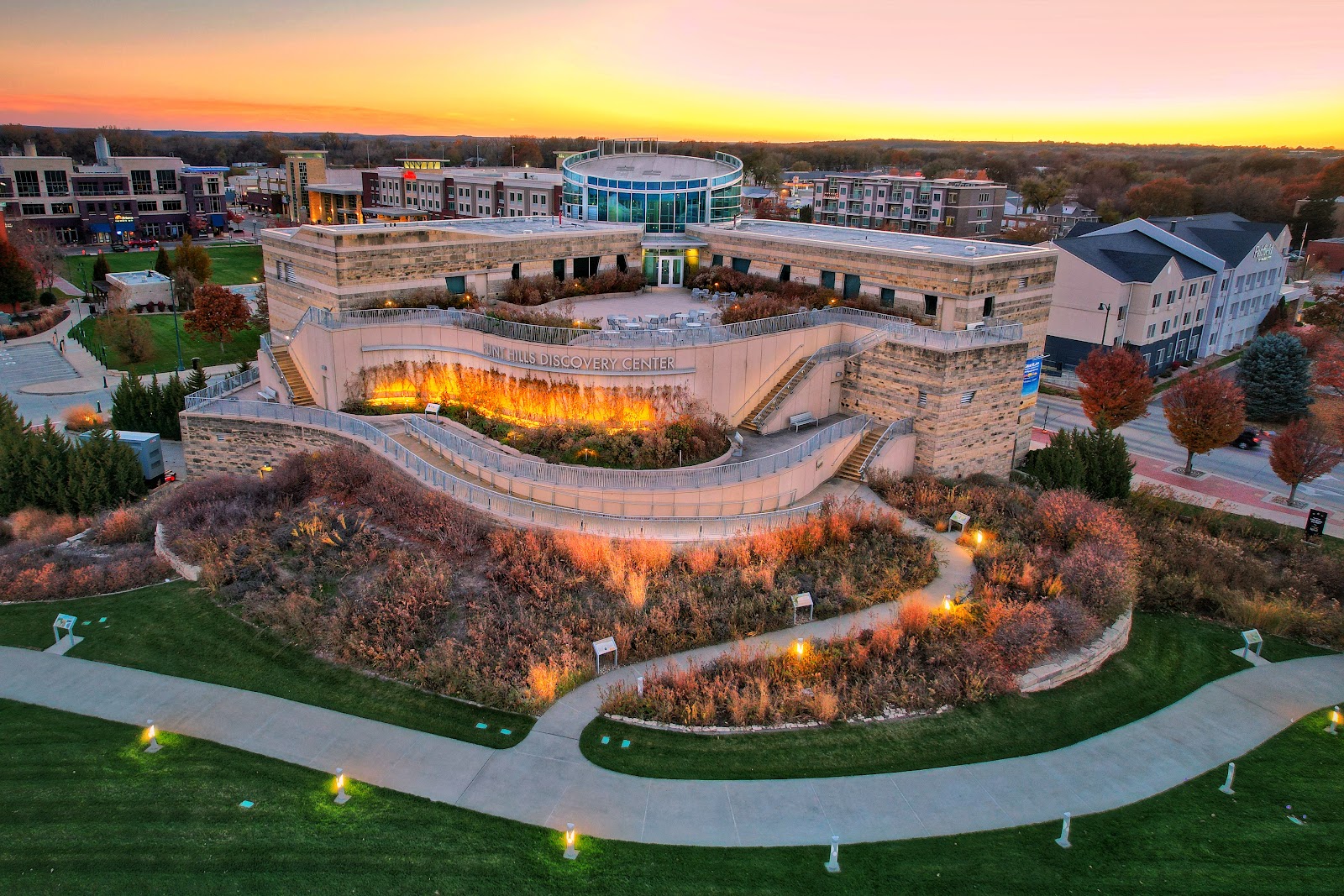
More frames from The Flint Hills Discovery Center
The Flint Hills Discovery Center wedding photography: common questions
What is the frame?
A couple at full-height glazing with the Flint Hills sky legible beyond, both faces and sky correctly exposed rather than one sacrificed for the other.
Which glazing should be used?
The elevation that is shaded at the hour. A north-facing wall is shaded all year at this latitude and is the most reliable in the building.
How far back should a group stand?
Three metres. At one metre a row parallel to glazing has a two-stop spread across it; at three it is even.
How is the exposure difference handled?
Choose one of three: expose for the faces and let the sky go, expose for the sky and light the faces, or wait for the crossing. Never compromise between them.
What is the best frame in the building?
The crossing, twenty-five to forty minutes after sunset, when the exterior falls to the interior’s brightness and one exposure holds everything with no equipment.
What applies in the galleries?
Museum conditions: low directional lighting in pools, display glass that reflects, and restrictions on flash and stands that protect irreplaceable objects.
More Kansas venue guides
We are writing a photographer’s guide to every venue we would happily shoot in Kansas. Here are three more, plus the full index:
- The Kansas State University Alumni Center, Manhattan: The One Decision That Governs Everything
- The Manhattan Arts Center, Manhattan: A Walk Through the Building
- The Barn at the Ranch, Goddard: Field Notes
Planning a wedding at The Flint Hills Discovery Center?
Six decisions, or wait for the crossing. Tell us your date.