 The Riverside Hotel, Boise: The Light Through a Day
Sawtooth Lodge, Lowman: What It Suits and What It Does Not
Steam is the site’s subject and its problem. It is also unlike anything else in this guide.
A hot spring lodge in a forested Idaho canyon is a particular proposition, and the honest way to describe it is by what its two unusual features suit and do not suit.
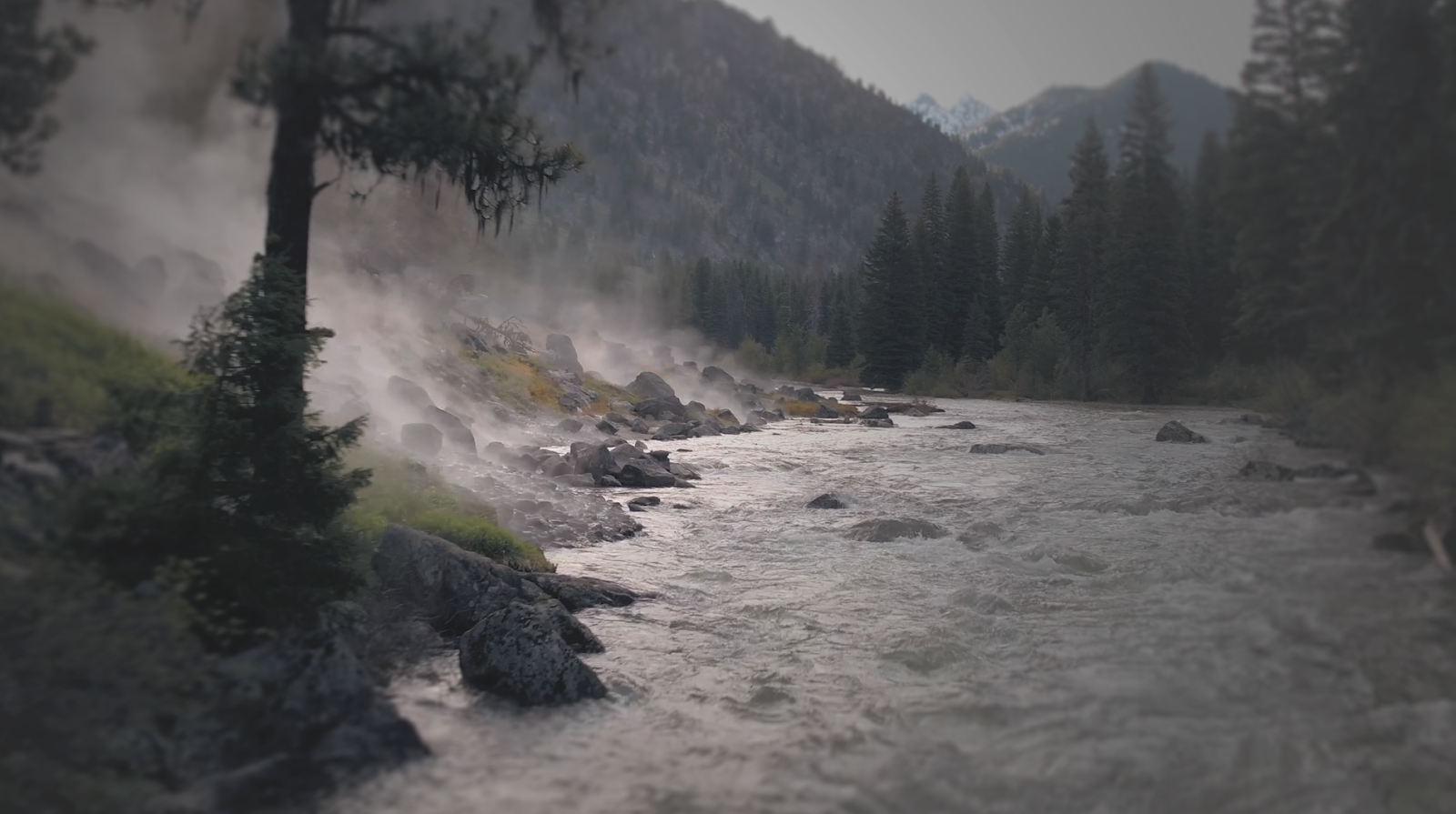
The first is the steam. Geothermal water in a cool mountain canyon produces visible vapour, and how much of it there is depends entirely on the temperature difference between the water and the air — which means there is almost none on a warm July afternoon and a great deal on a cold October morning.
Steam is genuinely unlike anything else in this guide. It scatters light, which makes shafts visible in the air; it separates near from far, which gives depth; it moves constantly, which means every frame is different; and it renders everything behind it in soft tonal layers. Used deliberately it is spectacular.
It also causes three specific problems. It condenses on a lens within seconds at close range. It is unpredictable in position and density, which means a frame composed carefully may be obscured a moment later. And it removes contrast, which means anything behind it loses detail.
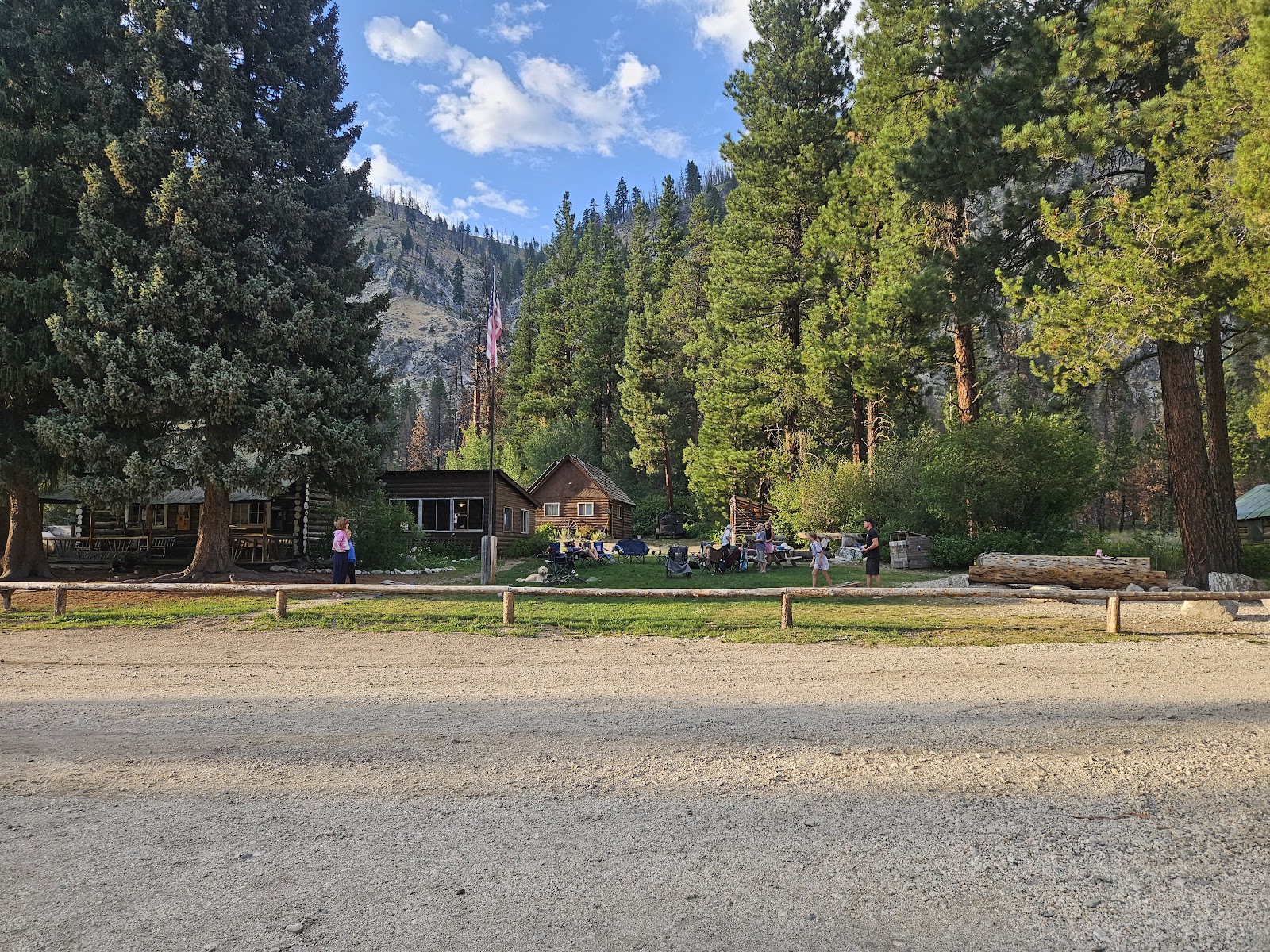
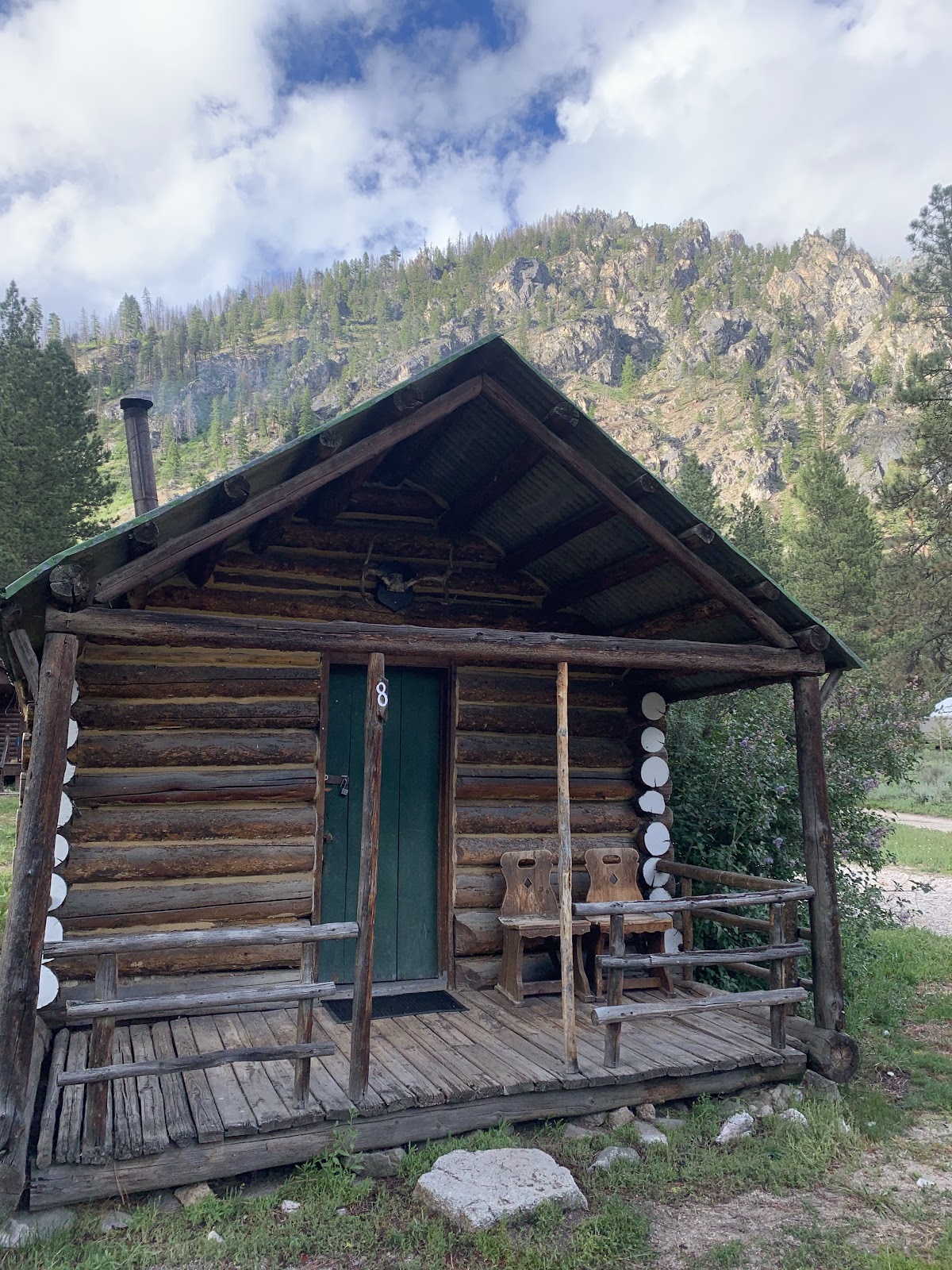
The second unusual feature is the canyon. A deep forested canyon on the Payette drainage means walls that block the sun for hours at each end of the day — so the direct-sun day on the floor is considerably shorter than the day above it — and granite outcrops, ponderosa pine and a fast river.
We have not photographed a wedding at the Sawtooth Lodge; hot spring lodges in Idaho canyons behave consistently. Which spaces are included, whether the lodge operates seasonally, what access there is to the pools and the river and where the limits are, the covered alternative, and what the road conditions are on the date are questions for their team — and seasonal operation and road access are both worth confirming, because mountain roads here close.
Sawtooth Lodge at a glance
| Where | A hot spring lodge in a forested canyon near Lowman, Idaho |
| The steam | Depends on the temperature difference: none in July, a great deal in October |
| Suits | Atmosphere, shafts, depth, and a subject nothing else in this guide has |
| Does not suit | Reliable wide views, close work near the pools, or a hot summer afternoon |
| Ask first | Seasonal operation, road conditions, pool and river access, covered alternative |
What it suits
It suits atmosphere above everything, and the steam is what supplies it.
Vapour in air does three things that no filter or lighting decision reproduces. It makes light visible: a shaft through steam is a solid object in the frame rather than a bright patch on the ground, which is the single most dramatic effect available at any venue in this guide. It separates: near objects read dark and sharp against a paler softer distance, which gives depth a clear day does not. And it renders everything in tonal layers rather than in detail, which suits a longer lens and a compressed composition.
The frame that uses it best has the light behind or beside the steam and the camera looking toward it, with a subject at the near edge — dark and sharp against the pale mass. Exposed for the steam rather than for the faces, with the faces lifted by a close warm-gelled source, that is the strongest frame the property gives.
Close matters because steam scatters light rather than reflecting it usefully: a source at two metres needs roughly a quarter of the output of the same source at four, and the light aimed through vapour is partly lost in it.
It suits the canyon’s own early shade. Because the walls block the sun for hours at each end of the day, the canyon floor is in soft even light for a long period — which in a climate with hard high-altitude sun is genuinely useful. That shade is not flat: it is lit by the strip of sky above and by whatever wall is catching light, which means it arrives from above and from one side and a subject positioned to face the lit wall gets directional soft light.
It suits the interval frame, which in a canyon is dramatic because the walls are close. When the floor has gone into shade and the upper walls and rims are still lit, a subject stands in soft even light with brilliantly lit granite and ponderosa above and behind them — and because the walls are steep, that lit ground fills a frame.
That is made by exposing for the lit wall and lifting the faces with a close warm-gelled source, and it runs for twenty or thirty minutes.
It suits granite, which is the canyon’s material and a good one. Granite is neutral in colour and coarse in texture, which means it takes raking light beautifully — every crystal face and fracture shows when the light crosses it — and in shade it is a mid to dark tone that holds a subject without competing.
Wet granite is better still: it darkens and saturates, which makes it a genuinely dark background, and near a hot spring or a river it is permanently damp.
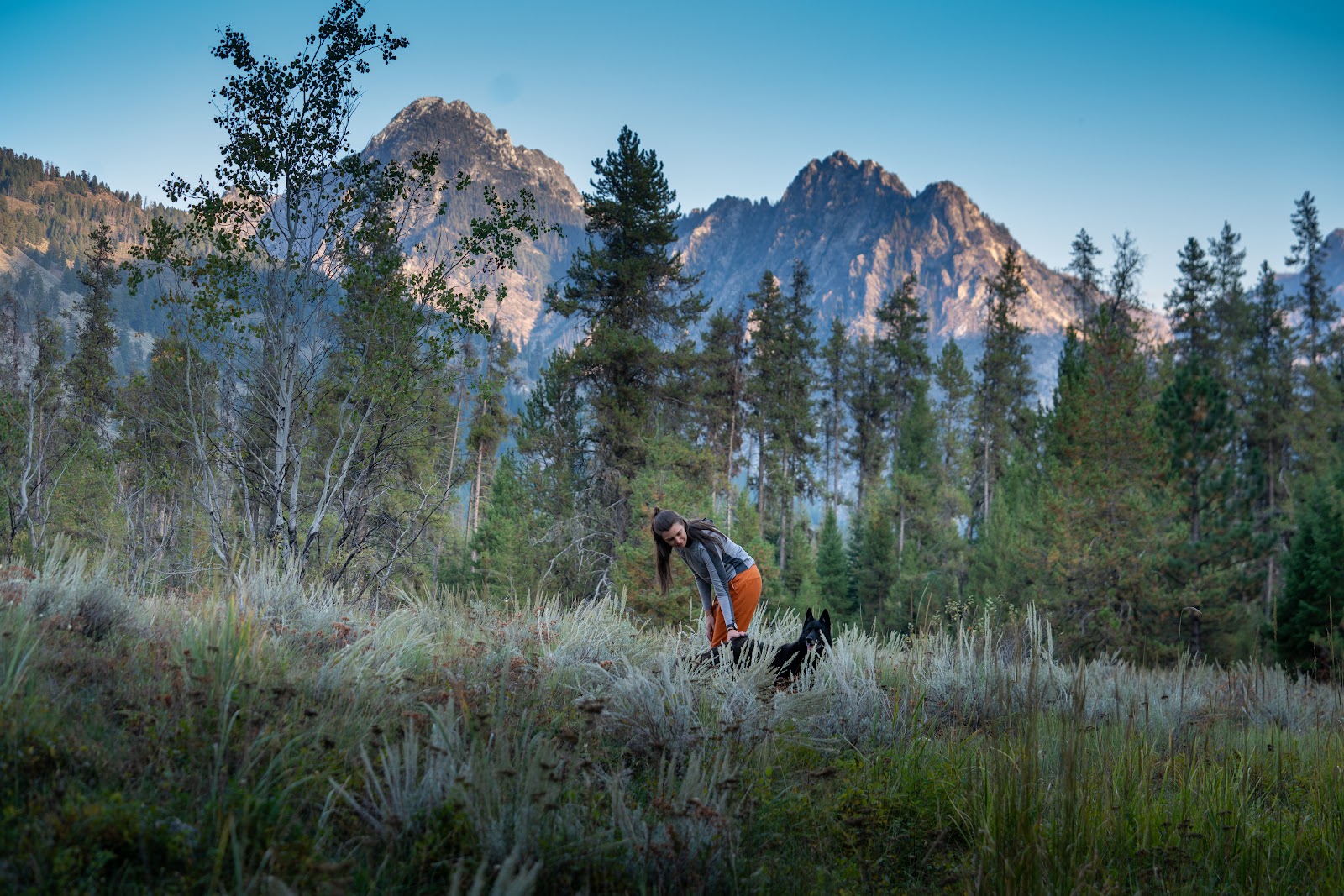
It suits ponderosa pine as a background rather than as shade. Mature ponderosa has a massive trunk with distinctive orange-brown plated bark, and a stand of them is a strong repeating vertical pattern dark enough to give two or three stops of separation. Compressed on a longer lens it reads as inland western canyon country and nowhere else.
And it suits the shoulder seasons, which is where the steam and the light coincide. Autumn and spring give cold air over hot water, which produces the vapour, and a lower sun, which produces the shafts — and those two together are what the site is for.
What it does not suit
It does not suit reliable wide views, and that is the honest limitation of a canyon.
There is no horizon, no distant landscape and no elevated frame: every background is the canyon wall or the forest at more or less the same distance. That is not a fault, but it is a mismatch if the couple booked a mountain venue expecting the peaks — and the Sawtooths, despite the lodge’s name, are not visible from a canyon floor.
The answer is contrast rather than distance: a steam frame, a granite frame, a river frame, a canopy-edge frame and a close detail frame are five completely different pictures within a hundred metres, where five wide canyon views are the same picture five times.
It does not suit close work near the pools, and this is the practical problem the steam causes. Vapour condenses on a lens within seconds at close range, which means a front element fogs, wipes clear, and fogs again — and there is no equipment solution beyond working further back, keeping a cloth in hand and accepting that the closest frames will be the hardest to get.
A warmed lens fogs less than a cold one, which means bringing a body out of a warm room into cold air near a pool is the worst case and letting it acclimatise first is worth the wait.
It also means the steam frames are made at a distance rather than in the middle of the vapour: a longer lens from ten metres back produces a cleaner frame than a wide lens from two, and it keeps the glass dry.
It does not suit a hot summer afternoon, and the reason is twofold. The steam largely disappears when the air is warm, which removes the site’s distinctive subject — and a canyon at low-to-middle elevation in an Idaho July is hot, with the direct-sun window falling in the middle of the day when the heat is worst.
So a July wedding here has the canyon’s shade, the river, the forest and the granite, and very little steam. That is still a good site and it is not the site the photographs suggest, which is worth saying in advance.
Two further limitations. The road is the first: mountain roads on this drainage are subject to winter closure and to damage, which makes access a definite question rather than an assumption for anything outside the summer season — and whether the lodge operates at all in winter is the related question.
And the light levels in a forested canyon are low. Ponderosa is open enough that it does not create the four-or-five-stop darkness of a coastal rainforest, but a canyon floor in shade under conifer is still dim — which means fast lenses matter and a tripod earns its place for anything static.
The metering trap is severe here and it runs in every direction: shaded granite and dark conifer make a meter overexpose a face by a couple of stops, lit granite and white water fool it the other way, and steam confuses it entirely because it is bright and low in contrast at once. Manual, metered on skin, is the only workable approach.
The white balance needs the same treatment. Canyon shade lit by a strip of sky is cool; sunlit granite bounces neutral; ponderosa filters a warm green; and steam is neutral but scatters whatever colour is passing through it. A custom setting made on a face in position handles it and a preset does not.
And the river is the last constraint. A fast cold Idaho river is loud enough to compete with unamplified vows, and access to it is a safety matter for the venue’s limits rather than anyone’s judgement on the day.
- Steam depends on the temperature difference — none in July, plenty in October
- Expose for the steam and lift the faces close and gelled
- Work steam from a distance on a longer lens; close range fogs the glass
- No distant views here; get variety from contrast rather than walking further
- Manual metering throughout — steam is bright and low in contrast at once
The canyon year
A forested Idaho canyon has a long snowy winter, a short intense summer and two excellent shoulder seasons — and at a hot spring the shoulder seasons are the reason to come.
Winter is long and snowy on this drainage, and the first question is access: mountain roads here close or become difficult, and whether the lodge operates at all in winter is a definite question rather than an assumption.
Where it is available, winter is the site’s most spectacular condition. Cold air over hot water produces the maximum steam of the year — dense, constant vapour rising through snow-covered granite and conifer — which combined with a very low sun gives visible shafts through it for most of the short day.
The December sun at this latitude reaches only about twenty-two degrees above the horizon, and in a deep canyon that means large parts of the floor receive no direct sun at all. That is soft even light everywhere, with steam and snow, which is as distinctive as anything in this guide.
Snow is the best natural fill available outdoors and against near-black conifer and wet dark granite it gives the widest brightness range the site offers — expose for the snow and let the rest go black, overexposing deliberately relative to the meter, which snow fools by about two stops. Snow beside steaming water is a specific and unusual condition worth planning around.
The costs are cold, a short day, batteries draining faster, the lens-fogging problem at its worst, and access that depends entirely on conditions.
Spring is long and wet on this drainage. Snowmelt runs the river high and hard through May and June, which is when it is most dramatic and least approachable — and the steam is still good because the air remains cold. Late spring is when the canyon greens and the forest is at its most luminous.
Summer is the busiest season and the one with the least steam. Warm air removes most of the vapour, the river drops and clears, the canyon is hot in the middle of the day, and the direct-sun window falls when the heat is worst. The long days help: light until past nine at this latitude means the good hours are the early and late ones and there are plenty of both.
The honest late-summer note is wildfire smoke. Idaho’s fire season runs from roughly July into September and a canyon traps smoke because the air does not move — which can fill the whole valley for days, turn the sun orange, flatten contrast and, in this case, remove the shafts entirely because scattered light no longer arrives in beams.
That is the one condition in which the site’s best frame is unavailable, and it cannot be planned for.
Late September into October is the best window of the year and it is the answer for anyone with a movable date. The air turns cold while the water stays hot, which brings the steam back in quantity; the sun is low enough to make shafts through it; the smoke risk passes; the air clears; and the deciduous element turns.
That deciduous element is cottonwood, aspen and willow along the river, which turn a clean gold in October — and gold cottonwood against dark ponderosa, wet granite and rising steam is the strongest thing this canyon produces. The window runs roughly through October.
November brings cold rain, the first snow and the closing of the season, and by December the canyon is in winter — which, if the lodge is open, is when the steam is at its absolute best.
More frames from Sawtooth Lodge
Sawtooth Lodge wedding photography: common questions
What decides how much steam there is?
The temperature difference between the hot water and the air. There is almost none on a warm July afternoon and a great deal on a cold October morning.
How should steam be photographed?
With the light behind or beside it and the camera looking toward it, exposed for the steam with the faces lifted by a close warm-gelled source.
What is the practical problem with it?
It condenses on a lens within seconds at close range. Work from further back on a longer lens and let a cold body acclimatise before approaching.
What does the site not suit?
Reliable wide views — a canyon has no horizon and the Sawtooths are not visible from the floor — and a hot summer afternoon, when the steam disappears.
Where is the shade?
The canyon’s own walls give hours of soft even shade at each end of the day. Ponderosa dapples badly and is a background rather than a shade.
When is the site at its best?
October, when cold air brings the steam back, a low sun makes shafts through it, and the cottonwood along the river turns gold.
More Idaho venue guides
We are writing a photographer’s guide to every venue we would happily shoot in Idaho. Here are three more, plus the full index:
- Schweitzer Mountain Resort, Sandpoint: The One Decision That Governs Everything
- Shore Lodge, McCall: The Light Through the Day
- Silver Creek Lodge, Pine: Field Notes
Planning a wedding at Sawtooth Lodge?
Steam, granite and a short sun day. Tell us your date and we will time it.