 The Riverside Hotel, Boise: The Light Through a Day
Schweitzer Mountain Resort, Sandpoint: The One Decision That Governs Everything
Summit or village. The lift’s last download decides more than the sunset does.
At a ski mountain there is one decision that governs the photographic day, and it is whether the wedding happens at the summit or at the village base.
Everything follows from it: what the view is, what the light does, how much weather risk the wedding carries, how many guests can realistically get there, and what the running order has to look like.
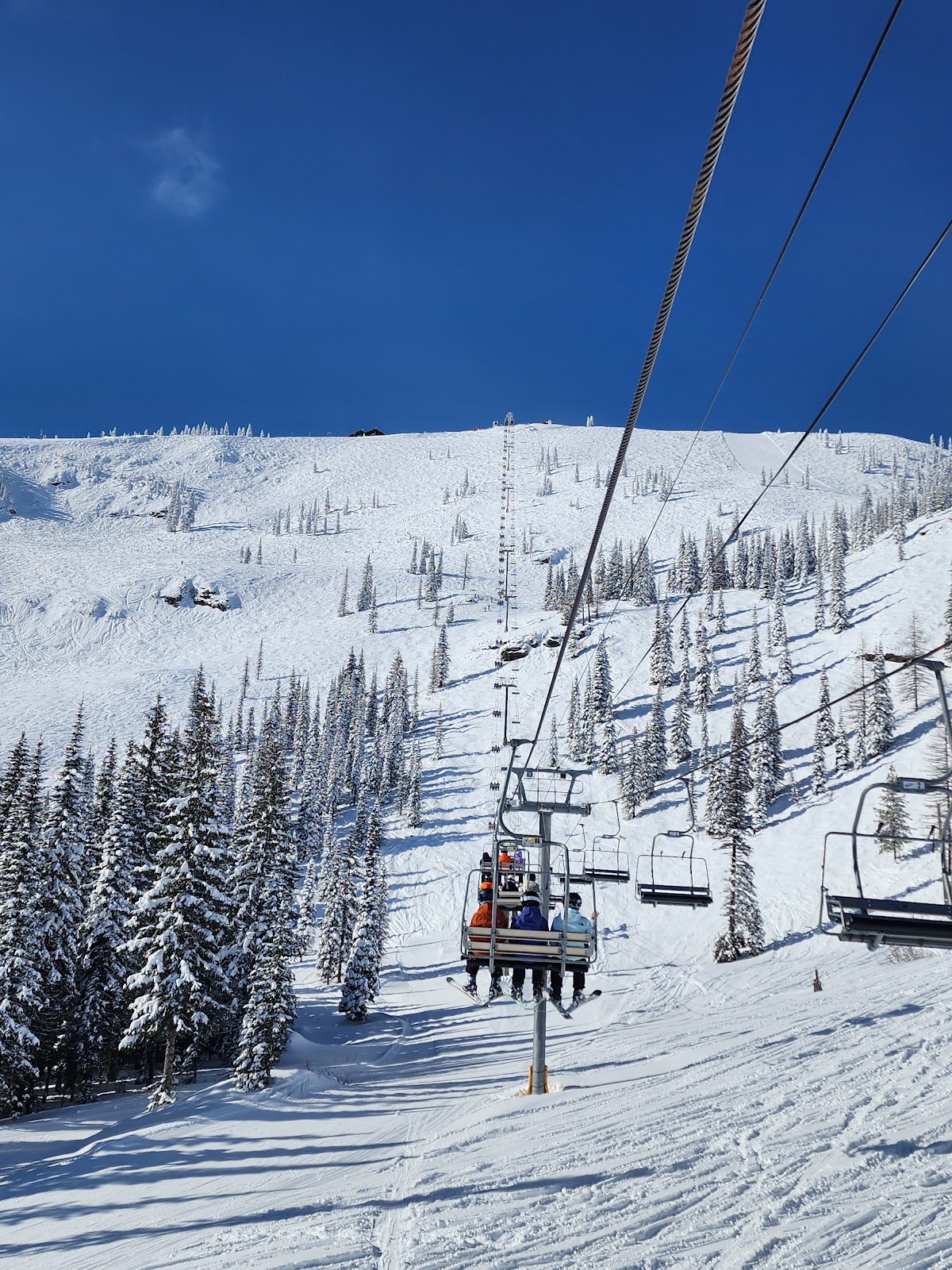
The reason it governs so much is elevation combined with machinery. A summit here is a couple of thousand feet above the village, which changes the temperature, the wind, the weather exposure and the vegetation — and reaching it depends on a lift that runs to a schedule set for operations rather than for photography.
That last point is the one that most often goes wrong. If the last downloading time is at five, then the last frame at the summit is before five regardless of what the light is doing at eight — and at a site whose best light in a north Idaho July is at half past eight, that mismatch can cost the best frames of the day.
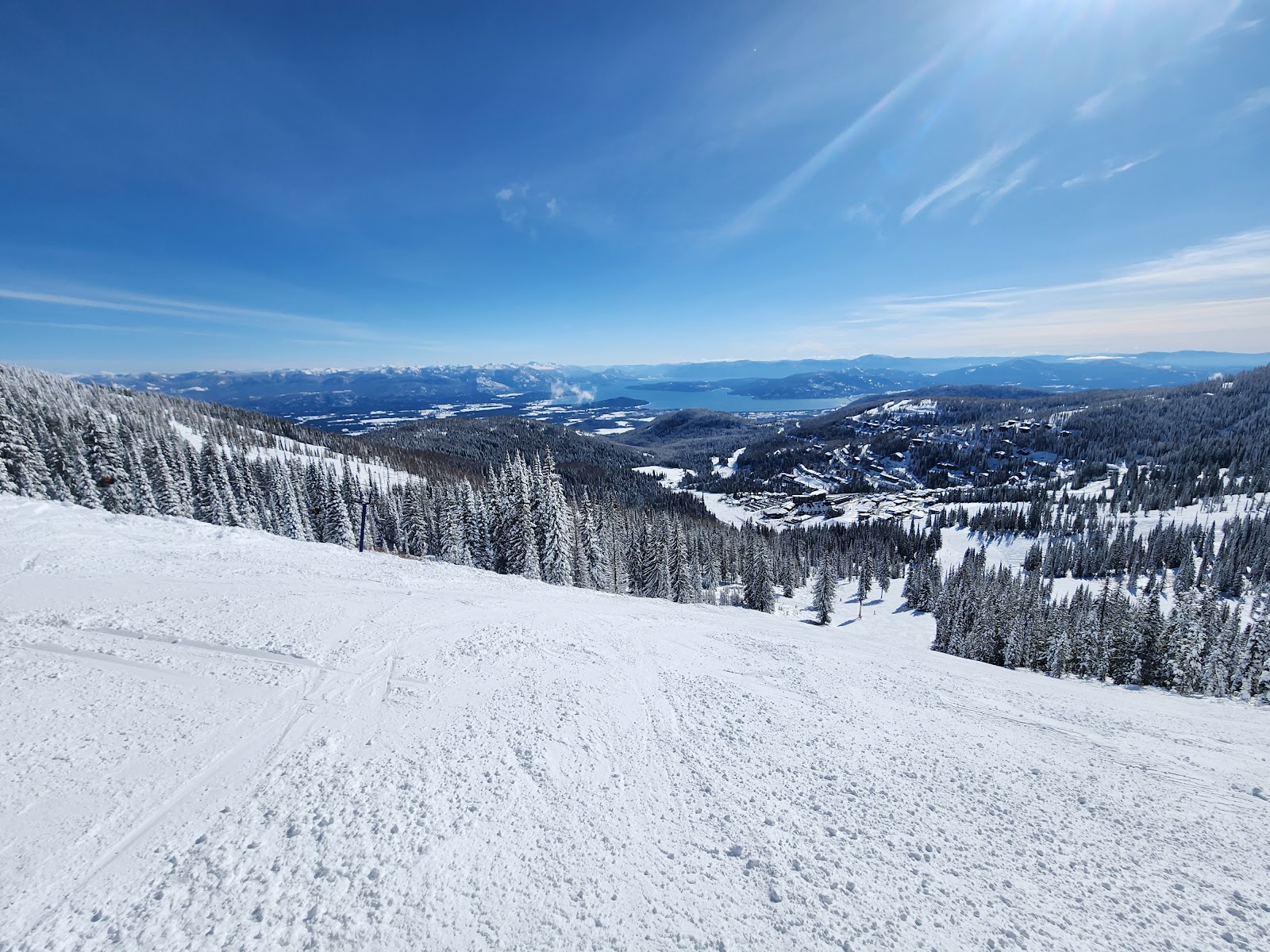
What the summit offers in return is the view, and at this mountain it is a genuine one: Lake Pend Oreille below, which is one of the deepest lakes in the country, with the Selkirk and Cabinet ranges beyond it and, on a clear day, a great deal of country in three directions.
The fourth element is the climate, and north Idaho is unlike the rest of the state: an inland maritime pattern with heavy winter snowfall, damper summers and forests of western red cedar, hemlock, larch and Douglas fir rather than the dry lodgepole country further south.
We have not photographed a wedding at Schweitzer; ski mountain venues behave consistently. Whether the lift runs in summer and on what schedule, what the last downloading time is, which spaces are included at each elevation, the covered alternative at both, and how many guests the lift can move are questions for their team — and those answers, rather than anything here, decide which side of this decision a wedding lands on.
Schweitzer Mountain Resort at a glance
| Where | A ski mountain above Lake Pend Oreille at Sandpoint, north Idaho |
| The decision | Summit or village base — two different elevations and two different days |
| The constraint | The lift’s schedule, and especially the last download time |
| The summit | A genuine view; no shade, no shelter, and a hard deadline |
| Ask first | Summer lift schedule, last download, spaces and cover at both elevations |
If it is the summit
The summit gives the view and takes nearly everything else, and both halves are worth stating plainly.
What it gives is distance in several directions. Lake Pend Oreille is large and deep, which means it reads as a substantial body of water rather than a pond, and the ranges beyond it stack into layers — which is exactly what a long lens is for. Compression brings the far ridges forward and squeezes out the intervening ground, and in the clear air that follows a front it holds real detail.
A wide lens does the opposite: it renders the lake as a thin pale band above a great deal of bare ski-run grass, which is the standard mistake at every summit venue.
The exposure for the view goes on the distance rather than on skin, with the faces lifted by a close warm-gelled source — because metering on faces gives a white sky and a washed-out landscape. Close matters because nothing at a summit bounces: a source at two metres needs roughly a quarter of the output of the same source at four.
What the summit takes away is shade, shelter and the schedule.
There is no shade. Near the top of a north Idaho mountain the trees are stunted and sparse or absent, and the ski runs are cleared — which means a midday summit ceremony in clear weather is a squinting congregation with no alternative. The elevation makes it worse, because thinner air means harder sun and deeper shadow.
There is no shelter either. An exposed summit in a mountain weather system is a poor place to be under a building storm, and afternoon convection is a real feature of these mountains in summer. The decision to move a party down belongs to whoever is responsible for them rather than to whoever wants one more frame, and it is worth agreeing in advance what triggers it.
And the schedule is set by the lift rather than by the sun. Knowing the exact last download time before the ceremony time is fixed is the single most important piece of planning at a summit wedding — because at this latitude in July the best light is at half past eight and a five o’clock last chair makes it unreachable.
The guest count is the fourth constraint: how many people a lift can move, and how long that takes, shapes the whole shape of the day. Ninety guests at a handful per chair is a long operation.
Cold and wind are the last of it. A summit at this elevation is cold even in July once the sun drops, and wind on an exposed ridge adds chill on top — which means a party in formal clothes needs coats, and a lightstand is a liability rather than a tool. Handheld or bracketed sources are the working configuration.
Where the summit does work, the frame worth planning for is the interval: the lake and the valleys below already in shade while the summit and the ranges beyond are still lit. That runs for twenty or thirty minutes and it is the best thing the elevation gives — made by exposing for the lit ground and lifting the faces with a close warm-gelled source.
If it is the village
The village base gives up the wide view and gets back everything the summit removes, which for most weddings is the better trade.
It has buildings, which means shade at any hour, a named covered alternative with real capacity, and interiors that work in weather. Any porch, deck, colonnade or overhang is the reliable position: a solid roof blocks the overhead component, restricts the light to a horizontal band that models a face properly, bounces off the decking to fill, and cannot dapple. Two or three metres in from the open edge, at any hour in any weather.
It has a schedule that bends. Without a lift deadline the day can run to the light rather than to an operations timetable — which at this latitude in summer means the last hour and the long twilight after it are genuinely available, and those are better than most people expect.
It has real forest, and north Idaho’s forest is the best in this state for a photographer. This is inland maritime country, which means western red cedar, western hemlock, Douglas fir, grand fir and western larch — dense, dark, damp-loving conifer rather than the sparse dry lodgepole of central Idaho.
That density is the point. Cedar and hemlock block almost everything, which means the canopy edge is the most reliable outdoor position on the property: a metre or two inside at the margin of an opening gives soft directional light in front and near-darkness behind, three or four stops of free separation and no equipment.
The metering trap that goes with it is the standard one and it is pronounced: a meter looking at dark cedar overexposes a face by a couple of stops, and the bright cleared run or the lake beyond fools it hard the other way. Manual, metered on skin, reset at every transition — with a custom white balance in each place, because damp cedar forest bounces green and the open ground does not.
Western larch is the region’s distinctive tree and it is worth knowing about, because it does something no other conifer here does: it is deciduous. Larch needles turn a clean intense gold in late October and drop — which means a north Idaho forest has a conifer autumn, a gold and near-black landscape that exists nowhere in the dry lodgepole country to the south.
The village also keeps the option of both, which is the answer for a good many weddings: ceremony and reception at the base where the shelter, the space and the schedule are, and a short deliberate trip up the lift for twenty minutes of portraits in the view. That takes the elevation on only where it pays, and it is worth proposing whenever the decision is genuinely open.
What the village gives up is the distance. From the base the mountain is above and foreshortened, and the ski infrastructure — lift towers, cables, snowmaking and cleared runs — is part of the view rather than out of it. Either those are composed out with a longer lens and closer framing, or they are accepted as what the place is.
Accepting them is more honest and frequently better: a cleared run climbing out of frame is a strong graphic line, and a lift tower against a cloud is unmistakably of a mountain resort. Pretending otherwise produces pictures that could be anywhere.
Indoors, a mountain lodge here is timber and it absorbs, which means the ambient is a stop or two below what the eye estimates and the background behind a subject drops away for free. A subject a metre from a window turned about forty-five degrees to it gets horizontal light with steep fall-off, room lights off, custom white balance on a face — and a window facing snow delivers very bright cool light, which makes a winter interior better lit than a summer one.
- Know the last download time before the ceremony time is set
- Summit: expose for the distance and lift the faces close and gelled
- Longer lens at the summit; a wide one loses the lake entirely
- Village: cedar and hemlock canopy edges are the most reliable position here
- Ceremony at the base and twenty minutes up the lift is usually the answer
The north Idaho year
North Idaho has an inland maritime climate: wetter and milder than the rest of the state, with heavy winter snowfall in the mountains and damper summers than the dry country to the south.
Winter is the mountain’s own season and the snowfall here is substantial. The lifts run reliably, the summit is accessible, and snow turns everything into a reflector — filling the shadows a low sun carves, brightening every window in the village, and throwing light upward into every covered deck.
Snow is the best natural fill available outdoors and against near-black cedar and hemlock it gives the widest brightness range in this guide: expose for the snow and let the conifer go black, overexposing deliberately relative to the meter, which snow fools by about two stops.
The December sun at this latitude reaches only about eighteen degrees above the horizon, which is the lowest of any venue in this guide outside Alaska — which means the whole short day rakes rather than floods, removing any hard-light problem and modelling every surface. On the light alone winter is the easiest season here, and it is also when a summit trip is most operationally straightforward because the lifts are running for skiing anyway.
The costs are cold, wind chill on an exposed summit, batteries draining faster, a cold camera fogging when carried into a heated lodge, and a base area full of skiers.
Spring is long, wet and slow at this latitude and elevation. Snow lies well into May on the mountain, break-up is muddy and unattractive, and the summer lift operation has not begun — which means late spring is the weakest part of the year here and a wedding in May is a village proposition rather than a summit one.
June is when it opens and the forest is at its most luminous: cedar and hemlock at their greenest, understorey flowering, and the days very long at this latitude — light until well past nine, which means the good low light arrives late and lasts.
Mosquitoes are a genuine consideration in damp north Idaho forest in June and early July, less so on an exposed summit in a breeze.
July and August are the season and the most reliable weather. The honest late-summer note is wildfire smoke: the regional fire season runs from roughly July into September and smoke from fires anywhere in the northern Rockies or eastern Washington can fill a valley for days — which turns the sun orange, flattens contrast, removes the lake and mountain views entirely, and shifts everything warm in a way no white balance resolves.
That is the single biggest risk to a summer wedding here and it cannot be planned for, only acknowledged. It is a genuine reason to prefer late September or October to mid-August if the date is movable.
Late September into October is the best window of the year and north Idaho’s autumn is distinctive. Aspen and birch turn gold in late September, and then the western larch turns — a deciduous conifer that goes a clean intense gold through the second half of October, scattered through a dark evergreen forest.
That larch colour is unique in this guide: gold conifer against near-black cedar and hemlock, on a mountainside, with a deep blue lake below. Nothing else in these pages produces it, and the window is roughly the second half of October.
The caveat is that the summer lift operation frequently ends before the larch turns, which can close the summit option exactly when it is most worth having. That is a question with a definite answer and it is worth asking before an October date is set.
November brings the rain and the first snow, and by December the mountain is in winter.
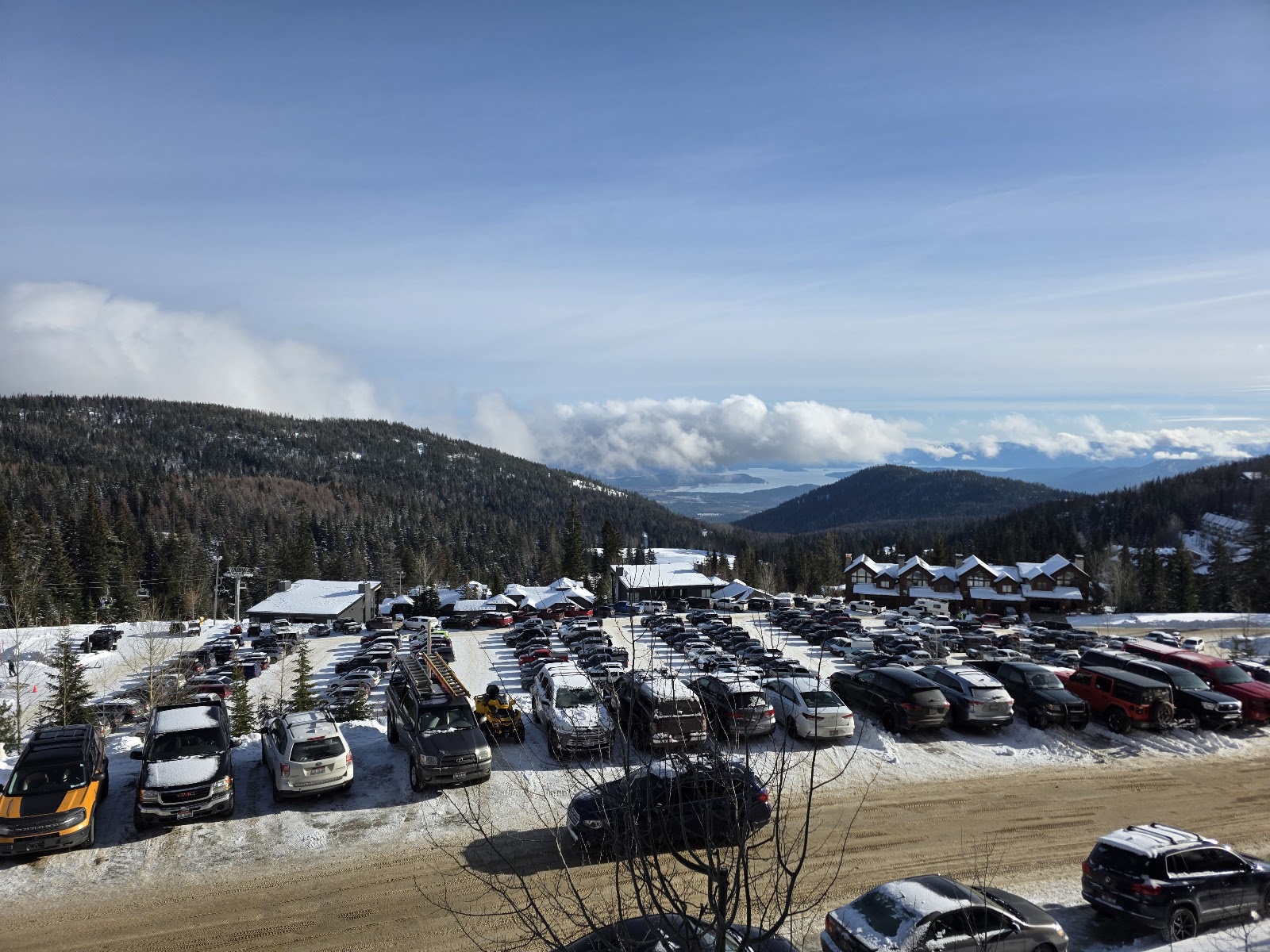
More frames from Schweitzer Mountain Resort
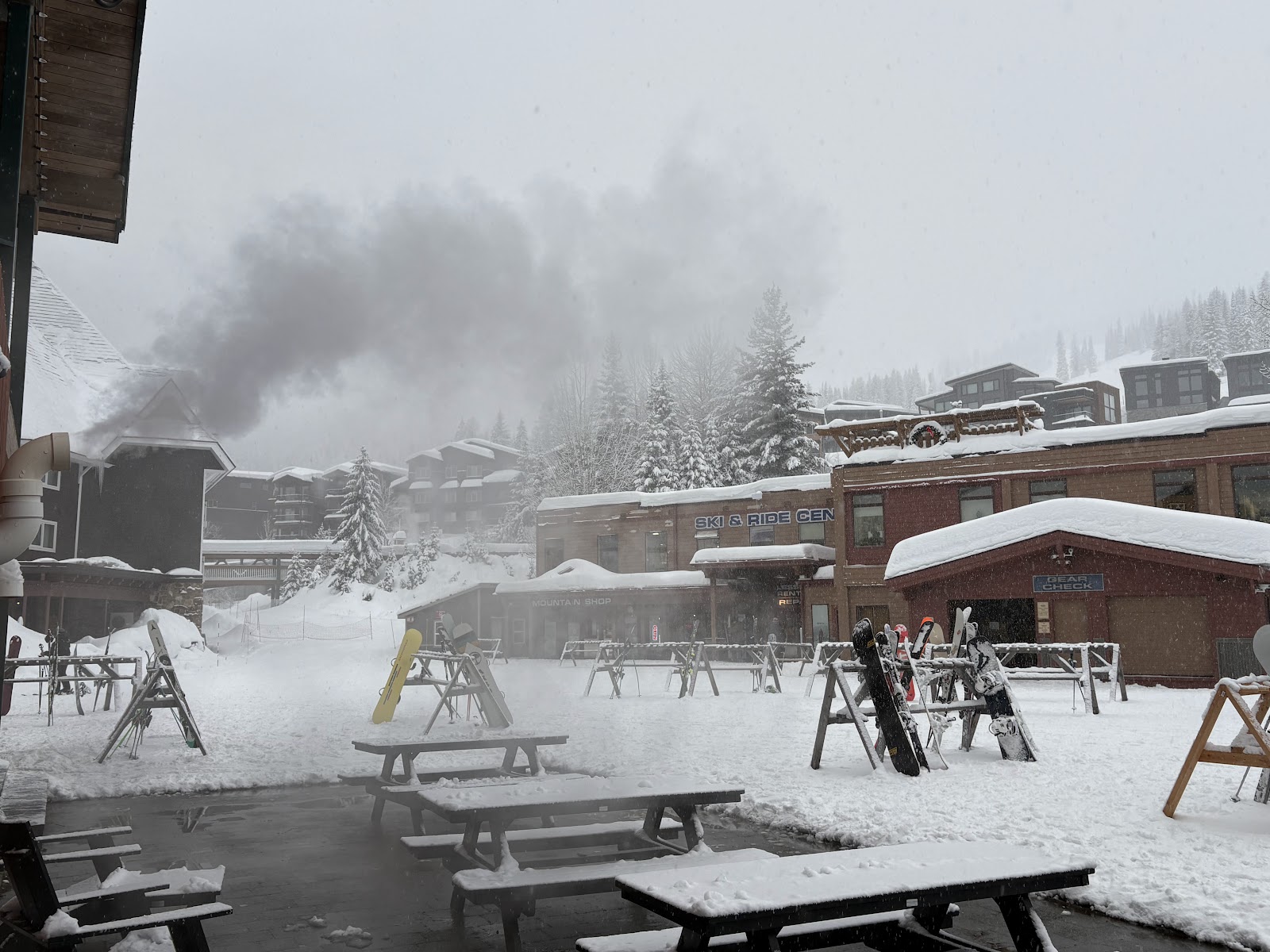
Schweitzer Mountain Resort wedding photography: common questions
What is the governing decision?
Summit or village base. It fixes the view, the light, the weather exposure, the guest count and the whole running order.
What is the single question to ask first?
The last downloading time. At a site whose best summer light is after eight in the evening, a five o’clock last chair decides everything.
Is there shade at the summit?
Effectively none — the trees are stunted or absent and the runs are cleared. It is a morning, evening or overcast proposition.
What does the village do better?
Shade at any hour, a real covered alternative, dense cedar and hemlock canopy edges, and a day that runs to the light rather than a timetable.
Can we do both?
Usually the best answer: ceremony and reception at the base, and a short deliberate trip up the lift for twenty minutes in the view.
When is the site at its best?
The second half of October, when western larch turns gold against near-black cedar above a deep blue lake — if the lift is still running.
More Idaho venue guides
We are writing a photographer’s guide to every venue we would happily shoot in Idaho. Here are three more, plus the full index:
- Shore Lodge, McCall: The Light Through the Day
- Silver Creek Lodge, Pine: Field Notes
- Sun Valley Resort: The Site’s Own Logic
Planning a wedding at Schweitzer Mountain Resort?
Summit or village — decide it early. Tell us your date and the lift schedule.