 The Riverside Hotel, Boise: The Light Through a Day
Hidden Springs Ranch, Meridian: The Problem, and Four Ways Out
Dry air at elevation makes the sun harder than the thermometer implies. And there is nothing to stand under.
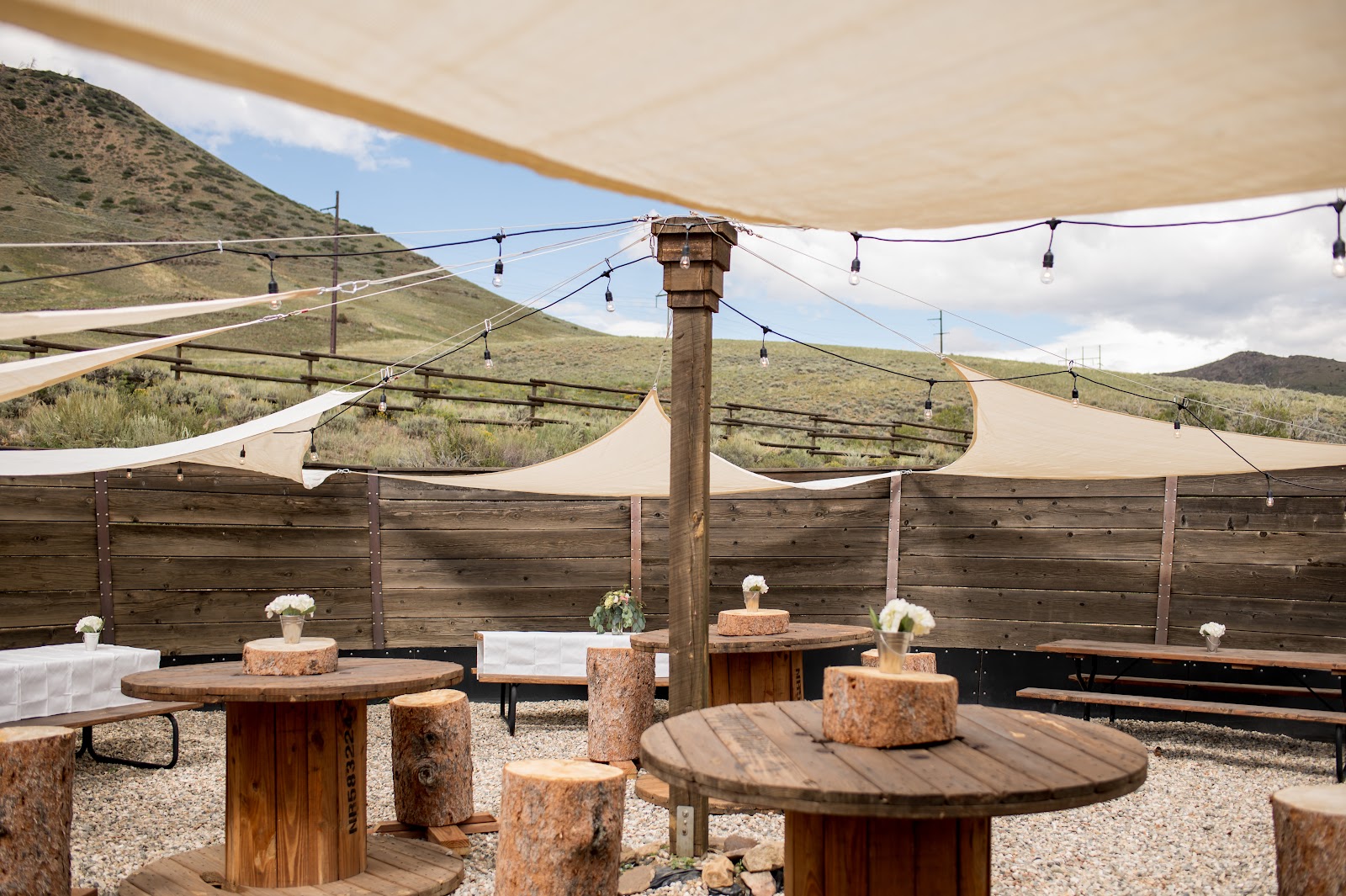
The problem at an irrigated ranch venue in the Boise valley is hard sun on open ground, and it is worse than the same problem in the Southeast for a reason that is atmospheric rather than seasonal.
The valley sits at around two and a half thousand feet in dry western air, which means there is less atmosphere overhead and far less moisture in it to diffuse the light. So the sun here is harder than the same temperature in humid country: shadows have sharper edges, the range between lit and shaded surfaces is wider, and a face half in sun at midday is unrecoverable rather than merely difficult.
The second half of the problem is that there is almost nothing to stand under. Irrigated valley farmland is open by design — fields, pasture, mown ground, planted borders — and the mature trees that would give shade grow only where water has been put for long enough. On a younger property there may be very little canopy at all.
Three difficulties follow. The middle of the day has a small number of usable positions rather than many. Any group photograph has to be placed by the light rather than by the background, because everyone in the same light is the requirement and dappled shade under young trees makes it impossible. And the exposure has to be handled deliberately, because the range between a pale sunlit surface and a shaded face is wider here than in damper country.
The fourth element is the compensation, and it is real: the days are long at this latitude, the evening light is exceptional in clear dry air, and the Boise foothills to the north are close enough to be a genuine background on a long lens.
There are four ways out. We have not photographed a wedding at Hidden Springs Ranch; irrigated valley ranch venues behave consistently. Which buildings and areas are included, whether anything is cooled, the covered alternative, what power is available at the field positions, and what the actual timings are are questions for their team.
Hidden Springs Ranch at a glance
| Where | An irrigated ranch in the Boise valley at Meridian, around 2,500 feet |
| The problem | Hard dry-air sun on open ground with very little mature shade |
| Way one | Move the day: the diurnal swing here is large and the evening is long |
| Way two | Use the buildings. Way three: bring the shade |
| Way four | Use the irrigated ground’s own bounce, which is generous |
Ways one and two: the clock, and the buildings
The first way out is to move the day, and the high desert gives more to that than a humid climate does because the diurnal swing is large.
Dry air at elevation holds very little heat overnight, which means a valley that reaches the nineties Fahrenheit in the afternoon commonly starts the morning thirty degrees cooler — and cools rapidly again after sunset. So a morning here is genuinely a different climate rather than a slightly cooler version of the afternoon, and an evening is comfortable in a way an Alabama evening is not.
The light follows the same pattern. The sun at this latitude in midsummer reaches about seventy degrees above the horizon at noon, which is high enough to be unusable for portraits — and the days are long enough that the light runs until past nine, which means the low warm light arrives late and lasts for a genuinely useful period.
So the strongest single planning move is to weight the day toward the ends of it: a morning ceremony, or an evening one with portraits at half past eight. At a venue with fixed timings that is a conversation to have in advance, because the best light of the day will otherwise fall after the reception has started.
The second way out is the buildings, and at a ranch venue they are the only dependable shade.
A shaded wall facing open sky is a soft directional source, and a shaded wall behind a subject is a dark background — which is free separation and available at any hour in any weather. A barn, shed or outbuilding in unpainted or dark-stained timber is better still, because timber absorbs: a subject two or three metres inside a large opening is lit horizontally from one side with a near-black background behind them.
That is the best frame on most ranch properties and it needs nothing brought. The catchlight settles the distance — low and broad on the opening side of each eye means the doorway is doing the work — and turning about forty-five degrees to the opening rather than facing it squarely gives the modelling.
Any porch, overhang, covered deck or breezeway is the other version: a solid roof restricting the light to a horizontal band, bouncing off the ground to fill from below, and incapable of dappling. Two or three metres in from the open edge.
The distinction that matters at a ranch is solid versus slatted. A pergola, an arbour or a gapped canopy is not shade but a striped dappling machine, and in dry clear air at elevation the stripes are harder-edged and more damaging than they would be in humid country. The test is universal: look at the face rather than the ground, and any hard edge on skin means move.
Where the property has mature trees, the canopy edge is the reliable position — a metre or two inside on the side facing open sky, soft directional light in front and a dark canopy behind. In the Boise valley those are likely to be the species that thrive with irrigation: maple, ash, linden, poplar and conifer. Deciduous canopy filters as much as it blocks and therefore dapples; conifer where it occurs is the real blocker.
And the metering reverses between the buildings and the open ground, which is the discipline of a ranch day: dark timber makes a meter overexpose a face by a couple of stops, and pale irrigated pasture, mown grass or bare ground makes it underexpose. Manual, metered on skin, reset at every transition.
Ways three and four: bringing the shade, and using the ground
The third way out is to bring the shade, and at an open venue in hard light it earns its weight.
A large held diffuser above and to one side of a subject turns hard overhead sun into soft directional light, which is the only way to make a midday portrait work on open ground. In dry clear air at elevation the improvement is more dramatic than it would be in humid country, because the light being modified is harder to begin with.
The practical constraint is wind, which in the Boise valley is a genuine factor on open ground: a panel is a sail and a stand is a liability, which means the honest version of this solution is a held diffuser, two people to hold it, and a willingness to abandon it when the wind makes it unsafe.
The added source for lifting faces is the other half. Against a bright background — a lit field, a lit foothill, a bright sky — the exposure goes on the background and the faces are lifted by a close source gelled warm to match. Close matters because open ground bounces some light but not enough to lift a backlit face: a source at two metres needs roughly a quarter of the output of the same source at four.
And the gel matters more at elevation in dry air than it does lower down, because the shade is lit by a deep blue sky and is markedly cool while the low sun is strongly warm — which means an ungelled source produces faces that read cold against a warm landscape.
The fourth way out is to use the ground, because irrigated valley ground bounces generously and that is genuinely useful in hard light.
Mown grass, pasture and pale bare soil all throw light upward into faces, which fills the shadows a high sun carves under eyes and chins. That is the one thing working in a photographer’s favour at midday on open ground, and used deliberately it means a subject standing in the shade of a building on open ground is lit from the front by whatever sky is visible and from below by the ground — close to a two-source arrangement arriving for nothing.
The cost is uplight under the chin, which something solid on one side corrects, and the diagnosis is to look at the chin in the first frame of every position.
The ground’s other use is texture, and it belongs to the ends of the day. Mown pasture, planted rows, tracks and irrigation lines all have texture in raking light and none at midday — and any line in the ground becomes a graphic element that leads into a frame or cuts across it depending on where the camera stands. Two steps either way is the whole difference.
Irrigation itself is worth knowing about as a practical matter. An irrigated property runs water on a schedule, which means ground that is dry in the morning may be soft in the afternoon — and a pasture flood-irrigated two days before a wedding is soft regardless of the forecast. That is a question for the venue rather than for a weather app.
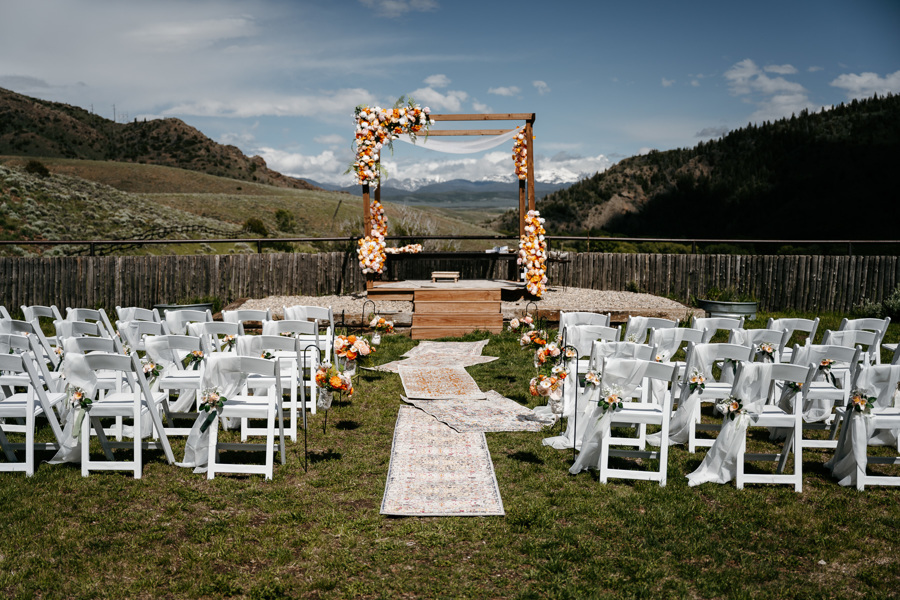
The foothills are the site’s wide subject and the dry clear air is what makes them work. The Boise foothills rise to the north of the valley, and in this atmosphere they hold structure and colour at a distance in a way they would not in humid country — which means a long lens compresses them into layers and brings them forward as a genuine background.
A wide lens reduces them to a low band above a great deal of field, which is the standard mistake. And the exposure goes on the hills rather than on skin, with the faces lifted by a close gelled source.
The foothills’ colour is the other thing to know: they are green for a few weeks in spring and dry gold-brown for the rest of the year, which means the site’s background is warm-toned for most of the season. That suits low sun and it is worth showing a couple in advance rather than letting a spring photograph set the expectation.
- Weight the day toward the ends: the swing is large and the light runs past nine
- Building openings and solid-roofed porches are the only dependable shade
- Slatted pergolas are worse here than in humid air — harder edges, wider range
- A held diffuser earns its weight, and wind is the reason it may not be usable
- Check the chin: irrigated ground bounces generously and lights it from below
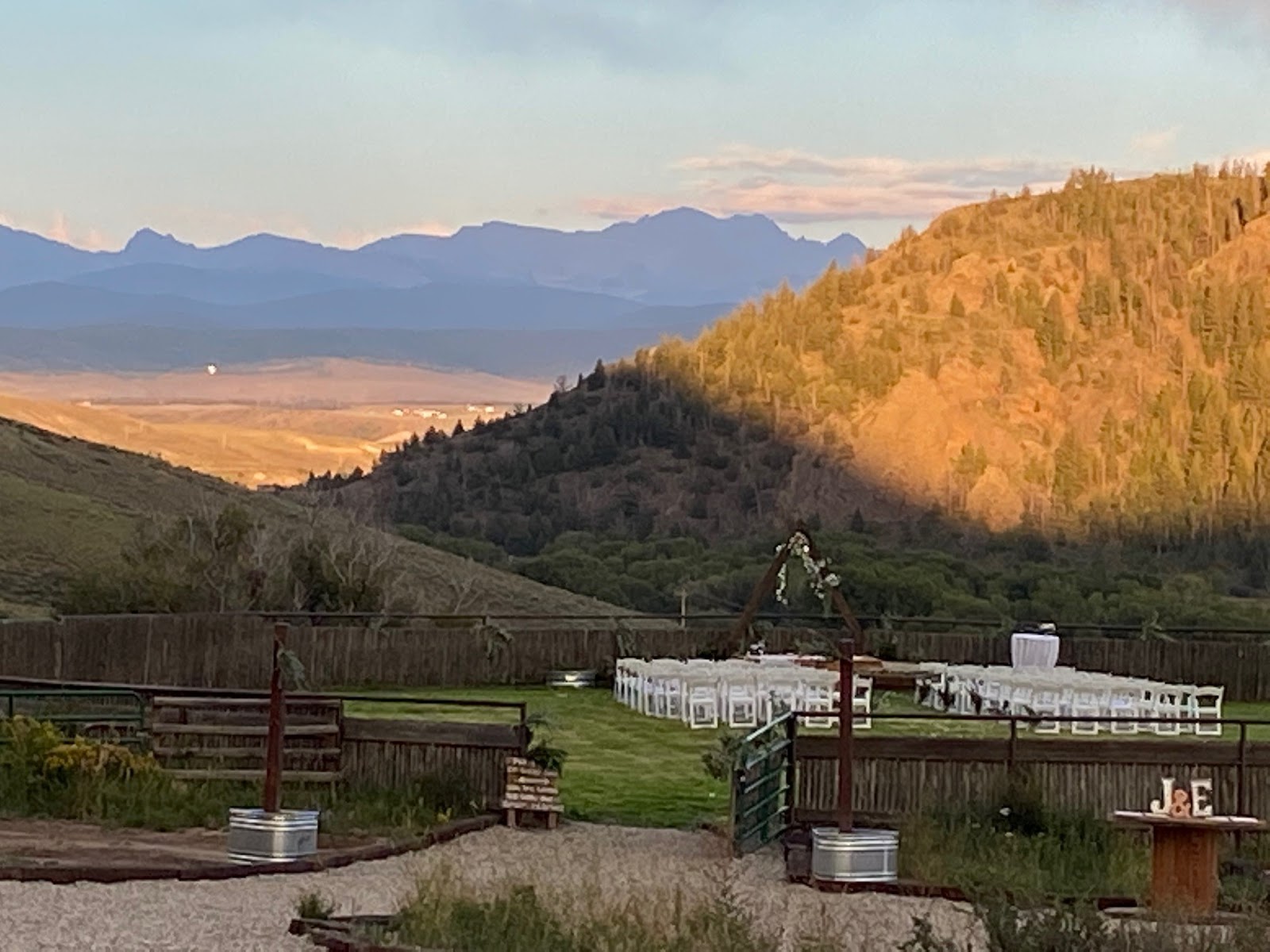
The Boise valley year
The Boise valley is high desert with hot dry summers, cold winters and a long sunny season, which makes most dates workable and turns the calendar into a question of comfort and colour.
Winter is cold and comparatively dry: hard freezes occur, snow falls but does not always lie long at valley level, and the deciduous element is bare. At a ranch venue the honest weakness of the season is that the property is at its most exposed — no canopy, dormant ground, and nothing to screen the boundary.
What winter gives is the light. The December sun at this latitude reaches only about twenty-four degrees above the horizon, which is low enough that the whole short day rakes rather than floods — which removes the site’s central problem entirely. In December there is no hour at which the sun is high enough to flatten a face on open ground, and that makes winter the technically easiest season here.
It also means the light comes through a barn opening almost horizontally and reaches much further into the building than a summer sun does, which widens the usable band inside considerably.
Snow, where it lies, is the best natural fill available outdoors and against dark timber it gives the widest brightness range the property offers — expose for the snow and let the wood go black, overexposing deliberately relative to the meter, which snow fools by about two stops. Snow also simplifies the whole property and its boundary.
Inversion fog is the valley’s characteristic winter condition and it is worth knowing: cold air pooling in the valley can produce days of low grey fog, which flattens everything and removes any distance — an easy even condition to work in and short on drama, and the one condition that makes an open ranch feel enclosed.
Spring is the best season for the landscape. The pasture greens, the planting comes into leaf and flower through April and May, and the Boise foothills are briefly green rather than gold — which is the one period when the whole valley reads as green and the site’s wide frames work best.
That lasts a few weeks and it is worth knowing, because the foothills are the background for most of the wide frames here and they are dry for the rest of the year.
Summer is hot, dry and the busiest season, and it is the hardest for the problem this guide is about. Temperatures in the nineties Fahrenheit and frequently above a hundred in July and August, with clear skies and hard light, push everything to the buildings, the canopy edges and the ends of the day.
The compensations are the long day — light until past nine — and the rapid evening cooling, which means an outdoor reception in the evening is comfortable in a way it would not be in the Southeast.
The honest late-summer note is wildfire smoke. Idaho’s fire season runs from roughly July into September and smoke from fires anywhere in the region can fill the Boise valley for days — turning the sun orange, flattening contrast, removing the foothills entirely and shifting everything warm in a way no white balance resolves. It cannot be planned for, only acknowledged.
Autumn is the best season overall. The heat breaks in late September, the smoke risk passes, the air clears, and the irrigated planting turns — the maple, ash, linden and poplar that were planted for exactly this, giving concentrated colour on the property while the surrounding country is dry gold.
Poplar and cottonwood in particular turn a clean intense yellow in the Boise valley in October and they are frequently planted in rows as windbreaks — which gives a line of gold that is both a strong graphic element and unmistakably of this valley.
Late September into October is the best window of the year, with clear air, a low sun, comfortable temperatures and concentrated colour.
More frames from Hidden Springs Ranch
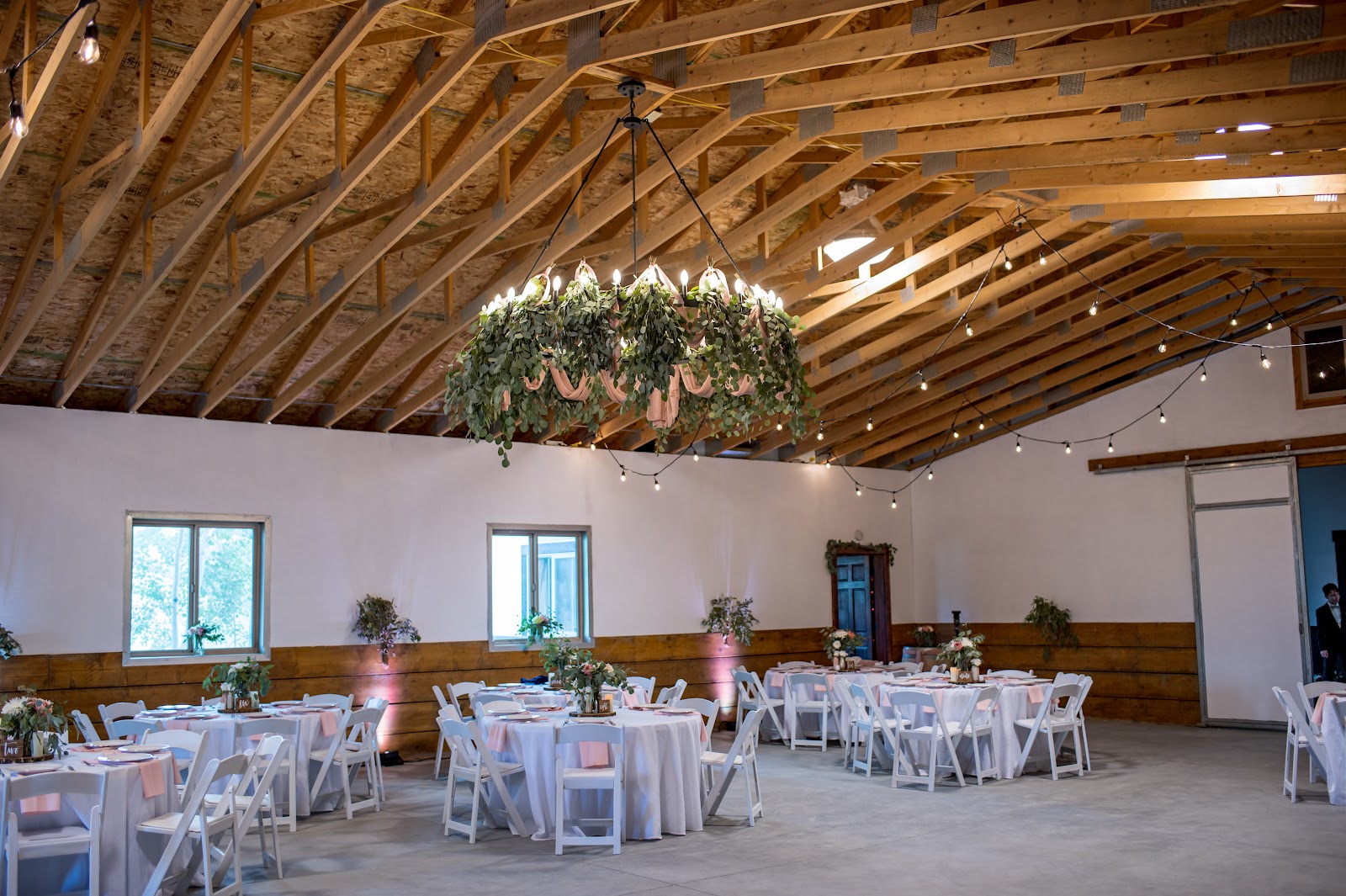
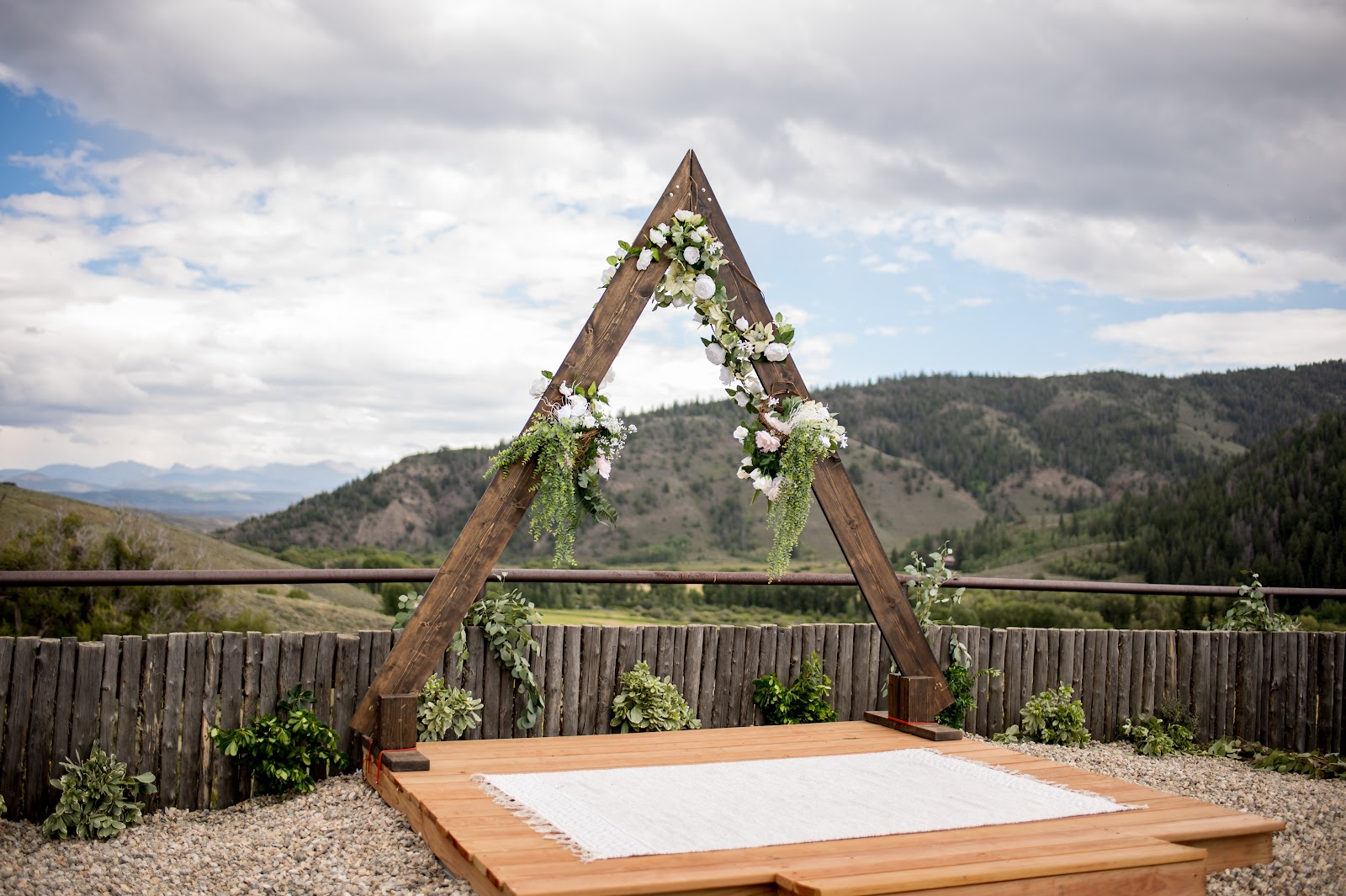
Hidden Springs Ranch wedding photography: common questions
Why is the sun harder here than the temperature suggests?
Dry air at elevation scatters far less light, so shadows have sharper edges and the range between lit and shaded surfaces is wider than in humid country.
What is the main fix?
Move the day to its ends. The diurnal swing is large, the evening cools fast, and the light runs until past nine at this latitude.
Where is the shade?
The buildings — a large opening in dark timber, a porch, a covered deck. Slatted pergolas stripe a face rather than shading it.
Does the ground help?
Yes. Irrigated pasture and mown grass bounce generously into faces, which fills midday shadow — at the cost of uplight under the chin.
Are the foothills usable as a background?
Yes, on a long lens. Dry clear air means they hold structure at a distance — but they are dry gold for most of the year rather than green.
When is the site at its best?
Late September into October for clear air and concentrated planted colour — and December, when the sun never gets high enough to flatten a face.
More Idaho venue guides
We are writing a photographer’s guide to every venue we would happily shoot in Idaho. Here are three more, plus the full index:
- Highlands Event Center, Post Falls: The Problem, and Four Ways Out
- Hitching Post, Hayden: One Frame, and How It Is Made
- Idaho Rocky Mountain Ranch, Stanley: The Light Through the Day
Planning a wedding at Hidden Springs Ranch?
Hard light and open ground, handled properly. Tell us your date.