 The Riverside Hotel, Boise: The Light Through a Day
Highlands Event Center, Post Falls: The Problem, and Four Ways Out
There is plenty of light here and no contrast. The second one is the harder problem.
The problem at a modern event venue is the opposite of what most people expect, and stating it correctly is what makes it solvable.
There is no shortage of light. A purpose-built venue of this kind has large glazing, pale walls, pale ceilings and bright finishes, which means daylight enters and then bounces from every surface — filling the shadows under eyes and chins, lowering the contrast and producing even flattering illumination almost anywhere in the room.
What is missing is contrast, and without it a frame has no structure. A subject in soft bounced light against a pale wall has nothing distinguishing them from the background: no fall-off, because the light does not fall off; no shadow side, because it has been filled; and no tonal difference, because everything in the frame is the same brightness.
The result is a picture that is technically correct and visually flat — and, worse, one that looks the same wherever in the building it was made. A whole day of those is a set that could be one photograph.
The second half of the problem is texture. Modern interiors give flat planes, straight lines and plain surfaces, which means there is nothing incidental in a frame to carry interest — so all the weight falls on the light, the people and the composition.
The compensation is the setting. North Idaho is the wettest and greenest part of the state, with inland maritime forest of cedar, hemlock and larch, and the Spokane river and Lake Coeur d’Alene nearby — which means everything the interiors withhold is available outside.
There are four ways out. We have not photographed a wedding at the Highlands Event Center; modern event venues behave consistently. Which spaces and outdoor areas are included, whether the lighting can be dimmed, the covered alternative, what the actual timings are, and whether more than one event runs on a date are questions for their team.
Highlands Event Center at a glance
| Where | A modern event venue at Post Falls, north Idaho |
| The problem | Plenty of light and no contrast — flat frames that all look alike |
| Way one | Find the dark, deliberately |
| Way two | Use the glazing as a source. Way three: add light for contrast |
| Way four | Go outside; north Idaho has what the interiors lack |
Ways one and two: finding the dark, and using the glass
The first way out is to find the dark, and in a pale building that is a deliberate search rather than something that happens by accident.
What counts is anything two or more stops below the subject’s own light, and a modern building has fewer of those than an old one — but it does have some. A doorway with an unlit space behind it. A corridor receding away from a window. A recessed area, a stairwell, a service passage, a lift lobby. Drapery. A dark panel or a dark-framed opening seen against a bright exterior.
Walking the building once and listing three or four of those is ten minutes of work and it is the difference between a varied set of pictures and a uniform one.
The exposure follows: metering on skin, in manual, and letting the dark background stay dark. In a pale building the instinct is the opposite, because a meter looking at large bright surfaces underexposes — which means a day here needs the correction in both directions depending on where the camera is pointing.
The second way out is to use the glazing as a source rather than as a background, and it is the single most effective technique in a modern building.
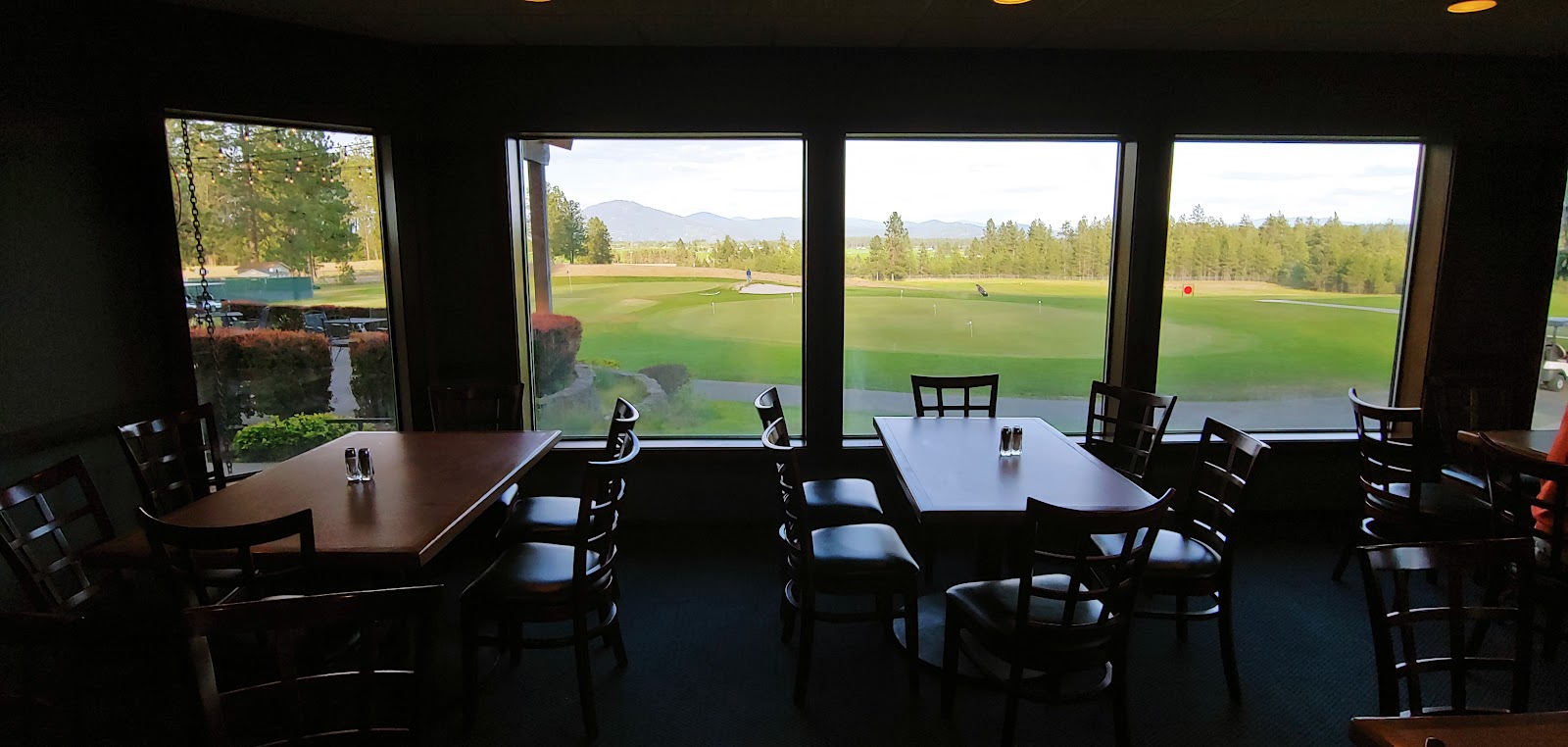
A large window is much brighter than anything bouncing around a room, which means it is still directional even in a space that fills every shadow. A subject a metre from the glass, turned about forty-five degrees to it, gets a lit side, a shadowed side and a gradient between them — real modelling, in a room that otherwise produces none.
The catchlight confirms it: broad and low on the window side of each eye. And in a pale room there will be a second weaker catchlight from the bounce off the opposite wall, which is exactly what tells you the room is filling and why the contrast is lower than it would be in a dark building.
Drawing one curtain or blind partly across the window is the best free improvement available: it narrows the source, which sharpens the fall-off across the face considerably. It is the least used of the fixes and the most effective.
Two further rules and both are free. Turn off whatever interior lighting can be turned off, because warm fittings against cool daylight put two colours on one face and no white balance renders both. And set a custom white balance on a face in position, because in north Idaho a window facing conifer delivers markedly green light while one facing snow or bright cloud delivers cool.
Glazing carries one technical note that matters in modern buildings more than old ones: it reflects. A frame pointed toward a large window at a shallow angle picks up the room, the camera and the photographer, and a few degrees off perpendicular removes it. After dark the glass becomes a mirror as the exterior darkens, which means every frame pointed that way contains the lit room twice.
And a window facing a view is a subject as well as a source: exposing for the view silhouettes the subject, exposing for the subject whites out the view, and the resolution when both are wanted is a close source at roughly the window’s brightness. Averaging is what automatic metering does and it fails at both ends.
Ways three and four: adding contrast, and going outside
The third way out is to add light, and the reason is the opposite of the usual one. In a dark venue a source supplies illumination; here it supplies contrast.
One source off the camera axis, set about a stop above what the room’s ambient gives the skin, re-establishes the shadow side that the room’s own bounce has filled in. That is what turns a flat frame into a modelled one, and it works anywhere in the building regardless of what is behind the subject.
The gel depends on what the room is doing. Modern venues frequently mix warm LED fittings with cool daylight from large glazing, which means the ambient colour varies from position to position — so setting the gel to match whatever is dominant on the face, with the white balance set to the gel, is the working method.
Low ceilings are the modern building’s genuine advantage and they should be exploited. A ceiling under about three and a half metres is a large usable bounce surface, which means a flash aimed into it returns soft overhead-forward light across a whole room — something a tall ornate ceiling simply cannot do. The caution is colour, because a warm-painted ceiling colours the bounce.
For the evening reception the approach is standard: expose the ambient about a stop under what faces need so the room keeps some depth rather than going uniformly bright, then add one warm-gelled source just above skin level, bounced in a low pale room rather than aimed directly.
Precision is the requirement that runs through all of it. Modern interiors give long straight lines, flat planes and repeated elements, and those are compositional resources only if they are used exactly — a frame a degree off level against a long horizontal, or a subject placed almost-but-not-quite deliberately, reads as a mistake where the same imprecision would hide entirely in woodland.
Height is the last interior resource: any upper level, mezzanine or stair looking down over a space makes a large volume legible as a shape rather than an expanse, which wide framing at floor level cannot do.
The fourth way out is to go outside, and in north Idaho what is outside supplies precisely what the interiors lack.
The forest is the first of it. Inland maritime cedar, hemlock, grand fir and Douglas fir are dense and dark — considerably darker than the pine of southern Idaho — which means the canopy edge is the reliable outdoor position and the strongest background available anywhere on or near the property. A metre or two inside at the margin of an opening gives soft directional light in front and near-darkness behind: three or four stops of free separation, which is exactly the contrast the interiors do not have.
The metering trap is the standard one and it is the reverse of the interior’s: dark cedar makes a meter overexpose a face where pale interior surfaces make it underexpose, and the crossing between them happens in a few paces. Manual, metered on skin, reset each time.
And the white balance needs the same treatment, because a damp conifer forest bounces green onto everything while a pale modern room is close to neutral.
Western larch is the region’s distinctive tree and it is worth knowing about: a deciduous conifer whose needles turn a clean intense gold in the second half of October before dropping. That gives north Idaho a conifer autumn — gold scattered through near-black evergreen — which exists nowhere else in this guide and which is the strongest colour a modern venue’s grounds could borrow.
The water is the second resource. The Spokane river and Lake Coeur d’Alene are nearby, and both give what a building cannot: a horizontal reflector, a mirror when calm, and distance. Whether either is reachable within a portrait window is a question with a definite answer and it is worth asking.
And the light outdoors is the quiet advantage. North Idaho has a high proportion of overcast days, which means the brightness range collapses far more often than it does in the dry south: no dappling, no squinting, no clipped whites, colour at full saturation, and no hour that has to be avoided. A grey day here is technically the easiest day of the year — and at a venue whose problem is excess evenness, the outdoor grey day is still better than the indoor one, because the forest supplies the dark that the room does not.
- Find three or four genuinely dark backgrounds before the day
- Glazing at forty-five degrees, and draw one curtain partly across it
- Add a source to create a shadow side, not to supply light
- Bounce off the low ceiling — the modern building’s real advantage
- Outside, cedar gives the contrast the interiors cannot
The north Idaho year
North Idaho has an inland maritime climate: wetter, cloudier and milder than the rest of the state, with heavy winter snowfall and a high proportion of overcast days.
Winter is long and snowy, and for an indoor venue that barely matters — the honest argument for a January or February date at a purpose-built building.
Where winter matters is the daylight. The December sun at this latitude reaches only about eighteen degrees above the horizon — the lowest of any venue in this guide outside Alaska — which means it enters large glazing almost horizontally and travels much further into a room than a high summer sun does. The window position is substantially better in January than in June.
Snow adds to it: a snow-covered exterior reflects light up into every window, which brightens the interiors and makes the light entering them cool and very bright. And outdoors, snow against near-black cedar is the widest brightness range in this guide — expose for the snow and let the conifer go black, overexposing deliberately relative to the meter, which snow fools by about two stops.
Winter also puts any after-dark exterior frame inside a normal running order, because at this latitude the light goes by half past four in December rather than after nine.
The costs are cold, a short day, batteries draining faster, and a cold camera fogging when carried from a snowy exterior into a heated room. Spares in an inside pocket and bodies bagged until they warm.
Spring is long, wet and slow at this latitude. Snow lingers into April, break-up is muddy and the ground is saturated — which makes early spring the weakest part of the year outdoors and a legitimate reason to weight an April wedding indoors, where the season is irrelevant.
Late spring is when the forest becomes luminous: new growth on cedar and hemlock tips, ferns unrolling, and the grass at its greenest. Mosquitoes are a consideration in damp forest in June.
Summer is warm rather than hot and shorter than southern Idaho’s, with light running until well past nine at this latitude. That is the scheduling fact of the season: the good low light arrives late, hours after most receptions begin, which makes asking in advance about stepping outside worth doing rather than hoping.
The honest late-summer note is wildfire smoke. The regional fire season runs from roughly July into September and smoke from fires anywhere in the northern Rockies or eastern Washington can fill a valley for days — turning the sun orange, flattening contrast and shifting everything warm in a way no white balance resolves. For an indoor venue it matters less than for a landscape one, which is a quiet advantage.
Autumn is the best season for the outdoor half and the most convenient for a scheduled venue. The heat goes in September, the smoke risk passes, the air clears, and north Idaho’s distinctive autumn arrives: birch and aspen gold in late September, then western larch turning through the second half of October.
Gold larch scattered through near-black cedar is the strongest thing the region produces and it is exactly the contrast a pale modern interior lacks — which makes twenty minutes outdoors in late October the highest-value decision available on an autumn date.
The scheduling advantage is that by then the days are short enough for the good light to fall inside a normal afternoon slot rather than after nine in the evening, which at a venue running to a clock is the real argument for a late October date.
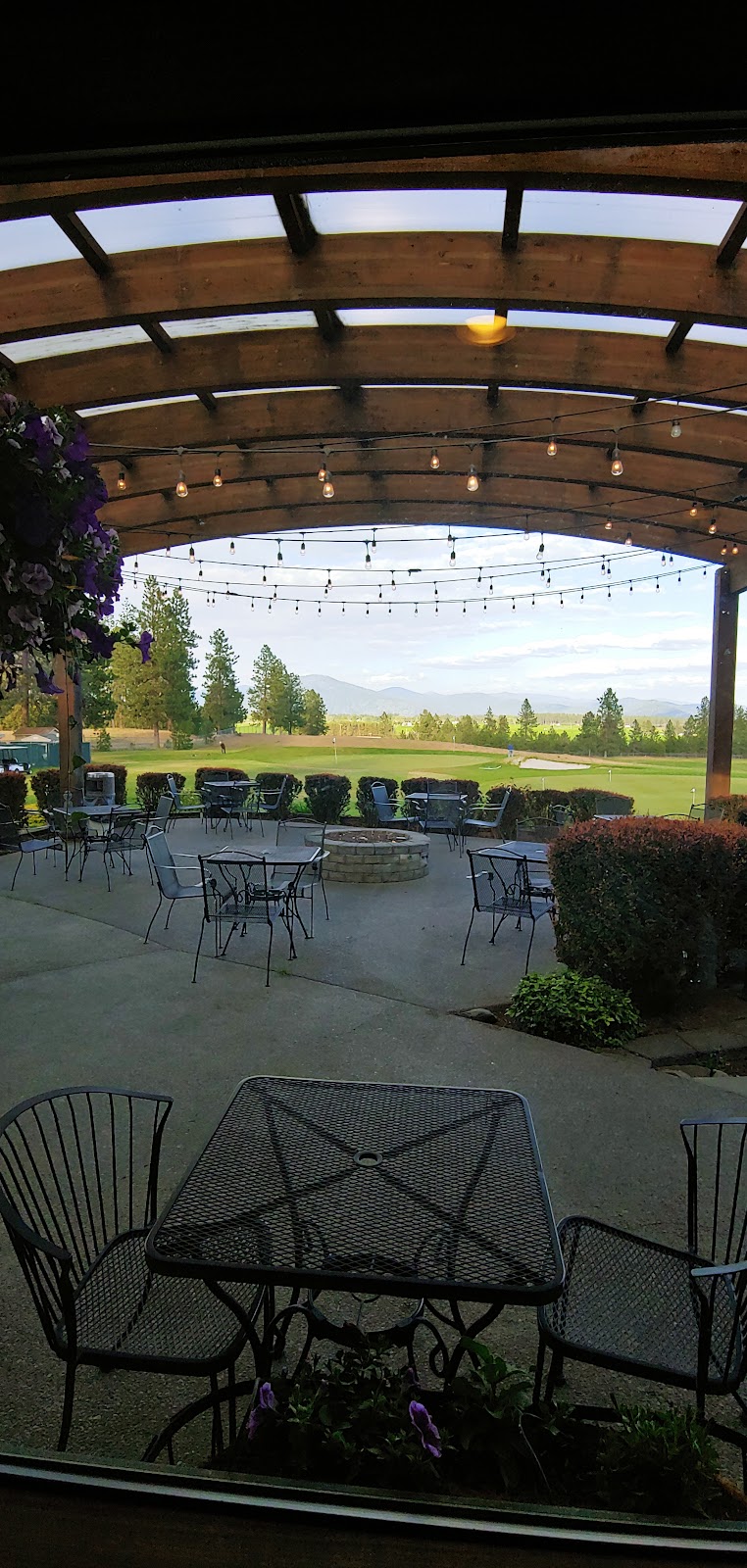
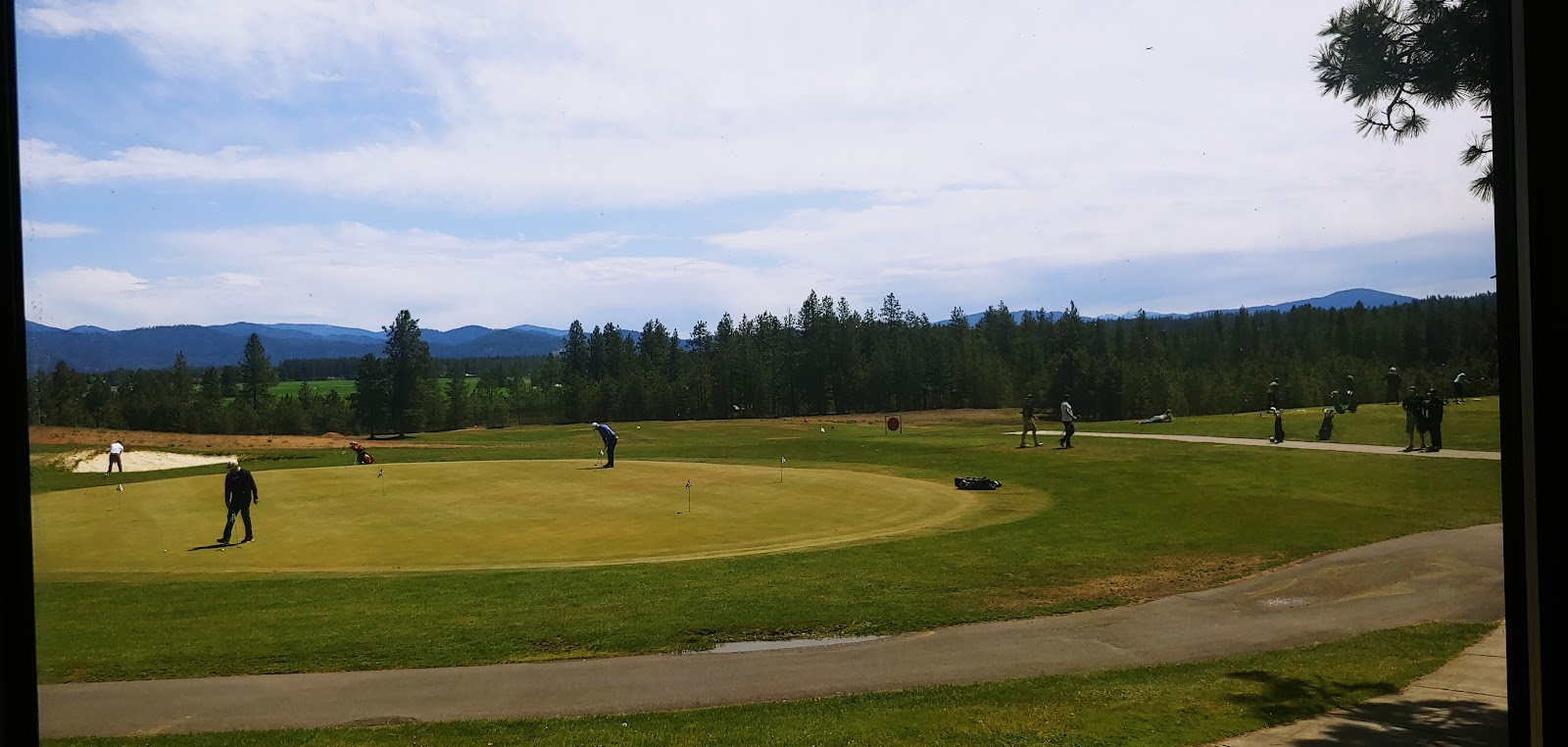
More frames from Highlands Event Center
Highlands Event Center wedding photography: common questions
What is the problem at a modern venue?
Not light — there is plenty. It is contrast: pale bounced light against pale walls gives no fall-off, no shadow side and no tonal separation.
How do I fix it indoors?
Find something genuinely dark to put behind the subject, use the glazing as a directional source, or add a source to create a shadow side.
What is the best free improvement?
Draw one curtain or blind partly across the window. It narrows the source and sharpens the fall-off across the face considerably.
What is the building's advantage?
A low ceiling, which is a usable bounce surface. A tall ornate ballroom ceiling returns almost nothing.
What does outside supply?
The contrast the interiors lack. North Idaho’s cedar and hemlock are dense and dark enough to give three or four stops of free separation.
When is the best date?
Late October: gold larch against near-black cedar, clear air, and short enough days that the good light falls inside a normal afternoon slot.
More Idaho venue guides
We are writing a photographer’s guide to every venue we would happily shoot in Idaho. Here are three more, plus the full index:
- Hitching Post, Hayden: One Frame, and How It Is Made
- Idaho Rocky Mountain Ranch, Stanley: The Light Through the Day
- McCall Golf Course, McCall: The One Decision That Governs Everything
Planning a wedding at Highlands Event Center?
A capable building and a forest outside it. Tell us your date.